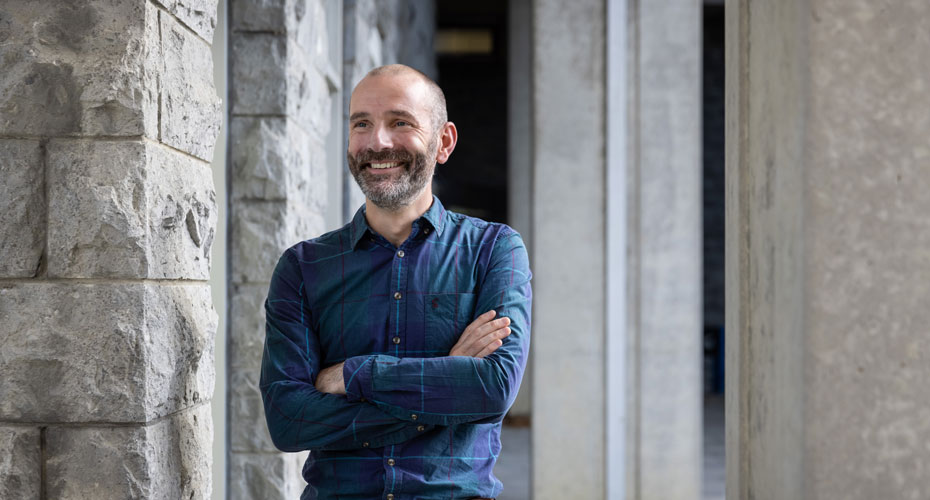
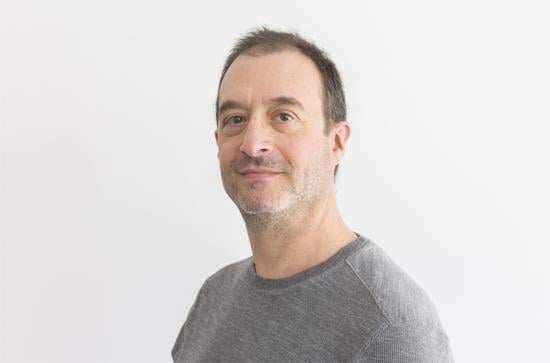
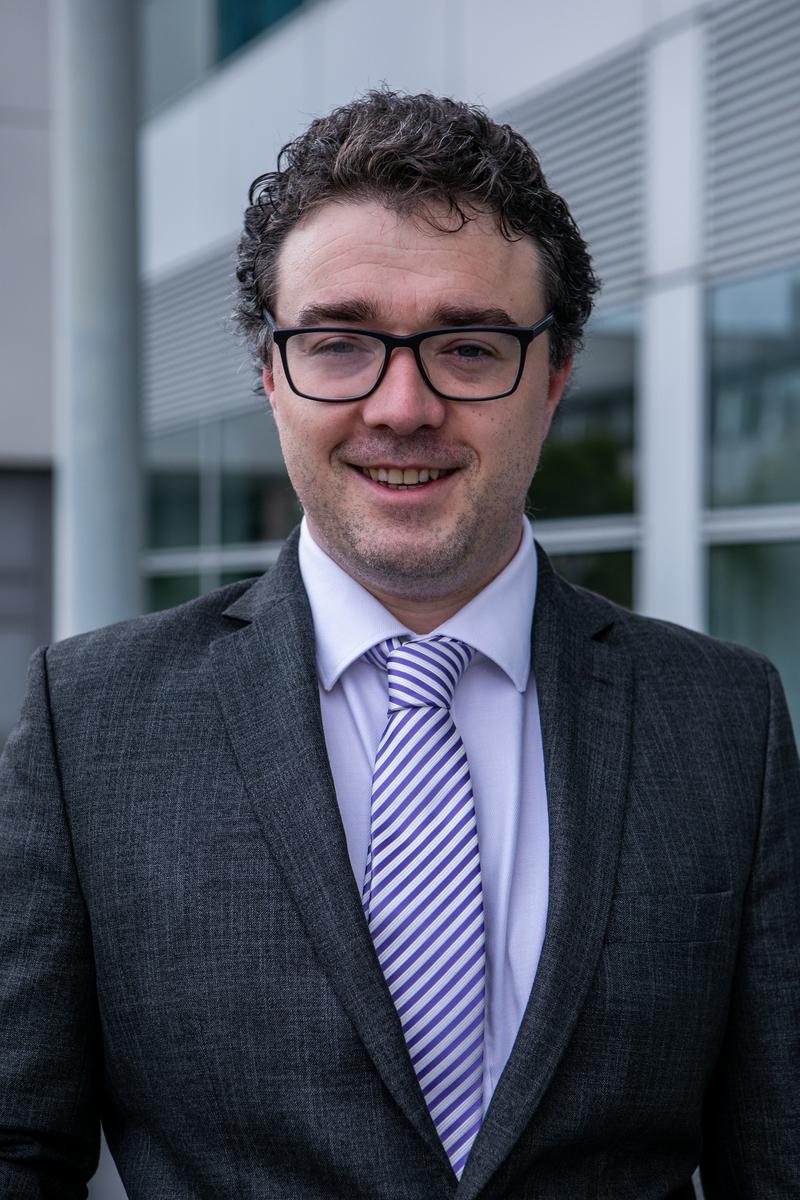
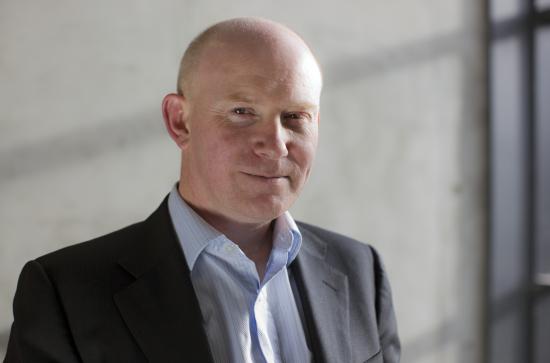
Aonghus Lawlor is an Assistant Professor/Lecturer in Computer Science at the School of Computer Science, University College Dublin. His roles include coordinating modules such as Software Engineering, Data Structures, Machine Learning, and Final Year Project Foundations. He holds an Orcid identifier: 0000-0002-6160-4639. His research focuses on machine learning applications in medical imaging (e.g., MRI, CT), sports science, and healthcare systems. Notable areas include AI-driven diagnostics, cybersecurity in radiology, and genomics for agricultural optimization. Recent work explores ChatGPT4-vision in MS progression, knee osteoarthritis grading via anomaly detection, and reinforcement learning in exercise prescriptions. Professional activities include committee roles in ACM Recommender Systems and Intelligent User Interfaces, grant assessments, and peer reviewing. He has published 137+ outputs, emphasizing interdisciplinary AI solutions with clinical and agricultural impact. Teaching responsibilities span foundational CS courses to advanced ML and project modules. No formal awards are listed, but his work demonstrates contributions to AI ethics, health informatics, and agricultural genomics.
Dr. Simon Kelly is an Associate Professor in the UCD School of Electrical & Electronic Engineering, part of the UCD College of Engineering and Architecture. With a background in Electrical and Electronic Engineering (B.E. and Ph.D. from UCD), he has established himself as a leading researcher at the intersection of engineering and cognitive neuroscience, focusing on how the brain makes perceptual decisions. Dr. Kelly's research program centers on understanding the neural mechanisms underlying perceptual decision making. Using human electroencephalography (EEG), he investigates how the brain accumulates sensory evidence to reach decisions about what we see, hear, and experience. His pioneering work around 2012 identified the Central Parietal Positivity (CPP) signal that reflects the accumulation of evidence during decision processes, building to a threshold before decisions are executed. This discovery has fundamentally advanced our understanding of how the brain transforms sensory input into decisions. His recent publications reveal continued innovation in understanding the dynamics of evidence accumulation, the neural representation of confidence in decisions, and how prior knowledge shapes perceptual processing. His work spans theoretical advances in decision mechanisms and practical applications for diagnosing and treating cognitive impairments associated with neurological disorders like Parkinson's disease. Wellcome Trust Investigator Award in Science (2020) for 'What dictates the extent of evidence accumulation in human decision making?' SFI US-Ireland Research Partnership Programme award (2020) for 'Uncovering the neural architecture underlying decisions abstracted from movements' As an interdisciplinary researcher, Dr. Kelly bridges engineering, neuroscience, and psychology through his leadership of the UCD Cognitive Neural Systems Lab. His work has significant implications for both fundamental cognitive science and potential clinical applications, reflecting his commitment to basic research as a foundation for future practical advances.
Madeleine Lowery is a Professor in the School of Electrical and Electronic Engineering at University College Dublin. She leads the Personal Sensing research group, focusing on engineering approaches to study the human nervous system in health and disease, with applications in therapies for impaired motor function. Her interdisciplinary research integrates neural engineering, electromyography, and biomedical signal processing. Specializes in neuromuscular systems and neural control of movement Develops myoelectric control systems for artificial limbs Designs high-density electrode systems for neural activity recording Investigates deep brain stimulation mechanisms in Parkinson’s disease models Her research spans neurodegenerative disorders (ALS, Huntington’s disease) and rehabilitation technologies , including wearable sensors for gait and sleep analysis. Key methodologies involve computational modeling , adaptive control systems , and biomedical signal analysis .
Dr. Deirdre Kilbane is the Director of Research at the Walton Institute for Information and Communications Systems Science, Department of Computing and Mathematics, Waterford Institute of Technology (SETU). She is also an Adjunct Lecturer in the School of Physics at University College Dublin (UCD), contributing to academic teaching and research supervision. Her strategic leadership drives innovation in AgriTech, Healthcare, Smart Cities, Energy, and ICT. Education: PhD in Mathematical Physics, Maynooth University (1999–2004) BSc in Experimental Physics, University College Dublin (1995–1999) Her research focuses on nanotechnology, artificial intelligence, quantum physics, and molecular communications , with applications in brain implants for epilepsy, quantum key distribution, and smart agricultural systems. She leverages interdisciplinary approaches to solve real-world challenges in healthcare and communications. Her work aligns with UN Sustainable Development Goals, particularly in health and innovation. The most recent publications highlight a strong trend in quantum communication systems , especially satellite-based QKD, and AI-driven edge solutions for industrial IoT, including dairy processing. There is also significant focus on nanoscale biosensing for neurological conditions, reflecting her involvement in the EU Horizon 2020 PRIME project. These works span quantum engineering, AI, and biomedical applications, indicating a highly interdisciplinary research profile. Scientific Awards and Recognition: Coordinator and Principal Investigator, EU Horizon 2020 FETOpen PRIME project Member, Science Foundation Ireland Research Centres: CONNECT and FutureNeuro Featured among '9 women in deep tech you should be following' (2024) Regular invited speaker on quantum technologies and EuroQCI Dr. Kilbane actively advises PhD students, including Rahul Mhapsekar, and leads major research grants from Horizon Europe and SFI. Her projects often involve cross-institutional and international collaborations, particularly in quantum communication and 6G technologies. She has secured significant funding, including SETU’s largest Horizon Europe drawdown to date. Her leadership extends to public engagement, policy input, and media commentary on emerging technologies. She is a key member of the Walton Institute’s research divisions, which focus on future networks, communications, and intelligent systems. Her team works on cutting-edge projects in quantum communication, AI for IoT, and neurotechnology, often in collaboration with CONNECT and FutureNeuro. The institute serves as a national hub for innovation in ICT and smart systems, with Dr. Kilbane playing a central role in shaping its research direction.
Prof. Damien Thompson is a Full Professor of Physics at the University of Limerick (since 2021), affiliated with the Bernal Institute, Pharmaceutical Manufacturing Technology Centre (PMTC), and SSPC – the SFI Research Centre for Pharmaceuticals. His research focuses on predictive materials modelling, self-assembly, peptide engineering, and molecular electronics, leveraging high-performance computing and advanced simulations (molecular dynamics, electronic structure calculations). He has held prior roles as a Scientist at Tyndall National Institute (2005–2013) and postdoctoral fellowships in France (2003–2005). His work spans biomaterials design, drug delivery systems, and nanoelectronic devices, with recent breakthroughs in piezoelectric peptide assemblies and molecular memristors. Collaborations include institutions globally, emphasizing sustainable materials and biomedical applications. Notable contributions include computational studies of amyloid proteins and drug-nucleation interactions. Research interests also encompass energy-efficient molecular electronics, with innovations in memristive systems and molecular logic gates. His labs integrate computational and experimental methods to bridge fundamental science and applied technologies, addressing challenges in healthcare and renewable energy.
Professor Barak Pearlmutter is affiliated with Maynooth University in the Faculty of Science & Engineering . His research spans multiple domains including automatic differentiation , neural networks , machine learning , and neuroscience . He has contributed significantly to adaptive systems , brain imaging , and programming language design . Research Interests include: Adaptive systems, automatic differentiation, theoretical neurobiology, neural networks, machine learning, acoustic source separation/localization, neuroscience, brain imaging, programming language design, and computational neuroscience. Publications focus on applying algorithmic differentiation to machine learning, developing neural ODE models for biomedical signals, advancing sparse NMF techniques, and integrating functional programming with numerical methods. Collaborations span institutions like MIT, Oxford, and IEEE societies, with work in brain-computer interfaces , MEG source localization , and neuromodulation for tinnitus treatment. Technical Contributions include the DiffSharp AD library for .NET languages and foundational work on reverse-mode automatic differentiation in functional frameworks. His 2018 Journal of Machine Learning Research survey on AD remains a seminal reference in the field. Application Areas cover biomedical signal processing , optical brain-computer interfaces , cognitive modeling , and neural code optimization . His work intersects computer science, neuroscience, and mathematical computing through sparse decomposition and probabilistic modeling .
Graham Healy is Assistant Professor and COMSCI Programme Board Chair at Dublin City University's School of Computing. His research develops hybrid human-computer interaction systems using bioelectric signals (EEG), eye-tracking, and machine learning. Current projects include the CASTLE multimodal dataset, AMBER BCI dataset for naturalistic settings, and DERCo EEG-reading comprehension corpus. Dr. Healy creates interactive retrieval systems like VEAGLE (eye gaze-assisted video browsing) and LifeInsight (lifelog search engine), winning competitive evaluations at Video Browser Showdown and Lifelog Search Challenge events. His neuroergonomics research investigates pre-stimulus EEG for predicting driver reaction times, while health informatics projects develop machine learning models for early gestational diabetes prediction using electronic health records. With PhD expertise in brain-computer interfaces from DCU, Dr. Healy's work spans experimental neuroscience, information retrieval, and clinical applications. Recent publications address reproducibility challenges in medical AI and validate diagnostic coding in electronic health systems. His NeuroScore framework evaluates GAN performance using neural responses, advancing quality assessment in synthetic media.
Dr. Alison O'Connor is an Assistant Professor at the University of Limerick , affiliated with the Department of Computer Science & Information Systems , Ageing Research Centre , and Lero – the Irish Software Research Centre . Her research bridges machine learning with mechanics of materials and healthcare data analytics , focusing on applications in structural integrity , Industry 4.0 , and medical informatics . Education : PhD in Mechanical Engineering (Imperial College London, 2015-2019), Graduate Diploma in Advanced Materials (2008-2009), and BSc in Aeronautical Engineering (2004-2008). Her research interests span explainable AI for healthcare decision-making, finite element analysis in nuclear steel integrity, and cold rolling process modeling . Recent publications highlight her work on agent-based patient pathway simulations and MRI texture analysis of traumatic brain injury. She contributes to journal peer-review and university committees as a core member. Publication trends show dual expertise: 50% in structural integrity and materials science, 50% in neuroscience and medical diagnostics . Key subfields include dopamine regulation , microdialysis techniques , and computational medicine .
Dr. Susan Joyce is a Senior Lecturer at the University College Cork (UCC), affiliated with the School of Biochemistry and Cell Biology in the College of Science, Engineering and Food Science. She leads a multidisciplinary research group focused on host-microbe interactions, metabolomics, and microbial metabolism. Her work examines how dietary and microbial factors influence health outcomes, particularly in relation to metabolism, gastrointestinal health, and disease. Dr. Joyce holds a B.Sc. in Biology and Mathematics from Maynooth University, a PhD in host-microbe interactions, and postdoctoral training at institutions including École Normale Supérieure (Paris) and Trinity College Dublin. She is a Principal Investigator (PI) in the APC Microbiome Ireland SFI Research Centre and directs the MRes Programme in Biochemistry and Biosciences. She has secured significant funding from bodies like Science Foundation Ireland (SFI), Department of Agriculture, Food and the Marine (DAFM), and Horizon 2020. Her research interests include the role of bile acids in gut-brain communication, microbiome modulation of host metabolism, and the development of microbial therapies. Notable projects include investigating the therapeutic potential of gut bacteria in obesity and inflammatory bowel disease (IBD), as well as studying the impact of dietary interventions on bile acid profiles and cardiometabolic health. Dr. Joyce has published over 110 peer-reviewed articles in journals such as PNAS , Nature Communications , and GUT . She has received awards for her mentorship and teaching, including the 2021 Irish Research Council Ally Award and a nomination for the UCC President's Prize for Excellence in Teaching (2022). She serves on editorial boards, including Frontiers in Nutrition , and actively participates in professional societies like the Irish Mass Spectrometry Society (Vice-Chair, 2020–2024). Her research integrates metabolomics, cell biology, and animal models to address questions at the interface of microbiology, nutrition, and disease. Current projects include optimizing microbial enzyme inhibition for animal husbandry, dissecting the role of gut microbiota in aging, and identifying novel biomarkers of dietary ingredients in fermentation processes.
Prof. Ray O'Neill is an experimental physicist at Maynooth University's Department of Experimental Physics, affiliated with the Faculty of Science & Engineering and Hamilton Institute. He holds the title of Associate Dean of Science and Engineering, with prior roles including Dean of the Faculty of Science, Dean of Research and Graduate Studies, and Vice President for Innovation (2013-2016). His research spans atomic and molecular physics, quantum entanglement, biomedical imaging, and innovation systems. O'Neill earned his BSc and PhD in Physics from Queen’s University Belfast, joining Maynooth in 1993. He contributed to Ireland’s first national research integrity policy (2011-2013) and led the Maynooth University Curriculum Commission (2014-2016). Education: BSc in Physics, Queen’s University Belfast PhD in Atomic and Molecular Physics, Queen’s University Belfast Research Interests: Combines foundational physics (electron impact excitation, quantum systems) with applied work in near-infrared biomedical imaging and innovation systems. Recent focus on data analytics and machine learning applications. Publications Overview: Over 30 peer-reviewed articles across atomic physics, optics, and biomedical engineering. Key topics include laser plasma dynamics, multiphoton ionization, and brain-computer interface technologies. Administrative Contributions: Chaired national research integrity working group (2011-2013) Member of European Universities Association Research Policy Group Developed university-wide curriculum reforms as Curriculum Commission Chair Labs/Teams: Active in Hamilton Institute collaborations, focusing on interdisciplinary innovation and applied physics research.
Professor Tomas Ward is a Full Professor in the School of Computing at Dublin City University. His research develops neurotechnology and brain-computer interfaces for healthcare applications, including EEG-based art preference decoding, motor imagery classification, and Long COVID symptom monitoring. Recent work focuses on digital health interventions for clinical trials, athlete pain assessment frameworks, and self-powered wearable sensors. Publications demonstrate expertise in translating neuroengineering concepts into clinical and sports medicine applications.
Professor Lorina Naci is a leading academic in Psychology and Neuroscience at Trinity College Dublin (TCD), where she leads the 'Consciousness and Cognition Group' and serves as a Fellow of Trinity College. She holds a PhD from the University of Cambridge, awarded as an International Cooke Fellow. Her research focuses on developing biomarkers for cognition and consciousness in brain-injured and aging populations, including Alzheimer's patients, and explores medico-ethical implications of neuroimaging-based communication tools for non-responsive patients. Affiliations: Trinity College Dublin, Trinity Institute of Neurosciences (TCIN), Global Brain Health Institute (with UCSF). Education: PhD in Psychology (University of Cambridge, 2010). Her groundbreaking work includes detecting covert awareness in vegetative state patients via neuroimaging and pioneering brain-computer interfaces for communication. She has secured €995,990 in recent grants, including HRB and Science Foundation Ireland awards. Key contributions include changing clinical practice guidelines for consciousness assessment and influencing policy frameworks globally. Research interests span disorders of consciousness, dementia prevention, neuroimaging techniques, and ethics of neuroscience applications. Her work has been featured in Nature , Science , and over 200 media outlets worldwide. Awards: L'Oréal for Women in Science Fellowships (2016-2017), UNESCO Rising Talent Award, and multiple grants from HRB, SFI, and others. Grants: Lead PI on €31.5M 'TITAN' research centre proposal, SFI Frontiers Award (€1M pending). Her lab’s current projects include the PREVENT-Dementia study, the largest midlife cohort investigating dementia origins, and developing biomarkers for early Alzheimer’s detection. She actively engages in public science communication through media interviews and policy advocacy.
Jin Xu is a Postdoctoral Researcher at the Insight Centre , affiliated with the Decision Making research group. Their work focuses on algorithm development for EEG data processing in Brain-Computer Interface (BCI) applications and advancing trustworthy recommender systems to address transparency and oversight challenges in AI-driven decision-making. Research interests span: Brain-Computer Interface (BCI) EEG Data Processing Human-Computer Interaction Artificial Intelligence (AI) Trustworthy Recommender Systems Jin Xu emphasizes collaborative exploration, analytical problem-solving, and interdisciplinary teamwork. They actively engage in research projects that bridge complex data processing, AI ethics, and user-centric system design. Contact: jin.xu@insight-centre.org
Dr Maria Chiara Leva serves as a Senior Lecturer within the Faculty of Sciences and Health at Technological University Dublin (TU Dublin), specifically in the Department of Food Science & Environmental Health. She concurrently holds a visiting lecturer position for Risk Assessment and Safety Management in Trinity College Dublin's School of Engineering, while maintaining associated Principal Investigator roles at TU Dublin's Science and Technology in Advanced Manufacturing research centre and Trinity's Centre for Innovative Human Systems. Her research program centers on Human Factors, Human Reliability Analysis, Human Machine Interface Design, Safety Management Systems, and Safety Culture, with over 60 publications spanning operational risk assessment and safety engineering applications. Dr Leva's work demonstrates consistent evolution from foundational human reliability modeling toward integrated safety management frameworks, with recent publications emphasizing real-time workload monitoring, risk intelligence systems, and cross-industry applications in manufacturing and process safety. Her research bridges theoretical human factors principles with practical implementation in high-risk operational environments. Dr Leva leads significant industry-academic initiatives including the spin-out company 'Tosca Human Factors Solutions', which originated from an EU project she directed as Principal Investigator. Her leadership extends to professional societies where she co-chairs the European Safety and Reliability Association's Human Factors technical committee and previously chaired the Irish Ergonomics Society. She also co-founded the annual Symposium on Human Mental Workload, now in its third iteration. Scientific Awards Female Founder Competitive Start Fund (National Digital Research Centre and Enterprise Ireland, 2016) Dr Leva has secured substantial research funding through EU projects and national grants, establishing her campus company as a conduit for translating academic research into industry solutions. Her advisory role in Tosca Human Factors Solutions demonstrates successful commercialization of academic expertise, while her ongoing research collaborations with manufacturing and process safety sectors highlight practical impact. She actively mentors through her academic positions and symposium organization, fostering next-generation researchers in human factors engineering. Her work operates within the interdisciplinary ecosystem of TU Dublin's Food Science & Environmental Health department and Trinity's engineering research centres, focusing on human-system integration challenges across food safety, industrial manufacturing, and critical infrastructure sectors.
Associate Professor Yan Yan is a leading researcher at University College Dublin's School of Biomolecular and Biomedical Science, where she currently holds the position of Associate Professor (since July 2024) after serving as Assistant Professor from 2018-2024. Her research program focuses on understanding nanoscale interactions with the immune system to develop novel immunotherapies for cancer and infectious diseases. PhD in Biochemistry and Molecular Biology from Peking University, China Postdoctoral training at the University of Melbourne Science Foundation Ireland SIRG Fellow Marie Curie Fellow Australian Research Council DECRA Fellow Professor Yan's research interests center on nanoscale shape biology and its applications in immunotherapy development. She has pioneered work on how nanoparticle architecture influences immune responses, particularly through the study of nanostructure shape effects on T cell receptor repertoires and histone modifications. Her interdisciplinary approach combines nanotechnology, immunology, and biointerface science to develop novel therapeutic strategies. Her laboratory investigates protein corona formation, nanoparticle translocation across biological barriers, and the development of shape-dependent immunomodulatory therapies. Analysis of Professor Yan's publication record reveals a strong focus on systematic investigation of nanoscale shape effects on biological systems. Her work has evolved from fundamental studies of protein corona formation to more recent applications in immunotherapy development, with increasing emphasis on translation to clinical applications. Her research demonstrates consistent innovation in methodology, particularly in developing frameworks for systematic nanoscale shape discovery and evaluation. 1st Prize Interstellar Initiate at New York Academy of Sciences (2017) Starting Investigator Research Grant from SFI (2016) Australian Eureka Prize for Excellence in Interdisciplinary Scientific Research (2013) Discovery Early Career Research Award from ARC (2013) Reviewer Excellence Award (top 1% reviewers, 2017) Professor Yan has successfully secured numerous research grants including HEA Covid-19 funding, the NANOSCAPE project, EXOTRAIN, and multiple UCD Equip Scheme awards. She supervises PhD students and coordinates modules including Biochemist's Toolkit, Bioprocessing, and Enzyme Technology & Protein Engineering. Her laboratory is part of the Conway Institute at University College Dublin, where she leads an interdisciplinary team working at the interface between nanostructures and the immune system. Her research group maintains active collaborations across multiple disciplines, focusing on translating nanoscale discoveries into therapeutic applications for cancer and infectious diseases.