
Dr. Xi Wang is a Lecturer in the Department of Computer Science at ETH Zurich, specializing in energy-efficient embedded systems and wearable biomedical technologies. His research bridges hardware optimization and machine learning for real-world health applications. Key research areas include: Low-power neural network deployment for wearable medical devices Brain-machine interfaces with on-device learning Sensor fusion techniques for seizure detection Edge computing architectures for physiological monitoring His work demonstrates strong emphasis on algorithmic efficiency and hardware co-design for constrained devices. Dr. Wang teaches courses on embodied intelligence and computer architecture, focusing on practical implementations of advanced computing concepts.
جستجوی استاد راهنمای دانشگاهی
برای مسیر پژوهشیتان، استاد راهنما، استاد دانشگاه و پژوهشگر مناسب را پیدا کنید و با آنها ارتباط بگیرید.
نمایش ۱۶-۳۰ از ۷۵ استاد راهنما
اطلاعات پروفایلها از صفحات عمومی دانشگاهها گرفته شده و ممکن است بهروز نباشد.

Pierre Mégevand is a Professor and group leader at the Faculty of Medicine, University of Geneva, where he leads the Human Neuron Lab. His research is centered on understanding the neural mechanisms underlying human cognition and epilepsy, using intracranial recordings from awake patients. He is actively involved in both clinical and basic neuroscience research, with a focus on speech, language, and seizure dynamics. His research interests span cognitive neuroscience, clinical neurophysiology, and neuroengineering. He investigates how neurons encode sensory stimuli and behavioral responses, particularly in the context of speech and language. His lab uses stereo-EEG and microelectrode recordings to identify seizure-specific neural patterns and develop patient-tailored biomarkers for seizure detection and prediction. Key areas include multisensory integration, functional brain networks in epilepsy, and neural decoding of imagined speech. His recent publications reflect a strong trend in human intracranial electrophysiology, with studies on audiovisual illusions, electrode localization tools, functional networks in epilepsy, and neural correlates of speech and emotion. His work combines clinical data with advanced computational methods to uncover the dynamics of human brain function. Among his scientific contributions are methodological advancements and clinical insights in epilepsy monitoring and treatment. Though no specific awards are listed, his publications in top journals like Nature Communications and Epilepsia indicate high recognition in the field. Mégevand advises graduate students and postdoctoral researchers, including Lora Fanda and Jonathan Monney. His lab collaborates on grants related to neurotechnology, brain-computer interfaces, and epilepsy research, though specific grant details are not provided. He is part of a multidisciplinary team at the University of Geneva that includes engineers, neurologists, and neurosurgeons. The Human Neuron Lab, based at the Centre Médical Universitaire (CMU), is equipped for advanced human electrophysiology studies. The team includes a master assistant, graduate students, and postdoctoral researchers, reflecting an active and collaborative research environment focused on translational neuroscience.

Lin Duمشاهده پروفایل
پژوهشگر
Lin Du is a Doctoral Assistant and PhD student at the Swiss Federal Institute of Technology in Lausanne (EPFL), affiliated with the School of Engineering, the Institute of Electrical Engineering, and the Laboratory of Intelligent Systems (SCI-STI-SC). She is co-supervised by Prof. Sandro Carrara (EPFL) and Prof. Yann Thoma (HEIG-VD). Her educational background includes: Bachelor of Science in Electronic Information Engineering from Beijing Institute of Technology (2019) Master of Science in Information and Communication Engineering from Beijing Institute of Technology (2022) Lin Du's research focuses on applying machine learning algorithms to estimate drug concentration from sensor data. Her work lies at the intersection of electrical engineering, biosensors, and machine learning, with applications in drug delivery systems and personalized medicine. She is an active member of EPFL's Integrated Circuits Laboratory (ICLAB) and Brain-Computer Interface research community, conducting doctoral research on biosensor data analysis within the Laboratory of Intelligent Systems.
Giuseppe Schiavone serves as a Researcher holding the Foundation Bertarelli Chair in Neuroprosthetic Technology at the Laboratory for Sensory Processing (LSBI) within the School of Engineering at École Polytechnique Fédérale de Lausanne (EPFL). He concurrently holds Lecturer positions in the School of Life Sciences and the Doctoral Program for Engineering Education, demonstrating cross-disciplinary engagement across EPFL's academic structure. His research centers on neuroprosthetic technology and sensory processing , with emphasis on developing neural interfaces to restore sensory functions. His work bridges engineering and neuroscience through investigations into brain-computer interfaces and neural signal decoding , aiming to create therapeutic devices for sensory restoration. This interdisciplinary approach integrates computational modeling with experimental neuroscience. Dr. Schiavone operates within EPFL's Laboratory for Sensory Processing, a specialized research unit focused on understanding neural mechanisms of sensory perception and translating findings into neuroprosthetic applications. The laboratory collaborates with clinical partners to advance neural engineering solutions for neurological impairments, situated within EPFL's Institute of Neurosciences framework.
Dominik Wyserمشاهده پروفایل
پژوهشگر
Dr. Dominik Wyser is a Researcher in the Department of Rehabilitation Engineering at ETH Zürich. He contributes to the Professorship for Rehabilitation Engineering, focusing on neurotechnology and wearable medical devices. His work emphasizes functional near-infrared spectroscopy (fNIRS), brain-computer interfaces (BCI), and rehabilitation technology. Wyser leads projects involving Optohive, a wearable fNIRS system for ambulatory brain activity monitoring. His research spans signal processing, clinical neuroscience, and biomedical instrumentation. Education background: Not explicitly stated in provided texts but implied through academic role. Research interests include advancing wearable neurotechnology for real-world applications, optimizing fNIRS systems for clinical and sports settings, and improving motor imagery decoding for BCI systems. His work bridges engineering and medicine, with applications in exercise physiology and neurorehabilitation. Publications reflect a focus on fNIRS methodology, BCI advancements, and wearable device development. No awards or grants explicitly listed, though involvement with Optohive suggests industry-academia collaboration. No formal student supervision details provided.

Quentin Gallotمشاهده پروفایل
پژوهشگر
Quentin Gallot is affiliated with the Neuroinformatics Professorship at ETH Zürich (Eidgenössische Technische Hochschule Zürich), located at Y55 G72 Winterthurerstrasse 190 in Zurich, Switzerland. His role involves supporting research activities within the Neuroinformatics domain. While specific research interests are not explicitly detailed in the provided text, his department's focus suggests engagement with computational models of neural systems, neuroimaging analysis, and interdisciplinary approaches to understanding brain function. Professional activities likely include laboratory support, data management, and technical collaboration within the neuroscientific community. No formal academic awards or student advisement records are mentioned in the text. His institutional contact information reflects active participation in the institute's operational structure.
Guido Bolognaمشاهده پروفایل
استادیار
Guido Bologna is an Assistant Professor at the Haute école du paysage, d'ingénierie et d'architecture de Genève (HEPIA), within the School of Technique et IT and the Department of Informatique et systèmes de communication. His research focuses on explainable artificial intelligence (XAI), rule extraction from neural networks, and their applications in healthcare and computer vision. His work emphasizes transparent decision-making in AI systems, particularly for medical diagnostics (e.g., melanoma detection from images) and radiotherapy side-effect prediction. He co-leads the HES-XPLAIN platform, an open-source initiative to democratize XAI development. Key projects include PRE-ACT (predicting radiotherapy side effects) and Fidex/FidexGlo algorithms for explaining ensemble models and SVMs. Notable contributions include rule extraction from deep neural networks using techniques like DIMLP ensembles and DCT-based feature maps. His research bridges theoretical advances in AI with practical applications, such as sensory substitution devices for visually impaired individuals and gait analysis for elderly mobility aids. Bologna collaborates internationally on interdisciplinary projects, spanning healthcare informatics, robotics, and neuroscience. His work addresses challenges in algorithmic transparency, fairness, and privacy in AI systems, with a focus on real-world deployable solutions.

Prof. Jamie Paik is a Full Professor at the Swiss Federal Institute of Technology (EPFL), where she serves as Director of the Reconfigurable Robotics Lab (RRL) and is a core member of the Swiss NCCR robotics group. She holds multiple academic appointments across EPFL's School of Engineering, including positions in the Institute of Mechanical Engineering (IGM), STI-SMT SMT-ENS, and STI-SGM SGM-ENS. Additionally, she serves as a PhD program committee member for the Doctoral Program in Robotics, Control and Intelligent Systems. Her research focuses primarily on soft robotics , origami-inspired robotics , and wearable technologies . Prof. Paik's work leverages multi-material fabrication and smart material actuation to develop novel robotic designs that push the physical limits of materials and mechanisms. Her current research includes self-morphing Robogami (robotic origami) that transforms from planar shapes to 2D or 3D structures through predefined folding patterns, similar to traditional paper origami. Prof. Paik has published extensively on robotic origami, haptic feedback systems, and soft actuators, with her most recent work (2024-2025) focusing on vibration of soft twisted beams for locomotion, semi-autonomous surgical assistance, plug-and-play pneumatic systems, and data-driven kinematic modeling. Her research demonstrates a clear trajectory toward more adaptive, reconfigurable robotic systems with applications in surgery, human-robot interaction, and wearable technologies. Among her notable achievements, she developed a 7-DoF humanoid arm during her PhD at Seoul National University (sponsored by Samsung Electronics), which was the lightest in literature at that time (3.7kg including the 8-DoF hand). During postdoctoral work at Pierre Marie Curie University, she developed the internationally patented JAiMY laparoscopic tools now commercialized by Endocontrol-medical.com. PhD: Seoul National University (Humanoid Arm and Hand Design) Postdoc: Institut des Systems Intelligents et de Robotic, Université Pierre Marie Curie Postdoc: Harvard University's Microrobotics Laboratory Prof. Paik has supervised numerous PhD students, both current and past, including Bakir Alihan, Demirtas Serhat, Jiang Shaopeng, Kanno Ryo, Schüssler Alexander Michael, and Wang Ziqiao. Her teaching includes Topics in Autonomous Robotics, Mechanical Product Design and Development, and Advanced Design for Sustainable Future.

Michel Besserve is a Full Professor in the Department of Empirical Inference at the Max Planck Institute for Intelligent Systems in Tübingen, Germany. His research bridges artificial intelligence, causal inference, and neuroscience to develop trustworthy and interpretable AI systems for understanding complex phenomena in artificial, physical, and socioeconomic systems. Dr. Besserve completed his PhD dissertation titled Analyse de la dynamique neuronale pour les Interfaces Cerveau-Machine : un retour aux sources at Université Paris-Sud 11 in November 2007. His academic journey has led him to become a leading researcher in causal machine learning, collaborating extensively with Bernhard Schölkopf and other prominent scientists in neuroscience and AI. Professor Besserve's research centers on causal machine learning, with a focus on understanding and anticipating changes in complex systems. He investigates principles like the Independence of Causal Mechanisms (ICM) to improve causal model identifiability and develop more robust AI. His work spans theoretical foundations of causal inference to practical applications in neuroscience, brain function analysis, and socioeconomic systems. He has made significant contributions to understanding brain networks through causal inference and machine learning, with publications in major journals including Nature, PLOS Biology, and Neuron. His publication record reveals a clear trajectory from theoretical causal inference toward developing frameworks for real-world applications. Recent work focuses on building Causal Computational Models (CCMs) that integrate data, domain knowledge, and causal structure to improve robustness and interpretability of complex system models. His research shows increasing integration of causal machine learning with applications to neuroscience and socioeconomic systems, particularly in developing causal AI that can address real-world complexity while producing interpretable outcomes for decision makers. Through his leadership in the Department of Empirical Inference, Professor Besserve has established a research program that bridges theoretical machine learning with practical applications in neuroscience and complex systems. His team develops novel causal machine learning tools that uncover internal structure and transformations of complex systems, with potential applications ranging from brain function analysis to sustainable economic modeling.
Prof. Dr. Reto Wildhaber is a Professor for Digital Biomarkers and Signal Processing at the University of Applied Sciences and Arts Northwestern Switzerland (FHNW), School of Life Sciences. He holds a dual doctorate (Dr. sc. ETH and Dr. med.) and serves as a Senior Researcher at the Signal and Information Processing Laboratory (ISI) at ETH Zürich. His academic roles include lecturing at the Institute for Medical Engineering and Medical Informatics, focusing on biomedical signal processing and medical device development. Education: PhD in Signal and Information Processing (Dr. sc. ETH), ETH Zürich (2013), awarded ETH Medal 2019 Medical Doctorate (Dr. med.), University of Zürich (2011) Electrical Engineering Degree from Fachhochschule Rapperswil (2002) Research Interests: Model-based signal processing, digital biomarkers, medical sensor systems, and clinical trials for medical devices. His work emphasizes ECG analysis, cochlear implantation, coronary stenosis assessment, and wearable medical technologies. Publications Trends: Focus on real-time signal analysis in cardiology and electrophysiology, with contributions to ECG-based diagnostics, cochlear implant optimization, and medical device validation. His work bridges algorithm development and clinical applications, emphasizing translational research. Awards: ETH Medal 2019 (best thesis award, ETH Zürich) and Zellweger Preis (awarded for thesis at Fachhochschule Rapperswil). Projects: Co-developed open-source tools like lmlib.ch (model-based signal processing library) and CLabUZH (cardiopulmonary simulation software for education). Labs/Teams: Active in the Institute for Medical Engineering and Medical Informatics (FHNW) and the Signal and Information Processing Laboratory (ETH Zürich).
Zuria Bauer is a Lecturer in the Department of Computer Science at ETH Zürich. Her research focuses on advancing computer vision, robotics, and mixed reality technologies with applications in human-robot interaction, scene understanding, and assistive technologies. Key areas include monocular depth estimation, 3D scene reconstruction, and neural rendering techniques. Her work integrates theoretical advancements with practical implementations, such as enhancing robotic perception systems for real-world environments and developing intuitive mixed reality interfaces. Bauer has contributed to datasets like UASOL and frameworks like MaRINeR, which address challenges in novel view synthesis and object manipulation. Research trends in her articles emphasize cross-disciplinary approaches, combining deep learning with robotics to solve problems in healthcare accessibility (e.g., COMBAHO system) and environmental perception for autonomous systems. She explores both hardware-software co-design (e.g., low-cost wearable sensors) and algorithmic innovations (e.g., NeRF-based augmentation). While no formal awards are listed, her publications reflect sustained contributions to advancing perception technologies across dynamic scenes, robotic interaction, and assistive applications.
- Computer Vision
- Robotics
- Mixed Reality
- +۳ مورد دیگر
Sander de Haanمشاهده پروفایل
پژوهشگر ارشد
Sander de Haan is a Research Fellow and PhD student at the University of Lucerne's Institute for Social Ethics (ISE), concurrently pursuing a computational neuroscience PhD at ETH Zurich under Prof. Benjamin F. Grewe and Prof. Peter G. Kirchschlaeger. His research integrates ethical analysis with artificial intelligence and biological learning systems. Education: Master's in Computer Science Engineering from EPFL, with projects in theoretical machine learning, medical diagnostics AI, and deep learning for pose estimation/cell segmentation. Prior experience includes AI internships at Logitech (brain-machine interfaces), medical psychedelic data science, and teaching roles at EPFL/ETHZ. Research focuses on ethical dimensions of AI, principles of learning systems, and interdisciplinary connections between neuroscience and ethics. No specific awards or grants are listed in the provided text. Labs/teams: Affiliated with the Institute of Neuroinformatics (ETH Zurich) and the Lucerne Graduate School in Ethics (LGSE).

Sara Irina Fabrikant is a Professor in the Department of Geography at the University of Zurich, where she leads cutting-edge research at the intersection of cartography, cognitive science, and geographic information systems. Her work focuses on understanding how humans interact with spatial information, particularly through mobile and neuroadaptive interfaces that respond to users' cognitive states. Department of Geography, University of Zurich Editor for major cartography journals and conference proceedings Principal investigator on multiple research projects in spatial cognition Active collaborator with international researchers across cognitive science, neuroscience, and GIScience Professor Fabrikant's research centers on spatial cognition and human-computer interaction in geographic contexts. She investigates how people process spatial information through various display modalities, with particular emphasis on mobile map navigation, landmark recognition, and spatial learning. Her work bridges theoretical cartography with practical applications in wayfinding systems, incorporating methods from cognitive psychology, neuroscience, and human-computer interaction. Recent research has increasingly integrated physiological measures like EEG to develop neuroadaptive geographic information displays that respond to users' cognitive load and spatial learning needs. Analysis of her recent publications reveals a clear trajectory toward more sophisticated integration of neuroscience methods with cartographic design principles. Her work has evolved from foundational studies on spatialization and information visualization to cutting-edge research on neuroadaptive location-based services. Key themes across her publications include the impact of visualization design on spatial learning, the role of landmarks in navigation, the effects of uncertainty representation on decision-making, and the development of context-aware mapping systems that adapt to users' cognitive states in real-time. Professor Fabrikant has served as editor for numerous special issues and conference proceedings, including multiple COSIT (Conference on Spatial Information Theory) volumes, demonstrating her leadership in the field. Her extensive publication record in top-tier journals reflects consistent contributions to cartographic theory and practice over multiple decades. Her research program demonstrates significant advising activity through numerous co-authored publications with emerging scholars, though specific student names aren't listed in the provided materials. Her work frequently involves interdisciplinary collaboration across geography, computer science, cognitive psychology, and neuroscience, suggesting a well-funded research program with multiple ongoing projects. She has organized and edited proceedings for major international conferences, indicating substantial recognition within her field. While specific lab structures aren't detailed in the provided text, Professor Fabrikant's research appears to involve multiple experimental setups including virtual reality environments, real-world navigation studies with mobile eye-tracking, and neurophysiological measurement systems. Her work with teams across Switzerland and internationally suggests a collaborative research environment focused on pushing the boundaries of how geographic information is designed and experienced.
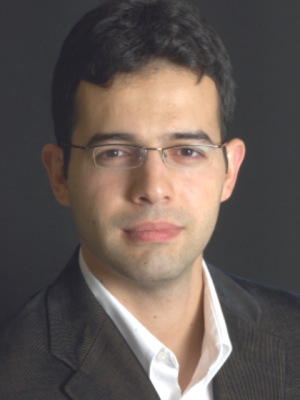
Prof. Mehmet Fatih Yanik is a Full Professor at the Department of Information Technology and Electrical Engineering at ETH Zürich and Deputy Head of the Institute of Neuroinformatics. He leads the Yanik Lab, focusing on neurotechnology, neuroengineering, and high-throughput screening systems for drug discovery. His career includes tenured positions at MIT (2006-2014) and postdoctoral work at Stanford University. He holds a BS and MS from MIT (Electrical Engineering/Physics and Computer Science) and a PhD in Applied Physics from Stanford. Educations: BS in Electrical Engineering and Physics, MIT (1999) MS in Engineering and Computer Science, MIT (2000) PhD in Applied Physics, Stanford University (2006) Research Interests: Prof. Yanik’s work spans neurotechnology platforms for large-scale neural recording and stimulation, high-throughput in vivo screening systems for drug discovery, and advanced neuroimaging techniques. He pioneered ultra-flexible neural electrodes and non-invasive focused ultrasound neuromodulation. His lab integrates machine learning with neurotechnology to study brain circuit dynamics and anesthetic states. Awards: NIH Director’s Pioneer Award (youngest recipient) ERC Consolidator Award Bridge Discovery Award Technology Review’s 'Top 35 Innovators Under 35' Advising & Grants: His research is supported by NIH, ERC, NSF, and industry partnerships. He directs the NSC Master’s program and teaches courses like "Bioelectronics and Biosensors" . The Yanik Lab collaborates widely, advancing translational neurotechnology for clinical applications. Labs & Teams: The Yanik Lab at ETH Zürich develops cutting-edge tools for neuroscience, including neural interface technologies and AI-driven analysis pipelines for behavioral and neural data.

Friedemann Zenkeمشاهده پروفایل
استادیار
Friedemann Zenke is an Assistant Professor at the University of Basel and a Junior Group Leader at the Friedrich Miescher Institute for Biomedical Research (FMI), Basel, Switzerland. His research lies at the intersection of computational neuroscience, machine learning, and neuromorphic engineering, focusing on modeling memory formation and information processing in neural networks. Assistant Professor, University of Basel (2022–present) Junior Group Leader, FMI (2019–present) SNSF Eccellenza Fellow (2022–2027) Education: PhD, School of Computer and Communication Sciences, EPF Lausanne, Switzerland (2014) Diplom in Physics, University of Bonn and Australian National University (2009) Postdoctoral Fellow, Stanford University (2015–2017) Sir Henry Wellcome Postdoctoral Fellow, University of Oxford (2017–2019) His research interests center on understanding how plasticity mechanisms—such as Hebbian, homeostatic, and predictive plasticity—enable learning and memory in biologically inspired neural networks. He develops computational models using spiking and rate-based networks, leveraging high-performance computing and machine learning tools. His work integrates theoretical analysis from dynamical systems and statistical physics with practical dimensionality reduction techniques to compare model outputs with experimental data. A major focus is on surrogate gradient methods for training non-differentiable spiking networks, enabling their application in neuromorphic hardware. The recent publications highlight a strong trend toward bridging theoretical neuroscience with practical AI and hardware applications. Key themes include credit assignment in spiking networks , energy-efficient neuromorphic learning , biologically plausible plasticity rules , and benchmarking frameworks for emerging neural models. His work increasingly emphasizes the co-design of algorithms and hardware for next-generation brain-inspired computing systems. Scientific Awards: SNSF Eccellenza Fellowship (2022–2027) Wellcome Trust Postdoctoral Fellowship (2016–2019) Swiss National Science Foundation Postdoctoral Fellowship (2015–2016) Teaching Award, EPFL (2012) Marie Curie PhD Fellowship (2010–2014) DAAD Fellowship (2006) Friedemann Zenke leads an active research group at FMI, advising multiple PhD students and mentoring postdoctoral fellows. His research is supported by competitive grants, including the SNSF Eccellenza grant. He is a key member of the Computational Neuroscience Initiative Basel , fostering interdisciplinary collaboration between theoretical and experimental neuroscience. His lab develops large-scale neural network simulations and contributes to open tools for evaluating spiking neural networks, such as the Heidelberg Spiking Data Sets. Future work aims to further unify principles of biological learning with scalable, efficient AI systems.