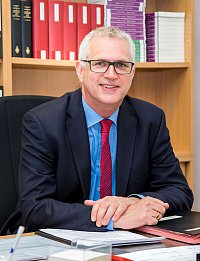
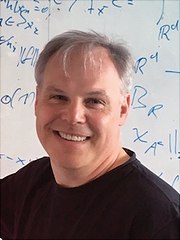
Karin Mora is a postdoctoral researcher at Leipzig University , affiliated with the Faculty of Physics and Earth System Sciences . She leads the DeepFeatures project funded by the European Space Agency and contributes to the proposed Breathing Nature excellence cluster, combining biology, economics, meteorology, and physics to study biodiversity-climate-human interactions. Research Focus : Phenological Rhythms in Ecosystems AI & Mathematical Modeling of Climate Impacts Earth System Data from Satellites and Citizen Science Scientific Contributions : DeepExtremeCubes methodology for climate extremes SpectralIndices.Jl software for remote sensing Plant Trait Coordination and Forest Monitoring Innovations Awards : Forschungspreis (Paderborn University, 2015) Technion Postdoctoral Scholarship (2014-15) Funding for EWM Summer School Course (2013) Education : PhD in Applied Mathematics (University of Bath, 2014) Master of Mathematics (University of Reading, 2008) Outreach : MDR Wissen Radio Contributions Royal Society Summer Science Exhibition Co-organizer of EuropaBON Stakeholder Dashboard
Ying-Tung Lin is an Associate Professor at the Institute of Philosophy of Mind and Cognition , National Yang Ming Chiao Tung University (NYCU), Taipei, Taiwan. His research sits at the intersection of philosophy of mind, cognitive science, and AI ethics, with a focus on self-experience in mental simulation, algorithmic bias, and authenticity in memory interventions. Education: PhD in Philosophy from Johannes Gutenberg-Universität Mainz (2014). Research interests include: Philosophy of Mind & Consciousness Cognitive Enhancement via Neurotechnology Algorithmic Fairness in AI Episodic Memory & Bodily Self-Identification Observer Perspective in Mental Simulation Autobiographical Self-Modeling His publication trends show interdisciplinary engagement between 2014-2024, covering topics like dream epistemology , AI governance frameworks , and neuroethical policy . Key methodologies involve conceptual analysis combined with empirical data from cognitive studies. Advising information is not explicitly available in provided texts. Grants or funding sources aren't mentioned in the scraped content. Dr. Lin participates in cross-disciplinary initiatives like the Philosophy, Intelligence, Brain, and Mind Program at NYCU, and contributes to academic events including the International Society for the Philosophy of the Sciences of the Mind conference (2025).
Leonardo Banh is a Researcher at the University of Duisburg-Essen within the Faculty of Computer Science and its Chair of Business Information Systems and Software Engineering . M.Sc. in Business Information Systems (University of Duisburg-Essen, 2022) B.Sc. in Business Information Systems (University of Duisburg-Essen, 2020) Semester abroad at Instituto Superior Técnico, Lisbon (2021) His research focuses on Generative AI and its socio-technical implications, particularly in Machine Learning and Deep Learning applications. He explores intersections with NeuroIS , Smart Tourism , and E-commerce Ecosystems , emphasizing sustainability and digital transformation. Recent publications analyze Generative AI in Software Engineering , AI in Music Sentiment Analysis , and AI-Based Sign Language Translation . His work often involves design science research and grounded theory frameworks. Best Paper in Track Award (ICIS 2024) Nominated for Best Paper Award (ICIS 2024) Outstanding Reviewer (ICIS 2024) As advisor, he supervises theses on topics including AI-Based Mental Health Chatbots , Generative AI in HR , and Smart Tourism Applications . He also contributes to the Institute of Computer Science and Information Systems and serves on appointment/habilitation committees.
Gero Strobel is an Assistant Professor at the Chair of Business Informatics and Software Engineering, Faculty of Computer Science, University of Duisburg-Essen. His research focuses on intelligent information systems, generative AI, and IoT-enabled smart services with applications in sustainability, healthcare, and industrial transformation. Academic Roles: Assistant Professor (2022–present), Postdoctoral Researcher (2021), Research Assistant (2017–2021) Key Research Areas: Generative AI, Smart Service Systems, E-commerce Ecosystems, Digital Health, Sustainable Business Models His work develops design principles for VR training systems, AI healthcare communication, and smart agriculture architectures. He leads the SOFTEC IoT Innovation Lab and contributes to data ecosystems research as guest editor of Electronic Markets (2024 special issue). Scientific Recognition: 2021 Science Prize of Sparkasse Essen 2021 University of Duisburg-Essen Dissertation Prize Best Paper in Track Award at ICIS 2021 Strobel co-edits the Electronic Markets special issue on data ecosystems (2024) and serves as track chair for data ecosystems at HICSS and AMCIS. His research combines design science methodology with empirical studies across 135+ e-commerce initiatives, 100+ AI startup analyses, and 183 IoT architectures.
Prof. Dr. Dirk Evers is a Professor of Systematic Theology/Dogmatics at the Theological Faculty of Martin Luther University Halle-Wittenberg since 2010. He previously served as Dean of the Theological Faculty from 2016-2018 and as President of the European Society for the Study of Science and Theology (ESSSAT) from 2014-2022. He also holds a research associate position at the University of Pretoria, South Africa. Evers is Managing Editor of the journal "Philosophy, Theology and the Sciences" and has edited numerous book series on science and religion. His educational background includes theological studies in Münster, Tübingen, and Madurai (South India) from 1983-1989, followed by pastoral training and service in the Württemberg Regional Church. He earned his doctorate in 1999 (awarded the ESSSAT prize in 2002) and completed his habilitation in Systematic Theology in 2005. Prof. Evers' research focuses on Protestant Dogmatics, the relationship between Theology and Natural Sciences (particularly cosmology, evolution theory, brain research, and physics), Philosophy of Religion (with emphasis on Leibniz, Kant, analytic philosophy, and modal logic), and Hermeneutical Theology. His work bridges theological inquiry with scientific understanding, exploring how contemporary scientific discoveries interact with traditional theological concepts. He has made significant contributions to discussions on creation theology, human identity, and the dialogue between science and religion. His recent publications demonstrate a consistent engagement with the interface of theology and science, addressing topics from artificial intelligence and dataism to resurrection theology and human identity. Evers approaches these subjects with a hermeneutical perspective that values both scientific rigor and theological depth. Among his notable awards are the ESSSAT prize in 2002 and the Bad Herrenalber Academy Prize in 2009. He is also active in numerous academic societies including the Wissenschaftliche Gesellschaft für Theologie (serving as Chair of the Systematic Theology section from 2021-2024), the International Society for Science & Religion, and the Gottfried Wilhelm Leibniz Society. Prof. Evers serves as a liaison professor for the German Academic Scholarship Foundation and is a deputy member of the Ethics Commission of Saxony-Anhalt. His editorial work includes serving on the boards of "Zygon: Journal of Religion & Science" and the book series "Studien zur Interdisziplinären Anthropologie."
John-Dylan Haynes is a Professor of Theory and Analysis of Large Scale Brain Signals at Charité – Universitätsmedizin Berlin, leading the Berlin Center for Advanced Neuroimaging. His academic journey includes a PhD in Biology (2003, Bremen University) and a Diploma in Psychology (1997, Bremen University). His research focuses on decoding neural mechanisms underlying decision-making, attention, and conscious perception using advanced neuroimaging techniques. Professional highlights include roles as Head of the independent research group “Attention and Awareness” at the Max Planck Institute for Human Cognitive and Brain Sciences (Leipzig, 2005–2010), and postdoctoral positions at University College London and Plymouth University. He is an Editorial Board Member of NeuroImage and organizer of major conferences in computational neuroscience and cognitive science. Haynes’ work bridges cognitive neuroscience with neuroimaging, emphasizing multivariate decoding methods to interpret large-scale brain signals. His recent publications explore rule representations in prefrontal cortex, saliency processing, and reward anticipation mechanisms. He leads interdisciplinary initiatives to advance neuroimaging technologies and their applications in understanding human cognition.
Prof. Dr. med. Andreas K. Engel serves as Director of the Institute of Neurophysiology and Pathophysiology at the Center for Experimental Medicine, University Medical Center Hamburg-Eppendorf (UKE). His research focuses on neural oscillations, brain dynamics, and neurophysiological mechanisms in health and disease, particularly employing EEG, MEG, and brain stimulation techniques like tACS to study cognitive processes, motor control, and multisensory integration. Current affiliation: Institute of Neurophysiology and Pathophysiology, UKE Academic rank: Professor Email: ak.engel@uke.de Key research areas include: Neural oscillations and synchronization Neurodegenerative disease mechanisms (Parkinson's) Brain-computer interface development Neural coupling during social interactions Cortical network dynamics Neuromodulation techniques Recent publications demonstrate expertise in analyzing multisensory integration, phase-amplitude coupling, and applying stimulation methods to modulate cortical activity patterns. His work bridges computational neuroscience with clinical applications in movement disorders and cognitive impairments.
Stefan Ehrlich is a Researcher at the Institute for Cognitive Systems (ICS) at the Technical University of Munich (TUM). His work focuses on neuroengineering, particularly non-invasive brain-computer interfaces (BCI) for human-robot interaction (HRI), neuroadaptive systems, and EEG-based neurotechnology. He collaborates closely with Prof. Gordon Cheng and contributes to projects involving error-related potentials (ErrPs), affective neurofeedback, and neuroprosthetics. His research integrates cognitive neuroscience principles with robotics to enhance human-machine collaboration and adaptive systems. Key research areas include: Development of passive BCI systems for real-time robotic adaptation Design of co-adaptive human-agent interfaces using neural signals EEG-based assessment of exoskeleton and humanoid robot performance Neuroimaging techniques for music-brain interactions His publications emphasize interdisciplinary approaches, combining neuromorphic engineering, machine learning, and social robotics. Ongoing work explores low-power neuromorphic hardware for EEG decoding and neurophysiological mechanisms underlying human-robot trust dynamics. Collaborations involve institutions like the Bernstein Center for Computational Neuroscience and industry partners in wearable robotics. Labs/Teams: Active contributor to the EEG Laboratory and projects like the Soft Wearable Robotics initiative. Engages in international conferences (IROS, IEEE EMBC) and co-organizes workshops on HRI and neurotechnology.
Dr. Seung-Goo Kim is a Postdoctoral Researcher at the Max Planck Institute for Empirical Aesthetics (since 2021), working under Prof. Daniela Sammler. His career spans postdoctoral roles at Duke University, University of Cambridge, and MPI for Human Cognitive and Brain Sciences, with a PhD in Psychology from University of Leipzig (2017, summa cum laude). He holds graduate degrees in Cognitive Science and dual BA in Economics/Psychology, with early training in Musical Composition. PhD: University of Leipzig & MPI for Human Cognitive and Brain Sciences Postdoc: Duke University (USA), University of Cambridge (UK) Current affiliation: Max Planck Institute for Empirical Aesthetics, Frankfurt/Main His research focuses on the neural encoding of music and speech , particularly: shared mechanisms of musical emotion and prosody; intersubject variability in musical reward sensitivity; temporal structure processing; pitch perception correlates; and applications in clinical neuroscience. Key methodologies include MEG, fMRI, and computational modeling of auditory systems. Major scientific awards include: Johanna Quandt Young Academy Fellowship (2023) Postdoc Research Grant Award (Duke University, 2021) Summa cum laude PhD (2017) Conference Scholarship (Mariani Foundation, Italy, 2014) Best Poster Presentation Award (Korean Society of Human Brain Mapping, 2010) His work includes collaborations with leading labs in neuroaesthetics , music cognition , and clinical neuroscience , with recent publications analyzing tonal hierarchy, dissonance encoding, and myeloarchitecture of impulsivity. Current projects emphasize computational models of auditory processing and empirical aesthetics.
Prof. Dr. Armin Iske is a Full Professor of Numerical Approximation at the University of Hamburg's Department of Mathematics, within the Faculty of Mathematics, Computer Science and Natural Sciences. He holds a PhD from the University of Göttingen (1994) and habilitation from TU Munich (2002). His research focuses on numerical approximation, kernel-based methods, computational fluid dynamics, and medical imaging. He has held academic positions globally, including visiting roles at ANU (Australia) and the University of Leicester (UK). Research interests include scattered data approximation, adaptive particle methods for flow simulation, and high-dimensional data analysis. He has authored 118+ publications, including works on kernel interpolation, medical imaging reconstruction, and machine learning applications. He serves on editorial boards for journals like Advances in Computational Mathematics and Sampling Theory . His contributions span interdisciplinary projects, such as SFB/TRR 181 on energy transfer in atmosphere and ocean, and collaborations in nanotechnology for brain interfaces. His work bridges theoretical mathematics with practical applications in engineering and biosciences.
Roghayeh Barmaki is a researcher with extensive publications in virtual reality, augmented reality, and educational technology. Her work spans rehabilitation systems, autism therapy, and neuroimaging analysis using fNIRS. She collaborates with institutions including Georgia Institute of Technology and University of Florida. Key Collaborators : Anjana Bhat, Jicheng Li, Shayla Sharmin, Vuthea Chheang Research Themes : Wearable sensors, LSL framework, movement synchrony, multimodal learning analytics Research Interests She focuses on immersive technologies for education and therapy, with expertise in: Functional Near-Infrared Spectroscopy (fNIRS) for cognitive engagement Wearable sensor integration in rehabilitation Gender perspectives in AR/VR education Multimodal affect analysis for autism Privacy-preserving behavioral analytics 3D visualization for anatomy training Publication Trends Recent work emphasizes fNIRS applications in gaming environments and hybrid deep learning models for cognitive analysis. Earlier studies focused on gesture recognition, movement synchrony estimation, and autism intervention datasets. Impactful Projects She developed the MMASD dataset for autism research and contributed to VR therapy systems. Her collaborations include: Georgia Tech's Autism Technology Research University of Florida's TeachLivE virtual classroom Germany's AIxVR conference contributions International collaborations on sensor systems
Ali Hassan is a researcher affiliated with the National University of Sciences and Technology (NUST), School of Electrical Engineering and Computer Science, Department of Computer and Software Engineering. His work spans multiple domains in computer science, engineering, and applied mathematics, focusing on areas such as machine learning, IoT, energy systems, and medical informatics. His research explores: Reinforcement learning applications for battlefield information systems IoT antenna design and performance evaluation Optimization of second-life battery systems in electric vehicles Transformers for real-time vehicle collision avoidance Image hashing techniques using visual attention models Neural network-based phasor estimation for power grids Biomedical sensor systems for non-invasive health monitoring Mathematical modeling of viral dynamics Recent publications demonstrate his emphasis on interdisciplinary approaches combining AI, signal processing, and sustainability. He has collaborated with institutions across Pakistan, France, Saudi Arabia, and the USA, with a focus on practical implementations in cybersecurity, energy optimization, and healthcare technology.
Dr. Oxana Eschenko is a Group Leader at the Max Planck Institute for Biological Cybernetics in Tübingen, Germany, affiliated with the Department of Computational Neuroscience. She was previously associated with the Department of Physiology of Cognitive Processes, indicating a research trajectory focused on brain function and cognitive systems. Her research interests lie primarily in computational neuroscience and the physiology of cognitive processes, with likely emphases on neural mechanisms of learning, memory, and information processing in the brain. These interests are inferred from her departmental affiliations and the scientific focus of the institute. The available data does not include any publications, preventing analysis of research trends or thematic evolution. Similarly, no information on teaching, supervision, or collaborative networks is provided in the current text. No scientific awards or honors are mentioned in the provided content. There is no information available regarding student mentorship, grant funding, or leadership in educational programs. Dr. Eschenko leads an independent research group, suggesting involvement in guiding postdoctoral researchers and doctoral students, though specific names are not listed. She is part of a leading neuroscience research institute with access to advanced imaging, computational, and technical support facilities, suggesting her work benefits from interdisciplinary collaboration and state-of-the-art infrastructure.
Prof. Dr.-Ing. Gerd-Jürgen Giefing serves as Professor of Information and Communication Technology at Georg Agricola University of Applied Sciences since 2003, concurrently leading the Electrical and Information Engineering Master's Program, Digital Signal Processing Laboratory, and serving as Deputy Head of the Software Engineering Laboratory. His academic foundation includes: Electrical engineering studies with data processing focus at University of Karlsruhe and Technical University of Munich (1983-1988) Doctorate in neuroinformatics and technical vision from Ruhr University Bochum (1988-1993) Research spans cognitive robotics with emphasis on behavior-oriented scene analysis and distributed communication frameworks, augmented reality systems, and traffic telematics applications including driver face recognition. His foundational work in biologically inspired computer vision established video-based facial capture systems using multiprocessor architectures, later evolving into cognitive robotics frameworks. Current investigations focus on brain-computer interfaces and nomadic point cloud calibration for mobile robotics. Publication trends reveal a progression from neurobiological vision models (1990s) to cognitive robotics infrastructure (2010s), consistently addressing real-world applications in automation and human-machine interaction through IEEE conference proceedings. Key recognitions: Innovation Award '94 from Bochum Technology Transfer Association European Information Technology Award 1996 from European Council for Applied Sciences and Engineering As IEEE Systems Man and Cybernetics Society member, he maintains active research leadership without documented grant specifics. His laboratory direction fosters applied research in signal processing and software engineering for cognitive systems development.
Dr. Hongwei Tan serves as Group Leader at the Department of Molecular Electronics, Max Planck Institute for Polymer Research (MPIP) in Mainz since November 2024. Previously, he was Research Fellow (2022-2024) and Postdoctoral Fellow (2017-2022) at Aalto University's Department of Applied Physics, following postdoctoral work at the University of Massachusetts Amherst on neurointerface devices. His academic credentials include: Bachelor of Physics, Nankai University (2011) Doctorate in Materials Physics and Chemistry, University of Chinese Academy of Sciences (2016), focusing on neuromorphic photomemristors Tan's research pioneers neuromorphic biointerfaces—integrating brain-inspired electronics with biological systems to enable energy-efficient computation and seamless biointeraction. His work targets transformative applications in brain-machine interfaces, prosthetics, and diagnostics through interdisciplinary convergence of neuroscience, materials science, and engineering. His publication portfolio (2015-2024) reveals a clear evolution from foundational optoelectronic memristor research toward complex neuromorphic systems for sensory processing. Key thematic trajectories include photomemristor-based vision systems, tactile coding with spiking nerves, and nanoionic human-machine interfaces, demonstrating consistent innovation in bioinspired hardware. As MPIP Group Leader, Tan directs research strategy and team mentorship within his neuromorphic electronics program, though specific advisees and grant details remain unlisted in available materials. His laboratory focuses on developing integrated neuromorphic systems—from novel materials and devices to algorithms—that facilitate bidirectional communication between electronic and biological neural networks for next-generation neurotechnologies.