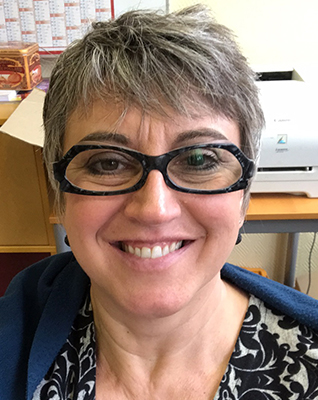
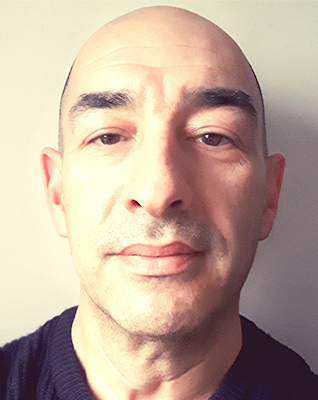
Si Yuan Zhao is a multidisciplinary researcher with significant contributions to Geology , Environmental Science , Materials Science , and Remote Sensing . Active in high-impact collaborations, he has published in journals like Applied Catalysis B , Nature Electronics , and Nature Astronomy . Key Affiliations: Implied association with institutions conducting lunar exploration (e.g., Chinese Academy of Sciences) and environmental geoscience research. Research Themes: His work bridges geological processes (landslide susceptibility, lunar volcanism) with advanced materials for energy storage (hydrogels, hybrid batteries) and environmental remediation (photocatalytic degradation, water treatment composites). He applies computational methods like transformers for SAR image analysis and investigates interfacial charge-transfer mechanisms in aqueous zinc batteries. Scientific Awards: No explicitly mentioned honors. Advising: No student names listed in the provided text.
Thomas Jacquet is a postdoctoral researcher at the Université de Bourgogne, affiliated with INSERM U1093 and the Institut Marey. He holds a PhD in STAPS (Sports Science) from the same university (2017-2021), focusing on mental fatigue's electrophysiological markers and compensation strategies under Prof. Bénédicte Poulin-Charronnat. His research combines neuroscience, motor control, and electroencephalography (EEG) to explore mental fatigue's impact on physical and cognitive performance. He previously served as an Attaché Temporaire d’Enseignement et de Recherche (ATER) in Dijon (2020-2021), teaching physiology, neuroscience, and research methodologies at undergraduate and graduate levels in STAPS programs. His work spans topics like mental fatigue mitigation through physical activity/music, smartphone-induced cognitive impairments, and neural mechanisms of motor imagery. Major findings include EEG-based markers of mental fatigue and the role of motor cortex activity in effort perception. His postdoctoral research (ANR Mentalist project under Prof. Romuald Lepers) continues exploring fatigue's electrophysiological underpinnings and recovery strategies. Jacquet's lab collaborations include INSERM and the Institut Marey, focusing on translational research in sports science and neurophysiology. Publications highlight interdisciplinary approaches, linking neuroscience with clinical and applied contexts. Key areas include: (1) EEG correlates of mental fatigue and motor performance, (2) acute smartphone use's cognitive impacts, and (3) efficacy of music/physical activity in fatigue countermeasures. His work bridges basic research with real-world applications in sports, healthcare, and technology design. Current projects emphasize automated vehicle safety for disabled users and long-term mental fatigue effects. He collaborates internationally, with recent papers in PLoS One , Neuropsychologia , and Frontiers in Psychology . Teaching responsibilities include L1-L3 neuroscience, biostatistics, and research instrumentation in STAPS programs.
Maureen Clerc is the Director of the Inria center at Université Côte d'Azur, appointed in November 2019. She holds dual roles as a research director at Inria and chief engineer at the Ponts et Chaussées Department. Her expertise spans signal processing, bioelectromagnetism, and brain-computer interfaces, with a focus on clinical applications and neuroscience modeling. She completed her engineering degree at École Polytechnique (1993) and earned a doctorate in applied mathematics there (1999), followed by a research supervision qualification from the University of Nice-Sophia Antipolis (2007). Contributions: Co-founded the NeuroMod thematic institute for neuroscience and cognitive modeling, and led the Athena and Odyssee project teams. Past Roles: Deputy Scientific Delegate at Inria (2014–2018), instrumental in Inria-Université Côte d'Azur partnerships. Awards: 2014 Pierre Faurre Prize for scientific contributions.
Thomas Doublet is a Lecturer in Neuroscience at the Faculty of Social and Human Sciences (SHS) at Université Catholique de l'Ouest (UCO Angers). He holds a Doctorate in Neuroscience from Aix-Marseille University (2013). His research focuses on epilepsy mechanisms, the impact of physical activity on neurological health, and spatial memory processes. He manages internships for first-year psychology students and collaborates with the APCoSS research team. His work bridges neuroscience and biomedical engineering, with a focus on developing neural interfaces (e.g., organic transistors for in vivo recordings) and studying epilepsy-related cognitive deficits. Key contributions include investigations into observational learning deficits in experimental epilepsy and the design of biocompatible neural probes. Publications span topics like glucose sensor technology, brain activity monitoring, and the role of physical activity in improving epilepsy patients' quality of life. He has maintained an active publication record since 2011, with recent work addressing translational applications of neuroscience research.
Dr. Alain Destexhe serves as Research Director (DRCE) and Deputy Director of the NeuroPSI Institute (UMR9197) at CNRS, University of Paris-Saclay, and CEA Saclay Campus in France. As Editor-in-Chief of the Journal of Computational Neuroscience , he leads one of the premier publications in his field. His research program spans multiple international collaborations, with funding from major agencies including the ANR, EC, MRC, NIH, and HFSP. Destexhe's research lies at the interface between physics (dynamical systems) and neuroscience (electrophysiology), focusing on the stochastic activity of the cerebral cortex and its consequences on integrative properties and neuronal coding. His work explores collective dynamics of neuronal networks including oscillations and chaotic states, along with the development of computational methods for electrophysiology such as conductance extraction and analysis of multiple electrode recordings. His laboratory maintains an extensive website ( neurocompute.cnrs.fr ) featuring publications, simulations, and 3D morphological reconstructions. The recent publications reveal a strong emphasis on multiscale approaches connecting molecular mechanisms to large-scale brain activity, with particular focus on thalamocortical systems, slow-wave sleep dynamics, consciousness signatures, and the development of advanced neural network models. His work spans from single neuron dynamics to whole-brain modeling, demonstrating a consistent commitment to bridging different levels of neural organization. Destexhe actively participates in the organization of international conferences and summer schools, contributing to the training of the next generation of computational neuroscientists. His laboratory website provides extensive educational resources including simulation demos, computer-generated animations, and NEURON programs that reproduce figures from published articles.
Dr. Saïd Moussaoui is a Professor in the Department of Automation and Robotics at École Centrale de Nantes , affiliated with the Nantes Digital Sciences Laboratory (LS2N) and the Signal, Image and Sound research team. His work spans machine learning, medical imaging, and signal processing, with a focus on EEG-based mental workload classification, PET reconstruction, and 4D Flow MRI optimization. Research Areas : Signal Processing, Medical Imaging, Machine Learning, Neuroscience, Biomedical Engineering Labs/Teams : LS2N Laboratory, Signal, Image and Sound Team Recent publications highlight trends in graph learning for EEG analysis, deep learning regularization in PET imaging, and super-resolution techniques in cardiovascular MRI. His research integrates physics-based models with data-driven approaches for applications in healthcare and industrial predictive maintenance. The LS2N laboratory provides a multidisciplinary environment for his work, combining advanced computational methods with real-world applications in biomedical engineering and robotics. Collaborations with institutions like IEEE and projects on digital twins underscore his technical leadership in applied research.
Franck Amadieu is a Professor at the Cognition, Languages, Ergonomics (CLLE) research unit of the University of Toulouse - Jean Jaurès . His work bridges cognitive psychology and human-computer interaction, focusing on how digital technologies (hypertexts, animations, tablets) influence learning processes and information retrieval. He examines cognitive load, prior knowledge effects, and user experience in multimedia learning environments. Research Trends: His recent publications analyze adolescents' evaluation of online video sources, disorientation in hypermedia navigation, and the acceptance of brain-computer interfaces (BCIs) for stroke rehabilitation. Key themes include critical thinking development, technology acceptance models, and cognitive resource allocation during digital learning. Collaborative Networks: He collaborates with institutions like ENAC (Aeronautical Computer Human Interaction) , LII (Interactive Computer Team) , and ACHIL . His interdisciplinary approach connects psychology, education, and neuroergonomics to optimize technology design for diverse populations.
Julie Lemarié is a Professor of cognitive psychology and ergonomics at the University of Toulouse's UFR of Psychology and the Cognition, Languages, Ergonomics (CLLE) laboratory. Her academic career spans cognitive psychology research with a focus on document comprehension, multimedia learning, and accessibility for visually impaired individuals. Her research interests focus on three main areas: (1) mental processes involved in understanding and learning from documents, both multimedia and non-multimedia; (2) accessibility of digital documents for people with visual impairments; and (3) mental processes involved in choosing answers when taking multiple choice tests and implications for their design. Her work falls within cognitive psychology and cognitive ergonomics, with both theoretical scope (enrichment of models of understanding and learning) and applied scope (design of learning materials, technological devices, and assistive technologies). Professor Lemarié's recent publications demonstrate strong trends in multimedia learning, particularly examining how signaling in educational animations affects learners with different prior knowledge levels. She also maintains an active research program in multiple-choice testing methodology and digital accessibility for visually impaired students. Her work consistently applies cognitive psychology principles to practical educational and accessibility challenges. She currently supervises multiple doctoral students working on topics related to cognitive ergonomics, visual impairment, and language learning. Her pedagogical responsibilities include coordinating the Master's degree programs at the UFR of Psychology and co-coordinating the ECIT-FH Master's track in Cognitive Ergonomics, Technological Innovations and Human Factors. Professor Lemarié serves as the reference person for the Toulouse Mind & Brain Institute for the CLLE laboratory and is a member of the CNRS Pluridisciplinary Thematic Network on Education. She has developed research collaborations across multiple disciplines, reflecting her commitment to multidisciplinary approaches to cognitive psychology problems.
Evgeny Parfenov is a Post-doctoral Fellow at the LNC2 Laboratory in Paris, France. His work focuses on the intersection of subjectivity, brain function, and visceral processes. Research Interests His research spans neuroscience, cognitive science, and psychophysiology, with a particular emphasis on understanding the neural and physiological mechanisms underlying subjective experiences. Laboratory Affiliation Laboratory: LNC2 Team: Subjectivity, Brain and Viscera Location: 29 rue d'Ulm, 75005 Paris, France
Fabien Lotte is a Senior Researcher (Directeur de Recherche DR2) at Inria, affiliated with the University of Bordeaux. He leads the Potioc team, focusing on Brain-Computer Interfaces (BCI) and related technologies. Research Interests: Brain-Computer Interfaces (BCI) for motor imagery and neurofeedback Machine learning on Riemannian manifolds for EEG analysis Reproducibility in neural engineering research Passive BCI for cognitive/affective state estimation Neuroergonomics and adaptive systems Scientific Contributions: His recent work explores Riemannian geometry for BCI, including feature fusion, visualization techniques, and performance prediction via median nerve stimulation. He has developed open-source tools like BioPyC and contributed to large datasets for BCI reproducibility. Scientific Awards: 2023 : Nature Mentorship Award (Mid-Career Category) 2023 : Lovelace-Babbage Prize from French Academy of Science Advising and Collaborations: Supervised multiple PhD students (Léa Pillette, Jelena Mladenovic, David Trocellier) and postdocs. Leads ANR projects (STIM-BCI, BCI4IA) and ERC-funded initiatives (BrainConquest, SPEARS).
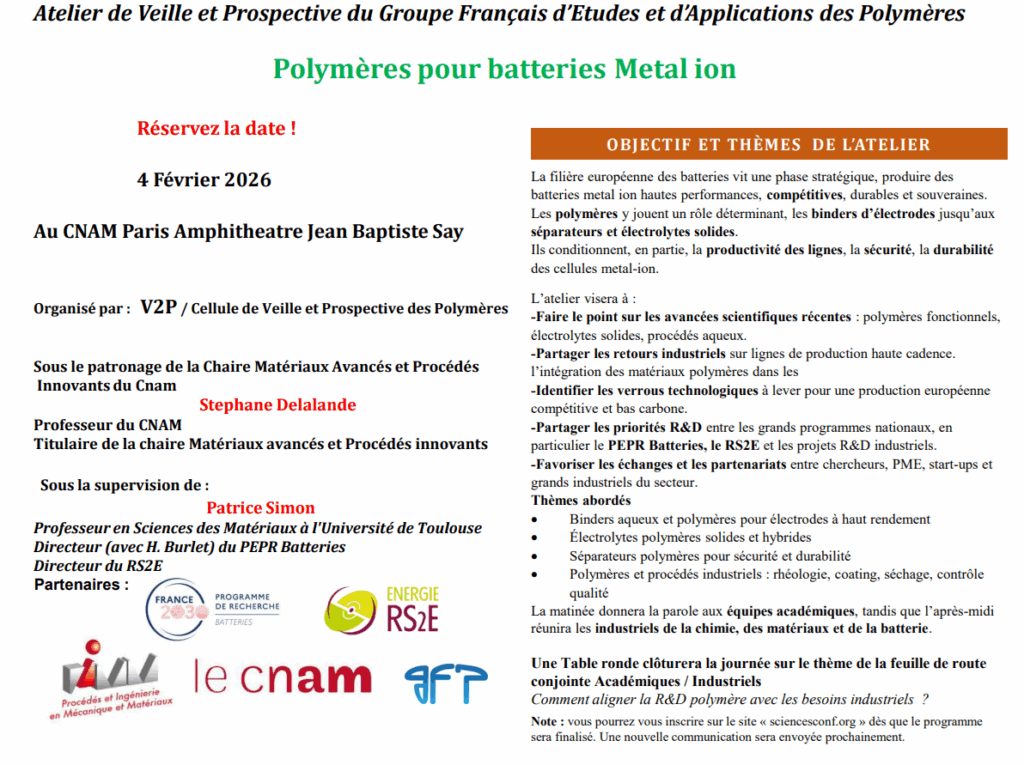
Guillaume Miquelard-Garnier is a Professor at the Conservatoire National des Arts et Métiers (CNAM), where he leads the Polymers and Composites (P&C) team at the PIMM Laboratory. His affiliations include membership in the CNRS National Committee (Soft Matter Section) and editorial responsibilities for Materials Today Communications . He previously served as a Maître de Conférences at CNAM (2010–2023) and holds expertise roles with MESRI, ANR, and FNR Luxembourg. His research explores polymer physics, emphasizing surface/interfacial phenomena in composites, blends, and elastomers. Key themes include: Structure-property relationships in multiphase polymer systems Dewetting dynamics and rheology of nanolayer films Sustainable materials design (e.g., 3D-printed composites, recycled polymers) Interphase characterization in thermoplastic composites Recent publications (2022–2024) reveal a strong focus on advanced manufacturing techniques like multimaterial 3D printing and nanolayer processing. Trends include sustainable material innovation (e.g., coal-reinforced polymers), smart actuators, and environmental health impacts of microplastics. Experimental methods combine rheology, microscopy, and computational modeling. Scientific awards include the Joint SFP/GFP Prize (2020) for contributions to polymer physics. He actively mentors PhD students and postdocs, with 12+ alumni in industrial R&D roles. His lab engages in ANR-funded projects and industrial partnerships (Renault, Safran). The P&C team at PIMM Laboratory specializes in polymer processing, interfacial science, and composite optimization, supported by collaborations with global institutions.
Fabrice Lamarche serves as an Associate Professor at Université de Rennes 1 within the ESIR School of Engineering, while maintaining dual affiliation with the MimeTIC research team at IRISA / INRIA Rennes. His academic career spans uninterrupted service since 2004, evolving from Assistant Professor roles at IFSIC (2003-2009) to current positions at ESIR. As co-founder of Golaem (2009), he bridges academic research with commercial application in crowd simulation technology. His institutional journey includes sequential membership in SIAMES (2004-2006), Bunraku (2007-2011), and MimeTIC (2011-present) research teams at INRIA. Lamarche earned his PhD in Computer Sciences from Université de Rennes 1 in 2003 with thesis work on virtual human autonomy. His educational foundation includes a Master of Computer Sciences specializing in Computer Graphics and AI (1999-2000), a Master of Engineering from INSA de Rennes (1997-2000), and a Technical degree from IUT de Limoges (1995-1997). His research program centers on virtual human behavior modeling with emphasis on decision-making systems, path planning under environmental constraints, and crowd simulation architectures. Key innovations include TopoPlan for human-scale navigation and frameworks integrating high-level task scheduling with low-level motion planning. This work addresses fundamental challenges in creating autonomous virtual characters capable of navigating complex 3D environments while exhibiting realistic behaviors, with applications spanning virtual reality, gaming, and simulation-based training systems. Publication analysis reveals consistent output from 2001-2014, evolving from foundational behavioral animation (2001-2004) to sophisticated crowd simulation systems (2013-2014). A notable trajectory shows increasing integration of cognitive modeling with motion planning, alongside exploration of Brain-Computer Interfaces for virtual navigation. Recent work demonstrates particular strength in semantic decomposition of urban environments and time-space constrained task scheduling. His scientific contributions have earned significant recognition: Rennes city medal (2009) for research excellence Second prize at Deutsch Telekom Awards (FMX 2008) for TopoPlan/MKM integration As an active researcher and educator, Lamarche advises students through Université de Rennes 1 while leveraging INRIA resources and Golaem industry partnerships. His publication record indicates sustained grant funding, particularly through INRIA channels, with collaborative projects extending to neuroscience applications via Brain-Computer Interface research. The MimeTIC team affiliation provides infrastructure for multimodal interaction research in complex virtual environments. Lamarche's laboratory work through MimeTIC focuses on developing practical implementations of virtual human autonomy systems. His research group maintains strong industry connections via Golaem, which commercializes crowd simulation technology. Current efforts emphasize semantic understanding of virtual urban spaces and robust path planning under dynamic constraints, building on foundational work in topological navigation and behavioral decision systems.
Marie-Hélène BEKAERT serves as a Lecturer at ESPRIT and holds an elected position on the unit council, demonstrating active involvement in academic governance. She is based in office S4.06 at the Scientific City campus and affiliated with the BCI research team. Her research focuses on interdisciplinary work at the intersection of: Brain-Computer Interface systems Neuroscience applications Biomedical engineering solutions Computational neuroscience Through her role in the BCI team, she contributes to advancing neural signal processing and assistive technologies. Her academic service extends beyond teaching to institutional leadership via the unit council, reflecting commitment to both research innovation and academic community development.
José Rouillard is a Lecturer-Researcher in Computer Science (section 27) at Université de Lille, affiliated with the CRIStAL laboratory (Centre de Recherche en Informatique, Signal et Automatique de Lille) where he works in the Brain-Computer Interface (BCI) research team. His academic position combines teaching responsibilities with active research in human-computer interaction, particularly focusing on novel interface technologies and assistive applications. Dr. Rouillard's primary research interests center around Brain-Computer Interfaces with particular expertise in Steady-State Somatosensory-Evoked Potentials (SSSEP). His work explores multimodal interaction techniques, virtual reality integration with BCI systems, and applications for individuals with motor disabilities such as Duchenne muscular dystrophy. Recent publications (2023-2024) demonstrate continued innovation in BCI technology, including Wizard of Oz studies on user perception, advanced SSSEP recording techniques with cEEGrid systems, and multimodal cobot interaction frameworks using MQTT protocol. His research bridges theoretical neuroscience with practical applications for assistive technologies. As an educator, Dr. Rouillard has created one of the most comprehensive App Inventor 2 teaching resources available, with 76 detailed projects covering the full spectrum of mobile application development. His course materials progress from basic applications to advanced implementations involving Bluetooth communication with Arduino, Firebase database usage, and AI APIs including OpenAI's ChatGPT and DALL-E. His teaching spans multiple academic years, with documented student projects from 2013 through 2023 across various Master's programs including MMD IAE, MIAGE, and e-Services. Supervised PhD thesis: "Hybrid brain-machine interface to overcome disability caused by Duchenne muscular dystrophy" (Alban Dupres, 2016) Supervised PhD thesis: "Filtrage somesthésique pour des interfaces cerveau-ordinateur utilisant des stimulations vibro-tactiles" (Jimmy Petit, 2022) Dr. Rouillard maintains a strong educational presence through his extensive online resources, including YouTube video tutorials, NextCloud file sharing for course materials, and detailed project guides. His student projects demonstrate practical applications of mobile development across diverse domains including health monitoring, gaming, social networking, and educational tools. The breadth of his educational impact is evident in the hundreds of student applications documented from 2013-2023, showcasing his commitment to practical, hands-on learning in computer science education.