Sajjad Arzemanzadeh serves as a Casual Teaching staff member in the School of Engineering at The University of Western Australia, holding a multi-disciplinary Doctor of Philosophy degree with active research contributions in biomechanics and computational engineering. His educational background includes: Doctor of Philosophy (Multi-Disciplinary) Dr. Arzemanzadeh's research centers on the biomechanical behavior of brain tissue and brain-skull interfaces, employing advanced computational methods to investigate mechanical failure under diverse loading conditions. His work spans: Brain Tissue Engineering Computational Biomechanics Finite Element Simulation Mechanical Failure Analysis Sliding Contact Mechanics His 2025 publication analyzes tension and compression properties of brain-skull interfaces through finite element modeling, advancing computational biomechanics for medical applications in traumatic brain injury research and medical device development.
Mahesh Suryawanshi is a Senior Lecturer and ARC DECRA Fellow at the School of Photovoltaic and Renewable Energy Engineering (SPREE), UNSW Sydney. He holds a Ph.D. in Physics (Materials Science) from Shivaji University, India (2015), and completed postdoctoral work at Chonnam National University, South Korea (2015-2019) under the Brain Korea (BK)-21 Fellowship. Research Interests: Development of earth-abundant nanocrystals/quantum dots for solar energy conversion, surface ligand engineering, solution-processed thin films for photovoltaics and water splitting, and electrocatalytic systems for hydrogen production. His work emphasizes scalable synthesis methods and in-situ operando characterization. Grants & Awards: ARC DECRA Fellowship (2021-2024), Early Career Researcher Award (European Commission, 2019-2021), and multiple accolades including the Key Scientific Article Award (REGI, Canada) and Best Presentation Award at AFORE 2018. Scientific Awards: ARC DECRA Fellowship Early Career Researcher Award Best Presentation Award (AFORE 2018) Key Scientific Article Award (REGI) Supervision: Mentors HDR students including Xinyao Guo and Yiming Xia. Established the Multifunctional NanoMaterials and Devices subgroup at SPREE, fostering international collaborations. Labs & Teams: Affiliated with SPREE at UNSW, previously worked with Prof. Jin Hyeok Kim at Chonnam National University and Prof. Xiaojing Hao/Martin Green at UNSW. Focuses on scalable nanocrystal synthesis and device integration.
Dr. David Tsai is a Senior Lecturer at the University of New South Wales (UNSW), jointly appointed between Biomedical Engineering and Electrical Engineering. He leads the Biomedical Microsystems Lab , focusing on miniature microelectronic devices for brain-machine interfaces and subcutaneous biosensing. His research has been continuously funded by the NHMRC since 2013, including an ongoing Ideas grant for soft brain-machine interfaces. He has secured >$3.8M in total funding, with support from the Kavli Foundation and ARC Linkage Infrastructure Grants . His work has appeared in Nature Communications , Nature Nanotechnology , and IEEE Transactions on Biomedical Circuits and Systems . Scientific Recognition: IEEE EMBC Student Paper Award (twice) IEEE EMBC Best Papers Award NHMRC CJ Martin Fellowship (2013-2017) Kavli Foundation Postdoctoral Fellowship (2012-2013) Education: PhD in Biomedical Engineering (2012), UNSW MBiomedE (2007), UNSW BE (Software, First Class Honours) (2007), UNSW Research Themes: Development of ultra-dense microelectrode arrays for cellular-resolution electrophysiology, computational modeling of retinal responses to electrical stimulation, and standardization of neurotechnology data formats. His lab collaborates with industry partners like LeafLabs LLC , BlackRock Microsystems , and Contactile .
Kerry Hourigan is a Professor in the Department of Mechanical and Aerospace Engineering within the Faculty of Engineering at Monash University. He serves as Director of the Laboratory for Biomedical Engineering (LBE) and Co-Director of the Fluids Laboratory for Aeronautical and Industrial Research (FLAIR), highlighting his leadership in interdisciplinary fluid dynamics research. PhD in Astrophysics, Monash University (1981) BSc in Applied Mathematics and Physics, Monash University (1975) His research centers on fluid dynamics, particularly bluff body flows, flow-induced vibrations, and bio-inspired fluid systems. He combines experimental and computational approaches to study vortex dynamics, fluid-structure interactions, and novel engineering applications in biomedical and aeronautical contexts. His work spans fundamental fluid mechanics to applied engineering solutions. The recent articles highlight a strong trend in using data-driven and machine learning techniques to model and control complex fluid-induced vibrations, especially around bluff and elliptical bodies. His work integrates computational fluid dynamics with physical experiments, often targeting applications in energy harvesting and biomedical devices. The research consistently appears in top-tier journals such as Journal of Fluid Mechanics and Physics of Fluids , reflecting sustained scholarly impact. His primary scientific recognition is as a Fellow of Engineers Australia, awarded in 1996, acknowledging his contributions to engineering science and practice. Lead investigator on multiple ARC and NHMRC-funded projects, including studies on wake transitions, bioreactors for stem cell culture, and intracellular delivery systems. Actively supervises PhD students and collaborates internationally with institutions in France (CNRS), Denmark (Technical University), and the USA (Caltech). He leads the Laboratory for Biomedical Engineering (LBE) and co-directs the Fluids Laboratory for Aeronautical and Industrial Research (FLAIR), both fostering collaborative, cross-disciplinary research in fluid mechanics and biomedical applications.
Shaun Cloherty is a Lecturer in the Department of Biomedical Engineering at RMIT University's School of Engineering. He holds a BE (Hons) in Aerospace Avionics from Queensland University of Technology and a PhD in Biomedical Engineering from the University of New South Wales. His research focuses on systems neuroscience, integrating experimental and computational methods to understand neural coding, information processing in the brain, and the neural basis of perception and behavior. Cloherty has held research positions at UNSW, Australian National University, National Vision Research Institute, and Monash University. His teaching interests include undergraduate courses such as Image Processing, Computer Architecture, and Biomedical Signal Analysis, alongside postgraduate courses in Image Systems Engineering. He is open to supervising Masters and PhD students in areas like neural prosthetics, retinal implantation safety, and motor imagery recovery. Cloherty's research spans topics including retinal prosthesis safety, visual processing in primates, and the application of virtual reality in post-stroke rehabilitation. His work has been published in journals like *Progress in Biomedical Engineering* and *Journal of Neuroscience*. He actively contributes to collaborative projects and maintains a GitHub profile for software development related to mission control training and biomedical systems. His research projects include investigating motor imagery and VR for stroke recovery, developing chronic neural electrode arrays, and optimizing solar cell light-trapping designs. Cloherty's interdisciplinary approach bridges engineering and neuroscience, with a focus on translational applications in health technology.
Professor Thea Blackler (Queensland University of Technology, School of Design) serves as Associate Dean Research for the Faculty of Creative Industries, Education & Social Justice. A world leader in intuitive interaction research, she pioneered empirical work in this field and authored the foundational text Intuitive Interaction: Research and Application . Her interdisciplinary leadership bridges HASS and STEMM disciplines, with applications in health, agriculture, and disaster management. Current leadership projects: DP200100723 on children's active play & DP240102717 on intergenerational interaction Over $9 million in external funding including 4 ARC grants 2137 citations (h-index 26) across design, HCI, health, and interdisciplinary venues Her research portfolio includes design for dementia , TEI (tangible, embodied, embedded interaction) , and co-design methodologies . Recent publications focus on disaster preparedness systems , bee health monitoring , and prosthetic aesthetics . 2018 Ig-nobel Prize winner for research on user manual avoidance, with global media reach exceeding 300 million. Supervises 7 current HDR students and has mentored 20 completions. Key collaborations include a $4.97M MRFF project on brain tumor caregiver support and industry partnerships in agriculture, healthcare, and manufacturing.
Sam Curtis serves as an Academic Casual in the School of Psychological Sciences at Macquarie University, part of the Faculty of Medicine, Health and Human Sciences. Concurrently, she is a Doctor of Philosophy candidate within the same faculty, reflecting dual engagement in teaching and advanced research. Her doctoral studies at Macquarie University represent her primary educational pursuit, though prior academic qualifications remain unspecified in the source material. Research interests center on cognitive psychology, with specialized expertise in selective attention mechanisms, priming paradigms, and Stroop task interference. Complementing this, she investigates neurotechnology applications including portable EEG systems and neurogaming interfaces for real-world neuroscience deployment. Publication trends reveal an interdisciplinary trajectory: cognitive psychology work (e.g., manipulating priming to eliminate Stroop interference) merges with neurotechnology validation (e.g., portable EEG headsets), demonstrating consistent focus on translating laboratory findings to practical applications since 2019. No scientific awards, fellowships, or major honors are documented in the available profile. Information regarding student supervision, grant funding, or research project leadership is absent from the provided materials. Her EEG validation research suggests collaboration within neurotechnology teams, though specific laboratory affiliations or team structures remain unmentioned.
Professor Robert Barry is a distinguished academic in the School of Psychology at the University of Wollongong, Faculty of the Arts, Social Sciences and Humanities, where he has held a Professor position since 2020. His research career spans several decades with significant contributions to psychophysiology and cognitive neuroscience. Barry's research focuses on four major interconnected themes: the Orienting Reflex using his Preliminary Process Theory, electrophysiology of Attention-Deficit/Hyperactivity Disorder (ADHD), arousal and activation mechanisms, and brain dynamics. His work bridges theoretical psychophysiology with clinical applications, particularly in ADHD assessment and treatment. He has developed electrodermal skin conductance level as a gold standard measure of arousal and linked it to EEG alpha activity. His recent publications (2023-2025) reveal a strong focus on mindfulness meditation effects on EEG, sex differences in neural oscillations, and the relationship between prestimulus brain states and cognitive processing. Barry has made important contributions to understanding adaptive phase changes in brain activity and how the brain organizes ongoing activity to optimize stimulus processing. Professor Barry has supervised numerous PhD and Master's students over his career, with current supervision including projects on menstrual cycle effects on EEG, cardiac responses during music listening, and mindfulness effects on neural oscillations. He has collaborated extensively with colleagues including Clarke and Johnstone, who were his former students and are now Associate Professors. His research has been supported by multiple grants, including ARC Discovery Projects and internal University of Wollongong funding. Notable projects include investigations into electrophysiological assessment in ADHD, brain processing of musical patterns, and the effects of interstimulus interval on orienting reflex measures.
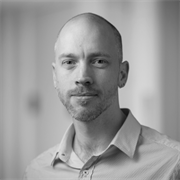
Dr Nathan Caruana is a Senior Lecturer in Psychology at Flinders University’s College of Education, Psychology and Social Work. He leads the HAVIC Lab for Human, Artificial & Virtual Interactive Cognition and is a key figure in the Flinders Institute for Mental Health and Wellbeing. B. Psych. (Hons 1), Macquarie University (2012) PhD in Human Cognition and Brain Sciences, Macquarie University (2016) His research focuses on social cognition in neurotypical and neurodivergent populations (autism, schizophrenia) through virtual reality , eye-tracking , social robotics , and neuroimaging . Recent work examines joint attention mechanisms , gaze-based communication systems , and robot-assisted literacy for neurodiverse children. Recent publications explore autism diagnosis disclosure , robot trust dynamics , and VR-based employment training . His 2025 articles in Molecular Autism and Royal Society Open Science address neurodiverse communication and gaze contextuality . 2024: Flinders Institute Best Thought Leader 2023: Best ECR Presentation in Social Neuroscience 2021: Paul Bourke Award 2016: David Hall Prize (Best Thesis) He secures substantial grants including the 2025 Enterprise Scholarship ($172,406) and Bial Foundation Grant (€57,500). His 2022 MQ Strategic Infrastructure Grant ($134,013) supported VR-based neuroinclusion research.
Distinguished Professor Chin-Teng Lin is a leading academic at the University of Technology Sydney (UTS) , where he serves as Co-Director of the Australian AI Institute (AAII) and Director of the Computational Intelligence and Brain Computer Interface Lab . With a career spanning decades, he has pioneered advancements in artificial intelligence (AI) and brain-computer interfaces (BCI) , focusing on human-machine collaboration, wearable EEG systems, and neuroergonomics. School of Computer Science, UTS Co-Director, Australian AI Institute Director, Computational Intelligence and BCI Lab Lin’s research interests are deeply rooted in machine-intelligent systems , cognitive neuroscience , and human-centric AI . He has developed groundbreaking technologies like fuzzy neural networks (FNNs) in 1992, which revolutionized AI by integrating human-like reasoning. His work extends to multi-agent reinforcement learning for cybersecurity, wearable EEG devices for real-world applications, and neurofeedback interventions for chronic pain management. His research outputs include over 950 peer-reviewed publications , with a focus on deep learning , transformer models , and clustering algorithms . Articles like the MGRW-Transformer (2025) and Autonomous Clustering (2025) highlight his leadership in interpretable AI and parameter-free methods. Scientific awards and recognitions include: IEEE Fellow (2005) IFSA Fellow (2012) IEEE Fuzzy Systems Pioneer Award (2017) Outstanding Achievement Award, Asia Pacific Neural Network Assembly Lin has supervised 72 PhD candidates , 30 postdoctoral fellows , and 237 research Masters students since 1992, mentoring notable alumni such as Dr. Zehong Cao (ARC DECRA Fellow) and Prof. Chia-Feng Juang (IEEE Fellow). His funding portfolio includes $10M+ from the US Army Research Lab , $3.8M from the Australian Defence Innovation Hub , and $30.2M in industry collaborations .
Dr. Mukesh Prasad is an Associate Professor at the School of Computer Science , University of Technology Sydney (UTS). With expertise in Machine Learning , Artificial Intelligence , and Computer Vision , his research addresses applications in healthcare, biomedical science, and smart infrastructure. He holds a Ph.D. in Computer Science from National Chiao Tung University, Taiwan, and an M.S. in Computer and Systems Sciences from Jawaharlal Nehru University, India. Key research areas: Machine Learning, AI, Brain-Computer Interfaces, IoT, and Evolutionary Computation Industry experience: Principal Engineer at TSMC (2016-2017), Postdoctoral Researcher at National Chiao Tung University Dr. Prasad has secured competitive grants for AI applications in disaster response, conversational agents, and medical diagnostics. His work has been published in high-impact venues like IEEE , ACM Transactions , and Springer Nature , with over 200 peer-reviewed papers. He serves on editorial boards for journals including Frontiers in Neurorobotics and ACM Computing Surveys . Scientific Awards: Vice Chancellor Teaching and Learning Citation Award (2019) Alumni Fellowship for Ph.D. (2014) Golden Bamboo NCTU Fellowship (2010) Professional Members: IEEE (2011), ACM (2019)
Dr. Khairul Azlan A Rahman serves as Executive – Engineering at University of Wollongong Malaysia while maintaining active research roles as a part-time project researcher at GIRA and MENTARI research departments. His career bridges academic research and practical engineering applications in biomedical technology. His educational foundation includes a PhD in Electrical & Electronic Engineering from Universiti Tun Hussein Onn Malaysia (2020), Master in Engineering (Robotic) from UTHM (2011), Bachelor in Engineering (Power) from Universiti Teknologi Malaysia (2008), and Diploma in Electrical Engineering (Mechatronic) from UTM (2005). Dr. Rahman's research centers on Brain-Computer Interface (BCI) and Functional Electrical Stimulation (FES) systems for stroke and paraplegic rehabilitation. His work develops innovative control mechanisms that translate brain signals into physical movement assistance, creating pathways for patients to regain mobility through neurotechnology. This research sits at the critical intersection of biomedical engineering, robotics, and clinical rehabilitation, with strong emphasis on practical implementation of assistive devices. His scientific contributions have been recognized through multiple international awards: Special Award and Silver Medal from Saudi Arabia at IPITEx 2020 Silver Medal at Bangkok International Intellectual Property Exposition (IPITEx 2020) Gold Medals at NIICe2019 and iMIT 2019 Gold Medal at International Research and Innovation Symposium (RiSE 2018) Dr. Rahman actively contributes to academic development through postgraduate supervision, having served as Co-Supervisor for Medina exchange students at UTHM. His consultancy projects, including the Mechanical Robot Development for Ducting Cleaning initiative, demonstrate his ability to translate research into industrial applications. Current research activities continue through his part-time roles at GIRA and MENTARI where he explores next-generation rehabilitation technologies while maintaining freelance work in robotics and programming.
Professor Adrian Carter is an Australian Research Council Future Fellow at the Monash Bioethics Centre , affiliated with the School of Philosophical, Historical and Indigenous Studies and an Adjunct Fellow at the School of Psychological Sciences , Monash University. His work bridges neuroethics , addiction neuroscience , and public policy , focusing on the societal and ethical implications of emerging neurotechnologies. Key Research Areas : Neuroethics, Addiction Neuroscience, Mental Health Ethics, Public Policy, Neurotechnology, Bioethics Leadership Roles : Leads the Neuroscience and Society Group , Co-Chairs the Neuroethics and Responsible R&I Committee (Australian Brain Alliance), Co-Editor-in-Chief of Neuroethics (Springer) His recent publications explore psychedelic medicine , neurotechnology ethics , and addiction treatment policies , reflecting interdisciplinary collaboration with institutions like the Wellcome Trust and Pennsylvania State University . Awards include the Shimadzu Young Investigator Award and Monash Supervisor of the Year . Adrian has secured over $4 million in funding from agencies including the Australian Research Council and National Health and Medical Research Council .
Professor Gaetano Gargiulo is a Research Professor in the Biomedical Engineering and Neuroscience research program at MARCS Institute, Western Sydney University. He received his MS equivalent degree in Electronic Engineering (biomedical specialization) from University of Naples in 2006 and his Ph.D. from University of Bologna in 2010. With extensive experience in medical device design and commercialization, he has contributed to two startup companies in bio-instrumentation and holds seven PCT patents. His research focuses on cardiovascular monitoring, inverse modeling, brain/machine interfaces, and biomedical instrumentation. A key aspect of his work involves improving electrocardiography (ECG) by addressing systematic errors while preserving current clinical practices. He has developed ultra-high input impedance amplifiers for passive dry electrodes enabling unobtrusive patient monitoring. Professor Gargiulo's publication record shows consistent output with 137 publications and over 133,000 reads. His recent work (2022-2025) spans forcecardiography, soft robotics, biomedical sensors, and wearable monitoring technologies. His research demonstrates strong translational potential for clinical applications in cardiac diagnostics and monitoring. His research achievements include: Development of novel forcecardiography (FCG) techniques for simultaneous cardiac and respiratory monitoring Advancements in HASEL actuator technology for soft robotics applications Innovations in wearable sensor design for cardiovascular and respiratory monitoring Fundamental contributions to understanding and correcting systematic errors in ECG Development of low-cost diagnostic tools for peripheral vascular diseases Professor Gargiulo's work bridges theoretical modeling of bio-signal sources with practical development of diagnostic tools, maintaining a strong focus on clinical applicability while advancing fundamental understanding of cardiovascular mechanics and monitoring.
Dr. Scott Adams serves as a Senior Lecturer at Deakin University within the Faculty of Science Engineering and Built Environment, School of Engineering, and is affiliated with the Centre for Sustainable Bio-Products. His research spans multiple engineering disciplines with a strong emphasis on sustainable technologies, artificial intelligence applications, and biomedical device development. Dr. Adams earned his Doctor of Philosophy and dual Bachelor degrees (Engineering with Honours and Information Technology with Distinction) from Deakin University. His academic journey progressed from Postdoctoral Research Fellow (2019-2022) to his current Senior Lecturer position. His research interests focus on data management and data science, electronics and sensor technology, control engineering, mechatronics, robotics, and biomedical engineering . His work demonstrates particular expertise in sustainable waste management systems, AI-driven monitoring solutions, and neural interface technologies. Dr. Adams has developed innovative approaches to tyre recycling, solar panel inspection, greenhouse monitoring, and neural microprobes with adaptive stiffness. An analysis of his recent publications reveals a strong trend toward sustainable engineering solutions with applications in waste recycling (particularly end-of-life tyres and solar panels), AI-enhanced monitoring systems for environmental and agricultural applications, and advanced biomedical devices featuring novel materials and control systems. His interdisciplinary approach bridges mechanical engineering, computer science, and environmental science. Dr. Adams actively supervises numerous doctoral students across diverse engineering projects and has secured substantial research funding through multiple industry collaborations. His grants portfolio includes significant projects such as the Commercialisation of an Automated Mobile EOL Solar PV Panel Recovery Plant ($345,925), End of Life Tyres to Green Hydrogen ($23,745,206), and various contracts with rail companies, energy firms, and agricultural technology developers. His teaching responsibilities include units such as SEE216 - Analogue and Digital Electronics, SEJ102 - Electrical Systems Engineering Project, and SEE711 - Sensor Networks. Dr. Adams has developed several innovative devices including the SmartStim AI-enabled deep brain stimulation device, AgriGlow IoT multi-spectral light sensing system, and automated soil gas monitoring technology, demonstrating his commitment to translating research into practical applications.