Alessandro Beghi is a Full Professor at the Department of Information Engineering, University of Padova. His research focuses on advanced control systems, machine learning applications in industrial processes, and automation technologies. He leads projects in areas like resilient manufacturing, semiconductor production optimization, and anomaly detection in smart systems. Key research interests include Nonlinear Model Predictive Control (NMPC), Deep Learning for industrial quality prediction, and energy-efficient HVAC systems. His work integrates cutting-edge algorithms with real-world applications, such as motorcycle stability systems and textile manufacturing processes. Publications highlight contributions to AI-driven manufacturing frameworks (e.g., SMART-IC, VIR2EM), anomaly detection methodologies, and control strategies for complex systems. He is actively involved in editorial roles and educational initiatives in control engineering and automation.
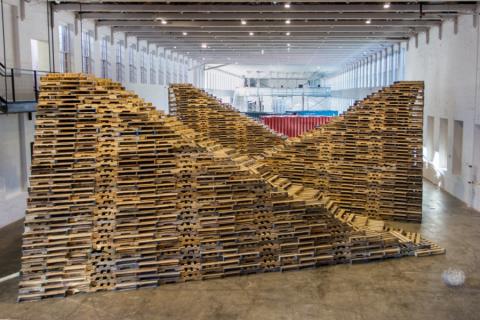
Liz Glynn is a Professor and Associate Chair for Undergraduate Studies in the Department of Art at the University of California, Irvine (UCI), within the Claire Trevor School of the Arts. She holds a BA from Harvard College (2003) and an MFA from the California Institute of the Arts (2008). Her practice combines sculpture, large-scale installations, and performance art to explore themes of historical narratives, cultural artifacts, and monumental architecture. Notable exhibitions include The Archaeology of Another Possible Future (MASS MoCA, 2017), RANSOM ROOM (SculptureCenter, NYC, 2014), and public projects like Open House (Public Art Fund, NYC, 2017). She has been featured in venues such as the Barbican Center (London), MoCA (Los Angeles), and the New Museum (NYC). Glynn’s work investigates material value and societal change through performance cycles like [de-]lusions of Grandeur (LACMA, 2015–16) and black box (Getty Research Institute, 2012). Her work is in major collections including LACMA, the Hammer Museum, and the Fondation Sandretto Re Rebaudengo (Turin). She has received grants from the Creative Capital Foundation, Pollock-Krasner Foundation, and others. Glynn has taught at Harvard College, UCLA, Art Center College of Design, and Otis College of Art and Design. Her research engages with themes of empire, materialism, and participatory art practices.
Renato Mancuso is an Associate Professor in the Computer Science Department at Boston University (BU) and director of the BU Cyber-Physical Systems Lab (CPSLab@BU). He is also affiliated with the BU Department of Electrical and Computer Engineering. He received his Ph.D. from the University of Illinois at Urbana-Champaign (2017) and degrees from the University of Rome 'Tor Vergata' (B.S. 2009, M.S. 2012). His research focuses on real-time and embedded systems, including techniques for achieving controllable timeliness in safety-critical applications, FPGA-accelerated systems, and autonomous systems. He pioneers software/hardware techniques for performance profiling and management in hybrid CPU+FPGA platforms, with applications in robotics, aviation, and autonomous ground vehicles. Key research areas include cyber-physical systems, real-time resource management, and black-box workload profiling. His work has received multiple awards, including the NSF CAREER Award (2023) and the 2024 ACM SIGBED Early Career Researcher Award. His research is supported by federal agencies (NSF) and industry partners (Bosch, Red Hat, Cisco, Xilinx). He advises numerous Ph.D. and master’s students and leads initiatives like the BU F1Tenth Autonomous Racing Organization (ACRO). His lab actively recruits students with expertise in robotics, operating systems, virtualization, and FPGA development. Notable contributions include the E-WarP profiling framework, the Omnivisor hypervisor, and innovations in FPGA-based system management. He has authored over 50 peer-reviewed publications and holds patents in embedded systems design.
Kyunghyun Cho is a Professor of Computer Science and Data Science at New York University (NYU), holding dual appointments at the Courant Institute and the Center for Data Science. He serves as the Glen de Vries Professor of Health Statistics and Co-Director of the Global Frontier AI Lab (with Yann LeCun). His research focuses on machine learning, natural language processing, and their applications in healthcare and biology. Cho received his PhD from Aalto University (2014) and has held positions at Facebook AI Research (2017-2020) and as a postdoc at the University of Montreal under Yoshua Bengio. He has organized major conferences including ICLR, NeurIPS, and ICML, and co-founded the Transactions on Machine Learning Research (TMLR). His awards include the Samsung Ho-Am Prize in Engineering (2021) and CIFAR Fellowship. Current projects include causal inference frameworks, antibody design via AI, and multimodal healthcare systems. Cho's work bridges foundational ML theory and practical applications in biomedicine, with recent focus on generative models, cross-cultural benchmarking (BLEND), and lab-in-the-loop protein engineering.
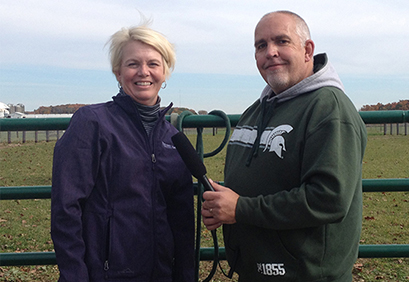
Karen Waite Warner is an Academic Specialist and Director of Undergraduate Education in the Department of Animal Science at Michigan State University (MSU), within the College of Agriculture & Natural Resources. She holds a BS, MS, and PhD from MSU, with specialties in Animal Science and Sports Psychology (emphasizing equestrian studies). Her roles include coordination of undergraduate education and teaching courses like ANS 110 (Introductory Animal Science), ANS 242 (Horse Management), and equine behavior/welfare topics. As an MSU Extension specialist, she advises on 4-H programs, including show rules and judging lists. Research interests focus on equine behavior, sports psychology in equestrian activities, and animal welfare. Her articles address practical topics like hay quality, toxic plant risks, hydration needs, and equine health management. She received the 2024 CANR Camden Endowed Teaching Award for her pedagogical contributions. Waite Warner advises MSU’s Horse Judging Team and Equestrian Teams, and leads initiatives like the Horse Tails Literacy Project, which connects first graders with equine education. She also engages in outreach through podcasts and social media (e.g., Michigan Equine News and Out of the Box Stall blog).
Bob Knuth is the Director of Theater at Lake Forest College, where he oversees the Theater department's academic and production activities. He holds a BA from the University of Wisconsin-Eau Claire, graduate studies at Northwestern University, and a Certificate in Interior Design from The School at the Art Institute of Chicago. His expertise spans Scenic Design, Lighting Design, Graphic Design for Theater Marketing, and Stage Direction Education. Before joining Lake Forest College, he held roles such as Creative Director at The Second City, Resident Designer at Circle Theatre, and Sr. Graphic Designer at The Chicago Symphony Orchestra. Knuth has received multiple accolades, including Joseph Jefferson Awards for Scenic Design and Direction, and HOW Design Magazine awards for poster designs. His work emphasizes innovative solutions for constrained theater spaces, as highlighted in reviews by The Chicago Tribune and BroadwayWorld.com. He advises students through courses on Theater Production and Design and mentors through internships and practical theater projects. His lab, the Hixon Scene Shop, supports student-driven productions. Knuth’s research focuses on maximizing creative potential in limited-stage environments and integrating visual storytelling across set, lighting, and marketing mediums.
William Davies King, a Professor at the University of California, Santa Barbara (UCSB), is an interdisciplinary scholar, artist, and curator. His work bridges literary criticism, art curation, and experimental creative practices. Published Finding the Way to 'Long Day's Journey Into Night' (Anthem Press, 2024) Founder of The Museum of Nothing (2022) Keynote speaker and collaborator at UCSB's Interdisciplinary Humanities Center Research Interests: King specializes in Eugene O'Neill studies, hyper-illuminated book art (bibliolage), and conceptual curation. His projects explore intersections of literature, visual culture, and the absurdity of material culture through collage, exhibition, and text. Selected Publications & Exhibitions: Tao Museum of Nothing (2023) featuring Campbell's soup labels and Shuffle Art Ben Finds a Fantasy (2022) combining children's books and Japanese theater prints The Art of the FAR OUT East (2016) synthesizing Far Eastern art with pop culture Artistic Method: King's bibliolages (hyper-illuminated books) deconstruct existing texts through collage, cutting, and reassembling. His work interrogates cultural narratives, from dental history to space exploration, often using found objects and subversive juxtapositions.
Danielle Chapman is a Lecturer in English at Yale University. She holds an M.F.A. in Poetry Writing from the University of Virginia (2003) as a Henry Hoyns Fellow, and a B.A. in English from New York University (1998), graduating Summa Cum Laude. Her research focuses on contemporary poetry, intersections of faith and literary expression, cultural criticism, memoir writing, and Southern history and literature. She teaches courses such as 'Shakespeare and the Craft of Writing Poetry' and 'Reading Poetry for Craft.' Education: University of Virginia (M.F.A.), New York University (B.A.) Her creative work explores themes of Southern identity, religious experience, and cultural critique through poetry and essays. Recent publications include poems in The New Yorker , Poetry , and The Atlantic Monthly , as well as essays in Commonweal and The Oxford American . Her books include Boxed Juice , Holler: A Poet Among Patriots , and Delinquent Palaces .
Rafael Casado González is a Professor at the Department of Systems Informatics, School of Engineering, University of Castilla-La Mancha, Spain. He was previously an Associate Professor at the same institution and was promoted to Full Professor (Catedrático de Universidad) on May 23, 2023. His academic journey includes a Doctorate in Computer Engineering from UCLM (2001), a degree in Computer Engineering from Universidad de Murcia (1996), and a Technical Engineering in Systems Informatics from UCLM (1993). Doctor Ingeniero en Informática – University of Castilla-La Mancha (2001) Ingeniero Informático – Universidad de Murcia (1996) Ingeniero Técnico en Informática de Sistemas – University of Castilla-La Mancha (1993) His research spans Wireless Sensor Networks (WSNs) , Unmanned Aerial Vehicles (UAVs) , air traffic management , and high-performance network reconfiguration . He has made significant contributions to aviation safety, particularly in missed approach maneuvers , aircraft reinjection , and conflict resolution in U-Space . His work also extends to distributed forest fire monitoring and entrepreneurship education in engineering . The 15 most recent publications reflect a strong trend toward UAV traffic management , environmental sustainability in aviation , and intelligent systems for air navigation . His work combines simulation, machine learning, and real-time algorithms to improve safety and efficiency in complex airspace environments. Earlier works focus on network reconfiguration and localization in WSNs , indicating a long-standing interest in distributed and autonomic systems. Rafael Casado González has collaborated with prominent researchers such as Aurelio Bermúdez, Carlos T. Calafate, and Pablo Boronat across multiple publications. His affiliations are consistently with the University of Castilla-La Mancha, and he contributes to both technical and educational research domains. There are no listed scientific awards or honors in the provided text. He has advised or collaborated on various research projects, particularly in UAV systems and WSNs, though specific student names are not mentioned. His work has been supported through institutional affiliations and collaborative research, but no grants are explicitly listed. He is actively involved in developing simulation frameworks and real-time navigation systems for autonomous drones. While no specific lab or research group name is mentioned, his work on SensGrid , UAV navigation frameworks , and WSN-based fire monitoring systems suggests involvement in a research lab focused on intelligent distributed systems and aerospace applications.
Irfan Ahmed Halepoto serves as a Guest Researcher at Aalborg University's Faculty of Engineering and Science within the Department of Power Electronics System Integration and Materials, Denmark. His work focuses on advancing electric vehicle (EV) technology through energy consumption modeling and drive range optimization. Research interests center on Electric Vehicle Engineering , Autonomous Systems , and Eco-driving Optimization . He employs black-box modeling techniques and AI-driven predictive frameworks to integrate real-time parameters like traffic patterns and weather data, developing novel strategies for energy-efficient route planning in EVs. His fingerprint analysis reveals dominant expertise in Key Parameters Engineering (100%), Black Box methodologies (100%), and Driving Route optimization (100%). Recent publications demonstrate a clear trend toward multi-objective optimization of EV performance using NSGA-II algorithms and real-time data integration. His research bridges theoretical modeling with practical applications in sustainable transportation, specifically targeting traffic avoidance systems and dynamic range extension for electric vehicles through eco-driving strategies. Based at Pontoppidanstraede 111, Aalborg East, Halepoto operates within AAU's Power Electronics research ecosystem, contributing to cutting-edge system integration projects focused on sustainable energy solutions for next-generation electric mobility.
Mattia Setzu is a Research Fellow at the Department of Computer Science, University of Pisa, where he also pursues his PhD. His work focuses on Explainable Artificial Intelligence (XAI), particularly on developing methods to interpret and explain the decisions made by black box machine learning models. His educational background includes: Bachelor's degree in Computer Science from the University of Cagliari (2016) with 103/110 Master's degree in Computer Science from the University of Pisa (2018) with 110/110 cum laude Setzu's research centers on the explainability problem in artificial intelligence, addressing what he refers to as the "black box syndrome" that machine learning models suffer from. His quote "To be human is to wonder. To go beyond the empirical data and grasp the essence of things is the cornerstone of human understanding and allows us to be active agents in the world" reflects his philosophical approach to explainable AI. His methodological evolution spans from semantic web applications for source code analysis to sophisticated frameworks for generating global explanations from local ones using clustering approaches, topology-aware algorithms, and Bayesian techniques. His publication record demonstrates a clear progression in XAI research, with recent work connecting explainability methods to critical applications in pandemic response. This interdisciplinary approach shows how his core research on making AI systems transparent has practical implications in high-stakes domains like public health and social policy. Setzu contributes to major research initiatives: XAI - Science and technology for the eXplanation of AI decision making TAILOR - Foundations of Trustworthy AI - Integrating Reasoning, Learning and Optimization His collaborative work extends across multiple domains, frequently appearing as co-author with researchers from diverse backgrounds including public health, social science, and traditional computer science disciplines. This network reflects the interdisciplinary nature of modern AI research and the growing importance of explainability across application domains.
Siva Kesava Reddy Kakarla is a Senior Researcher in the Networking Research Group at Microsoft Research, Redmond. His work focuses on high-performance network automation tools, integrating verification, testing, anomaly detection, algorithms, and automata theory to enhance robustness and efficiency in networking systems. Ph.D. in Computer Science from UCLA (2022), advised by Prof. Todd Millstein and Prof. George Varghese, with research on formal methods for DNS robustness and automated template inference for network misconfigurations. Bachelor's in Computer Science and Engineering (CSE) from IIT Kharagpur, advised by Prof. Sandip Chakraborty for his undergraduate thesis. His research areas include Systems and Networking , Network Automation , and Formal Methods , often intersecting with Machine Learning for Systems . Recent work, such as his 2024 HotNets publication, explores gray-box performance analysis of learning-enabled systems, revealing critical underperformance gaps in traffic engineering pipelines. The Networking Research Group at Microsoft Research serves as his primary affiliation, where he continues to innovate in network automation and robustness. His email contact is sivakakarla@microsoft.com, and he works in Microsoft Building 99, Redmond, WA.
Laurent Georges is a Professor at the Department of Energy and Process Technology, Faculty of Engineering Science, Norwegian University of Science and Technology (NTNU). He specializes in Building Performance Simulation (BPS), HVAC systems, heat pumps, zero emission buildings, and energy flexibility. His research integrates computational fluid dynamics (CFD) and data-driven modeling to address energy efficiency and sustainability challenges. Key projects include leading Work Package 3 on 'responsive and energy efficient buildings' in the FME ZEN (Zero Emission Neighbourhoods in Smart Cities) and investigating heat pump systems in the ChiNoZEN and OPPTRE projects. He is President of IBPSA-Nordic and a member of NORVAC Foundation. Research trends focus on energy flexibility, thermal storage, and AI-driven control strategies for buildings. Recent work emphasizes hybrid energy systems, CFD for airflow simulation, and optimal control frameworks for demand response. Advising includes 5 PhD students (as main supervisor) and 4 co-supervised, with notable alumni like Vegard Heide and Elyas Larkermani. His work spans 60+ publications since 2017, addressing topics from wood stove integration to model predictive control. Labs/teams: Active in FME ZEN, collaborating with DTU and SINTEF on energy systems, thermal storage, and building performance. Development of Python tools like pymodconn bridges academic research with industrial applications.
Oskar Kviman is a doctoral student at KTH Royal Institute of Technology working in the Lagergren Lab within the Division of Computational Science and Technology. His research bridges machine learning, statistics, and computational biology with a focus on developing and applying advanced probabilistic methods. His primary research interests include: Bayesian phylogenetics and probabilistic machine learning Variational inference, variational auto-encoders, and sequential Monte Carlo methods Generative AI techniques including flow matching, Schrödinger bridges, and diffusion models Computational cancer research focusing on differential expression testing and spatial transcriptomics Kviman's publication record demonstrates significant contributions to variational inference methodology, particularly in phylogenetics and generative modeling. His work spans top machine learning conferences including ICML, NeurIPS, and AISTATS, showing consistent development of techniques that improve efficiency and accuracy in probabilistic modeling. Recent publications focus on multi-marginal flow matching, variational resampling, and mixture learning in black-box variational inference. He has been recognized for his peer review contributions as a Top reviewer (10%) for AISTATS 2023. Kviman has supervised master's theses for Xindi Liu and Ricky Molén at KTH and serves as a lecturer for 'Statistical Methods in Applied Computer Science' since 2021, while previously working as a teaching assistant for 'Machine Learning, Advanced Course' and 'Deep Learning, Advanced Course'.
Rafid Mahmood is an Assistant Professor at the University of Ottawa's Telfer School of Management , with a part-time role as Sr. Research Scientist at NVIDIA Toronto AI Lab. He holds a BASc, MASc, and PhD in Electrical and Industrial Engineering from the University of Toronto. Educations: B.A.Sc. (Honors) in Electrical Engineering, M.A.Sc. in Electrical Engineering, Ph.D. in Industrial Engineering (University of Toronto) His research focuses on predictive/prescriptive decision-making models and data-centric pipelines for AI systems , targeting applications in healthcare, autonomous vehicles, and generative AI. Key areas include optimizing data collection, inverse optimization, and bridging simulation-to-real gaps in machine learning. Recent Research Trends: His work emphasizes balancing data quality/cost (e.g., crowd-informed annotation), enhancing vision-language model robustness, and scalable training strategies for large models. He also explores pricing dynamics in generative AI markets and healthcare logistics optimization. Funded Projects: CIHR Grant (2024-2029): $1.45M for AI-driven cardiac arrest prediction in hospitals NSERC Discovery Grant (2023-2028): $160K for data-centric AI frameworks SSHRC Insight Grant (2023): $68K for synthetic data in labor markets Labs/Teams: Leads projects at NVIDIA Toronto AI Lab and collaborates with the Vector Institute. Active in organizing workshops like Exploring the Next Generation of Data (CVPR 2025).