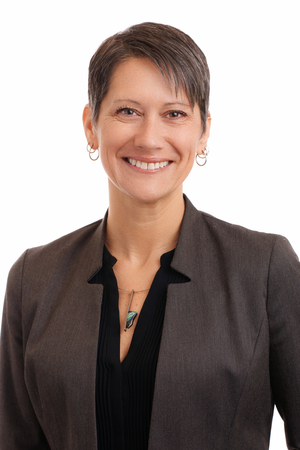
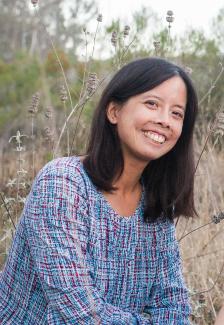
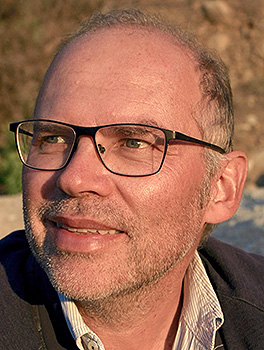
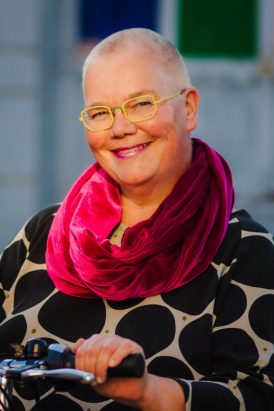
Dr. Corey T. Callaghan is an Assistant Professor in the Department of Wildlife Ecology and Conservation at the University of Florida . Based at the Fort Lauderdale Research and Education Center , his research focuses on global change ecology using big data from citizen science platforms like eBird and iNaturalist, combined with geospatial analyses and macroecological theory . Ph.D. (2019) from UNSW Sydney M.S. (2015) from Florida Atlantic University B.S. + B.S. (2013) from Canisius College His work examines urban ecology , including how species traits influence urban tolerance across birds, amphibians, and butterflies. He develops adaptive sampling frameworks to optimize citizen science data collection while addressing biases. Current projects analyze human-nature interactions through citizen science participation, secondary data in photographs, and machine learning for biodiversity monitoring. He actively contributes to conservation strategies for urban biodiversity and data-driven restoration efforts . Recent publications highlight his expertise in cross-taxa comparisons , continental-scale analyses , and ecosystem service quantification . He leads the Global Ecology Research Group at the University of Florida, emphasizing collaborative science and open-source methodologies .
Max Planck Institute for Plant Breeding ResearchGermany
Adam Runions is a researcher in the Department of Computer Science at the University of Calgary, leading the MPG Partner Group in computational analysis of leaf development through collaborative work with Miltos Tsiantis. His group is embedded in the Graphics Cluster, focusing on interdisciplinary problems at the intersection of computer science and developmental biology. University of Calgary - Department of Computer Science MPG Partner Group (2022) Graphics Cluster affiliation His research explores computational modeling and analysis of plant form and development across multiple scales, integrating geometric modeling, physically-based simulation, and computer-aided design. Key themes include plant morphogenesis, self-organization of natural forms, and cross-disciplinary applications in computer graphics and animation. Recent publications emphasize plant development (leaf shape, bark patterning), mathematical modeling (auxin-driven patterning), and geometric techniques (subdivision surfaces, PUPs). Collaborations span institutions like the Max Planck Institute for Plant Breeding Research. Scientific Awards Marie Sklodowska-Curie Fellowship Best Paper Award (International Conference on Cyberworlds 2015) Best Student Paper Award (Computer Graphics International 2011) The group actively recruits BSc, MSc, and PhD students with backgrounds in computer science and mathematics for projects on plant form simulation and digital content creation. Research integrates evolutionary biology, biomechanical modeling, and computational techniques.
Jarrod Ray Hore is a Scientia Lecturer in the School of Humanities & Languages at the University of New South Wales (UNSW), Sydney, and Co-Director of the New Earth Histories Research Program. His work explores environmental history, settler colonialism, and the intersections of science, geology, and cultural landscapes. Hore’s research focuses on landscape photography’s role in shaping colonial projects, earthquake geology, and the logistics of the natural history trade. He has published widely in journals like the Pacific Historical Review and Australian Historical Studies, and his award-winning book *Visions of Nature* (2022) examines how photography reinforced settler territoriality. His research interests span environmental history, transnational history, the history of science, and colonial studies. Key areas include the history of settler colonialism in Australia, New Zealand, and North America, as well as the cultural and scientific dimensions of geological exploration. Hore actively supervises HDR and honours students in environmental history, colonial history, and the history of photography. His awards include the Marilyn Lake Prize (2023) and Donna Coates Prize (2022), with shortlist recognitions for prestigious history awards. Beyond academia, he teaches courses like *A House Divided: The Making of Modern America* (ARTS2150), emphasizing U.S. histories of race, class, and global engagement. Hore’s work bridges environmental humanities and colonial studies, analyzing how visual and scientific practices reinforced imperial and settler agendas. His current projects explore the material and logistical networks underpinning natural history collections and the epistemologies of colonial geology.
Johnny Golding is a Professor at the Royal College of Art (RCA), School of Arts & Humanities. His career spans roles such as Director of the Centre for Fine Art Research at Birmingham City University, Professor of Philosophy in the Visual Arts & Communication Technologies (2000–2012), and honorary Professorship in Philosophy and Imaging at Dundee School of Art (2009). Born in New York, he holds a PhD from the Universities of Toronto and Cambridge. Education : - PhD in Philosophy from the Universities of Toronto and Cambridge. - Earlier studies in Toronto and New York. Research Interests : Golding’s work explores post-Newtonian analytics, new materialisms, and the erotics of sense as 'radical matter.' His interdisciplinary approach bridges art, philosophy, and 'wild sciences' like AI, robotics, and quantum theory. Key themes include data proliferation's societal impact, emergent systems, and the interplay between art and technology. Recent Articles & Projects : Focus on Data Loam (2020), exploring future knowledge systems through art and science collaborations. Recent works address radical empathy, distributed intelligence, and the ethics of AI. His 2018 opera Entanglement: The Opera and installations like Of The Thick and the Raw exemplify his practice-led philosophy. Grants & Leadership : - Led the Data Loam project (FWF-PEEK funded), involving over 20 artists and scholars. - PI for AiDesign Labs on generative AI at RCA. Labs & Collaborations : - Radical Matter Lab (2017–2018), a pedagogical experiment at RCA. - Collaborations with institutions like the University of Applied Arts Vienna and the British Library.
Jörg Bohlmann is a Professor in the Department of Forest and Conservation Sciences at the University of British Columbia , affiliated with the Michael Smith Laboratories, Botany Department (Faculty of Science), and Wine Research Centre. His research spans genomics, biochemistry, and chemical ecology of plant specialized metabolism, focusing on terpenoids and phenolics for applications in forest health and bioproducts. Research Streams : Plant defense against insects/pathogens, metabolic engineering of bioproducts, forest genomics, and molecular evolution of terpenoid pathways. Collaborations : National and international partnerships with academia, government, and biotech industries. Recent Publications highlight genomic insights into Western Redcedar (2023), including its low genetic diversity and adaptation mechanisms despite self-fertilization. Earlier work (2001–2022) covers conifer defense systems, Arabidopsis terpenoid pathways, cannabis flavor genetics, and mass spectrometry infrastructure. Scientific Awards include: NSERC E.W.R. Steacie Fellow (2015), Fellow of the Royal Society of Canada (2015), Feodor Lynen Postdoctoral Fellowship (1995–1998), and Distinguished University Scholar (UBC). Funding Sources : NSERC (Discovery/Strategic grants), CFI, Genome Canada/BC, provincial/federal agencies. Labs & Facilities : Michael Smith Laboratories (UBC), National Centre of Excellence, Forest Sciences Centre, and a dedicated mass spectrometry lab for metabolite analysis.
Dr. Rebecca Pratt is a tenured Professor in the Department of Foundational Medical Studies at Oakland University William Beaumont School of Medicine (OUWB), where she has been a faculty member since January 2018. She previously held professorial roles at Michigan State University College of Osteopathic Medicine (MSUCOM), where she taught anatomy, embryology, neuroanatomy, physiology, and histology, and served as Associate Professor and Director of Histology at the West Virginia School of Osteopathic Medicine. She also held appointments at Grand Valley State University and completed postdoctoral training at Purdue University. Ph.D., Cell Biology and Oncology, Purdue University B.S., Zoology and Botany/Plant Pathology, Michigan State University Dr. Pratt's research focuses on the fascial system and its role in whole-body health, including fascial continuity, muscle attachment, somatic pain transmission, and biochemical communication. She integrates radiology into anatomy education and advocates for evidence-based medical curricula. Her work bridges clinical anatomy, histology, embryology, and physiology with modern educational practices. Her recent publications reflect a strong emphasis on fascial anatomy, medical education innovation, and the integration of imaging in teaching. Themes include plastination, generational learning trends, and fascia’s role in women's health and athletic performance, published in journals like Clinical Anatomy and Anatomical Sciences Education , as well as in Women and Men’s Health and NIKE magazines. Scientific awards and honors include: Basmajian Award (American Association of Anatomy) Keith and Marion Moore Award (AAA) Five consecutive Golden Apple Teaching Awards at MSUCOM Golden Apple Award at OUWB Dr. Pratt has served in major leadership roles, including President of the International Fascia Research Society, Board Member of the American Association of Anatomy (AAA) and the American Association of Clinical Anatomy (AACA), and Chair of multiple AAA committees. She is a Visiting Anatomy Professor at Weill Cornell and St. George’s University School of Medicine, and faculty advisor for the Docapellas at OUWB. She has been an invited speaker internationally and contributed to high-impact projects like the BodyWorlds Fascial Net Plastination Project. She actively serves on OUWB’s Admissions and Student Promotion and Retention Committees. Dr. Pratt leads and organizes major international initiatives, including the Women's Clinical Health Summit in Rio de Janeiro (2024) and the Fascia Research Congress in New Orleans (2025), fostering global collaboration in fascial science. Her lab and research team focus on fascial anatomy and medical education, working closely with institutions in Italy (University of Padova) and Germany (BodyWorlds project).
Mikael Thollesson is a Senior Lecturer at Uppsala University, affiliated with the Department of Organismal Biology; Systematic Biology and Klubban’s Biological Station. His research focuses on evolutionary biology, phylogenetics, taxonomy, and molecular biology, particularly in marine and freshwater sponges (Porifera), bacterial pathogens, and computational methods in evolutionary analysis. Evolutionary Biology Marine Biology Taxonomy His recent publications highlight trends in sponge biodiversity, phylogeography, bacterial horizontal gene transfer, and mitochondrial gene evolution. Key articles include studies on Swedish demosponge faunas, Silene sect. Arenosae systematics, and computational tools like SPRIT for detecting gene transfers. No explicit awards or grants are mentioned.
University of California , Santa Barbara (UCSB)United States
Alenda Y. Chang serves as an Assistant Professor in Film and Media Studies at the University of California, Santa Barbara. With a multidisciplinary background spanning biology, literature, and film, she integrates ecocritical theory with contemporary media analysis. Her scholarly work appears in journals including Interdisciplinary Studies in Literature and Environment , Qui Parle , and electronic book review , focusing on sustainable media practices and ecological frameworks for digital engagement. Her educational background includes: M.A. and Ph.D. in Rhetoric from the University of California, Berkeley M.A. in English Language and Literature from the University of Maryland Chang specializes in environmental media and game studies, developing theoretical frameworks for ecological game design. Her research examines how digital games model environmental systems and foster player engagement with climate change through concepts like "slow violence" and "rambunctious play." She advocates for sustainable design patterns that address gaming's carbon footprint while creating immersive ecological narratives. Analysis of her 15 most recent publications reveals a consistent trajectory from foundational ecological game theory (2013-2018) to current work on thermal contexts of play and sustainable infrastructure (2022-2024). Her scholarship increasingly bridges data-driven activism with critical game design, emphasizing multispecies entanglements and infrastructural play as tools for environmental awareness. As co-founder of Wireframe—a collaborative media studio at UCSB—Chang cultivates critical game design practices through initiatives like growinggames.net . The studio supports data-driven global media art, environmental activism, and experimental pedagogy, serving as a hub for translating ecological theory into tangible digital interventions that challenge anthropocentric perspectives in gaming.
Prof. Willy Tinner is a leading academic at the University of Bern, serving as Head of the Paleoecology section and Vice Executive Director within the Institute of Plant Sciences. His research focuses on reconstructing past environmental changes through pollen analysis, vegetation dynamics, and human-ecosystem interactions. Tinner's work integrates paleoecological data with climatology, archaeology, and conservation biology to understand long-term ecological processes. His expertise spans Holocene climate impacts, Neolithic land use patterns, and biodiversity conservation challenges in alpine and Mediterranean ecosystems. Notable research includes studies on Fagus-Quercus forest coexistence in Italy, Abies alba climatic adaptations, and human-driven vegetation changes across Europe. Tinner collaborates internationally, contributing to projects in Greece, Ukraine, and the Balkans. He has published extensively on topics such as fire regimes, lake sediment archives, and the ecological consequences of ancient agricultural practices. His leadership positions reflect his role in shaping Switzerland's ecological research priorities through institutions like WSL Cadenazzo.
Dr. Doyle D. Calhoun serves as University Assistant Professor of Francophone Postcolonial Studies within the Department of French at the Faculty of Modern and Medieval Languages and Linguistics, University of Cambridge, where he is also a Fellow of Peterhouse College. His scholarly profile spans African and Caribbean literary studies, cinema analysis, and historical sociolinguistics with a focus on resistance narratives. His educational trajectory includes a Ph.D. in French from Yale University (2022), an M.A. in Linguistics from KU Leuven, and undergraduate studies in Linguistics and French Literature at Boston College. Additional academic development occurred through residencies at Fondation Camargo (Cassis) and Bibliothèque Marmottan (Paris). Calhoun’s research centers on Francophone postcolonial resistance, particularly suicidal acts against French colonialism as documented in The Suicide Archive (2024). His work excavates silenced histories of Atlantic slavery, abolition movements, and Négritude philosophy through literary and cinematic archives, emphasizing Senegalese and Caribbean contexts. He explores how contemporary writers reconstruct erased narratives of enslaved resistance through transmedia practices. His recent publications reveal a methodological convergence between literary analysis, historical recovery, and decolonial theory. Articles frequently address archival silences in colonial documentation while examining how contemporary artists reimagine resistance through linguistic innovation, cinematic storytelling, and embodied protest. Key thematic clusters include the weaponization of silence, subversive uses of missionary linguistics, and the politics of memory in postcolonial contexts. 2024 Malcolm Bowie Prize (Society for French Studies) 2024 William R. Parker Prize (Modern Language Association) 2021 Ralph Cohen Prize (New Literary History) 2016 Vivien Law Prize (Henry Sweet Society) Calhoun actively mentors graduate students in African/Caribbean literatures and cinema studies, with current projects including Africa after 1848 and Florence . His grant history features academic residencies at Fondation Camargo and Bibliothèque Marmottan, alongside a 2021 scholarship from the latter institution. Public engagement includes the 2025 La Noire de... film symposium and contributions to Los Angeles Review of Books and Salon . He contributes to the Cambridge Language Collective and Polyglossia Magazine while organizing events through Peterhouse. His 2025 podcast appearances on Stegi Radio and New Books Network demonstrate active knowledge dissemination beyond traditional academic channels.
John McDonagh is an Associate Professor in Global Development and the Environment at the School of Global Development, University of East Anglia. His academic journey began with a BSc in Botany (University of Bristol, 1987), followed by an MSc in Tropical Soil Fertility Management (Imperial College, 1988) and a PhD in Tropical Agronomy (University of London, 1993). He joined UEA in 1997 and is a member of the Tyndall Centre for Climate Change Research. His research focuses on tropical soil management, sustainable farming systems, and land degradation assessment across Africa, Asia, and Latin America. Notable projects include GEF-funded ecosystem carbon assessment tools and DFID-supported biochar studies in Ghana and China. He has also contributed to FAO’s LADA project on dryland degradation. McDonagh has extensive field experience in Thailand, Madagascar, Tanzania, and Namibia, blending scientific research with community-based approaches. His interdisciplinary work addresses the nexus of agriculture, environment, and livelihoods, aligning with UN SDGs related to climate action and zero hunger.
Thomas Pape is a Professor at The Natural History Museum of the University of Copenhagen, specializing in the systematics, taxonomy, phylogeny, biogeography and evolution of Diptera (two-winged insects), with special emphasis on Calyptratae families including Sarcophagidae, Oestridae, and Calliphoridae. He has been a professor since 2025 after serving as an Associate Professor from 2004-2024. PhD from Copenhagen University (1990) Docent at Stockholm University (1998) Associate Professor at Danish Bilharziasis Laboratory (1990-1992) Research Entomologist at Naturhistoriska Riksmuseet, Stockholm (1994-2004) His research spans taxonomy, systematics, phylogeny, biogeography and evolution of Diptera with special emphasis on calyptrate families. He collaborates on Systema Dipterorum, conducts comparative larval morphology studies, and investigates the phylogeny of Calyptrata. His work includes Diptera nomenclature and large-scale biodiversity inventories. Analysis of his recent publications reveals a strong trend toward molecular phylogenetics (using RAD-seq and anchored phylogenomics), forensic entomology applications, and biodiversity informatics. His research spans entomology, systematics, evolutionary biology, and increasingly intersects with bioinformatics and conservation science, with significant contributions to understanding flesh flies, bot flies, and blow flies. President of the International Council of Zoological Nomenclature (since 2016) Chair of the Council for the International Congresses of Dipterology (2010-2018) Member of editorial boards for Entomotropica, Studia dipterologica, Stuttgarter Beiträge zur Naturkunde, and Tijdschrift voor Entomologie Dr. Pape teaches courses in Entomology (structure, phylogeny and biology of terrestrial arthropods), Field Biology II - Zoology, and Ecology and Evolution of East Africa (a 2-week field course in Tanzania with Nikolaj Scharff). He has served on scientific panels for SYNTHESYS and as chair of the scientific advisory committee for Museum Koenig in Bonn (2006-2009). His research group employs both morphological and molecular approaches to address evolutionary questions in Diptera, with particular expertise in calyptrate families. The laboratory maintains active international collaborations across multiple continents, as evidenced by his extensive publication record and research network.
Petra Kuppers is a Professor at the University of Michigan, specializing in disability culture, performance art, and ecocriticism. She holds a PhD from Falmouth College of Art/Plymouth University (1999) and is affiliated with multiple departments, including English, Drama, and Gender Studies. Her work bridges academic research with community-based performance, emphasizing socially just futures through art. Key roles include Artistic Director of The Olimpias, co-founder of Turtle Disco, and a Just Tech Fellow (2024–2026) for 'Planting Disabled Futures,' a VR project blending disability culture and environmental ethics. She teaches graduate courses on disability studies and creative writing, advising students through a monthly 'Research Coven.' Kuppers has authored influential books like *Disability and Contemporary Performance* (2003) and *Eco Soma* (2022), recognized with awards such as the Guggenheim Fellowship and ATHE Book Prize. Her poetry collections, including *Gut Botany* (2020) and *Diver Beneath the Street* (2024), explore intersections of disability, ecology, and true crime. Her research spans crip ecologies, archival activism, and somatic methods, with recent projects including *Crip/Mad Archive Dances* and participatory events like 'Crip Drifts.' She emphasizes accessibility in performance, digital art, and public engagement, often collaborating with Indigenous communities and global disability collectives.
Prof. Dr. Deniz Tasdemir is a Full Professor (W3) of Marine Natural Products Chemistry at GEOMAR Helmholtz-Zentrum für Ozeanforschung Kiel and serves as Director of the GEOMAR-Biotech center and Head of the Marine Natural Product Chemistry Research Unit. Her career spans institutions including the National University of Ireland Galway and UCL School of Pharmacy. PhD in Pharmacy, ETH Zurich (1997) Post-doctoral work, University of Utah (2001) Dr. Helmut Legerlotz Fellowship, University of Zurich (2002-2025) Her research focuses on marine chemical ecology , metabolomics , and bioprospecting for bioactive compounds from sponges, algae, and marine microbiomes. Recent work explores seagrass pathogen reduction, microbiome interactions, and aquafeed applications. Scientific awards include: Waters Award for Natural Products Innovation (2016) Egon Stahl Silver Medal (2005) Pierre Fabre Prize (2004) ETH Zurich Medal (1997) She leads collaborative projects on ocean sustainability and marine drug discovery, with editorial roles in Marine Drugs , Planta Medica , and Phytochemistry Letters .
Dr. Yunfei Jiang is an Assistant Professor in the Department of Plant, Food, and Environmental Sciences at Dalhousie University's Faculty of Agriculture. Her research focuses on improving crop resilience to climate change and sustainable agronomic practices in Atlantic Canada, with expertise in agronomy, crop physiology, and environmental stress responses. She holds a Ph.D. in Plant Science from the University of Saskatchewan (2017), an M.Sc. from Dalhousie University (2013), and a B.Sc. in Horticulture from Fujian Agriculture and Forestry University (2010). Her research includes evaluating enhanced efficiency fertilizers, biochar, and intercropping systems to enhance soil health and crop yields. She teaches courses such as AGRN2001 (Cereal-Based Cropping Systems) and PLSC2001 (Plant Propagation Techniques). Funding and awards details, along with her graduate students' projects, are available on her lab website at jiangdal.ca . Dr. Jiang is affiliated with professional organizations including the Nova Scotia Institute of Agrologists and the American Society of Agronomy. Her lab, the Agronomy and Crop Physiology (ACP) Lab, emphasizes sustainable agriculture and crop adaptation to environmental challenges. Contact her via email at yunfei.jiang@dal.ca or visit her lab's address: PO Box 550, Truro, NS B2N 5E3.