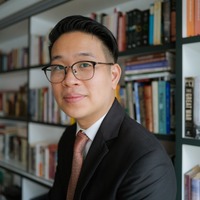
Sakari Melander is a Professor at the Faculty of Law , University of Helsinki, specializing in Criminal Law , with a focus on constitutionalization, Europeanization, and sentencing policies. His work bridges theoretical criminal law with practical legislative and policy challenges. Key research areas include EU criminal law, constitutional constraints on criminal legislation, and general doctrines of criminal law. He has extensive experience in parliamentary legal consultation, providing expert opinions to Finland’s Legislative Committees (e.g., on immigration control, anti-corruption directives, and digital evidence handling). Recent publications address topics like EU corporate sanction policies, constitutionalization of criminal law, and reforms in Finnish sentencing systems. His 2025 article in the New Journal of European Criminal Law explores balancing administrative and criminal sanctions in the EU. Scientific awards include: Hilkka ja Otto Brusiin Foundation Thesis Prize (2001) Magister Bonus – Good Teacher Award (2014) Primustohtori Award (2010) Year’s Teacher (2010) Year’s Opponent (2008) He leads research projects such as Criminal Law Under Pressure: Differentiation and Harmonization (2012-2015) and Assessment of Human Trafficking Sanction Practices (2021-2022), and supervises doctoral theses on criminal law topics.
Renaud Morieux is Professor of European History at the University of Cambridge and Fellow of Pembroke College. His research explores borders between Britain, France, and the wider world since the 18th century, with focus on migration, oceans, incarceration, and the social history of war. He holds editorial responsibilities for journals including Past & Present and Revue d'Histoire Moderne et Contemporaine . Research Interests: Morieux investigates maritime borders through interdisciplinary lenses combining legal history, family studies, and global perspectives. His projects examine political deportation in the Indian Ocean and a reflexive history of European statelessness. His award-winning publications analyze cross-Channel relations, war captivity, and oceanic governance. Article Analysis: Morieux's scholarship demonstrates consistent focus on transnational networks, legal pluralism, and subaltern agency. Recent work explores colonial knowledge systems, penal transportation, and epistolary communities, reflecting innovative methodological approaches to reconstructing marginalized histories across imperial spaces. Awards and Honors: Philip Leverhulme Prize for History (2014) Leo Gershoy Award for The Channel: England, France and the Construction of a Maritime Border (2017) Mémoires de la Mer book prize (2009) Advising and Grants: Morieux has supervised 10+ PhD students on topics ranging from naval mutinies to famine philanthropy. Current doctoral candidates explore Sir Joseph Banks' networks, WWI prisoner repatriation, and oral culture in the French Atlantic. His research receives international funding including EU and UK research council support.
Sarah Turnbull is an Associate Professor at the University of Waterloo, affiliated with the Balsillie School for International Affairs. Her work intersects criminology, sociolegal studies, and critical border/migration studies, focusing on immigration detention, deportation, punishment, and social justice through postcolonial, antiracist, and feminist lenses. Education: PhD and MA in Criminology and Socio-Legal Studies from the University of Toronto; BA from Simon Fraser University. Her current research includes: (1) a SSHRC-funded study on the National Immigration Detention Framework in Canada using Foucauldian genealogical methods; (2) the Prison Transparency Project , a comparative analysis of carceral transparency in Canada, Spain, and Argentina; and (3) a transatlantic study on pandemic impacts in prisons. She employs ethnographic and qualitative methods in her research. Selected Grants: 2023–2030: Co-Investigator, Prison Transparency Project (SSHRC Partnership Grant). 2022–2025: Principal Investigator, Reforming Detention (SSHRC Insight Grant). 2022–2023: Co-Principal Investigator, COVID-19 Justice as Penal Justice (Strathclyde-Waterloo Transatlantic Award). Turnbull’s publications and collaborations emphasize systemic inequalities, carceral mobilities, and ethical research practices. She co-founded the Prison Transparency Project and has contributed to dialogues on art as resistance in detention settings.
Dr. Samantha Halliday is an Associate Professor in Biolaw at Durham Law School and Co-Director of the Durham CELLS (Centre for Ethics and Law in the Life Sciences) and the Institute for Medical Humanities. She has held academic positions across Europe, including roles at the Universities of Huddersfield, Leeds, Liverpool, Warwick, Swansea, and Aberystwyth. Her doctoral work at Justus-Liebig University Giessen, Germany, examined compelled obstetric intervention and received the Promotionspreis award for best legal thesis. Education includes a Law with German Law and Language degree from the University of East Anglia and a doctorate from Justus-Liebig Universität Giessen. Her research focuses on comparative medical law and ethics at life's beginning/end, with particular attention to advance decision-making and maternal-fetal conflicts. She authored Autonomy and Pregnancy: A Comparative Analysis of Compelled Obstetric Intervention (Routledge, 2016), a seminal work in biomedical law. Key grants include an ESRC Research Seminar Series on advance decision-making and DFG-funded projects on transnational criminal law harmonization. She serves on peer review boards for AHRC/ESRC and advises the Royal Pharmaceutical Society's end-of-life care committee. Fluent in English, German, French, and Dutch, she actively contributes to interdisciplinary dialogues on healthcare law and ethics. Current projects include fostering a European research network on advance directives and analyzing cross-border challenges in criminal law limitation periods. Her work bridges legal, medical, and social science perspectives to address complex ethical dilemmas in healthcare.
Dr. Hongxuan Lin serves as an Assistant Professor in the Department of Southeast Asian Studies at the National University of Singapore (NUS), Faculty of Arts and Social Sciences. His academic work centers on the complex relationship between Islam and Marxism in Indonesia, with broader interests in progressive Islamic discourses across the Muslim world. As a faculty member at one of Asia's premier research universities, Dr. Lin contributes significantly to Southeast Asian studies through his research, teaching, and publications. Dr. Lin earned his Doctor of Philosophy in History from the University of Washington, Seattle, between 2015 and 2020. His doctoral research focused on Indonesian intellectual history, examining how Muslim identity and Marxist analytical frameworks coexisted in the minds of Indonesian nationalists during the anti-colonial struggle and early republic period. His supervisors were Laurie J. Sears, Christoph Giebel, and Vicente L. Rafael, all prominent scholars in Southeast Asian studies. Dr. Lin's research primarily investigates the intersection of Islam and Marxism in Indonesia from 1915 to 1965, exploring conciliatory discourses where Marxist ideas were theorized as compatible with Islam within frameworks of anti-colonial resistance. He examines how Indonesian intellectuals adapted global political currents to local contexts, challenging state-driven narratives that position Islam and Marxism as mutually exclusive. His work also considers women's contributions to these discourses and is expanding to study the circulation of progressive Islamic ideas across the Indian Ocean region connecting Egypt, Arabia, Iran, South Asia, and the Malay Archipelago. His research reveals how progressive Islamic thinkers addressed socio-economic inequity, women's rights, intercommunal tolerance, and religious governance. Dr. Lin's publications demonstrate a consistent focus on Southeast Asian political history, particularly Indonesia's intellectual landscape during the colonial and post-colonial periods. His scholarship reveals patterns of creative adaptation where Indonesian thinkers engaged with global political currents while transforming them for local contexts. A notable trend across his work is the examination of transnational intellectual networks that connected Southeast Asia with broader global movements, showing how ideas traveled and were transformed across borders. His research challenges simplistic narratives about religious and political identity, revealing instead complex intellectual traditions that defy easy categorization. Dr. Lin is multilingual with proficiency in Indonesian (reading, writing, speaking, and understanding), Chinese (Mandarin) (reading, writing, speaking, and understanding), Dutch (reading), and French (reading). This linguistic capability supports his research across multiple archives and sources in different languages, enhancing the depth and authenticity of his historical analysis. His work bridges multiple disciplinary approaches including history, political science, religious studies, and post-colonial theory.
Alison Liebling is Professor of Criminology and Criminal Justice at the University of Cambridge and Director of the Institute of Criminology’s Prisons Research Centre. Her work focuses on prison quality, moral performance, and staff-prisoner dynamics. Current Leverhulme Major Research Fellowship (2020-2023) on moral rules in prison Fellow of the British Academy Research Interests: Prison moral climate and legitimacy Comparative studies of public/private sector prisons Trauma-informed practices and rehabilitation programs Prison officer roles and professional discretion Key Publications: Prisons and their Moral Performance (2004, OUP) The Effects of Imprisonment (2005, Willan Publishing) Legitimacy and Criminal Justice (2013, OUP) Crime, Justice and Social Order (2022, OUP) Scientific Contributions: Developed international moral climate survey tool Co-editor of the Oxford Handbook of Criminology Evaluated therapeutic interventions like music and reading programs
Lara Green is a Lecturer in the Department of History at the Erasmus School of History, Culture and Communication, Erasmus University Rotterdam. She joined the department in 2021 after teaching at Durham University, UK. Her research focuses on modern and contemporary Russian history, particularly revolutionary movements, transnational networks, political violence, and gender. Her primary research interests include: Revolutionary emigration and transnational activism Gender and political violence in Russian history Anarchism and revolutionary terrorism Martyrdom and political sacrifice Publishing and intellectual networks in exile Imperial and Soviet history Lara's recent scholarly work explores the intersections of biography, exile, and revolutionary identity. Her publications span topics such as the transnational life of Peter Kropotkin, the representation of penal exile in memoirs, the British reception of Russian nihilism, and the response to revolutionary terrorism in imperial contexts. These studies reveal a consistent engagement with how political ideologies travel across borders and are reinterpreted in new cultural settings. Her recent articles, published in journals like Slavonic and East European Review , Anarchist Studies , and History of European Ideas , demonstrate a strong thematic focus on revolutionary subjectivity, transnational solidarity, and the gendered dimensions of resistance. The articles collectively highlight her methodological approach, combining intellectual history, cultural analysis, and transnational perspectives. Lara is currently working on two major projects: The Russian Free Press Fund and the Russian Revolutionary Emigration, 1881-1926 : A study of transnational information networks and publishing activities among Russian revolutionaries in exile. Violent Women in Russia, 1864-Present Day : An exploration of female political violence from the era of penal reform to contemporary movements like Pussy Riot. Her work contributes to the United Nations Sustainable Development Goals, particularly through her engagement with themes of heritage, identity, and global futures within the ERMeCHS research clusters (GFCP - Global Futures, Colonial Pasts; HI - Heritage & Identity). Lara has co-authored works with scholars such as D. Saunders, D. Laqua, and G. Brewis. While no formal advising or grant information is available, her collaborative research and publication record indicate active academic engagement. She also contributes to broader scholarly discourse, with her work being cited in Scopus, mentioned in news outlets, referenced on Wikipedia, and discussed on social media platforms like X (formerly Twitter).
Lionel Smith is a Professor of Comparative Law at the University of Cambridge's Faculty of Law, appointed in 2024. His career includes roles at the University of Alberta (1991-1996), Oxford University (1996-2000), McGill University (2000-2022), and the University of Cambridge (2022-2024). He holds degrees from the University of Western Ontario, Cambridge University, Oxford University, and the Université de Montréal. LL.B. from University of Western Ontario and Université de Montréal LL.M., LL.D. from Cambridge D.Phil., M.A., D.C.L. from Oxford His research focuses on comparative private law, particularly fiduciary obligations, trust law, and unjust enrichment. He emphasizes understanding unselfish behavior through legal frameworks across civil and common law systems. Recent work includes The Law of Loyalty (Oxford UP, 2023) and contributions to Comparative Property Law: Global Perspectives (2017). Publications span 9 journal articles, 2 books, 2 book chapters, and 2 edited volumes. His 2024 Cambridge Law Journal article on 'knowing receipt' explores cross-jurisdictional trust recovery mechanisms, while his 2020 University of Toronto Law Journal paper redefines parenthood through fiduciary principles. Awards: Titular Member of the International Academy of Comparative Law, Member of American/European Law Institutes Leadership: President of World Society of Mixed Jurisdiction Jurists, non-practicing member of Alberta Bar Teaching includes the 'Comparative Law' course at Cambridge and co-authoring leading textbooks like Waters’ Law of Trusts in Canada . His research programs investigate trust law evolution in civil law systems and fiduciary duty foundations.
Prof. Dr. Sylvia Kesper-Biermann is a Professor of Historical Educational Research at the University of Hamburg's Faculty of Education, specifically within the department of General, Intercultural and International Comparative Education and Educational Psychology (EW 1). She has held this position since 2017 and previously served in various academic roles at institutions such as Justus-Liebig University Giessen, Ludwig-Maximilians-Universität München, and the University of Cologne. Her research focuses on historical education, transnational educational spaces, comics as educational media, post-colonial education, and the history of human rights and emotions. Educationally, she studied Middle and Modern History, History Didactics, and Specialist Journalism at Universities of Siegen, Gießen, and Bristol. Her career includes roles as a research coordinator for the DFG Graduate School on Automatism, a research fellow at the University of Paderborn, and participation in multiple DFG-funded projects. Her research interests are interdisciplinary, emphasizing the intersection of education, history, and media. Recent work explores comics' role in language education for guest workers in West Germany, transnational colonial schools, and emotional dimensions of legal cultures. She has published extensively, including monographs like Einheit und Recht and edited volumes on Turkish-German educational discourse. Prof. Kesper-Biermann has received notable awards such as the Hamburger Lehrpreis 2023 and the Karl-Ferdinand-Werner Fellowship. She leads projects like PostKol (on post-colonial education) and ComBiMe (comics as educational media in West Germany). Her work bridges historical analysis with contemporary educational challenges, emphasizing visual literacy, migration studies, and transnational collaboration. Her academic contributions include organizing lecture series on pedagogy, sexuality, and body politics, as well as international conferences on education history and comics studies. She collaborates with institutions like the Comic Kolloquium Nord and the German Society for Comics Studies, fostering interdisciplinary dialogue in visual and educational historiography.
Elena Bacchin is a Professor of Modern History at the University of Vienna’s Faculty of Historical and Cultural Studies, Department of History. She previously held academic positions as Associate Professor (2023-2024) and Assistant Professor (2021-2023) at Ca’ Foscari University of Venice, a Marie Sklodowska-Curie Global Fellow (2019-2022) at Columbia University and Ca’ Foscari, and a Lecturer at Queen Mary University of London (2017-2018). PhD in History, University of Padua (2007-2010) Doctoral Student, Scuola Normale Superiore, Pisa (2011-2015) Her research focuses on the transnational history of the 19th and 20th centuries, particularly political actors such as exiles, foreign fighters, and deportees. She examines the circulation of people, ideas, and practices across borders and their influence on political mobilization, repression, and the development of international solidarity networks. Her work also explores the history of nationalism, cultural history, and the relationship between political and religious identities. She contributes to UN Sustainable Development Goals 10 (Reduced Inequalities) and 16 (Peace, Justice, and Strong Institutions). Recent publications analyze political deportation during the Risorgimento, memory of exiles in Fascist Italy, and transnational humanitarian movements. These studies emphasize forced migration, penal colonies, narrative construction, and the intersection of international law with state security. Marie Sklodowska-Curie Fellowship Fellow at Remarque Institute, New York University Fellow at University of St Andrews Principal Investigator of the PRISON project (Italian Ministry of Research) As Principal Investigator of the PRISON project, she investigates political repression and international solidarity networks. Her academic collaborations include visiting scholar appointments at the University of California San Diego, University of Oxford, and New York University.
Mark Davison is an Emeritus Professor and Adjunct Professor in the Faculty of Law at Monash University, specializing in intellectual property law. He holds dual roles as a legal academic and a practicing lawyer with Knightsbridge Lawyers. His expertise spans trade marks, WTO agreements, and public health regulation, particularly tobacco plain packaging. He has authored seminal works such as Shanahan's Australian Law of Trade Marks and Passing Off and contributed to landmark cases including Australia’s successful defense of tobacco plain packaging laws at the WTO. Research Interests: Intellectual Property Law, Trade Marks, Geographical Indications, WTO Dispute Resolution, Public Health Policy, Database Protection, Competition Law. His work intersects international trade law, health policy, and legal reform. Awards: Recognized globally as one of the 50 most influential figures in IP (2014) and awarded the Vice-Chancellor's Distinguished Teaching Prize (2001). His research has been cited in over 100 court decisions and 250 IP office rulings, including a landmark High Court of Australia ruling in 2023. Advisory Roles: Member of the Advisory Council on Intellectual Property, Commonwealth Department of Health’s Plain Packaging Expert Group, and Intellectual Property Committee of the Law Council of Australia. He advised the Australian government during WTO tobacco litigation and contributed to free trade agreement negotiations involving geographical indications. Projects: Led ARC-funded research on geographical indications in Australian trade agreements and the impact of venture capital on innovation. Collaborated internationally on studies about the New Plurilateralism in global governance and the ‘Human Rights in Three Minutes’ video project. Media Engagement: Regularly commented on IP disputes, EU trade negotiations, and public health policy in media outlets, emphasizing the intersection of law, trade, and societal welfare.
Thom Brooks is Professor of Law and Government at Durham University's Law School and will become Principal of Collingwood College, Durham from September 2024. He serves as an Associate Fellow of the Institute of Advanced Studies and holds associate memberships in both the Philosophy Department and School of Government & International Affairs. Previously, he was Durham Law School's longest-serving Dean (2016-2021) and has held visiting positions at numerous prestigious institutions including Harvard, Yale, Oxford, Columbia, and Chicago Law Schools. Ph.D. in Philosophy, University of Sheffield M.A. in Philosophy, University College Dublin M.A. in Political Science, Arizona State University B.A. Music and Political Science (dual major), William Paterson University of New Jersey Professor Brooks' research spans multiple interconnected fields at the intersection of law, philosophy, and public policy. His work on immigration law and policy has significantly influenced UK policy debates, particularly regarding citizenship tests and integration strategies. In penal theory , he has developed a unified theory of punishment that integrates retributive and consequentialist elements, which has been cited in landmark legal cases including the Connecticut Supreme Court decision abolishing capital punishment. His scholarship on Hegelian political philosophy offers a systematic reading of Hegel's Philosophy of Right that has reshaped contemporary understanding of Hegel's contributions to legal and political thought. His work in global justice has pioneered a cross-cultural approach that bridges theoretical rigor with practical policy applications. Brooks' recent publications demonstrate a consistent focus on practical applications of philosophical principles to contemporary policy challenges, particularly in immigration, citizenship, and criminal justice. His work bridges theoretical rigor with policy relevance, often directly informing parliamentary inquiries and government policy development. A notable trend is his increasing focus on AI applications in immigration law and policy, reflecting his commitment to addressing emerging challenges through interdisciplinary scholarship that connects academic research with real-world policy implementation. Fellow, Royal Statistical Society (2024) Jenny Jeger Prize, Fabian Society (2022) Principal Fellow, Higher Education Academy (2022) Elected Member, Academia Europaea (2021) Dean's Award, Durham Law School (2022) Excellence in Teaching and Learning Award, Durham University (2016) Professor Brooks has supervised 9 PhD and 3 MJur students to completion, including Gianluca Andresani, Hayley Whitaker, Jianxuan Hu, and Professor Oliver Crisp. His mentorship extends beyond formal supervision through his leadership roles, including as founding editor of the Journal of Moral Philosophy and service on 20 editorial boards. His policy impact is substantial, with his research on UK immigration policy directly influencing parliamentary committees and government policy development. Brooks currently serves as Chair of the American Philosophical Association's Committee on Public Philosophy and is an Academic Bencher of Inner Temple, demonstrating his commitment to connecting academic scholarship with practical legal and policy applications through extensive media engagement (over 2,000 appearances since 2013) and advisory roles with governmental bodies.
Prof. Dr. Yener Ünver serves as a Professor in the Department of Public Law at Özyeğin University Faculty of Law since 2011. He holds a PhD in Criminal Law from İstanbul University (1996) and has made significant contributions to Turkish criminal law, medical law, and comparative legal studies. Faculty of Law, Özyeğin University Department of Public Law Director, German Law Research and Application Center Research Interests: His work spans Criminal Law , Medical Law , Comparative Law , and Legal Philosophy . He focuses on issues like permissible risk in criminal law, mental illness and criminal responsibility, and legal frameworks for health-related criminal activities. Publication Trends: Recent articles examine telemedicine regulations, health safety in sports, cross-border legal assistance, and crimes against human life. His research integrates public law principles with criminology and human rights analysis. Scientific Awards: Honorary Doctorate from Yeditepe University Stefan Bubçev Honorary Medal and Diploma Academic Leadership: Dean of Özyeğin University Faculty of Law Board member, Özyeğin University Faculty of Law
Dr. Daniel Loick is an Associate Professor of Political and Social Philosophy at the University of Amsterdam, affiliated with the Faculty of Humanities and the Philosophy and Public Affairs department. His research focuses on critiques of state power (police, prisons, borders), legal philosophy, and the politics of forms of life, rooted in critical theory traditions. He has held positions at institutions including Goethe University Frankfurt, Humboldt University Berlin, and Harvard University. Current roles include Principal Investigator of the 'Abolition Democracies' project (funded by Gerda Henkel Foundation) and the 'Emergencies of Authoritarianism' project (Volkswagen Foundation). He co-edits the 'Philosophy & Critique' book series and is a permanent fellow at the Institute for Social Research. Teaching spans institutions like the University of Amsterdam, Düsseldorf Art Academy, and Goethe University Frankfurt, covering critical theory, social philosophy, and seminars on abolitionism, legal critiques, and political movements. Key publications include The Abuse of Property , A Critique of Sovereignty , and Abolitionism: A Reader . Research emphasizes transnational abolitionist strategies and responses to authoritarianism. He actively engages with non-academic actors, NGOs, and activists to address global political challenges.
Gail Super is an Associate Professor in the Sociology department at the University of Toronto (Mississauga campus). Her research focuses on legal and criminological theory, penal systems in postcolonial contexts, vigilantism, and critical bordering studies. She holds a Ph.D. in Law and Society from New York University. Her work bridges empirical research in South Africa with theoretical engagements in critical legal studies. Professor Super’s current SSHRC-funded research examines vigilante violence in Cape Town’s townships and the interplay between state/non-state penal power. She collaborates with the Atikokan Native Friendship Centre on Indigenous youth experiences in Canada’s child welfare system. Her 2013 book Governing through Crime in South Africa critiques racialized punitive policies. Key themes include postcolonial justice tensions, punitive humanism, and spatialized precarity. Publications span British Journal of Criminology , Punishment & Society , and Law & Society Review . Research combines historical analysis with ethnographic fieldwork, addressing how crime categories and punishment practices reflect political authority. Teaching includes criminology and public sociology courses.