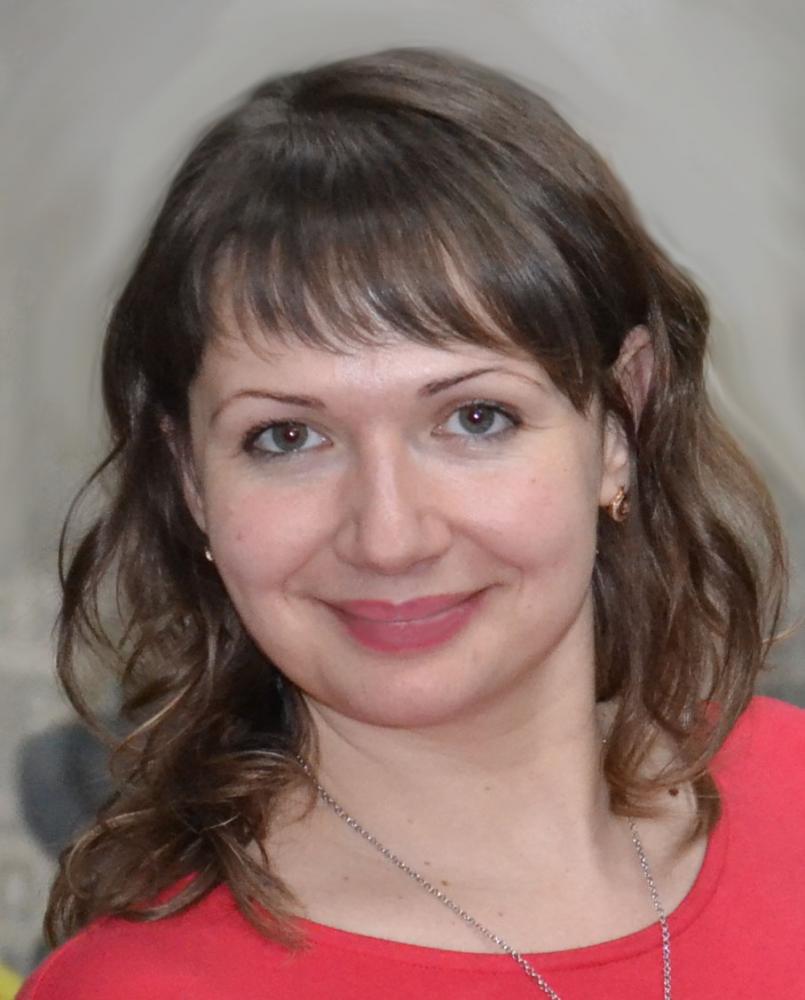
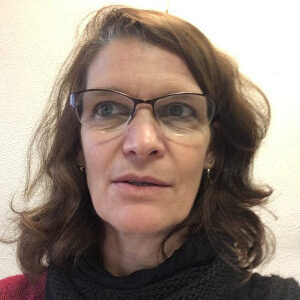
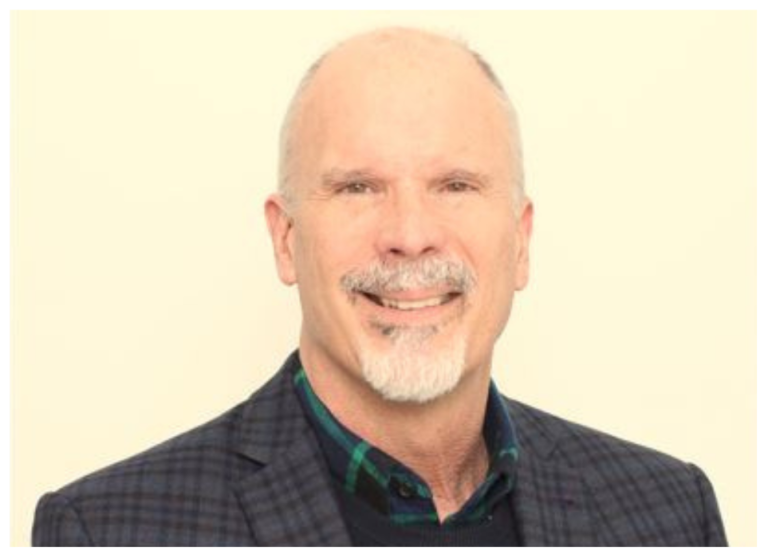
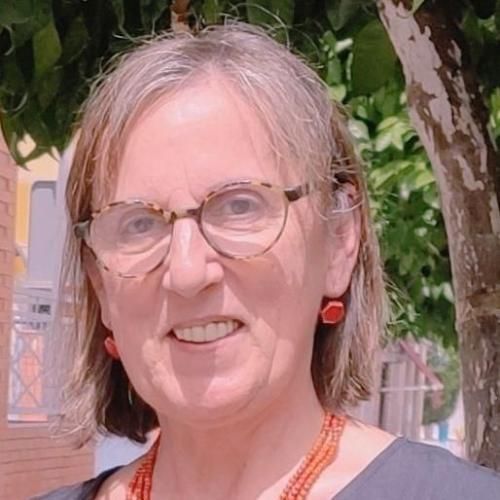
Mikkel Berg-Nordlie is a senior researcher at Oslo Metropolitan University , affiliated with the Norwegian Institute for Urban and Regional Research (NIBR) and the International Studies and Migration department. His work focuses on state-non-state actor interactions , indigenous representation , and urbanization's impact on Sami identity in Nordic countries and Russia. Recent research explores urban Sami core areas , antisamism , and Russian political influence through soft power. Articles analyze electoral dynamics in Sami Parliament elections and cross-border collaborations like Norwegian-Russian Barents region health initiatives. Active projects include IMPART (indigenous representation in majority parties), Proruss (Russian influence strategies), and MultiRur (immigrant integration in rural Norway). Despite extensive dissemination activities, no scientific awards are documented.
Burkhard Stadlmann is a Professor at the University of Applied Sciences Wels (FH Wels) , affiliated with the Rail Automation and Telematics department under the Center of Excellence Logistics LOGISTIKUM. His work focuses on railway engineering, digital automatic coupling, and logistics automation. Department: Rail Automation and Telematics Key Research Areas: Shunting automation, freight efficiency, and sensor systems Collaborations: HORIZON Research and Innovation Actions, Mobilität der Zukunft Recent research trends emphasize digital automatic coupling (e.g., DACIO project), shunting automation (TRANS4M-R), and baggage logistics (TerminalAufSchiene 2). Publications analyze grades of automation and climate impact mitigation. He has contributed to sustainable rail freight frameworks and innovative coupling technologies. Projects include Rail Automation initiatives spanning passenger-freight integration (cargoPV, 2017-2018), baggage drop-off optimization (TerminalAufSchiene 2, 2018-2020), and cross-border freight transformation (TRANS4M-R, 2022-present).
Rachel Seoighe is an Honorary Senior Lecturer at the University of Kent's School of Social Sciences. She is a criminologist whose work focuses on state violence, resistance, memory, and abolition from a decolonial, feminist perspective. Her academic roles include being SSPSSR's Athena SWAN champion and EDI lead, founder and leader of the division's Reflexive Teaching Working Group, and co-chair of the Visual and Sensory Research Cluster. Her research interests span several interconnected areas: State violence and resistance, particularly in the context of Sri Lankan state crime and denial The Tamil justice struggle and memory activism in the diaspora Abolition feminism, women's imprisonment, and the closure of Holloway Prison Border criminologies, "race" and racialization Postcolonial and decolonial thought Social and transformative justice Environmental justice and community responses to issues like sewage pollution Dr. Seoighe's research follows a transdisciplinary approach aligned with scholar-activist and creative methodologies. Her recent work includes the Flow.Walk.Drag. project exploring community responses to sewage and water-borne bacteria in Margate and Liverpool. She is co-founder and director of Hearth Consultancy Ltd and Tend Toward Justice CIC, which provide support for social justice organizations and conduct social research. Her scholarly contributions demonstrate a consistent focus on understanding systems of power, state violence, and community resistance. The trajectory of her work shows an evolution from examining post-war Sri Lanka to broader explorations of carceral systems and abolitionist futures, with a strong commitment to methodological innovation that bridges academic research and activist practice. Dr. Seoighe is actively involved in several organizations beyond her university role: Chair of trustees for Beauty out of Ashes Trustee for Women at WISH Consultant and researcher for Tamil Information Centre As an educator, she teaches a popular module on State Crime and Resistance at the undergraduate level and convenes a course on Prisons and Penal Policy at the postgraduate level. Her teaching is informed by her research and activist commitments, emphasizing critical perspectives on state power and social justice.
Delphine Peace is a Research Associate in the Department of Sociology at Durham University, specializing in Contextual Safeguarding . Her work focuses on addressing extra-familial harms faced by adolescents, particularly in international settings, refugee populations, and community contexts. Current projects include Seeking Safety (2024-2027), funded by Esmée Fairbairn and Paul Hamlyn Foundations, focusing on unaccompanied asylum-seekers in the UK/Europe; Scaling and Supporting Readiness for Contextual Safeguarding (2024-2027), coordinating practice networks across 80+ UK local authorities. Her research integrates embedded and participatory methods , collaborating directly with youth and practitioners to co-produce toolkits and policy briefings. Key contributions include exploring the intersection of forced migration , human trafficking , and child protection systems , alongside analyzing service adaptations during the pandemic. Recent publications emphasize peer support strategies and interagency collaboration.
Professor Kateryna Ivanivna Antonyuk serves in the Department of Economics and Customs at National University Zaporizhzhia Polytechnic's Faculty of Business Technologies and Economics, holding the academic rank of Professor with Doctor of Economic Sciences degree. Her 15-year academic career since 2011 encompasses teaching innovative international business models, global marketing, and anti-corruption disciplines while leading research on consumption security systems. Her educational foundation includes: Higher National Institute for Strategic Studies (2020) - Doctoral studies in Economics Kyiv National Economic University (2008) - Postgraduate studies in Economics and Enterprise Management Zaporizhia National Technical University (2005) - Honors diploma in Marketing Professor Antonyuk's research centers on consumption security across institutional hierarchies, with expanding focus on wartime economic resilience. Her work examines how global marketing frameworks adapt to geopolitical instability, particularly analyzing Ukraine's integration challenges with EU regulatory systems. Recent scholarship investigates sustainable development intersections with consumption security, revealing critical linkages between environmental protection and economic stability during conflict. Analysis of her 15 most recent publications shows dominant focus on Ukraine's post-war reconstruction through seven key lenses: consumption security frameworks (32% of works), international trade adaptation (24%), sustainable development integration (18%), digital transformation (12%), entrepreneurship ecosystem rebuilding (9%), and environmental economics (5%). This distribution reflects urgent national priorities while maintaining theoretical rigor in economic security. Her scientific recognition includes: National University 'Zaporizhzhia Polytechnic' Gratitude (2023) for student business idea mentorship Zaporizhzhia Regional State Administration Award (2023) for youth scientific project development As DAAD project 'DILLUGIS' coordinator, she facilitates German-Ukrainian academic mobility while co-managing Economic Fundamental Initiative's 'Economic Literacy for All' program. Her grant leadership focuses on practical solutions for wartime economic continuity, including dual education systems and anti-corruption frameworks. International engagements span Estonia's Business School, East Bavarian Technical University, and EU-funded summer schools on sustainability. Professor Antonyuk actively shapes policy through Ukraine's Association of International Economists, contributing to national discussions on consumption security standards and EU integration pathways. Her current work establishes methodological frameworks for measuring war-induced economic damage while developing reconstruction models for enterprise ecosystems.
Dr. Teresa Astramowicz-Leyk serves as Professor at the University of Warmia and Mazury in Olsztyn, Poland, affiliated with the Department of Political and Security Sciences. Her academic work focuses on contemporary security challenges and geopolitical dynamics in Eastern Europe, particularly regarding the Ukraine-Russia conflict and its regional implications. Her research spans critical domains including: International Relations and Security Studies with emphasis on Eastern European geopolitics Human Rights protection in conflict and migration contexts Ukrainian-Polish cooperation and minority integration EU Eastern Policy and minilateral security frameworks Humanitarian response mechanisms for Ukrainian refugees Analysis of her 2023-2024 publications reveals concentrated scholarly attention on security dimensions of minilateral alliances involving Ukraine, international perception dynamics of the war, and Warmian-Masurian region's humanitarian operations. Her work consistently examines labor migration patterns, legal frameworks for refugee protection, and anti-corruption challenges in wartime governance. No scientific awards or formal advising roles are documented in available sources, though her prolific publication record demonstrates significant academic contribution to security studies and political science.
Wojciech Modzelewski is a Professor at the University of Warmia and Mazury, affiliated with the Department of Political and Security Sciences. His academic work focuses on international relations, particularly regional cooperation and border studies in Eastern Europe, with extensive publications analyzing Polish subnational diplomacy toward neighboring regions. He holds a Doctor Habilitatus (Dr. hab.) degree, the highest academic qualification in Poland, which qualifies him for professorship. His research spans International Relations , Political Science , and Security Studies , specializing in Paradiplomacy , Border Studies , and Regional Cooperation within the Baltic Sea Region. Key areas include cross-border dynamics with Kaliningrad, Lithuania, and non-European partners, alongside studies on disinformation education and public diplomacy frameworks. Analysis of his 15 most recent publications (2021-2024) reveals consistent focus on paradiplomacy as a tool for regional foreign policy, with geographic emphasis on Russia (Kaliningrad), Baltic states, China, and Italy. His work bridges theoretical frameworks in political science with practical case studies of Polish voivodeships, highlighting evolving subnational diplomatic strategies amid geopolitical shifts. No scientific awards were documented in the source material. Information regarding student advising, research grants, or laboratory affiliations was not provided in the available texts, though his active publication record suggests ongoing research supervision. His institutional work centers on cross-border cooperation mechanisms, particularly through Euroregions and transboundary governance structures in Eastern Europe, though specific team or lab details remain unreported.
Krzysztof Żęgota serves as Professor at the Department of Political and Security Sciences, University of Warmia and Mazury (UWM) in Olsztyn. His academic profile centers on Polish-Russian border dynamics with specialization in Kaliningrad regional studies and Eastern European security frameworks. His research interests span: Geopolitical analysis of Russian exclave territories Cross-border cooperation mechanisms in EU-Russia contexts Social perception of border security measures Regional identity formation in contested borderlands Impact of Ukraine war on Baltic security architecture Recent publications reveal consistent focus on Kaliningrad's strategic role, Polish-Russian border perceptions, and historical memory dynamics. His work demonstrates methodological diversity combining policy analysis, public opinion studies, and theoretical geopolitical frameworks. Żęgota actively contributes through institutional research leadership at UWM's Institute of Political Science, particularly regarding Kaliningrad-focused academic initiatives and scholarly publications in specialized journals.
Sara Karolak is a Lecturer at Université Paris Saclay, affiliated with the Laboratoire Écologie, Société et Évolution (IDEEV). She holds HDR (Habilitation to Direct Research) and is a member of the "Ecological Processes and human Impact" research team, focusing on environmental chemistry applications for public health. Her research centers on wastewater epidemiology for estimating community drug consumption and pesticide exposure. She develops HPLC-MS/MS methodologies for residue analysis in water systems, with additional expertise in syringe residue characterization and environmental factor impacts (e.g., temperature, pH) on monitoring accuracy. Analysis of her 2013-2021 publications reveals consistent leadership in international wastewater monitoring through projects like SCORE and ESCAPE. Her work spans tropical and urban environments, emphasizing method validation, inter-laboratory quality control, and cross-border drug consumption patterns. Scientific awards: None mentioned in source material. Dr. Karolak has contributed significantly to research supervision and collaborative initiatives: PhD Supervision: Co-supervised three doctoral candidates on wastewater contaminant analysis (Néfau 2010-2014, Bailly 2009-2013, Mullot 2005-2009). European Projects: Key participant in SCORE (wastewater drug monitoring until 2021) and ESCAPE (syringe residue analysis), advancing standardized epidemiological methodologies. She operates within IDEEV (UMR 9195), a CNRS-AgroParisTech-Université Paris Saclay joint laboratory dedicated to interdisciplinary research on human-environment interactions.
Iván Ivelic Yanes is a Full Professor at the School of Architecture and Design , Pontificia Universidad Católica de Valparaíso, where he has worked continuously since 1995. His career spans undergraduate and graduate teaching, research, community outreach, and institutional management, including serving as Director from 2014–2020. A lifelong member of the Amereida Open City , he contributes to architecture through collective creation and artistic exploration. Research Focus : Cultural infrastructure, urban habitability, and the role of architecture in protected natural areas. Key Projects : Over 25 works across the Americas, including cultural facilities and collective housing. International Engagement : Visiting professor in Argentina, Belgium, Switzerland, Spain, Germany, Greece, and New Zealand. Academic Contributions : Supervised numerous theses and directed experimental 1:1 scale architectural practices. His publications analyze architecture’s role in natural/cultural heritage, urban revitalization, and creative processes. He has participated in major exhibitions like Documenta 14 (2017) and Bienal de Venecia (2012).
Anna Maria Drexel serves as an Assistant Professor at the Institute of Soil Bioengineering and Landscape Construction within the Department of Landscape, Water and Infrastructure at the University of Natural Resources and Life Sciences Vienna (BOKU). With her Dipl.-Ing.Dr.nat.techn. academic credentials, she has established herself as a leading researcher in landscape construction, historical building research, and monument preservation within cultural landscapes. Her academic journey began with a Diplom in Landscape Ecology and Design in 1988, followed by professional practice in landscape architecture from 1988-1993, a doctoral degree in 1998, and appointment as associate professor in 2000. Professor Drexel's research focuses on landscape construction techniques, historical building research, and monument preservation in gardens and cultural landscapes. Her work specifically addresses landscape construction tradition and history of craft, open-space planning and garden design, historical gardens, construction technique and craft, cultural landscapes and constructions, and the history of garden technics. She has received the BOKU Teaching Award in 2016 for her innovative Paving Design Award project. Her publications demonstrate a consistent focus on sustainable technologies, structural engineering, building cultural heritage, and historical landscape architecture, with particular emphasis on stone wall construction and historical transport routes in Vorarlberg region. Her extensive publication record reveals significant contributions to cultural heritage documentation, particularly in the areas of historical stone walls, avalanche protection barriers, and transport routes. The research shows a clear pattern of methodological development in cultural landscape inventory systems, with increasing sophistication in documentation techniques and preservation strategies. Her work bridges historical research with contemporary landscape architecture practice, demonstrating how traditional construction techniques can inform sustainable modern practices. Among her notable achievements is the BOKU Teaching Award 2016, which she received as part of a team for the innovative Paving Design Award educational project. This recognition highlights her commitment to engaging teaching methods that connect students with practical landscape architecture challenges. Professor Drexel has supervised over 20 Master's theses on diverse topics including sustainable landscape construction techniques, historical stone wall documentation, cultural landscape preservation, and innovative approaches to landscape architecture. Her research projects, numbering over 20, have been primarily funded by Austrian Federal States (excluding Vienna), with significant contributions from the Anniversary Fund of the Oesterreichische Nationalbank. Current projects include the Historical Roads Austria - Montafon Region: Via Valtellina study (2023-2025) and the Wall Inventory Bizau 2021 (2021-2023), demonstrating her ongoing commitment to documenting and preserving Austria's cultural landscape heritage.
Gregory Hooks is a Professor of Sociology at McMaster University, where he teaches courses in contemporary sociological theory, environmental sociology, and community-based research. His academic career spans multiple research domains with a particular focus on environmental issues, spatial inequality, and the sociology of war and militarism. His educational background includes: Bachelor of Arts Individualized Major from Kent State University Master's in Rural Sociology from Ohio State University PhD in Sociology from the University of Wisconsin–Madison Professor Hooks' research centers on the intersection of environment, space, and power structures. He has made seminal contributions to the development of 'treadmill theory,' examining how military production creates environmental destruction in marginalized communities designated as 'national sacrifice areas.' His work on spatial inequality explores how geographic location shapes economic opportunity and social outcomes, particularly at subnational scales. He has conducted important research on the environmental impacts of militarism, prison systems, and border enforcement policies, often connecting these to broader questions of social justice and inequality. His scholarly output demonstrates a consistent trajectory examining how political economic structures shape environmental outcomes and spatial patterns of inequality. Recent work has increasingly focused on the connections between military spending and climate change, as well as the spatial dimensions of pandemic vulnerabilities. His research combines theoretical innovation with empirical rigor across multiple scales of analysis, contributing significantly to environmental sociology and political economy. Professor Hooks has taught numerous courses including Introduction to Contemporary Sociological Theory (SOCIOL 2LL3), Meeting the Challenge of a Changing Climate (SOCIOL 4NN3), and Participatory and Community-Based Social Research (SOCIOL 723). His work has been widely cited and referenced across academic and policy domains, demonstrating significant scholarly impact.
George Gonzalez is an Associate Professor and Area Chair in the Department of Accounting at the Dhillon School of Business, University of Lethbridge, where he has served since 2012. A dual-qualified Chartered Professional Accountant (Ontario) and Certified Public Accountant (Florida), he teaches core taxation and accounting courses while maintaining active research and professional practice. His academic credentials include: PhD in Accounting from the University of Pittsburgh BSc in Accounting from the University of Florida Dr. Gonzalez's research centers on Canadian, U.S., and international taxation with complementary work in behavioral research, internal auditing, and management accounting. His scholarship addresses practical cross-border tax challenges for individuals and businesses, examining regulatory compliance, treaty applications, and corporate structuring across jurisdictions. He frequently analyzes evolving tax legislation and its implications for expatriates and multinational entities. His publication portfolio demonstrates consistent output in both academic and professional venues, with recent work emphasizing international tax developments, cross-border retirement planning, and corporate tax strategy. The concentration on US-Canada tax issues, treaty interpretations, and non-resident compliance reflects his specialization in navigating complex international tax landscapes for diverse client scenarios. Teaching responsibilities include ACCT 3151 (Introduction to Tax), ACCT 4151 (Advanced Taxation), and MGT 5200 (Master of Science in Accounting Seminar), building on prior instruction in management accounting, cost accounting, and auditing courses. No public information indicates active research grants, student advising relationships, or laboratory affiliations.
Amalia Vahi Serrano is a Full Professor at the Department of Geography, History, and Philosophy, University of Pablo de Olavide (UPO), specializing in Human Geography. She leads the TITA Workshop on Territorial and Environmental Research. Her research interests span Human Geography, Territorial Development, Environmental Management, Cultural Landscapes, and Heritage Conservation. Recent projects include participatory artistic practices for urban quality of life, climate change resilience in cork oak forests, and territorial development frameworks in Andalucía. She has published 15 recent articles covering participatory urbanism, agricultural expansion, socio-environmental tensions, mining heritage, commercial centrality, transport integration, irrigation systems, and historical colonization landscapes. Key themes include functional centrality in metropolitan areas, gendered spatial dynamics, and sustainable territorial practices. She supervised a PhD thesis on spatial changes due to new commerce forms (2005) and collaborates on R&D grants funded by ERDF and Andalusian government programs.
Dr. Angel Luis Gonzalez Morales is an Associate Professor at the Higher Technical School of Architecture of the University of Seville , specializing in urban planning and territorial sustainability. His work bridges architectural theory, cultural landscapes, and socio-ecological innovation through projects focused on historic center regeneration, green infrastructure, and cross-border cooperation. Key Research Areas: Cultural landscapes, social innovation in urban contexts, Mediterranean urbanism, ecological regeneration, agro-combustibles impact, and temporal planning strategies Notable Contributions: Developed the concept of "Urban Firewalls" for heritage protection, pioneered affective landscape theories for identity preservation, and led international projects like the Master Plan of the Historic Center of Honduras and Mediterranean green infrastructure initiatives. Leadership Roles: Coordinated research projects on visual metaphors in urban planning, agro-combustibles sustainability, and cultural cooperation frameworks Academic Engagement: Presented at international conferences in Italy, Chile, Greece, and Austria on topics ranging from urban metabolism to affective landscapes, while contributing chapters to specialized publications on these themes.