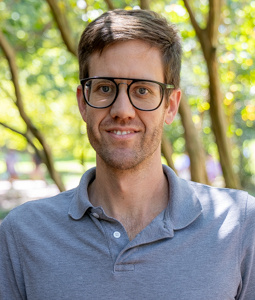
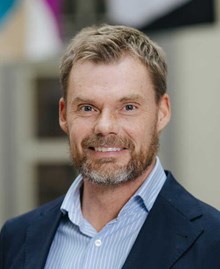
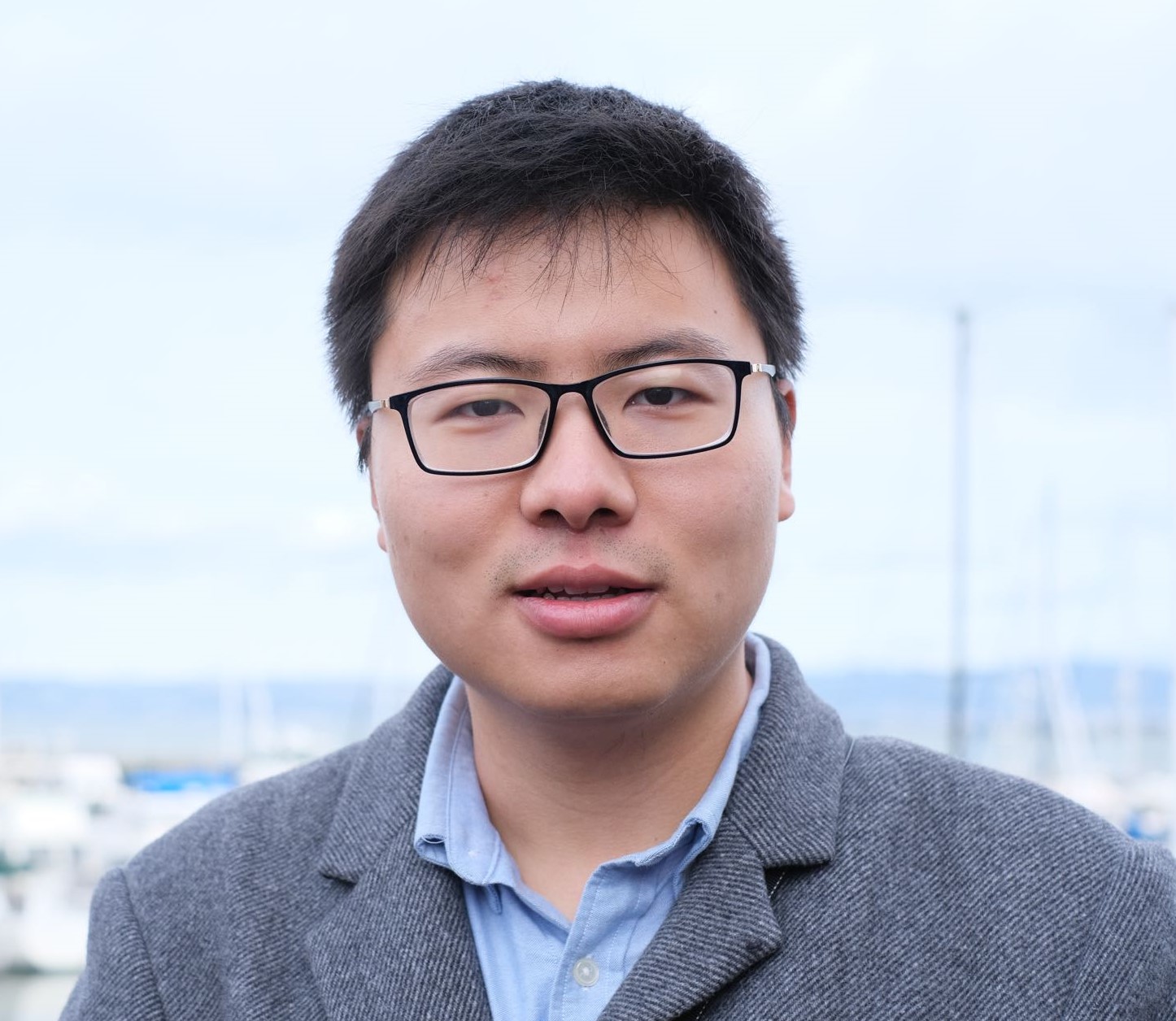
Alexander Aue is a Professor in the Department of Statistics at the University of California, Davis. His research focuses on time series analysis, change-point problems, functional data analysis, and high-dimensional statistics. He holds a Ph.D. and has contributed to foundational methodologies in these areas. His work emphasizes developing robust statistical techniques for analyzing complex data structures, including spectral analysis, bootstrap methods, and functional time series. Notably, he has advanced change-point detection methodologies without relying on dimension reduction. Awarded the prestigious AAAS Fellowship for his contributions, his recent publications explore topics like high-dimensional hypothesis testing, stationarity testing for functional time series, and error estimation in time series predictions.
Michael A. Newton is a Professor and Chair of the Department of Biostatistics and Medical Informatics at the University of Wisconsin–Madison, School of Medicine and Public Health. His research focuses on statistical methodologies for high-dimensional biomedical data, including cancer biology, immunology, and genomics. He is renowned for developing empirical Bayesian methods, stochastic models, and computational tools for analyzing molecular data. His work integrates statistical theory with interdisciplinary collaborations, contributing to advancements in translational biomedicine. Newton has held prestigious awards, including the Mortimer Spiegelman Award (2003) and the COPSS Presidents' Award (2004). He is an elected Fellow of the American Statistical Association and an elected Member of the International Statistical Institute. He leads the Biostatistics and Epidemiology Research and Design (BERD) core at the Institute for Clinical and Translational Research and is affiliated with the Carbone Comprehensive Cancer Center and the Center for Genome Science and Innovation. His teaching includes advanced courses in computational statistics, Bayesian analysis, and statistical methods in molecular biology. Newton directs graduate programs in Statistics and Biomedical Data Science, emphasizing interdisciplinary training.
Giuseppe Cavaliere is a Full Professor of Econometrics at the University of Bologna (since 2006) and a Distinguished Research Professor at Exeter Business School. He holds affiliations with the University of Copenhagen and Aarhus University. His research focuses on time series econometrics, financial econometrics, statistical inference, and empirical macroeconomics. He serves as co-editor of the Journal of Econometrics and associate editor of the Journal of Time Series Analysis. Key roles include being an Elected Fellow of the International Association for Applied Econometrics (IAAE), Fellow of the Journal of Econometrics, and Research Fellow of the Granger Centre for Time Series Econometrics. He previously served as President of the Italian Econometric Association (SIdE). His publications appear in top journals like Econometrica, Annals of Statistics, and Journal of Econometrics. Current research emphasizes bootstrap inference, cointegration, and volatility modeling in nonstationary environments. His work addresses challenges in econometric theory, financial data analysis, and macroeconomic policy evaluation. Awards and recognitions highlight his contributions to econometric methodology and its applications in finance and macroeconomics. His advisory and editorial roles reflect his influence in shaping the field's theoretical and practical advancements.
Karl Gregory is an Associate Professor in the Department of Statistics at the University of South Carolina, part of the McCausland College of Arts and Sciences. He holds a BS from Central Michigan University, and MS and PhD in Statistics from Texas A&M University, followed by a postdoctoral position at the University of Mannheim. His research focuses on bootstrap methods for high-dimensional regression, nonparametric regression, and sparse linear regression models. He currently serves as an Associate Editor for The American Statistician. Dr. Gregory’s work emphasizes methodological advancements in statistical inference, particularly in handling complex data structures such as group testing and high-dimensional settings. His contributions bridge theoretical statistics with practical applications in epidemiology and biomedical research. He is also actively involved in teaching, contributing to courses like STAT 516 and STAT 513. His research trends highlight interdisciplinary collaborations, integrating computational statistics with real-world challenges in health and data science. While no awards are explicitly listed, his editorial role underscores his impact on the statistical community. He maintains a lab focused on developing scalable statistical tools for modern datasets through his website and published works.
Prof. Dr. Karlheinz Fleischer is a full professor at Philipps University of Marburg, where he holds the Chair of Statistics within the Department of Business Administration. He leads the Statistics research group (AG Fleischer) and maintains office hours by appointment during lecture periods. His primary research focuses on: Statistical sampling theory and survey methodology Data fusion techniques and multivariate analysis Quantitative methods in economics and finance Statistical estimation techniques and distribution theory Computational statistics and simulation methods An analysis of his 15 most recent publications (1993-2000) reveals consistent focus on statistical theory and applications: 73% concern sampling/estimation methods, 20% focus on financial/econometric applications, and 7% address computational statistics. Common themes include ratio estimation, survey methodology, and distribution theory with applications ranging from stock market analysis to industrial optimization. He leads a research team including Dr. Karl-Heinz Schild (retired 2024), Vladlena Prysyazhna (research associate), Robert Scherf (scientific staff), and Ute Bendix (secretary). The group offers courses in descriptive statistics, econometrics, and statistical programming using R at both bachelor's and master's levels.
Rickard Sandberg is an **Associate Professor** and **Center Director** at the **Department of Entrepreneurship, Innovation and Technology** at the **Stockholm School of Economics (SSE)**. His work bridges econometrics, statistics, and business analytics with a focus on time series analysis, machine learning applications, and sustainability measurement. **Research Interests**: Machine Learning, Deep Learning, Data Analytics, Predictive Analytics, Forecasting, Nonlinear Time Series Modelling, Structural Economic Modelling, Econometrics, and Measuring Sustainability. His research emphasizes theoretical advancements in statistical methods and their practical application in economic and business contexts. **Key Contributions**: His publications explore unit root testing in nonlinear models, ESG rating challenges, and the impact of energy policies. Notable works include analyzing Scandinavian unemployment trends, cartel damage calculations, and Nordic companies' data-driven transformations. His 2023 paper on ESG ratings proposes solutions for consistency in ambiguous evaluation systems. **Teaching & Outreach**: Teaches advanced econometric time series courses (e.g., MSc 5314) and actively engages in international academic collaborations through presentations in Japan and Brazil. His work on AI for sustainability highlights interdisciplinary outreach efforts. **Labs/Teams**: Leads research initiatives within SSE’s Department, focusing on entrepreneurship and innovation through data and economic modeling frameworks.
Wenlong Mou is an Assistant Professor at the University of Toronto's Department of Statistical Sciences, with additional affiliation at the Vector Institute for AI. His research develops optimal statistical methods and efficient algorithms for data-driven decision-making, focusing on reinforcement learning, stochastic approximation, and causal estimation. He teaches advanced courses in theoretical statistics (STA3000) and stochastic processes (STA447/2006). Education: Ph.D. in EECS, University of California, Berkeley (2023) B.Sc. in Computer Science and Economics, Peking University Research Focus: Mou's work bridges statistical theory with machine learning practice. Key areas include: Theoretical foundations of reinforcement learning (e.g., Bellman equations, continuous-time systems) Efficient algorithms for semi-parametric estimation and debiasing Non-asymptotic analysis of stochastic optimization and MCMC methods High-dimensional statistical inference and causal modeling Publication Trends: Recent articles (2023–2025) emphasize reinforcement learning theory (policy evaluation, adaptive interpolation), causal inference (debiased estimators, propensity scores), and statistical computing (diffusion processes, Langevin algorithms). Methodological rigor and non-asymptotic guarantees characterize his work. Awards: INFORMS APS Student Paper Competition Finalist (2022) Advising and Labs: Actively recruiting PhD students with backgrounds in mathematics or deep learning. Students access GPU clusters via the Vector Institute. Grants unspecified in sources.
Steven T. Garren serves as PAC Chair and Professor in the Department of Mathematics and Statistics at James Madison University (JMU), where he has been employed since 2000. Currently holding the rank of Professor, he previously advanced from Associate Professor (2000-2006) to full Professor in 2006 after receiving tenure in 2003. Education: Ph.D. in Statistics (1994), University of North Carolina at Chapel Hill M.S. in Statistics (1992), University of North Carolina at Chapel Hill B.S. in Computer Science & Statistics, Mathematics, Physics (1989), Roanoke College Research Interests: Dr. Garren specializes in nonparametric statistics , sample surveys , order restricted inference , Markov chain Monte Carlo , and statistical computing . His methodological work addresses complex estimation challenges in constrained parameter spaces and survey data analysis, with emphasis on computational solutions for variance estimation and bias correction. Publications Trend: His 2009-2014 publications reveal consistent focus on delete-a-group jackknife methodology for survey statistics, demonstrating expertise in small-sample bias correction and effective degrees of freedom calculation. Complementary work on order-restricted exponential parameter estimation highlights his dual strength in theoretical development and practical statistical computing applications. Awards: No scientific awards documented in available sources. Advising and Grants: Public records contain no information regarding graduate students, research grants, or funded projects. Labs and Teams: No dedicated research laboratories or collaborative teams are referenced in institutional materials.
Evangelos Ioannidis is an Associate Professor at the Department of Statistics, School of Informatics and Statistics, Athens University of Economics and Business. Born in 1962, he holds a Mathematics PhD from the University of Heidelberg (1993) and has served in his current department since 1999, progressing from Lecturer (1999) to Assistant Professor (2007) and Associate Professor (2023). His expertise spans spectral analysis of time series , cointegration methods , and bootstrap applications in economic data analysis, with additional focus on Official Statistics and sampling techniques . University of Heidelberg: MMath (1987), PhD (1993) Researcher, University of Heidelberg (1987-1991) Visiting Researcher, University of Orsay, Paris Sud (1992-1993) OECD, Paris (1994-1998) National Institute of Labour (1999) His scientific contributions focus on time series econometrics, VAR model spectra, and R&D expenditure analysis. Recent work includes non-parametric spectral estimation and risk-based sampling methodology. He has collaborated with Eurostat on statistical projects (2012-2014). Current affiliations include the Athens University of Economics and Business , where he teaches and conducts research on economic time series analysis and statistical methods.
Brennan Bean is an Assistant Professor in the Mathematics and Statistics Department at Utah State University's College of Arts & Sciences. His work focuses on geospatial modeling, statistical methods for extreme weather analysis, and machine learning applications in structural and environmental engineering. Recent publications highlight expertise in snow load prediction, Bayesian entropy, and interdisciplinary data science. Notable contributions include optimizing design methods for insulated concrete wall panels and addressing deployment challenges for ML models in engineering contexts. Research trends span geospatial data integration, climate change impact assessments, and educational interventions in STEM. Key subfields include ground snow load mapping, extreme value statistics, climate downscaling, and high-dimensional ecological modeling.
Arkajyoti Saha is an Assistant Professor in the Department of Statistics at the Donald Bren School of Information and Computer Sciences , University of California, Irvine. Previously, he was a UW Data Science Postdoctoral Fellow at the University of Washington, working with Drs. Daniela Witten and Jacob Bien. His academic journey includes a PhD in Biostatistics from Johns Hopkins Bloomberg School of Public Health (advised by Drs. Nilanjan Chatterjee and Abhirup Datta), and bachelor's/master's degrees in Statistics from the Indian Statistical Institute, Kolkata. Research Focus: His work bridges statistical methodology and computational tools for high-dimensional and spatially dependent data. Key areas include scalable algorithms for spatial genomics, environmental monitoring, and machine learning applications such as random forests for dependent data. He also develops R packages like RandomForestsGLS to address challenges in correlated data analysis. Publications: His recent work spans spatial variable gene identification, fuzzy clustering theory, and environmental sensor calibration. He emphasizes methodological innovation in statistical genetics and geospatial statistics. Education & Mentorship: Encourages prospective students to contact him directly. His academic background reflects a strong foundation in theoretical and applied statistics, with a focus on bridging computational efficiency and statistical rigor.
Dr. Feng (George) Yu is an Associate Professor of Computer Science and Information Systems at Youngstown State University in Youngstown, Ohio. He serves as the Campus Champion of NSF Extreme Science and Engineering Discovery Environment (XSEDE) at YSU and has been collaborating with XSEDE and Pittsburgh Supercomputing Center since 2014 to bring national workshop series on High-Performance Computing to YSU. Ph.D. in Computer Science, Southern Illinois University (2013) M.S. in Pure Mathematics, Shandong University (2008) B.S. in Information and Computation Science, Northeastern University (2005) Dr. Yu's primary research focuses on database management systems, particularly Approximate Query Processing (AQP) for big data analytics. His work spans multiple areas including Cloud Computing , Blockchain , NoSQL Databases , and Bioinformatics . His recent research has centered on error assessment for AQP using bootstrap sampling techniques, as evidenced by his 2024 publications AQPrius and Error Assessment for Multi-Join AQP . He has also made significant contributions to plant genomics through alternative splicing analysis in various crops. His publication trends show a consistent focus on query processing and optimization, with a recent shift toward more sophisticated error estimation techniques in approximate query processing. His work bridges theoretical database research with practical applications in bioinformatics and educational technology, as seen in his 2024 paper on computing curriculum accessibility for students with ASD. Best of QUEST 2024 Finalist (Faculty Advisor) Research Professorship (2023, 2022, 2019, 2018) Distinguished Professor in Scholarship (2020) Best Paper Award at International Conference on Software Engineering and Data Engineering (2019) Faculty Membership in The Honor Society of Phi Kappa Phi (2022) Dr. Yu actively mentors undergraduate researchers, having advised students including Govardhan Gula for the BEST of QUEST project on accelerating bootstrap resampling, and led a CREU-funded project on recommender systems with undergraduate researchers Alyssa Adams, Olivia Bindas, Maddie Cope, and Elizabeth Durflinger. His research has been supported by external funding sources including Amazon Inc. and the Computer Research Association. He directs the YSU Data Lab , which focuses on data-oriented sciences and operates multiple high-performance research clouds including Sarah Cloud and YSU STEM Cloud. The lab conducts cutting-edge research in approximate query processing, blockchain, and heterogeneous cloud infrastructure.
Dr. Robert Lunde is an Assistant Professor in the Department of Mathematics and Statistics at Washington University in St. Louis. He holds a PhD in Statistics and Data Science from Carnegie Mellon University and completed postdoctoral research at the University of Michigan and University of Texas at Austin. His research encompasses statistical inference for network data, resampling methods, and distribution-free inference. Key areas include conformal prediction for network-assisted regression, bootstrap methods for streaming algorithms, and theoretical analysis of network resampling techniques. His work bridges high-dimensional statistics with computational efficiency in network analysis. Dr. Lunde has taught courses including Mathematical Statistics at Washington University and Probability Theory at Carnegie Mellon. His instructional approach emphasizes foundational theory and practical applications of statistical methods.
Can M. Le is an Associate Professor in the Department of Statistics at the University of California, Davis, within the College of Letters and Science. His research lies at the intersection of statistics, network science, and high-dimensional data analysis, with a focus on theoretical and applied aspects of network modeling and inference. Ph.D. in Statistics, University of Michigan, Ann Arbor His research interests include network analysis, random graph theory, community detection, high-dimensional statistical inference, and regularization of network data. He develops methods for analyzing noisy, complex network structures and has contributed significantly to spectral methods and low-rank approximations in network science. His work bridges theoretical statistics with practical applications in social and biological networks. The recent publications demonstrate a strong trend in modeling and inference for network-linked data, with emphasis on robustness, adaptivity, and concentration properties of random graphs. His work combines deep probabilistic analysis with statistical methodology, particularly in community detection and network estimation under noise and heterogeneity. His research is supported by the National Science Foundation (NSF) grant DMS-2015134, indicating active funding and ongoing contributions to the field. While no formal list of advisees is provided, his collaborative work with leading statisticians such as Elizaveta Levina and Roman Vershynin suggests an active research group and mentoring role. He has no listed scientific awards in the provided text. However, his consistent publication record in top journals (JASA, JRSSB, Annals of Statistics, JMLR) underscores his scholarly impact. Dr. Le's work is closely tied to theoretical and applied statistical research on networks, likely involving a research lab or team focused on network data science, though specific lab names or team structures are not mentioned in the text.
Davide La Vecchia is a Full Professor at the Research Institute for Statistics and Information Science (RISIS) at the University of Geneva, Switzerland. He holds dual PhDs in Statistics from Bocconi University (2007) and Economics from Università della Svizzera italiana (2011). His academic journey includes roles as an Assistant Professor at the University of St. Gallen and Monash University, and he has held visiting positions at Princeton University, the University of Copenhagen, and CREST (Paris). His expertise spans time series analysis, robust and semiparametric inference, financial econometrics, and spatial statistics. Key research contributions include work on saddlepoint approximations, optimal transportation methods, and latent variable models. Davide has led multiple grants, including from the Swiss National Science Foundation and the Australian Research Council. He serves as a referee for top-tier journals in statistics and econometrics. Teaching focuses on advanced statistical methods, including probability theory, time series analysis, and multivariate inference. His recent work emphasizes high-dimensional data modeling, spatio-temporal factor models, and applications to commodities trading networks. He has been honored with editorial roles and speaker invitations at global conferences, reflecting his leadership in statistical methodology.