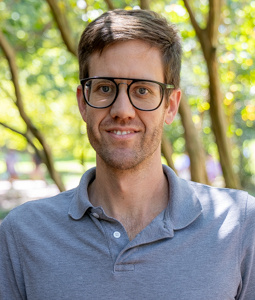
John Duchi is an Associate Professor at Stanford University, holding positions in the Department of Statistics and the Department of Electrical Engineering (with a courtesy appointment in Computer Science). He is affiliated with the School of Engineering. His research focuses on statistical learning, optimization, information theory, and computation, with an emphasis on balancing computational efficiency, privacy, and robustness. Key interests include developing algorithms for large-scale optimization, privacy-preserving techniques, and tools for evaluating machine learning systems' validity. Education: BS and MS in Computer Science (Stanford University, 2007–2008), MA in Statistics (UC Berkeley, 2012), and PhD in EECS (UC Berkeley, 2014). Research Interests: His work addresses three core areas: (1) optimizing trade-offs between computational resources and statistical performance, (2) creating scalable optimization methods, and (3) quantifying confidence in machine learning systems. Recent publications highlight contributions to privacy in federated learning, robust statistical validation, and uncertainty quantification. Articles: His recent work explores topics like distribution-free M-estimation, private federated learning, and instance-optimal mechanisms for statistical estimation. These studies emphasize privacy, robustness, and scalable solutions for modern data challenges. Advising & Grants: While no advisees are listed, his research has been supported by grants focused on optimization, privacy, and statistical theory.
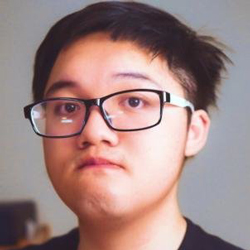
Yiping Lu is an Assistant Professor in the Department of Industrial Engineering and Management Sciences at Northwestern University's McCormick School of Engineering. His research focuses on developing interdisciplinary approaches combining domain knowledge (differential equations, stochastic processes), machine learning, and experiments. Key interests include scientific machine learning (AI4Science), stochastic simulation, and robust machine learning. Education: Ph.D. in Applied and Computational Mathematics, Stanford University (2023) B.S. in Computational Mathematics, Peking University (2019) Research Highlights: Hybrid research integrating ML with scientific domains like PDEs and inverse problems Development of Physics-Informed Learning frameworks Contributions to deep learning theory (ResNets, neural collapse) Advances in kernel operator learning and adversarial robustness Awards: CPAL Rising Star Award (2024) University of Chicago Data Science Rising Star (2022) Stanford Interdisciplinary Graduate Fellowship (2021) Labs/Teams: SCALE Lab (Scientific Computation and Learning at Northwestern) Collaborations with NYU's Courant Institute and Stanford
Xiaofeng Shao is a Professor of Statistics & Data Science at Washington University in St. Louis, with a joint appointment in the Department of Economics. He holds a PhD from the University of Chicago and previously served at the University of Illinois at Urbana-Champaign for 18 years. He is a Fellow of the Institute of Mathematical Statistics and the American Statistical Association. His research focuses on econometrics, time series analysis, change-point detection, high-dimensional statistics, nonparametric methods, and functional data analysis. Recent work emphasizes object-valued time series modeling and machine learning applications in high-dimensional and imaging data. Notable contributions include the dependent wild bootstrap method and self-normalization techniques for time series inference. Key awards include Fellowships from leading statistical societies. His publications span over 20 years, addressing topics like change-point detection in climate projections, statistical methods for COVID-19 infection trends, and high-dimensional dependence testing.
Bruce E. Hansen is the Mary Claire Aschenbrener Phipps Distinguished Chair and Trygve Haavelmo Professor of Economics at the University of Wisconsin-Madison, Department of Economics. He maintains an active research program with publications extending through 2025, demonstrating his continued prominence in econometric methodology. His research interests include: Econometric theory and methodology Time series analysis and forecasting Model selection, averaging, and shrinkage techniques Threshold and structural change models Statistical inference for clustered and dependent data Hansen's recent work focuses on innovative approaches to model averaging, standard error estimation for complex data structures, and unit root testing. His publications demonstrate both theoretical rigor and practical applicability to economic data analysis, with particular attention to handling clustered data, serial correlation, and model uncertainty. His influential publications include 'Least Squares Model Averaging' in Econometrica (2007) which introduced Mallows Model Averaging, and 'A Modern Gauss-Markov Theorem' (2022), both representing significant theoretical contributions to econometrics. His two textbooks 'Probability and Statistics for Economists' and 'Econometrics' (Princeton University Press, 2022) reflect his commitment to teaching and disseminating econometric knowledge. Hansen's research has been supported by multiple National Science Foundation grants (SES-9022176, SES-9120576, SBR-9412339, and SBR-9807111), highlighting the significance and quality of his contributions to the field.
Joseph P. Romano is a distinguished Professor of Statistics and Economics at Stanford University, where he has been on the faculty since 1986. He holds joint appointments in both the Department of Statistics and the Department of Economics, reflecting his interdisciplinary research that bridges statistical theory with economic applications. Romano has established himself as a leading scholar in mathematical statistics with significant contributions to econometrics, climate science, and multiple testing methodologies. Ph.D. in Statistics, University of California, Berkeley (1986) M.S. in Statistics, University of California, Berkeley (1983) A.B. in Statistics, Princeton University (1982), Summa Cum Laude Romano's research focuses on the theoretical foundations and practical applications of statistical methods, particularly in nonparametric statistics, bootstrap and resampling techniques, and multiple testing procedures. His work addresses the challenges of analyzing massive datasets with complex structures, such as those found in biotechnology, clinical trials, and econometrics. He has developed universal statistical tools applicable across diverse fields including climate science, genetics, finance, and education. His recent work emphasizes methods for multiple testing and multivariate inference driven by the availability of massive datasets, where he tackles issues like unknown dependence structures, heterogeneity, and high dimensionality. Analysis of Romano's recent publications reveals a consistent focus on developing robust statistical methodologies for complex data structures. His work spans theoretical advances in U-statistics with growing dimensions, practical applications in seroprevalence studies, and innovative approaches to ranking inference across various domains. The interdisciplinary nature of his research is evident in publications spanning economics journals, statistics journals, and even behavioral science preprints, demonstrating the broad applicability of his methodological contributions. 2021 LGBTQ+ Scientist of the Year, Out to Innovate Fellow, International Association of Applied Econometrics (2020) Fellow, Institute of Mathematical Statistics Presidential Young Investigator Award, National Science Foundation The Canadian Journal of Statistics Award Romano has mentored dozens of doctoral students throughout his career at Stanford, serving as dissertation advisor, co-advisor, and committee member for numerous PhD candidates in Statistics. His research has been consistently supported by National Science Foundation grants, including recent funding for computer-intensive inference with applications to social sciences (2020-2023) and randomization inference for contemporary statistical problems (2013-2016). He has served in various administrative roles at Stanford including Associate Chairman and Chair of Committee on Faculty Affairs. Beyond his academic pursuits, Romano is actively involved in the 500 Queer Scientists visibility campaign and maintains a balanced life with passions in music (having performed at Carnegie Hall), competitive tennis (ranked nationally in his age group), cooking, and architecture.
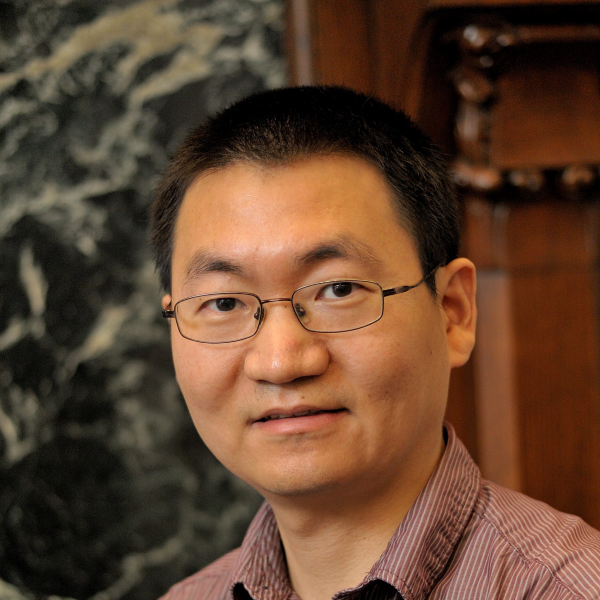
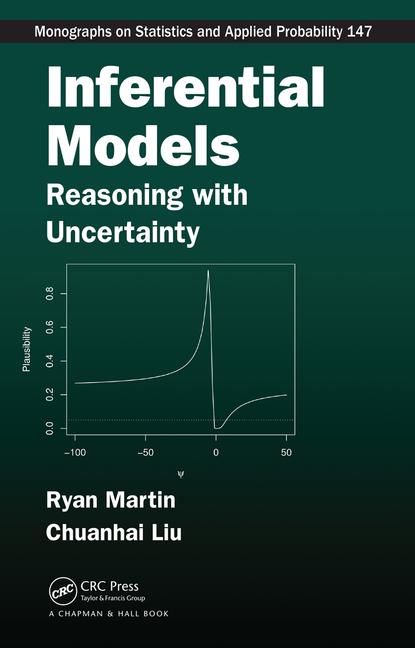
Chuanhai Liu is an Associate Head and Professor of Statistics at Purdue University’s Department of Statistics. He specializes in computational methods for statistical inference, Bayesian analysis, and big data computing systems. His research emphasizes robust algorithms, inferential models, and probabilistic methods. Education: M.S., Wuhan University, Probability and Statistics (1987) M.A., Harvard University, Statistics (1990) Ph.D., Harvard University, Statistics (1994) Research Interests: Computational methods (EM algorithms, MCMC), statistical software systems for big data, theoretical foundations of inference, and prior-free probabilistic modeling. His work bridges computational efficiency and statistical validity, with applications in network analysis, environmental data, and machine learning. Awards: Fellow of the American Statistical Association (2007) Elected Member of the International Statistical Institute (2006) Frank Wilcoxon Prize (2000) Advising & Grants: Supervised 9 Ph.D. students, including interdisciplinary collaborations. His grants focus on distributed statistical computing and inferential frameworks. Active in software development for large-scale data analysis. Labs/Teams: Leads statistical computing initiatives at Purdue, contributing to scalable algorithms and probabilistic inference systems.
Ryan Giordano is an Assistant Professor in the Department of Statistics at the University of California, Berkeley. He holds a PhD in Statistics from UC Berkeley (2019), advised by Michael Jordan, Tamara Broderick, and Jon McAuliffe, an MSc in Econometrics and Mathematical Economics from the London School of Economics (2009), and undergraduate degrees in Mathematics and Theoretical/Applied Mechanics from the University of Illinois at Urbana-Champaign. Prior to academia, he worked as an engineer at Google and HP and served as a Peace Corps volunteer in Kazakhstan. His research focuses on variational methods , Bayesian robustness , sensitivity analysis , and statistical computing , with applications in machine learning, environmental science, and astronomy. He is particularly known for developing scalable Bayesian inference techniques and quantifying the robustness of statistical models to data perturbations. Giordano’s recent work includes studies on Laplace approximation accuracy, MCMC sensitivity to data removal, and robustness metrics for differential expression analysis. He has contributed to open-source statistical software and collaborates with Tamara Broderick’s group at MIT on postdoctoral work (pre-2019 position). His academic trajectory combines theoretical innovation with practical applications, emphasizing reproducibility and computational efficiency in statistical methodology.
Wayne A Fuller is a Research Professor at Iowa State University , specializing in survey methodology and sampling statistics. His work focuses on advanced techniques for handling missing data, small area estimation, and measurement error models, with applications to agricultural surveys and public health research. Education: PhD in Statistics from Iowa State University Research Interests: Fuller's work bridges theoretical and applied statistics through: Development of fractional hot deck imputation methods Bootstrap techniques for variance estimation Small area prediction under constrained models Measurement error correction in health and agricultural data Time series analysis with autoregressive components Integration of administrative data with survey samples Publication Trends: His recent work emphasizes computational approaches to small area estimation (2016-2025), including bootstrap prediction intervals and benchmarking techniques, alongside methodological advancements in imputation and measurement error correction (2004-2015). Contact: Email: waf@iastate.edu Phone: 515-294-5830 Location: Ames, Iowa
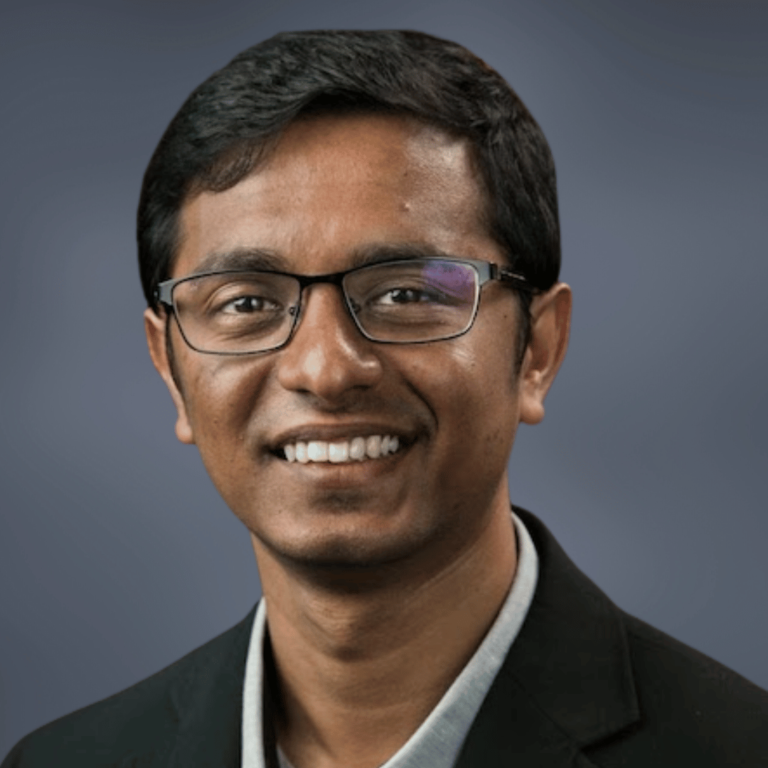
Srijan Sengupta is an Associate Professor of Statistics at North Carolina State University (NC State) since 2020. Previously, he served as an Assistant Professor at Virginia Tech from 2016 to 2020. He holds a Ph.D. in Statistics from the University of Illinois at Urbana-Champaign (2016) and degrees from the Indian Statistical Institute (B.Stat and M.Stat with Distinction). His research focuses on statistical methodology for network data, anomaly detection, bootstrap methods, and scalable inference, with applications in healthcare analytics, epidemiology, and cybersecurity. Education: Ph.D. in Statistics, University of Illinois at Urbana-Champaign (2011–2016) M.Stat (1st Division with Distinction), Indian Statistical Institute (2007–2009) B.Stat (1st Division with Distinction), Indian Statistical Institute (2004–2007) Research Interests: His methodological work includes statistical inference in networks, anomaly detection, bootstrap techniques, and scalable algorithms for big data. Applications span social determinants of health, healthcare analytics, space physics, epidemiology, and cybersecurity. He emphasizes interdisciplinary collaborations, particularly in patient safety event analysis and medical device safety. Awards and Grants: Norton Prize for Outstanding PhD Thesis (2015) NIH R01 Grant ($890,055, Principal Investigator) for statistical algorithms in patient safety (2019–2022) Multiple grants for network inference and anomaly detection (NSF, Socially Determined Inc., Virginia Tech Foundation) Advising and Service: Advises over 20 students across PhD, master’s, and undergraduate research programs. Serves as an Associate Editor for Sankhya, Series B and peer reviewer for top journals. Active in university service roles at NC State and Virginia Tech, including faculty hiring committees and curriculum development. Labs and Collaborations: Leads research on statistical network analysis, including projects funded by NIH and NSF. Collaborates with institutions globally on topics like epidemic thresholds, cybersecurity defenses (e.g., phishing detection), and healthcare analytics.
Alexander Aue is a Professor in the Department of Statistics at the University of California, Davis. His research focuses on time series analysis, change-point problems, functional data analysis, and high-dimensional statistics. He holds a Ph.D. and has contributed to foundational methodologies in these areas. His work emphasizes developing robust statistical techniques for analyzing complex data structures, including spectral analysis, bootstrap methods, and functional time series. Notably, he has advanced change-point detection methodologies without relying on dimension reduction. Awarded the prestigious AAAS Fellowship for his contributions, his recent publications explore topics like high-dimensional hypothesis testing, stationarity testing for functional time series, and error estimation in time series predictions.
Michael A. Newton is a Professor and Chair of the Department of Biostatistics and Medical Informatics at the University of Wisconsin–Madison, School of Medicine and Public Health. His research focuses on statistical methodologies for high-dimensional biomedical data, including cancer biology, immunology, and genomics. He is renowned for developing empirical Bayesian methods, stochastic models, and computational tools for analyzing molecular data. His work integrates statistical theory with interdisciplinary collaborations, contributing to advancements in translational biomedicine. Newton has held prestigious awards, including the Mortimer Spiegelman Award (2003) and the COPSS Presidents' Award (2004). He is an elected Fellow of the American Statistical Association and an elected Member of the International Statistical Institute. He leads the Biostatistics and Epidemiology Research and Design (BERD) core at the Institute for Clinical and Translational Research and is affiliated with the Carbone Comprehensive Cancer Center and the Center for Genome Science and Innovation. His teaching includes advanced courses in computational statistics, Bayesian analysis, and statistical methods in molecular biology. Newton directs graduate programs in Statistics and Biomedical Data Science, emphasizing interdisciplinary training.
Karl Gregory is an Associate Professor in the Department of Statistics at the University of South Carolina, part of the McCausland College of Arts and Sciences. He holds a BS from Central Michigan University, and MS and PhD in Statistics from Texas A&M University, followed by a postdoctoral position at the University of Mannheim. His research focuses on bootstrap methods for high-dimensional regression, nonparametric regression, and sparse linear regression models. He currently serves as an Associate Editor for The American Statistician. Dr. Gregory’s work emphasizes methodological advancements in statistical inference, particularly in handling complex data structures such as group testing and high-dimensional settings. His contributions bridge theoretical statistics with practical applications in epidemiology and biomedical research. He is also actively involved in teaching, contributing to courses like STAT 516 and STAT 513. His research trends highlight interdisciplinary collaborations, integrating computational statistics with real-world challenges in health and data science. While no awards are explicitly listed, his editorial role underscores his impact on the statistical community. He maintains a lab focused on developing scalable statistical tools for modern datasets through his website and published works.
Steven T. Garren serves as PAC Chair and Professor in the Department of Mathematics and Statistics at James Madison University (JMU), where he has been employed since 2000. Currently holding the rank of Professor, he previously advanced from Associate Professor (2000-2006) to full Professor in 2006 after receiving tenure in 2003. Education: Ph.D. in Statistics (1994), University of North Carolina at Chapel Hill M.S. in Statistics (1992), University of North Carolina at Chapel Hill B.S. in Computer Science & Statistics, Mathematics, Physics (1989), Roanoke College Research Interests: Dr. Garren specializes in nonparametric statistics , sample surveys , order restricted inference , Markov chain Monte Carlo , and statistical computing . His methodological work addresses complex estimation challenges in constrained parameter spaces and survey data analysis, with emphasis on computational solutions for variance estimation and bias correction. Publications Trend: His 2009-2014 publications reveal consistent focus on delete-a-group jackknife methodology for survey statistics, demonstrating expertise in small-sample bias correction and effective degrees of freedom calculation. Complementary work on order-restricted exponential parameter estimation highlights his dual strength in theoretical development and practical statistical computing applications. Awards: No scientific awards documented in available sources. Advising and Grants: Public records contain no information regarding graduate students, research grants, or funded projects. Labs and Teams: No dedicated research laboratories or collaborative teams are referenced in institutional materials.
Brennan Bean is an Assistant Professor in the Mathematics and Statistics Department at Utah State University's College of Arts & Sciences. His work focuses on geospatial modeling, statistical methods for extreme weather analysis, and machine learning applications in structural and environmental engineering. Recent publications highlight expertise in snow load prediction, Bayesian entropy, and interdisciplinary data science. Notable contributions include optimizing design methods for insulated concrete wall panels and addressing deployment challenges for ML models in engineering contexts. Research trends span geospatial data integration, climate change impact assessments, and educational interventions in STEM. Key subfields include ground snow load mapping, extreme value statistics, climate downscaling, and high-dimensional ecological modeling.
Dr. Feng (George) Yu is an Associate Professor of Computer Science and Information Systems at Youngstown State University in Youngstown, Ohio. He serves as the Campus Champion of NSF Extreme Science and Engineering Discovery Environment (XSEDE) at YSU and has been collaborating with XSEDE and Pittsburgh Supercomputing Center since 2014 to bring national workshop series on High-Performance Computing to YSU. Ph.D. in Computer Science, Southern Illinois University (2013) M.S. in Pure Mathematics, Shandong University (2008) B.S. in Information and Computation Science, Northeastern University (2005) Dr. Yu's primary research focuses on database management systems, particularly Approximate Query Processing (AQP) for big data analytics. His work spans multiple areas including Cloud Computing , Blockchain , NoSQL Databases , and Bioinformatics . His recent research has centered on error assessment for AQP using bootstrap sampling techniques, as evidenced by his 2024 publications AQPrius and Error Assessment for Multi-Join AQP . He has also made significant contributions to plant genomics through alternative splicing analysis in various crops. His publication trends show a consistent focus on query processing and optimization, with a recent shift toward more sophisticated error estimation techniques in approximate query processing. His work bridges theoretical database research with practical applications in bioinformatics and educational technology, as seen in his 2024 paper on computing curriculum accessibility for students with ASD. Best of QUEST 2024 Finalist (Faculty Advisor) Research Professorship (2023, 2022, 2019, 2018) Distinguished Professor in Scholarship (2020) Best Paper Award at International Conference on Software Engineering and Data Engineering (2019) Faculty Membership in The Honor Society of Phi Kappa Phi (2022) Dr. Yu actively mentors undergraduate researchers, having advised students including Govardhan Gula for the BEST of QUEST project on accelerating bootstrap resampling, and led a CREU-funded project on recommender systems with undergraduate researchers Alyssa Adams, Olivia Bindas, Maddie Cope, and Elizabeth Durflinger. His research has been supported by external funding sources including Amazon Inc. and the Computer Research Association. He directs the YSU Data Lab , which focuses on data-oriented sciences and operates multiple high-performance research clouds including Sarah Cloud and YSU STEM Cloud. The lab conducts cutting-edge research in approximate query processing, blockchain, and heterogeneous cloud infrastructure.