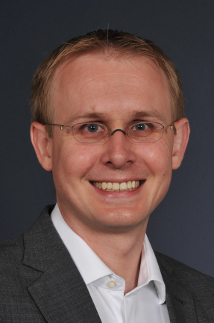
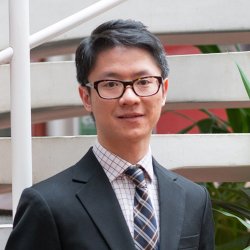
Brett Kolesnik is a Research Fellow in the Department of Statistics at the University of Warwick. His research focuses on probability theory, random structures, bootstrap percolation, and interactions with combinatorics. He has held postdoctoral fellowships at UC Berkeley, San Diego, and the University of Oxford, and was a Senior Demy at Magdalen College. His work includes organizing workshops on bootstrap percolation and collaborating with leading researchers in probability and combinatorics. Education: PhD in Mathematics from the University of British Columbia (advised by Omer Angel). Notable awards include the NSERC Postdoctoral Fellowship and the Florence Nightingale Bicentennial Fellowship in Statistics. Research interests span bootstrap percolation models, random graph dynamics, and stochastic processes. Recent work includes studies on Brownian map geometry, tournament score sequences, and Coxeter group structures. Selected articles explore topics such as critical beta-splitting processes, Catalan percolation, and random walks on algebraic structures. His publications appear in top journals like Electronic Journal of Probability and Annals of Applied Probability . Awards include the Florence Nightingale Fellowship and NSERC Postdoctoral Fellowship. Professional involvement includes organizing the 2024 BIRS workshop on Bootstrap Percolation and contributing to interdisciplinary collaborations in probability and combinatorics.
Axel Gandy is a Professor of Statistics at the Department of Mathematics, Imperial College London. He serves as Director of the EPSRC CDT in Modern Statistics and Statistical Machine Learning , overseeing PhD supervision and advanced statistical training.
Laurens Lootens is a Researcher in the Department of Applied Mathematics and Theoretical Physics (DAMTP) at the University of Cambridge. His work focuses on theoretical physics, particularly in quantum lattice models, topological phases of matter, and mathematical structures underlying quantum systems. He is affiliated with the High Energy Physics research group within DAMTP. His research interests include dualities in quantum systems, matrix product operator symmetries, conformal field theories, and tensor network methods. Lootens explores topics such as entanglement in many-body systems, symmetry-protected topological phases, and the interplay between algebraic structures and physical phenomena. Publications highlight his contributions to understanding lattice representations of dualities, topological sectors in quantum models, and critical lattice models for conformal field theories. His work bridges theoretical frameworks with computational methods, advancing both fundamental physics and quantum information science.
Laura Toni is an Associate Professor in the Department of Electronic and Electrical Engineering at University College London's Faculty of Engineering Sciences. She serves as the leader of a research team focused on advanced signal processing and machine learning applications, documented at https://lasp-ucl.github.io . Additionally, she holds prestigious affiliations as an ELLIS (European Laboratory for Learning and Intelligent Systems) Member and Turing Fellow Alumni. PhD in Electrical Engineering, University of Bologna (2009) MS in Electrical Engineering, University of Bologna (2005) Professor Toni's research spans theoretical and applied aspects of machine learning with particular emphasis on graph-based approaches. Her work integrates signal processing techniques with modern AI methodologies to address complex problems in communication systems, multimedia processing, and scientific discovery. She has made significant contributions to reinforcement learning theory, graph signal processing, and their applications across diverse domains including drug discovery and immersive technologies. Analysis of her recent publications reveals a strong focus on graph-based machine learning approaches, with increasing emphasis on reinforcement learning applications. Her work demonstrates a progression from theoretical foundations to practical implementations, particularly in multimedia processing, network science, and drug discovery applications. Many of her recent papers combine graph neural networks with diffusion models and reinforcement learning for complex prediction and generation tasks. Professor Toni has received notable recognition through her ELLIS membership and Turing Fellow Alumni status, which represent significant achievements in the European AI research community. ELLIS (European Laboratory for Learning and Intelligent Systems) Member Turing Fellow Alumni As an academic leader, Professor Toni supervises postgraduate students and leads a research team at UCL, focusing on cutting-edge projects at the intersection of signal processing and machine learning. Her team has secured research funding through various channels including European initiatives and industry partnerships, enabling them to pursue ambitious projects in graph learning, reinforcement learning, and multimedia processing. The team actively collaborates with institutions worldwide, including previous connections with UCSD and EPFL. Professor Toni leads the LASP research group at UCL (https://lasp-ucl.github.io), which focuses on Large-scale Adaptive Signal Processing for intelligent systems. The team comprises researchers working on graph signal processing, reinforcement learning, and multimedia applications, with strong connections to both theoretical foundations and practical implementations across various domains including healthcare, communications, and immersive technologies.
Neelakantan R. Krishnaswami is a Professor of Computer Science at the University of Cambridge's Computer Laboratory , and a Fellow of Trinity College . His research focuses on the intersection of program verification, programming language design, and foundational topics like type theory and semantics. His work spans areas such as refinement types, parser design, separation logic for systems software, and the semantics of reactive programming. Notable contributions include the Datafun language for higher-order Datalog and the λert type theory for explicit refinement types. He has also developed foundational frameworks for verifying imperative programs using advanced type systems and logical relations. Key publications include 'Explicit Refinement Types' (ICFP 2023), 'flap: A Deterministic Parser with Fused Lexing' (PLDI 2023), and 'CN: Verifying Systems C Code' (POPL 2023). His work frequently addresses challenges in efficiency, correctness, and modularity for both functional and imperative systems. His awards include Distinguished Paper Awards at PLDI 2019 and POPL 2020. His research integrates theoretical rigor with practical tooling, exemplified by contributions to languages like Coq, Lean, and Haskell.
Professor Paul Neville Balister is a faculty member and Fellow in the Mathematical Institute at the University of Oxford, where he serves as a University Lecturer and Professor of Mathematics. His research is centered in combinatorics and discrete mathematics, with strong ties to probabilistic methods and theoretical computer science. His research interests include combinatorics, graph theory, random graphs, probabilistic combinatorics, cellular automata, and discrete probability. These areas are evident from his extensive publication record in top-tier mathematical journals such as the Journal of the European Mathematical Society and Random Structures and Algorithms . The recent publications demonstrate a consistent focus on structural and probabilistic aspects of discrete systems, particularly in monotone cellular automata, graph saturation games, and random graph orderings. His work often explores threshold phenomena, extremal configurations, and asymptotic behavior in combinatorial models. While no formal awards are listed in the provided text, his active collaboration with leading mathematicians and publication in premier venues indicate significant recognition in the field. Professor Balister advises students and contributes to research grants, though specific names and projects are not detailed. He is part of the Combinatorics research group at Oxford, which fosters collaborative work in discrete mathematics and its applications.
Dr. Matteo Fasiolo is a Senior Lecturer in the School of Mathematics at the University of Bristol, specializing in Statistical Science. His research focuses on advanced statistical modeling with significant applications in electricity demand forecasting and medical statistics, leveraging Generalized Additive Models (GAMs) as a core methodology. His primary research interests span: Generalized Additive Models and their extensions for complex data structures Covariance matrix modeling for high-dimensional energy forecasting Probabilistic forecasting techniques for uncertainty quantification Statistical machine learning including variational inference and contrastive learning Applications in electricity grid management and medical diagnostics Recent publications (2023-2025) reveal a dual focus: developing scalable statistical methods for electricity net-demand prediction in Great Britain using additive covariance models, and applying distributional regression to medical challenges like kidney function decline and cardiovascular risk prediction. His work on SoftCVI demonstrates innovation in variational inference, while extensions to GAMs address both mean modeling and full distributional forecasting. Dr. Fasiolo has supervised at least one student as indicated by university records. His research outputs include 16 publications and 2 publicly available datasets, reflecting active contributions to methodological statistics and domain-specific applications in energy systems.
Professor Richard Allen holds the position of Professor of Cognitive Psychology at the University of Leeds, School of Psychology. He joined the university in 2008 as a Lecturer, became Associate Professor in 2015, and was promoted to full Professor in 2025. His academic journey includes a BSc and PhD in Psychology from the University of York, followed by postdoctoral research at the University of Bristol and University of York with renowned psychologists Alan Baddeley and Graham Hitch. He is an Associate Editor of Psychonomic Bulletin & Review (2019–2024) and previously served at Memory (2013–2019). He organized the 4th International Conference on Working Memory (2024) and is involved in international memory conferences. His research focuses on memory function across populations, including mechanisms of binding in working memory, attentional control, and aging. Key projects include ESRC-funded work on cognitive ageing and ARC-funded studies on cognitive offloading in children. He leads the Working Memory and Cognition (WoMCog) and Psychology of Ageing at Leeds (PAL) research groups, and his work is supported by grants from ESRC, ARC, and others. He has supervised over 20 PhD students and teaches at all levels in the School of Psychology. Research interests emphasize memory binding, attention-memory interactions, and applications to education/clinical settings. His work explores how information is encoded, maintained, and retrieved across modalities, with a focus on lifespan development and neurodegenerative conditions. Recent studies include detecting long-term forgetting in epilepsy and improving memory strategies for older adults. He has pioneered concepts like 'visuospatial bootstrapping' and 'strategic prioritization' in memory research.
Professor Javier Hidalgo is a Professor of Econometrics at the Department of Economics, London School of Economics and Political Science (LSE). He holds roles as Co-Director of the STICERD Econometrics Programme and has extensive editorial experience with journals such as Journal of Econometrics and Econometric Theory . His expertise spans econometric theory, with a focus on semiparametric estimation, long-memory processes, and structural change models. Education: PhD in Economics from LSE (1990), M.Sc. in Econometrics and Mathematical Economics (1985), and a Licenciatura in Mathematics from Universidad Complutense de Madrid (1982). Research Interests: Includes semiparametric estimation, dependence in economic analysis, diagnostic testing, and long-memory processes. His work emphasizes methodological advancements in econometric analysis of nonstationary and dependent data. Grants & Awards: Secured ESRC grants totaling over £400k for research on nonstationary economic data and long-memory processes. His 2015 article received the prestigious Tjalling C. Koopmans Econometric Theory Prize. Teaching & Supervision: Teaches advanced econometric courses including EC309 and EC518. Supervised 3 PhD students and served as Program Director for the M.Sc. in Econometrics and Mathematical Economics (2004–2019). Labs/Teams: Active in STICERD’s Econometrics Programme, fostering collaborative research in time series and econometric theory.
Dr. Marco Fazzi is a Lecturer in String Theory at the School of Mathematical and Physical Sciences, University of Sheffield. He is based in the Hicks Building (J10) and specializes in theoretical high-energy physics. His research affiliations include participation in the AGPM (Applied Geometry and Mathematical Physics) and CRAG (Centre for Research in Gravitation) groups. Dr. Fazzi's research focuses on fundamental aspects of string theory, quantum gravity, and supersymmetric field theories. Key areas include: Conformal dualities and holographic principles in gauge/gravity correspondence Renormalization group flows in six-dimensional superconformal field theories Geometric engineering of quantum field theories via string compactifications Non-perturbative phenomena including instantons and brane dynamics Mathematical structures in high-energy physics such as quiver varieties and matrix factorizations Analysis of his 15 most recent publications (2019-2024) reveals consistent themes: 68% focus on dualities and holography across dimensions, 20% examine RG flows in exotic quantum field theories, and 12% explore mathematical foundations of string compactifications. Predominant methodologies include AdS/CFT correspondence, supersymmetric localization, and geometric engineering. Dr. Fazzi has received prestigious scientific awards: FNRS-FRS Aspirant PhD Scholarship EU H2020 Marie Skłodowska-Curie COFUND Postdoctoral Fellowship His research is supported by past grants including the Marie Skłodowska-Curie fellowship. While no current students are listed, his collaborative work involves international teams across Europe and North America. Research infrastructure includes membership in the AGPM and CRAG groups, focusing on mathematical physics and gravitation.
Dr. Swati Chandna is a Senior Lecturer at the School of Computing and Mathematical Sciences, Birkbeck, University of London. She holds an honorary position as an Honorary Lecturer in Statistics at University College London (UCL) from January 2023 to January 2026. She earned her PhD in Statistics from Imperial College London in 2013. Her research focuses on statistical modeling, network analysis, and bioinformatics, with notable contributions to stochastic networks, single-cell genomic data analysis, and complex-valued signal processing. Teaching responsibilities include modules such as Bayesian Methods, Analysing Data, Statistical Analysis, and Project Applied Statistics. She serves as Admissions Tutor for Graduate Certificate and Diploma in Statistics for Data Science and as School Ethics Lead at Birkbeck. Her work bridges theoretical statistics with practical applications in genomics, environmental modeling, and biomedical research. Dr. Chandna’s recent research explores topics like covariate-driven network estimation, stochastic modeling of genomic data, and bootstrap techniques in source separation. Her publications reflect interdisciplinary collaboration across statistics, computer science, and life sciences.
Kwaku Ohene-Asare is a Lecturer in Business Analytics at De Montfort University, UK, within the School of Leadership, Management and Marketing. He holds a PhD in Operational Research and Management Science from the University of Warwick, an MSc in Economics and Finance (with distinction) from Loughborough University, and a BSc in Economics (first-class honors) from the University of Ghana-Legon. He also completed a certificate in Decision Science and Machine Learning at MIT, USA. He has held visiting professorships at Warwick University and Stellenbosch University and plays a senior lecturer role at the University of Ghana. His educational background includes: PhD in Operational Research and Management Science, University of Warwick, UK (2012) MA in Decision Science and Machine Learning, MIT, USA MSc in Economics and Finance, Loughborough University, UK (Distinction) BSc in Economics, University of Ghana-Legon (First Class) PGCAP (Part 1), University of Warwick, UK (2009) Certificate in Nonparametric & Bootstrap Methods, Sapienza University of Rome, Italy (2012) Kwaku's research interests span business analytics, management science, artificial intelligence, data science, machine learning, economic efficiency, productivity analysis, data envelopment analysis (DEA), stochastic frontier econometrics, and their applications in energy, finance, insurance, and credit unions. He has developed a research-based DEA course at the University of Ghana and pioneered the advanced quantitative research methods course for PhD students since 2015. His work integrates cutting-edge computational techniques and econometric modeling to address real-world economic and business challenges. The recent trend in his publications shows a strong focus on efficiency and productivity analysis across sectors—particularly in energy, banking, and insurance—using advanced non-parametric and parametric methods. He frequently applies DEA, Malmquist indices, and stochastic frontier models to assess performance in African and ECOWAS economies, with a growing emphasis on sustainability, undesirable outputs, and dynamic efficiency. His work bridges theoretical rigor with practical policy implications. His scientific awards include: Global Leadership Award (2021) DFID Shared Scholarship Scheme Award (2004) Doctoral Research Scholarship, Warwick Business School (2007) He has received multiple research grants, primarily from the University of Ghana Business School (UGBS), as Principal Investigator, including projects on data science and machine learning, energy productivity, banking efficiency, and multinational operations. He has supervised PhD students through course development and research mentorship. His consultancy work includes efficiency analysis for the National Petroleum Authority, Ghana, and market entry feasibility studies for international firms. He is affiliated with the Centre for Enterprise and Innovation (CEI), the Institute for Sustainable Economics, and the Institute of Energy and Sustainable Development (IESD) at DMU, where he contributes to interdisciplinary research on sustainable economic development. He is an active member of professional societies including the Operational Research Society (UK), INFORMS, Association of European Operational Research Societies, British Academy of Management, Productivity Analysis Research Network (USA), and the Economic Society of Ghana.
Andrea Guerrieri is a Lecturer at City, University of London, with a focus on Mathematics. Their academic career spans multiple institutions, including CERN, University of Padua, Perimeter Institute, Tel Aviv University, ICTP South American Institute for Fundamental Research, and Chulalongkorn University. PhD in Physics from Università degli Studi di Roma Tor Vergata (2013-2016) Laurea magistrale in Physics from Università degli Studi di Roma La Sapienza (2011-2013) Laurea triennale in Physics from Università degli Studi di Roma La Sapienza (2008-2011) Andrea's research interests lie at the intersection of theoretical physics and mathematics, particularly in quantum field theory, string theory, and scattering amplitudes. They have developed innovative bootstrap methods for studying effective field theories and flux tubes in QCD. Recent work explores multiparticle S-matrix constructions and M-theory implications in scattering amplitude spaces. Their publications reflect a deep engagement with high-energy physics, emphasizing mathematical rigor. Key themes include soft theorems, Wilson-Fisher fixed points, and the analytic structure of conformal blocks. Andrea has collaborated with prominent researchers across institutions in Europe, Canada, Israel, Brazil, and Thailand.
Dr. Ehsan Kharati Koopaei is a Senior Lecturer (Associate Professor) in Statistics/Data Science at the School of Computing and Mathematics, Manchester Metropolitan University. He serves as the Early Career Researchers (ECR) Representative and holds a FHEA (Fellow of the Higher Education Academy) and PGCert. His academic journey includes a BSc in Statistics from Iran, an MSc in Mathematical Statistics, and a PhD in Statistics from Italy. His research focuses on statistical inference, generalized linear models, and machine learning applications in public health and clinical trials. He has contributed to projects funded by the National Institute for Health and Care Research (NIHR), including studies on exercise interventions for abdominal aortic aneurysms, psychoeducation for psychosis, and suicide prevention in autistic adults. Dr. Koopaei has collaborated on over £9 million in research grants, serving as a statistician in trials such as the TACTIC telomerase study and the UK Mini Mitral valve surgery trial. His work emphasizes bridging statistical rigor with real-world healthcare applications. Awards include FHEA and PGCert. He teaches undergraduate courses in Computer Science and Mathematics and supervises potential PhD students in statistical data science.
Jason Chen is an Associate Professor in Tourism and Events Management at the University of Surrey, serving as Director of Postgraduate Research in the School of Hospitality and Tourism Management. He holds a PhD in Tourism Management from The Hong Kong Polytechnic University, alongside earlier degrees in Economics (BA, 2004) and Economics and Statistics (MSc, 2007). His research focuses on tourism economics, tourist behavior, demand forecasting, and quantitative methods. Notable projects include 'Understanding the Landscape of Inbound Tourism Measurement' and collaborations with organizations on tourism impact assessments. He has secured grants, including an ESRC grant for the School, and advises on postgraduate research programs. Teaching responsibilities include modules in International Tourism Management, Consumer Behavior, and Researcher Development. His recent publications emphasize spatiotemporal models, crisis management in tourism, and pro-environmental behavior interventions. He has contributed to policy-relevant studies on tourism's economic role and sustainability challenges. Key research themes include destination resilience, electric vehicle adoption, and behavioral nudging for sustainability. His work bridges academic theory with practical applications, supporting industry and policy stakeholders.