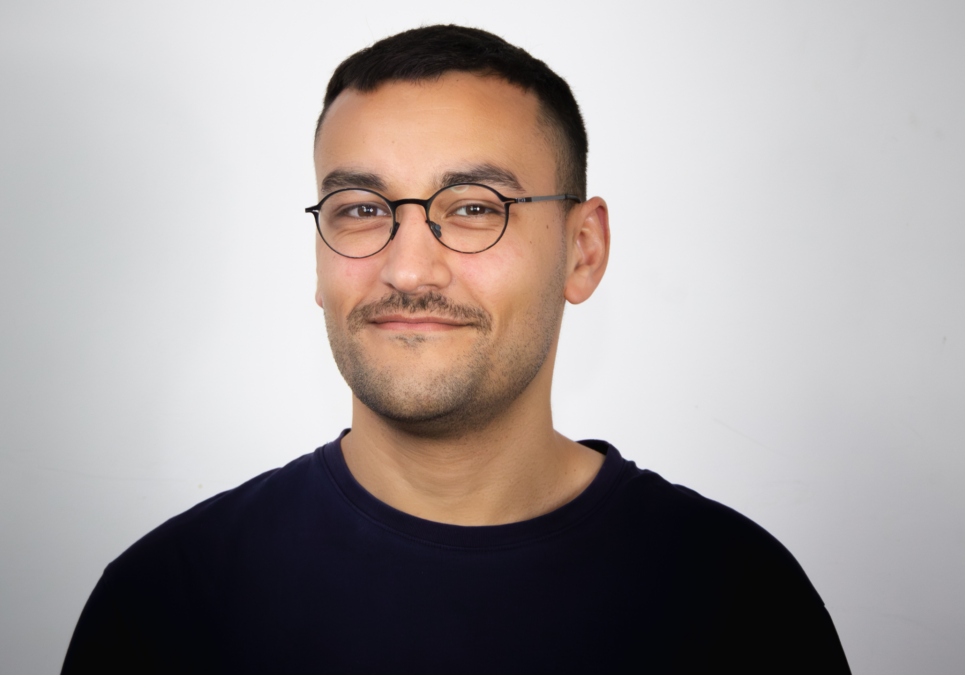
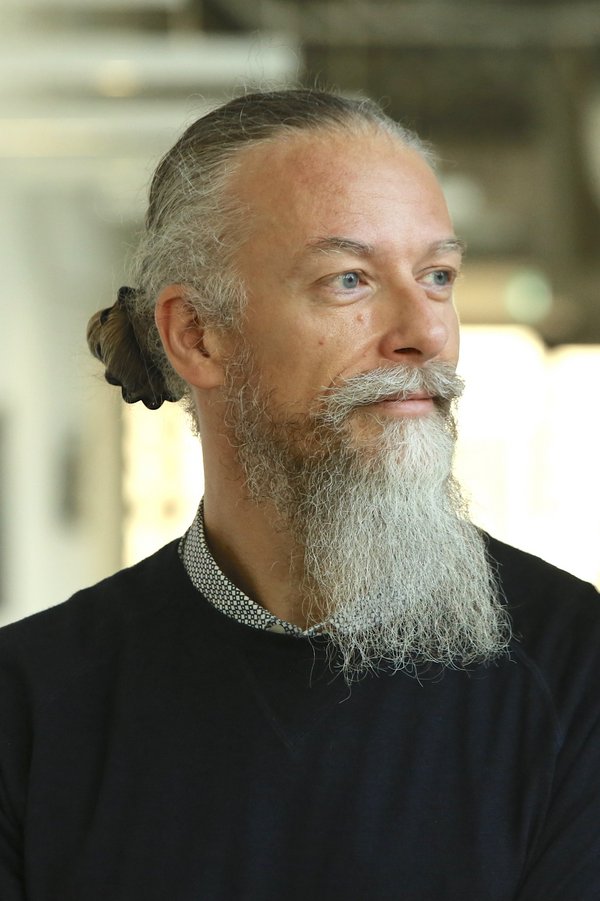
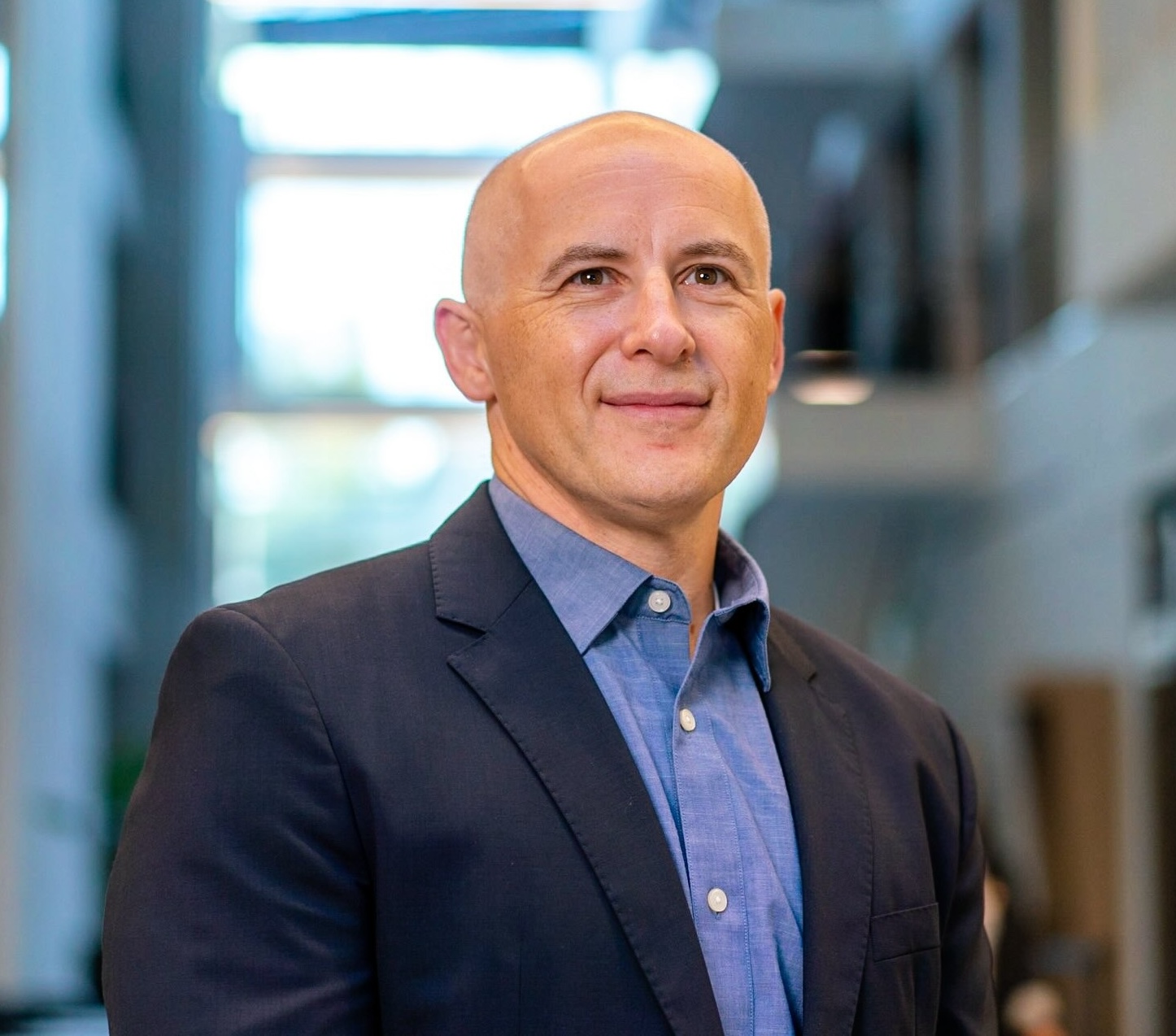
Patrick Bastian is a Scientific Assistant in Stochastics at Ruhr University Bochum. His methodological research develops statistical tools for functional time series and high-dimensional data. Focus areas include change point detection in biomechanical data, dependence testing in large-scale datasets, and equivalence testing frameworks. Recent publications introduce novel bootstrap methods for U-statistics in high dimensions.
Ziye Yang is a researcher active in Speech Signal Processing and Machine Learning applications. His work focuses on advanced techniques like weighted prediction error , deep learning models , and noise reduction in audio systems. He has collaborated extensively with Jie Chen and Cédric Richard on topics including speech dereverberation and nonlinear residual echo suppression . His research spans multiple subfields including distributed speech processing , attention-based architectures , and deconvolution regularization . Recent publications (2024-2025) emphasize hybrid methods combining traditional signal processing with modern neural networks, particularly for reverberation modeling and echo suppression. Key trends in his work include Integration of data-driven priors in signal enhancement Development of plug-and-play frameworks for audio processing Application of attention mechanisms in dual-stream networks
Elena A. Erosheva is a Professor of Statistics and Social Work at the University of Washington , where she serves as the Director of the Center for Statistics and the Social Sciences (CSSS). She is also affiliated with the School of Social Work and has made significant contributions to statistical methodology for the social, behavioral, and health sciences. Professor, University of Washington (Statistics & Social Work) Director, Center for Statistics and the Social Sciences (CSSS) Joint appointment with School of Social Work Editorial board member for top journals including Annals of Applied Statistics and Psychometrika Her research focuses on: Bayesian inference and hierarchical models Mixed membership and latent variable models for complex data Statistical approaches for longitudinal and multivariate categorical data Applications in social sciences, health, and medical research Gender homophily in academic collaborations Measurement of chronic disability and cognitive outcomes Recent publications analyze: Statistical learning models for rankings and scores Gender-based homophily in scholarly collaborations Variational inference techniques Mixed outcome latent variable models for neuroscience Methodology for detecting bias in peer review Major awards include: 2021 Fellow, American Statistical Association 2024 Elected Member, International Statistical Institute 2013 Mitchell Prize for Bayesian contributions 2014 America Competes Act Challenge winner She has advised numerous research projects and served as a PI for NIH-funded work on cognitive outcomes with advanced psychometrics.
Sujian Li is an active researcher in computational linguistics and natural language processing, with recent contributions to advanced large language model applications. Their work spans multiple critical areas including hierarchical memory frameworks for Wikipedia generation, self-refining entity grounding systems, and long-context embedding model extensions. Key Research Areas: Continual learning in NLP, multimodal reasoning, cross-lingual knowledge transfer, and factual consistency evaluation. Notable Methods: MOG framework for structured generation, ISR self-refinement scheme, LongAttn token-level analysis, and IPR step-level process refinement. Article Trends show a focus on improving LLM robustness through adversarial training, enhancing coherence via discourse-level graph modeling, and developing benchmarks like WIKIGENBENCH for real-world evaluation. Their research also addresses knowledge integration in biomedical multilingual models (KBioXLM) and mathematical parsing via tree-structured decoding. Collaborations include leading researchers like Yifan Song, Dawei Zhu, and Wenhao Wu across institutions and projects.
Professor Martin Huber is a leading academic in Applied Econometrics and Policy Evaluation at the University of Fribourg within the Faculty of Management, Economics and Social Sciences . He also serves as a Research Associate at the Centre for European Economic Research (ZEW) and collaborates with institutions like Soda Labs (Monash Business School) . PhD in Economics and Finance (2010) Assistant Professor at University of St.Gallen (2010-2014) Research stays at Harvard University (2011/2012) and University of Sydney (2014, 2019) His research focuses on data-based causal analysis , machine learning , and policy evaluation in labor, health, and education economics. He has pioneered the integration of causal machine learning with traditional econometric methods, developing novel algorithms for bid-rigging detection and dynamic treatment effect analysis. Recent publications demonstrate methodological advancements in graph attention networks , doubly robust estimation , and causal mediation analysis . His work addresses practical challenges like sample selection bias , instrument validation , and high-dimensional data in policy evaluation. Huber actively engages in teaching through initiatives like the ZEW summer school and Fribourg Winter School , where he instructs on R , Python , and causal analysis tools . He maintains a strong online presence through @causalhuber.bsky.social and has published Impact Evaluation in Firms and Organizations (MIT Press, 2023).
Dr. Gitte Kremling is a Postdoctoral Researcher in the Department of Mathematics at the University of Hamburg, affiliated with the Mathematical Statistics and Stochastic Processes research group. She works within Johannes Lederer’s Research Group, focusing on theoretical foundations of artificial neural networks and their connections to empirical process theory. Education: PhD in Mathematics (University of Wisconsin-Milwaukee), advised by Gerhard Dikta and Richard Stockbridge Her research bridges mathematical theory with practical advancements in machine learning, emphasizing rigorous frameworks for deep learning models. She actively contributes to software development through the R package gofreg , which implements bootstrap goodness-of-fit tests for regression models. Gitte has extensive teaching experience at both undergraduate and graduate levels, having taught courses at FH Aachen University of Applied Sciences and University of Wisconsin-Milwaukee. Her teaching includes Statistical Modeling, Calculus, Algebraic Literacy, and specialized summer courses for underrepresented students. Contact: gitte.kremling@uni-hamburg.de
Sami Nenno is an associate researcher at the AI & Society Lab of the Alexander von Humboldt Institute for Internet and Society (HIIG) and a postdoctoral researcher at the Center Synergy of Systems (Synosys) at the Technical University of Dresden. His work focuses on the intersection of artificial intelligence, disinformation, and political communication, with an emphasis on developing automated tools for fact-checking and analyzing large-scale text data. His educational background includes: Doctorate in Communication Science from the University of Bremen Master's degree in Philosophy from Humboldt University Berlin Master's degree in Data Science from the Berlin University of Technology Nenno's research interests center on disinformation and political communication in social media, natural language processing for fact-checking, and sustainable artificial intelligence. He has developed tools for monitoring disinformation and has investigated the sustainability and efficiency of machine learning models, particularly in reducing energy consumption during training. His recent publications demonstrate a strong focus on the analysis of misinformation across multiple countries, the use of fact-checking articles as data sources, and the development of methods for claim detection and named entity recognition in the political domain. The work spans communication science, computer science, and sustainable computing. No scientific awards were mentioned in the provided information. There is no information available regarding advising of students or research grants. Nenno is actively involved in the AI & Society Lab at HIIG, where he contributes to projects such as Public Interest AI, which aims to develop methods for assessing public interest orientation in AI systems. He also participates in organizing events and workshops on AI and society, including the Sustainable AI series and hackathons.
Kai Zehmisch is a Professor of Mathematics at Ruhr University Bochum, holding the Chair of Symplectic Geometry within the Faculty of Mathematics. His research focuses on symplectic and contact topology, particularly Reeb dynamics, holomorphic curves, and geometric analysis. He is affiliated with the Floer Center of Geometry and contributes to collaborative projects like CRC/TRR 191. Key research areas include symplectic capacities, contact structures, and applications of polyfold theory. Notable contributions include foundational work on overtwisted contact manifolds, Weinstein conjecture validations, and symplectic fillings. His recent publications address non-fillability via polyfolds and geometric rigidity in cotangent bundles. Zehmisch's work bridges dynamical systems with geometric topology, leveraging advanced techniques like holomorphic discs and surgery methods. His research often intersects with algebraic geometry and Finsler geometry, reflecting a broad yet deep engagement with modern geometric problems.
Thorsten Dickhaus is a Professor of Mathematical Statistics at the University of Bremen , affiliated with Faculty 3 - Mathematics and the Institute for Statistics . His research focuses on multiple testing procedures, asymptotic statistics, nonparametric methods, and computational applications in life sciences. He holds a Ph.D. in Mathematics from Heinrich-Heine-University Düsseldorf (2008) and has held academic positions at Humboldt University Berlin and the Weierstrass Institute for Applied Analysis and Stochastics (WIAS) Berlin before joining the University of Bremen in 2015. Key professional roles include: Principal Investigator in the Research Training Group (RTG) 2224 π³ (Parameter Identification) Principal Investigator in the Helmholtz School for Marine Data Science (MarDATA) Editorial roles for journals like Journal of Statistical Planning and Inference and Statistics (Berlin) Research projects include funded initiatives on multiple testing methodologies, neuroeconomics, and statistical inference in behavioral genetics. His Erdős number is 3, and he actively contributes to academic service through conference organization and editorial work.
Prof. Grigory Vilkov is a Professor of Finance at Frankfurt School of Finance & Management. His research focuses on options markets, volatility dynamics, climate finance, and machine learning applications in finance. He develops quantitative tools like the qmoms Python package for analyzing volatility surfaces. Key research areas include gamma risk, 0DTE options trading, and climate-related financial risk. He collaborates on projects like the BIS Bulletin (2024) and studies firm-level climate exposure. His work bridges theoretical finance with practical applications in portfolio construction and risk management. Research interests span options-implied moments, factor dispersions, and narrative-driven asset pricing using NLP. He has published in top journals like Review of Financial Studies and maintains active data repositories on OSF. His current projects explore ML/DL for portfolio optimization and automatic feature discovery in financial data.
Prof. Nils Detering is a Professor at the Chair of Financial and Actuarial Mathematics at Heinrich Heine University Düsseldorf. He previously held a tenure-track Associate Professor position at the University of California, Santa Barbara. His research focuses on systemic risk in financial systems, energy market modeling, and machine learning applications in finance. He has contributed over 20 peer-reviewed articles in top journals like Finance & Stochastics and SIAM Journal on Financial Mathematics . Education: PhD in Finance from Frankfurt School of Finance & Management and a Mathematics undergraduate degree from Georg-August University Göttingen. His work bridges stochastic analysis, random graph theory, and financial engineering. Key Research Areas: Systemic Risk, Energy Markets, Machine Learning in Finance, Random Graphs Teaching: Probability Theory, Stochastic Processes, Financial Mathematics courses at both undergraduate and graduate levels. Publications highlight methodological innovations in operator learning, reinforcement learning for financial systems, and quantitative risk management frameworks. His 2022 paper on reinforcement learning for banking networks earned a best paper award at the ACM International Conference on AI in Finance. Current affiliations include leading academic initiatives at HHU and collaborating on interdisciplinary projects combining mathematical finance with computational methods.
Karsten Reichold is an Assistant Professor at TU Wien, affiliated with the Institute of Statistics and Mathematical Methods in Economics within the Faculty of Mathematics and Geoinformation. His research bridges econometrics, time series analysis, and statistical learning, with a focus on robust inference in cointegrating regressions and forecasting applications in macroeconomics. His research interests include: Econometrics and time series modeling Statistical learning methods in economics Bootstrap and resampling techniques Empirical macroeconomic forecasting Stochastic processes and cointegration Panel data and polynomial cointegration The recent publication trend indicates a strong methodological focus on bootstrap inference, particularly self-normalized test statistics in cointegrating regressions, with implementation provided through open-source MATLAB code. His work emphasizes practical, ready-to-use econometric tools for robust statistical inference. Karsten Reichold has not been mentioned as receiving any scientific awards in the provided material. He is actively involved in teaching, offering courses such as Selected Topics in Econometrics, Stationary Processes and Time Series Analysis, and Introduction to Stochastic Processes. No information is available regarding student advisement or external research grants. He contributes to the academic community by sharing reproducible research code on GitHub. He leads and maintains research software repositories related to cointegration and panel FM-OLS estimation, promoting open science and computational reproducibility in econometrics.
Timo Terasvirta is the Ladislaus von Bortkiewicz Professor of Statistics at the School of Business and Economics , Humboldt University of Berlin. His research focuses on financial econometrics, time series analysis, and dynamic risk management. Key affiliations: International Research Training Group 1792, Center for Applied Statistics and Economics (CASE), Collaborative Research Center 649 (Economic Risk). Research areas: Financial econometrics, quantile regression, copula models, climate risk, high-dimensional time series. Recent publications emphasize tail risk modeling, hidden Markov structures, and nonparametric methods for financial and environmental applications. His work has been presented at institutions like Princeton University, Cambridge University, and London School of Economics.
Prof. Dr. Arnold Janssen is a retired professor (emeritus) at the Department of Mathematics, Heinrich-Heine-Universität Düsseldorf, affiliated with the Faculty of Mathematics and Natural Sciences. He specializes in mathematical statistics, asymptotic theory, nonparametric methods, and survival analysis. His research spans statistical methodology, including bootstrap techniques, false discovery rate control, and applications in biostatistics and financial mathematics. Janssen has contributed extensively to statistical theory through numerous peer-reviewed publications and has collaborated with researchers across disciplines. Research interests include: Mathematical statistics and asymptotic methods Nonparametric and semiparametric models Survival analysis and clinical trial design Extreme value theory and high-dimensional data analysis Bootstrap methods and permutation tests Applications in biostatistics and financial risk modeling His recent work emphasizes methodological advancements in multiple testing procedures, with applications to genomics and medical research. Janssen has also explored statistical foundations in functional data analysis and stochastic processes. Key contributions include theoretical developments in false discovery rate (FDR) control, nonparametric hypothesis testing frameworks, and the application of Le Cam's theory to modern statistical challenges. His collaborations span interdisciplinary projects with biologists, clinicians, and financial researchers.
Dr. Martin Dunsche is a Researcher at Ruhr University Bochum, affiliated with the Department of Mathematics under the Faculty of Mathematics. His primary research focus is on differential privacy , particularly in the context of cryptographic implementations and statistical methodologies to mitigate timing side-channel vulnerabilities. He contributes to the Group Dette and works within the Institute of Statistics and Chair of Stochastics . Collaboratively, he developed the open-source tool RTLF, which employs empirical bootstrap techniques to improve statistical evaluation of timing leaks in cryptographic systems. His recent work analyzes TLS libraries, revealing exploitable vulnerabilities in LAN settings through quantitative timing measurements. Martin serves as a reviewer for academic journals and is involved with initiatives like HDM@RUB . Office hours are by appointment. Education details are not explicitly provided in the text, though his professional role implies advanced academic training in statistics or mathematics. He has no listed scientific awards, and no grants or student advisement records are mentioned. His affiliation with the Institute of Statistics and Chair of Stochastics indicates a strong methodological foundation in statistical applications for cybersecurity and differential privacy.