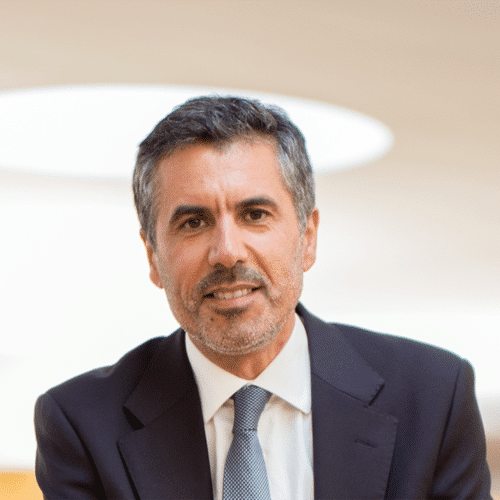
Morten Overgaard is an Associate Professor in the Department of Biostatistics at the Department of Public Health, Aarhus University. His primary roles include teaching and research, with expertise in biostatistics and survival analysis. He has been active in research since 2014, contributing to over 24 publications focusing on statistical methodologies in healthcare and epidemiology. Research interests include competing risks, probability theory, regression analysis, and variance modeling. His work often addresses clinical and public health challenges through advanced statistical techniques. Overgaard collaborates internationally, particularly in studies involving familial health histories and terminal event analysis. His recent articles (2023–2025) highlight contributions to win ratio estimation, variance modeling in treatment effects, and cataloging familial conditions linked to autism. These studies emphasize methodological rigor and practical applications in medical and public health contexts. Awards and grants are not explicitly listed in the provided text, but his active research output suggests sustained academic engagement. Overgaard’s work is disseminated through high-impact journals like the Scandinavian Journal of Statistics and Lifetime Data Analysis .
Rasmus Tangsgaard Varneskov is a Professor of Statistics and Financial Econometrics at the Department of Finance, Copenhagen Business School (CBS). He is also employed by Alphadyne Asset Management. His research focuses on econometrics, high-dimensional statistics, asset pricing, and financial economics, with a strong emphasis on time series analysis and financial econometrics methodologies. Before joining CBS, he was a postdoctoral researcher in Finance at Northwestern University's Kellogg School of Management. He holds affiliations with the Center for Big Data in Finance (BIGFI) and the Center for Statistics at CBS. His educational background includes advanced studies in statistics and econometrics, though specific degrees are not detailed in the provided text. Rasmus' research interests span advanced statistical methodologies for financial data, including volatility estimation, bootstrap techniques, predictive regressions, and structural change analysis. His work has been published in top journals such as Journal of Econometrics , Journal of Financial Economics , and Quantitative Economics . A key achievement is his 2023 Econometric Theory Multa Scripsit award for prolific and impactful contributions. His publications address topics like Laplace transforms of volatility, consistent inference in predictive regressions, and dynamic hedging strategies. While no formal advisees are listed, his industry collaborations (e.g., with Nordea and Alphadyne) suggest applied research engagement. He contributes to CBS's research initiatives through participation in interdisciplinary centers focused on big data and financial statistics.
José Fernando Mendes is a full Professor in the Department of Physics at the University of Aveiro, Portugal. He is also the Director of the Institute i3N-Aveiro and President of the Complex Systems Society. He is a member of the External Faculty at the Complexity Science Hub (CSH), Vienna. His academic leadership includes serving as Vice-Rector for Research at the University of Aveiro from 2010 to 2018. University: University of Aveiro School: College of Sciences Department: Department of Physics Position: Full Professor Leadership: Director, Institute i3N-Aveiro; President, Complex Systems Society External Affiliation: External Faculty, Complexity Science Hub (CSH) He holds a Ph.D. in Physics from the University of Porto (1995) and obtained the 'Agregado' (habilitation) in 2000. He was a professor at the University of Porto before moving to the University of Aveiro in 2002. Ph.D. in Physics, University of Porto, 1995 Degree in Physics, University of Porto, 1987 'Agregado' (Habilitation), University of Porto, 2000 José Fernando Mendes specializes in complex systems and statistical physics , with a focus on the structure and dynamics of complex networks. His research spans phase transitions, percolation theory, network epidemiology, neuroscience, granular media, and self-organized criticality. He investigates systems such as the World Wide Web, biological networks, and social networks using theoretical and computational models. His work bridges physics, computer science, and biology, contributing to foundational understanding in network science. His recent publications reflect a consistent focus on network structure , phase transitions , and robustness in complex systems. Key themes include directed networks, bootstrap percolation, and critical phenomena in networked systems. His research often involves mathematical modeling, simulations, and spectral analysis of network topologies. These works contribute to both theoretical advances and practical applications in network resilience and dynamics. He has received several prestigious scientific awards and honors: Fellow, American Physical Society (2020) Fellow, Network Science Society (NetSci, 2019) Senior Scientific Award, Complex Systems Society (2020) Member, Academia Europaea Premio Gulbenkian Ciencia (2004) Juri IBM Prize Mendes has been actively involved in mentoring and research leadership. He has supervised multiple postdoctoral researchers through EU-funded projects such as SOCIALNETS and has led the Group of Complex Systems & Random Networks (GNET) at the University of Aveiro. He has secured research funding for interdisciplinary projects in biophysics, social networks, and statistical physics. His group has hosted international workshops and conferences, fostering collaboration in network science. He leads the GNET research group, which focuses on statistical physics of complex networks, and is director of the Institute i3N-Aveiro , a multidisciplinary research institute promoting nanotechnology and materials science. GNET has been central to organizing major events like CNET2004 and ECCS, and collaborates with institutions across Europe. The group investigates cellular networks, neural systems, and socio-technical systems, using advanced computational and theoretical tools.
Jonas Striaukas is an Assistant Professor of Statistics and Finance at the Copenhagen Business School (CBS), Department of Finance, and a Marie Skłodowska-Curie Action fellow. His research focuses on econometrics, statistical/machine learning methods, and mixed frequency data modeling. He holds a PhD from Université Catholique de Louvain (2022), supervised by Professors Andrii Babii and Eric Ghysels. Prior to CBS, he was a research fellow at Fonds de la Recherche Scientifique—FNRS in Belgium. Research Interests: High-dimensional econometric modeling, nowcasting techniques, factor-augmented regressions, and applications of machine learning to financial and macroeconomic data. His work emphasizes robust statistical methods for time series analysis and sparse/dense model comparisons. Key Projects: Developed the 'midasml' and 'FAS' R packages for econometric analysis. Conducted a 2022 project at the National Bank of Belgium on machine learning-based nowcasting models. Affiliations: Department of Finance, Center for Statistics, CBS. Member of the Marie Skłodowska-Curie fellowship program.
Hans Christian Petersen is an Associate Professor in the Department of Mathematics and Computer Science at the University of Southern Denmark, where he conducts interdisciplinary research combining evolutionary biology and applied statistics. His work focuses on the variation and evolution in gibbons, sexual dimorphism, and Mesolithic populations in Northern Europe, supported by advanced statistical techniques including multivariate analysis and geometric morphometrics. Research Interests: Evolutionary Biology, particularly gibbon (Hylobatidae) evolution and sexual dimorphism Mesolithic populations in Northern Europe, including skeletal and population analysis Applied statistics in biological data, including nonparametric methods and limits of agreement Geometric morphometrics and multivariate statistical modeling His recent publications show a strong trend in both paleoanthropological studies (e.g., Maglemosian skeleton, Mesolithic burials) and methodological statistical research (e.g., simulation studies on limits of agreement), reflecting a dual expertise in empirical archaeology and statistical innovation. This interdisciplinary approach enables robust analysis of complex biological datasets. Scientific Engagement: Regular speaker on topics such as Neanderthal biology and human evolution Active peer reviewer and conference participant Contributor to public media on human evolution and societal topics He has taught courses such as BB512 Population and Evolution and has engaged in international academic activities, including guest lectures and research stays. While specific grants and advising roles are not detailed, his extensive publication and activity record suggest active research leadership. He is involved in collaborative networks across Europe, particularly in archaeological and anthropological research.
Steven Blurton is an Associate Professor in the Department of Psychology at the University of Copenhagen's Faculty of Social Sciences, specializing in cognitive psychology with a focus on mathematical modeling of perceptual and decision processes. His research integrates computational approaches with experimental paradigms to investigate fundamental cognitive mechanisms. Research Interests: Visual perception and attention dynamics Multisensory integration across auditory and visual domains Mathematical modeling of response times and decision-making Theory of Visual Attention (TVA) frameworks Sequential sampling models for cognitive processes His recent publications demonstrate an evolving trajectory from foundational work on Wiener diffusion models (2012) toward increasingly sophisticated integrations of response time modeling with multisensory processing and executive function interventions, with significant contributions appearing in Psychological Review , Journal of Mathematical Psychology , and Vision Research . Current research within the KU 2016 "Dynamical Systems" program focuses on unifying accuracy and response time predictions through sequential sampling models. Key Activities: Principal Investigator in the DFF 8018-00014B project "Foundations of Response Time Measurement" (2019-2020) Active member of the Center for Visual Cognition research group His methodological expertise spans computational modeling, experimental design for perceptual tasks, and advanced statistical analysis of cognitive data, with applications spanning basic research and educational interventions.
Roger Morales I Espasa serves as a PhD fellow and Guest Researcher at the Niels Bohr Institute within the Faculty of Science at the University of Copenhagen. His research bridges theoretical high energy physics, astroparticle physics, and gravitational physics with advanced mathematical frameworks. His doctoral work culminated in the 2025 thesis Special Functions and Geometries in Scattering Amplitudes: From Particle Physics to Gravity , establishing foundational connections between geometric structures and physical phenomena. Research interests include: Theoretical High Energy Physics Gravitational Wave Physics Calabi-Yau Geometry Applications Scattering Amplitudes in Quantum Gravity Elliptic Integral Techniques Post-Minkowskian Expansion Methods Analysis of his 2023-2025 publications reveals a concentrated focus on geometric approaches to gravitational physics, particularly Calabi-Yau manifolds in post-Minkowskian calculations. His work demonstrates increasing sophistication in handling singularities and precision frontier problems, with significant contributions to the mathematical understanding of gravitational wave generation mechanisms. Key collaborations include Frellesvig, Wilhelm, and Zhang across multiple high-impact publications. Affiliated with both the Niels Bohr Institute and Niels Bohr International Academy, Morales operates within Copenhagen's premier theoretical physics ecosystem. His research leverages institutional strengths in mathematical physics and gravitational wave astronomy, contributing to the institute's leadership in precision gravity calculations.