Ruonan Xu is an Assistant Professor in the Department of Economics at Rutgers University, specializing in Econometrics. She joined the department in Fall 2020. Her research focuses on finite population inference, spatial correlation, and causal inference methodologies. Education: Ph.D. in Economics, Michigan State University, 2020 B.A. in Mathematical Economics, Fudan University, 2015 Research Interests: Dr. Xu’s work emphasizes econometric methodologies for addressing complex data structures, including spatial correlation, clustered data, and interference effects. She has contributed to instrumental variable estimation with binary endogenous variables and developed design-based approaches for spatial analysis. Her recent focus includes robustness considerations in econometric models and multidimensional clustering techniques. Publications & Work in Progress: Her published work includes studies in The Econometrics Journal and Economics Letters . Current projects explore distributionally robust average treatment effects and difference-in-differences with interference mechanisms. A working paper on multidimensional clustering has been submitted to the Journal of Econometrics . Advising & Grants: No formal advisees or grants explicitly listed in the provided materials.
Joakim Westerlund is a Professor in the Department of Economics at Lund University's School of Economics and Management. With over 134 research outputs and 33 academic activities, his work focuses on econometrics, particularly panel data analysis, structural breaks, and estimation theory. He has contributed to the development of econometric methods for the New Keynesian Phillips Curve and common correlated effects models. Active Wallenberg Academy Fellowship (2019-2028) Supervised 11 doctoral theses and bachelor/master projects Peer-review panel member and journal editor His research aligns with UN Sustainable Development Goals in Economics and Econometrics, with significant contributions to panel unit root testing, interactive effects models, and Stata-based econometric methods. Westerlund received the prestigious Journal of Applied Econometrics Distinguished Author award in 2018. Current PhD supervisees include Christina Maschmann (2023-2028), Tilman Bretschneider (2023-2028), Pelle Almgren (2022-2027), and Shayan Meskinimood (2021-2026).
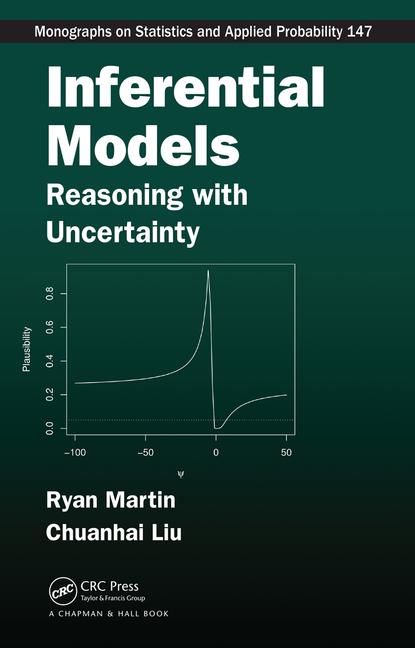
Chuanhai Liu is an Associate Head and Professor of Statistics at Purdue University’s Department of Statistics. He specializes in computational methods for statistical inference, Bayesian analysis, and big data computing systems. His research emphasizes robust algorithms, inferential models, and probabilistic methods. Education: M.S., Wuhan University, Probability and Statistics (1987) M.A., Harvard University, Statistics (1990) Ph.D., Harvard University, Statistics (1994) Research Interests: Computational methods (EM algorithms, MCMC), statistical software systems for big data, theoretical foundations of inference, and prior-free probabilistic modeling. His work bridges computational efficiency and statistical validity, with applications in network analysis, environmental data, and machine learning. Awards: Fellow of the American Statistical Association (2007) Elected Member of the International Statistical Institute (2006) Frank Wilcoxon Prize (2000) Advising & Grants: Supervised 9 Ph.D. students, including interdisciplinary collaborations. His grants focus on distributed statistical computing and inferential frameworks. Active in software development for large-scale data analysis. Labs/Teams: Leads statistical computing initiatives at Purdue, contributing to scalable algorithms and probabilistic inference systems.
Yen-Chi Chen is an Associate Professor in the Department of Statistics at the University of Washington. He also holds positions as a Data Science Fellow at the UW eScience Institute and as a co-investigator and statistician at the National Alzheimer's Coordinating Center. His academic career spans multiple interdisciplinary fields including statistics, data science, and astrostatistics. Chen's educational background includes a Ph.D. from Carnegie Mellon University, where he received prestigious awards including the Umesh K. Gavasakar Thesis Award (2017) and the William S. Dietrich II Presidential Ph.D. Fellowship Award (2015). His research focuses on nonparametric statistics, topological data analysis, missing data methodologies, cluster analysis, manifold learning, and applications in large-scale structure analysis and astrostatistics. Chen has made significant contributions to the development of statistical methods for analyzing cosmic web structures, GPS data, and causal inference with continuous treatments. His work bridges theoretical statistics with practical applications in astronomy, neuroscience, and public health. Analysis of his recent publications reveals a strong emphasis on developing novel statistical frameworks for complex data structures, particularly focusing on density-based methods, manifold learning, and approaches that address challenges in missing data and causal inference without standard assumptions. ASA Noether Early Career Scholar Award, American Statistical Association (2022) CAREER Award, National Science Foundation (2022-2027) Umesh K. Gavasakar Thesis Award, Carnegie Mellon University (2017) William S. Dietrich II Presidential Ph.D. Fellowship Award, Carnegie Mellon University (2015) Chen has advised numerous graduate students across multiple publications, with a focus on developing new statistical methodologies. His research has been supported by major funding agencies including the National Science Foundation and the National Institutes of Health. He is actively involved in several research groups including the UW Geometric Data Analysis Group, the UW Center for Statistics and the Social Sciences, and the National Alzheimer's Coordinating Center.
Martin Huber is Professor of Applied Econometrics and Policy Evaluation at the University of Fribourg, Switzerland, within the Faculty of Management, Economics and Social Sciences, Department of Economics. He leads the Chair of Applied Econometrics and maintains an active research profile with numerous publications in top economics and statistics journals. His work bridges theoretical econometrics with practical policy applications across multiple domains including labor, health, and education economics. Professor Huber earned his Ph.D. in Economics and Finance in 2010 and served as Assistant Professor at the University of St. Gallen until 2014. He has conducted research stays at Harvard University (2011/2012) and the University of Sydney (2014 and 2019), establishing an international research network. His academic affiliations include the Committee for Econometrics of the Verein für Socialpolitik, Global Labor Organization, Soda Labs (Monash Business School), and Centre for European Economic Research (ZEW) Mannheim. Huber's research focuses on data-based causal analysis , machine learning applications in economics , and policy evaluation methods . He specializes in developing and applying statistical and econometric methods for measuring causal effects, with particular emphasis on semi- and nonparametric microeconometrics. His work spans labor economics (gender occupational segregation, maternal labor supply), health economics, education policy, and competition policy (bid-rigging cartels detection). His recent publications (2023-2025) demonstrate a clear trajectory toward integrating machine learning techniques with traditional econometric methods for causal inference. This includes developing frameworks for causal discovery, improving difference-in-differences methods with machine learning, and creating novel approaches for detecting collusion in markets. His 2023 book "Causal Analysis: Impact Evaluation and Causal Machine Learning with Applications in R" (MIT Press) has become a key reference in the field. As an active researcher, Professor Huber directs several research projects including experimental evaluations of gender occupational segregation in the Swiss apprenticeship market. His work combines theoretical rigor with practical policy relevance, often employing experimental and quasi-experimental methods to address questions of causal mechanisms in social and economic phenomena. Through his Chair of Applied Econometrics, Huber supervises Ph.D. students and maintains an active research group focused on advancing causal inference methodologies. His work has significant implications for evidence-based policymaking across multiple sectors, particularly in evaluating the effectiveness of social programs and economic policies.
Ryan Giordano is an Assistant Professor in the Department of Statistics at the University of California, Berkeley. He holds a PhD in Statistics from UC Berkeley (2019), advised by Michael Jordan, Tamara Broderick, and Jon McAuliffe, an MSc in Econometrics and Mathematical Economics from the London School of Economics (2009), and undergraduate degrees in Mathematics and Theoretical/Applied Mechanics from the University of Illinois at Urbana-Champaign. Prior to academia, he worked as an engineer at Google and HP and served as a Peace Corps volunteer in Kazakhstan. His research focuses on variational methods , Bayesian robustness , sensitivity analysis , and statistical computing , with applications in machine learning, environmental science, and astronomy. He is particularly known for developing scalable Bayesian inference techniques and quantifying the robustness of statistical models to data perturbations. Giordano’s recent work includes studies on Laplace approximation accuracy, MCMC sensitivity to data removal, and robustness metrics for differential expression analysis. He has contributed to open-source statistical software and collaborates with Tamara Broderick’s group at MIT on postdoctoral work (pre-2019 position). His academic trajectory combines theoretical innovation with practical applications, emphasizing reproducibility and computational efficiency in statistical methodology.
Neelakantan R. Krishnaswami is a Professor of Computer Science at the University of Cambridge's Computer Laboratory , and a Fellow of Trinity College . His research focuses on the intersection of program verification, programming language design, and foundational topics like type theory and semantics. His work spans areas such as refinement types, parser design, separation logic for systems software, and the semantics of reactive programming. Notable contributions include the Datafun language for higher-order Datalog and the λert type theory for explicit refinement types. He has also developed foundational frameworks for verifying imperative programs using advanced type systems and logical relations. Key publications include 'Explicit Refinement Types' (ICFP 2023), 'flap: A Deterministic Parser with Fused Lexing' (PLDI 2023), and 'CN: Verifying Systems C Code' (POPL 2023). His work frequently addresses challenges in efficiency, correctness, and modularity for both functional and imperative systems. His awards include Distinguished Paper Awards at PLDI 2019 and POPL 2020. His research integrates theoretical rigor with practical tooling, exemplified by contributions to languages like Coq, Lean, and Haskell.
Daniel Wilhelm is a Professor of Statistics and Econometrics at LMU Munich, with a courtesy appointment in the Department of Economics. His research focuses on econometric theory, nonparametric methods, measurement error modeling, and statistical inference. He leads the Statistics and Econometrics Group at LMU and holds affiliations with the Centre for Microdata Methods and Practice (CeMMAP), Institute for Fiscal Studies (IFS), and the Centre for Research and Analysis of Migration (CReAM). Wilhelm’s work includes groundbreaking contributions to NPIV estimation, robust statistical testing, and the development of R and Stata packages for rank inference and econometric analysis. His recent publications address topics like rank-based inference, measurement error detection, and high-dimensional independence testing. He organizes academic events such as the Munich Econometrics Seminar and the LMU-Todai Econometrics Workshop. His research emphasizes methodological rigor and practical applications, with a focus on improving statistical techniques for social science and policy analysis.
Min Seong Kim is an Associate Professor in the Department of Economics at the University of Connecticut, affiliated with the College of Liberal Arts and Sciences. His research focuses on econometrics, particularly panel data analysis, bootstrap methods, and cross-sectional dependence. He earned his Ph.D. in Economics from UC San Diego in 2011. His contact information includes email: min_seong.kim@uconn.edu , and office location Oak Hall 330. Education: Ph.D., Economics, UC San Diego, 2011 Research Interests: Econometric theory and applications Bootstrap methods and robust inference Panel data models with cross-sectional dependence Time series analysis and spatial econometrics Publications highlight his contributions to econometric methodology, including robust inference techniques for panel data models, bootstrap methods, and policy analysis. Recent work addresses cross-sectional dependence in large panel models and diffusion index forecasts. No scientific awards are explicitly listed. Advising and grant details are not provided in the text. His research is supported through standard academic channels, and he maintains a professional website at http://minseongkim.weebly.com .
Eva Cantoni is a Full Professor at the Research Center for Statistics within the Geneva School of Economics and Management , University of Geneva. Her expertise spans robust statistical methodology, model selection, and applications in ecology and medicine. Ph.D. from University of Geneva Accredited European Statistician (FENStatS) Research Interests : She specializes in Robust statistics for real-world data Variable/model selection in high-dimensional settings Nonparametric and semi-parametric regression Zero-inflated and overdispersed count models Longitudinal and spatiotemporal data analysis Her work addresses ecological challenges (fish stock assessment), medical applications (hospital congestion modeling), and housing market analysis. Recent Trends in Publications : Recent articles focus on Confidence intervals for robust mixed models Editorial leadership in robust statistics Applications to fisheries science and public health Flexible modeling frameworks for complex data Comparative studies of statistical measures Extremes modeling in healthcare Leadership & Grants : She has served as: Vice-Dean for Teaching (2020-2023) Director of Master's in Statistics (2012-2019) Director of Applied Statistics Certificate (2015-2019) President, Swiss Federal Statistics Committee (2024-2027) Specialty Chief Editor, Frontiers in Applied Mathematics (2024) Grants include projects on Robust solutions for modern data (2023-2025) Sustainable fisheries modeling (2018-2021) Advancements in state-space models (2014-2017) Software Contributions : Developed R packages for robust statistical methods: confintROB (bootstrap confidence intervals) RobSSM (robust state-space models) R2_LMM (explained variation measures)
Prof. Vladimir Spokoiny is a leading figure in stochastic algorithms and nonparametric statistics at the Weierstrass Institute for Applied Analysis and Stochastics (WIAS) and Humboldt University of Berlin . His work bridges mathematical statistics with practical applications in finance, medicine, and machine learning. Born in 1959 in Moscow, USSR PhD from Lomonosov Moscow State University (1988) Habilitation from Humboldt University (1996) Head of WIAS research group since 2000 Professor at Humboldt University since 2002 Spokoiny's research focuses on adaptive nonparametric methods, high-dimensional data analysis, and statistical finance. His innovations in local homogeneity testing and propagation-separation methods have advanced volatility modeling, image analysis, and manifold learning. He employs Bayesian optimization frameworks and stochastic control techniques for financial instrument pricing. Recent scientific contributions include generalized bootstrap procedures for Bures-Wasserstein barycenters (2024), dimension-free Laplace approximation bounds (2023), and structure-adaptive manifold estimation (2022). His 19+ PhD students and editorial roles in top journals like The Annals of Statistics demonstrate sustained academic impact. International Statistical Institute member American Statistical Association fellow Institute of Mathematical Statistics member Bernoulli Society member
Ivan Canay is a Professor of Economics and Director of the Mathematical Methods in the Social Sciences Program at Northwestern University’s Weinberg College of Arts & Sciences. He holds a PhD from the University of Wisconsin, Madison (2008). His research focuses on econometric theory, particularly developing statistical methods for assessing partially identified models, including tests for moment inequalities and randomization-based inference techniques. Recent work addresses challenges in clustered data analysis, covariate-adaptive randomization, and regression discontinuity designs. Canay’s academic contributions include advancing methodologies for handling non-ignorable cluster sizes and improving the robustness of inference in settings with limited data. He serves as an associate editor for the Journal of Econometrics , Journal of Business and Economic Statistics , and Econometrics Journal . His work bridges theoretical econometrics with practical applications in policy evaluation and causal inference. Key research themes include: Partially identified models and moment inequality frameworks Bootstrap methods for clustered data Covariate-adaptive randomization in clinical trials Statistical software development (e.g., Stata modules) His publications emphasize methodological rigor while addressing real-world complexities in economic data. Current projects likely expand his work on inference under structural constraints and improving accessibility of econometric tools for applied researchers.
Dr. John O. Miller is an Associate Professor of Operations Research in the Department of Operational Sciences at the Air Force Institute of Technology (AFIT), where he has served since 1997 in roles including Military and Civilian Deputy Department Head and Director of the Center for Operational Analysis. A retired U.S. Air Force Lieutenant Colonel, he combines more than three decades of military experience with scholarly expertise in simulation modeling, defense logistics, and operations research. Education: Ph.D. in Industrial Engineering, The Ohio State University, 1997 M.S. in Operations Research, Air Force Institute of Technology, 1987 M.B.A., University of Missouri at Columbia, 1983 B.S. in Biology, United States Air Force Academy, 1980 Dr. Miller’s research focuses on the development and application of simulation methodologies—especially agent-based and discrete-event modeling—to military logistics, weapon system evaluation, and combat readiness. His work often integrates multivariate statistics, experimental design, and optimization techniques to address Air Force and Department of Defense challenges such as sortie generation, munitions supply chains, and directed-energy weapon assessment. Across more than 40 refereed articles, recent publications demonstrate a sustained emphasis on: Metamodeling of large-scale simulations using dynamic Bayesian networks and bootstrapping Agent-based exploration of air-to-air missile concepts and aircraft maintenance manpower Statistical evaluation of pattern-recognition and automatic-target-recognition algorithms Logistics degradation modeling for bomber fleets and brigade combat teams These contributions underscore his leadership in military simulation and defense-focused operations research. Scientific & Teaching Honors: AFIT Instructor of the Quarter, 2005 Tau Beta Pi Engineering Honor Society (Alumnus Member), 2001 AFIT Student Chapter ORSA Outstanding OR Educator, 1999 MORS Barchi Prize Nominee, 1998 Alpha Pi Mu & Omega Rho Honor Societies USAFA Department Instructor of the Year, 1993 Dr. Miller has advised numerous M.S. and Ph.D. students whose dissertations and theses advance simulation optimization, military logistics, and combat modeling. His teaching interests span simulation modeling and analysis, design of experiments, probability and statistics, and operations research methods for defense applications. He maintains active professional memberships in INFORMS, the Military Operations Research Society, and the Air Force Association, and he frequently presents at both invited and organized conferences, fostering collaboration among military, academic, and industry analysts.
Prosper Dovonon serves as a Full Professor in the Department of Economics at Concordia University in Montreal, Canada, where he holds a prestigious Concordia University Research Chair, Tier 1, in Econometrics of Large Datasets. He previously held positions as Associate Professor (2015-2023) and Assistant Professor (2010-2015) at the same institution. Additionally, he maintains an adjunct professorship at the University of Adelaide's School of Economics since 2021 and previously served as a Visiting Professor at HEC Montreal's Department of Finance (2017-2018). His educational background includes a PhD in Economics from Universite de Montreal (2007), an MSc in Statistics and Economics from ENSEA, Abidjan, Cote d'Ivoire (2000), and an MSc in Mathematics from Universite Nationale du Benin, Abomey-Calavi, Benin (1996). Dovonon's research focuses on advanced econometric methodologies, particularly in time series analysis and financial econometrics. His work addresses complex identification issues, develops robust estimation techniques, and creates innovative testing procedures for economic models. He specializes in moment condition models, GMM estimation, volatility modeling, and handling identification failures in econometric frameworks. His publication record shows a consistent focus on theoretical econometrics with practical applications in finance. Recent work emphasizes mixed identification strength scenarios, instrument exogeneity testing, and specification testing under challenging identification conditions. His research demonstrates increasing sophistication in handling complex econometric problems with real-world financial data applications. His notable recognition includes the Concordia University Research Chair, Tier 1, in Econometrics of Large Datasets, highlighting his significant contributions to the field. Dovonon has supervised numerous graduate students and collaborated extensively with leading econometricians worldwide. His research has been supported by institutional funding through his Research Chair position, enabling significant contributions to econometric theory and methodology. He maintains active research collaborations across international institutions and continues to push the boundaries of econometric theory with applications to financial markets and economic modeling.
Holger Dette is a Professor and Chair Holder of Stochastics (specializing in Statistics) at the Faculty of Mathematics, Ruhr University Bochum. He leads the prominent Group Dette within the Institute of Statistics, overseeing a team of researchers, doctoral students, and administrative staff including Birgit Tormöhlen as team assistant. His research group is deeply integrated within the university's mathematical ecosystem, collaborating with other research groups across algebra, analysis, numerics, and topology. Dette's research spans mathematical statistics with strong applications in real-world problems. His primary interests include optimal experimental design, time series analysis, functional data, change point problems, nonparametric regression, biostatistics, special functions, goodness-of-fit tests, and random matrices . His work bridges theoretical statistics with practical applications, particularly evident in his collaborations with pharmaceutical giants Novartis and Bayer AG in biostatistics, as well as Quasol, a spin-off company from his statistics institute. His recent publications (2024-2025) reveal a research program increasingly focused on high-dimensional and functional data analysis, privacy-preserving statistics, and novel methodological approaches to longstanding statistical problems. Dette's work shows strong interdisciplinary connections, particularly with biomechanics (analyzing joint angles during fatigue phases) and data science (addressing challenges in the era of big data). His research group is actively involved in multiple DFG-funded projects including the newly established 'Small Data' collaborative research center (Sonderforschungsbereich 1597) and the Spatio-temporal Statistics for the Transition of Energy and Transport (Transregio 391). Dette has received significant recognition including the prestigious Humboldt Research Award . His paper 'With Great Power Come Great Side Channels: Statistical Timing Side-Channel Analyses with Bounded Type-1 Errors' achieved second place at the CSAW'24 Applied Research Competition MENA. His research group has also secured multiple significant funding awards from the German Research Foundation (DFG). As an advisor, Dette supervises numerous doctoral and master's students including Pascal Quanz, Marius Kroll, and Carina Graw. His group offers statistical consulting services for scientists and students across bachelor's, master's, and doctoral phases. The group maintains strong industrial partnerships, particularly in biostatistics applications, demonstrating Dette's commitment to translating theoretical statistics into practical solutions for real-world challenges.