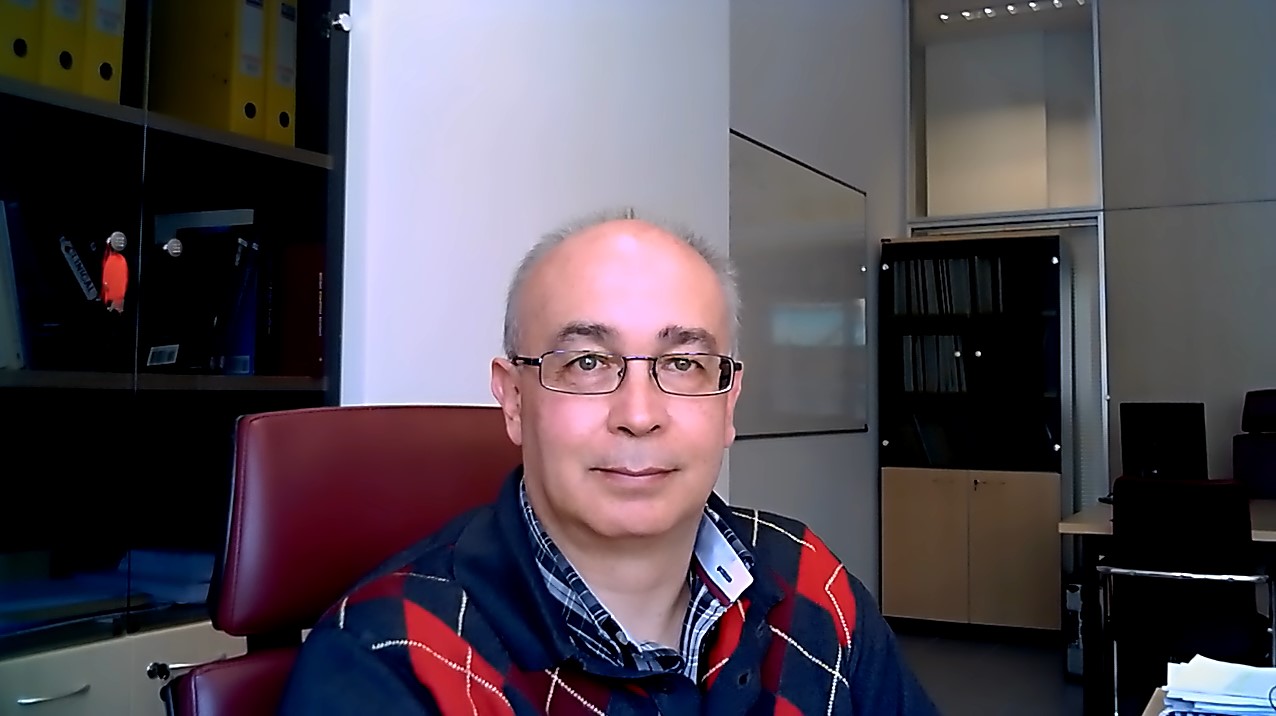
Evangelos Ioannidis is an Associate Professor at the Department of Statistics, School of Informatics and Statistics, Athens University of Economics and Business. Born in 1962, he holds a Mathematics PhD from the University of Heidelberg (1993) and has served in his current department since 1999, progressing from Lecturer (1999) to Assistant Professor (2007) and Associate Professor (2023). His expertise spans spectral analysis of time series , cointegration methods , and bootstrap applications in economic data analysis, with additional focus on Official Statistics and sampling techniques . University of Heidelberg: MMath (1987), PhD (1993) Researcher, University of Heidelberg (1987-1991) Visiting Researcher, University of Orsay, Paris Sud (1992-1993) OECD, Paris (1994-1998) National Institute of Labour (1999) His scientific contributions focus on time series econometrics, VAR model spectra, and R&D expenditure analysis. Recent work includes non-parametric spectral estimation and risk-based sampling methodology. He has collaborated with Eurostat on statistical projects (2012-2014). Current affiliations include the Athens University of Economics and Business , where he teaches and conducts research on economic time series analysis and statistical methods.
Angelos Kanas is a Professor of Finance at the Department of Economics within the School of Economics, Business and International Studies at the University of Piraeus. His academic career spans over two decades with significant contributions to finance, banking, and econometric modeling, supported by continuous research funding from entities including NATO and the European Union. His educational background includes undergraduate studies funded by the Hellenic National Scholarships Foundation (I.K.Y.), an M.Sc. supported by the Bodosakis Foundation, and a Ph.D. financed by the National Scholarships Foundation (I.K.Y.). Kanas specializes in Finance, International Finance, Financial Markets, Financial Risks and Protection, and Banking. His research integrates advanced quantitative methods to analyze systemic risk, market efficiency, and policy impacts, with particular focus on regime-switching models and DEA efficiency measurements. Recent work explores intersections between climate finance, banking stability, and corporate governance. Analysis of his 15 most recent publications reveals an evolving research trajectory: early work (2005-2013) established expertise in exchange rate dynamics and asset pricing, while post-2015 research increasingly addresses banking regulation, systemic risk prediction, and methodological innovations in efficiency analysis. Current work (2022-2025) demonstrates strong engagement with climate-related financial risks and AI applications in finance. Hellenic National Scholarships Foundation (I.K.Y) studentship (undergraduate, three annual) Bodosakis Foundation scholarship (M.Sc.) National Scholarships Foundation (I.K.Y.) scholarship (Ph.D.) Kanas has secured research funding from NATO and EU bodies, reflecting recognition of his work's policy relevance. His extensive refereeing activities across 30+ journals including Journal of International Economics and Journal of Banking and Finance demonstrate scholarly leadership. He teaches core finance courses including International Finance and Special Topics in Finance, and has authored two academic books: Principles of Investment Analysis and Financial Markets (2021) and FinTech and Machine Learning: Basic Principles and Applications (2023).
Professor Balas Costas is a full Professor and Director of the Electronics Lab at the School of Electrical and Computer Engineering, Technical University of Crete. His expertise spans optoelectronics, biomedical imaging, and medical device innovation. He earned his Ph.D. in medical physics from the University of Patras (1992) and has led pioneering research in hyper-spectral imaging and non-invasive diagnostics. Key roles include founder of DySIS-Medical, a medical device company, and inventor of the DySIS imaging system for cervical neoplasia detection. Awards include the 2013 Greece Innovates Applied Research & Innovation Competition. Research interests focus on optical biopsy, biomedical spectral imaging, and diagnostic device development. His work bridges academia and industry, with contributions to global health through cost-effective diagnostic tools. Notable projects include the development of the DySIS device, validated through multinational clinical trials, and hyperspectral imaging systems for art conservation. Publications span biomedical optics, diagnostic technologies, and material analysis. Grants and venture capital funding (€15M+) support his research. He is a member of IEEE Photonics Society, SPIE, and Optical Society of America.
VASDEKIS VASILEIOS is a Professor of Statistics at the Department of Statistics, School of Information Sciences and Technology, Athens University of Economics and Business (AUEB), where he has been a faculty member since 1999. He previously served as Assistant Professor (2003–2009), Associate Professor (2009–2016), and Lecturer (1999–2003). He held administrative roles including Head of Department (2016–2020) and Vice-Chancellor for Academic Affairs and Personnel (2020–2024). Education: D.Phil. in Statistics, University of Oxford, UK (1989–1993) M.Sc. in Applied Statistics, University of Oxford, UK (1988–1989) B.A. in Mathematics, University of Athens, Greece (1983–1988) His research focuses on longitudinal data analysis , latent variable models , and composite likelihood methods , with applications in clinical trials, psychology, and public health. He has developed statistical methodologies for correlated binary data, multivariate ordinal responses, and random effects models. His work bridges theoretical statistics with practical applications in medicine and social sciences. The recent publications show a strong trend in psychometrics , model diagnostics , and longitudinal modeling , particularly using composite likelihood and goodness-of-fit techniques. His interdisciplinary collaborations extend to developmental psychology and nutrition studies. Scientific Awards: Fellow of the Royal Statistical Society (UK) IKY Scholarship for Doctoral Research (1989–1993) He has supervised multiple doctoral students, including Evgenia Tzompanaki, Antonia Korre, and Ioanna Athanassopoulou, and postgraduate researcher Kostas Florios. He has secured research funding through projects such as PYTHAGORAS, ARISTEIA II, and internal AUEB grants. His professional service includes teaching workshops on SPSS and statistical methods for health professionals, often in collaboration with pharmaceutical companies like JANSSEN-CILAG. He is an active member of professional societies, including the Royal Statistical Society, the American Mathematical Society, and the Bernoulli Society. He has contributed to European research networks such as DAFNE, focusing on food consumption data analysis.
Ioannis Vlahavas is a Professor in the School of Informatics at Aristotle University of Thessaloniki since 2003, where he directs the Intelligent Systems Lab. He has held significant leadership roles including Chair of the School of Informatics (2003-2005, 2013-2017) and Dean of the School of Science and Technology at the International Hellenic University (2007-2016). His career spans over three decades with continuous contributions to artificial intelligence research and education. Education: Ph.D. in Computer Science, Aristotle University of Thessaloniki (1988) B.Sc. in Physics, Aristotle University of Thessaloniki (1982) Professor Vlahavas's research focuses on foundational AI areas including Logic Programming, Knowledge Representation and Reasoning, Automated Planning, and Machine Learning. His work bridges theoretical frameworks with practical applications in autonomous systems, healthcare diagnostics, and financial modeling. He has pioneered methodologies in reinforcement learning and multi-agent systems, with particular emphasis on personality emulation in gamified environments and transformer-based architectures for complex real-world problems. His recent publications reveal a strong trajectory toward deep reinforcement learning, transformer optimization, and low-resource language processing. Key application domains include autonomous driving (5 of 15 recent papers), biomedical text mining (particularly drug-drug interaction extraction), and personality modeling in gaming environments. There is notable cross-pollination between finance (portfolio theory applications, cryptocurrency trading) and AI methodology development. Scientific Awards: EurAI Fellow (2017) Professor Vlahavas has mentored numerous graduate students through PhD candidate programs and research projects. His leadership extends to organizing major international conferences including the 24th IEEE International Conference on Tools with AI (2012) and the 9th Hellenic Conference on Artificial Intelligence (2016). He serves on editorial boards and has guest-edited special journal issues on AI applications. He directs the Intelligent Systems Lab at Aristotle University, which operates as a multidisciplinary research hub focusing on machine learning, natural language processing, and intelligent system applications across healthcare, transportation, and finance sectors. The lab maintains strong industry connections including RealMINT, the university spin-off where he serves as CEO.
Afendras Giorgos is an Associate Professor in the Department of Statistics and Operations Research at Aristotle University of Thessaloniki since January 2023. Previously, he served as an Assistant Professor at the same institution (2018–2023) and held roles at the University at Buffalo (USA), including Adjunct Assistant Professor (2018–2022) and Research Associate (2015–2018). His research focuses on statistical theory, probability, and machine learning, with a strong emphasis on variance bounds, covariance identities, and cross-validation techniques. Giorgos holds a PhD in Mathematics from the National and Kapodistrian University of Athens (2008), a Master's in Statistics and Operations Research (2004), and a degree in Mathematics (2001). His professional experience includes visiting roles at the University of Cyprus and external associate positions at Athens University of Economics and Business. His research interests span distribution families, orthogonal polynomials, asymptotic statistics, dependency measures, and statistical machine learning. Recent work includes advancements in cross-validation methodologies and model selection criteria, with applications to resampling effectiveness and training/test size optimization. No scientific awards are explicitly mentioned in the text. His professional trajectory reflects extensive contributions to academic research and teaching in statistical theory and applied mathematics.
Nikolos Ioannis serves as a Professor at the School of Production Engineering and Management, Technical University of Crete, currently on leave but maintaining active research status. His work spans computational fluid dynamics, aerodynamics, and marine engineering within the Department of Production Engineering and Management. His primary research focuses on computational fluid dynamics with emphasis on ship hull reconstruction from 2D drawings, hypersonic flow simulation, and wind turbine optimization. Recent publications demonstrate expertise in geometric modeling , rarefied gas dynamics , and renewable energy systems . The 2025-2020 article portfolio reveals consistent contributions to naval architecture, aerodynamic shape optimization, and laser-matter interactions with strong methodological focus on B-spline functions, DSMC methods, and differential evolution algorithms. Professor Ioannis maintains an active email contact ( inikolos@tuc.gr ) and office location at D4.107 in the MPD Building. His work shows significant interdisciplinary connections between production engineering, computational physics, and marine applications with particular strength in translating theoretical models to practical engineering solutions.
Ioannis Nikolos is a Professor at the School of Production Engineering and Management, Technical University of Crete, and holds a Visiting Professor position at the Institute of Plasma Physics & Lasers (IPPL), Hellenic Mediterranean University. With over 30 years of R&D experience, he has coordinated 39 projects and participated in 13 more. His research focuses on Computational Fluid Dynamics (CFD), Turbomachinery, Design Optimization, and Traffic Flow Modeling. He has authored/co-authored 60 journal papers, 110 conference papers, and three books, with an h-index of 24 (Google Scholar). Education: Diploma (1990) and PhD (1996) in Mechanical Engineering from the National Technical University of Athens (NTUA). His expertise spans fluid dynamics, engineering design optimization, and unmanned aerial vehicle aerodynamics. He is a Senior Member of AIAA and serves as an Associate Editor for ASME journals. Research Interests: Computational Engineering, Turbomachinery Component Design, Wind Turbine Optimization, Traffic Flow Modeling, and Plasma Physics applications. His work integrates computational intelligence with traditional engineering methods. Awards: Recipient of the IEEE ITS Society Outstanding Application Award (2018) for contributions to traffic management systems. He leads the Turbomachinery & Fluid Dynamics Laboratory and has supervised 7 completed PhD theses. Grants & Advising: Extensive R&D funding from EU, Industry, and Greek State. Currently supervising 3 PhD students. Editorial roles include ASME Journal of Fluids Engineering and Water. Labs & Teams: Director of the Turbomachinery & Fluid Dynamics Laboratory, collaborating on projects involving CFD, plasma physics, and autonomous systems.
Magnus O. Myreen is a Professor in the Department of Computer Science and Engineering at Chalmers University of Technology, Sweden. He has been with Chalmers since 2014, becoming a tenured Associate Professor in 2015 and being promoted to full Professor in June 2023. Myreen has an extensive record of service to the programming languages and formal methods communities, including serving on program committees for major conferences like PLDI, POPL, ICFP, and CPP, and chairing the steering committee for the ITP conference series since November 2023. Myreen received his academic training at prestigious institutions: B.A. in Computer Science at the University of Oxford, tutored by Dr. Jeff Sanders Ph.D. on program verification in 2009 at the University of Cambridge, supervised by Prof. Mike Gordon Myreen's research focuses on program verification, interactive theorem proving, and compiler verification. He is best known for his work on the CakeML project, which is an ML-style language with a formal semantics and a growing ecosystem of proofs and tools that support construction of verified applications. As he states on his website, "My most recent work has focused on CakeML, which is an ML-style language with a formal semantics and a growing ecosystem of proofs and tools that support construction of verified applications. As far as I know, the CakeML compiler is the first verified compiler to have been bootstrapped." His research spans several key areas: Decompilation into logic — verification of machine code Proof-producing synthesis from logic Verified Lisp and ML runtimes Connecting things up: verified stacks Myreen's publication record shows a strong focus on verified compilation and theorem proving, particularly through the CakeML ecosystem. His work consistently bridges the gap between theoretical foundations and practical implementation, with numerous papers on verified compilers, program verification, and theorem proving. A significant trend in his recent work (2021-2024) has been extending CakeML's capabilities to handle more complex language features, improve performance, and verify increasingly sophisticated compilation techniques including bootstrapping and dynamic computation. Myreen has received several prestigious awards and recognitions: Winner of the BCS Distinguished Dissertation Competition 2010 for his PhD work Royal Society Research Fellow (UK) since 2012 ACM SIGPLAN Most Influential POPL Paper Award for the 2014 CakeML paper Amazon Research Award for his proposal "Compiling Dafny to CakeML" Myreen has advised several PhD students to completion, including Alejandro Gomez (Sep 2017 – Jun 2023), Oskar Abrahamsson (Aug 2017 – Dec 2022), and Andreas Loow (Sept 2016 – Sep 2021). He also collaborated with postdocs including Hira Syeda, Thomas Sewell, and Johannes Aman Pohjola. His research has been supported by various funding sources, though specific grants aren't detailed in the provided text. Notably, he received an Amazon Research Award for his work on compiling Dafny to CakeML, and his CakeML project has clearly attracted significant attention in the programming languages and formal methods communities. Myreen leads research on the CakeML project, which has grown into a substantial ecosystem for verified compilation. The project involves a team of researchers working on various aspects including compiler verification, program synthesis, and theorem proving. Myreen also collaborates with researchers at other institutions, as evidenced by his visits to EPFL (meeting Viktor Kuncak, Martin Odersky, and James Larus) and NUS (visiting Ilya Sergey's group). In October 2023, he began a ten-month sabbatical at Cambridge UK, where he worked part-time for Arm Ltd., indicating ongoing industrial collaboration.