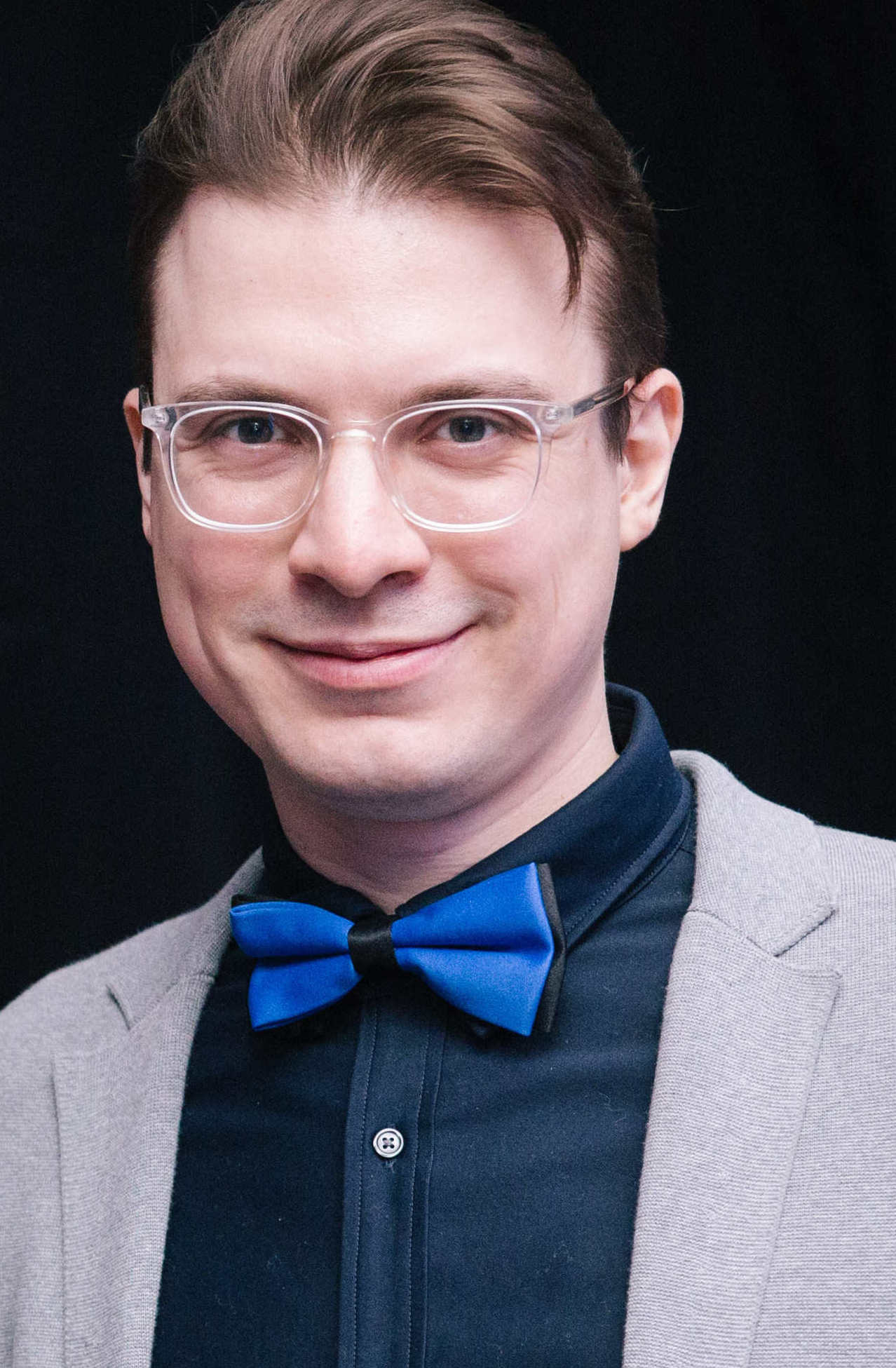
Steve Prestwich is a Lecturer at the School of Computer Science and Information Technology, University College Cork. He specializes in Artificial Intelligence, Data Analytics, and Algorithmics, with research interests spanning constraint programming, Boolean satisfiability, and hybrid search methods. Education: BA (Hons) Mathematics from University of Oxford, MSc and PhD in Computer Science from University of Manchester. Research Focus: His work integrates constraint programming, SAT solving, and metaheuristics for optimization under uncertainty, with applications in inventory control, protein design, and stochastic modeling. Awards: Runner-up, Constraint Modelling Challenge Bronze medal, SAT'05 Solver Competition
Florentina Voboril is a Research Fellow in the Algorithms and Complexity group at Technische Universität Wien. Her research explores how Large Language Models can solve Constraint Programming instances efficiently, with additional focus on SAT-solving and algorithm design. She investigates applications of AI in combinatorial optimization problems and develops innovative approaches to algorithmic challenges. Voboril has developed methods for SAT-based local improvement in string problems and generates streamlining constraints using LLMs. Her work bridges theoretical computer science with practical applications in computational biology and AI-assisted programming.
Prof. Pedro Barahona is a former Visiting Professor at the International Center for Computational Logic (ICCL) , affiliated with the Faculty of Computer Science at TU Dresden. His research focuses on translating Constraint Satisfaction Problems (CSP) into Satisfiability (SAT) frameworks, with contributions to encoding techniques and algorithmic optimization. His work bridges formal logic, artificial intelligence, and computational complexity. Key publications (2013-2014) address SAT-based approaches for CSP constraints, hierarchical hybrid encodings, and efficient logical translations. Though listed as a former member, his contributions remain part of the ICCL's research portfolio. No awards or grants are explicitly noted in the provided materials.
Vladimir Ulyantsev is an Associate Professor at the Faculty of Information Technologies and Programming, ITMO University, where he leads the International Laboratory 'Computer Technologies' and the Discrete Optimization and Formal Methods Lab. He earned his PhD in 2015 (title: 'Finite-State Machine Synthesis Using SAT and CSP Solvers') after completing his Bachelor’s (2011) and Master’s (2013) degrees in the Department of Computer Technologies at ITMO University. His research spans bioinformatics, combinatorial optimization, and computational methods for finite-state machine synthesis. Key contributions include developing software tools like MetaFast and MetaCherchant for metagenomic analysis, and advancing genetic algorithms for demographic history inference (GADMA/GADMA2). He has secured multiple grants from Russian scientific foundations and leads interdisciplinary collaborations, including a partnership with Aalto University, Finland, from 2016-2019. His 15 most recent publications (2012-2025) focus on metagenomics, SAT solvers, evolutionary algorithms, and bioinformatics applications in oncology and disease diagnostics. He has supervised 25+ student theses, including Ekaterina Noskova’s PhD on demographic history inference. He contributes to academic governance as a member of ITMO University’s scientific, technical, and academic councils.
Guido Tack is an Associate Professor in the Department of Data Science & Artificial Intelligence at Monash University's Faculty of Information Technology. He leads development of the MiniZinc constraint modeling language and is a core developer of Gecode, a leading constraint programming library. His research focuses on combinatorial optimization, constraint solver architecture, and industrial applications, extending to programming languages and computational logic. Education: PhD (Dr.-Ing.) in Computer Science from Saarland University (2009), Diplom Informatiker (MSc equivalent) from Saarland University (2003). Professional experience includes postdoctoral roles at NICTA, Saarland University, and KU Leuven before joining Monash in 2012 as a Lecturer and Monash Larkins Fellow. Research interests span constraint programming, optimization algorithms, and their applications. Recent projects include improving the MiniZinc ecosystem, optimizing metering systems for smart water networks, and quantum information technology. He has secured over 13 major research grants, including leadership in the ARC Training Centre for Optimization Technologies. Teaching: Chief Examiner for FIT5170, FIT9135, FIT5216; Lecturer for FIT1047, FIT4010, and others. Editorial Roles: Co-Editor-in-Chief of Constraints journal (2015), active in ACM and Association for Constraint Programming. Awards: 2024 Eureka Prize finalist, 2017 FIT Dean's Award, 2010 Doctoral Research Award. Publications span constraint solving techniques, optimization algorithms, and educational tools. Recent work emphasizes real-time path planning, bi-objective search, and energy-efficient systems. He contributes to both academic conferences and industry-focused projects, bridging theoretical research with practical applications.
Sebastian Krieter is a researcher in software engineering and product-line systems, affiliated with Otto-von-Guericke University Magdeburg, Germany. He completed his PhD in 2022 with a dissertation focused on efficient interactive and automated product-line configuration. His research spans software variability, feature modeling, configuration management, and automated software configuration. Research Interests: Software Product Lines and Variability Management Feature Modeling and Analysis Automated Configuration and Sampling Algorithms Combinatorial Testing and Feature Interaction Knowledge Compilation and SAT-based Analysis His recent work includes developing methods for T-wise interaction coverage, improving sampling efficiency in configurable systems, and integrating AI techniques into software variability management. He has contributed to the development of tools like FeatureIDE and UVL (Universal Variability Language). Scientific Contributions: Over 70 peer-reviewed publications in top-tier venues such as ICSE, SPLC, GPCE, and ASE. Key organizer of workshops including the 1st International Workshop on Reverse Variability Engineering (Re: Volution). Active contributor to open-source tools and datasets for benchmarking feature model analyses. Collaborations: He has collaborated extensively with Thomas Thüm, Gunter Saake, Thomas Leich, and a network of international researchers in software engineering and AI.
Igor Razgon is a Senior Lecturer and Programme Director for M.Sc. Advanced Computing Technologies at the Department of Computer Science and Information Systems , Birkbeck University of London. His research focuses on parameterized algorithms , combinatorial optimization , and computational complexity . Research Trends : Recent work explores width parameters in graph algorithms (e.g., mim-width), structural properties of graphs without large bicliques, and complexity analysis of constraint satisfaction problems. Awards : Recipient of the EATCS-IPEC Nerode Prize in 2020 for foundational work on directed feedback vertex sets. Collaborations : Co-investigator on two EPSRC-funded projects and frequent collaborator with researchers in graph theory (e.g., D. Marx, V. Lozin, B. O'Sullivan). Contact : Office at Room MAL260, Birkbeck University of London, or via email: igor@dcs.bbk.ac.uk
Olha Matsyi serves as an Assistant Professor (post-doc) within the Division of Applications of Contemporary Mathematical Analysis at Lodz University of Technology, with contact details including email olha.matsyi@p.lodz.pl and phone (+48) 42 631-36-17. Her research focuses on Operations Research and Mathematical Optimization, specializing in combinatorial algorithms for location theory, knapsack problems, community detection, and VLSI routing. She employs metaheuristic and bio-inspired methods to solve NP-hard optimization challenges, bridging theoretical mathematics with engineering applications in healthcare logistics and crisis management. Publications from 2020-2025 demonstrate increasing emphasis on real-world implementations like mobile medical service optimization and decision support systems, alongside theoretical advances in continuous coverage and constrained classification. Collaborative work with researchers such as Oksana Pichugina highlights her interdisciplinary approach to algorithm design. No scientific awards were documented. Information regarding student mentorship, research grants, or specific laboratory teams was not provided in the source material.
Henry Kautz is a Professor in the Department of Computer Science at the University of Rochester, where he has held leadership roles including Director of the Institute for Data Science (2014–Present) and Chair of the Department of Computer Science (2007–2014). Previously, he served as Director of Intelligent Systems at Kodak Research (2006–2007), and held academic positions at the University of Washington and AT&T Laboratories. He currently serves as a Fellow of the AAAS, ACM, and AAAI. His research focuses on artificial intelligence, pervasive computing, and data science, with applications in public health monitoring, natural language processing, and social media analysis. He has over 20,000 citations with an h-index of 65 and i10-index of 124. His research interests include data mining social media for disease tracking, grounded language learning through text-video alignment, and knowledge representation systems combining logic and probability. Notable projects include deploying the 'nEmesis' system to prevent foodborne illness via social media analysis and developing tools like OPUS for social media user studies. His work bridges theoretical AI advancements with real-world societal challenges, emphasizing ethical and practical applications of technology. Dr. Kautz has received prestigious awards including the AAAS and ACM Fellowships, reflecting his contributions to advancing AI and computational science. His research trends show a strong focus on leveraging big data and machine learning for societal good, particularly in health surveillance, mental health monitoring, and urban mobility analysis. Collaborations with interdisciplinary teams highlight his commitment to applying AI to solve complex global problems. In terms of leadership, he has directed major initiatives in data science education and research, fostering innovation at the University of Rochester. His career spans academia and industry, with impactful contributions to both theoretical and applied domains of computer science.
Dr Joan Espasa Arxer is a Lecturer in the School of Computer Science at the University of St Andrews, specializing in the AI group. His research focuses on Automated Planning, Constraint Programming, and applications of logic in computer science. He holds a position in the Department of Computer Science and teaches courses such as CS4402 - Constraint Programming and CS4303 - Videogames, while supervising projects across various academic levels. Research interests include Classical and Numeric AI Planning, Boolean Satisfiability (SAT), Satisfiability Modulo Theories (SMT), Planning as Satisfiability, Constraint Programming, and Automated reformulation of models. His work addresses challenges in planning domain modeling, benchmark instance generation, and cross-paradigm problem solving. Recent publications explore lifted planning with constraints, international planning competitions, and modeling pipelines in AI. He collaborates on tools like the 2023 International Planning Competition dataset and frameworks for generating benchmark instances. Advises PhD students Mustafa Abdelwahed and Carla Davesa Sureda. Engages in community outreach through events like 'Doors Open @ Computer Science' and contributes to open-source tools for planning and constraint satisfaction.
Inês Lynce is a Professor at the Department of Computer Engineering within the Instituto Superior Técnico (University of Lisbon) and a researcher at INESC-ID Lisboa . Her research focuses on Artificial Intelligence, Constraint Satisfaction and Optimization, Automated Reasoning, Formal Methods, and Bioinformatics. She leads multiple research projects, including RIGA (Indirect Discrimination Analysis), GOLEM (Automated Programming), and LAIfeBlood (AI for Blood Management), funded by FCT and EU programs. Education: While specific academic qualifications aren't listed, her roles and research output indicate advanced degrees in Computer Science/Engineering. Her work bridges theoretical computer science and practical applications, with a strong emphasis on Satisfiability (SAT) solving, constraint programming, and AI-driven solutions for complex systems. She has organized major conferences like SAT 2019 and ECAI 2025 , and serves on editorial boards for journals including Artificial Intelligence Journal and Journal on Satisfiability . Her awards include the INESC-ID Young Researcher Award (2009), APPIA PremiA Award (2009), and UTL/Deloitte Young Researcher Award (2008). Professional activities span program committee roles for AAAI , IJCAI , and CP conferences, reflecting her leadership in AI and constraint-based research. Teaching activities are managed through Fenix IST, and she collaborates with initiatives like CompSustNet for interdisciplinary research. Her work has been applied to diverse domains, including transportation scheduling, bioinformatics modeling, and cybersecurity protocol analysis.
Prof Ian James Miguel is a Professor and Head of the School of Computer Science at the University of St Andrews, a position he has held since 2004. He specializes in Artificial Intelligence, particularly in solving combinatorial optimization problems using Constraint Programming and SAT techniques. His research emphasizes automated constraint modeling, including the development of the Constraint Modelling Pipeline, which translates high-level problem descriptions into solver-ready models. He teaches courses on Constraint Programming and Video Games. His research focuses on advancing constraint modeling techniques, including automated reformulation, tabulation, and the exploration of constraint models via graph transformations. Notable contributions include the Athanor system for local search over constraint specifications and the TabID framework for subproblem identification. His work frequently addresses challenges in combinatorial optimization, such as multi-task learning and algorithm selection. Prof Miguel leads projects funded by EPSRC and others, including initiatives on automated constraint modeling tools like Conjure and Savile Row. He has supervised PhD students in areas like constraint modeling, automated algorithm selection, and planning under constraints. His research extends to interdisciplinary applications, such as ecological modeling and computational algebra, through collaborations with centers like the Sir James Mackenzie Institute. His recent publications emphasize automated reformulation techniques, streamlined constraint solving, and the integration of machine learning into constraint-based systems. His work aims to enhance solver efficiency and broaden the applicability of constraint programming across diverse domains.
Martin Vatshelle is an Associate Professor in the Department of Informatics at the University of Bergen (UiB) , Norway. He obtained his PhD from UiB in 2012 with a thesis titled New Width Parameters of Graphs . His research is centered on theoretical computer science, particularly in the design and analysis of graph algorithms. His main research interests include: Graph Algorithms Parameterized and Fixed-Parameter Tractable (FPT) Algorithms Algorithm Engineering Graph Theory, especially width parameters like boolean-width, clique-width, and branch decompositions Dynamic programming on structured graphs The recent publications of Martin Vatshelle reflect a strong focus on structural graph theory and algorithmic efficiency. His work frequently explores the computational complexity of graph problems, leveraging width parameters to design faster exact or parameterized algorithms. Themes such as boolean-width bounds, vertex partitioning, and satisfiability problems (#SAT, MaxSAT) are recurrent, indicating a deep engagement with both theoretical foundations and practical algorithmic improvements. There are no scientific awards mentioned in the provided texts. Martin Vatshelle has taught a variety of courses in algorithms, discrete mathematics, and complexity theory since 2004, including Algorithms, Data Structures and Programming , Complexity Theory , and Algorithm Engineering . There is no mention of research grants or supervised students in the provided materials. He collaborates extensively with researchers such as Jan Arne Telle and Sigve Hortemo Sæther. He is affiliated with the research group on Didactics within the Department of Informatics. No separate lab or research center is mentioned.
Chu Min LI is a University Professor at the University of Picardy Jules Verne (UPJV), working in the Modélisation, Information et Systèmes (MIS) laboratory (UR UPJV 4290). Their research focuses on Optimization, Cryptography, and Artificial Intelligence, with particular expertise in MaxSAT (Maximum Satisfiability), Constraint Programming, and Combinatorial Optimization. Professor LI's research spans theoretical and applied computational problem solving. Key research areas include: MaxSAT and MinSAT solving techniques Constraint programming and satisfaction Combinatorial optimization algorithms Geometric packing problems AI-driven optimization methods Theoretical foundations of satisfiability Analysis of Professor LI's publications from 2023-2025 reveals a strong focus on advancing MaxSAT solving techniques with diverse applications including conference scheduling, assembly line balancing, and geometric packing problems. Their work consistently bridges theoretical insights with practical algorithmic improvements, demonstrating both depth in theoretical understanding and relevance to real-world problems across multiple domains. Professor LI has received significant recognition for their contributions, including a Best Paper Award at CP 2021 (27th International Conference on Principles and Practice of Constraint Programming). Professor LI leads substantial research projects including 'BforSAT' (Branching for SAT and beyond) and 'Massal'IA' (Propositional reasoning for large-scale optimization), indicating significant research funding and leadership. Their extensive collaborative network includes researchers such as Felip Manyà, Kun He, Jiongzhi Zheng, and Sami Cherif, suggesting an active research group and international connections.
Olivier Bailleux is a Research Professor at the University of Burgundy within the Faculty of Science and Technology . His work focuses on computational logic and optimization. Teaching: C/C++ programming, constraint programming, logical programming Research: SAT resolution, constraint decomposition, genetic algorithms Team: Data Science Research Interests: SAT solvers, constraint programming, and algorithmic optimization. His projects explore efficient translations of complex constraints into Boolean models. Publications span topics like Pseudo-Boolean encoding, DPLL/CDCL algorithm comparisons, and minimal resolution refutations, reflecting interdisciplinary work in logic and artificial intelligence.