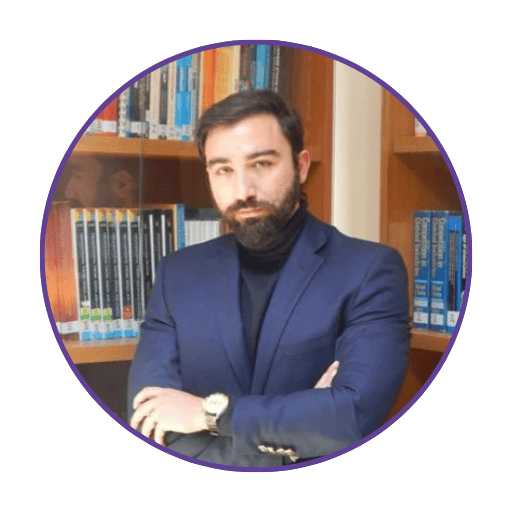
Dr Theodosis Mourouzis serves as an Assistant Professor of Information Management at the University of Nicosia and directs the MSc in Business Intelligence and Data Analytics program within the Department of Information Technologies. Academic Background: PhD in Information Security and Cryptography from University College London (UCL) MSc in Advanced Studies in Mathematics from University of Cambridge BA/MA in Mathematics from University of Cambridge Research Expertise: Dr Mourouzis specializes in information security with deep technical focus on cryptography (including symmetric/asymmetric cryptanalysis) and blockchain ecosystems . His work spans theoretical cryptanalysis of algorithms like GOST and SIMON to practical implementations such as privacy-preserving healthcare blockchain solutions. Current research emphasizes efficient blockchain design and security evaluation frameworks. Publication Trends: His 14 publications (2011-2021) reveal an evolution from foundational cryptanalysis (differential/algebraic attacks on ciphers) toward applied blockchain systems. Key thematic clusters include cryptographic security evaluation (35% of works), blockchain innovation (40%), and authentication systems (25%), demonstrating consistent technical rigor across theoretical and implementation challenges. Academic Leadership: As MSc Director, he oversees program development bridging technical cryptography research with business intelligence applications, indicating strong curriculum design capabilities and industry-academia translation focus.
Professor Andrew Schumann is a faculty member at the University of Information Technology and Management in Rzeszow, Poland. With 202 publications and 1,143 citations, he has established himself as a significant interdisciplinary researcher working at the intersection of philosophy, logic, history, and unconventional computing. His academic expertise spans: Analytical Philosophy Philosophy of Language Ontology and Ancient Philosophy Philosophy of Religion Artificial Intelligence and Unconventional Computing History of Logic across civilizations Professor Schumann's research focuses on examining logical structures across different civilizations and historical periods, from ancient Mesopotamian divination practices to Judaic hermeneutics and Buddhist logic. He is particularly known for his work on unconventional computing models inspired by biological systems, especially slime mold (Physarum polycephalum), which he studies as a natural computing substrate capable of implementing logical operations and solving complex problems. His recent publications (2023-2025) demonstrate a continued exploration of ancient logical systems and their relevance to modern computational paradigms. His work spans diverse areas including: Historical analysis of logical traditions (Judaic, Mesopotamian, Buddhist, Greek) Unconventional computing models based on biological systems Cultural diffusion of philosophical and religious ideas Comparative studies of logical systems across civilizations Applications of ancient logical structures to modern computational problems Professor Schumann has received significant scholarly attention with 58,434 reads of his publications, indicating broad interest in his interdisciplinary approach. His work bridges humanities and computational sciences in innovative ways that challenge traditional disciplinary boundaries. His international collaborations include researchers from institutions worldwide, reflecting the global relevance of his research topics. With publications spanning multiple languages and cultural contexts, Professor Schumann contributes to a truly cross-cultural understanding of logic and its applications.
Prof. Dr. Hans-Peter Lenhof holds the Chair for Bioinformatics at Saarland University since 2000, where he leads research in computational biology and disease mechanism analysis. His career includes: Postdoctoral research at Max Planck Institute for Informatics (1993-1999) Research Group Leader at MPI (1999-2000) Professor at Saarland University (2000-Present) His group develops innovative bioinformatics methods with three primary focus areas: Personalized Cancer Therapy : Creating AI/ML approaches to optimize drug selection from over 200 cancer therapeutics, addressing tumor heterogeneity through predictive modeling of treatment efficacy. Diagnosis & Prognosis : Pioneering blood-based diagnostic methods using autoantibody and miRNA profiles that demonstrate high clinical sensitivity for multiple cancers and neurological disorders through collaborative studies. Pathogenic Mechanism Analysis : Employing graph-based network models to visualize and analyze deregulated biological processes, particularly signaling cascades in cancer progression. The lab maintains active collaborations with Andreas Keller's Clinical Bioinformatics group and Eckart Meese's Human Genetics team. Computational tools developed include BALLView for molecular visualization, GeneTrail for high-throughput data analysis, and specialized frameworks for therapy optimization (MERIDA) and miRNA networks (miRTargetLink).
Michael LeBlanc, PhD, serves as Professor in the Biostatistics Program of the Public Health Sciences Division at Fred Hutchinson Cancer Center (Fred Hutch) and holds a dual appointment as Research Professor in the Department of Biostatistics at the University of Washington. He directs the Statistics and Data Management Center for the SWOG Cancer Research Network, overseeing approximately 100 active clinical trials across design, accrual, and analysis phases, and is a member of Fred Hutch's Translational Data Science Integrated Research Center (TDS IRC). His academic background includes a PhD in Biostatistics from the University of Washington (1989), an MMath in Statistics from the University of Waterloo (1984), and a BSc in Mathematics from Simon Fraser University (1983). Dr. LeBlanc specializes in innovative clinical trial methodologies with expertise in adaptive regression techniques including tree-based and Boolean logic regression for subgroup identification. His research focuses on integrating biomarker and genetic data into trial frameworks, developing methods for long-term treatment efficacy assessment, and optimizing pragmatic trial designs with streamlined data collection. Current projects emphasize statistical approaches for trials involving immunocompromised populations and herpes treatment research. As Group Statistician for SWOG, he leads statistical coordination for national cancer clinical trials and contributes to translational data science initiatives through the TDS IRC. His work bridges methodological innovation with practical applications in oncology research, as highlighted in recent features including a 2024 news release on improving clinical trials for immunocompromised patients.
Daniel W. C. HO is a Chair Professor of Applied Mathematics and Associate Dean (Undergraduate Education) at the College of Science, City University of Hong Kong. He has been with City University of Hong Kong since 1989, having previously served as a Research Fellow at the University of Strathclyde, Glasgow, UK from 1985 to 1988. Prof. Ho received first class honours in BSc, MSc, and PhD degrees in mathematics from the University of Salford, Greater Manchester, UK in 1980, 1982, and 1986, respectively. His academic journey began with foundational work in control theory and has evolved into a distinguished career spanning over three decades. Prof. Ho's research interests span multiple domains in control theory and systems engineering. His primary focus areas include Control Theory , Estimation and filtering theory , Complex dynamical distributed networks , Multi-agent networks , Nonlinear singular systems , and Stochastic systems . His work bridges theoretical advances with practical applications, particularly in networked control systems, cybersecurity for cyber-physical systems, and distributed optimization. Prof. Ho has made significant contributions to the understanding of synchronization phenomena in complex networks, resilient control under cyber attacks, and quantized control systems with communication constraints. His research has evolved from classical control theory to address contemporary challenges in networked and distributed systems, reflecting the changing landscape of control engineering. Prof. Ho's publication record shows a strong emphasis on secure control systems under cyber attacks, distributed optimization with communication constraints, event-triggered control schemes, quantized control systems, and synchronization of complex networks. His work demonstrates a consistent progression from theoretical foundations to addressing practical implementation challenges in cyber-physical systems, with increasing focus on security aspects in recent years. Prof. Ho has received numerous prestigious awards and honors throughout his career. He was named a Fellow of the Institute of Electrical and Electronics Engineers (IEEE) in 2017 and elevated to IEEE Life Fellow status in 2024. He was awarded the Chang Jiang Chair Professorship by the Ministry of Education, China in 2012. Prof. Ho has been recognized as a Highly Cited Researcher for eleven consecutive years from 2014 to 2024, and is among the Top 2% of most highly cited scientists globally from 2020 to 2024. He received the Best Paper Award from The 8th Asian Control Conference in 2011 and the Teaching Excellence Award from City University of Hong Kong in 2020 for his innovative teaching approaches. Prof. Ho has held significant editorial responsibilities, serving as Subject Editor of the Journal of Franklin Institute, Co-Editor in Chief of Franklin Open, Associate Editor of IEEE Transactions on Neural Networks and Learning Systems, Asian Journal of Control, and Action Editor of Neural Networks. He has also served on the editorial boards of several other prestigious journals, contributing to the advancement of his field through scholarly communication. His leadership extends beyond research and teaching as Associate Dean (Undergraduate Education) of the College of Science at City University of Hong Kong, where he plays a key role in shaping the educational experience for science students.
Dr. Fabian Schönfeld is a postdoctoral researcher at the Institute of Neural Computation (INI), which is part of the Faculty of Computer Science at Ruhr-Universität Bochum. He works in the Theory of Neural Systems group, focusing on computational modeling of the hippocampus using Slow Feature Analysis and other machine learning techniques. His educational background includes: Diploma in Computer Science from FAU Erlangen (2004-2009) PhD in Neuroscience from the International Graduate School of Neuroscience (2010-2016) Dr. Schönfeld's research primarily focuses on theoretical neuroscience, particularly on modeling the hippocampus and spatial cognition. His work combines computational approaches with neuroscience to understand how the brain processes spatial information. He has extensively used Slow Feature Analysis to model place cell behavior in the rat hippocampus, arguing for its feasibility as a fundamental principle of cognitive data processing. His research interests also extend to deep learning, artificial intelligence, and the intersection of these fields with neuroscience. His publications demonstrate a consistent focus on hippocampal function and spatial representation, with an increasing sophistication in modeling approaches over time. The research shows how computational models can help understand neural mechanisms of spatial representation, navigation, and memory formation, with applications in both neuroscience and artificial intelligence. Dr. Schönfeld has supervised several bachelor's theses on topics related to robot navigation using Slow Feature Analysis and has taught courses on Scientific Computing with Python. His academic service includes: Supervising bachelor's theses (2012-2013) Teaching Scientific Computing with Python (2015-2017) Tutoring high school students in mathematics and physics (2007-2010)