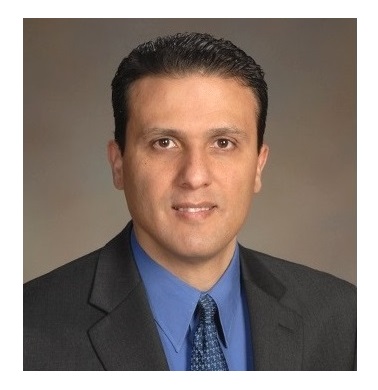
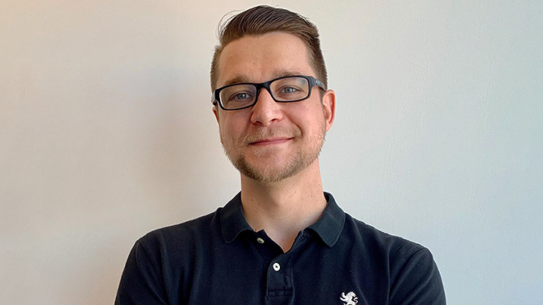
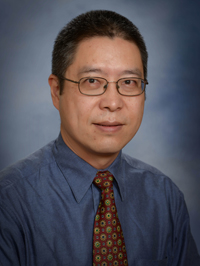
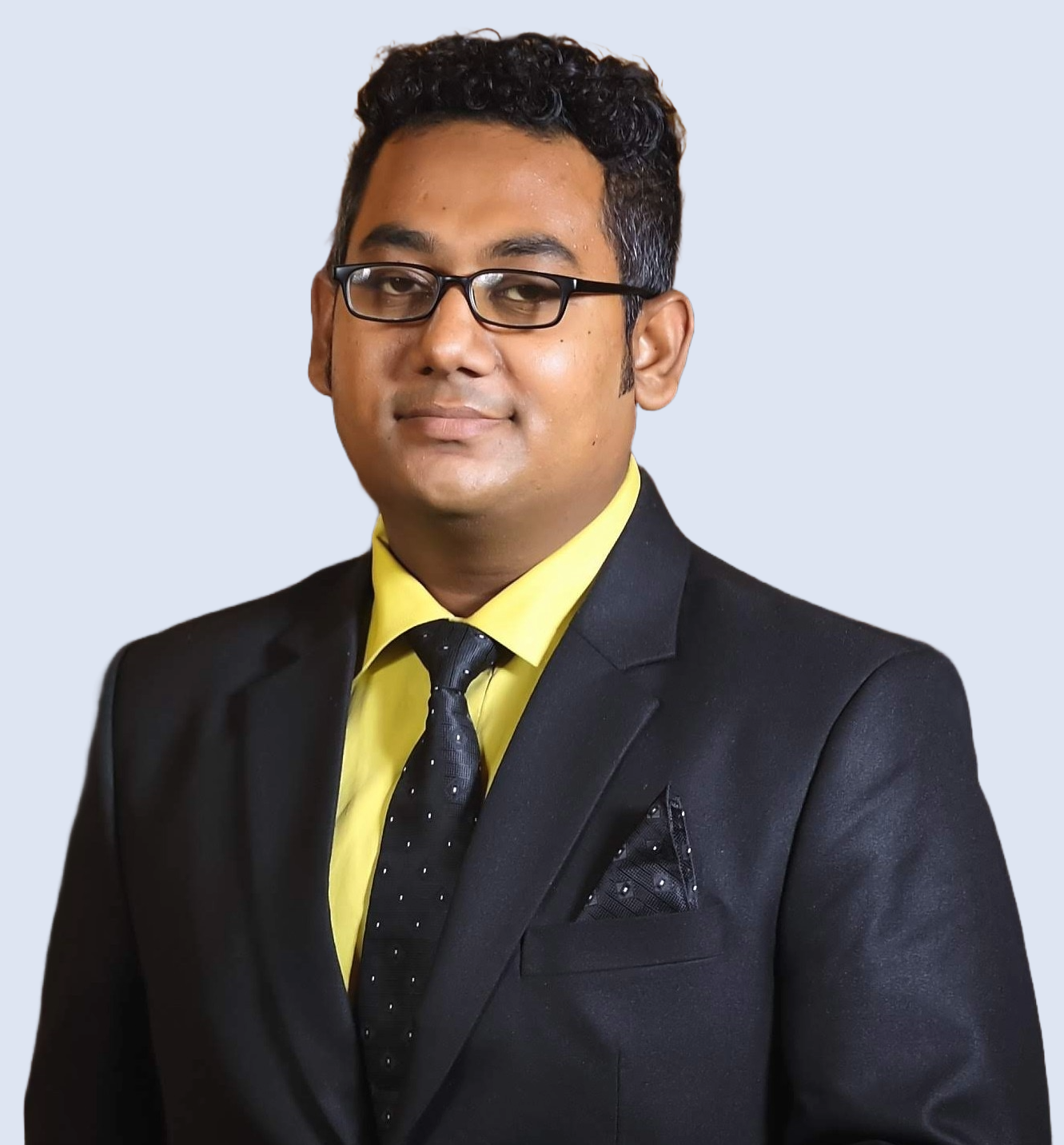
Dr. Wahab Hamou-Lhadj is a Professor and Chair at the Department of Electrical and Computer Engineering , Concordia University, and an Affiliate Researcher at NASA JPL, Caltech . He leads research in Artificial Intelligence for IT Operations (AIOps) , Software Observability , and Model-Driven Engineering , focusing on improving the reliability of digital systems in AI-driven environments.
Ashley M R Montanaro is a Professor of Quantum Computation at the School of Mathematics, University of Bristol . Active in quantum computing research since at least 2014, they lead projects at the intersection of quantum algorithms , computational complexity , and quantum information theory , affiliated with the Bristol Quantum Information Institute. Research interests focus on quantum algorithm design , computational complexity analysis , and quantum simulation . Key work includes developing variational quantum algorithms for phase transition detection, Hamiltonian simulation techniques, and quantum-classical hybrid methods for solving complex problems in physics and optimization. Recent publications demonstrate expertise in: Quantum phase diagram simulation with low-depth circuits Quantum speedups for constraint satisfaction problems Quantum communication complexity of machine learning tasks Quantum-enhanced optimization heuristics Hamiltonian simulation with time-dependent product formulas Quantum algorithm complexity analysis Scientific awards include: EPSRC Fellowship (2014-2019) - "New insights in quantum algorithms and complexity" Active in quantum software development through projects like: "Quantum Algorithms from Foundations to Applications" (ERC-2018-COG) "Quantum Computing and Simulation Hub" (2019-2024) "Prosperity Partnership in Quantum Software" (2019-2023)
Brandon Reagen is an Assistant Professor in the Department of Electrical and Computer Engineering at New York University's Tandon School of Engineering, with affiliations in Computer Science, the Center for Advanced Technology in Telecommunications (CATT), and the NYU Center for Cybersecurity (CCS). He holds a PhD in Computer Science from Harvard (2018) and undergraduate degrees in Computer Systems Engineering and Applied Mathematics from the University of Massachusetts, Amherst (2012). His research focuses on computer architecture, hardware acceleration for deep learning and privacy-preserving computation, and VLSI design. He pioneered efficient deep learning accelerator designs through unsafe optimizations and contributed to benchmarking frameworks like Aladdin and MachSuite. His work spans privacy-preserving machine learning, secure computing systems, and hardware-software co-design for cryptographic protocols. Key achievements include the NSF CAREER Award (2024) and Siebel Scholar recognition (2018). His research centers on advancing secure computing through innovations like zero-knowledge proof accelerators (e.g., zkSpeed), fully homomorphic encryption frameworks (Orion), and entropy-guided privacy techniques for large language models. He leads interdisciplinary efforts at CATT and CCS to bridge hardware design and cybersecurity challenges. Reagen's contributions include over 50 publications in top-tier conferences (e.g., ISCA, ASPLOS, MLSys) and industry collaborations at Facebook AI. His work emphasizes practical solutions for encrypted computation efficiency, privacy-preserving inference, and scalable secure systems.
Jiang Hu is a Professor in the Department of Electrical and Computer Engineering at Texas A&M University, holding the Eric D. Rubin '06 Endowed Professorship. He also serves as Co-Director of Graduate Programs and is affiliated with the Computer Science & Engineering department. His research focuses on VLSI design automation, machine learning applications, and hardware security. He has held roles as editor for IEEE Transactions on CAD and ACM Transactions on Design Automation, and chaired the 2012 ACM International Symposium on Physical Design. Education: B.S. in Optical Engineering (Zhejiang University, 1990), M.S. in Physics (1997), and Ph.D. in Electrical Engineering (University of Minnesota, 2001). He worked at IBM Microelectronics before joining Texas A&M in 2002. Research interests include energy-efficient VLSI circuits, on-chip communication fabrics, analog layout automation, and AI-driven EDA. Recent work emphasizes machine learning for design closure, privacy-preserving frameworks, and systolic array-based architectures. Awards: IEEE Fellow (2016) Humboldt Research Fellowship (2012) Multiple best paper awards at DAC, ICCAD, and ASPDAC Advising and grants: Leads initiatives like the SLICE project, NSF workshops on ML-EDA infrastructure, and serves as Editor-in-Chief of ACM TODAES since 2024. His work bridges academic research and industry applications in EDA and semiconductor design. Labs/Teams: Active contributor to open-source tools like ALIGN for analog layout generation and collaborations on machine learning for EDA commons.
Dr. Muhammad Rashed is an Assistant Professor in the Department of Computer Science and Engineering at the University of Texas at Arlington, within the College of Engineering. He holds a Ph.D. in Computer Engineering from the University of Central Florida (2024) and a B.S. in Electrical and Electronics Engineering from Bangladesh University of Engineering and Technology (2015). Ph.D. : Computer Engineering, University of Central Florida, 2024 B.S. : Electrical and Electronics Engineering, Bangladesh University of Engineering and Technology, 2015 His research focuses on electronic design automation (EDA), in-memory computing, AI acceleration, and sustainable computing. He explores novel computing paradigms to overcome the limitations of traditional architectures, particularly in data-intensive applications such as AI and scientific computing. His work emphasizes hardware-software co-design and leveraging emerging non-volatile memories for energy-efficient processing. The 15 most recent publications highlight a consistent focus on in-memory computing, particularly in path-based and flow-based architectures, logic synthesis, and AI acceleration. Key themes include optimization, fault tolerance, verification, and the use of advanced data structures like sentential decision diagrams. His work is published in top-tier venues such as DAC, ICCAD, ASP-DAC, and IEEE/ACM journals. Scientific Awards: UTA CARES Grant for OER Creation Research Experiences for Undergraduates (REU) Grant Alireza Seyedi Doctoral Research Innovation Endowed Scholarship David T. & Jane M. Donaldson Memorial Scholarship IEEE/ACM William J. McCalla ICCAD Best Paper Award Nomination Best Research Video Award, Design Automation Conference (DAC) Dr. Rashed advises several graduate and undergraduate students in the NextGen Computing Lab and is involved in research grants including the UTA CARES Grant and REU funding. He actively contributes to academic service through roles such as conference TPC member, journal reviewer (e.g., IEEE TCAD, ACM TODAES), and committee participation in the department and college. His lab, the NextGen Computing Lab, is dedicated to building scalable, energy-efficient computing systems for next-generation AI and scientific workloads, aligning with national initiatives in advanced computing.
Leslie Valiant is the T. Jefferson Coolidge Professor of Computer Science and Applied Mathematics in Harvard University's School of Engineering and Applied Sciences, where he has held a faculty position since 1982. A foundational figure in theoretical computer science, his work bridges artificial and natural computational phenomena across multiple disciplines. His academic background includes education at: King's College, Cambridge Imperial College, London Ph.D. in Computer Science from Warwick University (1974) Valiant's research spans computational complexity , machine learning theory , parallel systems , and computational neuroscience . He pioneered the PAC (Probably Approximately Correct) learning framework that established computational learning theory as a rigorous field. His holographic algorithms work revealed deep connections between computational complexity and statistical physics, while his neuroidal model and evolvability theory provide computational explanations for cognitive processes and biological evolution. Current investigations focus on cortical computation primitives and knowledge infusion architectures. His publication trends show increasing integration of neuroscience with computational theory since 2010, with dominant themes in holographic computation (2006-2018), cortical modeling (2012-2018), and evolvability (2009-2017). The work consistently applies computational complexity analysis to biological and cognitive systems. Major recognitions include: Nevanlinna Prize (1986) for mathematical aspects of computer science Knuth Award (1997) for foundational algorithms contributions EATCS Award (2008) for theoretical computer science impact Turing Award (2010) for computational learning theory and complexity Fellowship in the Royal Society and National Academy of Sciences Valiant's research has been supported by NSF and international grants enabling cross-disciplinary work in computational neuroscience and evolutionary algorithms. While specific advisees aren't documented in source materials, his theoretical frameworks have shaped generations of researchers in machine learning and complexity theory. His current research group explores neuroidal architectures for cognitive computation, investigating how cortical circuits achieve robust information processing through in-circuit testing methodologies. Ongoing projects aim to identify fundamental computational primitives in neural systems and develop biologically inspired AI frameworks.
Thomas Peyrin is a Full Professor at Nanyang Technological University (NTU) in Singapore, leading the Symmetric Key and Lightweight Cryptography Lab (SyLLab) since 2012. He co-founded TT-logic.ai, focusing on cryptographic innovations. His academic journey includes a Ph.D. in Cryptology from Orange Labs and University of Versailles (2008), a Master in Computer Science from MPRI (2005), and engineering training at CPE Lyon (2004). Education : Ph.D. (2008), MPRI Master (2005), EPFL Exchange (2003-2004), CPE Lyon (1999-2004) Career : Full Professor at NTU (2022-present), Associate Professor (2017-2022), Nanyang Assistant Professor and NRF Fellow (2012-2017), Research Fellow at NTU (2010-2012), Cryptography Expert at Ingenico (2008-2010) Thomas specializes in symmetric cryptography, cryptanalysis of hash functions and block ciphers, and machine learning applications to security. His work includes groundbreaking research on SHA-1 collisions, lightweight cryptographic primitives (e.g., GIFT, PHOTON), and automated cryptanalysis frameworks. Recent projects explore integrating AI with cryptographic verification and fault attack resistance. His publications span top conferences like CRYPTO, EUROCRYPT, and CHES, with awards including the FSE Test of Time Award (2025), FSE Best Paper (2023), and NRF Investigatorship (2022). He has advised numerous students in cryptographic research and co-founded SyLLab, a leading lab for symmetric cryptography innovation. Scientific Awards : Test of Time Award at FSE 2025 Best Paper Award at FSE 2023/ToSC NRF Investigatorship (2022) Lee Kuan Yew Postdoctoral Fellowship Best Paper Awards at FSE 2012 and ASIACRYPT 2007
David Doty is a Professor in the Department of Computer Science at the University of California, Davis . His research focuses on the intersection of molecular systems and computation , exploring how natural processes like chemical reactions , DNA nanotechnology , and self-assembly can perform computation. He also investigates connections to theoretical computer science, including distributed computing and algorithmic information theory . Doty's work bridges physics , chemistry , and biology through rigorous computational models like the Tile Assembly Model and Population Protocols . His research program includes software development ( scadnano , ppsim ), theoretical analysis, and collaborations with experimentalists. He teaches courses on theory of computation and molecular computing , and has advised numerous students in his research group. His publications cover topics such as algorithmic self-assembly , chemical reaction networks , and thermodynamic binding networks , with a focus on understanding fundamental computational and physical limits. Key software tools developed by his group include scadnano for DNA design and ppsim for population protocol simulations. Doty's recent research trends explore rate-independent chemical computing , error correction , and stochastic modeling in molecular systems. Current academic activity includes teaching ECS 120 (Undergraduate Theory of Computation), ECS 220 (Graduate Theory of Computation), and ECS 232 (Theory of Molecular Computation). He maintains a research lab in 2306 Academic Surge and continues to publish in leading conferences like DNA Computing and CMSB .
Maria Elena Valcher is a Professor at the Department of Information Engineering, University of Padova, Italy. She is an IEEE Fellow (since 2012), IFAC Fellow (since 2023), Socio Effettivo of Istituto Veneto di Scienze, Lettere ed Arti (since 2017, previously Socio Corrispondente 2008-2017), and Socio Effettivo of Accademia Galieliana di Scienze, Lettere ed Arti in Padova (since 2022, previously Socio Corrispondente 2017-2022). She currently serves as Administrator of the Istituto Veneto and holds leadership positions including EUCA President (2024-2025) and IEEE Control Systems Society Past President. Her research focuses on control systems, systems theory, optimization, Boolean control networks, multi-agent systems, and consensus problems. She has made significant contributions in distributed control, data-driven methods, and network optimization, with recent work exploring applications in opinion dynamics and social networks. Recent publications demonstrate a strong emphasis on data-driven approaches to control systems, particularly in distributed state estimation, unknown-input observer design, and multi-agent coordination. Her work shows consistent development in theoretical frameworks for networked systems with practical applications. Awards and Honors: IEEE Fellow (2012) IFAC Fellow (2023) Socio Effettivo, Istituto Veneto di Scienze, Lettere ed Arti (2017-present) Socio Effettivo, Accademia Galieliana di Scienze, Lettere ed Arti in Padova (2022-present) She teaches 'Controlli Automatici' (Bachelor in Information Engineering) and 'Systems Theory' (Master in Control Systems Engineering) during the 2024/2025 academic year. She has chaired major conferences including the 61st IEEE Conference on Decision and Control (CDC 2022) and serves as Program Chair for ICSTCC 2025.
Henry D. Pfister is the Addy Family Professor of Electrical and Computer Engineering at Duke University, with a secondary appointment in Mathematics. He holds affiliations with the Pratt School of Engineering and the Duke Quantum Center. His research focuses on information theory, error-correcting codes, quantum computing, and machine learning applications in communications. Pfister earned his Ph.D. from UC San Diego and has held prior roles at Texas A&M University, École Polytechnique Fédérale de Lausanne, and Qualcomm. Education: Ph.D. in Electrical Engineering, UC San Diego (2003); M.S. degrees in Public Policy and Environmental Management from Duke University; J.D. and additional degrees from UNC Chapel Hill. Research interests include Reed-Muller codes, quantum error correction, neural decoders for DNA storage, and capacity-achieving coding schemes. Recent work highlights include proving Reed-Muller codes achieve capacity on binary-erasure channels and developing quantum-enhanced classical communication protocols. Publications span topics like polar codes for quantum channels, belief-propagation algorithms, and neural network-based decoding. Notable grants include NSF funding for DNA storage coding and quantum simulation projects. Pfister has advised over 20 graduate students and is a recipient of the STOC Best Paper Award and NSF CAREER Award.
Arnab Sen is an Associate Professor at the School of Mathematics, University of Minnesota. His research focuses on probability theory and discrete harmonic analysis, with emphasis on models from statistical physics such as spin glasses, random graphs, random matrices, and random polynomials. PhD in Statistics, UC Berkeley (2010), advised by Steven N. Evans and Elchanan Mossel Postdoctoral Fellow, Statistical Laboratory, University of Cambridge His research spans discrete probability , statistical physics , and random matrix theory , addressing topics like disorder chaos in spin glasses, eigenvalue distributions, and quantum percolation. He has taught graduate and undergraduate courses including Random Matrix Theory , Introduction to Stochastic Processes , and Multivariable Calculus . His recent publications analyze spin glass models, random matrices, and combinatorial systems.
Demirdache Hamida is a Full Professor of Linguistics at Nantes University and Director of the Nantes Linguistics Lab (LLING UMR 6310, CNRS). She holds a PhD from MIT (1991) and Habilitation à diriger des recherches from Nantes University (2003). Her research focuses on syntax-semantics interfaces, linguistic diversity, and formal syntactic theory with emphasis on Semitic languages and under-represented languages like Salish. She has pioneered experimental methodologies to probe logical form syntax, particularly in studies of temporal anaphora, distributivity, and quantification. Leadership roles: Founded LLING lab in 2004, elevated to CNRS status in 2016 Research grants: Coordinator of ANR-DFG projects (2022-2025), CHILL serious game initiative (2018-2021) Awards: Palmes académiques (2011), Descartes-Huygens Prize (2003), multiple PEDR/PES excellence awards Her experimental work bridges theoretical syntax and empirical child language studies, with recent focus on cross-linguistic variation in telicity and scalar implicatures. Supervised 15 PhD theses (including 3 double-doctorates) and 54 master’s theses. Active in international research networks including the Van Riemsdijk Foundation and Carnot Cognition Institute. LLING lab specializes in formal linguistics with particular expertise in: syntax-semantics interfaces, multilingualism, and experimental methods. Current projects investigate Boolean connectives (FRAL project), heritage language maintenance (AThEME EU project), and logical language acquisition through game-based learning (Cool Boole School).
Tamon Stephen is a Professor in the Department of Mathematics at Simon Fraser University (SFU), part of the Faculty of Science. His research focuses on operations research, with an emphasis on combinatorial optimization, algorithms, discrete geometry, and computational biology. He holds a Ph.D. in Mathematics from the University of Michigan (2002). His work often bridges theoretical and computational aspects, addressing interdisciplinary applications. Stephen is affiliated with the Centre for Operations Research and Decision Sciences (CORDS) and has contributed to software tools for hypergraph transversals and colorful linear programming. He has taught courses such as Math 208W (Introduction to Operations Research) and has advised projects in metabolic network analysis and scheduling optimization. His office is located at the Surrey campus (SRYC 2886). Key research collaborations include studies on firefighter scheduling, nurse rostering, and metabolic pathway analysis. His methodologies often leverage algorithm design, polytope theory, and discrete mathematics. Stephen actively participates in academic service, organizing seminars and contributing to conferences such as the West Coast Optimization Meeting. His work emphasizes practical applications of theoretical results, with a focus on solving real-world optimization challenges.
Sharad Malik is the George Van Ness Lothrop Professor of Engineering at Princeton University's Department of Electrical and Computer Engineering. His research focuses on designing functionally correct and secure computing systems, combining system design with mathematical modeling for verification. He pioneered the Instruction-Level Abstraction (ILA) model for SoC verification and has contributed extensively to Boolean satisfiability (SAT) solvers. Education: PhD (1990), M.S. (1987) in Computer Science from UC Berkeley; B.Tech. (1985) in Electrical Engineering from IIT Delhi. Research Interests: Formal Verification of Digital Systems Hardware Security and Trust Boolean Satisfiability Solvers System-on-Chip (SoC) Design Accelerator-rich Platform Architectures Notable Achievements: IEEE CEDA A. Richard Newton Technical Impact Award (2017) 2013 IEEE/ACM DAC Most Cited Paper Award Princeton President’s Distinguished Teaching Award (2009) Advising & Labs: Leads the Malik Group, advising over 50 graduate students and postdocs. Active in postdoc recruitment and mentorship programs.
Kunihiko Kaneko is a Professor at the Niels Bohr Institute, University of Copenhagen, with a distinguished career in theoretical biophysics and complex systems. He received his PhD and MSc in Physics from the University of Tokyo, and has held leadership roles at the Universal Biology Institute and Center for Complex Systems Biology. PhD Physics, 1984 - University of Tokyo MSc Physics, 1981 - University of Tokyo His research spans five primary areas: Universal Biology, Evolutionary Constraints, Ecosystem Dynamics, Neural Cognition, and Universal Anthropology. He has published extensively on multi-level consistency principles, dimensional reduction in biological systems, and reciprocity between robustness and plasticity across scales. Recent publications show strong focus on microbial ecosystems (2025), evolutionary game theory (2025), neural modular architectures (2024), and dimensional reduction in cellular systems (2024). His work bridges physics and biology through dynamical systems theory applied to diverse phenomena from protocells to human societies.