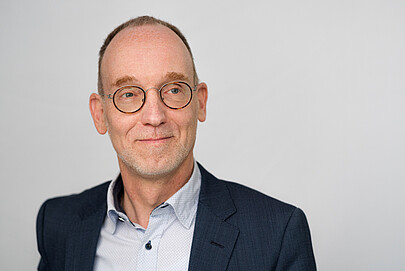
Gerd Stumme is a Full Professor of Computer Science at University of Kassel , leading the Chair on Knowledge and Data Engineering . He serves as Executive Director of the Research Center for Information Systems Design (ITeG) , director of the International Centre for Higher Education Research (INCHER) , and founding member of the Hessian Institute for Artificial Intelligence (hessian.AI) . His research spans the intersection of Data Science, AI, and Mathematics , focusing on semantic/structural analysis of social networks, concept hierarchies, and mathematical structures (graphs, ordered sets) for knowledge acquisition. He pioneered work on Semantic Web, Web Mining, Social Bookmarking , and Recommender Systems , and has recently revisited mathematical foundations for knowledge representation. Recent publications analyze ordinal motifs in lattices , controversy mapping , and social network structures , with applications to business models, journalism, and AI. His work often integrates graph theory and formal concept analysis . He is a core developer of BibSonomy , a social bookmarking and publication-sharing system, and has contributed to FolkRank and TriAS algorithms for collaborative knowledge management.
Barbara Drossel is a Full Professor at the Institute of Solid State Physics within the Faculty of Physics at the Technical University of Darmstadt, where she has been conducting research since February 2002. Her work bridges theoretical physics, complex systems theory, and theoretical ecology, focusing on interdisciplinary approaches to understanding emergent phenomena in natural systems. She leads the AG Drossel research group that investigates the theoretical foundations of complex networks, ecological communities, and quantum systems. Professor Drossel's research spans multiple domains with emphasis on complex systems theory, where she has made significant contributions to understanding random Boolean networks, food web modeling, and the physics of ecological communities. Her work demonstrates how simple rules can lead to complex emergent behavior across different scales, from quantum systems to ecological networks. She investigates how top-down causation operates in complex systems and explores the relationship between microscopic dynamics and macroscopic patterns in diverse contexts. Analysis of her recent publications reveals a consistent focus on theoretical frameworks that connect physics with ecology. Her work shows increasing integration of quantum mechanics with ecological modeling, particularly in understanding emergence and time evolution in complex systems. She frequently employs network theory to analyze ecological communities and has developed innovative approaches to studying species interactions, mutualistic networks, and spatial dynamics in meta-communities. Minerva Fellowship Heisenberg Fellowship DFG Fellowship for research at MIT Professor Drossel has supervised numerous doctoral students whose work spans theoretical ecology, complex systems, and statistical physics. Her research group has secured funding for projects examining the stability of ecological networks, quantum decoherence, and the mathematical foundations of complex systems. She maintains active collaborations with researchers across Europe and has contributed to major theoretical advances in understanding how complexity emerges from simple interactions in diverse systems. The AG Drossel research group operates at the intersection of physics and theoretical biology, maintaining strong connections with both the physics and biology departments at TU Darmstadt. The group combines mathematical rigor with biological relevance, developing models that capture essential features of complex natural systems while remaining analytically tractable. Their work has influenced both theoretical physics and ecological theory, demonstrating the power of interdisciplinary approaches to complex systems.
Ruben Martins is an Assistant Professor at Carnegie Mellon University's School of Computer Science and serves as the program director of the Master of Science in Computer Science (MSCS) . His research focuses on the intersection of constraint programming, program synthesis, analysis, and verification, with recent work aiming to make formal methods tools more accessible through automated reasoning. Ruben earned his Ph.D. with honors from the Technical University of Lisbon, Portugal (2013) , followed by postdoctoral research at the University of Oxford (2014-2015) and UT Austin (2015-2017) . Research Interests : Ruben's work bridges constraint programming and program synthesis , with applications in software verification , optimization , and automated reasoning . He has developed award-winning tools like Open-WBO , a modular MaxSAT solver that has won gold medals in international competitions. His publications span top-tier venues such as POPL , PLDI , FSE , SAT , and CP , often addressing real-world challenges from program analysis to network security. Scientific Awards include: Distinguished Paper Award at PLDI 2018 Distinguished Paper Award at FSE 2021 Distinguished Paper Award at SAT 2022 Gold medals for Open-WBO in MaxSAT competitions Teaching & Advising : Ruben mentors Ph.D., Master’s, and undergraduate students in research projects related to program synthesis, formal methods, and constraint solving. He teaches courses such as Bug Catching: Automated Program Verification and Advanced Topics in Logic: Automated Reasoning and Satisfiability , emphasizing hands-on experience with tools like Why3. His advising spans topics from AI-driven program repair to network protocol verification , fostering collaboration across disciplines.
Professor Yann Disser is a faculty member in the Department of Mathematics at TU Darmstadt since 2021. He previously held an Assistant Professor (tenure-track) position at TU Darmstadt (2016-2021), a PostDoc position at TU Berlin (2012-2016), and a Visiting Professor role at Augsburg University (2015). His research spans Combinatorial Optimization , Online Algorithms , Graph Exploration , Computational Complexity , and Robust Optimization . Current position: Professor (W2), TU Darmstadt Previous: Assistant Professor (2016-2021), TU Darmstadt PostDoc & Habilitation: TU Berlin (2012-2016) His research focuses on algorithmic approaches to optimization problems, including: Combinatorial Optimization for problems like Steiner trees and knapsack variants Online Algorithms with applications to scheduling and transportation Graph Exploration by mobile agents and complexity bounds Computational Complexity of linear programming pivot rules Network Flows and geometric reconstruction Recent publications analyze incremental maximization with greedy methods, lower bounds for active-set methods , and universal circuit designs . His work appears in top venues like IPCO , ESA , and SODA . He advises a team of researchers including David Weckbecker, Farehe Soheil, and Alexander Birx. Current and past advisees often focus on algorithmic theory, with placements at institutions like HPI Potsdam and Merck.
Jilles Vreeken is a Professor of Computer Science at Saarland University and tenured faculty at the CISPA Helmholtz Center for Information Security, where he leads the Exploratory Data Analysis research group. He is also an ELLIS Fellow and Faculty of the Saarbrücken Unit on AI and ML. His work bridges theoretical foundations with practical applications in causal inference, unsupervised learning, and exploratory data analysis. Dr. Vreeken's research focuses on developing theory and algorithms for answering fundamentally exploratory questions about data: "what is going on in my data?", "what causes what and how?", and "what can we learn from this model?" without making unnecessary or unjustified assumptions. He takes a principled approach based on information theory to identify what is worth knowing, then develops efficient algorithms for extracting useful interpretable results. His work spans causal inference under realistic conditions (including hidden confounding, selection bias, and non-i.i.d. data), summarizing complex data and models in understandable terms, and combining these threads to create more robust and useful models across diverse data types. His recent publications demonstrate a strong trend toward causal discovery in increasingly realistic settings, including non-stationary time series, event sequences, and scenarios with hidden confounders. He has made significant contributions to federated learning, interpretable machine learning, and pattern mining. His work consistently applies information-theoretic principles to develop methods that are both theoretically sound and practically useful for extracting insights from complex data. Dr. Vreeken has received numerous prestigious awards including: IEEE ICDM'18 Tao Li Award for Excellence in Research IEEE ICDM'18 Best Paper Award UdS-CS'15 Busy Beaver Teaching Award ACM SIGKDD'11 Best Student Paper Award ACM SIGKDD'10 Doctoral Dissertation Runner-Up Award ECML PKDD'09 Best Student Paper Award As an advisor, Dr. Vreeken has mentored numerous doctoral researchers to completion, including Dr. Osman Ali Mian, Dr. David Kaltenpoth, Dr. Boris Wiegand, Dr. Sebastian Dalleiger, Dr. Janis Kalofolias, Dr. Jonas Fischer, Dr. Alexander Marx, Dr. Panagiotis Mandros, Dr. Kailash Budhathoki, Dr. Roel Bertens, Dr. Koen Smets, and Dr. Michael Mampaey. He has secured significant research funding as PI for multiple projects including "AI for Prediction and Therapy Guidance in Acute Stroke" (HAICU, 2025-2028), "Neuro-Explicit Models of Language, Vision and Action" (RTG, DFG, 2023-2028), and "Crushing Antimicrobial Resistance using Explainable AI" (HAICU, 2021-2024). Dr. Vreeken leads the Exploratory Data Analysis (EDA) research group at CISPA, which focuses on developing theory and algorithms for discovering novel insights from data, learning inherently interpretable models, and drawing reliable causal conclusions. The group has produced numerous influential algorithms and frameworks in causal inference, pattern mining, and exploratory data analysis, with applications spanning healthcare, materials science, and cybersecurity.
Leif Kobbelt serves as a University Professor at RWTH Aachen University, leading the Computer Graphics Group within the Department of Computer Science (Informatik 8). His research focuses on advancing geometry processing, interactive visualization, and computer graphics through innovative algorithmic solutions and interdisciplinary collaborations. Professor Kobbelt's research program centers on geometry acquisition and processing, with significant contributions to mesh generation, surface reconstruction, and neural rendering techniques. His work bridges theoretical geometry with practical applications in computer vision, photo-realistic image synthesis, and multimedia data transmission, often involving collaborations with industry partners and international research teams funded by DFG and EU sources. Recent publications (2023-2025) reveal a strategic integration of deep learning with traditional geometry processing, particularly in Gaussian splatting for real-time rendering, NeRF-based 4D content generation, and robust mesh Boolean operations. His group maintains leadership in quad mesh optimization and surface mapping while expanding into immersive visualization techniques for complex data analysis. The group has earned recognition through prestigious awards: Günter Enderle Best Paper Award at Eurographics 2023 Best Paper Award (1st place) at Symposium on Geometry Processing 2022 Honorable Mention for Best Paper at ACM Symposium on Virtual Reality Software and Technology Funding from Deutsche Forschungsgemeinschaft and European Union programs supports the group's research infrastructure and international collaborations. The team actively supervises graduate theses while developing open-source software tools that translate theoretical advances into practical industry applications, particularly in digital fabrication and immersive visualization systems. The Computer Graphics Group operates as a central hub for visual computing research at RWTH Aachen, maintaining strong ties with both academic institutions and technology companies. Their recent work on virtual reality educational tools and high-fidelity 3D reconstruction systems demonstrates commitment to knowledge transfer and real-world impact beyond traditional publication venues.
Manuel Penschuck is a Research Fellow at the Institute of Computer Science , Goethe University Frankfurt, Germany. His research focuses on algorithm engineering, graph theory, and scalable network generation, with emphasis on parallel computing, I/O-efficient algorithms, and random graph models. He actively contributes to conferences like ESA, SEA, and IPDPS, and has co-authored publications in top venues including LIPIcs , IEEE Transactions , and SIAM . His work includes engineering algorithms for non-linear preferential attachment , parallel shuffling , and hyperbolic graph generation . He has co-organized program committees for ESA, EuroPar, and SEA, and his collaborations span institutions such as MPI-INF, TU Darmstadt, and Australian National University. Recent publications highlight advances in uniform graph sampling, geometric network models, and distributed systems. His research integrates theoretical rigor with practical implementation, addressing challenges in big data and high-performance computing. He is a key contributor to the Networkit toolkit for large-scale network analysis.
Gabriela F. Ciocarlie is a Researcher at SRI International, focusing on advancing cybersecurity, IoT security, and formal verification techniques. Her work bridges theoretical computer science with practical applications in critical infrastructure protection and manufacturing systems. She has contributed to over 48 publications across conferences like CCS, NDSS, and IEEE venues. Her research interests span adversarial machine learning, secure manufacturing automation, and resilient biomanufacturing systems. Notable projects include developing frameworks for verifying manufacturing design integrity and creating end-to-end security solutions for cyber-physical systems. She has also pioneered work on deployable adversarial attacks against neural networks and automated attack investigation tools like autoMPI. Key collaborations include partnerships with institutions like Columbia University (former affiliation) and industry leaders. Her work often addresses real-world challenges such as pandemic-resilient biomanufacturing and securing critical infrastructure through cyber-physical integration.
Prof. Dr. Jilles Vreeken is tenured faculty at the CISPA Helmholtz Center for Information Security , where he leads the Exploratory Data Analysis group. He also serves as an Honorary Professor at Saarland University . Research focuses on causal inference, machine learning, and data mining Develops unsupervised methods for robust, interpretable models PI on grants like HAICU's Neuro-Explicit Models and Crushing Antimicrobial Resistance His recent work spans causal discovery in non-stationary time series ( SPACETIME ), federated binary matrix factorization, interpretable neural search patterns, and data modification rule mining from event logs. He applies information-theoretic approaches to address hidden confounding, selection bias, and multi-environment causal modeling. Key trends in his publications include: Integrating causal inference with machine learning via algorithmic Markov conditions Advancing federated learning for privacy-preserving causal discovery Creating interpretable pattern mining frameworks for graphs, sequences, and high-dimensional data Developing MDL-based methods for reliable dependency and rule discovery Scientific Recognition: 2018 - IEEE ICDM Tao Li Award 2018 - IEEE ICDM Best Paper 2015 - UdS-CS Busy Beaver Teaching Award 2011 - ACM SIGKDD Best Student Paper 2010 - ACM SIGKDD Doctoral Dissertation Runner-Up 2009 - ECML PKDD Best Student Paper As an educator, he has supervised 15+ PhD/MSc students and taught courses like Topics in Algorithmic Data Analysis and Information-Theoretic Machine Learning . His research group pioneers methods for trustworthy information processing and causal anomaly detection , with applications in materials science, epidemiology, and cybersecurity.
Thorsten Koch is a Professor for Software and Algorithms for Discrete Optimization at Technische Universität Berlin , with multiple leadership roles including Head of the Applied Algorithmic Intelligence Methods (A²IM) , Digital Data and Information for Society, Science, and Culture (D²IS²C) , Kooperativer Bibliotheksverbund Berlin-Brandenburg (KOBV) , and Forschungs- und Kompetenzzentrum Digitalisierung Berlin (digiS) . Based at Zuse Institute Berlin and affiliated with TU Berlin's Institute for Mathematics, he focuses on integrating mathematical optimization with high-performance computing and artificial intelligence to solve complex real-world problems. Research Pillars : Mathematical optimization algorithms Quantum computing applications AI/ML integration in decision systems Energy systems optimization Scientific software development Leadership Roles : Head of Applied Algorithmic Intelligence Methods (A²IM) Head of Digital Data & Information for Society, Science, and Culture (D²IS²C) Head of Kooperativer Bibliotheksverbund Berlin-Brandenburg (KOBV) Head of Forschungs- und Kompetenzzentrum Digitalisierung Berlin (digiS) Key Collaborations : Working with IBM Quantum on quantum optimization Collaborating across institutions for energy system modeling Developing open-source optimization tools like SCIP Contributing to digital library infrastructure Recent Research Trends : Quantum optimization benchmarking Machine learning-aided optimization Multi-objective decision frameworks Energy infrastructure optimization Adaptive algorithm design CO2 network modeling Impact : Advancing hybrid optimization methods Developing open-source tools for scientific computing Building digital infrastructures for libraries and research Exploring quantum-classical algorithm synergies
Nian-Ze Lee is an Assistant Professor at the Department of Electrical Engineering, College of Electrical Engineering and Computer Science, National Taiwan University, Taiwan, where they lead the Formal Methods and Analysis for Computing and Engineering Laboratory (ForMACE Lab). Additionally, Lee holds a position as a Gastprofessor (Guest Professor) affiliated with the Software and Computational Systems Lab (SoSy-Lab) at LMU Munich, Germany. Lee's research focuses on formal methods, with particular expertise in model checking, program analysis, and electronic design automation. Their work bridges hardware and software verification, developing techniques that transfer methodologies between these domains. A significant portion of their research involves stochastic Boolean satisfiability and threshold logic circuits, with applications in both hardware and software verification. Lee's recent publications demonstrate a strong trend toward developing cross-domain verification techniques, particularly focusing on how hardware model checking approaches can be adapted for software verification. Their work on interpolation-based model checking and configurable program analysis has received recognition through multiple best paper and artifact awards at top-tier conferences. ACM SIGSOFT Distinguished Paper Award (FSE 2024) Best Artifact Award (FSE 2024) Distinguished Artifact Award (TACAS 2024) Best Paper Award (SPIN 2024) Lee has secured research funding including a grant from the German Research Foundation (DFG) for the project 'Bridging Hardware and Software Analysis.' They actively maintain several software projects including Btor2C, Btor2-Cert, CPV, MoXIchecker, and contribute to CPAchecker and BenchExec. Lee is currently recruiting Ph.D., Master's, and Bachelor's students to work on formal methods research, with Ph.D. students potentially enrolled at LMU Munich through a DFG-funded project.
Heribert Vollmer is a Professor of Theoretical Computer Science and Managing Director of the Institute for Theoretical Computer Science at Leibniz University Hannover, where he has been employed since 2002. He is also a member of the Academic Freedom Network and serves as a liaison lecturer for the network at Leibniz University. His extensive academic career includes serving as Dean of Studies for Computer Science from 2015-2023 and as spokesperson for the 'Foundations of Computer Science' department of the German Informatics Society. Professor Vollmer earned his doctorate in 1994 on 'Complexity Classes of Functions' from the University of Würzburg, following studies in computer science with a focus on computational linguistics at the Rhineland-Palatinate University of Education in Koblenz (1984-1989). He completed his habilitation in 2000 with a monograph on 'Some Aspects of the Computational Power of Boolean Circuits of Small Depth' and received a teaching qualification in computer science. His research spans theoretical computer science, computational complexity, and logic, with particular focus on Boolean circuits, complexity classes, and descriptive complexity. He has also made significant contributions to the philosophy of mind and intelligence, exploring the relationship between artificial intelligence and consciousness through the lens of Pierre Teilhard de Chardin's philosophical work. His interdisciplinary approach bridges technical computer science with broader philosophical questions about intelligence in humans and machines. Professor Vollmer's notable recognition includes the Feodor Lynen Fellowship from the Alexander von Humboldt Foundation, which supported his research at the University of California at Santa Barbara. He has published over 140 papers in scientific journals and conference proceedings, authored a textbook on circuit complexity, and edited multiple books in his field. As an academic leader, Professor Vollmer has served as editor of the journal 'ACM Transactions on Computational Logic' and as a member of the editorial board of the 'Yearbook of Academic Freedom.' His research has been supported through various academic positions and fellowships, including his visiting professorship at UC Santa Barbara funded by the Humboldt Foundation. He leads the Institute for Theoretical Computer Science at Leibniz University Hannover and is actively involved in the global computer science community as the German representative to Technical Committee 1 'Foundations of Computer Science' of the International Federation for Information Processing (IFIP).
Stefan Kratsch is a Professor of Theoretical Computer Science at the Institute of Computer Science, Humboldt University of Berlin. He holds this position since September 2017 and has previously held academic roles at the University of Bonn (2015–2017) and Technical University Berlin (2012–2014). His research focuses on parameterized complexity, efficient preprocessing, and computational complexity, with a strong emphasis on theoretical foundations and algorithm design. University: Humboldt University of Berlin Department: Institute of Computer Science (Algorithm Engineering group) Academic Rank: Professor Email: stefan.kratsch@hu-berlin.de, kratsch@informatik.hu-berlin.de Kratsch’s recent publications highlight his work on advanced algorithmic techniques for graph problems. Key areas include kernelization methods, flow-augmentation for connectivity problems, and tight complexity bounds for classical problems parameterized by structural measures like clique-width and cutwidth. His theoretical contributions aim to bridge preprocessing efficiency with computational hardness. Stefan actively engages in academic service, including organizing workshops and serving on program committees for leading conferences such as IPEC, LATIN, and SWAT. He has reviewed for numerous journals and grant panels, including the European Research Council and German Research Foundation. Advising: He supervised PhD candidate Michael Piechotta, whose defense is scheduled for September 2025.
Fadi A. Aloul is an academic at the American University of Sharjah, UAE , with a focus on computer science and cybersecurity. His research spans Boolean satisfiability Machine learning applications IoT and mobile security Chaotic system modeling He has collaborated extensively on FPGA implementations, intrusion detection, and health monitoring systems. Research Trends : Recent work emphasizes machine learning for cybersecurity (e.g., Android malware detection, IoMT threat mitigation) and FPGA-based chaotic models for medical/disease simulation. Earlier studies highlight symmetry-breaking algorithms in satisfiability problems and mobile health applications. Collaborations : Co-authored with Imran A. Zualkernan Assim Sagahyroon Ahmed S. Elwakil Wassim El-Hajj across institutions in UAE, USA, and Egypt.
Sam Corson is a Ramon y Cajal Fellow (Research Fellow) at the Technical University of Madrid, specializing in the construction of unconventional mathematical structures at the intersection of group theory, topology, and set theory. His work resolves longstanding conjectures, such as the Cannon-Conner problem on fundamental groups of the harmonic archipelago and Griffiths double cone, and introduces novel objects like Artinian groups of arbitrary cardinality and Jonsson groups satisfying Babai’s infinitary edge orbit conjecture. His research interests emphasize automatic continuity (proving open kernels for homomorphisms from topological groups to hyperbolic/braid groups), wild topology (analyzing fundamental groups of non-locally simply connected spaces), and set-theoretic group theory (constructing groups under ZF axioms without choice). Key contributions include models of ZF where metric spaces fail paracompactness or torsion-free abelian groups lack bi-orderings, demonstrating deep interactions between logic and algebra. Recent publications (2021–2025) reveal a trend toward profinite rigidity in Coxeter groups, cardinality constraints in infinite groups, and geometric realizations of permutation actions. His work spans journals like Bulletin of the London Mathematical Society and Proceedings of the American Mathematical Society , often coauthored with Saharon Shelah and Olga Varghese. Scientific recognition includes: Ramon y Cajal Fellowship (prestigious Spanish postdoctoral award) With an Erdős number of 2, Corson collaborates extensively but has no documented advisees, teaching roles, or grants. His research operates within pure mathematics frameworks without applied lab structures or institutional teams beyond coauthor networks.