Scott J Aaronson is the David J. Bruton Jr. Centennial Professor of Computer Science at the University of Texas at Austin , where he explores the theoretical foundations of quantum computing and computational complexity theory . A pioneer in the field, he has bridged quantum physics, computer science, and mathematics to clarify the capabilities and limitations of quantum computers. A summa cum laude graduate of Cornell University and holder of a PhD from UC Berkeley , Aaronson has shaped public understanding through his popular blog Shtetl-Optimized , his book Quantum Computing Since Democritus , and TED Talks. His research has established critical insights into: Quantum Supremacy : Theoretical frameworks for experimental validation without full fault tolerance Cryptographic Security : Demonstrating quantum lower bounds for collision problems Classical Complexity : The invention of algebrization as a tool for complexity class analysis Awarded the ACM Prize in Computing (2020) , ACM Fellow (2019) , and the Simons Investigator Award , his work has been recognized as foundational to the digital age. He has also mentored graduate students in quantum complexity theory, with projects advancing topics like Boson Sampling , Forrelation , and Quantum Zero-Knowledge Protocols . Scientific Awards: ACM Prize in Computing (2020) ACM Fellow (2019) Tomassoni-Chisesi Prize in Physics (2018) Simons Investigator Award (2017) Alan T. Waterman Award (2012) Aaronson’s advocacy for Deep Zionism and reflections on AI’s existential implications reflect his broader engagement with ethics and societal impact in technology.
Assoc. Prof. Daniel Olejár, PhD, serves in the Department of Cryptology and Information Security at Comenius University's Faculty of Mathematics, Physics and Informatics in Bratislava. His academic responsibilities include teaching Principles of Computers, Combinatorial Analysis, Information Security, and Information Theory/Coding Theory courses. Contactable at olejar@dcs.fmph.uniba.sk from office M-214, he maintains active scholarly engagement through recent high-impact publications. Professor Olejár's research bridges cybersecurity policy implementation and theoretical computer science . His expertise spans information security governance , combinatorial structures , and random graph theory . The 2018 commentary on Slovakia's Cybersecurity Act demonstrates practical policy contributions, while earlier works on dominating cliques phase transitions reveal deep theoretical foundations. This dual focus creates unique value in translating mathematical rigor into security frameworks. His publication trajectory shows strategic evolution from pure theory (2008-2012) to policy application (2018), reflecting responsive scholarship aligned with national security priorities. The consistent output across disparate domains indicates rigorous methodological discipline applicable to both legislative analysis and abstract computational problems. Though specific grant details aren't public, his role in major policy documents suggests institutional research support. Student supervision occurs through structured coursework and departmental seminars, with theoretical specializations offering potential thesis directions in combinatorial security analysis. As a core faculty member in Cryptology and Information Security, he contributes to the department's mission of advancing both theoretical knowledge and practical security solutions. No dedicated laboratory is referenced, but his departmental affiliation places him within Bratislava's primary hub for cryptographic research and cybersecurity education, facilitating collaboration on national security initiatives through institutional channels.
Magnus O. Myreen is a Professor in the Department of Computer Science and Engineering at Chalmers University of Technology, Sweden. He has been with Chalmers since 2014, becoming a tenured Associate Professor in 2015 and being promoted to full Professor in June 2023. Myreen has an extensive record of service to the programming languages and formal methods communities, including serving on program committees for major conferences like PLDI, POPL, ICFP, and CPP, and chairing the steering committee for the ITP conference series since November 2023. Myreen received his academic training at prestigious institutions: B.A. in Computer Science at the University of Oxford, tutored by Dr. Jeff Sanders Ph.D. on program verification in 2009 at the University of Cambridge, supervised by Prof. Mike Gordon Myreen's research focuses on program verification, interactive theorem proving, and compiler verification. He is best known for his work on the CakeML project, which is an ML-style language with a formal semantics and a growing ecosystem of proofs and tools that support construction of verified applications. As he states on his website, "My most recent work has focused on CakeML, which is an ML-style language with a formal semantics and a growing ecosystem of proofs and tools that support construction of verified applications. As far as I know, the CakeML compiler is the first verified compiler to have been bootstrapped." His research spans several key areas: Decompilation into logic — verification of machine code Proof-producing synthesis from logic Verified Lisp and ML runtimes Connecting things up: verified stacks Myreen's publication record shows a strong focus on verified compilation and theorem proving, particularly through the CakeML ecosystem. His work consistently bridges the gap between theoretical foundations and practical implementation, with numerous papers on verified compilers, program verification, and theorem proving. A significant trend in his recent work (2021-2024) has been extending CakeML's capabilities to handle more complex language features, improve performance, and verify increasingly sophisticated compilation techniques including bootstrapping and dynamic computation. Myreen has received several prestigious awards and recognitions: Winner of the BCS Distinguished Dissertation Competition 2010 for his PhD work Royal Society Research Fellow (UK) since 2012 ACM SIGPLAN Most Influential POPL Paper Award for the 2014 CakeML paper Amazon Research Award for his proposal "Compiling Dafny to CakeML" Myreen has advised several PhD students to completion, including Alejandro Gomez (Sep 2017 – Jun 2023), Oskar Abrahamsson (Aug 2017 – Dec 2022), and Andreas Loow (Sept 2016 – Sep 2021). He also collaborated with postdocs including Hira Syeda, Thomas Sewell, and Johannes Aman Pohjola. His research has been supported by various funding sources, though specific grants aren't detailed in the provided text. Notably, he received an Amazon Research Award for his work on compiling Dafny to CakeML, and his CakeML project has clearly attracted significant attention in the programming languages and formal methods communities. Myreen leads research on the CakeML project, which has grown into a substantial ecosystem for verified compilation. The project involves a team of researchers working on various aspects including compiler verification, program synthesis, and theorem proving. Myreen also collaborates with researchers at other institutions, as evidenced by his visits to EPFL (meeting Viktor Kuncak, Martin Odersky, and James Larus) and NUS (visiting Ilya Sergey's group). In October 2023, he began a ten-month sabbatical at Cambridge UK, where he worked part-time for Arm Ltd., indicating ongoing industrial collaboration.
Simone Severini is a Professor of Physics of Information at the University College London , affiliated with the Department of Computer Science . He is a Royal Society University Research Fellow and contributes to multidisciplinary groups including Intelligent Systems , UCL CS Quantum , UCL Quantum Science and Technology Institute , and CoMPLEX . Research Interests: His work bridges Quantum computing Machine learning Graph theory Quantum information theory Computational biology with a focus on quantum algorithms, classical simulation of quantum systems, and mathematical frameworks for physical correlations. Scientific Contributions: Recent publications span quantum state learning, non-Markovian dynamics, adversarial quantum learning, and graph isomorphism. His projects include Quantum Computing, Information, and Algebras of Operators and the Distributed Information initiative . Awards: Royal Society University Research Fellowship Best Paper Award at FCT2017
Gheorghe Craciun is a Professor in the Department of Mathematics and Department of Biomolecular Chemistry at the University of Wisconsin-Madison . His research focuses on Mathematical and Computational Methods in Biology and Medicine , particularly in analyzing chemical reaction networks, dynamical systems, and algebraic geometry applications. He has taught advanced courses like Math 703 and organized workshops, including the Moshe Mendelson Memorial Lecture and the Moshe Mendelson Workshop on Mathematics of Reaction Networks . His recent publications explore topics such as Toric Differential Inclusions , Complex Balanced Equilibrium , and Reaction Network Stability . His work involves collaborations with researchers like Casian Pantea , Polly Yu , and Minh Binh Tran . He also contributes to interdisciplinary areas, including biochemistry , neuroscience , and genomics , applying mathematical frameworks to biological systems.
Dr. Levent Aksoy is a Senior Research Fellow at Tallinn University of Technology, School of Information Technologies, Department of Computer Systems, where he has been working since 2020 (initially as a Post-Doc and since November 2023 as Senior Research Fellow). His academic journey began with a BSc from Yildiz Technical University, followed by MSc and PhD degrees from Istanbul Technical University in Electronics and Communication Engineering. Dr. Aksoy's research primarily focuses on electronic design automation, hardware security, and optimization techniques. His work spans several key areas including logic locking, circuit obfuscation, multiplierless design methods for constant multiplications, and switching lattices for efficient logic implementation. He has published extensively in top-tier IEEE journals and conferences, with a strong emphasis on hardware security mechanisms and efficient circuit design. His recent publications (2020-2025) demonstrate a clear research trajectory toward hardware security, with numerous papers on logic locking techniques, structural analysis attacks, and hardware obfuscation methods. This research direction aligns with his current leadership of the EAGER project on 'Hardware-Efficient Realization of UA Cryptographic Standards' and his involvement in the European Space Agency project on 'End-to-End Supply Chain Protection'. Dr. Aksoy has received multiple awards for his research contributions, including: First place in HELLO: CTF 2022 (2023) Best paper award at DDECS (2022) Best paper award at EUC (2015) As a supervisor, Dr. Aksoy currently guides three students working on hardware security topics, including lightweight cryptography implementations and advanced hardware protection mechanisms. He also serves on PhD and MSc defense committees at Tallinn University of Technology and Linköping University. His professional service includes IEEE membership and reviewing for prestigious IEEE transactions and conferences such as DATE, ICCAD, and ISCAS.
Jürgen Dassow is a Professor for Theoretical Computer Science at the Faculty of Computer Science, Otto-von-Guericke-University of Magdeburg, Germany. He has held this position since 1992 and previously served as Rector of the university from 1993 to 1996. His academic career spans over five decades, beginning with studies in mathematics at the University of Rostock in the 1960s. Professor Dassow's research focuses on formal languages, regulated rewriting, Lindenmayer systems, grammar systems, syntactical complexity, and biocomputing . His work has significantly contributed to theoretical computer science, particularly in the mathematical foundations of language theory and automata. He has maintained a prolific publication record with over 200 scientific papers and 4 monographs, including the influential 1989 work 'Regulated Rewriting in Formal Language Theory' co-authored with Gheorghe Păun. His recent research (2020-2023) continues to explore operational complexity, closure-involution operations, contextual grammars, and networks of evolutionary processors. These publications demonstrate his sustained engagement with cutting-edge theoretical problems in computer science. Professor Dassow has also been instrumental in organizing the international Descriptional Complexity of Formal Systems (DCFS) workshop series and has edited numerous proceedings volumes. Professor Dassow has been actively involved in the academic community through approximately 100 lectures at conferences and universities across 18 countries. His work bridges theoretical computer science with biological computing models, reflecting the interdisciplinary nature of modern theoretical research. His research group at the Otto-von-Guericke-University continues to advance knowledge in formal language theory, with recent publications addressing contemporary challenges in descriptional complexity and bio-inspired computational models. Professor Dassow's career exemplifies long-term dedication to advancing the theoretical foundations of computer science while maintaining relevance to emerging computational paradigms.
Dr Theodosis Mourouzis serves as an Assistant Professor of Information Management at the University of Nicosia and directs the MSc in Business Intelligence and Data Analytics program within the Department of Information Technologies. Academic Background: PhD in Information Security and Cryptography from University College London (UCL) MSc in Advanced Studies in Mathematics from University of Cambridge BA/MA in Mathematics from University of Cambridge Research Expertise: Dr Mourouzis specializes in information security with deep technical focus on cryptography (including symmetric/asymmetric cryptanalysis) and blockchain ecosystems . His work spans theoretical cryptanalysis of algorithms like GOST and SIMON to practical implementations such as privacy-preserving healthcare blockchain solutions. Current research emphasizes efficient blockchain design and security evaluation frameworks. Publication Trends: His 14 publications (2011-2021) reveal an evolution from foundational cryptanalysis (differential/algebraic attacks on ciphers) toward applied blockchain systems. Key thematic clusters include cryptographic security evaluation (35% of works), blockchain innovation (40%), and authentication systems (25%), demonstrating consistent technical rigor across theoretical and implementation challenges. Academic Leadership: As MSc Director, he oversees program development bridging technical cryptography research with business intelligence applications, indicating strong curriculum design capabilities and industry-academia translation focus.
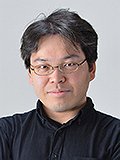
Hiroshi Unno is a Professor at Tohoku University 's Research Institute of Electrical Communication and a Visiting Professor at the National Institute of Informatics. He has served on program committees for major conferences like POPL , PLDI , ICFP , and CAV . Dr. Unno's research focuses on Programming Languages Software Verification Artificial Intelligence Higher-Order Model Checking Refinement Type Systems Temporal Logic His recent work (2023-2025) includes advancements in algebraic effects , probabilistic program verification , and prophecy-based type systems . Key contributions appear in POPL , PLDI , and ICFP journals. Scientific awards include Distinguished Paper Award at POPL 2024 Distinguished Paper Award at POPL 2023 PPL 2014 Best Paper Award He leads development of tools like RCaml , Thrust , and EffCaml for refinement type checking. Current projects involve Kakenhi grants 20H04162 and 25H00446 . Dr. Unno actively contributes to academic communities through Program Committee roles at AAAI, CAV, and SAS Editorial work for IPSJ Transactions Organizing PPL Summer School (2022)
Dr. Fabian Schönfeld is a postdoctoral researcher at the Institute of Neural Computation (INI), which is part of the Faculty of Computer Science at Ruhr-Universität Bochum. He works in the Theory of Neural Systems group, focusing on computational modeling of the hippocampus using Slow Feature Analysis and other machine learning techniques. His educational background includes: Diploma in Computer Science from FAU Erlangen (2004-2009) PhD in Neuroscience from the International Graduate School of Neuroscience (2010-2016) Dr. Schönfeld's research primarily focuses on theoretical neuroscience, particularly on modeling the hippocampus and spatial cognition. His work combines computational approaches with neuroscience to understand how the brain processes spatial information. He has extensively used Slow Feature Analysis to model place cell behavior in the rat hippocampus, arguing for its feasibility as a fundamental principle of cognitive data processing. His research interests also extend to deep learning, artificial intelligence, and the intersection of these fields with neuroscience. His publications demonstrate a consistent focus on hippocampal function and spatial representation, with an increasing sophistication in modeling approaches over time. The research shows how computational models can help understand neural mechanisms of spatial representation, navigation, and memory formation, with applications in both neuroscience and artificial intelligence. Dr. Schönfeld has supervised several bachelor's theses on topics related to robot navigation using Slow Feature Analysis and has taught courses on Scientific Computing with Python. His academic service includes: Supervising bachelor's theses (2012-2013) Teaching Scientific Computing with Python (2015-2017) Tutoring high school students in mathematics and physics (2007-2010)