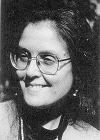
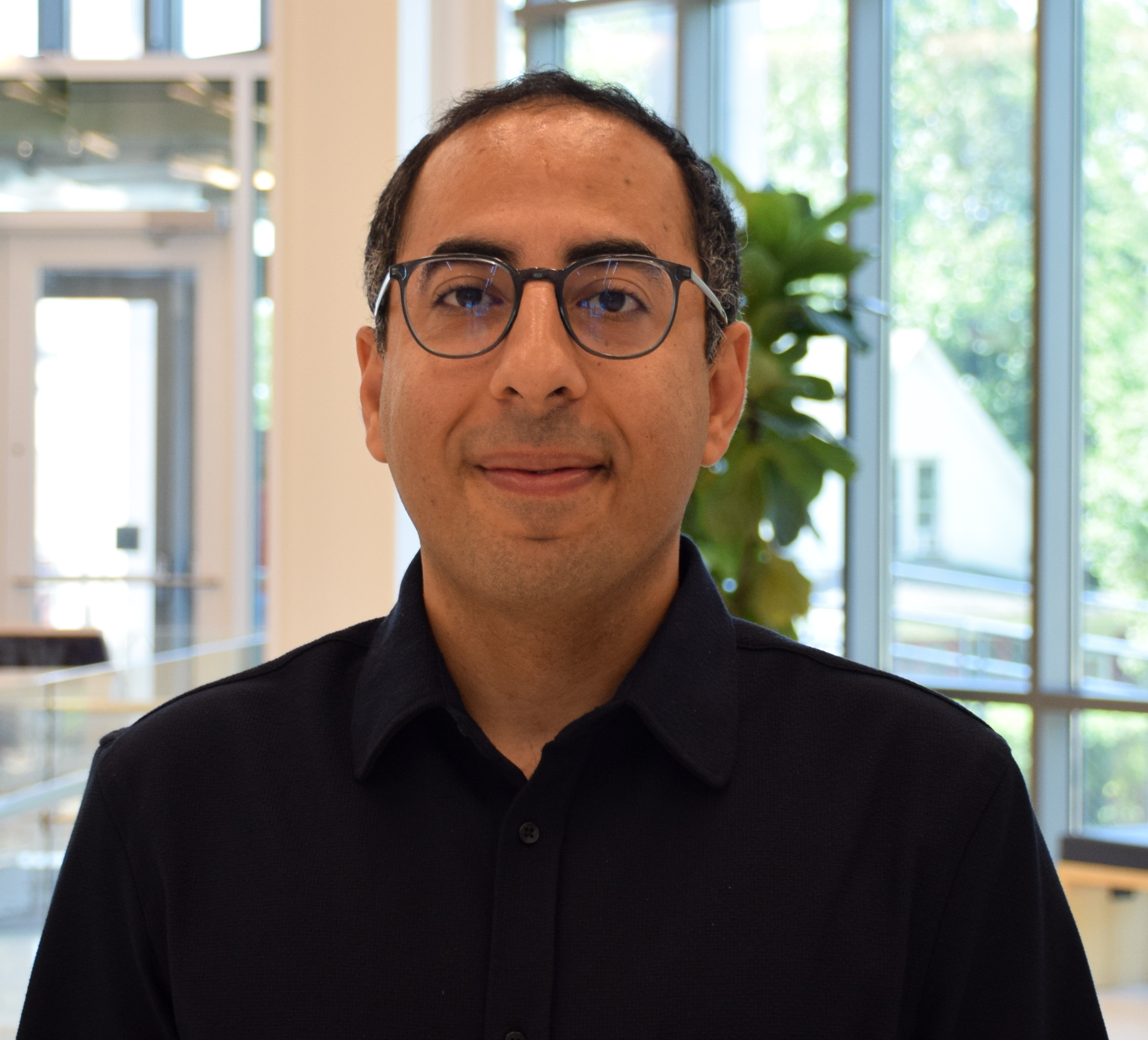
Judith Roitman is a full Professor of Mathematics at the University of Kansas, where she has been since 1976, rising to full professorship after earlier roles at Wellesley College and the Institute for Advanced Study. Her academic journey began with an English Literature degree from Sarah Lawrence College (1966) before transitioning to mathematics at UC Berkeley, earning a Ph.D. in 1974 under Robert Solovay, with research in set-theoretic topology and Boolean algebra. She has held leadership roles in the Association for Women in Mathematics (AWM), serving as its President (1979–1981) and shaping its early structure. Her research spans over 40 papers and a textbook, Introduction to Modern Set Theory (1990), while her work in mathematics education includes co-authoring the NCTM Principles and Standards 2000 . She received the 1990 Louise Hay Award for Mathematics Education and was inducted into the AWM Fellows Program in 2018. Roitman’s career combines research with advocacy: she mentored students, advised on national education policy, and ran teacher workshops for elementary and high school educators. Her non-academic pursuits include poetry (e.g., Slippage , 1999) and Zen Buddhism, co-founding the Kansas Zen Center in 1978.
Prof. Dr. Daniel Hug is a Professor at the Karlsruhe Institute of Technology (KIT) , affiliated with the Department of Mathematics and the Institute of Stochastics . His research focuses on Probability , Geometry , Convex geometric analysis , Stochastic geometry , and Educational mathematics . He contributes to the DFG Priority Program Random Geometric Systems and previously participated in the DFG research unit Geometry and Physics of Spatial Random Systems . Prof. Hug has co-authored two influential monographs: Poisson Hyperplane Tessellations (Springer Monographs in Mathematics) and Lectures on Convex Geometry (Springer Graduate Texts in Mathematics, 2020). His work spans theoretical advancements in convex and stochastic geometry , including integral geometry, random mosaics, and tensor valuations, alongside applied studies in digital microstructures and Minkowski tensors . His publications from 2025–2024 emphasize hyperbolic space , Boolean models , and Minkowski tensor estimators , reflecting ongoing collaborations with researchers like M. Klatt, C. Thäle, and R. Schneider. Prof. Hug leads courses such as Stochastic Geometry and seminars on Random graphs and tessellations , and is actively involved in working groups like AG Stochastische Geometrie and AG Stochastik .
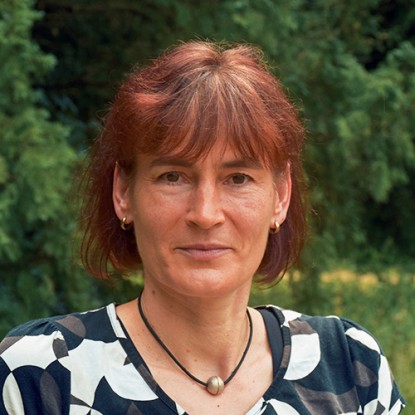
Barbara Drossel is a Full Professor at the Institute of Solid State Physics within the Faculty of Physics at the Technical University of Darmstadt, where she has been conducting research since February 2002. Her work bridges theoretical physics, complex systems theory, and theoretical ecology, focusing on interdisciplinary approaches to understanding emergent phenomena in natural systems. She leads the AG Drossel research group that investigates the theoretical foundations of complex networks, ecological communities, and quantum systems. Professor Drossel's research spans multiple domains with emphasis on complex systems theory, where she has made significant contributions to understanding random Boolean networks, food web modeling, and the physics of ecological communities. Her work demonstrates how simple rules can lead to complex emergent behavior across different scales, from quantum systems to ecological networks. She investigates how top-down causation operates in complex systems and explores the relationship between microscopic dynamics and macroscopic patterns in diverse contexts. Analysis of her recent publications reveals a consistent focus on theoretical frameworks that connect physics with ecology. Her work shows increasing integration of quantum mechanics with ecological modeling, particularly in understanding emergence and time evolution in complex systems. She frequently employs network theory to analyze ecological communities and has developed innovative approaches to studying species interactions, mutualistic networks, and spatial dynamics in meta-communities. Minerva Fellowship Heisenberg Fellowship DFG Fellowship for research at MIT Professor Drossel has supervised numerous doctoral students whose work spans theoretical ecology, complex systems, and statistical physics. Her research group has secured funding for projects examining the stability of ecological networks, quantum decoherence, and the mathematical foundations of complex systems. She maintains active collaborations with researchers across Europe and has contributed to major theoretical advances in understanding how complexity emerges from simple interactions in diverse systems. The AG Drossel research group operates at the intersection of physics and theoretical biology, maintaining strong connections with both the physics and biology departments at TU Darmstadt. The group combines mathematical rigor with biological relevance, developing models that capture essential features of complex natural systems while remaining analytically tractable. Their work has influenced both theoretical physics and ecological theory, demonstrating the power of interdisciplinary approaches to complex systems.
Ambrus Pal is a Reader in Pure Mathematics at the Department of Mathematics, Imperial College London, within the Faculty of Natural Sciences. His research interests span Pure Mathematics, Mathematical Physics, and Applied Mathematics, with a focus on algebraic geometry, number theory, and cohomology theories. He is affiliated with the CNRS-Imperial Abraham de Moivre UMI and contributes to both research and teaching in mathematics. His work often addresses cohomological pairings, arithmetic geometry, and the Brauer-Manin obstruction. Notable projects include studies on p-adic cohomology, motivic Euler characteristics, and the arithmetic Yau-Zaslow formula. Pal has collaborated on international conferences and schools, such as the LMS-CMI Research School on Homotopy Theory and Arithmetic Geometry. His publications reflect a deep engagement with abstract algebraic structures, including quasi-Boolean groups, Grothendieck-Witt rings, and real projective geometry. While his research emphasizes theoretical advances, applications to arithmetic applications and global function fields are recurrent themes. No scientific awards or advising records are explicitly mentioned.
Xi Chen is an Associate Professor in the Department of Computer Science at Columbia University. Prior to this, he was a postdoctoral researcher at the Institute for Advanced Study (Princeton University) and the University of Southern California. He holds a B.S. in Physics/Maths from Tsinghua University (2003) and a Ph.D. in Computer Science from Tsinghua University (2007), advised by Professor Bo Zhang under the guidance of the Institute for Theoretical Computer Science led by Andrew Chi-Chih Yao. His research focuses on Algorithmic Game Theory, Economics, and Complexity Theory. His work is supported by an NSF CAREER award, a Sloan Research Fellowship, and Columbia University startup funds. He has received the EATCS Presburger Award and multiple best paper awards, including at FOCS 2006, ISAAC 2009, and CCC 2017. Xi Chen has taught courses such as Analysis of Algorithms , Lower Bounds in Theoretical Computer Science , and Introduction to Computational Complexity . He co-advises current PhD students Tim Randolph and Erik Waingarten, and has graduated students like Timothy Sun (Emory University) and Xiaorui Sun (University of Illinois at Chicago). He has served on program committees for conferences like WINE, SODA, and STOC. His research spans theoretical computer science, including property testing, graph isomorphism, and fixed-point computation. He is affiliated with Columbia's Theory Group and actively participates in the Theory Seminar organized by Alex Andoni. Xi Chen's research also extends to algorithmic economics, exploring mechanisms, pricing strategies, and market equilibria. His work on complexity theory includes contributions to counting problems and circuit complexity. He maintains a lab and collaborates with researchers in theoretical computer science and algorithmic game theory.
Valentine Kabanets is a Professor in the School of Computing Science at Simon Fraser University. He holds a Ph.D. in Computer Science from the University of Toronto (2000), M.Sc. from Simon Fraser University (1996), and B.Sc. from the National University of Kiev (1993). His research focuses on computational complexity theory, pseudorandomness, circuit lower bounds, and cryptography. He has received prestigious awards including the Nerode Prize (2013) and multiple best-paper awards at conferences like STOC and CCC. Teaching includes courses on computability and complexity (CMPT 308), data structures and algorithms (CMPT 307), and advanced complexity theory. His research explores foundational questions such as derandomization of algorithms, connections between upper/lower bounds in complexity, and cryptographic hardness assumptions. He leads the Algorithms and Complexity Theory Lab and has supervised numerous graduate students and postdocs. Kabanets' work bridges theoretical insights with practical algorithmic advancements, contributing to both foundational computer science and applied cryptography.
Yuhan Jiang is a Research Fellow in the Department of Mathematics at the University of California, Berkeley, where they work under the mentorship of Professor Sylvie Corteel. Previously, Jiang completed their PhD at Harvard University under the supervision of Professor Lauren K. Williams. Their academic address is 931 Evans Hall, Berkeley. Education: PhD in Mathematics from Harvard University, advised by Professor Lauren K. Williams Dr. Jiang specializes in algebraic combinatorics, with research spanning polytope theory, matroid theory, and algebraic statistics. Their work connects combinatorial structures with algebraic geometry and representation theory, particularly focusing on coinvariant rings, poset dynamics, and Ehrhart theory. Jiang's research demonstrates a strong interplay between discrete mathematics and geometric structures, often revealing deep connections between seemingly disparate areas of mathematics. Analysis of Jiang's recent publications shows a consistent focus on combinatorial structures with geometric interpretations. Their work on alternating diagonal coinvariants, echelonmotion, and positroid polytopes demonstrates expertise in connecting algebraic combinatorics with geometric reasoning. The publications reveal a progression from foundational combinatorial structures to applications in probability (through Markov chain analysis) and statistics (through algebraic statistical models). A notable trend is Jiang's ability to bridge theoretical combinatorics with concrete computational results, as seen in their work on Ehrhart series and k-ellipses. Dr. Jiang teaches Math 185: Complex Analysis for Fall 2025 at UC Berkeley, indicating active participation in the department's educational mission. While specific grant information isn't provided in the available text, their productive research output across multiple mathematical domains suggests successful funding support for their scholarly activities.
Justin Thaler is an Associate Professor in the Department of Computer Science at Georgetown University, researching algorithms and computational complexity with focus on probabilistic proof systems, verifiable computation, and streaming algorithms. Education: PhD Computer Science, Harvard University BS Computer Science and Mathematics, Yale University Research Interests: Develops protocols for verifying computations (including zero-knowledge proofs), analyzes the power of low-degree polynomials, and designs efficient streaming/sketching algorithms for large datasets. Publications: Research advances theoretical foundations of proof systems, with recent work on SNARKs, lookup arguments, and Fiat-Shamir security. Authored the monograph 'Proofs, Arguments, and Zero-Knowledge'. Advising & Labs: Advises PhD students in theoretical computer science. Contributes to open-source projects including DataSketches library of streaming algorithms. Currently on leave at a16z crypto research.
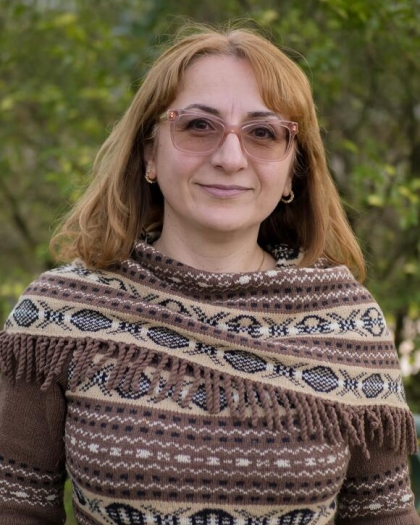
Lilya Budaghyan is a Professor at the Department of Informatics, University of Bergen, Norway, leading the Boolean functions research team at the Selmer Center. She holds a PhD from the University of Magdeburg (2005) and a habilitation from Paris 8 University (2013). Her research focuses on Boolean functions, particularly APN (Almost Perfect Nonlinear) functions and their cryptographic applications, with contributions to hardware implementations, equivalence relations, and cryptographic protocol design. She has authored the book *Construction and Analysis of Cryptographic Functions* and received awards including the TMS Starting Grant (2016) and Emil Artin Junior Prize (2011). Her work includes projects like the EU-funded BoolTI (2021–2025) and collaborations across institutions in Armenia, Germany, Italy, and France. Key research themes include constructing APN functions, analyzing their properties, and optimizing their hardware implementations for secure systems. Her recent publications emphasize hardware architectures for APN permutations, equivalence between cryptographic functions, and theoretical advancements in algebraic coding and finite fields. She serves as an editor for journals in cryptography and has organized international workshops such as WCC 2013.
Li-Yang Tan is an Assistant Professor of Computer Science at Stanford University , focusing on theoretical computer science. His research emphasizes computational complexity, machine learning theory, and algorithm design. Education: Ph.D. in Computer Science from Columbia University , advised by Rocco Servedio His work explores: Boolean function complexity Decision tree learning algorithms Circuit lower bounds Computational-statistical tradeoffs Query complexity Massively parallel algorithms Recent publications analyze computational-statistical tradeoffs via NP-hardness, improve decision tree learning techniques, and establish direct sum theorems for query complexity. His research often bridges complexity theory, learning theory, and algorithm design, with applications in pseudorandomness and correlation clustering. Awards: Best Paper Award at FOCS Best Paper Award at CCC Best Paper Award at SAT Sloan Fellowship Li-Yang collaborates with students and researchers including Guy Blanc, Caleb Koch, and Carmen Strassle. He has delivered invited special issue papers at FOCS, CCC, and SAT conferences.
Andrea Costamagna is a researcher affiliated with the École Polytechnique Fédérale de Lausanne (EPFL), working within the School of Computer and Communication Sciences and the Department of Communication Systems. His research focuses on logic synthesis, digital circuit design, and the intersection of machine learning with hardware implementation. His work includes optimizing digital circuits using techniques like resynthesis, resubstitution, and decomposition, with applications in FPGA design and low-power systems. Recent publications explore symmetry-based synthesis, glitch-aware power minimization, and the use of resistive switching devices in machine learning hardware. His research also extends to quantum physics modeling with deep learning.
Mohsen Heidari is an Assistant Professor in the Department of Computer Science at Indiana University, Bloomington. He is affiliated with the IU Quantum Science and Engineering Center (QSEc) and the NSF Center for Science of Information (CSoI). He previously held positions as a Visiting Assistant Professor at Purdue University and as a Postdoctoral Research Associate at CSoI. Ph.D. in Electrical Engineering (2019) and M.Sc. in Applied Mathematics (2017) from the University of Michigan His research focuses span quantum computing, theoretical machine learning, and information theory. Key themes include: Quantum algorithm design and sample complexity Fourier-based learning frameworks Quantum-classical duality in learning problems Information-theoretic approaches to biological systems Article trends show a strong emphasis on quantum-classical learning intersections (6/15 papers), Fourier analysis applications (5/15), and information-theoretic foundations (12/15). Notable venues include NeurIPS, IEEE Transactions, and ISIT. He directs research involving: Quantum Neural Network development Quantum measurement simulation Quantum data compression techniques Quantum algorithm implementation constraints
Xuan Zhang is an Associate Professor at the Department of Information and Communication Technology, University of Agder. His research focuses on Tsetlin Machines, learning automata, and their applications in machine learning, computer vision, and hyperspectral imaging. Research Trends: Zhang’s recent work includes developing interpretable machine learning models (e.g., Tsetlin Machines), optimizing convolutional architectures for image processing, and applying automata theory to solve multi-armed bandit problems and channel selection in cognitive networks. His field spans theoretical analysis and practical implementations in AI, remote sensing, and health informatics. Scientific Contributions Co-developed advanced Tsetlin Machine variants for XOR/NOT operator convergence, disease forecasting, and image restoration Published in journals like IEEE Transactions on Pattern Analysis and Machine Intelligence , Information Sciences , and Applied Intelligence Explored Bayesian pursuit algorithms, hierarchical learning automata, and particle swarm optimization techniques Contact: xuan.zhang@uia.no
Adam Jardine is an Associate Professor in the Department of Linguistics at Rutgers University. He serves as the Graduate Program Director, overseeing the academic affairs of the department's graduate programs. His research focuses on computational and mathematical approaches to phonological theory, with emphases on formal language theory, learnability, and the application of computational models to phonological phenomena. Jardine holds a PhD in Linguistics from the University of Delaware (2016) and has held prior academic positions. His research integrates theoretical linguistics with computational methods, exploring topics such as autosegmental phonology, subregular complexity classes, and phonological learning algorithms. He has organized major conferences including AMP 2024 and workshops on subregular phonology. Jardine leads NSF-funded research on subregular inference of morpho-phonology (Award #2416184), collaborating with Jane Chandlee and Jeffrey Heinz. Key contributions include work on autosegmental representations, computational phonology, and the logical foundations of phonological theory. He has advised numerous PhD students, including Huteng Dai (2024) and Hyunjung Joo (expected 2026), whose research spans phonological learning and computational modeling. Jardine teaches advanced courses such as Phonology Seminar and maintains active participation in interdisciplinary projects linking linguistics to computer science and artificial intelligence. Recent work includes contributions to The Cambridge Handbook of Phonology (2026) and co-organizing sessions on computational learnability at the LSA Annual Meeting. His lab focuses on formal phonology, with ongoing projects exploring the computational boundaries of phonological systems and the application of recursive schemes to linguistic analysis.
Rocco Servedio is a Professor in the Department of Computer Science at Columbia University, where he leads research in theoretical computer science with a focus on computational complexity theory, learning theory, and the role of randomness in computation. He previously served as Chair of the Computer Science Department from 2018 to 2021. He holds a Ph.D., MS, and AB in Mathematics from Harvard University. His research interests include property testing, computational learning theory, and algorithmic lower bounds. He has contributed to foundational work in areas like junta testing, trace reconstruction, and convexity testing. Servedio has held leadership roles in major conferences such as STOC, CCC, and COLT, and has mentored students through courses like Unconditional Lower Bounds and Derandomization . Education: Ph.D. in Computer Science, Harvard University MS in Computer Science, Harvard University AB in Mathematics, Harvard University His research bridges theoretical computer science and applied mathematics, with recent work exploring the intersection of Gaussian processes, convex geometry, and algorithmic efficiency. Servedio's contributions to the field are exemplified through his involvement in high-impact conferences and his leadership in advancing fundamental computational theories.