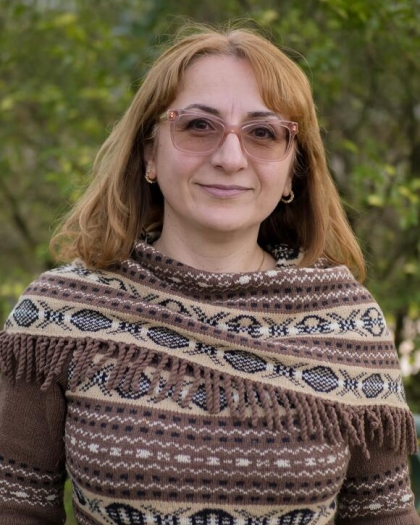
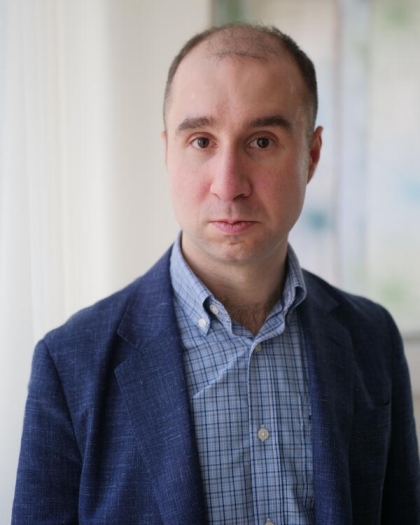
Lilya Budaghyan is a Professor at the Department of Informatics, University of Bergen, Norway, leading the Boolean functions research team at the Selmer Center. She holds a PhD from the University of Magdeburg (2005) and a habilitation from Paris 8 University (2013). Her research focuses on Boolean functions, particularly APN (Almost Perfect Nonlinear) functions and their cryptographic applications, with contributions to hardware implementations, equivalence relations, and cryptographic protocol design. She has authored the book *Construction and Analysis of Cryptographic Functions* and received awards including the TMS Starting Grant (2016) and Emil Artin Junior Prize (2011). Her work includes projects like the EU-funded BoolTI (2021–2025) and collaborations across institutions in Armenia, Germany, Italy, and France. Key research themes include constructing APN functions, analyzing their properties, and optimizing their hardware implementations for secure systems. Her recent publications emphasize hardware architectures for APN permutations, equivalence between cryptographic functions, and theoretical advancements in algebraic coding and finite fields. She serves as an editor for journals in cryptography and has organized international workshops such as WCC 2013.
Xuan Zhang is an Associate Professor at the Department of Information and Communication Technology, University of Agder. His research focuses on Tsetlin Machines, learning automata, and their applications in machine learning, computer vision, and hyperspectral imaging. Research Trends: Zhang’s recent work includes developing interpretable machine learning models (e.g., Tsetlin Machines), optimizing convolutional architectures for image processing, and applying automata theory to solve multi-armed bandit problems and channel selection in cognitive networks. His field spans theoretical analysis and practical implementations in AI, remote sensing, and health informatics. Scientific Contributions Co-developed advanced Tsetlin Machine variants for XOR/NOT operator convergence, disease forecasting, and image restoration Published in journals like IEEE Transactions on Pattern Analysis and Machine Intelligence , Information Sciences , and Applied Intelligence Explored Bayesian pursuit algorithms, hierarchical learning automata, and particle swarm optimization techniques Contact: xuan.zhang@uia.no
Stefano Nichele is a Professor at the Department of Computer Science and Communication, Østfold University College, Norway. He holds additional roles as Professor II at OsloMet and has served in leading academic positions since 2014. His research focuses on Artificial Life (ALife), Neuro-Inspired AI, and Machine Learning, with a particular emphasis on cellular automata, reservoir computing, and neuro-inspired substrates. Nichele co-directs the Østfold AI (ØAI) hub and is an active member of IEEE, ELLIS, and the Norwegian AI Research Consortium (NORA). He earned his PhD in Computer Science from NTNU (2015) and completed his MSc at the University of Insubria, Italy. His work bridges computational systems and biological substrates, exploring criticality in neural networks and quantum-evolutionary algorithm interactions. He has received prestigious awards, including the Young Research Talent grant (2019) and the Distinguished Early-Career Investigator award (2024). Nichele’s research spans theoretical and applied domains, with over 50 publications on cellular automata dynamics, neuro-inspired robotics, and AI ethics. His recent projects include studying in vitro neural networks for computational capacity assessment and developing frameworks for body-brain co-evolution in soft robotics. Education: PhD in Computer Science, NTNU (2015) MSc in Computer Science, University of Insubria (2009) Awards: Young Research Talent grant (2019) Distinguished Early-Career Investigator (2024) Grants & Roles: Co-director of the Østfold AI hub Board member of NORA (Norwegian AI Research Consortium) Labs & Collaborations: Focus on neuro-inspired AI systems and unconventional computing Partnerships with institutions like Simula Metropolitan and the International Society for Artificial Life (ISAL)
Stefano Nichele is a Professor at Oslo Metropolitan University's Faculty of Technology, Art and Design, where he leads research in the Department of Computer Science with a focus on Artificial Intelligence. His laboratory investigates the intersection of biological and artificial intelligence through neural networks and cellular automata. Research Focus: Nichele's work bridges computational neuroscience, complex systems, and machine learning. Key themes include: Developing AI tools for neuroscience applications like dementia prediction Modeling neural network dynamics using biological and computational approaches Evolutionary algorithms and quantum computing hybrids Cellular automata frameworks for emergent intelligence Research Projects: AI-Mind: Developing AI-based dementia diagnostic tools FeLT: Human-machine-environment interactions in ecological contexts DeepCA: Biological-artificial intelligence integration SOCRATES: Efficient distributed data analysis Publications: His recent works (2024-2025) primarily explore neural network dynamics, cellular automata applications, and computational neuroscience models. The research demonstrates consistent focus on emergent behavior in complex systems and biological computation.
Duy Ho is a Research Fellow in the Department of Mathematics and Statistics at UiT The Arctic University of Norway. He holds a PhD in Mathematics from McGill University and MS from Lomonosov Moscow State University. His research explores geometric structures and combinatorial methods with applications in coding theory and cryptography. Ho's current work focuses on developing coding theory applications using theoretical foundations from finite geometry. Recent projects investigate hull-variation problems in rank metric codes, quasi-cyclic codes, and linear complementary dual codes. His geometric research examines ovoids in projective spaces, hyperovals, and toroidal circle planes. Publications demonstrate strong connections between combinatorial structures and cryptographic applications, including work on bent functions derived from geometric constructions. Ho's research aims to advance mathematical foundations for secure communication systems.
Nikolay Stoyanov Kaleyski is an Associate Professor at the Department of Informatics, University of Bergen. His research focuses on cryptographic Boolean functions, particularly APN (Almost Perfect Nonlinear) functions and their applications in symmetric cryptography. He explores algorithm design for function analysis and hardware architectures for efficient cryptographic implementations. He has taught courses including Advanced Cybersecurity (INF249), Applied Cryptography (INF143A), and Information Theory (INF242) across multiple semesters. His research interests include the construction, classification, and properties of Boolean functions with optimal cryptographic criteria. He investigates hardware-friendly implementations of APN permutations and contributes to understanding equivalence relations among functions (EA/CCZ-equivalence). Notable work includes studies on planar functions in finite fields and low-complexity hardware architectures using TU-decomposition. Publications span topics like APN function generalizations, 0-APN monomials, and partial APN properties. Collaborations with institutions like the Naval Postgraduate School and Sungkyunkwan University highlight his international research network. His doctoral dissertation (2021) deepened insights into longstanding APN-related problems.
Norwegian University of Science and TechnologyNorway
Martin Kuiper is a Professor in Systems Biology at the Norwegian University of Science and Technology (NTNU). He transitioned from industry to academia in 2008, previously working at VIB Institute in Gent, Belgium. His research focuses on integrating biological knowledge using ontologies, semantic web technologies, and logical modeling. The Kuiper lab develops tools like BioGateway and CausalBuilder, and contributes to initiatives such as DrugLogics and GRECO/GREEKC. Education: M.Sc. (1982) and PhD (1987) in Biology from the University of Groningen, followed by postdoctoral work at Ohio State University and Utrecht University. Career highlights include roles in industry (KeyGene NV, GenScope, Aventis CropScience) before joining academia. Research interests emphasize knowledge management, bioinformatics tools, and systems biology approaches to drug development and gene regulation. Key projects include modeling drug resistance in colon cancer (COLOSYS) and advancing causal interaction standards (MI2CAST). Publications span bioinformatics, computational biology, and systems medicine, with contributions to journals like iScience , Nucleic Acids Research , and Bioinformatics . Collaborations involve interdisciplinary teams from medicine and humanities at NTNU. Lab activities include developing ontologies for gene regulation and drug target identification, with applications in cancer therapy and systems medicine. Active in open science initiatives like the Gene Regulation Knowledge Commons.
Norwegian University of Science and TechnologyNorway
Slobodan Petrovic is a Professor of Information Security at the Norwegian University of Science and Technology (NTNU), specifically within the Department of Information Security and Communication Technology (IIK) at the Faculty of Information Technology and Electrical Engineering (IE) in Gjøvik, Norway. His academic career demonstrates a strong commitment to both research and education in cybersecurity disciplines. Professor Petrovic's research interests span across multiple critical domains in information security, with primary focus on Cryptology , Intrusion detection systems , and Wireless communication security . His work consistently bridges theoretical foundations with practical applications, particularly in digital forensics, cryptographic techniques, and network security protocols. The breadth of his research is evident in his extensive publication record spanning nearly two decades. His recent publications (2022-2024) reveal an expanding research scope into emerging security challenges including autonomous vehicle security, 5G network protection for social robots, and physical-layer security implementations for wireless communications. These articles demonstrate his ability to adapt research focus to address contemporary security threats in evolving technological landscapes. Professor Petrovic teaches cryptology and intrusion detection courses at both the Master in Information Security (MIS) program and the PhD program in Information Security at NTNU. He is an active member of the Cryptology Research Group (Norwegian Applied Crypto Lab - NaCl), contributing to Norway's cybersecurity research ecosystem. His collaborative research approach is evident through numerous co-authored publications with researchers including Nguyen Hai Thanh, Katrin Franke, Michael Cheffena Gebresilassie, and others. This collaborative network spans multiple institutions and research domains within information security.
Mohit Pal is a Postdoctoral Fellow at the Department of Informatics, University of Bergen, Norway. He is affiliated with the Faculty of Mathematics and Natural Sciences and conducts research under the mentorship of Prof. Lilya Budaghyan. He holds a Ph.D. in Mathematics from the Indian Institute of Technology Jammu, where he was supervised by Dr. Sartaj Ul Hasan. Education: B.Sc. in Mathematics, University of Allahabad (2011–2014) M.Sc. in Mathematics, Indian Institute of Technology Kharagpur (2014–2016) Ph.D. in Mathematics, Indian Institute of Technology Jammu (2018–2021) Visiting Student, Indian Institute of Technology Delhi (2018–2019) Visiting Student, Indian Statistical Institute Delhi (2022) His research lies at the intersection of cryptography and finite fields, focusing on boomerang uniformity, differential uniformity, APN and PN functions, permutation polynomials, and arithmetization-oriented cryptographic primitives . His work contributes to the theoretical foundations of symmetric cryptography and algebraic design of secure functions. He has published in leading journals such as Designs, Codes and Cryptography , IEEE Transactions on Information Theory , and Advances in Mathematics of Communications . His recent publications explore connections between generalized differential properties and cryptographic robustness, particularly in odd characteristic fields. Scientific Awards and Recognition: Reviewer for top-tier journals including IEEE Transactions on Information Theory , Designs, Codes and Cryptography , and Applicable Algebra in Engineering, Communication and Computing . Active participant in major international workshops such as Asiacrypt, Boolean Functions and Their Applications (BFA), and SETA. Erdős Number: 3 (via Sartaj Ul Hasan and Pantelimon Stănică). He has advised no students to date but has contributed to research mentoring through collaboration. He taught INF-143A: Applied Cryptography at the University of Bergen in 2024, instructing 84 students at undergraduate and master’s levels. His research has been supported through postdoctoral funding at the University of Bergen and prior project fellowships at IIT Jammu and Harish-Chandra Research Institute. He is currently engaged in advancing the theory of arithmetization-friendly cryptographic functions, with implications for zero-knowledge proofs and secure computation. Laboratories and Research Teams: Mohit Pal is part of the cryptography research group at the Department of Informatics, University of Bergen, collaborating closely with Prof. Lilya Budaghyan and Dr. Chunlei Li. His work integrates into broader efforts on algebraic methods in modern cryptography, particularly in the context of post-quantum and efficient cryptographic design.
Western Norway University of Applied SciencesNorway
Assoc. Prof. Constanza Riera is affiliated with the Department of Computing, Mathematics, and Physics at the University of South-East Norway. Her research focuses on cryptography, finite fields, Boolean functions, quantum computing, algebraic combinatorics, and coding theory. She has published extensively on topics including differential spectra, cryptographic function design, quantum states, and algebraic structures. Her work bridges theoretical mathematics with applications in cryptography and information security. Recent articles explore properties of APN functions, c-differentials, quantum state characterization, and combinatorial designs rooted in finite fields. Notable contributions include advancements in c-differential uniformity and the application of Dillon's switching method to construct secure functions. Riera's research also delves into quantum computing, analyzing graph-based quantum states and their algebraic properties. Her interdisciplinary approach addresses both foundational mathematical problems and practical cryptographic challenges.
Trygve Johnsen is a Professor of Pure Mathematics at the Department of Mathematics and Statistics, UiT The Arctic University of Norway. His research bridges algebraic geometry with error-correcting codes , focusing on matroid theory, coding theory, and combinatorial structures. He is affiliated with the research group Applied and Computational Algebra and the Albatros project on mathematical aspects of information transmission. Education: PhD in Mathematics (University of Oslo, 1984) Research Interests: Algebraic Geometry, Coding Theory, Matroid Theory, Combinatorics, Algebraic Methods in Coding His recent work explores symmetric determinantal varieties, q-matroid analogues, and generalized weight spectra of codes. Scientific contributions include foundational studies on Grassmannians, Stanley-Reisner rings, and Betti numbers in coding theory. Doctoral Students: Supervised 5 PhD candidates including Andreas L. Knutsen and Jan Roksvold.
Oleksandr Kholosha is an Associate Professor at the Department of Informatics, University of Bergen. His research focuses on cryptography, coding theory, and discrete mathematics with an emphasis on bent functions, finite fields, and sequence design. He has collaborated extensively with experts like Tor Helleseth and Lilya Budaghyan. His work spans cryptographic primitives (stream ciphers like Pomaranch), algebraic aspects of bent functions, and analysis of pseudorandom sequences. Notable contributions include studies on Niho bent functions, correlation properties of m-sequences, and cryptanalysis techniques. Key achievements include over 30 peer-reviewed publications in top venues such as IEEE Transactions on Information Theory and Lecture Notes in Computer Science. His research addresses theoretical foundations and practical applications in information security.
Chunlei Li is a Professor in the Department of Informatics at the University of Bergen, specializing in Coding Theory and Cryptography. His research focuses on signal design, error-correcting codes, cryptographic primitives, and blockchain technology. He holds a PhD from the University of Bergen (2014) and has held postdoctoral positions at the University of Stavanger and the Selmer Center. He teaches courses in algebraic coding, cybersecurity, and cryptography. His research spans waveform design for wireless communications, feedback shift register sequences, rank metric codes, homomorphic encryption, and discrete mathematics. He leads projects such as 'Sequences and Their Applications' and contributes to conferences like SETA and NISK. Supervised students include those in symmetric cryptography, sequence design, and code-based cryptography. His work emphasizes cryptographic strength, with contributions to APN functions, permutation polynomials, and decoding algorithms for rank metric codes. He has authored numerous papers on topics like differential properties of functions and blockchain-based security systems.
Igor Aleksandrovich Semaev is a Professor at the Department of Informatics, University of Bergen. His research focuses on cryptography, cryptanalysis, algebra, and computational problems in finite fields. He has contributed to areas such as sparse equation systems, Gröbner bases, and algorithmic security. Position: Professor Affiliation: Department of Informatics, University of Bergen Research interests include cryptanalysis of symmetric-key systems (e.g., DES), combinatorial problems in cryptography, and polynomial system solving techniques. His work often bridges algebraic methods with cryptographic applications, addressing challenges like sparse equation solutions and algorithmic complexity. Key contributions include the analysis of LFSR-based stream ciphers, probabilistic methods for Macaulay matrices, and multidimensional linear cryptanalysis. His publications span from 2005 to 2024, reflecting sustained engagement with both theoretical and applied cryptography. Notable projects include funding from the Norwegian Research Council (Project 247742) for work on Gröbner basis complexity. While no awards are explicitly mentioned, his prolific publication record highlights academic recognition. He has advised collaborative projects but no named students are listed. His work intersects with labs or teams through institutional affiliations, though specific lab details are not provided.
Western Norway University of Applied SciencesNorway
Pål Ellingsen is an Associate Professor at the Department of Computing, Mathematics, and Physics at Western Norway University of Applied Sciences. His research spans remote sensing, cryptography, space science, and machine learning, with applications in structural monitoring, marine data management, and aerospace engineering. Contact: Pal.Ellingsen@hib.no | Office E407 Research Interests include: Remote sensing techniques like DInSAR for monitoring storage facilities Cryptographic properties and Boolean function analysis Space science via CubeSats and aurora observation Machine learning applications in port automation His recent publications highlight trends in interferometric SAR for volume tracking , free space optical communication in Arctic environments , and open data practices in marine science . Ellingsen contributes to projects like the Nansen Legacy Project and the Boreal Aurora Camera Constellation (BACC) . His work bridges technical and multidisciplinary fields, emphasizing data-driven solutions and advanced signal processing.