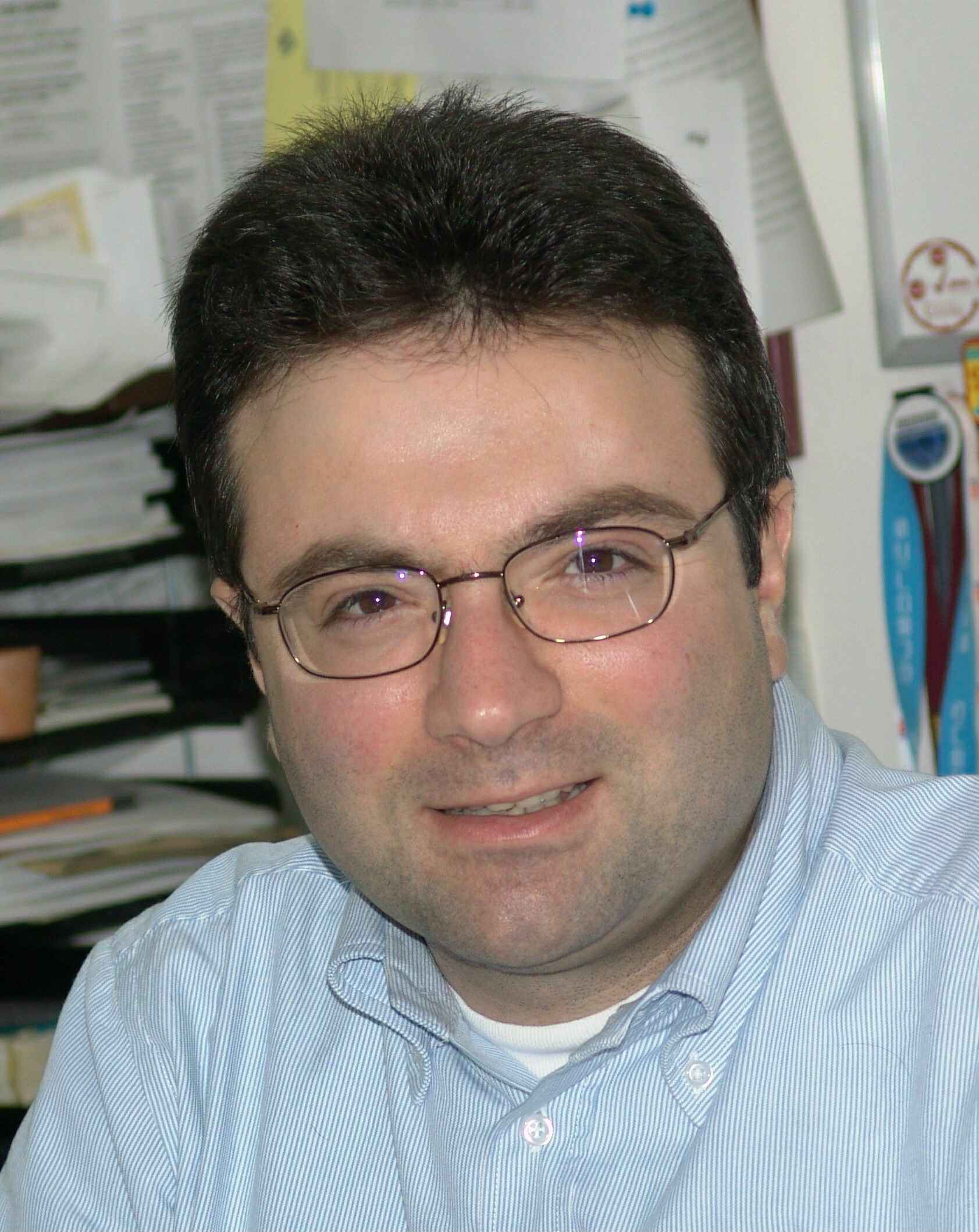
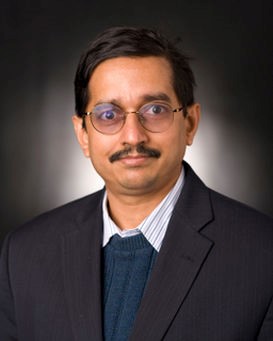
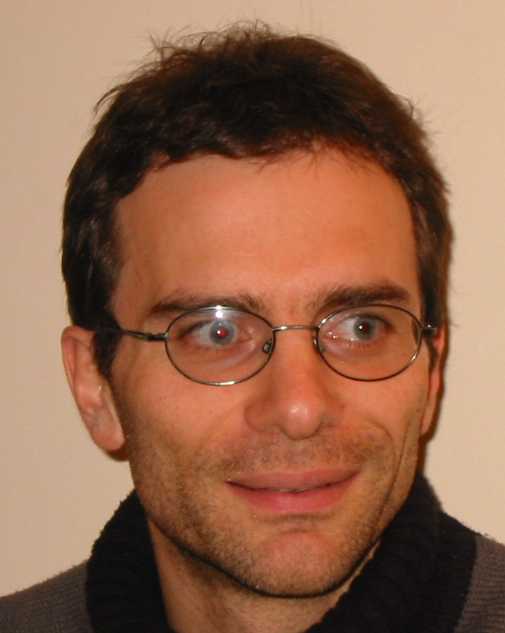
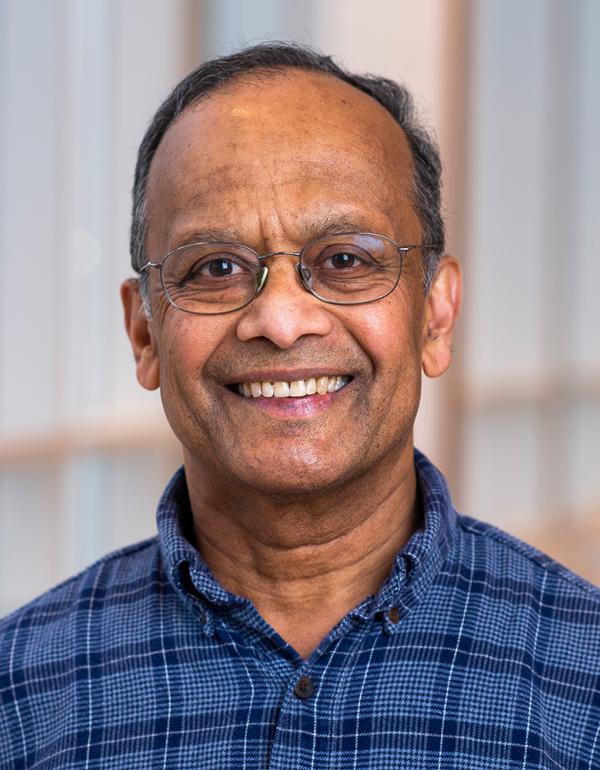
Kazushige Terui is an Associate Professor at the Research Institute for Mathematical Sciences (RIMS), Kyoto University. His research focuses on mathematical logic and its applications to computer science, particularly proof theory, computational complexity, and nonclassical logics. He investigates proof normalization complexity, algebraic reformulations of proof-theoretic techniques, and logical foundations of computation. Terui maintains an active research group at RIMS and teaches courses including Mathematical Logic and Computer Science Fundamentals. Research Interests: Terui's work spans: Proof-theoretic aspects of nonclassical logics (linear logic, substructural logics) Computational complexity of proof normalization in lambda calculus Algebraic reformulation of logical techniques (cut-elimination, interpolation) Denotational semantics approaches to complexity characterization Effective proof discovery methods based on programming language theory Publications: His recent articles primarily explore proof theory, computational complexity, and logical foundations, with frequent focus on lambda calculus, linear logic, and type systems. Works frequently bridge theoretical computer science and mathematical logic. Education & Outreach: Authored the book Can Computers Become Mathematicians? (2015) for general audiences and maintains extensive lecture materials on mathematical logic and computer science foundations.
Nectarios Koziris is a Professor at the Department of Computer Science , National Technical University of Athens (NTUA) , and former Dean of the School of Electrical and Computer Engineering . His research focuses on Parallel and Distributed Systems , Computer Architecture , and Cloud Computing . Key Research Themes: Compiler-OS-Architecture Interaction, Datacenter Hyperconvergence, Sparse Matrix Optimization, Quantum Computing, FPGA Virtualization Leadership: Founder of ~okeanos (Europe's largest public Cloud IaaS), Co-founder of GFOSS , Member of IEEE Computer Society Greece, Advisor to Arrikto Inc. His work has led to over 180 publications with 5800+ citations (h-index 33) , including two Best Paper Awards (IPDPS 2001, CCGRID 2013) and Intel Recognition (2015). He has supervised 12 PhD students and participated in 15+ EU projects as coordinator or consortium partner. Scientific Leadership: Program Co-Chair for Europar 2012 , Organizer for IPDPS , ICPP , SC conferences, and active member in Cloud Computing Expert Groups for the European Commission.
Arijit Bishnu is an Associate Professor at the Indian Statistical Institute in the Advanced Computing and Microelectronics Unit (ACMU). He has taught courses such as Design and Analysis of Algorithms , Randomized Algorithms , Computational Geometry , and Algorithms for Big Data over multiple years (2008–2025), focusing on theoretical and applied aspects of computer science. Research Interests: His work spans Theoretical Computer Science , Randomized and Approximation Algorithms , Computational Geometry , and Combinatorics . He explores problems in sublinear algorithms, streaming computation, geometric data analysis, and complexity theory. Publications: Recent papers include contributions to STOC 2025 , RANDOM 2025 , and APPROX 2024 , covering topics like property testing, triangle counting complexity, and streaming algorithms. Collaborations with researchers like Sourav Chakraborty, Gopinath Mishra, and Sayantan Sen highlight his interdisciplinary approach. Academic Leadership: He has co-organized research courses such as Approximation Algorithms and Topics in Algorithms and Complexity , emphasizing mentorship and knowledge dissemination in theoretical computer science. His comprehensive work integrates algorithmic innovation with rigorous mathematical analysis, advancing computational techniques for large-scale and geometric data.
Gérard Berry (born December 25, 1948) is a distinguished French computer scientist currently serving as Professor at the Collège de France, holding the permanent chair Algorithmes, machines et langages (Algorithms, Machines, and Languages) since 2012. He previously held the Informatique et sciences numériques chair (2009-2010) and the Technological Innovation Liliane Bettencourt chair (2007-2008) at the same institution. Before joining Collège de France full-time, he served as Director of Research at INRIA Sophia Antipolis (2009-2012) and at École des Mines de Paris (1977-2001). His research spans over 30 years in three main fields: lambda calculus and functional programming, parallel and real-time programming languages, and design automation for synchronous digital circuits. He is particularly renowned for developing the Esterel programming language. His work bridges theoretical computer science with practical industrial applications. Berry's research has evolved to include current work in Hop and HipHop for Web programming, formal verification of compilers, and languages for computer music. His publications demonstrate consistent contributions to programming language theory, formal methods, and their applications in hardware and software systems. Gold Medal of CNRS (2014) Chevalier de l'Ordre de la Légion d'Honneur (2012) Member of French Academy of Sciences (2002) Member of Academia Europaea (1993) Monpetit Prize of Académie des sciences (1990) Berry has advised 17 PhD students and reviewed numerous theses. His industrial experience includes serving as Chief Scientist Officer of Esterel Technologies (2000-2009), where he directed the implementation of the Esterel v7 compiler. He has also held significant leadership roles including President of the Scientific Council of IRCAM and membership on the Scientific Council of the National Education. His teaching at Collège de France has covered topics ranging from the foundations of computation to the societal impact of digital technology, with courses including The Informatics of Time and Events and Proving Programs: Why? When? How? His laboratory work has focused on developing practical applications of theoretical computer science concepts.
Rafail Ostrovsky is a Distinguished Professor of Computer Science and Mathematics (by courtesy) at UCLA's Henry Samueli School of Engineering and Applied Science. He holds the Norman E. Friedman Chair in Knowledge Sciences and serves as Director of the Center for Information and Computation Security. With over 350 refereed publications and 15 issued USPTO patents, he is one of the most influential researchers in theoretical computer science and cryptography. Professor Ostrovsky's research spans cryptography, network algorithms, and search and classification of large-scale, high-dimensional data. His work focuses on foundational aspects of secure computation including zero-knowledge proofs, secure multi-party computation, private information retrieval, and privacy-preserving data analysis. His contributions to streaming algorithms, metric embedding, and clustering for high-dimensional data have established important theoretical frameworks with practical applications. He has pioneered techniques for secure computation that maintain privacy while enabling collaborative data analysis. His recent publications demonstrate continued leadership in advancing secure computation protocols, with emphasis on efficiency improvements, practical implementations, and novel applications in blockchain technology and distributed systems. His work consistently addresses fundamental theoretical challenges while maintaining relevance to real-world security problems, bridging the gap between theoretical cryptography and practical security solutions. Selected Honors: 1993 Henry Taub Prize 2017 IEEE Computer Society Edward J. McCluskey Technical Achievement Award 2018 RSA Award for Excellence in Mathematics 2022 W. Wallace McDowell Award (the highest award given by the IEEE Computer Society) Professor Ostrovsky has served in significant leadership roles including chair of the IEEE Technical Committee on Mathematical Foundations of Computing (2015-2018) and chair of the IEEE FOCS 2011 Program Committee. He has served on over 40 international conference program committees and currently serves on the editorial boards of the Journal of ACM and Algorithmica Journal. As a Fellow of the National Academy of Inventors, AAAS, ACM, IEEE, and IACR, and as a foreign member of Academia Europaea, his contributions have been widely recognized across multiple disciplines. He actively teaches advanced courses including Introduction to Cryptography (CS183), Foundations of Cryptography (CS282A/M209A), and Cryptographic Protocols (CS282B/M209B), mentoring the next generation of security researchers while continuing to push the boundaries of secure computation through his research.
Andrej Bogdanov is a Professor at the University of Ottawa in the School of Electrical Engineering and Computer Science . He earned his B.S. and M.Eng. from MIT and Ph.D. from UC Berkeley . Before joining Ottawa, he held positions at the Chinese University of Hong Kong , ITCS (Tsinghua) , DIMACS (Rutgers) , and the Institute for Advanced Study . He has served as a Visiting Professor at the Tokyo Institute of Technology (2013) and the Simons Institute (2017, 2021). Research Interests : Computational complexity, cryptography foundations, pseudorandomness, one-way functions, property testing, quantum algorithms, and sublinear-time algorithms. Teaching : Courses on Discrete Mathematics, Great Algorithms, Computational Complexity, and Cryptography at University of Ottawa, Chinese University of Hong Kong, and Rutgers University. Publications : 15+ recent works in TCC , CRYPTO , ICALP , RANDOM , and journals like Journal of Cryptology and Theory of Computing . Service : Program co-chair for SAC 2026 , and committee member for major conferences including CRYPTO , TCC , Eurocrypt , and FOCS . Advising : 12 current and former Ph.D./M.Phil. students, with postdoctoral advisees at institutions like IIT Palakkad and Academia Sinica . His work bridges theoretical computer science with applications in cryptography, quantum computing, and network security.
Vijaykrishnan Narayanan is a Professor at the College of Engineering , Pennsylvania State University, with affiliations in both Computer Science & Engineering and Electrical Engineering departments. He co-directs the Microsystems Design Lab and leads the Architecture, Benchmarking, and Circuits Thrust at the DARPA/SRC LEAST Center. Education : Bachelors (1993) from University of Madras; Ph.D. (1998) from University of South Florida His research focuses on Power Aware Computing , Computer Architecture , Embedded Systems , and Emerging Device Integration . Recent work explores steep-slope devices for energy efficiency, nonvolatile processors for ambient energy harvesting, and neuromorphic architectures using hybrid VO₂-MOSFET oscillators. Key article trends span post-CMOS technologies (tunnel FETs, VO₂ devices), low-power design , and bio-inspired signal processing . Scientific Awards : IEEE Fellow, ACM Fellow, IEEE Transactions on VLSI Best Paper, IEEE Micro Best Paper Patents : Dynamically-configurable hardware architecture for audience analytics
Eleonora Bilotta is a Full Professor of General Psychology at the Department of Physics, University of Calabria, Italy. She is the coordinator of the Ph.D. Course in Psychology of Programming and Artificial Intelligence and vice-coordinator of the Ph.D. Course in Science, Engineering of Environment, Construction, and Energy. Her research spans interdisciplinary fields such as cognitive psychology, educational technologies, artificial life, and mathematical modeling of behavior. Prof. Bilotta has over 150 publications and has contributed to journals like Complexity and International Journal of Bifurcation and Chaos . She led initiatives like the COMSON project (EU-funded) for e-learning platforms and directed the Evolutionary Systems Group (ESG). She also organized conferences such as the International Conference on Simulation of Adaptive Behavior and the Workshop on Artificial Life. Her work bridges science and art, leveraging chaos theory for creative design and educational tools. She collaborates globally, including with institutions like Bergische Universität Wuppertal and Chapman University. Her labs focus on cognitive science, modeling, and simulation, emphasizing innovation in education and technology.
Luc Segoufin is a Research Professor at INRIA (French National Institute for Research in Computer Science and Automation), affiliated with the Department of Computer Science at École Normale Supérieure (ENS) in Paris. He leads the VALDA research team, focusing on theoretical computer science foundations. His research spans: Database theory: Query answering, consistency, and enumeration complexity Logic and automata: Finite model theory, automata over data structures Computational complexity: Fine-grained analysis and lower bounds Formal methods: Verification and logic-based modeling His recent publications (2022–2024) concentrate on: Dichotomy theorems for query answering under constraints Constant-delay enumeration algorithms for structured data Decidability in logic fragments over trees and graphs Connections between automata, algebra, and complexity No scientific awards are mentioned in available sources. He collaborates extensively within the VALDA team and international researchers on projects involving database theory, logic, and automata. No student advising details are provided.
Rajarshi Roy is a Professor at the Institute for Physical Science and Technology (IPST) at the University of Maryland. His research focuses on nonlinear dynamics, chaos theory, and their applications in optical systems. He explores phenomena such as synchronization patterns, machine learning-driven network analysis, and quantum-optical systems. His experimental work includes studies on optoelectronic oscillators, delay-coupled systems, and photonic random number generation. His research interests span nonlinear dynamics , chaos theory , and optical systems . Key areas include synchronization of coupled oscillators, chimera states, and machine learning applications in network inference. He also investigates noise effects in photonics and quantum technologies, such as entanglement quality estimation in fiber systems. His recent work emphasizes combining machine learning with nonlinear dynamics to analyze complex systems. For instance, his studies on delayed dynamical systems and neuromorphic computing showcase innovations in network inference and reservoir computing. Experimental validations using optoelectronic setups highlight his interdisciplinary approach. Roy’s articles explore cutting-edge topics like entropy harvesting in photon-counting systems, topological control of synchronization, and suppression of optical scattering via chaos. His contributions bridge fundamental nonlinear science with technological applications in photonics and information systems.
Sherief Reda is a Professor of Engineering and Computer Science at Brown University's School of Engineering. He leads the SCALE lab, focusing on energy-efficient computing, digital chip design, embedded systems, and machine learning applications. His research bridges hardware design and combinatorial optimization, with over 130 publications and five US patents. Reda has secured $21M+ in research funding from NSF, DoD, DARPA, and industry partners like Samsung and Intel. Education: PhD in Computer Science & Engineering, UC San Diego (2006) MS in Computer Science, Ain Shams University (2000) BS in Computer Science, Ain Shams University (1998) Research Interests: His work spans resource-efficient AI, approximate computing, and interdisciplinary applications in social sciences. Recent projects include chemical-based computing and thermal management for high-performance chips. Reda's lab explores machine learning for combinatorial optimization, with practical applications in logistics and hardware design. Publications & Awards: Over 130 articles in top venues like IEEE Transactions and Nature Communications. Recipient of the NSF CAREER Award (2021) and IEEE Fellow (2020). His work on energy-efficient computing earned him the AAIA Fellowship. Grants & Collaborations: Principal Investigator on NSF, DoD, and industry-funded projects. Collaborators include Prof. Kim (Chemistry) and Prof. Rose (Engineering). Reda also serves as an Amazon Scholar and expert witness in patent litigation. Labs & Teams: Directs the SCALE lab, which develops open-source EDA tools and novel thermal simulation frameworks like PACT. His team pioneered techniques like ABACUS for approximate circuit synthesis and LoCool for energy efficiency in servers.
Michael Saks is a Distinguished Professor of Mathematics at Rutgers, The State University of New Jersey . He is affiliated with both the Department of Mathematics and the Computer Science Department as a graduate faculty member. His research focuses on theory of computation and discrete algorithms , with applications in computational complexity, combinatorics, and algorithmic analysis. His recent publications include work on edit distance approximations , randomized algorithms , discrepancy of random matrices , and Boolean function analysis , reflecting a strong emphasis on theoretical foundations. He has contributed to journals such as Combinatorica , Journal of Graph Theory , and Discrete Applied Mathematics , and served on editorial boards and conference program committees, including the 2014 IEEE Conference on Computational Complexity . Michael Saks maintains active research and teaching pages , including guidance for graduate applicants and links to seminars like the Discrete Mathematics/Theory of Computing Seminar . He also participates in initiatives such as the Center for Computational Intractability and DIMACS .
Vladimír Siládi, PhD, serves as Assistant Professor and Head of the Department of Computer Science at Matej Bel University in Banská Bystrica, Slovakia, where he has held academic positions since 1995. His current roles include Project Coordinator for the Virtual University initiative and Registration Authority for SlovakGrid, with prior experience as a part-time Assistant Professor at Slovak University of Technology. Educational Background: PhD in Computer Science, Slovak University of Technology in Bratislava (1997-2007) Master's in Theology, Comenius University in Bratislava (2003-2008) Master's in Secondary Education and Teaching (cum laude) and PaedDr. (EdD), Matej Bel University (1988-1993, 2005) High School Diploma, GMN Banská Štiavnica (1984-1988) His research centers on Grid Computing architectures , parallel processing techniques , and security frameworks for distributed systems . Specialized expertise includes GPU-accelerated algorithms for NP-hard problems, trust models in ad hoc grid environments, and cloud-based educational platforms. His interdisciplinary work bridges computer science with environmental modeling and psychological applications through virtual reality systems. Publication analysis reveals a consistent focus on computational optimization across 12 major works (2006-2014), with recent contributions emphasizing trust intersection models for decentralized grids (2012-2013) and cloud-based educational infrastructure (2013). Earlier works established foundations in GPU-accelerated network topology optimization and genetic algorithms for irregular systems (2006-2010). Scientific Awards: No awards documented in source materials Project leadership includes the Virtual University of Matej Bel University (ITMS 26110230077) coordinating 85 team members across 280 courses, plus TEMPUS-FLACE distance learning development (1998-2000). His registration authority role for SlovakGrid since 2009 supports national research infrastructure. Departmental leadership involves managing the Computer Science team while teaching core courses in algorithms, grid technologies, and GPU programming, maintaining consultation hours for student engagement.
Petteri Kaski is an Associate Professor at the Department of Computer Science, School of Science, Aalto University , and a member of the Helsinki Institute for Information Technology (HIIT) . His research focuses on theoretical computer science, particularly in algorithm design, exact and parameterized algorithms, algebraic algorithms, and combinatorics. Doctoral Degree in Engineering and Technology, Helsinki University of Technology (2005) Licentiate Degree in Engineering and Technology, Helsinki University of Technology (2002) Master's Degree in Engineering and Technology, Helsinki University of Technology (2001) His recent work explores tensor scaling, Johnson-Lindenstrauss transforms, Hamiltonian cycles, and computational complexity, with contributions to polynomial-time algorithms, finite field computations, and combinatorial optimization. Notable awards include the Best Paper Award at ICALP 2017 , an ERC Starting Grant (2014) , and the Kirkman Medal (2007) . He has served on scientific committees for conferences like STACS 2025 and ICALP 2024 , and collaborated with institutions such as the IT University of Copenhagen and Universität Regensburg . Key Research Areas : Theoretical Computer Science, Algorithm Design, Exact Algorithms, Algebraic Computation, Graph Theory, Combinatorics
Dr. Kalikinkar Mandal is an Associate Professor in the Faculty of Computer Science at the University of New Brunswick (UNB), Fredericton, Canada. He holds the prestigious NB Power Cybersecurity Research Chair for smart grid security and privacy, a position supported by $500,000 in funding from NB Power for a five-year term. Dr. Mandal is also a member of the Canadian Institute for Cybersecurity (CIC), an ACM member, and a member of the International Association for Cryptologic Research (IACR). Education: PhD in Electrical and Computer Engineering from the University of Waterloo (2013) MTech in Computer Science from the Indian Statistical Institute, Kolkata (2009) Additional Master's degree in Mathematics Dr. Mandal's research broadly focuses on cryptography, cybersecurity, and privacy, with specific expertise in lightweight cryptography, privacy-preserving computation, security and privacy in smart grids and Internet of Things (IoT), trusted computing, and high-speed cryptography. His work addresses critical challenges in securing emerging technologies, particularly in energy infrastructure where cybersecurity threats can have severe consequences for essential services. His research bridges theoretical cryptography with practical applications in real-world systems. Analysis of Dr. Mandal's recent publications reveals a consistent focus on cryptographic techniques for resource-constrained environments, particularly for smart grid and IoT applications. His work spans theoretical foundations of cryptographic primitives, practical implementations of lightweight ciphers, and innovative privacy-preserving protocols for emerging technologies. A notable trend in his research is the development of efficient cryptographic solutions that balance security requirements with performance constraints in critical infrastructure systems. Scientific Awards: NB Power Cybersecurity Research Chair ($500,000 funding) Contributor to multiple cryptographic algorithms (ACE, SPIX, SpoC, WAGE) that reached Round 2 of NIST Lightweight Cryptography standardization Dr. Mandal actively mentors graduate students in cybersecurity research, currently supervising three students working on cryptographic protocols for cyber-physical systems, cybersecurity in advanced metering infrastructure, and privacy for electric vehicles. His NB Power Cybersecurity Research Chair supports research that provides training opportunities for both graduate and undergraduate students, preparing them as future cybersecurity leaders. Through direct applied research, knowledge dissemination, and student training, his work addresses critical challenges in power and security infrastructure. Dr. Mandal is actively involved in several research initiatives related to lightweight cryptography. He is part of the development teams for ACE, SPIX, SpoC, and WAGE - all of which were Round 2 candidates in the NIST Lightweight Cryptography standardization project. His GitHub repository (comsec-lwc) contains reference and optimized implementations of these cryptographic algorithms. He also contributes to the Canadian Institute for Cybersecurity at UNB, focusing on practical applications of cryptographic techniques in critical infrastructure security.