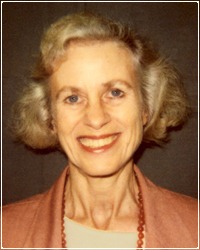
Mirjam Foot is Professor of Library and Archive Studies at University College London, where she has established herself as a leading authority in bookbinding history through decades of scholarly work. Her research centers on the historical evolution and decorative techniques of bookbinding, particularly in England, analyzing how binding practices reflect societal structures and cultural shifts. Key contributions include: Studies in the History of Bookbinding (1993) The History of Decorated Bookbinding in England (with Howard Nixon, 1992) The History of Bookbinding as a Mirror of Society (1998) She formerly taught the course "European Decorative Bookbinding" (B-70) from 1993 to 2002, focusing on continental binding traditions and their artistic significance.
Mesude Hülya DOĞRU serves as an Associate Professor in the Department of Traditional Turkish Arts at Sakarya University's Faculty of Art, Design and Architecture, holding this position since 2001. Her institutional affiliation demonstrates deep integration within Turkey's academic art community. Her educational foundation includes: Bachelor's degree in Decorative Arts from Istanbul State Academy of Fine Arts (1980-1985) Proficiency in Arts (Master's equivalent) in Illumination from Mimar Sinan Fine Arts University's Institute of Social Sciences (1989-1995), with thesis: "A research on the origins of motifs on zencereks used in illumination, bookbinding and architecture from the Seljuks to the twentieth century" Professor DOĞRU specializes in Traditional Turkish Arts with emphasis on historical motif evolution across illumination, bookbinding, and architecture. Her research bridges Seljuk-era decorative traditions with 20th-century applications, focusing on zencerek motifs as cultural artifacts. This work preserves endangered techniques while establishing academic frameworks for Turkish decorative heritage. Contact is available via mhdogru@sakarya.edu.tr or +90 (264) 295 54 54.
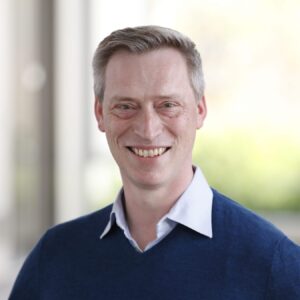
Dr. Linus Ubl is a Research Fellow at the Hebrew University of Jerusalem (Martin Buber Society of Fellows) and Honorary Research Fellow at the University of Oxford. He holds a D.Phil. from Oxford and a Staatsexamen from the Catholic University of Eichstätt-Ingolstadt. His research focuses on medieval German literature, mysticism, and cultural history, with a particular emphasis on manuscript studies and interdisciplinary cultural analysis. Education includes a D.Phil. in Medieval and Modern Languages (Oxford, 2019), M.St. in Modern Languages (Oxford, 2015), and multiple degrees in History and German Studies from Eichstätt. He has held visiting fellowships at the German Historical Institute in Rome and the Herzog August Bibliothek in Wolfenbüttel. Current projects include investigating the cultural poetics of medieval suicide and directing the MMMMO project digitizing manuscripts of Mechthild of Hackeborn’s Liber specialis gratiae. His work spans theological treatises, legal documents, and vernacular texts to explore medieval discourses on suicide, blending literary analysis with historical and legal perspectives. Key publications include Konstruktion und Manifestation von ‚Frauenmystik’ (2023) and articles on medieval manuscripts, monastic libraries, and liturgical practices. Awards include the British Academy Grant and AHRC funding. He teaches medieval German literature and historiography at Oxford, covering topics like Minnesang, courtly romance, and mystical texts. Grants include funding from the BMBF and John Fell Fund. Collaborative projects involve digital humanities initiatives and international research networks. His work bridges literary, historical, and theological approaches to pre-modern German culture.
Andrew Huot is an Adjunct Lecturer at the University of Illinois, holding an MFA from The University of the Arts. His research focuses on conservation and preservation , history of the book , and artists' books . He teaches graduate bookbinding at the University of Illinois and undergraduate/graduate courses in bookbinding and printmaking at the University of the Arts. His artistic practice emphasizes observing overlooked details of daily life, transforming them into tactile book artworks using traditional techniques like woodblock and letterpress printing. Notable works include Exits West (2008-2009), an editioned artists' book chronicling a cross-country journey. He operates andrewhuot.com and maintains Big River Bindery as a creative studio and teaching space. Teaching emphases include pochoir printing, structural bookbinding, and interdisciplinary approaches to book arts. His work balances historical craftsmanship with contemporary storytelling, often exploring themes of memory, navigation, and human interaction with environment.
Wesley Bedrosian is an Associate Professor of Illustration at Massachusetts College of Art and Design (MassArt) in Boston. He is a distinguished freelance illustrator and former art director at The New York Times, known for his dual expertise in traditional pen-and-ink techniques and innovative 3D sculptural illustrations. His work has been featured in major publications like Newsweek, The New York Times, and Vanity Fair. Education: MFA in Illustration from School of Visual Arts (1996); BFA in Graphic Design/Illustration from Kent State University (1989). Research interests include bridging traditional and digital art practices, sketchbook-driven creativity, and the role of illustration in editorial and commercial contexts. His 3D style, showcased in exhibitions like the 2024 Chambers Gallery exhibit, explores sculptural forms and virtual clay techniques. Awards include recognition from Applied Arts, American Illustration, 3×3 Magazine, and the Society of Illustrators. He has contributed to authoritative books on illustration, including Motion Illustration (2024) and Becoming a Successful Illustrator (2013). Bedrosian teaches at MassArt and SVA, emphasizing hands-on learning and creative discipline. His workshops on bookbinding and 3D animation reflect his commitment to innovative art education.
Claudia Colini is an Assistant Professor at the University of Hamburg, affiliated with the Faculty of Humanities and the Archaeological Institute. She leads the Mobile Lab and serves as Spokesperson for the 'Selecting Materials' research field within the Cluster of Excellence 'Understanding Written Artefacts' (UWA). Her work focuses on archaeometry, material analysis of manuscripts, and book archaeology, particularly in Islamic and early medieval contexts. Colini’s research integrates interdisciplinary methods, combining historical texts with scientific analysis to explore material choices in written artefacts. Her key projects include investigating ink recipes from Arabic sources, analyzing papyrus and parchment in early Islamic manuscripts, and developing non-destructive analytical protocols for cultural heritage preservation. She has led initiatives such as 'The Scribe’s Choice: Writing Supports in Arabic Documents of the Early Islamic Centuries' and 'The Use of Parchment in Arabic Manuscripts of the Early Islamic Centuries.' Colini’s publications emphasize methodological advancements in material analysis, including multispectral imaging, Raman spectroscopy, and ink replication. She collaborates internationally on projects like the Palm-leaf Manuscript Profiling Initiative and has contributed to studies on manuscripts from Thailand, Egypt, and the Middle East. Her work bridges historical, scientific, and conservation disciplines, advancing understanding of material culture in global contexts. Her research also addresses practical conservation challenges, such as preserving fragile manuscripts through material characterization. Colini’s Mobile Lab facilitates field-based analysis, enabling on-site investigation of artifacts. She actively engages in academic outreach, organizing workshops and presenting at conferences on topics like ephemeral writing and multispectral data interpretation.
Andrew P. Wilson is a lecturer at Mount Allison University specializing in innovative pedagogical practices within religious studies and liberal arts education. His work emphasizes: Creative methodologies for teaching abstract theological concepts Integrating art-making (charcoal drawing, bookbinding) into curricula Exploring pilgrimage as embodied learning Secular-sacred dialogue in academic settings His research focuses on embodied pedagogy , using physical and creative practices to deepen engagement with religious texts and traditions. While no specific awards are mentioned, his contributions to the Wabash Center's blog series demonstrate sustained impact on theological education practices.
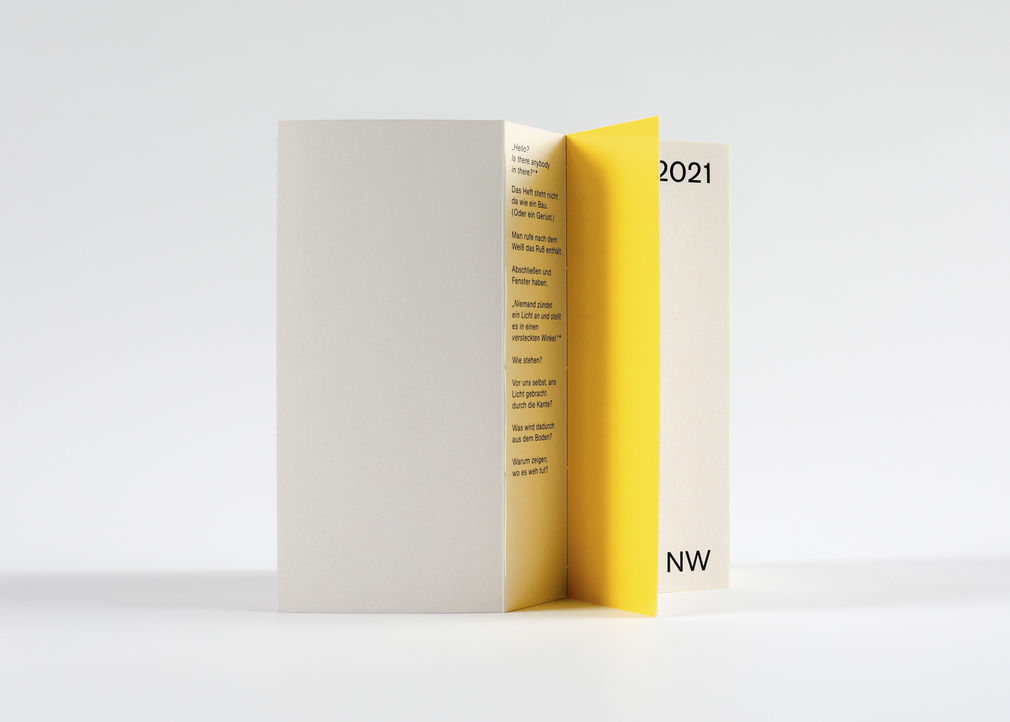
Nina Wood is a PhD candidate and Tutor in the Department of Art at Offenbach University of Art and Design, specializing in autotheoretical writing practices and experimental book design. Her interdisciplinary work bridges literary studies, philosophical aesthetics, and material design. Her educational background includes a Bachelor's degree in Integrated Design from Hochschule für Künste Bremen and a Diploma from Hochschule für Gestaltung Offenbach. These foundations support her current research exploring the intersection of theoretical reflection and autobiographical writing. Wood's research focuses on autotheory as a queer-feminist practice that challenges traditional narrative structures. Her dissertation examines works by Paul B. Preciado, Maggie Nelson, and Gloria Anzaldúa, analyzing how these authors use fragmented writing to destabilize identity formation while connecting personal experience with social theory. Her artistic practice extends this research through experimental book projects that physically manifest these theoretical concepts through innovative typography, material choices, and spatial arrangements. Her publications and artistic projects reveal a consistent exploration of how material form influences meaning-making, particularly in how book structures can challenge normative reading experiences. The works demonstrate increasing sophistication in merging theoretical content with experimental form, creating what she terms 'autotheoretical (book) bodies' that resist fixed interpretations. Dissertation funding from Evangelisches Studienwerk e.V. As a tutor in the Philosophy/Aesthetics teaching area, Wood guides students in ideological critique of artistic representation. Her funded dissertation project examines how autotheoretical writing deploys personal experience as theoretical interrogation within social structures. Her collaborative editorial work on 'Postskriptum über ästhetische Ideologien' demonstrates her commitment to interdisciplinary approaches. Wood's artistic practice functions as her primary research laboratory, where she develops book projects that physically manifest theoretical concepts through experimental binding techniques, spatial arrangements of text, and innovative material treatments. Her work transforms traditional book formats into sculptural objects that invite multiple reading paths and challenge conventional notions of narrative continuity.
Assoc. Prof. Dr. İbrahim Mustafa Vuslat Noyan GÜVEN is a distinguished academic specializing in Traditional Turkish Arts at Kastamonu University's Faculty of Fine Arts and Design. With over two decades of academic experience, she has established herself as a leading expert in Ebru (Turkish marbling), carpet-kilim weaving, and traditional fabric patterns. Her career spans multiple prestigious institutions including Cumhuriyet University and Kastamonu University, where she currently serves as Department Head. Education: PhD/Art Proficiency: Akdeniz University, Institute of Fine Arts, Art and Design (2012-2015) Master's Degree: Atatürk University, Institute of Social Sciences, Traditional Turkish Handicrafts (2007-2010) Bachelor's Degree: Atatürk University, Faculty of Fine Arts, Traditional Turkish Handicrafts Department (1995-1999) Dr. Güven's research focuses on the preservation and contemporary applications of traditional Turkish arts. Her work bridges historical craftsmanship with modern artistic expression, particularly in Ebru art, textile conservation, and architectural ornamentation. She has pioneered studies on regional weaving traditions including Sinop-Ayancık linen textiles and Kastamonu stone printing techniques. Her interdisciplinary approach connects art conservation with cultural heritage studies, child development through art education, and gender perspectives in artistic expression. Her extensive publication record reveals a strong emphasis on documenting and preserving endangered traditional crafts. The research shows particular attention to wood carving (kalem işi) in historical buildings, regional carpet weaving traditions across Anatolia, and the chemical properties of materials used in Ebru art. Her work demonstrates a consistent commitment to both scholarly documentation and practical preservation of Turkey's intangible cultural heritage. As an academic advisor, Dr. Güven has supervised multiple master's theses focusing on traditional Turkish arts, with particular emphasis on Ebru documentation and historical analysis. She has led several research projects including 'Cultural Awareness Creation Related to Turkish Ebru Art' (2024) and 'Cultural Awareness Creation Related to Motifs/Emblems Used in Traditional Turkish Flat Weavings' (2024). Dr. Güven actively contributes to the international academic community through participation in numerous symposiums and exhibitions worldwide. Her artistic practice complements her academic work, with regular participation in traditional Turkish art exhibitions across Turkey and internationally.
Joanna Maria Zatorska-Rosén is a Lecturer at Stockholm University’s Department of Slavic and Baltic Studies, Finnish, Dutch and German . Holding a PhD in Slavic Languages, she specializes in Polish-Swedish relations and Polish cultural heritage in Swedish collections, particularly through the lens of book collections from the Polish-Lithuanian Commonwealth era. Current Role: Lecturer in Polish language and cultural history Research Focus: Polish-Swedish cultural exchange, early modern book collections, heritage preservation Key Collaborations: Faculty of History (University of Warsaw), Skokloster Castle research network Her recent publications and conference papers analyze socio-political literature in wartime libraries, comparative art studies, and historical bibliography. She has contributed to international symposia on early modern European collection studies and Polish diaspora heritage. No formal scientific awards are documented in the provided materials. Teaching includes Polish I (SLPOL1), Polish II (SLPOL2), and specialized seminars on Polish cultural history. She maintains active ties with research teams at Stockholm University, Skokloster Castle, and the Royal Armoury.
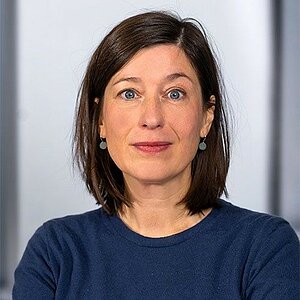
Claudia Siegel is Professor of Typography at Hof University of Applied Sciences, Faculty of Engineering Sciences, appointed in 2014. She co-directed the Communication Design program at the Münchberg campus from 2018 to 2022 and established a print/paper workshop since 2019. Her educational background: Hochschule für Grafik und Buchkunst Leipzig (under Prof. Ruedi Baur and Prof. Günter Karl Bose) Universität der Künste Berlin (under Prof. Michael Klar) Jan van Eyck Akademie Maastricht Postgraduate Bauhaus-Kolleg IV Dessau She was awarded Meisterschülerin in 2007. Her research focuses on character systems, form, color, and image-text staging in 2D/3D spaces. She integrates professional experience from editorial, fashion, and exhibition design into multidisciplinary teaching approaches, with current work at the communication-textile design intersection since 2024. Recent projects demonstrate strong engagement with social design and cultural heritage, including Stadt im Dialog (2022) for community dialogue and Esspapier (2022) exploring culinary books. Her exhibition work at Richard Wagner Museum and Walderlebniszentrum Mehlmeisel highlights environmental communication expertise. Her scientific recognition: Meisterschülerin (2007) She has supervised over 250 student publications with diverse thesis topics from book design to sustainable fashion. She serves as accreditation reviewer and appointment committee member, with current research in design didactics. At Münchberg campus, she operates a specialized workshop offering Risograph, screen printing, and bookbinding techniques, bridging traditional craftsmanship with contemporary design education.
Costas Vassilakis is a Professor in the Department of Informatics and Telecommunications at the University of Peloponnese, serving as Dean of the Faculty of Economics and Technology since 2019. He holds a PhD from the University of Athens (1995) and has held academic roles since 2005, including Associate Professor and Visiting positions. His research focuses on information systems, semantic web technologies, and cultural informatics, with contributions to projects like Virtual Museums and SmartGov. He leads initiatives in digital cultural heritage, cybersecurity, and smart agriculture. Notable projects include Experimedia Blue for personalized cultural experiences and Cyber-Trust for IoT security. Active in teaching, he has instructed courses on operating systems, software engineering, and real-time systems. He contributes to academic governance, including roles in the University Council and strategic planning units. His work bridges technology and cultural preservation, emphasizing interdisciplinary innovation. Education: PhD in Informatics, University of Athens (1995); MSc equivalent in Informatics, University of Athens (1990). Research Interests: Focuses on recommenders systems, collaborative filtering optimization, cybersecurity frameworks, and AI applications in agriculture. Active in cultural heritage digitization, museum technologies, and VR systems. Recent Projects: Includes TripMentor (tourism platform), PaloAnalytics (market analytics), and Rehabotics (rehabilitation robotics). Leads EN.I.R.I.S.S.T., a national infrastructure for maritime and logistics research. Awards: No explicit awards listed, but recognized through extensive project leadership and academic roles.
Dr. Steffi Dippold is an Associate Professor in the Department of English at Montclair State University, part of the College of Humanities and Social Sciences. Previously, she held a position at Kansas State University and earned her Ph.D. in 2012 from Stanford University. Her research focuses on pre-1900 American literatures, Native American and Indigenous studies, book history, and material/visual culture, with a particular interest in alternative archives and the cultural dynamics of early colonial interactions. Her work explores themes such as literacy, orality, and corporality in colonial contact zones, as seen in her forthcoming book Plain as in Primitive: The Figure of the Native in Colonial America , which recontextualizes the Noble Savage model. She has been recognized with prestigious fellowships from institutions like the Huntington Library and the British Library, as well as the Alden Prize for her doctoral research. Dr. Dippold collaborates with students and local museums to recover voices of marginalized groups through non-textual literacies. Her publications include studies on print ornaments, textual keys, early Native American bookbinding, and Indigenous grammars. She teaches courses emphasizing the multicultural and multilingual realities of colonial America.
Lina Hakim is a Senior Lecturer in Visual and Material Culture at Kingston University's School of Creative and Cultural Industries, Department of Critical and Historical Studies. She joined Kingston University in October 2015, teaching Critical and Historical Studies primarily to Graphic Design students. She also serves as a Sessional Lecturer at Imperial College London, where she teaches 'Science, Art & Design' to undergraduate STEM students and supervises an independent study module on 'Science Culture and Society'. Previously, she was an Andrew Mellon Post-Doctoral Research Fellow at the Victoria and Albert Museum, where she coordinated the V&A Research Institute Pilot Project exploring models of object-led inquiry and developing opportunities for cross-disciplinary collaborative research. Her educational background includes: PhD in Humanities & Cultural Studies from the London Consortium, Birkbeck, University of London (2013) MRes in Humanities & Cultural Studies from the London Consortium, Birkbeck, University of London MA in Book Arts from Camberwell College of Arts, University of the Arts London BA in Graphic Design from the American University of Beirut Lina Hakim's research focuses on the intersections between visual and material cultures of science, technology, craft, and play. Her work examines how objects facilitate thinking and understanding at multiple levels including encounter, production, use, and re-appropriation. Her doctoral project, 'Scientific Playthings: Artefacts, Affordance, History', investigated how 19th-century scientific instruments like the string surface model, Crookes radiometer, and gyroscope transitioned into toys. Her research is deeply informed by her artistic and design practice, emphasizing attentiveness to skill and craftsmanship, phenomenological experiences of objects, and the political dimensions of material assemblages. Her scholarly publications reveal a consistent methodology centered on object-oriented inquiry, with particular attention to how material encounters mediate knowledge production across historical and contemporary contexts. Her work spans historical analysis of scientific instruments, critical examinations of design activism, and theoretical explorations of material phenomenology, demonstrating a distinctive approach that bridges academic research with creative practice. Among her notable recognitions is the Andrew Mellon Post-Doctoral Research Fellowship at the Victoria and Albert Museum, where she coordinated the V&A Research Institute Pilot Project exploring models of object-led inquiry and developing opportunities for cross-disciplinary collaborative research. Hakim has taught across multiple programs including Graphic Design BA (Hons) and Illustration Animation BA (Hons) at Kingston University. At the V&A, she taught 'Key Concepts' on the V&A/RCA History of Design MA programme, examining the latest theories and methodologies in the field, and ran a 'Thinking Things' reading group for V&A staff. Her teaching philosophy emphasizes experiential learning through material engagement, connecting theoretical frameworks with hands-on object analysis. Her work bridges academic research with creative practice, reflecting her background as both a scholar and an artist. Through her various roles at Kingston University, Imperial College London, and the Victoria and Albert Museum, she has developed a distinctive approach to material culture studies that connects historical analysis with contemporary concerns about the political and epistemological dimensions of objects.
Jonathan Shelley is an Assistant Professor in the Department of English at St. John Fisher College. His research focuses on early modern literature, technical writing, and higher education in prison systems. He holds a Ph.D. from the University of California, Berkeley, and a B.A. from Washington University in St. Louis. His work explores theories of friendship in early modern texts, Renaissance technical writing (e.g., dance notation), and ethics in writing pedagogy. He has conducted research on book history during the European Renaissance and American Revolution, with hands-on experience in 17th/18th-century printing technologies like papermaking and bookbinding. His grants include funding from the NEH and Shakespeare Association of America. Teaching roles include courses on early modern British literature, Shakespeare, and mass incarceration. He co-leads the Rochester Education Justice Initiative, teaching incarcerated students in Western New York prisons, and has taught for Common Good Atlanta since 2019. His 2020 Whiting Grant supported 'Shakespeare and the Common Good in Atlanta,' a project adapting inmate artwork into educational materials. Featured in Common Good Atlanta: Breaking Down the Walls of Mass Incarceration (2020 documentary) Recipient of multiple academic grants for prison education initiatives His outreach extends to bridging humanities education inside and outside prison systems, emphasizing ethical pedagogy and community engagement.