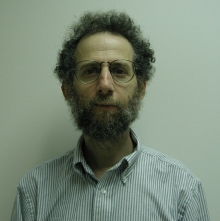
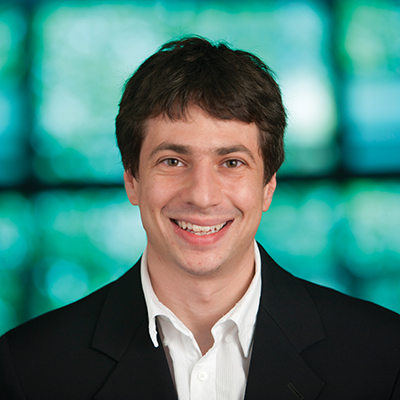
Mark Steedman is Professor of Cognitive Science at the University of Edinburgh's School of Informatics, with adjunct appointment at University of Pennsylvania. His research spans computational linguistics, AI, and cognitive science, focusing on Combinatory Categorial Grammar (CCG) and its applications. His research examines: Combinatory Categorial Grammar parsing and semantics Language model capabilities and limitations Cross-linguistic semantic inference Brain modeling of language processing Recent publications analyze hallucination sources in large language models, cross-linguistic entailment graphs, and brain-computer parallels in structure-building. He develops computational models integrating symbolic and distributional approaches to semantics. Honors include ACL Lifetime Achievement Award (2018) and George E. Davis Medal (2001). He serves on editorial boards of major linguistics journals and has authored influential books including 'The Syntactic Process' and 'Taking Scope'.
Ibo van de Poel is a Full Professor at Delft University of Technology , within the Faculty of Technology, Policy and Management , specifically in the Section Philosophy . He holds the prestigious Antoni van Leeuwenhoek professorship , awarded to excellent young researchers, and is a leading figure in Design for Values , engineering ethics , and technology as social experimentation . Education: Van de Poel studied Philosophy of Science, Technology and Society at the University of Twente , with a propaedeutic exam in Mechanical Engineering . He earned his PhD in Science and Technology Studies (STS) in 1998 from the University of Twente , under the supervision of Prof. Dr. A. Rip. Research Interests: His research spans three major themes: Design for Values : Investigating how moral values can be integrated into engineering design, including empirical studies on how engineers handle value conflicts. Moral Responsibility in R&D Networks : Exploring the "problem of many hands" in large-scale research and development projects, developing formalizations and empirical methods. Ethics of Emerging Technologies : Examining ethical issues in new technologies like nanotechnology and synthetic biology , with a focus on technology as social experimentation . Publications and Impact: Van de Poel has authored over 25 international peer-reviewed articles and 15 book contributions . He is co-editor of major works including the Handbook of Philosophy of Technology and the Engineering Sciences (Elsevier, 2009), Philosophy and Engineering (Springer, 2010), and Ethics, Engineering and Technology (Wiley-Blackwell, 2011). His recent work includes leading the VICI project "New Technologies as Social Experiments" , funded by NWO. Scientific Awards: Antoni van Leeuwenhoek Professorship (TU Delft) VICI Grant for "New Technologies as Social Experiments: Conditions for Morally Responsible Experimentation" Advising and Grants: Van de Poel has led and contributed to multiple high-impact projects, including: NWO Project on "Moral Responsibility in R&D Networks" (2007–2012) EU Project on ethical issues in synthetic biology (2009–2011) VICI Project on "New Technologies as Social Experiments" (ongoing) He has also supervised PhD students and contributed to educational innovations, including the development of the AGORA web-based program and the first Dutch textbook on ethics and technology . Labs and Teams: Van de Poel is an active member of 4TU.Ethics & Technology , a federation of Dutch technical universities focused on ethics and technology. He contributes to the Simon Stevin Series in the Ethics of Technology and participates in various reading groups and PhD communities within the network.
Professor Cedo Maksimovic is a leading academic in the Department of Civil and Environmental Engineering at Imperial College London, Faculty of Engineering. He is a Principal Research Fellow and heads the Urban Water Research Group (UWRG), with affiliations to the Environmental and Water Resource Engineering group, Grantham Institute, Space Lab, and Urban Systems Lab. His research focuses on urban water systems , including storm drainage, urban flooding, water supply, and the interaction between urban infrastructure and the environment. He has pioneered work in applied fluid mechanics , smart water infrastructure , and flood risk management , with innovations such as the AOFD method for urban surface flood modelling and intelligent sensor networks recognized by the ICE Telford Gold Medal. His recent research, as reflected in publications, spans urban pluvial flooding , leakage detection , integrated urban water management , and blue-green infrastructure . These works emphasize computational modelling, real-time monitoring, and climate resilience in urban environments. UNESCO/IAHR Lecturer of the Year 2001 ICE Telford Gold Medal (WINES project team) Prof. Maksimovic has led major projects funded by EPSRC, EU (Climate-KIC, Interreg), UNESCO, and ERANET_CRUE. He advises postgraduate students and has created international educational initiatives like the EDUCATE programme. He also serves as Editor-in-Chief of the Urban Water Book Series and co-founded the Urban Water journal. He leads the UNESCO-endorsed IRTCUD/CUW network with centres in Banjaluka, Belgrade, Cairo, Kuala Lumpur, London, Porto Alegre, Tehran, and Trondheim, promoting global collaboration in urban water research and education.
Hanna Halaburda is an Associate Professor of Technology, Operations, and Statistics at the Leonard N. Stern School of Business, New York University, where she joined in 2019. Her research lies at the intersection of economics, technology, and digital platforms, with a strong focus on blockchain, cryptocurrencies, and platform competition. She has published extensively in top academic journals and co-authored the seminal book Beyond Bitcoin: The Economics of Digital Currencies . PhD in Economics, Northwestern University MA in Economics, Warsaw School of Economics MA in Philosophy, Warsaw University Her research interests center on the economic implications of digital transformation. She investigates how blockchain technology reshapes trust, governance, and competition in digital markets. Her work explores token design, consensus mechanisms, smart contracts, and the strategic use of decentralization in platforms. She also studies platform competition under network effects, consumer choice, and omnichannel marketing. A recurring theme is how digital technologies alter traditional economic forces and business models. The most recent articles show a strong trend toward analyzing the governance, security, and economic design of blockchain systems. Her work combines rigorous theoretical modeling with empirical insights, often applying game theory and industrial organization frameworks. Topics include permissioned vs. permissionless blockchains, the role of cryptographic tokens in coordination, and the macroeconomic implications of digital currencies. She also contributes to debates on Web3, AI, and the future of digital platforms. Scientific awards and recognitions include: ISR Best Paper Published in 2022 Runner-Up Lead article in RAND Journal of Economics Best Paper Award at Tokenomics 2023 Best Paper Award at WISE 2023 Best Paper Finalist at WISE 2022 and WISE 2021 Hanna Halaburda has advised and collaborated with numerous researchers and institutions. Her co-authors include leading scholars from Harvard, NYU, and international universities. She has received research recognition through best paper awards and invitations to contribute to high-impact journals and policy discussions. Her work has been supported by academic and policy institutions, including the Bank of Canada, where she previously served as a senior economist. She frequently publishes in both academic and practitioner outlets, including Harvard Business Review and Nature Human Behavior , indicating strong translational impact. She is actively involved in research teams focused on digital assets, blockchain governance, and platform economics. While no formal lab is mentioned, her extensive list of working papers and collaborations suggests leadership in a dynamic research group at NYU Stern. Her recent work on DAOs, public crypto mining firms, and CBDCs indicates ongoing, forward-looking research programs with real-world policy and business implications.
Professor Jane Ohlmeyer is the Erasmus Smith’s Professor of Modern History at Trinity College Dublin and Chair of the Irish Research Council. She previously served as Trinity’s first Vice-President for Global Relations (2011-14) and Director of the Trinity Long Room Hub Arts and Humanities Research Institute (2015-20). Her research focuses on New British and Atlantic Histories, early modern Irish and British history, and the intersection of humanities with digital innovation. Key projects include the 1641 Depositions digitization (€22m in grants), SHAPE-ID (EU-funded interdisciplinary collaboration), and Human+ (placing humanity at the center of technology). She has published 13 books, including *The Cambridge History of Ireland* (2018) and edited volumes on Irish colonialism and empire. Her current project explores 'Ireland, Empire and the Early Modern World', slated for the 2021 Ford Lectures at Oxford. Teaching and supervision include courses on early modern war and nobility, with 11 PhD students, 8 postdocs, and 9 Marie Skłodowska-Curie fellows supervised. She has served as external examiner for Oxford, Cambridge, and other institutions. Public engagement includes the 'Behind the Headline' series and commentary on Brexit and democracy crises.
Ethiraj Gabriel Dattatreyan is an Assistant Professor in the Department of Anthropology at New York University. He holds a joint PhD in Anthropology and Education from the University of Pennsylvania (2015) and a B.A. in Economics and Finance from George Mason University (1997). His research focuses on media consumption, production, and circulation in relation to migration, gender, race, and urban space. He co-edits the Multimodal Section of the American Anthropological Association's flagship journal, American Anthropologist. His first book, *The Globally Familiar: Digital hip hop, masculinity and urban space in Delhi* (Duke UP, 2020), examines how Delhi’s youth utilize hip hop aesthetics through digital platforms. His forthcoming co-authored book *Digital Unsettling: Decoloniality and Dispossession in the Age of Social Media* (NYU Press) critiques corporate social media’s colonial legacies. Current projects include ethnographic work on African communities in India and a study of Angolan anthropologist Augusto Zita N’Gonguenho’s anticolonial methodologies. He previously served as Senior Lecturer and co-director of the Centre for Visual Anthropology at Goldsmiths, University of London. His research employs collaborative, multimodal approaches to explore decoloniality, digital media’s socio-political impacts, and urban cultural dynamics.
Mark Coeckelbergh is a Professor of Philosophy at the University of Vienna, specializing in the philosophy of technology, AI ethics, and robot ethics. He is affiliated with the Department of Philosophy and the Research Network Data Science at the University of Vienna. In addition to his academic position, Coeckelbergh has held significant roles including Former President of the Society for Philosophy and Technology (SPT) and Member of the European Commission's High-Level Expert Group on Artificial Intelligence (AI HLEG). His research focuses on the ethical, political, and philosophical implications of emerging technologies, particularly artificial intelligence and robotics. Coeckelbergh has published extensively in these areas, authoring influential books such as Robot Ethics (2022), The Political Philosophy of AI (2022), and Why AI Undermines Democracy and What To Do About It . His work explores how AI systems affect democratic processes, human agency, and social relationships. Recent publications demonstrate a strong focus on the relationship between AI, democracy, and ethical governance, examining how AI systems can both threaten and potentially enhance democratic processes through algorithmic transparency and participatory design approaches. Finalist of the World Technology Award 2017 Coeckelbergh teaches various courses including 'Introduction to Philosophy of LLMs,' 'LLMs and the Future of Writing,' 'Ethics and Robotics,' and 'Global Governance of AI.' He has supervised numerous students working on topics related to technology ethics and philosophy. He has been involved in several major research projects including H2020 PERSEO, WWTF Democracy Responsible Entrepreneurship, and FP7 DREAM (Development of Robot-Enhanced therapy for children with Autism spectrum disorders). Coeckelbergh has also announced upcoming guest professorships at the Institute of Philosophy of the Czech Academy of Sciences and Uppsala University, where he will work on environmental and technology ethics projects.
Raymond Boyle is a Professor of Communications (Theatre, Film & Television Studies) at the University of Glasgow, where he directs the Centre for Cultural Policy Research (CCPR). He holds a BA in Media Studies and History from the University of Ulster and an MA in Communications from Dublin City University. Previously, he taught at Glasgow Caledonian University and Stirling University before joining CCPR in 2007. His research focuses on media policy, cultural policy, and sports media, with particular attention to digital media's impact on television, sports journalism, and cultural intermediaries. Notable projects include studies of the UK Film Council, the Commonwealth Games 2014, and UEFA's Football Management programs. He has authored/co-authored books such as The Talent Industry: Television, Cultural Intermediaries and New Digital Pathways (2018) and edited volumes like Changing Sports Journalism Practice in the Age of Digital Media (2019). Boyle serves on the editorial boards of Media, Culture and Society and collaborates with institutions like UEFA. His work bridges academic research with consultancy, addressing media rights, sport governance, and public policy. Grants include AHRC-funded projects on UK film policy transitions and copyright issues in European football media rights. Teaching includes the MSc Media Management program. He has delivered keynote addresses on media digitization, sport and identity, and participated in public discussions on topics like FC Barcelona's cultural impact and Scottish media engagement.
Jan Eeckhout is an ICREA Research Professor at Pompeu Fabra University (UPF) in Barcelona, specializing in macroeconomic theory, labor markets, and urban economics. His work focuses on market power dynamics, wage inequality, and technological impacts on labor and urban systems. He holds a PhD from the London School of Economics (LSE). Eeckhout has received a prestigious ERC Advanced Grant (€2.45M) for research on 'Macro Market Power and Distribution.' He authored the influential book The Profit Paradox (2021), exploring how dominant firms reshape labor markets and economies, translated into multiple languages. His research frequently appears in top journals like the Quarterly Journal of Economics and Review of Economic Studies. Research Interests: Macro-Labor Theory, Labor Markets, Urban Economics, Market Power, and Economic Inequality. Recent work examines technological origins of labor market stagnation, IT-driven urban polarization, and wealth effects on worker productivity. Advising and Grants: Supervises PhD students (e.g., Milena Djourelova, David Puig) and collaborates with institutions globally (CEMFI, EUI, Sciences Po). His team includes co-authors like Jan De Loecker and Philipp Kircher. Active in policy discussions via think tanks and media outlets like VoxEU and the NYT. Labs/Teams: Leads a diverse research group at UPF, with projects on market power, urban economics, and labor dynamics.
Francis Bach is a Professor and researcher at INRIA, leading the SIERRA project-team since 2011, which is part of the Computer Science Department at Ecole Normale Supérieure (ENS) within PSL Research University. His work bridges CNRS, ENS, and INRIA as a joint research effort. Elected to the French Academy of Sciences in 2020, he currently runs the ERC project SEQUOIA following his previous ERC project SIERRA (2009-2014). His research spans statistical machine learning with focus on optimization, sparse methods, kernel-based learning, neural networks, graphical models, and signal processing. Bach completed his Ph.D. in Computer Science at U.C. Berkeley under Professor Michael Jordan, followed by work at Ecole des Mines de Paris and the WILLOW project-team at INRIA/ENS/CNRS (2007-2010). His recent book "Learning Theory from First Principles" was published by MIT Press in December 2024. Bach's publication record shows consistent high-impact contributions across machine learning theory and applications, with recent work focusing on conformal prediction, diffusion models, optimization theory, and learning theory foundations. His research demonstrates strong connections between theoretical guarantees and practical algorithms, with applications spanning generative modeling, robust optimization, and statistical inference. Elected to French Academy of Sciences (2020) ERC project SIERRA (2009-2014) ERC project SEQUOIA (current) Author of "Learning Theory from First Principles" (MIT Press, 2024) Bach actively mentors numerous PhD students and postdocs, with many alumni now holding faculty positions at institutions like EPFL, Ecole Polytechnique, University of Washington, and University of Montreal. His teaching includes advanced courses on learning theory at ENS's Master's programs. He regularly presents tutorials at major conferences including COLT, NeurIPS, and ICML, demonstrating his leadership in the theoretical machine learning community.
Clyde Kruskal is an Associate Professor in the Department of Computer Science at the University of Maryland, College Park. His research focuses on parallel architectures, models, and algorithms. He earned a Ph.D. from New York University in 1981 and a bachelor’s degree from Brandeis University in 1976. His work includes foundational contributions to parallel computing, such as the read–modify–write concept in distributed systems. Kruskal’s research spans topics like interconnection networks, synchronization mechanisms, and algorithm design for parallel systems. Education: Bachelor’s Degree: Brandeis University, 1976 Master’s Degree: New York University (Courant Institute), 1978 Ph.D.: New York University (Courant Institute), 1981 Research Interests: Parallel computing architectures, parallel algorithms design, multiprocessor synchronization, interconnection networks, and computational geometry problems like graph coloring and visibility analysis. His work emphasizes theoretical foundations and practical implementations in parallel systems. Notable Contributions: Kruskal co-authored the book Problems With A Point: Exploring Math And Computer Science (2019), and his research includes foundational papers on parallel prefix operations, sparse matrix algorithms, and synchronization protocols. His publications span over three decades, reflecting sustained contributions to parallel computing theory and practice. Advising & Outreach: He has mentored students through programs like the Summer Combinatorial Algorithms REU at UMD, fostering undergraduate research in algorithm design and parallel computing.
Sarah Banet-Weiser is the Walter H. Annenberg Dean and Lauren Berlant Professor of Communication at the University of Pennsylvania’s Annenberg School for Communication. She also holds a Research Professor position at the University of Southern California’s Annenberg School for Communication and Journalism and directs the Center for Collaborative Communication (C3). Previously, she served as Head of the Department of Media and Communications at the London School of Economics (LSE) and held leadership roles at the University of Southern California, including Vice Dean and Director of the School of Communication. Her interdisciplinary research focuses on gender in media, consumer culture, neoliberal capitalism, branding, and social media. Key publications include Authentic™: The Politics of Ambivalence in a Brand Culture (NYU Press, 2012), Empowered: Popular Feminism and Popular Misogyny (Duke, 2018), and Believability: Sexual Violence, Media, and the Politics of Doubt (2024). She has edited flagship journals like American Quarterly and co-edits Communication, Culture, Critique . Education: B.A., M.A., and Ph.D. in Communication from the University of California, San Diego (1989–1995). Editorial Roles: Former editor of American Quarterly ; founding co-editor of NYU Press’ Critical Cultural Communication Studies series. Her awards include the ICA Outstanding Book Award, Mellon Mentoring Award, and Distinguished Faculty Fellow at USC. She has held fellowships at the Fondation Maison des sciences de l'homme (Paris), Microsoft Research New England, and McGill University. Teaching and courses cover gender, media economies, popular culture, and crisis communication. Her work bridges activism and academia, examining media’s role in global cultural politics.
Professor Allan Afuah is a distinguished academic at the Stephen M. Ross School of Business, University of Michigan, specializing in strategy. He holds a PhD and MS from MIT. His research focuses on business model innovation, crowdsourcing, technological innovation, and open innovation. He has won prestigious awards, including the 2022 AMR Decade Award for his work on crowdsourcing. Afuah teaches courses on managing innovation in digital markets, emphasizing how firms like Apple and Amazon create value in uncertain environments. His books, such as Business Model Innovation and Creating and Capturing Value through Crowdsourcing , explore strategic frameworks for competitive advantage. His work often bridges theory and practice, addressing challenges in digital transformation and organizational strategy. Education: PhD (1994) and MS (1990) in Strategy from MIT. Awards include the AMR Decade Award, AMR Managerial Practice Award, and Ross School’s MBA Teacher of the Year. His research has been published in top journals like Academy of Management Review and Strategic Management Journal . Research Interests: Business Model Innovation Crowdsourcing and Open Innovation Technological Change and Strategy Competitive Advantage User-Driven Innovation Global Markets and Digital Transformation His articles analyze topics like multisided platforms, network effects, and the strategic implications of digital ecosystems. He advocates for frameworks that help firms navigate disruption and leverage innovation for sustained growth.
David Basin is a Full Professor at the Department of Computer Science, ETH Zurich, and heads the Information Security Group. He has held academic positions since 2003, including roles at the University of Freiburg (1997–2002) and the Max-Planck-Institut für Informatik (1992–1997). His research focuses on Information Security, including methods and tools for secure systems, formal verification, and cryptographic protocols. He is Editor-in-Chief of the ACM Transactions on Privacy and Security and Springer's Information Security and Cryptography book series. Basin founded the Zurich Information Security Center (ZISC) in 2003 and led it until 2011. Education: B.Sc. in Mathematics (Reed College, 1984), Ph.D. (Cornell University, 1989), and Habilitation (University of Saarbrücken, 1996). Research interests span formal methods for security protocol verification, privacy-preserving systems, and cryptographic implementations. He has contributed to foundational work on security protocols, including the Tamarin verification framework. His work addresses real-world systems like payment protocols (EMV), DNS security, and database isolation guarantees. Awards: ACM Fellow (2018) for contributions to Information Security and Formal Methods, IEEE Fellow. He has organized numerous conferences, including IEEE S&P, Euro S&P, and ACM CCS. Labs/Teams: Leads the Information Security Group at ETH Zurich and co-founded Anapaya Systems, a startup focused on network security solutions. His team develops tools like VeriMon (formally verified monitoring) and Tamarin for protocol analysis.
Aaron Roth is the Henry Salvatori Professor of Computer and Cognitive Science at the University of Pennsylvania, affiliated with the Department of Computer and Information Science in the School of Engineering and Applied Science. He holds a secondary appointment in the Department of Statistics and Data Science at the Wharton School and is associated with several research centers including PRiML, the Warren Center for Network and Data Sciences, and the AMCS program. He received his PhD from Carnegie Mellon University under Avrim Blum and was a postdoc at Microsoft Research New England. His research focuses on algorithms and machine learning, particularly in private data analysis, fairness in machine learning, game theory, mechanism design, and learning theory. His work bridges theoretical computer science with societal concerns, advocating for ethically aware algorithm design. He co-authored the book The Ethical Algorithm with Michael Kearns, which explores how to embed social values like privacy and fairness into algorithmic systems. His recent publications show a strong trend toward uncertainty quantification, multicalibration, conformal prediction, and fairness in reinforcement learning and high-dimensional settings. He frequently publishes in top-tier venues such as STOC, FOCS, ICML, NeurIPS, and COLT, often with a focus on rigorous theoretical foundations with practical implications. Hans Sigrist Prize Presidential Early Career Award for Scientists and Engineers (PECASE) Alfred P. Sloan Research Fellowship NSF CAREER award Google Faculty Research Award Amazon Research Award Yahoo Academic Career Enhancement award Roth has advised numerous PhD students and postdocs, many of whom now hold academic or industry research positions. He is also an Amazon Scholar at AWS and has served in advisory roles for companies like Apple, Facebook, Leapyear, and Spectrum Labs. He has been active in organizing workshops and tutorials on differential privacy, fairness, and adaptive data analysis, and has given keynotes at major conferences and institutions worldwide. He leads research groups and collaborates widely across Penn, focusing on responsible AI, privacy, and algorithmic fairness. His lab produces foundational work on calibration, unlearning, privacy-preserving learning, and equitable decision-making systems.