Dr. Mohd Ikram Ramli is a Lecturer in Engineering at the University of Wollongong Malaysia, specializing in mechanical and materials engineering. He holds a PhD in Mechanical and Materials Engineering from Universiti Kebangsaan Malaysia (2020), where he previously served as a Postdoctoral Researcher. His affiliations include certified Graduate Engineer status with Malaysia's Board of Engineers and Professional Technologist accreditation. His research focuses on: Metal Fused Filament Fabrication (MFFF) Ceramic composite filaments for additive manufacturing Powder injection molding of biomedical composites Rheological properties of advanced materials Recent publications demonstrate strong emphasis on titanium-based composites, hydroxyapatite biomaterials, and sustainable 3D printing solutions. Dr. Ramli has secured multiple research grants including: FRGS grant (RM132,400) for ceramic injection molding (2024) UOW Research Grant (RM30,000) for metal fused filaments (2024) FRGS grant (RM178,590) for shape memory alloys (2021) Awards and honors: Bronze Medal - Malaysia Technology Expo 2024 Highly Commended Collaboration Award - UOW Climate Champions 2023 Professional Technologist - Malaysia Board of Technologists He currently supervises 3 postgraduate students and serves as reviewer for multiple materials science journals. His lab work advances processing techniques for biomedical implants and additive manufacturing materials.
Julia Deutschmann is a Researcher at the University of Applied Sciences Wiener Neustadt, Faculty of Health, where she contributes to the Bachelor's degree program in Radiologic Technology. Her work bridges clinical radiology with fundamental bone research, focusing on the intersection of medical imaging, radiation effects, and skeletal health. Her research interests span multiple interconnected domains: bone density and microstructure analysis, osteolysis mechanisms, the relationship between intestinal microbiota and bone metabolism, particle radiation effects on skeletal systems, and medical imaging techniques. Dr. Deutschmann's work demonstrates an innovative approach connecting seemingly disparate fields to address complex questions in bone health. Analysis of her publication record shows a consistent focus on bone health from multiple angles, with recent work emphasizing the immunological aspects of radiation-induced bone changes. Her publications demonstrate interdisciplinary collaboration across radiology, immunology, microbiology, and gerontology, reflecting the increasingly integrated nature of modern medical research. Dr. Deutschmann's research has been published in reputable journals including Radiation Research, Carcinogenesis, International Journal of Paleopathology, and Bone, indicating recognition of her work within multiple scientific communities. Her publications have accumulated significant citations, particularly in the areas of bone imaging and radiation effects on bone. Her methodological expertise includes advanced medical imaging techniques (particularly HR-pQCT), molecular analysis of bone cells, and microbiome characterization. This diverse skill set enables her to approach bone health questions from multiple perspectives, contributing to a more comprehensive understanding of skeletal biology and pathology.
Prof. Dr. Ziya Esen is a full-time Professor at Çankaya University's Faculty of Engineering, Department of Materials Science and Engineering, where he has held academic ranks since 2011. He also serves as the Head of the Common Courses Department (2024–present) and was previously the Director of the Graduate School of Natural and Applied Sciences (2020–2024). His affiliations include research roles at the University of Waterloo (Canada) and advisory positions at Turkey's Defense Industry Academy. His research spans: Additive Manufacturing : Optimization of electron beam/laser melting for titanium alloys. Biomaterials : Porous titanium scaffolds for bone implants and surface treatments. Advanced Joining : Brazing techniques for superalloys and composites. Energy Materials : Nanofluids for solar thermal systems. He has received notable awards, including the TÜBİTAK Project Performance Award (2019) and departmental honors from METU. His lab advises 16+ graduate students, with recent theses on titanium processing and magnesium alloys. Funded projects include TÜBİTAK grants on aviation materials and solar collectors.
Lora Giangregorio is a Professor in the Department of Kinesiology at the University of Waterloo. Her research focuses on bone health, osteoporosis management, and exercise interventions for fracture prevention, particularly in aging populations and individuals with spinal cord injuries. Email: lora.giangregorio@uwaterloo.ca Her work spans clinical trials, systematic reviews, and policy development, with emphasis on: Bone density and microarchitecture in spinal cord injury patients Resistance training safety protocols (AERIES-RT) Telehealth-based fall prevention (MisterFit) Exercise programs for osteoporotic fractures (VIVA, MoveStrong) Integration of intersectionality in rehabilitation frameworks Recent publications highlight associations between lean mass and fracture risk, application of Delphi consensus methods for clinical guidelines, and advancements in imaging techniques for bone assessment. Key collaborations involve multicenter studies (Canadian Longitudinal Study on Aging, Canadian Multicentre Osteoporosis Study) and tool development for fracture risk stratification (SCI-FX, FRS-HC).
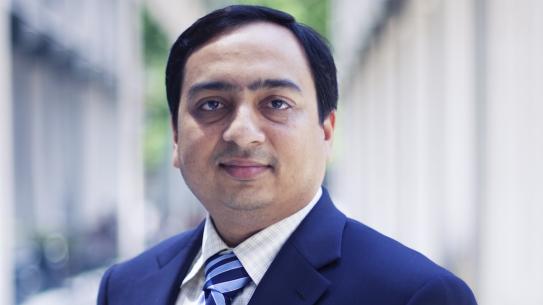
Dr. Nikhil Gupta is a Professor in the Department of Mechanical and Aerospace Engineering at the NYU Tandon School of Engineering , with affiliations to the Department of Civil and Urban Engineering and the Composite Materials and Mechanics Laboratory (CMML). He focuses on cybersecurity in additive manufacturing , dynamic materials characterization , and machine learning for composites . Education : Bachelor of Engineering, Metallurgical Engineering, Malaviya National Institute of Technology, Jaipur (1996) Master of Engineering, Metallurgical Engineering, Indian Institute of Science (1998) PhD, Mechanical Engineering, Louisiana State University (2003) His research explores additive manufacturing of complex composites , structural health monitoring , and cybersecurity threats in digital manufacturing . Notably, he co-developed embedded authentication codes to prevent 3D printing counterfeiting and pioneered machine learning techniques for defect detection in AM parts. His work is supported by the National Science Foundation and Texas A&M Engineering Experiment Station. The 15 most recent articles highlight trends in metamaterial design , bioprinting for tissue engineering , and cybersecurity frameworks for cyber-physical manufacturing , with a strong emphasis on experimental validation, computational modeling, and industrial applications. Scientific Honors : Fellow, ASM International (2022) Fellow, American Society for Composites (2022) Senior Member, National Academy of Inventors (2024) Brimacombe Medalist Award, TMS (2020) ASM Silver Medal (2013) As advisor to PhD student Youssef AbouelNour , Gupta investigates viscoelastic material modeling and in-situ monitoring for additive manufacturing. His lab, CMML, integrates fiber-optic sensors and AI-driven diagnostics to enhance manufacturing security and material performance.
Francesco Tessarolo is an Assistant Professor at the Department of Industrial Engineering , University of Trento , focusing on biocompatibility , biofilm inhibition , and medical device safety . His work bridges material science , clinical microbiology , and healthcare technology development . Teaches Medical devices quality and safety and Robotica in medicina courses Research spans antimicrobial coatings , biofilm prevention , and ambient assisted living technologies Collaborates with researchers like Giandomenico Nollo , Devid Maniglio , and Alessandro Cristoforetti Recent publications include: 2025 studies on blood collection systems and nonlinear microscopy analysis 2024 work on silver-doped plasma and antimicrobial textiles 2023 research on face mask filtration efficiency and dental implant biofilms His technical expertise combines biomechanical testing , microbial diagnostics , and user-centered design for medical applications.
Professor Andrew Pitsillides is a distinguished academic at the Royal Veterinary College (RVC), where he serves as Professor of Skeletal Dynamics in the Department of Comparative Biomedical Sciences at the Camden campus. He leads the Musculoskeletal Biology research group and is associated with the CPCS Research Programme and MicroCT Research Centre at RVC. Dr. Pitsillides received his Applied Biology BSc. (Hons, 1984) and PhD. in Biochemistry (1988) from the Kennedy Institute of Rheumatology. His postdoctoral work continued at UCL and RVC under prominent researchers including Jo Edwards, Mike Bayliss, and Lance Lanyon, where he established his own laboratory in 1995. Professor Pitsillides' research focuses on skeletal mechanobiology across diverse biological settings. His work spans from understanding the role of embryo movement in skeletal formation to how bones and joints respond to functional and traumatic loads throughout growth, adulthood, and aging. He has made significant contributions including discovering that nitric oxide is critical in bone mechano-adaptation, establishing that joint formation is mechanodependent, and developing a non-invasive model of in vivo loading that allows simultaneous study of tibial cortices and trabecular compartments. His research has been published in over 140 original articles with an h-index of 41+. His recent publications demonstrate a strong focus on bone mechanoadaptation, osteoarthritis mechanisms, and skeletal development. The research utilizes advanced imaging techniques like synchrotron X-ray tomography and employs various mouse models including the STR/Ort spontaneous osteoarthritis model. Key themes include the relationship between bone structure and mechanical function, sexual dimorphism in skeletal biology, and the molecular mechanisms underlying osteocyte function and bone adaptation. Fellow of The Royal Society of Biology (FRSB) Fellow of the Anatomical Society (FAS) Board Member of the Bloomsbury Centre for Skeletal Research Executive Editor of Cell Biochemistry and Function Executive Committee Member of International Society for Hyaluronan Sciences Former Honorary Secretary of the British Society for Matrix Biology Professor Pitsillides serves on numerous national and international review panels including the Belgian Fund for Scientific Research, Greek Governmental Agency, and European Commission. His research is currently funded by prestigious organizations including the EU, BBSRC, Wellcome Trust, Arthritis Research UK, and The Leverhulme Trust. He has successfully forged clinical links with Sheffield University and The Royal National Orthopaedic Centre, Stanmore, UCL. In teaching, he has led modules on 'Advanced Skeletal Pathobiology' and 'The Head' for Veterinary and BSc degrees, and regularly guest lectures at UCL, Imperial, and Oxford Universities.
Dr. Jacques-Donald Tournier serves as Reader in Biomedical Engineering at King's College London's Centre for the Developing Brain, where he leads research in advanced diffusion MRI methodologies. His work spans the Department of Biomedical Engineering and Department of Perinatal Imaging and Health at St Thomas' Hospital, focusing on white matter connectivity characterization and neonatal brain imaging through the Developing Human Connectome Project. His educational background includes: PhD in Diffusion Tensor MRI, UCL Institute of Child Health (2003) MSc in Trabecular Bone Architecture Analysis, University of Cambridge (1999) BA, University of Cambridge (1998) Research interests center on computational neuroimaging innovation, with seminal contributions to spherical deconvolution, probabilistic tractography (Track Density Imaging, Anatomically Constrained Tractography), and fixel-based analysis. Current work prioritizes neonatal diffusion MRI optimization and multi-shell HARDI data analysis, driving advancements in both methodological rigor and clinical translation for neurosurgical applications. His research bridges engineering, neuroscience, and clinical medicine through the MRtrix3 open-source platform. Scientific recognition includes: Editor's Choice Award (2014) President's Awards (2009, 2013) Discovery Outstanding Researcher Award (2013) Outstanding Teacher Award (2006) Dr. Tournier currently supervises postgraduate research within active grant frameworks, including the EPSRC-funded MRtrix project (2023-2026) and MRC neurodevelopment studies in congenital heart disease (2021-2026). His mentorship emphasizes methodological innovation and clinical translation, with students contributing to high-impact publications in neuroimaging. The Centre for the Developing Brain provides a collaborative environment integrating software development, clinical research, and large-scale connectome projects, supported by substantial infrastructure from the Wellcome/EPSRC Centre for Medical Engineering.
Dr. Liviu NEDELCU is a Scientific Researcher II at the National Institute of Materials Physics (NIMP) in Romania, where he has been working continuously since 2002. He earned his undergraduate degree from the Faculty of Physics - Section 'Materials Science and Technology' at University of Bucharest in 2002, followed by an MSc in 'Materials Physics' in 2004, and completed his PhD in Physics in 2011, all from the University of Bucharest. His research program centers on: Development of dielectric materials for microwave, millimeter wave, and terahertz applications Dielectric polarization and ferroelectric phase transitions Solid-state synthesis methods for electroceramics Advanced characterization techniques including XRD, SEM, and broadband dielectric measurements Microwave dielectrics, dielectric resonators, and tunable capacitors Dr. NEDELCU's publication record demonstrates consistent research excellence with 52 articles in Web of Science journals, an H-index of 15, and 530 citations (excluding self-citations). His recent work (2020-2025) shows a strategic expansion into biomedical applications of piezoelectric materials, terahertz characterization techniques, and sustainable materials development, reflecting his ability to bridge fundamental materials science with practical applications across multiple domains. His research achievements include: 1 awarded patent (RO 131868 B1) for 'Process for obtaining of Mg4Nb2O9 ceramics with low absorption in terahertz domain' Coordination of 1 international project and 6 national projects (4 as Principal Investigator) Active scientific reviewing for prestigious journals including Journal of Alloys and Compounds, Materials Science and Engineering B, and IEEE Access Dr. NEDELCU maintains professional profiles through UEFISCDI ID (U-1700-039C-8541), ORCID ID (0000-0002-0612-590X), and WoS ResearcherID (B-9882-2011), documenting his comprehensive scholarly contributions to materials science.
Mihai-Alexandru Grigoroscuta is a Scientific Researcher at the Laboratory of Magnetism and Superconductivity at the National Institute of Materials Physics (NIMP) in Romania. His primary research focuses on superconducting materials, particularly magnesium diboride (MgB 2 ), and advanced materials processing techniques such as Spark Plasma Sintering. His educational background includes: PhD in Materials Science and Engineering from University "Politehnica" of Bucharest (2016-2021) MSc in Biomaterials from University "Politehnica" of Bucharest (2014-2016) Bachelor's degree in Materials Science and Engineering from University "Politehnica" of Bucharest (2010-2014) Research internships at NIMS, Tsukuba, Japan (2018-2019) and IPCMS, Strasbourg, France (2013) Grigoroscuta's research spans multiple interdisciplinary areas including superconductivity, materials science, and biomedical applications. His work primarily investigates the processing-structure-property relationships of MgB 2 and related boride materials, with emphasis on enhancing superconducting properties through various doping strategies and texturing techniques. He has made significant contributions to understanding flux pinning mechanisms, critical current density enhancement, and the development of novel superconducting materials for practical applications. His research also extends to biomedical applications where he explores antimicrobial and biodegradable properties of MgB 2 for potential use in medical devices and wound healing. Analysis of his publication record reveals a strong focus on superconducting materials, particularly MgB 2 and its variants, with significant contributions to understanding flux dynamics, pinning mechanisms, and microwave properties. His work spans fundamental materials science to applied research with potential applications in magnetic shielding, biomedical devices, and energy technologies. Recent publications show an expansion into nanocomposites, drug delivery systems, and archaeological materials analysis, indicating broad interdisciplinary research interests. Grigoroscuta has been actively involved in research since 2015, initially as a Research Assistant and currently as a Researcher at NIMP. His work involves extensive collaboration with researchers across Romania and internationally, particularly with Petre Badica who appears as a frequent co-author and mentor. His expertise includes Spark Plasma Sintering, crystal growth techniques, and comprehensive materials characterization using various magnetic, mechanical, and structural analysis methods. He is part of the Magnetism and Superconductivity research group at NIMP, which focuses on developing advanced superconducting materials and investigating their fundamental properties. The laboratory appears to have strong capabilities in materials synthesis, particularly through Spark Plasma Sintering, and comprehensive characterization facilities including VSM, SQUID, and PPMS systems for magnetic and superconducting property measurements.
Diaaeldin Daghma serves as Group Leader of EdTissOmics at the Julius Kühn-Institut (JKI) in Quedlinburg, Germany, within the Institute for Breeding Research on Horticultural Crops since November 2023. His research spans plant biotechnology, mutagenesis, and cell biology with particular focus on plant embryogenesis and cereal genetics. Dr. Daghma's research interests center on plant biotechnology and mutagenesis, with significant contributions to understanding barley pollen embryogenesis, Arabidopsis embryo development, and CRISPR-based genome editing techniques. His work demonstrates expertise in cellular dynamics during plant development, epigenetic regulation, and advanced microscopy techniques. Early career research included bone biology and osteoporosis models, indicating a transition toward plant-focused research in recent years. His publication record shows consistent output since 2011 with 14 documented works, featuring prominent journals in plant science and developmental biology. Recent publications (2021-2023) focus on doubled haploid barley production, CRISPR applications, and Arabidopsis embryo development, reflecting his current research trajectory in plant biotechnology. Dr. Daghma has served as a peer reviewer for Plant Cell, Tissue and Organ Culture, demonstrating active engagement in the academic community. His collaborative work with researchers like Kumlehn, Hensel, and Melzer indicates strong institutional partnerships within plant biotechnology.
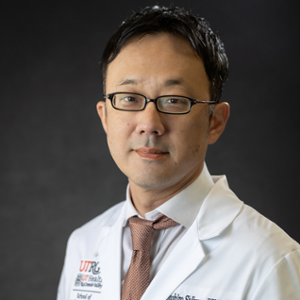
Dr. Naohiro Shibuya serves as a Clinical Professor at the University of Texas Rio Grande Valley (UTRGV) in Edinburg, Texas, where he is a leading authority in foot and ankle surgical care and research. His clinical practice focuses on complex reconstructive procedures and diabetic foot complications within high-risk patient populations. His research program addresses critical gaps in foot and ankle medicine through three interconnected domains: Reconstructive Innovation : Advancing arthroscopic ligament repair, arthrodesis techniques, and biomaterial applications for structural bone grafts Epidemiological Analysis : Investigating trauma patterns, flatfoot progression, and diabetic pathologies using national trauma databases Health Services Optimization : Evaluating postoperative care regimens and emergency department utilization to enhance surgical safety With over 100 peer-reviewed publications spanning 2008-2019, Dr. Shibuya's work demonstrates consistent focus on evidence-based improvements in surgical outcomes. His most recent studies (2018-2019) emphasize biomechanical analysis of hallux valgus correction and predictive modeling of postoperative complications using large-scale trauma datasets. Professional recognition includes his fellowship in the American College of Foot and Ankle Surgeons (FACFAS), reflecting significant contributions to academic podiatry through editorial board service and collaborative research with biomechanics specialists.
Julie Knippel Melsted Birch serves as a Tenure Track Assistant Professor in the Department of Veterinary and Animal Sciences, specifically within the Pathobiological Sciences section at the University of Copenhagen's Faculty of Health and Medical Sciences. Her work bridges veterinary medicine, orthopedics, and infectious disease research with a particular focus on bone infections and implant-related complications. Dr. Birch's research interests center on peri-prosthetic joint infections, osteomyelitis, and the development of animal models to study human orthopedic conditions. Her work investigates bacterial pathogenesis in bone tissue, immune responses to infection, and innovative treatment approaches for implant-associated infections. She has made significant contributions to understanding how bacteria invade bone microstructures and how the immune system responds to these challenges. Analysis of her recent publications reveals a strong focus on developing and utilizing porcine and minipig models to study bone infections, with particular attention to Staphylococcus aureus pathogenesis, neutrophil responses, and biomarker identification such as Serum Amyloid A. Her research spans basic science investigations of bacterial invasion mechanisms through translational work on novel antibiotic delivery systems. Dr. Birch is actively engaged in academic service and scholarly activities, regularly presenting her research at major conferences including the European Bone and Joint Infection Society meetings, EORS conferences, and Danish Bone Research Workshops. She has participated in numerous conferences between 2022-2025, demonstrating ongoing scholarly productivity and engagement with the international research community. Her academic work extends to veterinary education, where she has developed innovative teaching methods for veterinary anatomy courses, focusing on improving demonstration exercises and student engagement in practical learning environments. Dr. Birch maintains an active research laboratory focused on bone infection pathogenesis and treatment, collaborating with researchers across disciplines including microbiology, orthopedics, and biomedical engineering.