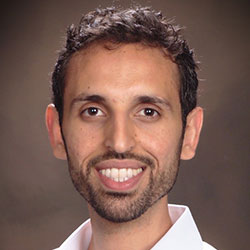
Prof. Christian Holz is an Associate Professor at the Department of Computer Science and Deputy Head of the Institute of Intelligent Interactive Systems at ETH Zürich. His work focuses on advancing human-computer interaction through innovations in wearable technologies, mixed reality systems, and sensor-driven applications. Key research areas include motion capture, physiological signal processing, and adaptive user interfaces. Holz leads the SIPLab (siplab.ethz.ch), producing influential work at the intersection of computer science and biomedical engineering. His research explores cutting-edge topics such as egocentric vision systems, wearable health monitoring devices, and VR/AR applications. Recent studies investigate cybersickness detection via EEG, heart rate estimation from eye-tracking cameras, and scalable motion capture using inertial/UWB sensors. Holz's work emphasizes practical applications in healthcare, education, and human-centered computing. Publications reflect a strong focus on interdisciplinary solutions, combining machine learning with sensor data analysis. Notable contributions include the EgoSim multi-view simulator, WildPPG biomedical dataset, and MiBOT cardiovascular modulation device. His research bridges theoretical advancements with real-world usability in domains like emergency response training, chronic disease monitoring, and immersive education.
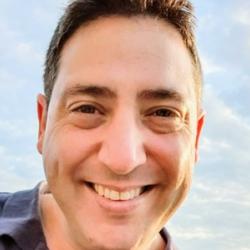
Dr. Auzeen Shariati is an Associate Professor and Director of Undergraduate Programs in the Department of Criminology, Law and Society at George Mason University. She holds a Ph.D. in Public Affairs and Criminal Justice from Florida International University (2017), an M.A. in Criminal Law and Criminology from Allameh Tabataba’I University (2010), and a B.A. in Judicial Law from the University of Tehran (2006). Prior to academia, she practiced as a defense attorney at the Iranian Bar Association. Her research focuses on environmental criminology, crime prevention, victimization, policing strategies, and comparative criminal justice systems. Key areas include pandemic impacts on domestic violence, school safety through Crime Prevention Through Environmental Design (CPTED), and policy evaluation in criminal justice. She has published extensively in journals like American Journal of Criminal Justice , Journal of Family Violence , and Security Journal . Recent work examines how the Covid-19 pandemic and social upheavals like the murder of George Floyd influenced domestic violence reporting and victim experiences. Her studies combine quantitative and qualitative methods, emphasizing real-world policy implications. Dr. Shariati teaches courses such as Introduction to Criminology , Law and Justice Around the World , and Evaluation of Crime and Justice Policies . She actively presents at conferences like the American Society of Criminology and has contributed to public discourse on campus safety and criminal justice reform through media engagements.
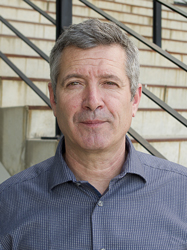
Nabil Alshurafa is an Associate Professor at Northwestern University, holding joint appointments in the McCormick School of Engineering (Computer Science and Electrical and Computer Engineering) and the Feinberg School of Medicine (Preventive Medicine). He directs the HABits Lab, which focuses on developing mHealth systems to address health behaviors such as overeating, stress, and UV exposure. His work integrates wearable sensors, machine learning, and behavioral science to create passive sensing solutions. Education: PhD in Computer Science and Wireless Health (UCLA), MS and BS in Computer Science (UCLA). Research Interests: Body sensor networks, activity recognition, embedded systems, and health informatics. His lab designs wearable devices (e.g., neck-worn sensors, UV patches) and AI frameworks to detect behaviors like eating patterns and stress levels. Collaborations include domain experts in medicine and engineering to translate technical innovations into clinical interventions. Recent Projects: Developing systems for stress monitoring via ECG-PPG patches, UV exposure tracking, and just-in-time interventions for overeating. The lab emphasizes ethical design, privacy preservation, and user-centered technology. Students and Lab Team: Supervises PhD, MS, and undergraduate researchers in areas like machine learning, embedded systems, and health data analytics. Notable advisees include Rawan Alharbi (PhD candidate), Shibo Zhang (PhD student), and Wilson Wang (MS student). Labs/Teams: HABits Lab collaborates with experts in Preventive Medicine, Psychiatry, and Dermatology to advance interdisciplinary health research. Current projects include predictive analytics for weight loss and interventions targeting maternal stress during pregnancy.
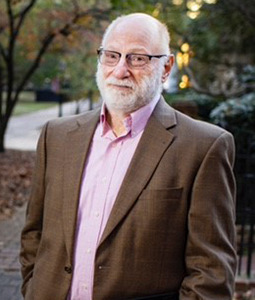
Barak Ariel is a Professor of Experimental Criminology at the Institute of Criminology, University of Cambridge. He holds a PhD in Criminology from Hebrew University of Jerusalem, an LLM (Hebrew University), LLB (Academic Centre of Law & Business), MA in Criminology (Hebrew University), and BA in Psychology (University of New York). Since 2008, he has been affiliated with the Jerry Lee Centre of Experimental Criminology and teaches on the MSt in Applied Criminology and Police Management. Academic Rank: Professor of Experimental Criminology Key Affiliations: University of Cambridge, Jerry Lee Centre of Experimental Criminology Education: PhD, LLM, MA, LLB, BA Dr. Ariel specializes in experimental criminology, evidence-based policing, and the role of technology in crime prevention. His research focuses on evaluating policing strategies through randomized controlled trials (RCTs), particularly in areas such as body-worn cameras, domestic abuse hotspots, and interventions to reduce violence against women. He has advised police departments and governments across the UK, USA, Latin America, and Europe. His recent publications highlight trends in global crime dynamics, the impact of police interventions on offender behavior, and the use of machine learning for crime forecasting. These works span subfields including hot spots policing, procedural justice, victim-offender overlaps, and network analysis of organized crime. Scientific Awards : Academy of Experimental Criminology Young Experimental Scholar Award European Society of Criminology Young Criminologist Award Fellow of the Division of Experimental Criminology As Chair of the Division of Experimental Criminology (2019–2021), Dr. Ariel has contributed to advancing methodological rigor in criminological research. He has conducted extensive evaluations of police-led interventions, including trials on body-worn cameras, victim communication strategies, and data-driven approaches to domestic homicide prevention. His work bridges academic research with practical policing reforms, emphasizing the importance of empirical evidence in criminal justice policy.
Neal R. Feigenson serves as the Lynne L. Pantalena Professor of Law at Quinnipiac University School of Law, where he has been a faculty member since 1987. He teaches core courses including torts, evidence, civil procedure, and visual persuasion in the law, blending doctrinal instruction with interdisciplinary perspectives on legal cognition. Education: BA, University of Maryland JD, Harvard University Professor Feigenson's scholarship fundamentally explores how cognitive and social psychology shapes legal decision-making processes, with particular emphasis on the transformative impact of visual and multimedia evidence in courtroom settings. His research investigates juror perception biases, the psychological mechanisms behind legal blame attribution, and the evolving challenges posed by digital evidence presentation in both physical and virtual courtrooms. This work bridges empirical psychological research with practical legal theory to address critical issues in evidence evaluation and judicial procedure. Analysis of his recent publications (2021-2024) reveals a concentrated focus on virtual legal proceedings, demonstrating how video evidence framing influences juror judgments about police conduct and damage awards. His scholarship consistently examines the tension between technological innovation in evidence presentation and foundational legal principles of fairness, credibility assessment, and human interaction within the justice system. Scientific Awards: No specific scientific awards, fellowships, or major honors are documented in the available sources. While detailed information about student advising and research funding is unavailable, Professor Feigenson maintains an active scholarly profile with over 60 publications. His professional activities center on teaching and research within Quinnipiac's law school, where he maintains an office in the School of Law and Education building (Room 110C) and welcomes media inquiries regarding his expertise in legal psychology and evidence law.
Professor Mauricio Villarroel is an Associate Professor of Biomedical Engineering at the University of Oxford's Institute of Biomedical Engineering and a Fellow of Magdalen College. He leads the Laboratory for Computational Medicine and Technology (LCMT), which focuses on improving clinical decision-making through digital health innovations for both high-income and low- or middle-income countries. Villarroel was born in Bolivia where he completed his undergraduate engineering degree before obtaining his doctoral degree in Engineering Science from the University of Oxford. He previously worked as a research scientist at the Health Sciences and Technology department at MIT and Harvard University, collaborating with multidisciplinary teams from academia, hospitals, and industry to develop advanced monitoring algorithms for intensive care. He returned to Oxford as a post-doctoral research assistant in Data Fusion & Telehealth and later served as a Senior Researcher in Next Generation of Digital Health. His research focuses on developing non-contact video-based physiological monitoring technologies to create personalized biomarkers of health. He has founded the spinout company OxeHealth based on his early work. Currently, his laboratory develops AI models to identify meaningful physiological changes using multimodal sensing technologies including video cameras, wearable devices, wireless technologies, smartphones, and body-worn sensors. His primary research areas include cardiovascular disease and neurodegenerative diseases, spanning from early detection of chronic conditions to in-hospital monitoring and remote management in community settings. He is also the first academic appointment of The Podium Institute for Sports Medicine and Technology, where he develops technologies to monitor factors leading to sports injuries in young athletes aged 11-18 years. Analysis of his recent publications reveals a strong focus on non-contact physiological monitoring, particularly using photoplethysmography and video-based technologies. His work spans cardiovascular monitoring (blood pressure estimation, circadian rhythms), neurological applications (movement disorders), respiratory monitoring (particularly in infants), and sports medicine (athlete screening). A consistent theme across his research is the development of AI-driven, multimodal approaches to extract meaningful clinical information from non-invasive or contactless monitoring systems. Villarroel has received significant recognition for his work, with multiple publications referenced in patents and clinical guidelines. His research has been picked up by news outlets and widely shared on social media platforms, indicating substantial impact in both academic and practical domains. His work on non-contact monitoring has particularly gained attention for its potential applications in resource-limited settings. As a research leader, Villarroel collaborates extensively with clinicians, engineers, and industry partners. His laboratory offers DPhil opportunities at the intersection of medicine, engineering, and technology. His research has led to practical applications including technologies for monitoring post-operative patients, detecting apnea in infants, and screening athletes for cardiac conditions that could lead to sudden death. The Laboratory for Computational Medicine and Technology maintains strong connections with Oxford's Medical Sciences campus, adjacent to the Churchill Hospital, facilitating direct translation of engineering innovations into clinical practice. The lab's work bridges multiple domains including computer vision, signal processing, AI, and clinical medicine to address significant healthcare challenges.
Amanda Glasbeek is an Associate Professor of Criminology in the Department of Social Science at York University's Faculty of Liberal Arts & Professional Studies, with cross-appointments to graduate programs in Sociolegal Studies, Sociology, and Gender, Feminist, and Women's Studies. She is currently on sabbatical until June 30, 2025. Her academic leadership includes serving as Department Chair (2016-2019, 2022-2024), University Senator (2022-2024), and member of the LA&PS Academic Policy, Planning & Research Committee (2021-2024). Education includes: PhD in Women’s Studies, York University (2004) MA in Sociology, Carleton University (1992) BA (Hons) in Sociology, Trent University (1989) Her research explores feminist criminology through anti-carceral and surveillance lenses, with specific focus areas including: Gender/racial dimensions of surveillance technologies (CCTV, body-worn cameras) Police reform and abolition movements Visual culture in criminal justice systems Historical and contemporary intersections of law, gender, and power Her work critically examines how surveillance practices reproduce social inequalities while advocating for transformative justice frameworks. Publications consistently center on surveillance, gender, and power dynamics within criminological contexts. Recent works (2013-2022) demonstrate a strong trajectory analyzing body-worn cameras, racial/gendered visibility in policing, historical continuities in carceral systems, and feminist critiques of surveillance capitalism. Theoretical approaches blend sociolegal analysis, postcolonial theory, and visual methodologies.
Dr. Lisa Stolzenberg serves as the Chair of the Department of Criminology and Criminal Justice at Florida International University (FIU). Her research focuses on quantitative methodologies applied to criminology, terrorism, substance abuse policies, health-related crime, and public safety technologies. She has held research positions at organizations such as Westat, Inc. and the Florida Department of Corrections, and her work has been funded by the National Institute of Justice (NIJ) and the Bureau of Justice Assistance (BJA). Dr. Stolzenberg holds a Ph.D. in Criminology from Florida State University (1993), an M.S. in Criminology (1986), and a B.S. in Criminal Justice from the University of Florida (1985). Her research interests include criminal sentencing, police practices, terrorism dynamics, and the intersection of drug policies with public health outcomes. She is widely published in leading journals such as Criminology and the American Sociological Review. Her recent work examines topics like the impact of cannabis legalization on opioid misuse, the role of body-worn cameras in police interactions, and the sociological factors influencing criminal behavior. Dr. Stolzenberg’s studies often bridge criminological theory with policy implications, contributing to evidence-based reforms in criminal justice systems.
Professor Stuart Lister holds the position of Pro-Dean for Research and Innovation at the University of Leeds' Faculty of Social Sciences. He is also a Professor of Policing and Criminal Justice in the School of Law. His career includes roles as Research Fellow at Keele University and Durham University before joining Leeds in 2001. He became Head of the Graduate School (2016–2020) and was promoted to Professor in 2019. His research focuses on policing arrangements, private sector involvement in criminal justice, and governance frameworks. Notable works include Criminal Justice and the Private Sector (2017) and Accountability of Policing (2015). He currently serves on editorial boards for International Journal of Police Science and Management and Policing and Society . Research interests encompass plural policing networks, police accountability, and the night-time economy’s governance. Key projects include studies on body-worn cameras (funded by N8 Policing Partnership) and ESRC-funded police-community engagement initiatives. He collaborates with West Yorkshire Police on applied research. Recent projects address asset confiscation, police governance reforms, and local alcohol policy integration. His work critiques privatization trends and explores democratic oversight mechanisms in policing. Key Roles: Pro-Dean Research & Innovation, Editor of Criminology and Criminal Justice (2012–2015) Current Projects: 'Dirty Assets', 'Markets in Policing' seminar series, 2011 riots analysis Teaching: Supervises postgraduate researchers including Eleanor Abbott and Rebecca Fox Grants: ESRC White Rose Doctoral Training Partnership leadership His interdisciplinary approach bridges criminology, governance, and public policy, with outputs addressing both academic and practitioner audiences.
Jacinta Gau is a Professor in the Department of Criminal Justice at the University of Central Florida (UCF), part of the College of Community Innovation and Education. Her work focuses on police-community dynamics, procedural justice, and racial disparities in policing. She holds a Ph.D. and has authored over 50 peer-reviewed articles since 2008, addressing topics such as body-worn camera adoption, police legitimacy, and the impact of negative media scrutiny on officer behavior. Her research emphasizes organizational reforms, officer well-being, and the intersection of race/gender with law enforcement practices. Notable contributions include studies on Hispanic/Latino police experiences, female officers’ workplace perceptions, and the role of mentorship in policing. She serves as a key advisor on criminal justice policy and frequently collaborates with law enforcement agencies to bridge theoretical insights with practical application. Recent work explores how procedural justice principles can mitigate tensions between marginalized communities and police, while her 2025 studies address STEM equity and organizational authenticity in academia. Gau’s research spans both domestic and international contexts, including analyses of wildlife rangers’ legitimacy in Africa/Asia.
Professor Jean-Luc Dugelay is a faculty member at EURECOM's Digital Security Department, specializing in facial image processing, image forensics, and biometrics. He holds a PhD in Image Processing from the University of Rennes (1992) and is a Fellow of IEEE (2012) and IAPR (2018). His research focuses on security applications like deepfake detection, privacy protection, and multi-spectral imaging. He leads projects on UAV surveillance, cross-spectrum face recognition, and deepfake countermeasures. Education: PhD in Image Processing (1992, University of Rennes), HDR (2013, University of Nice). Notable projects include HEIMDALL (deepfake detection), CONVERGE (transport security), and ImVerif (image forensics). His work on biometric systems and digital watermarking has been recognized with awards like the SEE Blondel Medal (2010). Research interests span facial analysis, video surveillance, and thermal imaging. He has advised students on topics like age estimation via GANs and cross-spectrum face recognition. Key publications include work on deepfake detection (IPAS 2025), thermal-to-visible face conversion, and event-based vision systems.
Abhishek 'Abbey' Dwivedi is an Associate Professor in Marketing at the School of Business, Charles Sturt University (CSU). He holds a PhD in Marketing from Griffith University, a Master's in Marketing Management (First Class Honours), and a PGDM in Marketing. His teaching experience spans over seven years across Griffith University, University of Queensland, and Central Queensland University, covering courses like Marketing Strategy, Global Marketing, and Services Marketing. PhD in Marketing, Griffith University (2006-2010) Masters in Marketing Management (First Class Honours), Griffith University (2004-2005) PGDM (Marketing), Central Queensland University (Brisbane) Abbey's research focuses on brand extensions , customer equity , celebrity endorsements , and marketing capabilities , with publications in journals like the Journal of Brand Management and European Journal of Marketing . His recent work explores social entrepreneurship and mental health impacts on frontline workers , aligning with his involvement in the Aspro Workforce Wellness Research Unit and Marketing Research Group . His 15 most recent publications (2005-2025) span brand management , social media engagement , cybersecurity in agriculture , and mental health during crises . Key trends include interdisciplinary work on industrial buyers , consumer-brand relationships , and marketing innovation in SMEs . Scientific Awards & Grants: Best Paper Award (2015) Best Reviewer in Track Award (2015) Better Mental Health Program Evaluation Project (2020) Certificate of Appreciation, Society for Marketing Advances (USA) (2014) Abbey supervises higher-degree research students and serves as a peer reviewer for journals like the Journal of Retailing and Consumer Services . He is also part of the Regional Entrepreneurship Research Group and Regional Work and Organisational Resilience Sturt Group .
Rob Voigt Assistant Professor of Linguistics and courtesy faculty in Computer Science at Northwestern University, affiliated with the Institute for Policy Research and Cognitive Science Program. Specializes in computational linguistics, focusing on natural language processing (NLP) applied to social science questions including policing, mental health, and immigration. Director of the Linguistic Mechanisms Lab, exploring how language reflects and shapes societal structures. Education PhD in Linguistics (2019), Stanford University Postdoctoral Scholar (2019-2020), Stanford University M.A. in East Asian Studies (2013), Stanford University B.A. in Chinese (2008), Vassar College Research Interests Combines computational methods with sociolinguistics to study: Police-community interaction through body-worn camera data Linguistic markers of procedural justice and racial disparities Language in marginalized communities and social movements LLM applications to clinical language analysis (autism spectrum disorders) Historical discourse analysis of immigration policies Recent Work Recent projects include analyzing 140 years of political immigration rhetoric (PNAS 2022), evaluating officer communication training via bodycam NLP (PNAS Nexus 2024), and developing stereotype analysis pipelines (EMNLP 2024). Active in policy-relevant research through grants on police training (NIJ) and mental health language analysis (NIH). Awards & Recognition Holds Cozzarelli Prize (2017) for groundbreaking policing research and Cialdini Prize for field methods innovation. Recipient of interdisciplinary fellowships from Stanford and NIH grants totaling $8M+. Teaching Current courses include Text Processing for Linguists . Known for ungrading pedagogy emphasizing intrinsic motivation and collaborative learning. Develops open-access computational linguistics curricula using Unix/Python. Labs & Collaborations Linguistic Mechanisms Lab focuses on socially responsible NLP. Collaborates with criminologists, cognitive scientists, and sociologists on projects like the Media Accountability Project (racial disparities in gun violence reporting).
Dr. Sara Thompson is a Professor in the Department of Criminology at Toronto Metropolitan University since 2008. Her work focuses on social inequality, urban violence, policing, hate crime, radicalization, and policy impacts. She holds a Ph.D. from the University of Toronto and has extensive advisory roles, including co-Principal Investigator on a SSHRC Insight Grant examining body-worn cameras and police accountability. Thompson serves on key committees such as the International Radicalization Prevention Team (ITERP), Toronto Police Service’s Race-Based Data Panel, and the Canadian Association of Chiefs of Police Research Advisory Committee. Education: BA (Hons.), MA, and Ph.D. in Criminology (University of Toronto). Research Interests: Thompson’s work bridges academic research and policy, emphasizing socially engaged violence-prevention strategies. Her recent projects explore the spatial distribution of violence, policing reforms, and CVE programming efficacy. She has authored influential reports on hate crime priorities, body camera impacts, and diaspora radicalization dynamics. Grants & Advising: Co-PI on SSHRC-funded body camera research (2021–present), led Public Safety Canada CVE evaluations, and contributes to police training curricula through the Ontario Police College. Her advisory roles span community organizations like Yorktown Family Services and Toronto Public Health’s violence initiative. Key Contributions: Developed CVE evaluation frameworks, advised on racial profiling policies, and co-authored major texts such as Canada Among Nations: Terrorism and Counter-terrorism (2020). Her work prioritizes balancing security needs with human rights and community trust.
Geoffrey P. Alpert is a Professor at the University of South Carolina's McCausland College of Arts and Sciences, Department of Criminology and Criminal Justice. He has conducted research on high-risk police activities for over 40 years, focusing on police use of force, training, and emergency diving protocols. His research explores critical policing issues such as: Use-of-force dynamics and continuum analysis Body-worn camera applications Training effectiveness and cognitive distortions Policing reform and accountability Police-officer decision-making Workforce crisis mitigation Recent publications emphasize experimental methodologies, AI-driven behavioral analysis, and cross-cultural policing comparisons. His work spans empirical studies, policy evaluations, and theoretical frameworks addressing police accountability, guardian/warrior role perceptions, and evidence-based reforms. He has collaborated with international organizations, testified to Congress and judicial inquests, and served as a Federal Monitor for the New Orleans Police Department. His expertise informs police training programs, legal standards, and public safety initiatives.