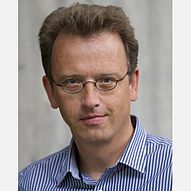
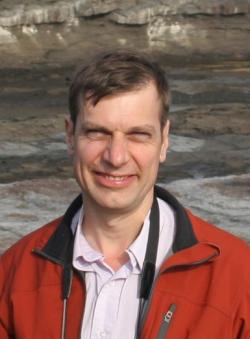
Dr Jacob C Dunn is an Associate Professor of Evolutionary Biology at Anglia Ruskin University's School of Life Sciences. Formerly a Senior Lecturer at Anglia Ruskin (2016–2020) and Lecturer at the University of Cambridge's Division of Biological Anthropology (2012–2016), he leads the Primate Evolution and Ecology Research Group and directs the Behavioural Ecology Research Group . His research focuses on primate vocal communication, language evolution, and conservation applications of bioacoustics, with international collaborations including the Fitch Lab at the University of Vienna. Research Interests: Bioacoustic analysis of primate vocal anatomy Macroevolutionary hypothesis testing Comparative studies of fear evolution Eco-acoustic approaches to animal welfare Phylogenetic comparative methods Notable Grants: £15,000 from Accelerate-C2D3 (2022–2023) £65,000 QR Funding (2021–2022) £340,000 Hydrophis Gas grant (2019–2022) £66,000 Anglia Ruskin University grant (2019–2020) Teaching: BSc (Hons) Zoology, Animal Behaviour, and Ecology & Conservation.
Anssi Laurila is a Professor in the Department of Ecology and Genetics, specializing in Animal Ecology at Uppsala University, Sweden. His research integrates evolutionary biology and ecology to explore the mechanisms underlying phenotypic and genetic variation in natural populations, particularly amphibians. His primary research interests include phenotypic plasticity , local adaptation , maternal effects , life-history evolution , and genomic responses to environmental gradients such as latitude, temperature, acidity, and predation. He investigates how populations adapt to heterogeneous environments through both plastic and genetic mechanisms, often using comparative studies across latitudinal clines and contrasting habitats. His work frequently focuses on amphibians like Rana temporaria , Rana arvalis , and Bufo bufo , as well as other ectotherms including freshwater snails and fish. The trends in his recent publications (2020–2025) show a strong emphasis on genomic and transcriptomic analyses of adaptation, host-pathogen interactions (especially with Batrachochytrium dendrobatidis ), immunogenetics (MHC diversity), conservation genetics of edge populations, and acclimation physiology . His studies often combine field observations with controlled experiments and molecular techniques, contributing to understanding evolutionary responses to climate change and anthropogenic stressors. No scientific awards are explicitly mentioned in the provided text. Dr. Laurila actively collaborates with researchers across Europe and supervises or co-supervises numerous studies, as evidenced by his consistent presence as a senior or corresponding author. While specific grant details are not listed, his extensive publication record in high-impact journals suggests sustained funding for research in evolutionary ecology and conservation. His work has implications for biodiversity conservation, particularly in the context of climate change and emerging infectious diseases. He is involved in research on amphibian microbiomes, thermal adaptation in geothermal systems, and the genetic basis of adaptive traits. His team explores how environmental stressors shape phenotypic and genetic variation, with a focus on understanding the limits and costs of plasticity and adaptation.
Sophie Caron is an Associate Professor in the Department of Biological Sciences at the University of Utah, where she leads a research laboratory investigating fundamental mechanisms of brain function using Drosophila melanogaster as a model system. Her work focuses on how the brain generates internal representations of the external world, stores memories, and translates these into behavior through multisensory integration. Education: B.S. from Université de Montréal Ph.D. from New York University Dr. Caron's research centers on the Drosophila mushroom body—a critical brain center for learning and memory—with emphasis on multisensory integration mechanisms. Her lab investigates how the brain combines information from multiple sensory modalities (olfaction, vision, etc.) to form unified percepts, challenging traditional views of sensory processing. Key discoveries include the demonstration that mushroom body connectivity follows near-random patterns that maximize memory capacity, and the identification of cross-modal sensory pathways beyond olfaction. Current work explores evolutionary adaptations in neural circuits across Drosophila species and developmental mechanisms establishing sensory wiring. Analysis of her 15 most recent publications (2019-2024) reveals three dominant research trajectories: (1) high-resolution mapping of Kenyon cell inputs using advanced techniques like dye electroporation, (2) computational modeling of how connectivity patterns shape sensory representation and learning, and (3) evolutionary studies of circuit architecture across Drosophila species. Her work consistently bridges experimental neuroanatomy with theoretical frameworks, emphasizing the interplay between random and structured wiring principles in neural circuit design. Scientific Awards: NSF CAREER Award (2021) for research on brain size evolution and neuronal circuit adaptation Dr. Caron mentors graduate students in the University of Utah's Molecular Biology Program and directs an active laboratory utilizing genetic, imaging, and behavioral approaches. Her research program is supported by competitive grants including the NSF CAREER award, with collaborations spanning neuroscience and evolutionary biology. Current projects investigate multisensory integration mechanisms, evolutionary drivers of neural circuit specialization, and developmental basis of sensory wiring. The Caron Lab maintains specialized facilities for Drosophila neurogenetics, advanced microscopy, and behavioral analysis. Her team collaborates with the University of Utah's Brain Institute and Center for Cell and Genome Science, contributing to interdisciplinary initiatives in neural circuit mapping and evolutionary neuroscience. Ongoing work explores how sensory representations evolve in response to ecological pressures and how circuit architecture enables flexible behavior in complex environments.
Michelle Cameron is an Associate Professor in the Department of Anthropology at the University of Toronto's Faculty of Arts & Science. She joined the department in 2018 and specializes in skeletal biology and bioarchaeology, integrating skeletal analysis with archaeological and ecological evidence to study human adaptability across diverse environments. Her research explores how environmental and cultural contexts shape human biology through time, focusing on biocultural stressors and skeletal responses. She employs advanced methodologies including 3D modeling, biomechanical analyses, and spatial analysis frameworks to examine human adaptation to environmental challenges. Primary research regions: Africa (South Africa, Namibia, Lake Turkana), North America, Europe Key methodologies: Cross-sectional geometry, skeletal biomechanics, paleodiet reconstruction Dr. Cameron's publications demonstrate expertise in subsistence transitions (herding practices), human evolutionary morphology, and contemporary skeletal biology applications. She maintains active fieldwork programs in southern Africa while engaging in comparative studies across continents. Scientific Awards: SSHRC Insight Development Grant Connaught New Researcher Award Education: PhD, University of Cambridge (2017) As co-host of the YouTube series 'Humans in 5', she actively participates in science communication, distilling complex anthropological concepts into accessible five-minute segments.
Dr. Michael Alfaro is a Professor in the Department of Ecology and Evolutionary Biology at UCLA, where he leads the UCLA Alfaro Lab. His research focuses on understanding evolutionary dynamics of organismal diversification, particularly in marine fishes. He employs interdisciplinary approaches combining evolutionary morphology, molecular phylogenetics, and theoretical evolution to explore patterns and mechanisms of morphological and functional diversity. Education: Ph.D. in Evolutionary Biology, University of Chicago (2000) M.A. in Biology, Humboldt State University (1995) B.A. in Dramatic Arts, University of California, Davis (1989) Research interests emphasize the interplay between morphological diversity and ecological/functional dynamics. Notable themes include the drivers of diversification in marine lineages, the role of physiological traits in lineage success, and the integration of computational tools for large-scale phenotypic analysis. Alfaro has contributed to advancements in phylogenetic methodology and genomic resources for studying fish evolution. His work bridges macroevolutionary theory with empirical data, often leveraging crowdsourced phenotypic data and bioinformatics tools like Sashimi and Charisma for high-throughput analysis. The lab actively engages in collaborative projects addressing biodiversity patterns and evolutionary mechanisms across marine and terrestrial systems. Grants and advising activities are central to his academic contributions, though specific details are not detailed in the provided text. The UCLA Alfaro Lab collaborates internationally, emphasizing both basic research and applied conservation contexts.
Irby Lovette serves as the Fuller Professor of Ornithology at Cornell University and directs the Fuller Evolutionary Biology Program, Cornell Museum of Vertebrates, and Cornell Lab’s Academic Affairs. His work integrates cutting-edge genomic approaches to explore avian biodiversity, evolution, and conservation. Dr. Lovette's research centers on deciphering the genetic basis of bird traits and evolutionary history through whole-genome analyses, which he describes as the "Hubble Telescope" for evolutionary biology. His expertise spans ornithology, evolutionary genomics, conservation genetics, speciation mechanisms, and climate-driven adaptations in avian populations, with emphasis on how genomic tools reveal biodiversity origins. His recent publications demonstrate a cohesive focus on genomic dissection of avian speciation, adaptation, and conservation challenges. Key themes include genetic structuring in endangered species, plumage evolution in raptors, hybrid zone dynamics, and climate-responsive genomic selection across diverse bird lineages from Australian finches to North American warblers and flycatchers. As an educator, Dr. Lovette actively mentors undergraduates, graduate students, and postdocs drawn to Cornell's ornithology programs. He leads The Lovette Lab, which cultivates collaborative research at the intersection of evolutionary biology, genomics, and bird conservation through hands-on student engagement and interdisciplinary partnerships.
Susan C. Anton is the Julius Silver, Roslyn S. Silver, and Enid Silver Winslow Professor of Anthropology and Vice Dean for Inclusive Excellence Education at New York University's College of Arts and Science. She holds a PhD (1994), MA (1991), and BA (1987) from the University of California, Berkeley. Her research focuses on physical anthropology, skeletal biology, and the evolution of Homo , with fieldwork in Asia and the Pacific. She co-authored a landmark 2014 Science paper on early Homo evolution and directs the NYU MA program in Biological Anthropology. Antón’s work bridges fossil morphology, ecology, and behavior. Recent projects include analyzing Koobi Fora fossils in Kenya and leading the 'Bones and Behavior' research group. She serves as President-Elect of the American Association of Physical Anthropologists and co-chairs its Committee on Diversity. Her publications span textbooks, peer-reviewed articles on Homo erectus dispersal, and interdisciplinary studies of human adaptation. Antón’s academic leadership includes guiding students in the MA program and fostering inclusive excellence initiatives. She collaborates globally, notably with the Koobi Fora Research Project and the Bones and Behavior Working Group.
Dr. Emma Pomeroy is an Associate Professor in the Evolution of Health, Diet and Disease at the University of Cambridge's Department of Archaeology. She is an active researcher with expertise spanning anthropology, archaeology, biological anthropology, and paleoanthropology. Her work combines human bioarchaeology with human biology and paleoanthropology, conducting research across South America, South Asia, Europe, and the Near East. Dr. Pomeroy's research focuses on understanding how past and present variation in human health, growth, and morphology is influenced by evolutionary processes including adaptation, neutral variation, and plasticity, as well as interactions with natural and social environments. Her specific interests in reproduction include the evolution and adaptation of the human pelvis, impacts of evolutionary and environmental factors on pelvic morphology and birth complications, and how early life conditions affect later growth and health which may influence birth complication risks. A significant portion of her recent work has investigated the evolutionary origins of low lean tissue mass among contemporary South Asians, which is implicated in elevated risk of type 2 diabetes and other chronic diseases. Dr. Pomeroy leads important archaeological projects including serving as the paleoanthropologist at renewed excavations at Shanidar Cave in Iraqi Kurdistan since 2016, where her team has made significant new Neanderthal discoveries. She also co-directs the Old St Bernard's Hospital Project in Gibraltar with Dr. Kevin Lane and Professor Clive Finlayson, investigating health, diet, and migration among skeletons from a 16th-17th century mariner's hospital. Her recent publications demonstrate a strong focus on human skeletal variation, Neanderthal studies, human adaptation, and the developmental origins of health and disease. Her work spans multiple geographical regions including the Americas, Europe, Mesopotamia and the Near East, and South Asia, examining periods from the Paleolithic through to contemporary populations. Dr. Pomeroy contributes to interdisciplinary research networks including Cambridge Reproduction, where she investigates the evolutionary aspects of human reproduction. Her methodological approaches integrate skeletal biology, archaeological science, and evolutionary theory to address fundamental questions about human variation and adaptation.
Prof. Dr. Ferdinand Evers is a Chair of Computational Condensed Matter Theory at the Institute of Theoretical Physics , University of Regensburg. His research spans quantum transport , spintronics , molecular electronics , and many-body localization , with a focus on ab initio and DFT-based modeling of nanostructures and low-dimensional systems . Key Research Areas: Quantum transport in molecular junctions Spin-orbit coupling and chiral effects Multifractality at quantum phase transitions Electronic structure of topological materials Ultrafast laser-driven electron dynamics Anderson localization and disorder Recent Article Trends (2021–2024): High-harmonic generation in topological insulators Spin-selective transport in chiral systems Mechanical torque in molecular rotors Self-consistent GW methods for molecular electronics Quantum interference in graphene nanoribbons Teaching: Lecturer for Theoretical Physics I-IV , Advanced Quantum Mechanics , and Scientific Perspectives courses at the University of Regensburg Focus on statistical mechanics , quantum transport , and computational nanoscience
Karen Abbott is a Professor and Associate Chair in the Department of Biology at Case Western Reserve University, specializing in theoretical population and community ecology. Her research employs mathematical modeling to investigate species distributions, abundance fluctuations, and ecological pattern formation. Her primary research interests include: Theoretical Population and Community Ecology Spatial Synchrony in Forest Insect Outbreaks Plant-Herbivore Dynamics and Inducible Defenses Evolutionary Responses to Climate Change Invasive Species Spread Mechanisms Ecological Time Series Analysis Recent publications (2023-2025) reveal strong emphasis on spatial ecology, transient dynamics, and network theory applications. Key trends involve modeling synchrony in ecological oscillators, life history effects on consumer-resource systems, and environmental stochasticity impacts on population cycles. Her work frequently addresses how new biologically-motivated models improve understanding of unexplained ecological phenomena. Scientific awards: None mentioned in provided text. Research funding includes the eMB Collaborative Research project (2023) on mathematical approaches for spatial synchrony in ecology. While specific student advisees aren't listed, her faculty role suggests graduate and undergraduate mentoring. Her lab maintains active research in theoretical ecology as evidenced by continuous publication output. She leads the Abbott Lab (https://abbottlab480702554.wordpress.com/), which focuses on mathematical modeling of ecological systems, investigating spatial synchrony, plant-herbivore interactions, climate change effects, and transient dynamics in population cycles.
Charles R. Marshall is the Philip Sandford Boone Chair in Paleontology and Professor in the Department of Integrative Biology at the University of California, Berkeley. He serves as Director of the University of California Museum of Paleontology (UCMP) and Chair of the Berkeley Natural History Museums (BNHMs). His research focuses on deep-time evolutionary biology, integrating fossil and genomic data to understand life's evolution, extinction dynamics, and morphological innovation. He holds a joint appointment in Earth and Planetary Sciences. Research Interests: Dr. Marshall explores processes shaping long-term evolution, including mass extinctions, biodiversity dynamics, and the origins of animal body plans. His work combines epistemological tools with interdisciplinary approaches, such as molecular phylogenetics and fluid dynamics analysis of fossilized structures. He emphasizes collaboration across institutions and disciplines, leveraging museum collections and computational models. Key Contributions: Notable projects include quantifying Tyrannosaurus rex population size, analyzing extinction pulses, and evaluating timetree methodologies. He co-authored influential studies on the Cambrian Explosion and the Red Queen hypothesis in mammalian extinctions. His work bridges paleobiology with conservation science to address modern ecological challenges. Awards: Recipient of the 2023 Paleontological Society Pojeta Award. His leadership roles include directing major initiatives like the Eastern Pacific Invertebrate Communities of the Cenozoic (EPICC) project, advancing global biodiversity documentation.
Faye Harwell serves as a Visiting Assistant Professor in the Department of Anthropology at Boston University, specializing in biological anthropology and primatology with a focus on orangutan biology and life history evolution. Her research bridges fieldwork in Indonesia with comparative analyses of captive and wild great ape populations. Dr. Harwell's academic background includes: Ph.D. in Biological Anthropology from Boston University (2023) M.A. in Biology from Clark University B.A. in Biology from Clark University Her research program centers on sexual dimorphism in orangutan body composition, life history parameters (including age at first birth and longevity), and evolutionary endocrinology. She employs innovative field methodologies like laser photogrammetry to study wild Bornean orangutans in Gunung Palung National Park, examining morphological development, hormonal cycles, and ecological adaptations. Her work connects primate biology to broader questions in human evolution and fossil hominin analysis. Analysis of her 15 most recent publications (2020-2025) reveals consistent thematic focus on orangutan biology, with dominant threads in sexual dimorphism (particularly male bimaturism and flanging processes), life history theory, and methodological innovation in non-invasive measurement techniques. Her scholarship integrates biological anthropology, conservation science, and evolutionary biology to address questions about great ape evolution and implications for understanding hominin fossil records. No documented scientific awards or fellowships were identified in available sources. Dr. Harwell teaches specialized courses including AN 558: Human Sex Differences and AN 559: Evolutionary Endocrinology. While specific grant details and graduate student mentorship records aren't publicly documented, her active publication record and fieldwork involvement suggest ongoing research collaborations. She participates in professional communities such as the Northeastern Evolutionary Primatologists (NEEP) network. She is actively involved with the Gunung Palung Orangutan Project, a 25-year interdisciplinary initiative combining long-term primate research with community-based conservation efforts in Indonesian Borneo. This project represents a critical nexus of field biology, habitat protection, and sustainable conservation practices focused on endangered Bornean orangutans.
Peter Hudson is the Verne M. Willaman Professor of Biology at Pennsylvania State University, affiliated with the Eberly College of Science. His research focuses on disease dynamics in wildlife systems, particularly exploring epidemiology, pathogen interactions, and zoonotic disease control. Former Director of the Huck Institutes of the Life Sciences, he leads projects addressing ecological and evolutionary drivers of infectious diseases. Notable contributions include studies on Hendra virus in bats, SARS-CoV-2 in deer, and wolf population dynamics linked to canine distemper outbreaks. His work integrates field studies with mathematical modeling, emphasizing landscape immunity and conservation strategies to mitigate pandemics. Hudson's research has been supported through grants including a $4.5M USDA initiative to study SARS-CoV-2 in wildlife. He collaborates internationally on bat-borne zoonoses and has published extensively in high-impact journals like Science , Nature , and PNAS . His interdisciplinary approach bridges ecology, epidemiology, and policy to address global health challenges. Key affiliations: Huck Institutes of the Life Sciences, Penn State's Institute for Energy and the Environment Expertise: Wildlife epidemiology, disease ecology, conservation medicine Recent work highlights include identifying weather patterns influencing Nipah virus risk in Bangladesh and demonstrating how disease outbreaks drive evolutionary changes in wolf coat color and mating behavior. He advocates for ecologically based biosecurity measures to prevent future pandemics through landscape restoration and biodiversity conservation.
Dag Olav Hessen is a Professor at the University of Oslo , leading the Center for Biogeochemistry in the Anthropocene (CBA) . The center integrates expertise from the Department of Life Sciences, Earth Sciences, and Chemistry to investigate climate-carbon-ecosystem interactions in northern latitudes. Research Focus: Climate change impacts on freshwater and marine ecosystems Key Areas: Ecological stoichiometry, genome size, pelagic food webs, permafrost thaw Methodology: Interdisciplinary approaches combining fieldwork, lab experiments, and modeling His recent publications address critical issues like greenhouse gas dynamics in thawing permafrost , tipping points in lake ecosystems , and global change effects on zooplankton communities . Collaborative work spans Arctic char vulnerability, DOM-contaminant interactions, and climate governance frameworks.
Aaron Sandel is an Associate Professor in the Department of Anthropology at the University of Texas at Austin , where he has been affiliated since at least 2012. He co-directs the Ngogo Chimpanzee Project and leads the Primate Ethology & Endocrinology (PEE) Lab . His research focuses on primate social bonds, emotions, and physiological metrics, with fieldwork based in Kibale National Park, Uganda . He teaches courses on biological anthropology, primate conservation, and the origins of friendship. Research Interests : Social bond formation across species Primate emotion quantification Life history and physiology Machine learning behavior analysis Comparative endocrinology Conservation biology Article Trends : Recent publications emphasize chimpanzee social dynamics, emotional/physiological metrics (via urine and breathing rate), and comparative evolutionary analysis. His work spans primatology , evolutionary anthropology , and machine learning applications , with increasing focus on gorilla sociality and human evolution in recent years.