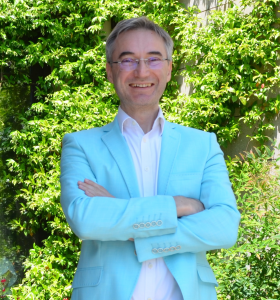
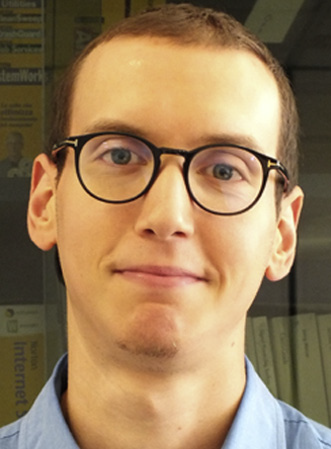
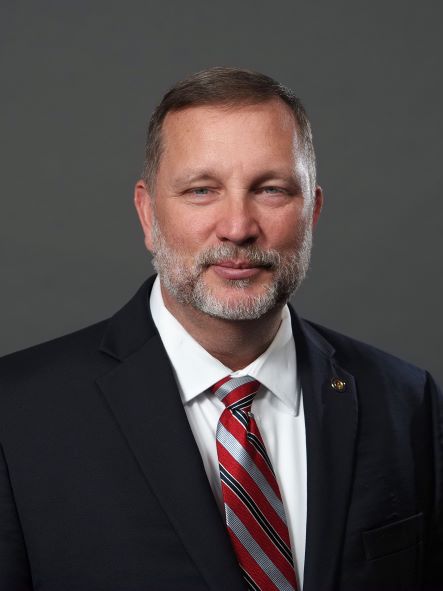
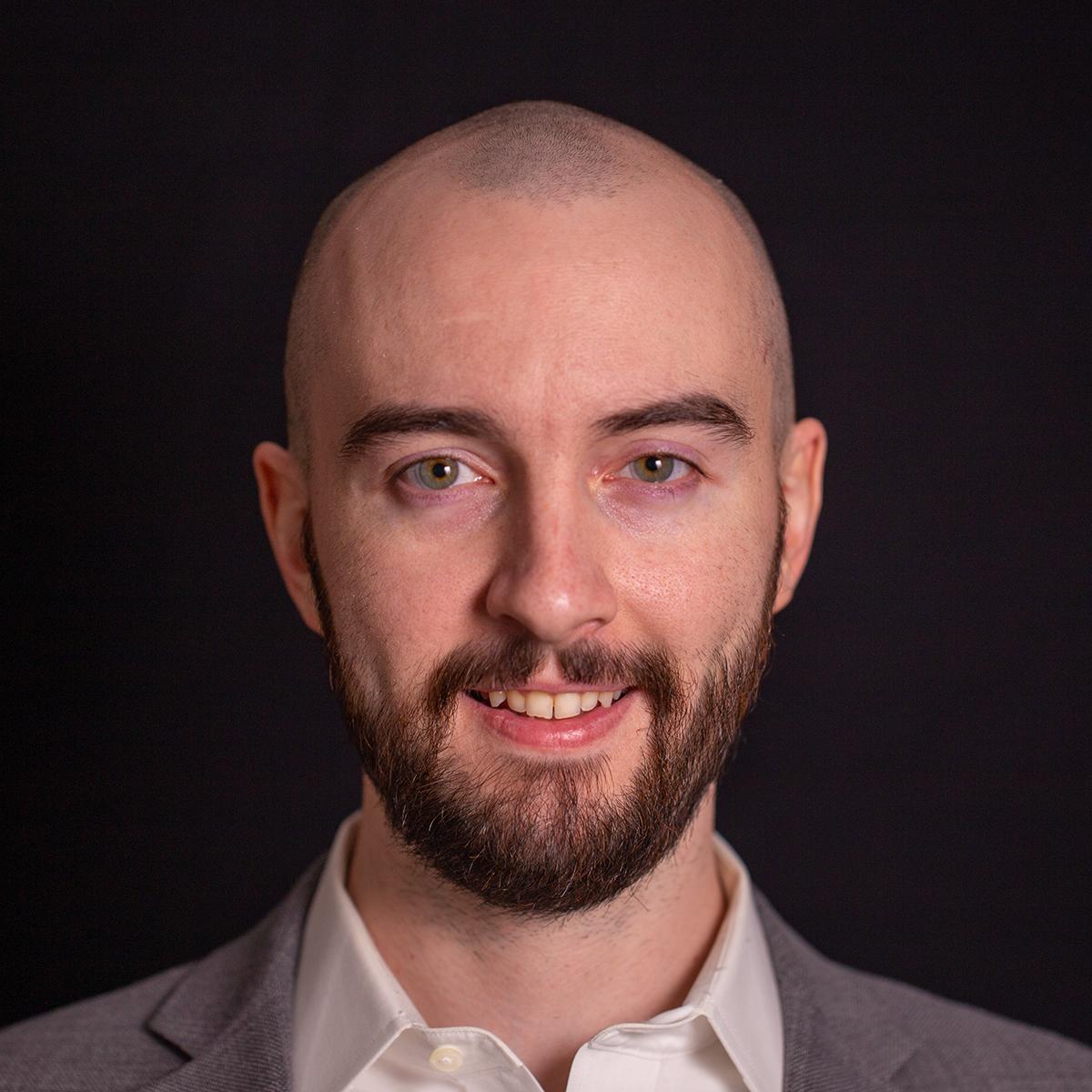
Prof. Metin Sezgin is a Professor in the Department of Computer Engineering at Koç University, College of Engineering. He specializes in Artificial Intelligence, Computer Vision, and Human-Computer Interaction, with notable contributions to sketch recognition, multimodal interaction, and educational technologies. His recent work includes advancing AI-driven systems for comic analysis, human-robot engagement, and child-centered machine learning pipelines. Prof. Sezgin has been appointed as Türkiye's representative in the Global Partnership for AI (GPAI), emphasizing his leadership in AI policy and research. He leads projects like the eHRI database for human-robot interaction analysis and develops tools for classroom engagement monitoring. His research integrates computer vision with real-world applications, including tangible programming interfaces for children and affective computing systems. Grants: TÜBİTAK 1001 Grant (2023) Labs: Koç University Parallel and Multicore Computing Lab Key Areas: Sketch Recognition, Multimodal Datasets, Human-Robot Interaction, Educational Technology His publications span domains from AI ethics to technical advancements in vision systems, with a focus on bridging theoretical research and practical societal impact.
Mohammad Ali Raayatpanah is an Associate Professor in the Department of Mathematical and Computer Sciences at Kharazmi University, Iran. He served as a Visiting Scientist at the Montpellier Advanced Knowledge Institute on Transitions, hosted by the Laboratory of Computer Science, Robotics and Microelectronics of Montpellier (LIRMM) from September 2024 to July 2025. Education: B.Sc. in Applied Mathematics from Kashan University, Iran (2004) M.Sc. in Applied Mathematics from Tehran University, Iran (2006) Ph.D. in Applied Mathematics from Tehran University, Iran (2013) Research Focus: Dr. Raayatpanah specializes in operations research and distributed computing, with expertise spanning linear/integer programming, network flows theory, communication networks, and network coding. His work extends to sustainable food supply chains, integrating food safety, environmental concerns, and uncertainty analysis through mathematical programming. His current research project addresses 'Mathematical Programming and Robust Optimization Techniques for Resilient and Sustainable Green Food Supply Chains'. Publication Trends: Analysis of his 2018-2025 publications reveals consistent emphasis on robust optimization for network design, particularly in wireless networks (Wireless Body Area Networks, vehicular networks) and healthcare systems. His work systematically addresses energy efficiency, resilience under attacks/uncertainty, and mathematical programming applications across supply chains and telecommunications, demonstrating methodological rigor in handling parameter uncertainty. Research Environment: During his fellowship, he collaborated at LIRMM, leveraging their infrastructure for network optimization research. His work bridges theoretical operations research with practical applications in critical infrastructure and sustainability challenges.
Professor Nebiye Musaoğlu is a distinguished academic at Istanbul Technical University, where she serves in the Department of Geomatics Engineering within the Faculty of Civil Engineering. With a career spanning over three decades at the university, she has established herself as a leading expert in geospatial technologies and their applications in environmental monitoring and urban planning. Her educational background includes a Doctorate in Geodesy and Photogrammetry Engineering from Istanbul Technical University (1995), a Master's degree with thesis in the same field (1991-1993), and a Licence degree from the Department of Geodesy and Photogrammetry Engineering (1985-1989). Musaoğlu's research interests focus on GIS and Information Technologies in Planning , Remote Sensing , and Photogrammetry , with particular emphasis on satellite image analysis, land use and land cover studies, and environmental monitoring applications. Her work bridges theoretical geospatial science with practical applications for urban and environmental management. An analysis of her recent publications reveals a strong trend toward integrating advanced remote sensing technologies with environmental monitoring, particularly in water resource management, pollution detection, and disaster response applications. Her research increasingly incorporates machine learning techniques and multi-source satellite data to address complex environmental challenges. Among her professional recognitions are the Best student work TUFUAB 9th SYMPOSIUM award and the Nebiye Musaoğlu Prize Science - Art Awards . She has supervised numerous theses, with 33 currently in progress according to her profile. Musaoğlu has secured significant research funding through multiple projects, including "Natural Disaster Damage Detection System Using Satellite Images and SAR Data," "Satellite Data Image Monitoring and Analysis System Development," and "Historical Geography of Central Asia" mapping project. Her work demonstrates strong leadership in developing practical geospatial solutions for real-world problems.
Alessandro Mengarelli is a Research Fellow at the Department of Information Engineering (DII) of Università Politecnica delle Marche. He holds a Ph.D. in Information Engineering (2017) from the same institution, focusing on balance and motor control in dynamic tasks under Prof. Sandro Fioretti's supervision. His research integrates biomechanics, biosignal processing, and wearable technologies, with a focus on neuromuscular control strategies and assistive systems. Key research areas include motion analysis, muscle co-contraction patterns, gait biomechanics, and the application of machine learning to biomedical data. He is actively involved in IEEE societies (EMBS, CTSoc, RAS) and the Interuniversity Centre of Bioengineering of the Human Neuromusculoskeletal System (IUC BOHNES). His work spans from wearable sensor development to clinical applications in diabetic neuropathy and neuro-rehabilitation. Mengarelli's recent publications emphasize innovations in gait phase recognition, EMG-based intent detection for prosthetics, and IoT-driven health monitoring. His articles highlight advancements in sensor fusion, deep learning models for biomechanical analysis, and minimal setup solutions for practical clinical use. He has contributed as a reviewer and Guest Editor for peer-reviewed journals, reflecting his engagement in advancing the field. His research bridges theoretical models (e.g., intermittent control theory) with practical applications, aiming to improve human-machine interfaces and assistive technologies.
Selin Hanife Eryürük is a Professor at the Department of Textile Engineering, Istanbul Technical University. Her research focuses on textile engineering, thermal comfort properties of fabrics, and innovative apparel manufacturing techniques. She has led projects on thermal protective clothing, surgical gown design, and lean production optimization in the clothing industry. University: Istanbul Technical University Department: Textile Engineering Roles: Academic Researcher, Project Principal Investigator Research interests include: thermal management of protective clothing, denim fabric performance, antimicrobial treatments, and digitalization of sewing lines. She has authored over 40 publications, including works on firefighter clothing thermal properties and moisture management in cotton denim. Recent projects involve: Lean Digital Model Design for Ready-Made Clothing Enterprises (BAP-funded) Multi-criteria analysis for Turkish apparel industry capacity (BAP-funded) Ultrasonic welding in surgical gown production (BAP-funded) Her work bridges material science with industrial applications, emphasizing sustainability and safety in textile production.
Dr. J. Todd McDonald is a Professor of Computer Science at the University of South Alabama's School of Computing. He serves as Director of the Center for Forensics, Information Technology, and Security (CFITS) and has held academic roles including Associate Professor (2011-2014) and Assistant Professor at the Air Force Institute of Technology (2006-2009). His education includes a Ph.D. in Computer Science from Florida State University (2006), MS in Computer Engineering from AFIT (2000), MBA from University of Phoenix (1996), and BS from the U.S. Air Force Academy (1990). Research Interests: Focus on software/hardware protection (obfuscation, watermarking), malware analysis, secure embedded systems, and cybersecurity. Notable projects include Phase-Space Analysis for seizure prediction, CAN network security, and development of the Program Encryption Toolkit (PET) for circuit protection research. Publications: Over 80 peer-reviewed articles in journals/conferences (e.g., IEEE, ACM) covering topics like side-channel analysis, malware detection, and cybersecurity frameworks. Recent work includes 2025 research on embedded system anomaly detection and 2021 studies in Android malware classification. Awarded Best Poster (IEEE HOST 2016) and Best Paper (CISR 2014) Managed NSF Scholarship for Service program ($6M+ funding) Advised 20+ graduate students in cybersecurity and software protection Led USA's DayZero Cyber Defense Competition teams (5th NCCDC 2017) Labs/Teams: SPERG (System Protection & Exploitation Research Group), CFITS directorship, and leadership in SSPREW workshop series. Active in developing cybersecurity education curricula and industry partnerships.
Snorre Aunet is a Professor II in the Department of Informatics at the University of Oslo, affiliated with the Faculty of Mathematics and Natural Sciences. He is a key member of the Nanoelectronics Systems Research Group and contributes to the 4DSpace project. His academic background includes a Dr. ing. from NTNU (2002) and a cand. scient. from the University of Oslo (1993). His research focuses on ultra-low-voltage and low-power mixed-signal circuits , particularly in subthreshold operation, with applications in IoT, space systems, and energy harvesting. He specializes in radiation-hardened (radhard) and defect-tolerant architectures, leveraging advanced semiconductor technologies like 22nm and 28nm FDSOI. His work integrates circuit design, microarchitecture, and reliability under extreme conditions such as radiation exposure and process variation. The recent trend in his publications shows a strong emphasis on energy-efficient VLSI design , including SRAM cells, adders, level shifters, and flip-flops operating in subthreshold regimes. He has also expanded into MEMS-based energy harvesting and hardware security, demonstrating a broad and evolving research portfolio. His collaborations span institutions and involve both theoretical modeling and practical implementation. Scientific Awards: No specific awards mentioned in the provided text. Advising and Grants: Snorre Aunet has supervised multiple students, including Somayeh Hossein Zadeh, Even Låte, and Ali Asghar Vatanjou, whose names appear as co-authors on several publications. He is involved in the 4DSpace research project, indicating active grant funding and leadership in space-related electronics research. His advising style appears collaborative, with students contributing to high-impact journals and conferences. Labs and Teams: He is a core member of the Nanoelectronics (NANO) research group at the Department of Informatics, which focuses on next-generation electronic systems. This group is engaged in cutting-edge research in nanoscale circuits, low-power design, and robust computing architectures.
Alin-Sasa Tisan is a Senior Lecturer in the Department of Electronic Engineering at Royal Holloway, University of London. His research focuses on neuromorphic systems, pervasive healthcare, and sensor-based applications. He holds a PhD in Electronic Engineering from Technical University of Cluj Napoca (2008) and has certifications in teaching and learning from Anglia Ruskin University (2012). Key research areas include neuromorphic designs for smell recognition, body hydration monitoring, low-cost air quality systems, and FPGA-accelerated signal processing. His work contributes to UN Sustainable Development Goals related to affordable and clean energy, industry innovation, and climate action. Recent projects include developing air quality monitoring systems for Tanzania, creative sensing methods for indoor environments, and cross-disciplinary approaches to industrial electronics challenges. He serves as an External Examiner at the University of Huddersfield and has supervised multiple collaborative projects involving international teams.
Matthew T. Flavin is an Assistant Professor in the School of Electrical and Computer Engineering at Georgia Institute of Technology, leading the Flavin Neuromachines Lab. He holds a B.S. from UIUC (2015), M.S. and Ph.D. from MIT (2017, 2021), and conducted postdoctoral research at Northwestern University. His research focuses on neural mechatronics, wearable bioelectronics, and extended reality for healthcare applications, emphasizing haptic interfaces, bio-integrated devices, and patient care solutions. Education: B.S. Electrical Engineering, University of Illinois at Urbana-Champaign, 2015 M.S. Electrical Engineering, MIT, 2017 Ph.D. Electrical Engineering, MIT, 2021 Research interests include haptics, neuroengineering, flexible electronics, and therapeutic biomedical applications. Key achievements include developing wearable sensors for molecular flux monitoring and haptic devices for sensory substitution. He has received NIH and Draper Laboratory awards. His lab collaborates on interdisciplinary projects at the intersection of engineering and biosciences. Grants and advising: Actively recruiting PhD students and postdocs. Lab locations in Van Leer Building and Bunger-Henry.
Valters Āboliņš is a Leading Visiting Researcher at the Institute of Occupational Safety and Environmental Health, focusing on biomechanics, sensor networks, and environmental health research. His work intersects with artificial intelligence, sports science, and data science. Active in national research programs addressing societal resilience, including pandemic response studies. Specializes in gait analysis, balance performance, and force plate methodologies. Recent publications explore performance-stabilizing synergies, wireless sensor networks, and IoT testbed facilities. His research trends emphasize interdisciplinary applications of biomechanics, machine learning, and wearable sensor technologies. Peer-review contributions to journals like Sports Biomechanics and Human Movement Science highlight his engagement in motor control and sensor network domains.
Adriana de Almeida Portela Viana de Sá is a transdisciplinary artist, researcher, and academic affiliated with Lusófona University in Lisbon, where she is an integrated member of CICANT – Centre for Research in Applied Communication, Culture, and New Technologies. She holds a PhD in Arts and Computing from Goldsmiths, University of London (2016) and a degree in Fine Arts from the University of Lisbon (1996). She has served as an invited professor at Coimbra University, ESAD, and Noroff University College, and has been a board member at Lusófona since 2021/2022. PhD in Arts and Computing, Goldsmiths, University of London (2016) Bachelor in Fine Arts, University of Lisbon (1996) Her research lies at the intersection of artistic practice, interaction design, audio-visual theory, and perception science. She explores how sound, light, movement, and digital environments interact to create immersive and expressive experiences. Her work integrates neuroscience and experimental psychology to understand sensory and cognitive engagement in performance contexts. The body of her recent publications reveals a consistent focus on live interfaces, parametric modeling, and the design of expressive instruments. Themes include spatial presence, audio-visual synchronization, and the analysis of sound art, reflecting a deep engagement with both theoretical and practice-based research in digital arts and human-computer interaction. She is the Editor-in-Chief of the Live Interfaces Journal and has chaired the International Conference on Live Interfaces in 2014 and 2022. Her editorial and leadership roles demonstrate significant contributions to the academic community in the field of live and interactive art. Adriana Sá has supervised research and mentored emerging artists through her academic and artistic engagements, though specific student names are not listed. She has not received formal grants mentioned in the text, but her sustained research output and international collaborations indicate active project development. Her work is supported through institutional affiliation with CICANT and participation in international conferences and publications. She is a core member of CICANT and contributes to shaping research direction at Lusófona University. Her artistic and research practice forms a collaborative network across institutions in Portugal, the UK, and beyond, particularly through the Live Interfaces community and her involvement in xCoAx and NIME conferences.
Dr. Ivan Maksymov is an Associate Professor at the Artificial Intelligence and Cyber Futures Institute of Charles Sturt University. His interdisciplinary research bridges quantum mechanics, machine learning, and cognitive neuroscience, with notable contributions to quantum-cognitive neural networks and reservoir computing systems. PhD in Physics and Mathematics, NURE University (2015) PhD in Electronic Engineering, Universitat Rovira i Virgili (2006) Maksymov specializes in applying quantum principles to artificial intelligence, particularly through reservoir computing and neural network optimization. His work also addresses hydrogen gas sensing using nanomagnetic materials and explores nonlinear acoustic/optical phenomena. Recent publications demonstrate trends in integrating quantum tunneling with cognitive models for human-AI interaction, developing multimodal classification systems, and creating explainable AI frameworks for medical and surveillance applications. Recipient of ARC Future Fellowship (2018) IgNobel Prize (2020) for AI optical illusion research AgriTwins Grant (2024) for cyber-secure agricultural twin technologies University Postdoctoral Fellowship (2012) Norden Body Works IoT telemetry grant (2022) As a registered supervisor, Maksymov mentors researchers in AI and quantum technologies. He contributes to peer review panels, coordinates the ARC Accelerator program, and actively participates in professional societies like the American Physical Society.
Minchul Kim is a researcher in computer science and quantum engineering, focusing on face recognition, synthetic data, and secure computation. His work spans journals like Information Fusion and IEEE Transactions on Circuits and Systems II: Express Briefs , as well as conferences such as CVPR, OFC, and WACV. Key contributions include physics-driven biometric systems, spiking neural networks for quantum communication, and privacy-preserving computation frameworks. His research leverages synthetic data and diffusion models for 3D human recognition, with a focus on pose and clothing invariance. Collaborations include Xiaoming Liu (Michigan State University), Anil K. Jain (Michigan State), Jungwoo Lee (Yonsei University), and others.
Jean Herveg is a Researcher at the LIS Department (CRIDS) within the Faculty of Law at the University of Namur . With a Doctorate in Law , his work focuses on legal frameworks for technology , particularly in eHealth , AI regulation , and data protection . He has contributed to 119 research outputs and collaborated on 12 projects since 1994. Education : Doctorate in Law, University of Namur Research interests span data privacy , medical device regulation , and ethical AI , with a strong emphasis on European Commission policy and UN Sustainable Development Goals (digital ethics, health equity). His INSPEX project (2017-2019) integrated smart spatial exploration systems with legal safeguards. Recent publications (2022) analyze AI regulation , collaborative energy management , and personal data protection in European law, reflecting his expertise in digital ethics and health informatics . He received the Les Etoiles de l'Europe Prize (2020) for his contributions to the H2020 INSPEX project and was recognized with the Study of the Month (2007) by the European Commission for his eHealth research. Scientific awards include "Les Etoiles de l'Europe" (2020) - French Ministry of Higher Education, Research and Innovation Study of the Month (2007) - European Commission (ICT for Health) Collaborations with institutions like the Académie Royale des Sciences de Belgique and projects such as TRUEDEV (trust in end-user devices) demonstrate his cross-disciplinary impact. His work aligns with SDGs related to responsible innovation and health data equity .
Alexis Boegli is a Professor at Haute Ecole Arc Ingénieur - HES-SO since 2018. He holds a PhD in Science from the University of Neuchâtel and has extensive expertise in analog, digital, and RF electronics with a focus on energy-constrained systems. His work emphasizes applications in wearable devices, biomedical engineering, and IoT localization systems. Affiliations: HE-Arc Engineering School (HES-SO), EPFL collaborations Education: PhD in Science (Neuchâtel), Microengineering (EPFL) Research interests include RF localization (BLE-based systems), energy-efficient power electronics, and dielectric elastomer actuators. His work bridges theory and applied research, with notable contributions to ultra-high-voltage converters and BLE direction finding algorithms. Recent articles focus on real-time indoor localization, energy-recovering actuators, and hybrid camera-RF access control systems. Research trends emphasize practical implementations of low-power, scalable solutions for IoT and biomedical applications. Patents include a BLE-based access control system (2022) and wireless transmitter compliance methods (2013). He has advised multiple doctoral candidates and collaborates with CSEM and industry partners on technology transfer initiatives.