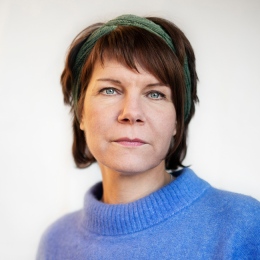
Malena Janson is a Lecturer at the Department of Child and Youth Studies , Stockholm University , specializing in children's culture and moving image media. Her work spans teaching, research, and public engagement across multiple disciplines. Swedish Film Institute network member for film educational research Steering group member of BIN Norden (Nordic children's culture network) Co-editor on multiple children's culture anthologies Research Focus : Historical and contemporary children's film/TV aesthetics Child figure functions in moving images Child-animal relationships in media Narrative liminality and phantasmagoria Norm criticism in visual culture Adaptation and transmediality Recent Publications address Swedish children's cinema history, Bergman film analysis, and media's role in shaping democratic citizenship. Articles since 2022 explore posthumanist narratives and eco-activism in children's television. Teaching Materials developed for Swedish Film Institute include guides for films like Heartstone , Your Name , and Matilda , emphasizing aesthetic learning and critical thinking.
Prof. Dr. Birgit Krawietz is a distinguished Professor at the Institute for Islamic Studies within the Department of History and Cultural Studies at the Free University of Berlin. Her academic work spans multiple disciplines within Islamic Studies, with particular focus on Islamic law, cultural history, and the intersection of religion with contemporary social practices. She actively supervises doctoral students and serves on important academic committees including as Chair of the Doctoral Committee of the Department of History and Cultural Studies and as a member of the Advisory Board of the Orient-Institut-Beirut (OIB). Her research interests encompass a diverse range of topics including Islamic normativity, Salafism, body and sport studies, and regional studies of the Arabian Gulf and Türkiye. Krawietz has established herself as a leading scholar examining how Islamic legal traditions interact with modern practices, particularly in areas like sports, medical ethics, and consumer culture. Her work often explores the tension between traditional Islamic jurisprudence and contemporary social transformations. Analysis of her recent publications reveals a consistent scholarly trajectory examining Islamic legal traditions through cultural and anthropological lenses. Her work demonstrates particular strength in analyzing bodily practices within Islamic contexts, from oil wrestling traditions in Turkey to medical ethics and sports regulations. She has made significant contributions to understanding how Islamic legal traditions adapt to modern contexts, particularly in the Gulf region where traditional practices intersect with rapid urbanization and globalization. Prof. Krawietz has supervised numerous doctoral projects covering diverse topics including Islamic jurisprudence regarding non-Muslims, theology in the Shafi'i school, and the recited Qur'an. Her academic leadership extends to organizing conferences and workshops, including upcoming events like the "South-South Comparativism" conference scheduled for June 2025. She has also served as co-editor for multiple significant publications that have shaped contemporary discourse in Islamic Studies. Her teaching portfolio demonstrates engagement with both foundational Islamic legal concepts and contemporary applications, including courses on human body modifications in Islamic jurisprudence, food regulations, and space construction in Islamic contexts. Her academic influence extends beyond Berlin through her membership in the Deutsche Arbeitsgemeinschaft Vorderer Orient (DAVO) and her participation in international scholarly networks.
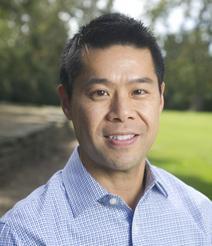
Dr. Kevin Gee is a Professor in the School of Education at the University of California, Davis, specializing in the School Organization & Educational Policy emphasis area. He serves as Director of the School Policy, Research, and Action (SPARC) Center and is a Faculty Research Affiliate with the Center for Poverty & Inequality Research. As a 2020-25 Chancellor's Fellow, Dr. Gee leads research initiatives focused on vulnerable youth populations and educational policy impacts. His work bridges education, public health, and social welfare systems to address structural inequities affecting children's development and academic success. Dr. Gee's educational background includes: Ed.D., Harvard Graduate School of Education, Quantitative Policy Analysis in Education (2010) Ed.M., Harvard Graduate School of Education, International Education Policy (2006) M.P.I.A., University of California, San Diego, Pacific & International Affairs (cum laude, 2004) B.A., University of California, Berkeley, City & Regional Planning (magna cum laude, 1994) Dr. Gee's research centers on the critical intersection between health and education systems, examining how schooling can influence children's well-being. He investigates policies addressing adverse childhood experiences including bullying, food insecurity, abuse, and neglect. His work employs rigorous quantitative methods including Hierarchical Linear Modeling, longitudinal analysis, and experimental/quasi-experimental designs. Dr. Gee focuses particularly on vulnerable populations such as children with disabilities, Asian American and Pacific Islander youth, and those involved in the child welfare system, seeking data-driven solutions to educational inequities. Analysis of Dr. Gee's recent publications reveals a strong focus on educational equity, with particular attention to vulnerable student populations. His work spans school absenteeism patterns, bullying and hate speech against AAPI youth, food insecurity impacts, and health-related educational outcomes. The research demonstrates increasing interdisciplinary collaboration, particularly with public health researchers, and shows a growing emphasis on pandemic-related educational disruptions and their disproportionate impacts on marginalized communities. Dr. Gee's notable scientific awards include: National Academy of Education (NAEd)/Spencer Postdoctoral Fellowship (2015) Foundation for Child Development (FCD) Young Scholars Program Award (2014-2017) UC Davis Hellman Fellowship (2015-2016) Chancellor's Fellowship (2020-2021) Outstanding Faculty Award, Asian Pacific American UC-Systemwide Alliance (2023) Distinguished Visiting Scholar, Advanced Research Collaborative, CUNY (2022) Dr. Gee serves as Principal Investigator for multiple significant grants, including the Heising-Simons Foundation project on districtwide family engagement strategies and chronic absenteeism (2024-2026), and the UC Davis SEED funding for research on how Asian American and Pacific Islander youth confront bullying. He also serves as Co-Investigator on the AAPI Data Grant examining school climate influences on bullying experiences. His grant portfolio demonstrates strong interdisciplinary collaboration, particularly between education and public health researchers, with a consistent focus on generating actionable insights for educational policymakers and practitioners. As Director of the School Policy, Research, and Action (SPARC) Center at UC Davis, Dr. Gee leads a research team focused on generating data-informed insights about underserved and overlooked youth in educational policy. The center's work specifically supports Asian American and Pacific Islander youth who have experienced bullying, children with chronic absenteeism, and child welfare-involved youth who have experienced maltreatment. The SPARC Center collaborates with various California school districts and state agencies to translate research into practical policy recommendations and implementation strategies.
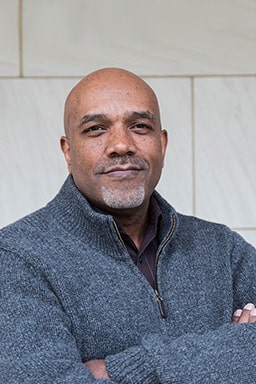
Sheldon George is Professor of Africana Studies at the University of Massachusetts Boston, where he joined the faculty in 2024. He holds a Ph.D. in English from Boston College and previously served in academic leadership roles including Director of Graduate English, Department Chair of Literature & Writing, and Director of General Education at prior institutions. His research focuses on African American literature, Lacanian psychoanalytic theory, race studies, diasporic Black women writers, and narrative theory. George examines how racial identity intersects with trauma, subjectivity, and social structures through literary and theoretical frameworks. His work bridges psychoanalytic theory with critical race studies, exploring themes of racial violence, identity formation, and cultural representation. George has published extensively on racial trauma and psychoanalytic approaches to race, with recent works exploring Christian nationalism, whiteness studies, and narrative innovations in global Black women's writing. His scholarship demonstrates consistent engagement with Toni Morrison's oeuvre, Lacanian theory applications to race, and contemporary racial discourse. He serves as Associate Editor of Psychoanalysis, Culture and Society and recently chaired the MLA Executive Committee for Psychology, Psychoanalysis and Literature. George has received teaching awards at both graduate and undergraduate levels for his academic instruction.
Assoc Prof Jason Skues is an Associate Professor in the School of Health Sciences at Swinburne University of Technology, where he contributes significantly to research, teaching, and PhD supervision. His work focuses on mental health, identity development, cultural intelligence, and psychological wellbeing across diverse populations including university students, prisoners, vocational trainees, and emerging adults. University: Swinburne University of Technology School: School of Health Sciences Academic Rank: Associate Professor Email: jskues@swin.edu.au His research interests span applied and developmental psychology, social and personality psychology, and clinical and health psychology. He investigates mental health literacy, cyberbullying, identity processes, and the psychological impact of educational and vocational experiences. His work often employs qualitative and mixed methods to explore complex human behaviors and interventions. The most recent publications show a strong trend toward mental health in educational and vocational contexts, prison mental health, cultural intelligence development through international exchange, and cyberbullying in emerging adults. His research consistently addresses real-world applications, aiming to improve training, policy, and psychological support systems. Office of Learning and Teaching (OLT) Citation (2012) Jason Skues supervises a wide range of PhD projects, particularly in identity development, mental health interventions, cyberbullying, and educational psychology. He has secured multiple competitive research grants from bodies including the Department of Justice, Department of Defence, and St. John's University, supporting studies on sleep problems, smoke-free prisons, and human-machine interface technologies. His collaborative network includes researchers across psychology, nursing, education, and forensic science. He leads and contributes to research teams focused on mental health in higher education, justice care, and vocational training. His work with simulated persons in nursing education and prison-based mental health programs highlights his commitment to innovative, evidence-based interventions.
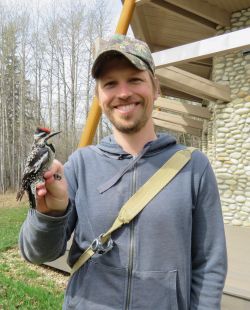
Brian Weeks is an Associate Professor in the School for Environment and Sustainability at the University of Michigan, where he joined as an Assistant Professor in 2019. His research focuses on understanding how species and communities respond to human-induced environmental changes, with particular emphasis on avian systems. Weeks leads an active research group that integrates museum specimen-based work, genomics, and field studies to investigate biodiversity responses to global change. Weeks' research interests span evolutionary ecology, climate change biology, and biodiversity conservation. His work primarily examines how bird species and communities have responded to environmental change through morphological adaptations. He combines museum-, field-, and lab-based approaches to study evolutionary processes across multiple scales, from macroevolutionary patterns in the Solomon Islands to contemporary changes in North American migratory birds. His lab has developed innovative methods like Skelevision for high-throughput measurement of functional traits from museum skeletal specimens. His publication record shows a strong focus on climate-driven morphological changes in birds, with recent work demonstrating how warming temperatures drive size reductions while simultaneously increasing wing length. His research has revealed that smaller-bodied species change at faster rates, and that migration timing shifts are decoupled from morphological changes. Weeks' lab also investigates biodiversity-ecosystem functioning relationships and extinction risk prediction. Packard Fellowship in Science and Engineering (2022) Ecological Society of America's George Mercer Award (2022) Katma Award, American Ornithological Society ISI Highly Cited paper (2021) Weeks advises multiple PhD and Master's students, and his lab collaborates extensively with researchers across institutions. His work has received significant media attention, with coverage in Science, The Wall Street Journal, The Washington Post, BBC News, and numerous international outlets. His research on birds shrinking due to climate change achieved an Altmetric score higher than 99.98% of papers tracked, reflecting its substantial scientific and public impact.
Dr Pengpeng Hu is a Senior Lecturer in Fashion Technology at the Department of Materials, The University of Manchester, UK. His research focuses on geometric deep learning, 3D human body reconstruction, point cloud processing, and smart textiles, bridging fashion technology with biomedical and engineering applications. Associate Editor: IEEE Transactions on Neural Networks and Learning Systems, IEEE Transactions on Automation Science and Engineering Academic Editor: PLOS ONE Editorial Board Member: Scientific Reports Programme Chair: 25th UK Workshop on Computational Intelligence Area Chair: 35th British Machine Vision Conference His work advances vision-based measurement systems, wearable technology, and 3D scanning for clothing and healthcare. Recent publications include innovations in MXene-based electronic textiles, 4D hand measurement extraction, and anthropometric analysis from depth images. Recipient of the Emerald Literati Award for an outstanding paper in 2019 Dr Hu accepts self-funded PhD students in areas like 3D human reconstruction, point cloud processing, and smart textiles. His editorial roles and conference leadership highlight his influence in computational intelligence and machine vision communities.
Dr. Matt Castle is a Researcher affiliated with the University of Cambridge , specializing in interdisciplinary approaches to food security and plant sciences. He serves as the Head of Bioinformatics Training and Head of PSLS Biostatistics Initiative within the Department of Plant Sciences . His work spans multiple domains, including plant disease modelling, infectious disease dynamics, and global governance of food systems. Research Themes: Modelling for Food Security, Plant Disease Modelling, Food Landscapes, Political Economy of Hunger His recent publications highlight expertise in ecological and agricultural modelling, with a focus on: Aflatoxin contamination in maize Urban forest pest dynamics Climate-driven range expansions Size-structured ecosystem resilience While his work intersects with food supply chains, land resources, and health, no specific scientific awards or student advisement details were listed in available public records.
Davide Cassi serves as Associate Professor of Physics of Matter at the University of Parma's Department of Mathematical, Physical and Computer Sciences since 2001, following his appointment as Researcher in Theoretical Physics (1995-2001). With over 30 years of academic service, he teaches Condensed Matter Physics, Soft Matter Physics, and Physics Applied to Gastronomy across undergraduate and graduate programs in Physics and Gastronomic Science. His educational background includes: Ph.D. in Physics, University of Parma (1988-1992) Master’s degree in Materials Science and Technology, University of Parma (1986-1988) Degree in Physics, University of Parma (1982-1986) Cassi's research integrates statistical mechanics with real-world applications through two primary lenses: complex network theory for ecological and social systems, and soft matter physics applied to culinary processes. His work on biodiversity loss prediction in agricultural networks and food preservation technologies demonstrates exceptional interdisciplinary reach. Recent publications reveal a strategic pivot toward AI-driven biodiversity conservation and network robustness modeling. Analysis of his 15 most recent publications (2023-2025) shows dominant themes in network vulnerability analysis (68% of works) and food-physics applications (27%), with emerging focus on machine learning integration for ecological modeling. His research bridges theoretical physics with practical solutions in food safety and ecosystem management. Key recognitions include: Grand Prix de la Science de l'Alimentation from Académie Internationale de la Gastronomie (2012-2013) Dual National Scientific Qualifications for Full Professorship (2022) in Theoretical Physics of Fundamental Interactions and Matter Cassi's academic contributions extend beyond publications to two international patents in food preservation technology and editorial leadership since 2007 for World Scientific's Series on Advances in Statistical Mechanics . His research program demonstrates consistent translation of theoretical physics into practical applications across gastronomy and ecology, with growing emphasis on AI-enhanced network analysis for sustainability challenges.
Elisabet Apelmo serves as Senior Lecturer in the Department of Social Work at Malmö University, Sweden. A visual artist with a PhD in Sociology, she bridges creative practice and academic inquiry to explore the complex intersections of bodily experience, sport, disability, and gender within contemporary society. Her research program centers on sociological analyses of bodily difference, particularly examining how physical education environments construct inclusion and exclusion through gendered and ableist frameworks. Apelmo employs phenomenological approaches and visual methodology to investigate how disabled bodies navigate sporting spaces, challenging normative assumptions about athletic participation and bodily capability. Her work consistently reveals how sporting cultures simultaneously enable and constrain identities, particularly for women and people with disabilities. Analysis of Apelmo's publication history shows sustained engagement with critical disability theory, gender studies, and sport sociology spanning nearly two decades. Her scholarship demonstrates methodological innovation through visual approaches and phenomenological frameworks, with recurring themes including the social construction of disability in sport contexts, gendered bodily experiences in physical education, and the material-semiotic relationships between bodies and technologies like wheelchairs. Among her current research initiatives are investigations into participation and exclusion dynamics in mainstream physical education from disability and gender perspectives, and ethnographic studies examining how dancers strategically use their bodies and gazes to disrupt stereotypical perceptions of physical impairment. These projects reflect her commitment to generating knowledge that directly challenges ableist assumptions within sporting cultures and educational settings.
Johan Sidén is a Lecturer and Associate Professor at Mid Sweden University , employed in the Department of Computer and Electrical Engineering (DET) . His work focuses on RFID technology , antenna design , and printed/flexible electronics , with a particular emphasis on industrial IoT and welfare technology applications. Research Keywords : Radio Frequency Identification, Antenna Design, Flexible Electronics, Wireless Sensor Networks, Microwave Engineering, Electronic Design Key Projects : DRIVEN (data-driven industrial transformation), SmartArea (functional surfaces), Pressure (ulcer monitoring), MakeSense! (welfare technology) Publications : 15+ recent works on wearable antennas, smart packaging, UWB antenna design, and RFID sensor integration Collaborations include partnerships with industrial and academic institutions, focusing on sustainable electronics, sensor systems, and smart infrastructure. His technical expertise spans antenna optimization , printed circuits , and edge computing for harsh environments.
You Zhou is an Affiliate Assistant Professor in the Department of Materials Science and Engineering at the University of Maryland, leading an experimental quantum materials research group. His work focuses on fundamental properties of quantum materials for next-generation information and energy technologies. Dr. Zhou's research centers on quantum phenomena in 2D semiconductors and correlated materials. His group investigates exciton physics in atomically thin heterostructures, metal-insulator transitions in correlated oxides, and emergent quantum phases like Wigner crystals. Key research areas include: Quantum-confined excitons in moiré superlattices Optical properties of 2D materials and van der Waals heterostructures Neuromorphic computing using correlated electron systems Thermal radiation engineering in quantum materials His recent publications (2023-2025) reveal strong emphasis on quantum phase transitions in 2D materials, particularly exciton physics in twisted bilayers and Wigner crystal formation. The work demonstrates sophisticated control of quantum states through electrostatic gating, optical excitation, and heterostructure engineering, with applications spanning quantum computing, optoelectronics, and energy technologies. Notable scientific awards include: 2DM Young Scientist Award (2024) DOE Early Career Award (2022) NSF CAREER award (2021) IUPAP Early Career Prize (2023) Ralph E. Powe Junior Faculty Award (2023) Dr. Zhou actively mentors graduate students including Liuxin Gu (Ann G. Wylie Dissertation Fellow). His research is supported by major grants from the Department of Energy and National Science Foundation. The group maintains strong collaborations with Harvard (Kim and Lukin groups), MIT, and national laboratories. Current openings exist for postdoctoral researchers to explore quantum materials synthesis, nano-fabrication, and optical characterization. The experimental group develops advanced techniques for probing quantum phenomena, including nanoscale thermal imaging, ultrafast optical spectroscopy, and cryogenic quantum transport measurements. Their facilities enable atomic-scale manipulation of 2D materials and correlated oxides for next-generation device applications.
Meghan Balk is a Postdoctoral Fellow with the Evolution and Paleobiology Group at the Natural History Museum, University of Oslo. Her work combines museum collections and trait databases to investigate how inter- and intra-specific traits change across time and space. She is passionate about digitizing museum data and enabling FAIR data principles for continued exploration of data-driven science across evolutionary biology and ecology. Balk received her Ph.D. from the University of New Mexico in 2017 with a concentration in Interdisciplinary Science through the Department of Biology. She earned her B.S. from the University of California, Davis in 2010 in the Department of Evolution, Ecology, & Biodiversity, with a minor in Paleobiology through the Department of Geology. Her academic journey reflects a strong foundation in both biological sciences and geological perspectives on evolutionary processes. Her research employs both micro- and macroscopic approaches to understand abiotic and biotic drivers of phenotypic evolution. She investigates within and among lineage phenotypic evolution using fossil and modern records of organisms like bryozoans. Her work on abiotic drivers examines body size changes in species like the bushy-tailed woodrat across geological time, while her research on biotic drivers explores predator-prey relationships in the fossil record, particularly focusing on species like Otodus megalodon. She utilizes machine learning and computational approaches to extract morphological trait data from specimen images. Balk's publication record demonstrates expertise across evolutionary biology, paleontology, ecology, and computational approaches. Her recent work focuses on developing FAIR and modular workflows for image-based knowledge discovery in the emerging field of imageomics. She has made significant contributions to understanding body size evolution across geological time, predator-prey relationships in the fossil record, and promoting open science principles for trait-based research. Her work bridges traditional paleontological methods with cutting-edge computational techniques. Balk is actively involved in several research projects including ROCKS PARADOX (Dissecting the paradox of stasis in evolutionary biology) and Machine-readable Nature (MaNa). She collaborates with researchers across institutions to create ontologies and workflows for trait data, such as the Functional Trait Resource for Environmental Studies (FuTRES) project and the Biology-Guided Neural Networks project. She teaches courses including Foundational Open Science Skills workshop, Git for Mere Mortals webinar, and R Basics Crash course, emphasizing the importance of reproducible research practices.
Robert Hamilton is a Professor in the Department of Communication Studies & Media Arts at McMaster University's Faculty of Humanities in Hamilton, Canada. With an extensive career as both an academic and practicing artist, he has established himself as a significant figure in contemporary media arts education and creation since joining McMaster University. Hamilton holds dual MFA degrees from the Art Institute of Chicago and the Jan van Eyck Academie in Maastricht, Netherlands, complemented by a Diploma from the Alberta College of Art + Design. His academic journey spans from 1981-1985 at the Alberta College, followed by advanced studies from 1991-1993 at the Jan van Eyck Academie. His research and creative practice centers on visual media with particular focus on video art, photography, and animation. Hamilton's work consistently explores themes of identity, community, and the evolving urban environment, often reflecting on societal events and contemporary issues. His artistic approach combines technical mastery with conceptual depth, resulting in works that challenge viewers' perceptions of everyday spaces and social structures. He has developed a distinctive methodology that blends documentary techniques with artistic interpretation, creating works that are simultaneously observational and transformative. Hamilton's recent body of work demonstrates a clear trajectory toward examining human relationships with urban spaces, particularly during times of societal transformation like the pandemic. His projects increasingly incorporate digital technologies and AI elements while maintaining a strong foundation in traditional media arts. The thematic continuity across his work reveals a persistent concern with how individuals navigate and make meaning within constructed environments. German Video Art Prize Silver Hugo Award at the Chicago Film Festival Work featured in National Gallery of Canada collection As an educator, Hamilton has mentored numerous students through senior thesis projects and specialized courses in media production. His teaching portfolio spans animation, video art, digital cinema, photographic techniques, and emerging media. While specific grant information isn't detailed in the available materials, his sustained creative output suggests successful acquisition of research funding to support his artistic practice. His work has been exhibited internationally at venues including Maison des Arts de Laval, Museum of Contemporary Art in Castello, Spain, and Transmediale in Berlin. Hamilton maintains an active studio practice that directly informs his teaching approach. His creative process involves both digital and traditional techniques, often experimenting with the intersection of physical and virtual spaces. He has developed specialized approaches to documenting urban environments that reveal hidden patterns and structures within everyday landscapes, creating what might be described as visual commentaries on contemporary life.
Prof. Dr. Peter Müller is a Professor at the Mathematical Institute of Ludwig Maximilian University of Munich (LMU), where he also serves as Dean of the Faculty of Mathematics, Informatics and Statistics. His research group focuses on Analysis, Mathematical Physics, and Numerics. Office: Room 439, Block B, Theresienstr. 39, 80333 Munich. Education: Habilitation in Mathematics, University of Göttingen (2006) Habilitation in Physics, University of Göttingen (2002) Ph.D. in Physics, University of Erlangen-Nürnberg (1996) Diploma in Physics, University of Erlangen-Nürnberg (1991) Research Interests: Müller's work spans mathematical physics, analysis, and probability theory, with emphasis on: Random Schrödinger operators and spectral theory Delocalization phenomena in disordered systems Quasiperiodic structures and ergodic properties Entanglement entropy in quantum systems His research bridges rigorous mathematical analysis with applications in quantum mechanics and statistical physics. Publication Trends: Recent articles (2013–2025) predominantly explore spectral theory in disordered quantum systems. Key themes include localization/delocalization transitions, asymptotic analysis of entanglement entropy, and spectral properties of random operators. Methodologically, his work combines functional analysis, stochastic processes, and operator theory to address fundamental questions in mathematical physics. Student Advising: Extensive mentorship of graduate students: 8 PhD students (e.g., Jakob Stern, Ruth Schulte) 17 Master's students (e.g., Leonard Wetzel, Julian Widl) Research Team: Leads the working group "Analysis, Mathematical Physics and Numerical Analysis" with postdoctoral researchers (e.g., Constanza Rojas-Molina) and PhD candidates. Regularly organizes international conferences on mathematical physics and disordered systems.