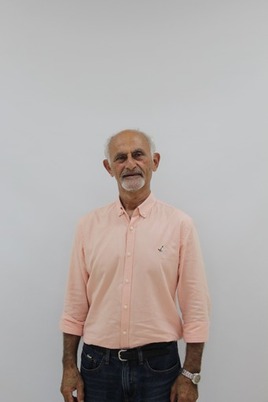
Wulf Gaertner is a Professor of Economic Theory at the School of Business Administration and Economics, University of Osnabrück. He leads the microeconomics subject group and is actively engaged in teaching and research in theoretical and experimental economics. University: University of Osnabrück School: School of Business Administration and Economics Department: Economic Theory Academic Rank: Professor His research interests lie at the intersection of economics, philosophy, and psychology, with a focus on social choice theory, distributive justice, behavioral and experimental economics, and decision-making under risk. He investigates how psychological insights inform economic behavior and whether normative principles like fairness and equity are upheld in real-world choices. The body of recent publications reveals a strong trend toward integrating empirical methods—particularly questionnaire-based experiments—with classical social choice and welfare economics. His work spans theoretical developments and cross-cultural empirical investigations, examining perceptions of equity, burden sharing, and moral uncertainty. Themes such as procedural justice, capability theory, and the application of Arrow’s impossibility theorem across disciplines recur throughout his scholarship. Notable academic contributions include delivering lectures at institutions like the London School of Economics and Humboldt Universität, authoring the widely used textbook A Primer in Social Choice Theory , and contributing authoritative entries on Amartya Sen and John Rawls. He has also honored leading scholars through laudations for honorary doctorates awarded to Amartya Sen and Reinhard Selten. While no formal list of students is provided, Gaertner has collaborated extensively with researchers such as Yongsheng Xu, F. Cowell, L. Schwettmann, and J. Jungeilges. His research has been supported through academic affiliations and publications, though specific grant details are not mentioned. He is affiliated with the Institute of Empirical Economic Research (IEW) and contributes to the LaER Economic Research Seminar. He has no listed email, awards, or part-time status, and there is no indication of retirement or emeritus status. All evidence points to an active, full-time faculty member at the peak of his academic career.