Dr. Philip Sullivan is Professor and Graduate Program Director in Kinesiology at Brock University. His research examines mental health in sports environments, including differences between student-athletes and non-athletes, mental health literacy of coaches and officials, and psychological aspects of coaching and team dynamics. Funded by SSHRC and World Anti-Doping Agency. Teaching includes Sport Psychology, Applied Sport Psychology, and statistical methods. Recent publications investigate sleep patterns affecting athlete mental health, coach-athlete mental health conversations, and resilience during COVID-19.
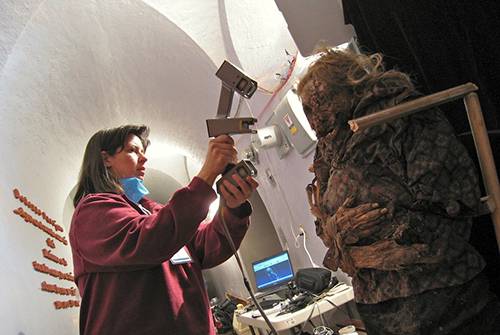
Jim Jones is an Associate Professor in the Department of Electrical and Computer Engineering at George Mason University's Volgenau School of Engineering. His work integrates cybersecurity, digital forensics, and practical applications, focusing on digital artifact analysis, malware detection, and data persistence. He holds a PhD in Computational Sciences and Informatics from George Mason University, an MS in Mathematical Sciences from Clemson University, and a BS in Industrial Engineering from Georgia Tech. Education: PhD, Computational Sciences and Informatics, George Mason University MS, Mathematical Sciences, Clemson University Bachelor's, Industrial Engineering, Georgia Tech Research Interests: Cybersecurity, Digital Forensics, Data Persistence, Malware Analysis, Machine Learning in Cybersecurity. His research is funded by agencies like DHS, NSF, and DoD, addressing challenges such as supply chain disruption detection, deleted file decay analysis, and cyber deception. Notable projects include the 'Digital Body Farm' for studying data decay and the 'Cyber P3 Scholarship Program.' He has advised numerous funded initiatives, including work on network topology discovery and insider threat evaluation. Collaborative efforts with industry and government emphasize bridging theory and practice in cybersecurity education and research.
Manuel Avelino Giráldez García is an Associate Professor in the Department of Physical and Sports Education at the University of A Coruña, affiliated with the Faculty of Sports Sciences and Physical Education. His academic roles include serving as Secretary of the Department of Physical Education and Sport (since 2025), Director of the AECC-UDC Chair 'Exercise against Cancer' (since 2025), and member of multiple academic committees. His teaching responsibilities include courses such as Physiology of Exercise I, Healthy Exercise and Quality of Life II, and Master's Dissertation supervision. His research focuses on promoting healthy physical activity, exercise prescription for clinical populations, and monitoring physiological responses to training. He leads the 'Performance and Health Group' research team and has contributed to projects like the CAPTURA initiative analyzing real-time neuromusculo-skeletal movement with fatigue considerations (funded by Spain's Ministry of Science). His publications emphasize exercise physiology in aging populations, training methodology optimization, and body composition analysis. He has directed master's theses such as 'Exercise-induced adaptations on endogenous antioxidant systems in human skeletal muscle' (2021). Active in curriculum development, he coordinates the CAPD in Sports Sciences and directs institutional research transfer initiatives.
Henrike Donner is a Professor of Anthropology at Goldsmiths, University of London, where she has served since 2015. Previously, she held positions at the London School of Economics (LSE), Georg-August Universität Göttingen, and Oxford Brookes University. Her research focuses on urban anthropology, gender, kinship, and class dynamics, with a particular emphasis on middle-class identities and urban politics in India. She leads projects addressing housing access for marginalized communities and has conducted fieldwork in Kolkata, examining topics such as reproductive labor, consumer culture, and neoliberalism's impact on social structures. Education: PhD in Social Anthropology (LSE, 1999), MA in Social Anthropology (LMU Munich, 1992) Projects: Principal Investigator for 'A Room for Ones Own' (UKRI-funded, 2018–2020) and 'Austerity Bites: Food Stories from Lewisham' (2016) Publications: Authored/edited books like Domestic Goddesses (2008), Being Middle-class in India (2011), and Globalising Everyday Consumption in India (2021) Her current research explores gendered labor and housing access in Kolkata's marginalized neighborhoods, blending ethnographic methods with feminist theory. She supervises doctoral students on themes such as class, kinship, and urban politics.
Dr. Benjamin Ruisch serves as a Lecturer in Psychology at the University of Kent's School of Psychology, specializing in political attitudes and intergroup prejudice. His research examines ideological divides through the lens of social and political psychology, with emphasis on conspiracy theories and pandemic-related social dynamics. His academic journey includes: PhD from Cornell University Social Psychology Area Postdoctoral Fellowship at Ohio State University Marie Sklodowska-Curie Fellowship at Leiden University Research Interests: Dr. Ruisch investigates the psychological foundations of political ideology, focusing on: Physiological correlates of political orientation (e.g., interoceptive sensitivity) Conspiracy theory formation and psychological consequences Ideological asymmetries in prejudice and moral judgment Social dynamics during global crises like the COVID-19 pandemic Publication Trends: His 2022-2025 work reveals evolving focus from pandemic responses to fundamental ideological processes. Key themes include the relationship between bodily awareness and political liberalism, slippery-slope reasoning in moral judgments, and longitudinal impacts of conspiracy beliefs. Publications consistently bridge political science with psychological mechanisms. Scientific Awards: Marie Sklodowska-Curie Fellowship Grants and Funding: Dr. Ruisch has secured support from major international bodies: European Commission U.S. National Science Foundation Society for Personality and Social Psychology American Psychology-Law Society United States-Indonesia Society Cornell University institutes (Institute for Social Sciences, Einaudi Center, Center for Study of Inequality) Labs and Teams: His collaborative network spans Cornell, Ohio State, Leiden, and Kent universities, operating through interdisciplinary teams focused on experimental social psychology. Current work involves pandemic-related attitude tracking and cross-national ideology studies without dedicated lab branding.
Brad Gemmell is an Associate Professor in the Department of Integrative Biology at the University of South Florida (USF), within the College of Arts and Sciences. His research focuses on marine ecology, fluid dynamics, and animal behavior, particularly investigating how organisms interact with fluid environments. He employs advanced imaging techniques like particle image velocimetry and holographic cinematography to study predator-prey dynamics, environmental pollutant impacts, and bio-inspired design principles. Education: Ph.D. in Marine Science (University of Texas, Austin, 2011); B.S. in Biology (University of Victoria, 2006). Research Interests: Gemmell explores fluid-organism interactions, evolutionary arms races between predators and prey, and the ecological consequences of marine pollutants such as oil spills. His work bridges biology and physics, with a focus on jellyfish propulsion, ctenophore predation, and the hydrodynamics of swimming in marine organisms. Lab and Collaborations: The Gemmell Lab develops biohybrid robotic jellyfish and examines the role of marine organisms in ecosystem processes. Current projects include studies on salp colony locomotion, shark scale bristling, and the ecological impacts of gelatinous zooplankton. Advising and Grants: Gemmell actively mentors graduate students and has secured grants for research on ctenophore predation, marine fluid mechanics, and bio-inspired engineering. He is currently accepting graduate students for collaborative projects.
Pittaras Theodoros is an Associate Professor in the School of Social Theology & Christian Culture at the Aristotle University of Thessaloniki , Greece. Based in office 11 on the ground floor of the Faculty of Theology building, he can be reached at pittaras@past.auth.gr . He teaches a rich portfolio of undergraduate and postgraduate courses focused on patristic literature and theology from the 2nd to the 8th centuries, with special emphasis on the Cappadocian Fathers, Chalcedonian and post-Chalcedonian writings, and the theology of Asia Minor Fathers. His research gravitates around Patristics and the life, writings, and teachings of the Church Fathers up to the 8th century . A central thread is the theological analysis of christological and mariological themes in patristic texts, particularly how early authors framed the Incarnation and the person of the Theotokos. This focus is reflected in his monographs on St. Cyril of Alexandria, Proclus of Constantinople, Theodotus of Ancyra, and Athanasius the Great, as well as in numerous scholarly articles. Across his publications, a consistent pattern emerges: meticulous engagement with primary Greek and Latin sources, contextualization within conciliar history (especially Ephesus 431), and critical appraisal of doctrinal controversies such as Nestorianism. His work bridges historical-textual scholarship and systematic theological reflection, illuminating how patristic insights continue to inform contemporary Orthodox thought. Labs, teams, and future directions: While no specific laboratory or research group is mentioned, Professor Pittaras is embedded in the vibrant academic community of the Department of Pastoral and Social Theology, contributing to its thematic networks, conferences, and international collaborations—most notably via Erasmus+ exchanges.
Dr. Jack Kelly is a Distinguished Research Professor (Retired) in the Neuroscience department at Carleton University, holding a Ph.D. from Vanderbilt University. His research focuses on central nervous system mechanisms underlying hearing and auditory information processing, particularly neural structures in the auditory brainstem and forebrain involved in sound perception and spatial localization. Key projects investigate the superior olivary complex, lateral lemniscus, and auditory cortex, employing neurophysiological, neuroanatomical, and behavioral techniques. He has contributed extensively to understanding auditory processing through studies on synaptic receptors (AMPA, NMDA, GABAA), ion channels (potassium), and neural circuits in the inferior colliculus and dorsal nucleus of the lateral lemniscus. His work addresses the neural basis of complex sound perception, such as speech and animal vocalizations, and the origins of central auditory processing disorders. Not eligible to supervise students, Dr. Kelly’s research has been published in journals like Journal of Neuroscience , Neurophysiology , and Hearing Research . His publications span 1996–2005, emphasizing auditory pathway modulation, synaptic mechanisms, and sound localization. Despite no listed awards, his contributions to auditory neuroscience are significant. His lab is located in the Health Sciences Building at Carleton University.
Dr. Cory Haberman is an Associate Professor and Director of the Institute of Crime Science at the University of Cincinnati's School of Criminal Justice. He earned his PhD in Criminal Justice from Temple University in 2015. His research focuses on crime science, emphasizing actionable strategies for crime prevention through partnerships with public safety stakeholders. Dr. Haberman prioritizes both scientific rigor and practical application, earning recognition as a U.S. National Institute of Justice LEADS Academic in 2019. Educations: PhD in Criminal Justice (Temple University, 2015). Research Interests: Dr. Haberman explores crime patterns, evidence-based policing, and place-based crime analysis. His work addresses hot spots policing, opioid crisis interventions, and police-community collaboration. Recent projects include randomized controlled trials of policing strategies and evaluations of overdose prevention programs. Grants & Funding: He leads multiple federal grants, including the Innovations in Community-Based Crime Reduction (BJA, $208,196) and Smart Policing Initiative (BJA, $241,505). Notable collaborations include evaluations of the Hamilton County Heroin Coalition and virtual reality training for police. Awards: 2019 ASC Division of Policing Early Career Award, 2023 ASC Teaching Award, and 2021 UC Faculty Excellence Award. Advising & Grants: Dr. Haberman oversees over $5 million in active grants, focusing on opioid strategies, police de-escalation training, and community policing. His lab, the Institute of Crime Science, collaborates with agencies like the Hamilton County Sheriff's Office and Fort Myers PD. Labs/Teams: Directs the Institute of Crime Science, a hub for translational research bridging academia and law enforcement. Engages in interdisciplinary projects with public safety partners.
Jason Fanning, PhD, is an Assistant Professor in the Department of Health and Exercise Science at Wake Forest University, with a secondary appointment in Internal Medicine, Gerontology and Geriatric Medicine at Wake Forest School of Medicine. He completed his undergraduate degree and PhD in Kinesiology at the University of Illinois at Urbana-Champaign, followed by post-doctoral training at the Wake Forest Sticht Center on Aging. Dr. Fanning joined Wake Forest University in July 2019. His research specializes in technology-driven interventions for health behavior change in older adults, focusing on physical activity, diet, and chronic pain management. Key methodologies include ecological momentary assessment, mHealth applications, and randomized controlled trials. Major projects include: MORPH : mHealth-supported pain/weight management for obese older adults Time to Move : Examining real-world movement impacts on inflammation and glucose regulation ReSHAPE : Investigating stress-physical activity relationships via smartphone monitoring Dr. Fanning teaches undergraduate and graduate courses in Health Psychology (HES 312 & 733) and Statistics in Health Sciences (HES 262 & 721). He directs the Behavioral Medicine Lab, developing interventions for aging populations. His 15 most recent publications (2025) demonstrate consistent focus on: Technology-enhanced geriatric interventions Physical activity-pain relationships Novel assessment methods (accelerometry, ecological momentary assessment) Randomized trials for chronic conditions (dementia, obesity, MS) Mechanistic studies of aging physiology
Raul Fernandez Rojas is an Associate Professor in the Department of AI and Robotics at the University of Canberra. His research focuses on multimodal neurophysiological sensing, machine learning applications in healthcare, and pain assessment using technologies like fNIRS, EEG, and facial expression analysis. He leads projects integrating brain-body interactions in neurological disorders such as Parkinson's disease and dementia, and develops intelligent systems for driver distraction detection. Education: PhD (details unspecified) Research interests include cognitive workload analysis, sensor fusion for biomedical applications, and AI-driven diagnostics for mental and neurological conditions. His work spans clinical pain assessment, human-swarm interaction, and real-time monitoring systems. He has contributed to over 55 peer-reviewed publications and actively supervises PhD candidates in machine learning for neurophysiological applications. Current projects include a dementia detection initiative using machine learning and exercise interventions, funded from 2024–2026. He collaborates internationally on topics like head motion patterns for depression biomarkers and fNIRS-based pain assessment for non-verbal patients. Advising focuses on PhD projects involving neurophysiological sensors (EEG, fNIRS, etc.) and facial expression analysis for pain recognition. Grants include funding for multimodal signal fusion research and wearable sensor systems.
Dr. Jennifer Bunn is an Associate Dean and Professor in the College of Health Sciences at Sam Houston State University. She holds a PhD in Exercise, Nutrition, and Preventive Health from Baylor University and a master’s in Exercise Physiology from the University of Kentucky. Her research focuses on athlete performance monitoring, wearable technology validation, and women’s sports health. She previously directed the Advanced Interdisciplinary Movement Sciences Lab at Campbell University and serves as a Fellow of the American College of Sports Medicine (ACSM). Dr. Bunn’s academic roles include editorial board memberships for the International Journal of Exercise Science and Journal of Sports Medicine and Physical Fitness . Her teaching spans exercise physiology, sport nutrition, and research methods. Key research themes include menstrual cycle impacts on lacrosse athletes, tactical officer performance, and the efficacy of consumer-grade wearables in physiological assessments. Her work emphasizes practical applications of sports science, such as optimizing training loads and mitigating injury risks. Recent studies highlight her focus on female athletes’ wellness, workload quantification, and algorithmic modeling for sports performance prediction. She actively contributes to ACSM committees, advocating for diversity in kinesiology research and policy. Awards: Fellow of the American College of Sports Medicine Labs/Teams: Former Director of Advanced Interdisciplinary Movement Sciences Lab Grants: Not explicitly listed in provided texts
Prof. Dr. Steffen Mau is a Professor of Macrosociology at Humboldt-Universität zu Berlin, part of the Department of Social Sciences within the Faculty of Cultural, Social and Educational Sciences. He holds a PhD from the European University Institute (EUI), Florence, and has held academic positions at institutions including Universität Bremen and the Berlin Social Science Center (WZB). Education: PhD in Political and Social Science from EUI (2001), Diploma in Sociology from Freie Universität Berlin (1997). Research: Focuses on macrosociology, social inequality, welfare state transformations, political sociology, and digitalization. Key works include Sorting Machines , Ungleich vereint , and The Metric Society . Awards: Gottfried Wilhelm Leibniz Prize (2021), Bavarian Book Award (2024), and numerous fellowships including Mercator and DAAD. Leadership: Co-founder of the SOCIUM Research Center on Inequality and Social Policy at Universität Bremen, member of the Berlin-Brandenburg Academy of Sciences, and editorial roles in journals like Leviathan and European Societies . His work bridges theory and policy, addressing contemporary challenges such as border dynamics, digital scoring systems, and East-West German disparities. He advises government bodies, including the Council of Experts on Integration and Migration (SVR), and contributes to public discourse through media engagement and civic education initiatives.
Dr. Rebecca Rowe is an Assistant Professor in the Department of Literature and Languages at Texas A&M University-Commerce. She holds a Ph.D. in English from the University of Connecticut, an M.A. in English with a Children's Literature specialization from Kansas State University, and a B.A. in English Literature and History from Hollins University. Her research focuses on children’s media, adaptation studies, and Disney cultural impact. She co-founded the International Journal of Disney Studies , the first peer-reviewed journal dedicated to Disney studies, alongside Dr. Robyn Muir. Dr. Rowe’s teaching emphasizes children’s literature, film analysis, and English education. She has developed innovative digital projects like the Our Teaching Materials Archive and Harry Potter and the Analysis of Fan Fiction . Her work bridges academic research and public engagement, including interviews with global media outlets and contributions to Disney, Culture and Society Research Network articles. Her research explores themes such as adulthood/childhood intersections, race representation in animated media, and fan communities. Notable projects include analyzing Disney’s legacy films and examining racial diversity in The Magic School Bus adaptations. She also investigates how adaptations (professional and fan-made) shape character identities through cultural and audience lenses. Dr. Rowe’s academic contributions span peer-reviewed journals ( Jeunesse , Journal of Popular Culture , Adaptation ), book chapters, and editorial roles. Her work often addresses societal tensions around adult engagement with children’s media, advocating for nuanced understandings of cultural consumption patterns.
Michelle D. Hamilton is a Professor in the Department of Anthropology at Texas State University and a Diplomate of the American Board of Forensic Anthropology (D-ABFA). She earned her PhD from the University of Tennessee, Knoxville (2004) and specializes in forensic anthropology, bioarchaeology, and paleopathology. Her research examines trauma, taphonomy, postmortem interval, and dental anthropology in medicolegal and archaeological contexts. As a consulting forensic anthropologist, she conducts crime scene recoveries, skeletal analyses, and trauma interpretations for law enforcement and medical examiners. She has instructed the FBI’s Human Remains Recovery Course since 1999. Publications address sharp-force trauma in maritime contexts, vulture scavenging patterns, ethical bioarchaeology, and neoplastic diseases in skeletal remains. Dr. Hamilton teaches graduate courses including Laboratory Methods in Forensic Anthropology, Paleopathology, and Field Methods. Her forensic casework involves collaborations with multiple agencies. Office: ELA 240.