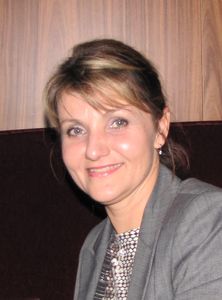
Assoc. Prof. Tatyana Yordanova is affiliated with the National Academy of Sports in Bulgaria, where she serves in the Faculty of Sports and Department of Technical and Ice Sports . She holds the academic rank of Associate Professor and has been leading the department since 2024. Education: Master's from State Central Institute of Physical Culture (1987); Doctorate in Sports Science (2019) Languages: English, Italian, Russian Her research focuses on technical elements in figure skating , speed-power abilities , balance stability , and judging systems . She has extensively studied jump mechanics and anthropometric factors in skaters. Her publications from 2018-2024 include studies on judging systems, jump techniques, and sports management. Key themes in her work involve training methodology, competition analytics, and biomechanics of skating. Since 2002, she has worked as an international figure skating judge, including at the Sochi 2014 Olympics . She chaired the Bulgarian Skating Federation (2011-2023) and participated in projects like Erasmus+ mobility (2022, 2024). Her pedagogical career includes roles as scientific assistant (1988), senior assistant (2006), and associate professor (2023).
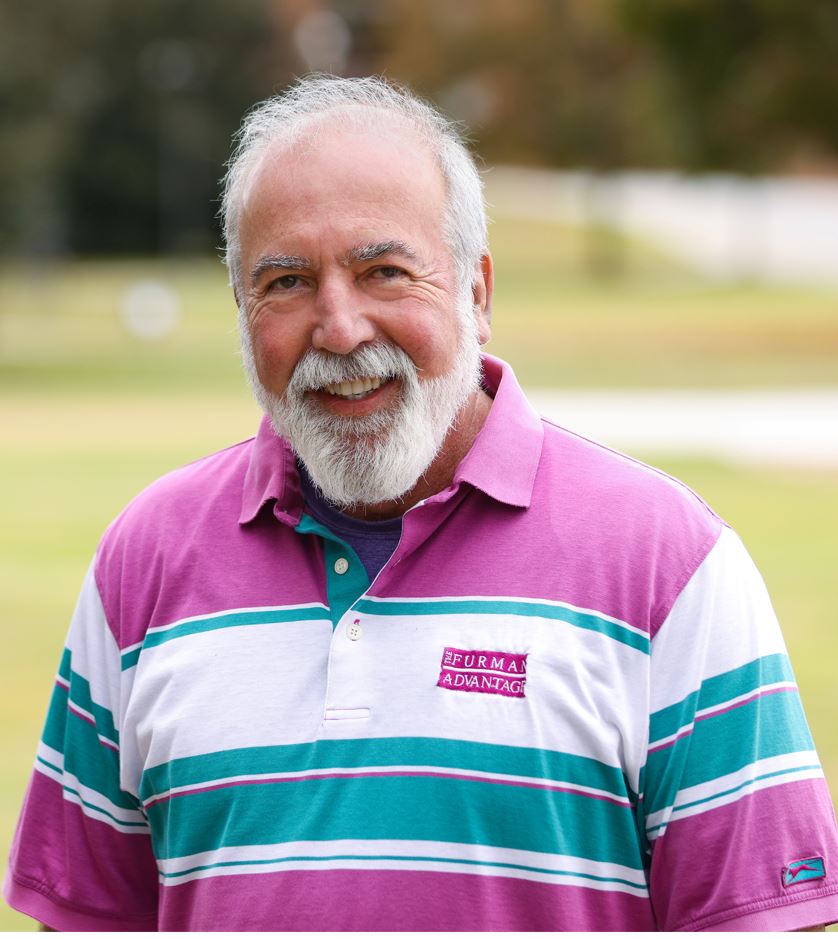
Anthony Caterisano is a Professor of Health Sciences at Furman University, with over 35 years of academic and athletic leadership. He holds a Ph.D., M.A., and B.S. from The University of Connecticut, SUNY, and UNC Chapel Hill. His research focuses on exercise physiology, resistance training, and sports medicine, with notable publications in journals like Medicine and Science in Sports and Exercise . Dr. Caterisano is a Fellow of the American College of Sports Medicine (FACSM) and has authored/co-authored books on football training and resistance techniques. He has served as wrestling coach at Furman, Spartanburg Methodist College, and currently coaches at Wade Hampton High School. As a competitive powerlifter, he has secured 16 South Carolina state titles, 10 national titles, and 10 world gold medals in masters-level competitions. His work bridges scientific research and practical application, with grants and presentations on topics like strength training methodologies and cardiovascular adaptations. Key contributions include studies on Tsunami Barbell training, metabolic responses to exercise, and core muscle engagement. His awards reflect both academic excellence and athletic achievement, while his grants and presentations underscore his commitment to advancing sports science.
Ana Marques is a Visiting Professor at Norwich Business School (University of East Anglia), specializing in accounting and quantitative methods. She previously served as head of research at the Nova School of Business and Economics in Lisbon and held visiting roles at the Indian Institute of Management Bangalore. Her academic background includes a PhD in Accounting from the University of Texas at Austin, a Master's in Management from Instituto Superior de Gestão (Portugal), and a 5-year Licenciatura in Management from the same institution. Her research focuses on non-GAAP earnings disclosures, corporate governance, ESG/CSR, and voluntary disclosures. Key funding includes a €80,000 Marie Curie grant and over €120,000 from Portugal's Foundation for Science and Technology. She has published in top journals like Review of Accounting Studies and European Accounting Review . Marques holds editorial roles at European Accounting Review and Accounting in Europe , and serves as Editor-in-Chief of the EAA's Accounting Research Center. She has organized major conferences like JIAR 2023 and the Lisbon Accounting Conference, and contributes to professional bodies such as the American Accounting Association (AAA) and European Accounting Association (EAA). Her work addresses disclosure strategies, sustainability assurance, and regulatory impacts, with recent focus on gender diversity policies and ESG-investment linkages. Research outputs emphasize global accounting practices and regulatory effectiveness across diverse sectors.
John Baillieul is Distinguished Professor at Boston University with joint appointments in Mechanical Engineering, Systems Engineering and Electrical & Computer Engineering. He directs experimental laboratories for real-time control of lightweight robotic systems and applies nonlinear control theory to complex multi-body, networked, and bio-inspired systems. Education: Ph.D., Harvard University Research Interests: Baillieul’s work spans robotics, nonlinear control, and networked systems. Early contributions resolved motion-planning for kinematically redundant manipulators; current themes include neuromimetic learning, vision-based navigation, and resilience of infrastructure networks such as power grids. His group couples rigorous geometric control with real-time hardware to create lightweight, high-performance robots and to uncover fundamental information limits in feedback systems. Recent Publication Trends (2021-2025): Over the past five years his output has concentrated on three synergistic directions: (i) neuromimetic and Koopman-based data-driven methods for estimating and controlling nonlinear systems, (ii) vision-based guidance and sparse optical-flow primitives for agile autonomous flight, and (iii) network-theoretic decomposition and information-rate studies for resilient operation of power grids and collective dynamics. Honors & Awards: IEEE Fellow 2025 Roger W. Brockett Control Systems Award Former Editor-in-Chief, IEEE Transactions on Automatic Control Affiliations & Service: He is a member of Boston University’s Center for Information and Systems Engineering (CISE), has served as Editor-in-Chief of IEEE Transactions on Automatic Control, and remains active in editorial and organizational roles across the IEEE control systems community.
Alessandra Meddis serves as an Assistant Professor in the Section of Biostatistics within the Department of Public Health at the University of Copenhagen's Faculty of Health and Medical Sciences. Her academic work centers on developing and applying advanced statistical methodologies for longitudinal and time-to-event data analysis, with significant contributions to public health research in Denmark and internationally. Her institutional affiliation is clearly established through university contact details and departmental listings. Her primary research interests include correlated survival data analysis, competing risk modeling, informative cluster size methodology, causal inference techniques for observational studies, and environmental epidemiology applications. Dr. Meddis has developed specialized expertise in handling complex survival data structures while maintaining focus on real-world public health problems, particularly in HIV comorbidity patterns, environmental exposure effects, and pandemic-related mortality analyses. Her methodological innovations directly address challenges in clustered and censored data common across medical research domains. Analysis of Dr. Meddis's recent publication record reveals a consistent trajectory of high-impact interdisciplinary research spanning clinical medicine, epidemiology, and statistical methodology. Her work appears in leading journals across biostatistics, infectious diseases, and public health, demonstrating strong collaborative networks with clinical researchers and epidemiologists. Key thematic areas include HIV treatment outcomes, environmental health exposures, and critical care applications during the pandemic, with recent methodological papers advancing survival analysis techniques for complex data structures. Scientific Awards: No scientific awards were specified in the available institutional profile. Advising and Grants: The institutional profile does not provide details regarding graduate student supervision or specific research grant funding. Her collaborative publications suggest involvement in multi-investigator projects including the COCOMO HIV cohort study and pandemic-related research initiatives. Labs and Teams: Dr. Meddis is affiliated with the Section of Biostatistics within the Department of Public Health, though specific laboratory facilities or dedicated research teams are not described in the source material. Her extensive co-authorship patterns indicate active participation in multiple research consortia across medical specialties.
Dr. Megan Renna is an Assistant Professor in Clinical Psychology at the University of Southern Mississippi. She earned her Ph.D. in Clinical Psychology from Columbia University's Teachers College and completed a postdoctoral fellowship funded by the National Cancer Institute at Ohio State University Comprehensive Cancer Center. Her research focuses on the bidirectional relationship between psychological and physical health, particularly how emotion regulation and negative emotionality contribute to chronic disease risk in breast cancer survivors and healthy adults. Education: Ph.D. in Clinical Psychology (2019) and M.Ph. (2018) from Teachers College, Columbia University Training: Predoctoral internship at Duke University Medical Center Her work bridges clinical psychology, psychophysiology, and behavioral medicine through studies on inflammation, autonomic dysfunction, and cancer survivorship. Recent publications examine metabolic syndrome, smartwatch body composition metrics, and couples' health dynamics. Key research themes include stress reactivity, emotion regulation therapy, and biobehavioral pathways linking mental states to physiological outcomes. Dr. Renna teaches Advanced Psychopathology and can be reached at Megan.Renna@usm.edu. Her methodological expertise spans experimental worry inductions, longitudinal studies, and psychometric scale development, with a focus on reducing distress disorders through emotion regulation interventions.
Assoc Prof Ng Teng Yong is an Associate Professor at the School of Mechanical & Aerospace Engineering (NTU), specializing in numerical modeling and simulation. With a background as Research Manager at A*STAR Institute of High Performance Computing, his work spans materials science, nanotechnology, and aerospace engineering. Current focus on graphene-based desalination membranes Expertise in molecular dynamics simulations Investigates nanoscale fluid mechanics and structural dynamics Recent publications highlight advancements in energy-efficient electrodialysis, smart robotics, and nonlinear vibration analysis. His interdisciplinary approach integrates computational methods with experimental validation in additive manufacturing and soft material mechanics.
Professor Nicole Metje is a Professor of Infrastructure Monitoring at the Department of Civil Engineering, University of Birmingham, and Director of the National Buried Infrastructure Facility. She also serves as Co-director of the Institute of Quantum Technology. Her research focuses on quantum sensing, geotechnical engineering, and infrastructure monitoring, with a particular emphasis on buried infrastructure detection and sustainable urban development. Education: PhD in Civil Engineering (University of Birmingham, 2001); Dipl.-Ing. in Civil Engineering (Hannover University, Germany, 1998). Key roles and affiliations include membership in EPSRC Infrastructure Strategic Advisory Team, Chartered Institution of Civil Engineering Surveyors, and international advisory boards for Hong Kong Polytechnic University. She has authored/co-authored over 50 journal papers and a textbook on tunnel construction. Research areas include quantum sensor applications for buried asset detection, geophysical soil properties, and sensor development for infrastructure monitoring. She leads projects such as UKCRIC National Buried Infrastructure Facility and Quantum Technology Hub in Sensors and Metrology. Awards and fellowships include FICE, FCInstCES, CEng, FHEA, and multiple committee memberships in national/international bodies. Teaching includes MSc courses on underground construction and geotechnical engineering. She supervises doctoral research on quantum sensors, soil-structure interactions, and sustainable infrastructure.
Hanbyul Joo is an Assistant Professor in the Department of Computer Science and Engineering at Seoul National University (SNU). Prior to joining SNU, he was a Research Scientist at Facebook AI Research (FAIR) in Menlo Park. He completed his Ph.D. in the Robotics Institute at Carnegie Mellon University, working with Yaser Sheikh, and received his M.S. in Electrical Engineering and B.S. in Computer Science from KAIST, Korea. Dr. Joo's educational journey began at KAIST, where he earned both his Bachelor's and Master's degrees. He then pursued his Ph.D. at Carnegie Mellon University's Robotics Institute, completing his dissertation titled "Sensing, Measuring, and Modeling Social Signals in Nonverbal Communication." His doctoral work focused on developing the Panoptic Studio, a unique sensing system with over 500 synchronized cameras for capturing social interactions. Dr. Joo's research primarily focuses on endowing machines and robots with the ability to perceive and understand human behaviors in 3D . His goal is to build "social Artificial Intelligence" that can interact with humans using social signals (body languages). He pursues this direction using data-driven methods where data is collected by measuring the wide spectrum of social signals transmitted during interpersonal social interaction. His research spans computer vision, machine learning, computer graphics, and robotics , with particular emphasis on 3D human pose estimation, human-object interaction, and social signal processing. His recent publications demonstrate a clear trend toward leveraging diffusion models for 3D reconstruction and generation tasks, with a focus on human-centric applications. His work bridges the gap between 2D image understanding and 3D scene reconstruction, often utilizing pre-trained models to overcome data limitations. The research consistently addresses fundamental challenges in understanding human behavior, interaction with objects, and social dynamics in 3D space. Dr. Joo is a recipient of several prestigious awards including the Samsung Scholarship and the CVPR Best Student Paper Award in 2018 . His paper "Total Capture: A 3D Deformation Model for Tracking Faces, Hands, and Bodies" received this honor at CVPR 2018. His research has been widely recognized in top computer vision and AI conferences, with multiple oral presentations at venues like CVPR, ICCV, and ECCV. Dr. Joo actively mentors a large group of students, with approximately 15 current students working toward MS/PhD degrees under his supervision. His lab, the SNU VCLab, focuses on cutting-edge research in computer vision and graphics. He has secured significant research funding through his work, though specific grant details aren't provided on his website. Dr. Joo frequently serves as an area chair for major conferences including CVPR, ICCV, and NeurIPS, demonstrating his standing in the academic community. Dr. Joo leads the SNU VCLab, which has developed several notable datasets and tools including SNU ParaHome, FrankMocap, and the CMU Panoptic Studio Dataset. His lab maintains strong industry connections, with students interning at leading companies like Meta. The lab's research focuses on building the infrastructure and algorithms needed for social AI, with an emphasis on practical applications that can be deployed in real-world settings.
Emmanuel Stamatakis is a Professor of Physical Activity, Lifestyle, and Population Health at the University of Sydney's School of Health Sciences (Faculty of Medicine and Health). He holds NHMRC Leadership Fellowships (2021-2025 and 2026-2030) and leads the Charles Perkins Centre's Physical Activity & Exercise Theme. His research focuses on lifestyle behaviors' impacts on cardiometabolic conditions, cancer, and cardiovascular health, using large-scale cohort studies and wearable device data. Key roles include directing the Mackenzie Wearables Research Hub and co-chairing WHO's Physical Activity Guidelines Development Group. Education: PhD from University of Bristol (2003), post-doctoral training at University College London. He leads the ProPASS consortium, involving 45 cohorts with wearable data. Over 460 peer-reviewed publications, including Clarivate's Highly Cited list since 2019. Research interests integrate physical activity, sedentary behavior, and sleep analytics with clinical outcomes. Current projects explore wearables-based measurement innovations, SPAN (sleep-physical activity-nutrition) synergies, and intervention designs for GLP-1 receptor agonist users. Recent articles emphasize VILPA (vigorous intermittent lifestyle physical activity) benefits, sleep-cardiovascular links, and multimodal lifestyle optimization. Awards include Australia's Top Researcher in Sports Medicine and multiple NHMRC grants. Supervises PhD projects on physical activity measurement and intervention design. Active in 50+ peer-reviewed journals and national/international funding bodies.
Prof. Dr. Arwen Deuss is a full Professor at the Faculty of Geosciences, Utrecht University , specializing in Seismology . Her research focuses on mapping Earth's deep interior using global seismology, with particular emphasis on mantle discontinuities, core structure, and whole Earth oscillations. She integrates seismological data with mineral physics, geodynamic modeling, and geochemistry to understand planetary evolution. Key research areas: Earth's Deep Interior, Global Seismology, Mantle Discontinuities, Inner Core Anisotropy Teaches courses in Theoretical Seismology, Earth Systems, and Planetary Interior Structure Developed open-source tools like FrosPy for normal mode analysis Her recent work explores 3D mantle attenuation, tilted transverse isotropy in the inner core, and seismic wave coupling. She leads projects connecting seismic tomography with geodynamic processes and maintains active collaborations in international seismological research.
Olumakinde Adesijibomi Ogunnaike is a President’s Postdoctoral Fellow at the Department of Physics, University of California, Berkeley. His research focuses on the quantum theory of strongly interacting and open systems, particularly symmetry, entanglement dynamics, and emergent properties in quantum systems. He actively bridges physics with poetry and philosophy, and is dedicated to mentoring underrepresented students in STEM. Education: PhD in Physics (MIT), MSc in Philosophy of Physics (Oxford), BSc in Physics and Mathematics (Harvard). Ogunnaike investigates quantum systems where fundamental particles exhibit unintuitive collective behaviors due to quantum correlations. His work spans topics like composite atom formation, measurement-induced phase transitions, and symmetry’s role in entanglement spread. He also explores interdisciplinary intersections, notably through the Poetry of Science project. His recent publications address quantum many-body stability, hydrodynamics, and graphene-based material properties. These works emphasize symmetry, long-range interactions, and measurement effects, reflecting both theoretical rigor and interdisciplinary curiosity. Award: President’s Postdoctoral Fellowship (UC Berkeley). Ogunnaike has organized MIT’s Directed Reading Program, co-founded National Society of Black Physicists chapters, and taught courses in general relativity and introductory laboratory physics. His outreach efforts highlight his commitment to inclusive education and community engagement.
Sara Hägg is a Senior Lecturer at the Karolinska Institutet , affiliated with the Department of Medical Epidemiology and Biostatistics . She is also a Docent in molecular epidemiology. PhD in Computational Biology (Linköping University, 2009) MSc in Molecular Biology (Stockholm University, 2003) BSc in Computer Science (Stockholm University, 2003) Her research focuses on human biological aging , including measurement of aging markers (telomere length, epigenetic clocks, frailty index), causal pathway analysis, and identification of geroprotectors for age-related diseases. She utilizes longitudinal twin studies (SATSA, GENDER, HARMONY), UK Biobank, and Swedish cohorts with methods like Mendelian randomization and genome-wide analyses . Recent articles demonstrate trends in epidemiological aging research , with emphasis on cardiovascular aging , neurological disease interactions , metabolic profiling , and epigenetic clocks . Her work often involves multivariable modeling and cross-cohort validation . Leadership roles include Director of LifeGene Core Facility (2024-) and Founding Board Member of the Nordic Aging Society (2023-). She serves on expert groups for the Swedish Twin Registry and Strategic Research Area in Epidemiology and Biostatistics .
Bryan K. Clark is an Associate Professor in the Department of Physics at the University of Illinois, with his office located in the Engineering Sciences Building. He leads the Clark Research Group, which works at the intersection of quantum information, condensed matter physics, machine learning, and computing. Clark's research spans four main areas: Quantum Computing , where his group develops quantum algorithms and collaborates with experimentalists on superconducting qubit systems; Quantum Many-Body Physics , where he applies computational methods to understand emergent behavior in strongly correlated systems; Algorithms for the Quantum Many-Body Problem , where his group has pioneered techniques like Neural Network Backflow (NNBF) that represent state-of-the-art accuracy for simulating fermions and frustrated magnetism; and Machine Learning for Experiment , where his group develops techniques to analyze experimental data like scanning transmission electron microscopy images. His publication record demonstrates consistent innovation in bridging theoretical quantum information science with practical applications. Recent work focuses on neural network approaches to quantum simulation, quantum error correction/mitigation, and novel qubit architectures like the Floquet Fluxonium Molecule. His research shows a clear trajectory from fundamental questions about the quantum-classical boundary to practical implementations in quantum hardware. Clark actively mentors graduate students, with recent thesis defenses by Faisal Alam, Matt Thibodeau, Chad Germany, James Allen, and Abid. His group has secured significant funding from the NSF and IBM's IIDAI institute to support research in quantum computing and machine learning applications for nano-photonics manufacturing and error mitigation. The Clark Research Group maintains strong connections with experimental teams, particularly in superconducting qubit development and materials characterization. They've developed computational tools like QOSY (Quantum Operators from SYmmetry) that are publicly available on GitHub and have gained recognition in the quantum information community.
Dr. Bradley Schoenfeld is a Professor of Exercise Science at Lehman College, serving as Graduate Director of the Human Performance and Fitness program. He previously acted as Sports Nutritionist for the New Jersey Devils hockey team. His research focuses on the effects of exercise on body composition, particularly muscle hypertrophy and fat loss, along with related nutrition interventions. Schoenfeld has authored over 300 peer-reviewed papers and the influential textbook Science and Development of Muscle Hypertrophy . He has received notable awards including the 2016 Dwight D. Eisenhower Fitness Award and 2018 NSCA Young Investigator of the Year. His work examines muscular adaptations from exercise variables manipulation, body composition changes, and supplementation effects. Key research themes include resistance training protocols, load progression strategies, and the physiological mechanisms underlying muscle growth. Education: Doctoral degree in Exercise Science Key Affiliations: National Strength and Conditioning Association (NSCA Fellow) Publications consistently address practical applications of resistance training science, emphasizing evidence-based approaches to optimize muscle development. His studies frequently explore training variables like volume, frequency, intensity, and rest periods. Grants and collaborations have supported investigations into deload strategies, isometric training effects, and nutritional strategies for hypertrophy. Labs/Teams: Conducts research through Lehman College's Human Performance Lab Future Work: Continuing exploration of training variables optimization and nutritional ergogenic aids