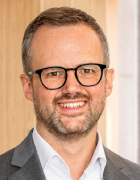
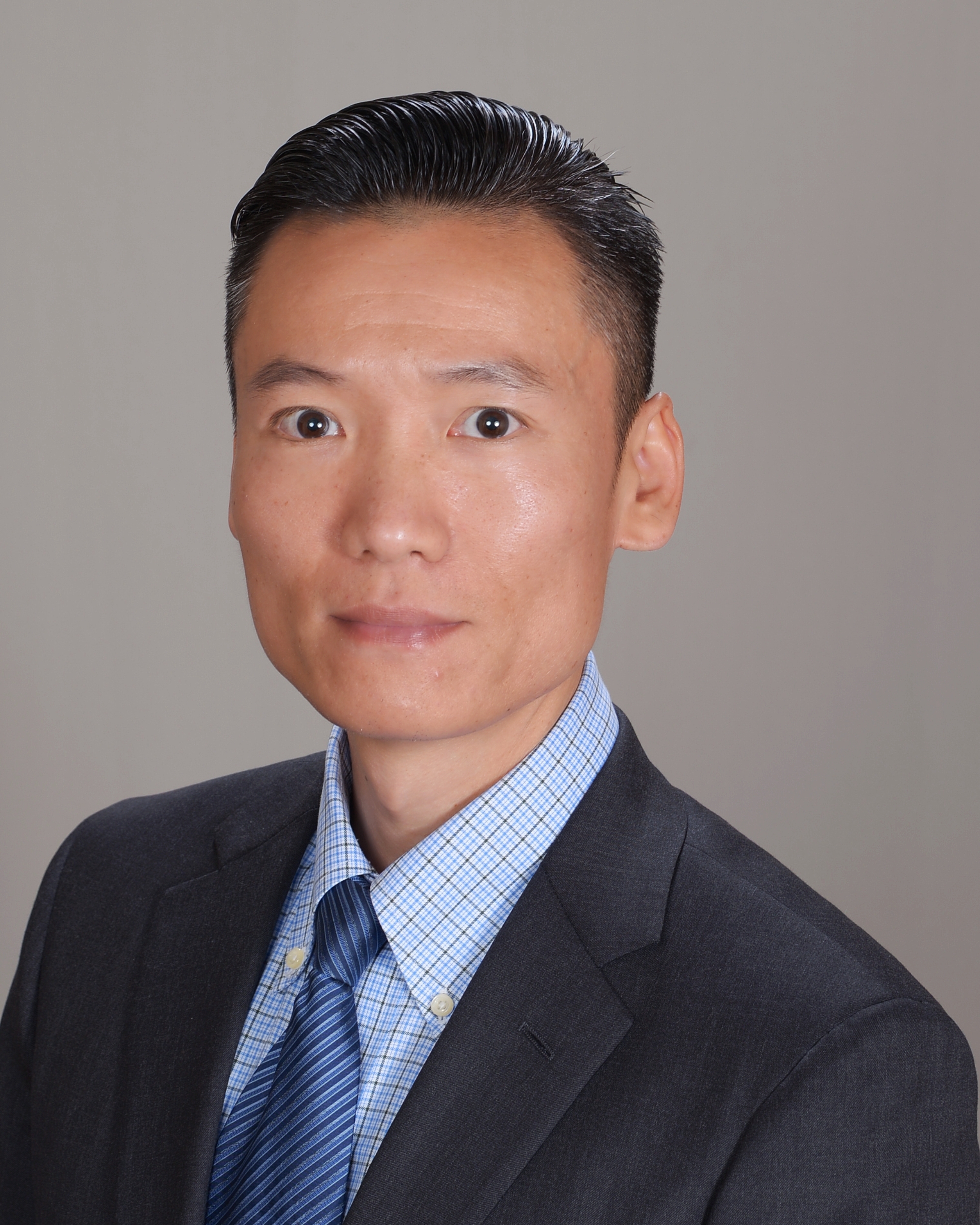
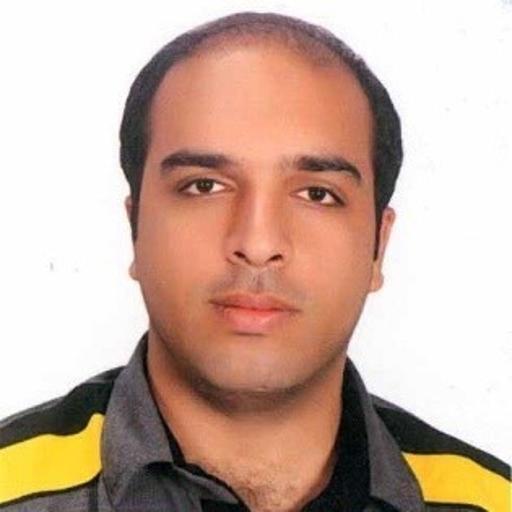
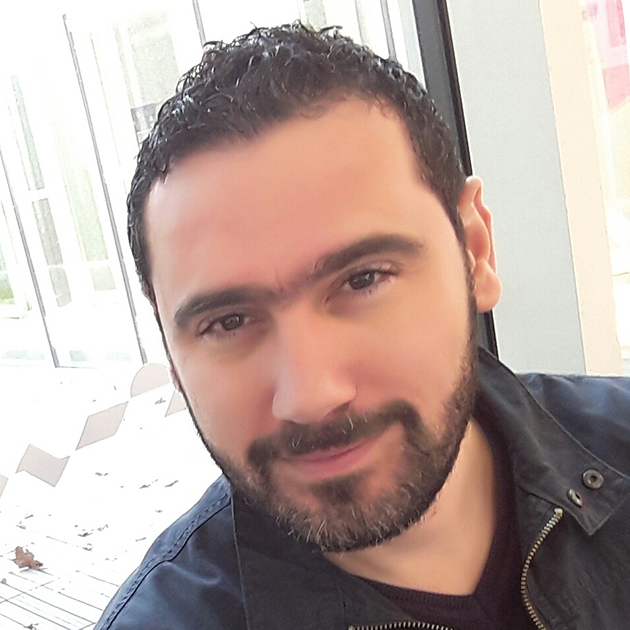
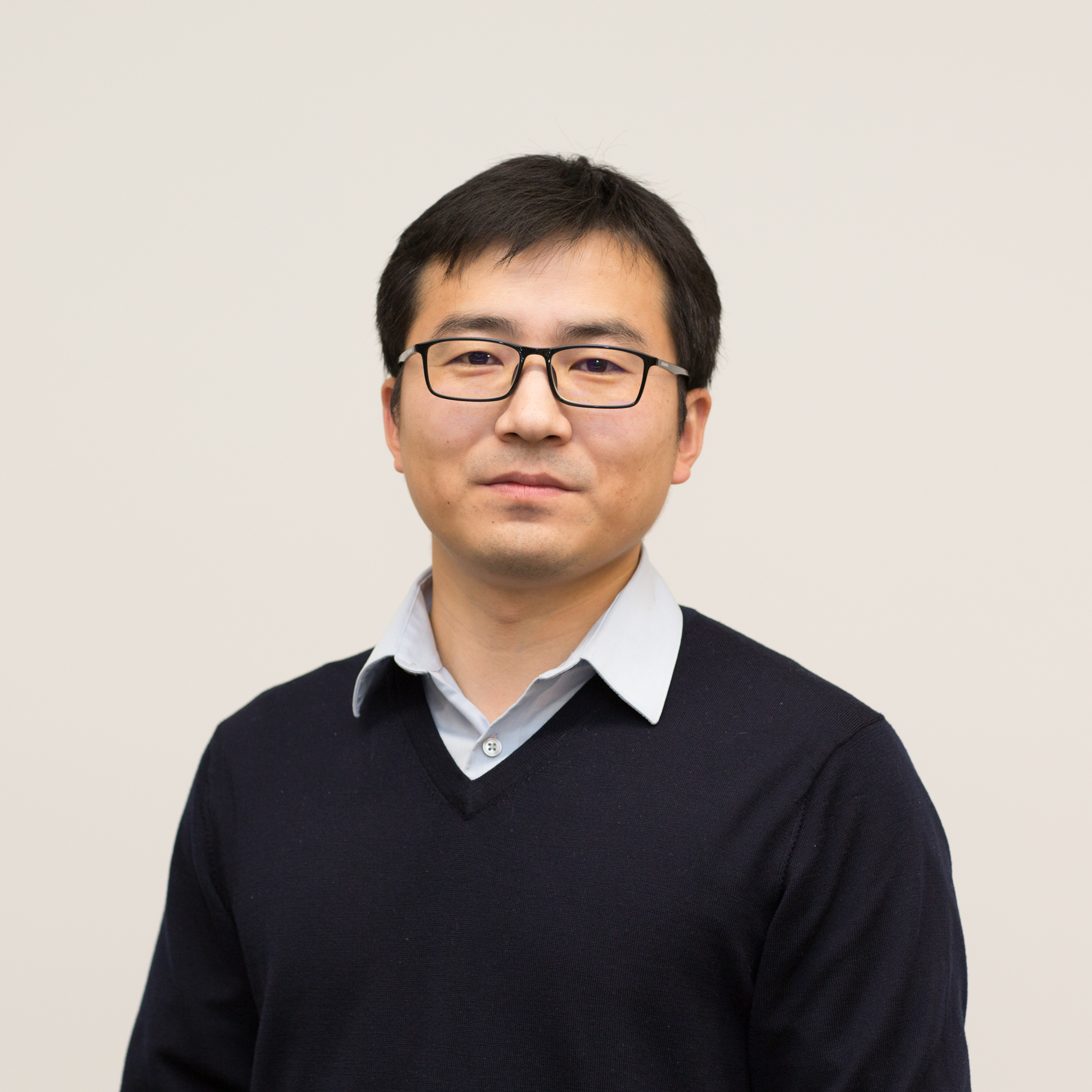
Halil Ali is a Lecturer in Data Science (Education Focused) at the School of Computing Technologies, RMIT University. His research spans privacy-preserving machine learning, blockchain technologies, and cybersecurity. Key research areas include federated learning , quantum-enhanced AI , secure biometrics , edge unlearning , and privacy in healthcare data . His recent publications focus on resilient AI systems , blockchain applications , and ethical data handling in emerging technologies. His work demonstrates expertise in integrating machine learning with blockchain security across domains like IoT, smart grids, and metaverse healthcare. He contributes to practical frameworks for zero-trust architectures , lightweight consensus protocols , and quantum-classical hybrid models .
Dr. Amin Keramati is an Assistant Professor of Supply Chain Management at Widener University’s School of Business Administration. He holds a PhD in Transportation & Logistics from North Dakota State University and previously served as a graduate research assistant at the Upper Great Plains Transportation Institute. His work includes federally funded projects like the Mountain-Plains Consortium’s MPC-550 project, focusing on highway-rail grade crossing safety. Dr. Keramati teaches courses in enterprise resource planning, decision analytics, database management, transportation/logistics, project management, and data analytics. Education: PhD in Transportation & Logistics, North Dakota State University Graduate Research Assistant at Upper Great Plains Transportation Institute Research Focus: Dr. Keramati develops mathematical, statistical, and machine learning approaches to solve complex problems in transportation, supply chain, and logistics. Key areas include data mining, big data decision support, transportation network analytics, project scheduling, smart manufacturing, and accident analysis. His interdisciplinary work bridges supply chain optimization with emerging technologies like blockchain for healthcare and clinical trials. Awards & Recognition: Student Paper Award, American Association of State Highway and Transportation Officials (2017) Grants & Projects: Lead researcher on the Mountain-Plains Consortium’s MPC-550 project, which expanded his dissertation work on safety systems for highway-rail crossings. Collaborates on federally funded transportation safety initiatives and supply chain optimization for bioethanol and pharmaceutical industries. Labs/Teams: Active in Widener’s School of Business research groups focusing on supply chain innovation and interdisciplinary projects combining logistics with emerging technologies.
Gilbert Fridgen is Full Professor in Digital Financial Services and holder of the PayPal-FNR PEARL Chair at the University of Luxembourg's Interdisciplinary Centre for Security, Reliability and Trust (SnT). He leads the FINATRAX research group focusing on blockchain, digital identity, and sustainable digital solutions. His research explores decentralized technologies in finance, energy systems, and public administration. Current projects investigate blockchain applications in industrial demand response, NFT markets, EU digital identity wallets, and DeFi institutional adoption. Prof. Fridgen examines the intersection of technology with regulatory frameworks and user behavior in energy and financial systems. He collaborates extensively with industry partners including PayPal and Spuerkeess. Prof. Fridgen actively contributes to EU digital policy discussions, particularly regarding the European Digital Identity Wallet framework and decentralized finance governance.
Prof. Magnus Fröhling is a Full Professor of Circular Economy and Sustainability Assessment at the Technical University of Munich (TUM), leading the Chair of Circular Economy and Sustainability Assessment at TUM Campus Straubing. He holds a doctorate and habilitation from the Karlsruhe Institute of Technology (KIT), specializing in material flow analysis and resource efficiency. His career includes roles as a professor at TU Bergakademie Freiberg before joining TUM in 2018. Fröhling’s research focuses on quantitative approaches for circular economy systems, including industrial value chains, built environments, and bioeconomy. He co-leads the TUM Mission Network Circular Economy, an interdisciplinary platform for research and innovation. **Education:** Bachelor/Master in Industrial Engineering, Karlsruhe University (TH) PhD in Industrial Engineering (2005), Karlsruhe University Habilitation in Business Administration (2011), KIT **Research Interests:** Circular economy concepts for automotive industry, buildings, and energy systems; sustainability assessment in bioeconomy; policy instruments for resource efficiency. His work emphasizes lifecycle analysis and closed-loop systems. **Awards:** TUM Sustainability Award (2021) and recognition for groundbreaking research on sustainability in industrial biotechnology (2020). **Advising & Grants:** Leads research initiatives like CirculaTUM, focusing on interdisciplinary collaboration. His work integrates policy analysis, technological innovation, and industrial ecology to advance sustainability goals. **Labs/Teams:** Active in TUM’s Green Fuel Center and SynBioFoundry@TUM, promoting sustainable energy and biotechnology solutions.
Prof. Roger Wattenhofer is a Full Professor at the Department of Information Technology and Electrical Engineering, ETH Zurich, Switzerland, and Deputy head of the Computer Engineering and Networks Lab. He holds a doctorate in Computer Science from ETH Zurich (1998) and has held positions at Brown University and Microsoft Research before returning to ETH. His research focuses on distributed computing, wireless networks, and algorithmic systems design, with contributions to Byzantine agreement protocols, blockchain technologies, and neural network architectures. He teaches courses such as Distributed Systems and Computational Thinking. Education: Ph.D. in Computer Science (ETH Zurich, 1998). Research interests include distributed systems, network algorithms, and the intersection of machine learning with distributed computing. His work spans both theoretical foundations and practical implementations, addressing challenges in fault tolerance, consensus mechanisms, and algorithmic efficiency. Recent publications explore topics like adversarial robustness in voting systems, privacy in reinforcement learning, and generative music models. He actively contributes to open-source frameworks and benchmarks for neural algorithmic reasoning.
Dr. Liang Cheng is the Department Chair and Professor in the Department of Electrical Engineering and Computer Science at the University of Toledo. He leads a department with ~700 students across CS, CSE, and EE programs. His research focuses on Cyber-Physical Systems (CPS), IoT, AI/ML, and intelligent infrastructure, supported by over $30M in funding from NSF, DOE, DOT, and industry. Notable projects include CPS Breakthrough initiatives and underground sensing systems. He co-edited a multidisciplinary book on Underground Sensing and contributed to smart grid cybersecurity. Dr. Cheng has held leadership roles at Lehigh University, shaping faculty governance and equity policies. His 100+ publications span networking, real-time systems, and sensor networks. He advises on funded projects totaling $30M+ and has pioneered pedagogical approaches in computer science education. Research Interests: Cyber-Physical Systems (CPS): Focuses on autonomous drones, energy systems, and real-time infrastructure Networking: Expertise in TSN, DTN, and wireless protocols Cybersecurity: SCADA systems, PLC attack detection, and blockchain energy modeling Underground Sensing: Geo-sensing via wireless signals and subsurface tomography Grants & Projects: Over 20 sponsored projects including NSF CPS Breakthrough (2018-2023), ABB smart grid projects, and DARPA-funded EDIFY systems. Key contributions include reconfigurable wireless architectures and network calculus tools for real-time systems. Teaching: Courses span senior design, compiler design, parallel computing, and wireless sensor networks. Developed pedagogical patterns for non-CS programming education. Awards: Recognized for leadership in academic governance and interdisciplinary research collaboration.
Dr. Mo Adda is a Principal Lecturer at the University of Portsmouth's School of Computing, part of the Faculty of Technology. He holds a PhD in Distributed Systems and Parallel Processing from the University of Surrey. His research focuses on network security, distributed systems, wireless networks, and cybercrime prevention. He leads projects in the Centre for Cybercrime and Economic Crime, exploring fault management in networks, blockchain applications, and IoT forensics. With 16 supervised theses, he advises on topics like energy-efficient cloud systems and machine learning for environmental modeling. His work bridges academia and industry, addressing challenges in software-defined networks, traffic control, and secure data sharing in social networks. Education: PhD in Distributed Systems (University of Surrey) Affiliations: Centre of Excellence in Defence, Risk & Resilience; Portsmouth Centre for Advanced Materials and Manufacturing Research Interests Dr. Adda's research spans: Network security and fault detection mechanisms Blockchain applications in IoT and forensics Energy-efficient cloud data center optimization Machine learning for climate modeling Self-organizing network protocols Grants & Collaborations His projects include collaborations with industry partners on secure data leakage detection in cloud systems and resilient wireless protocols for harsh environments. He has pioneered fault classification systems using clustering algorithms and fuzzy logic. Labs & Teams He contributes to the Centre for Cybercrime and Economic Crime, focusing on digital forensics and network intrusion analysis. His team develops frameworks for privacy management in social networks and proactive routing in software-defined networks.
Mohsen Ghafouri is an Associate Professor at the Concordia Institute for Information Systems Engineering (Concordia University). His research focuses on cybersecurity, smart grids, and cyber-physical systems with emphasis on securing energy infrastructure against cyber-attacks. Key areas include detection and mitigation of false data injection attacks, grid resilience against load-altering threats, and secure transactive energy markets. Research interests include wide-area monitoring systems (WAMS), microgrid control, and integration of renewable energy sources. He has developed frameworks for real-time anomaly detection in power systems, blockchain-based security solutions, and machine learning approaches for cyber threat identification. His work addresses vulnerabilities in smart grid components like IEC 61850 substations and EV ecosystems. Recent publications (2024-2025) highlight advancements in securing FACTS controllers, EV charging systems, and distributed energy resources. He has proposed novel mitigation strategies using reinforcement learning, graph neural networks, and federated learning. No scientific awards or grant details are provided in the source text. No advising relationships or lab affiliations are explicitly stated.
Sean Foley is a Professor of Applied Finance at Macquarie University, specializing in Fintech, Cryptocurrencies, Trading, and Market Design. He leads the Decentralized Assets division at the Digital Finance Cooperative Research Centre (DFCRC), bridging academia, industry, and government. His research focuses on blockchain applications like automated market makers, DeFi protocols, and stablecoins. Education: PhD in Finance from the University of Sydney (2014), focusing on 'The Impact of Regulation on Market Quality'. Research Interests: Decentralized finance (DeFi) systems Cryptocurrency market dynamics and regulation Market microstructure and liquidity provision Energy market crises and policy Regulatory frameworks for financial markets Key Projects: Leading the DFCRC's Industrial PhD Scholarships (2021–2031), mentoring students like Arvind Rangarajan and Juuso Artturi Itkonen. Research on Australia's National Electricity Market (NEM) suspension and energy policy. Awards: Best Paper Award at the Cryptocurrency Conference (2019) Philip Brown Prize for Best Australian Paper (2021) Exceptional Research Prize (2019) Advising & Grants: Supervised over 10 PhD students through DFCRC scholarships. Secured $181 million for the Digital Finance CRC. Lead applicant in the Gunns Ltd shareholder class action. Labs/Teams: Head of Decentralized Assets at DFCRC, collaborating on policy and technology. Co-researcher on 'Electricity Markets in Crisis' and cryptocurrency illicit use studies.
Noorbakhsh Amiri Golilarz is an Assistant Professor in the Department of Computer Science at The University of Alabama, College of Engineering. He has established himself as a prominent researcher in artificial intelligence, particularly in computer vision, deep learning, and image processing. His educational background includes: Postdoctoral Research Fellow, Computer Science, Boston College (2023) Ph.D., Electrical and Computer Engineering, Southern Illinois University Carbondale (2023) D. Eng., Computer Science and Technology, University of Electronic Science and Technology of China (2021) M.S., Electrical and Electronic Engineering, Eastern Mediterranean University (2017) B.S., Electrical Engineering, University of Guilan (2012) Dr. Golilarz's research spans multiple domains of artificial intelligence with a particular focus on computer vision, deep learning, and image processing applications. His work addresses challenges in medical imaging, satellite imagery, and cognitive neuroscience. He has made significant contributions to image denoising techniques, control chart pattern recognition, and AI applications in healthcare. His recent work has expanded into generative AI, large language models, and secure machine learning operations. His publication portfolio demonstrates consistent productivity with over 2500 citations and an h-index of 25. His most impactful work includes applications of blockchain and federated learning for COVID-19 detection, optimized support vector machines for medical diagnosis, and innovative image denoising techniques using metaheuristic optimization algorithms. Among his professional achievements: Co-founded AI Letters journal in 2024, serving as Associate Editor-in-Chief Served as Lead Guest Editor and Topic Editor for several SCI-indexed journals Held the role of Conference Program Chair Dr. Golilarz has supervised numerous graduate students and research projects, with his work spanning theoretical advancements in AI algorithms to practical applications in healthcare, energy systems, and cybersecurity. His research group has established collaborations with institutions including Boston College and Mississippi State University.
Rida Khatoun is a Professor in Cybersecurity at the Computer Sciences and Networks (Infres) Department at Télécom Paris. He holds a M.Sc. in Computer Engineering and a Ph.D. from the University of Technology of Troyes (UTT), France, awarded in 2004 and 2008, respectively. His research focuses on cybersecurity in networks, including cloud computing security, IoT security, vehicular networks security, intrusion detection systems, and blockchain technology. He has taught at Telecom Paris since 2014, Shanghai Jiao Tong University (SJTU) since 2016, and other institutions in China and France since 2005. His work spans theoretical frameworks and practical solutions for network security challenges. Key research areas include DDoS attack detection, vehicular communication security, and cryptographic protocols. He leads the Cybersecurity and Cryptography (C²) research team and is affiliated with the Laboratoire Traitement et Communication de l'Information (LTCI). His contributions include developing secure routing protocols (e.g., ASROP), statistical trust systems in wireless networks, and blockchain-based authentication for IoT. He has authored over 115 publications, including peer-reviewed articles and conference proceedings, with recent work addressing vehicular platooning security, TLS handshake optimization for C-ITS, and machine learning for cyberbullying detection. Rida’s academic activities include teaching courses on network security protocols, wireless network fundamentals, and QoS mechanisms. He collaborates internationally, contributing to smart city cybersecurity architectures and 6G programmable communications. His research emphasizes practical cybersecurity solutions for emerging technologies, ensuring robust protection against evolving threats in vehicular, IoT, and cloud environments.
Assoc Prof Ying Chen is an Associate Professor at the National University of Singapore , affiliated with the Department of Mathematics, Asian Institute of Digital Finance (as Academic Director of PhD Program in Digital FinTech 2022–2024), Risk Management Institute (2019–2023), Department of Statistics and Data Science (2019–2023), and Department of Economics (2018–2023). She also contributes to NUS Graduate School for Integrative Sciences and Engineering since 2016. Research Interests include: AI forecasting and quantum computing for finance Nonstationary time series and functional data analysis Energy data analytics and precision medicine Network autoregression and spatial-temporal modeling Explainable AI and citation metrics Portfolio liquidation and market-making algorithms Article Trends demonstrate expertise in: Adaptive forecasting for gas flows and electricity prices Blockchain network influence detection Quantum computing applications in finance Functional autoregression with mixed predictors Credit rating fairness and explainability High-resolution implied volatility modeling Scientific Awards include: ISI Elected Member (2016–) International Statistical Institute Council (2023–2027) IASC Scientific Secretary (2017–2019, 2023–2025) Advisory roles for EU FIN-TECH and xAIM projects
Yang Liu is a tenured Associate Professor at the Department of Management and Engineering , Linköping University, Sweden, and an Adjunct Professor at the University of Oulu, Finland. His expertise spans smart manufacturing, clean energy transition, and Industry 4.0 applications. He holds an M.Sc. and D.Sc. from the University of Vaasa, Finland. Research & Awards: Liu's work focuses on sustainable systems, decision support systems, and AI-driven energy efficiency. He has authored over 140 Web of Science publications, including top 0.1% ESI Hot Papers. He is ranked among the world's top 2% scientists (Stanford-Elsevier) and leads globally in 'big data analytics in manufacturing' and 'Industry 4.0-driven circular economy' research. Leadership & Projects: He leads projects like FlexSUS (EU Horizon 2020) and PERSEUS, developing tools for smart urban energy planning and 15-minute city models. He serves as Editor-in-Chief of Cleaner Engineering and Technology and Guest Editor for multiple journals. His research emphasizes bridging data science with sustainability challenges in manufacturing and energy systems. Key Achievements: Top-ranked in global citations, ESI Highly Cited Papers, and industry-driven sustainability frameworks. Grants: Leads EU-funded projects and collaborates with Siemens Energy on energy transition solutions. Labs & Teams: Part of the Environmental Technology and Management (MILJÖ) division and Unit for Product Service Innovation (MILJOPSI) at Linköping.
Di Shi is an Associate Professor at the Klipsch School of Electrical and Computer Engineering , New Mexico State University (NMSU), holding the Paul W. and Valerie Klipsch Distinguished Professorship. He previously founded the AI energy startup AInergy, LLC and held leadership roles at GEIRI North America, NEC Laboratories America, and Arizona State University. Education: PhD in Electrical Engineering, Arizona State University (2012) MS in Electrical Engineering, Arizona State University (2009) BS in Electrical Engineering, Xi'an Jiaotong University (2007) His research focuses on power system data analytics , energy storage , artificial intelligence , and IoT applications for grid stability and renewable integration. His work bridges theoretical innovation with real-world deployment, including software adopted by 15 utility companies. Recent publications highlight his leadership in deep reinforcement learning for grid control, blockchain frameworks for energy management, and tensor decomposition for efficient load modeling. He has secured a $6M NSF grant for AI-driven digital twinning to address climate-aware energy resilience. Awards & Recognition: 2025 Paul W. and Valerie Klipsch Distinguished Professorship 2024 University Research Council Mid-Career Award 2024 IET Fellow Multiple IEEE Best Paper Awards (2019–2022) 2019 L2RPN AI Competition Championship He serves as an editor for IEEE Transactions on Power Systems , IET Generation, Transmission & Distribution , and other journals, and leads the IEEE Task Force on IoT for Power Systems . His team’s patents cover AI-driven load modeling , energy storage scheduling , and state estimation , with 42 granted or pending.
Prof. Dr. Sebastian Steinhorst is an Associate Professor (W3-level with tenure) at the Technical University of Munich (TUM) within the Embedded Systems and Internet of Things group at the TUM School of Computation, Information and Technology . His research focuses on advancing the security, predictability, reliability, and interoperability of smart connected and autonomous systems, particularly for applications in Internet of Things (IoT) , Industry 4.0 , and automotive systems . PhD in Computer Science (2011) from Goethe University Frankfurt Postdoctoral roles at TUMCREATE Singapore (2011-2016) and Aarhus University (2016) Joined TUM in 2016 as Rudolf Moessbauer Tenure Track Professor His research areas include decentralized embedded systems, hardware/software co-design, modeling and verification of cyber-physical systems, security protocols for automotive networks, and time-sensitive networking (TSN) for industrial applications. Recent work explores blockchain-based data sovereignty, zero-knowledge proofs for vehicle authentication, and resilient architectures for autonomous systems. Key scientific contributions include the 2019 ACM TODAES Best Paper Award and pioneering work on CyberSecDome , LeapChain , and Simutack frameworks. He serves on editorial boards and conference committees, including co-organizing the Autonomous Systems Design initiative at DATE. His teaching portfolio spans lectures on System Design for IoT , Software Architecture for Distributed Systems , and IoT Security across multiple semesters. He also leads advanced seminars on embedded systems and IoT.