David Mazières is a Professor at Stanford University , affiliated with the School of Engineering and the Department of Computer Science . He serves as a software engineer at the Stellar Development Foundation . His work bridges academic research and industry applications in distributed systems and security. University: Stanford University Academic Rank: Professor Email: dm@scs.stanford.edu Research Interests: David Mazières' research focuses on distributed systems , cryptocurrencies , and computer security . Key areas include consensus protocols (e.g., Stellar ), low-latency scheduling ( Syrup , Shinjuku ), and cryptographic techniques for privacy and security ( SafetyPin , CCFI ). Key Achievements: His notable works include: TCP-ENO (RFC 8547) for secure transport protocols Stellar Consensus Protocol for decentralized finance SOSP 1999 Best Paper for 'Separating key management from file system security' Teaching Contributions: He has taught core and advanced courses at Stanford since 2005, including CS212 (Operating Systems) , CS240h (Functional Systems in Haskell) , and CS251 (Cryptocurrencies and Blockchain Technologies) . Previously taught courses at NYU (2001-2005).
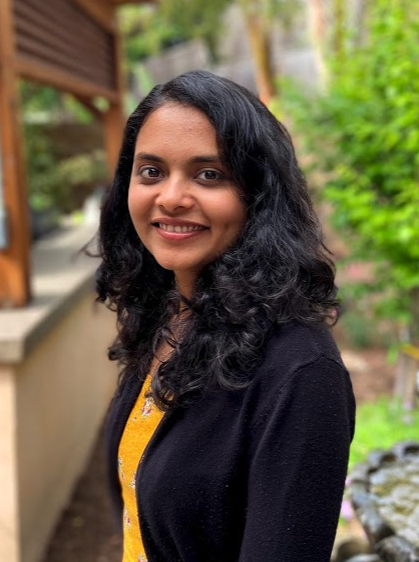
Shweta Shinde is an Assistant Professor in the Department of Computer Science at ETH Zurich where she leads the Secure & Trustworthy Systems (SECTRS) research group. She is also a member of the Institute of Information Security and the ZISC Center at ETH Zurich. Her work bridges theoretical foundations with practical implementations in hardware and system security. Dr. Shinde's research focuses on the intersection of trusted computing, system security, and program analysis. Her group investigates both foundational aspects of security to protect phones, servers, and accelerators, as well as practical aspects of realizing these solutions through large-scale system building. Her work spans hardware security primitives, trusted execution environments, confidential computing, and secure system design across multiple platforms including mobile devices, cloud infrastructure, and blockchain systems. Her publication record demonstrates significant impact in the field, with numerous papers in top security venues including IEEE S&P, USENIX Security, CCS, and NDSS. Her research has uncovered critical vulnerabilities in major hardware security technologies like Intel SGX and AMD SEV-SNP while also proposing novel frameworks for building more secure systems. The work spans multiple domains including hardware security, cloud security, mobile security, and blockchain security, with a consistent thread of identifying and addressing fundamental security challenges in trusted computing. Among her notable achievements are multiple best paper awards including at SysTEX 2025 and nominations at DATE 2025, a Distinguished Paper Award at IEEE S&P 2024, and recognition as a Most Innovative Research Pwnie Award Nominee in 2024. Her work on WeSee received particular attention for breaking AMD SEV-SNP through novel interrupt-based attacks. Dr. Shinde actively mentors PhD students including Mark Kuhne, Supraja Sridhara, Mélisande Zonta-Roudes, Benedict Schlüter, Andrin Bertschi, and others. She teaches courses on Systems Security, Information Security Lab, Seminar on Systems Security, and Current Topics in Information Security at ETH Zurich. Her service to the community includes extensive program committee work for major security conferences including Oakland (S&P), NDSS, USENIX Security, and CCS, where she has served as track co-chair and program co-chair for several workshops.
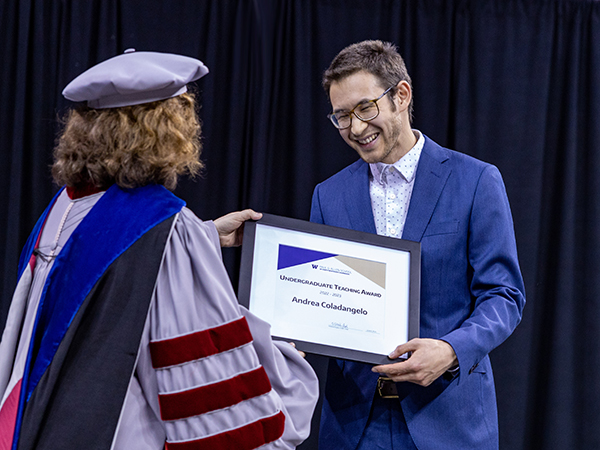
Andrea Coladangelo is an Assistant Professor at the Allen School of Computer Science & Engineering , University of Washington , co-leading the Quantum group and contributing to the Theory and Crypto groups. He coordinates the NSF-funded Quantum@UW REU program , fostering undergraduate research in quantum information. Previously, he was a postdoctoral researcher at UC Berkeley and the Simons Institute , advised by Umesh Vazirani , following a PhD in Computer Science at Caltech under Thomas Vidick . His academic journey began with a B.A. in Mathematics from Oxford and a Master in Mathematics from Cambridge . He co-founded qBraid , a platform for quantum computing education. Research Interests : Andrea explores the intersection of quantum computation and cryptography , focusing on foundational questions in entanglement , quantum correlations , and quantum learning theory . His work investigates quantum pseudorandomness , device-independent security , quantum algorithms , and quantum copy-protection , often leveraging computational assumptions to bridge quantum information theory with cryptographic applications. Scientific Awards : 2025 Google Research Scholar Program Award in Quantum Computing 2023 CSE Undergraduate Teaching Award for his course on quantum computation 2019 Best Student Paper Award at QIP Teaching & Outreach : Andrea designed and taught CSE 434: Intro to Quantum Computation (Spring 2023, 2024, 2025), CSE 534: Quantum Information and Computation (Autumn 2023), and CSE 599C: Quantum Learning Theory (Winter 2025). He also delivered lectures at the 22nd Bellairs Crypto Workshop (2024) and led a quantum programming tutorial using qBraid . Labs & Teams : As co-leader of the Quantum group at the Allen School, he collaborates with researchers in Theory and Crypto , advancing quantum computing through interdisciplinary projects and educational initiatives.
Beng Chin Ooi is a Lee Kong Chian Centennial Professor at the National University of Singapore (NUS), School of Computing (SoC). He holds a B.Sc. (1st Class Honors) and Ph.D. in Computer Science from Monash University. His research focuses on database systems, large-scale analytics, and distributed computing. He has held leadership roles including Dean of School of Computing (2007–2013) and Director of Smart Systems Institute (2011–2021). Key achievements include the Singapore President’s Science Award (2011), ACM Fellow (2011), IEEE Fellow (2009), and multiple best paper awards. His work emphasizes scalable data management, blockchain systems, and healthcare data analytics. Education: Monash University (B.Sc., Ph.D.) Leadership: Dean (SoC), Director (Smart Systems Institute) Awards: Over 15 major honors including ACM SIGMOD E.F. Codd Innovations Award (2020) His research spans distributed databases, big data systems, and innovative applications of blockchain technology. Recent work includes NASI (neural architecture search) and Rafiki (ML-as-a-service).
Malcolm McCulloch serves as Professor of Energy Systems and Group Leader of the Energy and Power Group within the Department of Engineering Science at the University of Oxford. He also holds the position of Co-Director for the Oxford Martin Programme on Integrating Renewable Energy and maintains affiliation with Christ Church college. His research spans four primary domains: domestic energy systems, electric vehicle technology, renewable generation, and energy solutions for developing regions. McCulloch's research focuses on practical energy transition challenges. His domestic energy work develops user-centric demand side management technologies and behavior change interventions, leading to the spin-out Intelligent Sustainable Energy (now Navetas Energy Management). In transportation, he pioneered the Morgan LifeCar hydrogen sports car project, resulting in high-efficiency motors and the Oxford Yasa Motors spin-out. His renewable generation research includes lightweight tidal turbines through Kepler Energy, while his Energy for Development work creates nano/micro grid solutions for distributed electrification. Analysis of his recent publications reveals a strong emphasis on integrating variable renewables through innovative market mechanisms, grid flexibility solutions, and electric vehicle integration. His work consistently addresses the technical and economic barriers to decarbonization, with increasing focus on peer-to-peer energy trading, thermal storage, and climate-resilient cooling solutions since 2020. McCulloch previously served as Co-Director of the Institute for Carbon and Energy Reduction in Transport (2008-2013) under the Oxford Martin School. His leadership extends to creating the Integrated Transport Network for Oxford and developing practical applications through multiple successful spin-out companies that bridge academic research and commercial implementation.
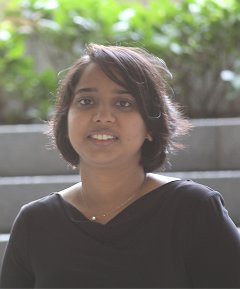
Sujaya Maiyya is an Assistant Professor at the Cheriton School of Computer Science, University of Waterloo. Prior to this, she completed a postdoc at Cornell University and earned her PhD from the University of California, Santa Barbara. Her research focuses on distributed systems, databases, and privacy/security, particularly in designing secure and efficient data management systems. She leads projects on oblivious databases, trusted execution environments (TEEs), and scalable privacy-preserving systems. Education: PhD in Computer Science, University of California, Santa Barbara (2018) MSc in Computer Science, University of California, Santa Barbara (2017) BE in Information Science, PESIT Bangalore (2014) Research Interests: Distributed systems, database privacy, oblivious datastores, genomics data security, and secure computation using TEEs. Her work emphasizes practical solutions for privacy-preserving storage and query processing, including tunable-privacy mechanisms and fault-tolerant ORAM systems. Awards and Grants: CFI/ORF Infrastructure Grant (2024-2029) NCC Research Awards (2024-2028) NSERC Discovery Grant (2023-2027) MIT EECS Rising Stars (2021) Teaching: Courses include CS348 (Introduction to Databases) and CS848 (Privacy Enhancing Data Systems). She emphasizes foundational concepts and system internals in database design and secure systems. Professional Service: Chair of Ontario Database Day (2024), PC member for SIGMOD, EDBT, VLDB, and ICDE. Frequent reviewer for journals like TKDE and DKE.
Giuseppe Ateniese is a Professor and Eminent Scholar in Cybersecurity at George Mason University, affiliated with the Department of Computer Science and Cyber Security Engineering. Formerly, he held the Farber Endowed Chair and chaired the Department of Computer Science at Stevens Institute of Technology. His research focuses on cloud security, applied cryptography, blockchain technology, and AI-driven cybersecurity solutions. He has received prestigious awards including the NSF CAREER Award and Google/IBM Faculty Awards. AIFurther, he teaches courses on blockchains, cryptography fundamentals, and cryptofinance. His work includes pioneering contributions to rewritable blockchains, password cracking via AI (e.g., PassGAN), and secure decentralized systems. Education: PhD in Computer Science, University of Genoa (2000) Laurea (M.Sc.), University of Salerno (1995) Master of Engineering (Honoris Causa), Stevens Institute of Technology (2020) Research Interests: Ateniese’s work bridges theoretical and applied cryptography, with emphasis on blockchain scalability, privacy-preserving machine learning, and secure data storage. He has developed foundational techniques like proxy re-cryptography and accountable storage systems. His recent efforts address AI’s dual role as both a cybersecurity tool and threat vector, including AI-based password cracking and defense strategies against LLM-driven attacks. Awards: NSF CAREER Award (for privacy/security research) Google Faculty Research Award (cloud security) IBM Faculty Award IEEE CISTC Technical Recognition Award Teaching & Labs: He teaches advanced courses on blockchains (CS695), cryptography fundamentals (CYSE/ECE476), and introductory cryptography (CS487/587). His research team focuses on cryptographic protocols, decentralized systems, and AI-security intersections. Collaborations include projects with Accenture on editable blockchain prototypes and NSF-funded work on password security.
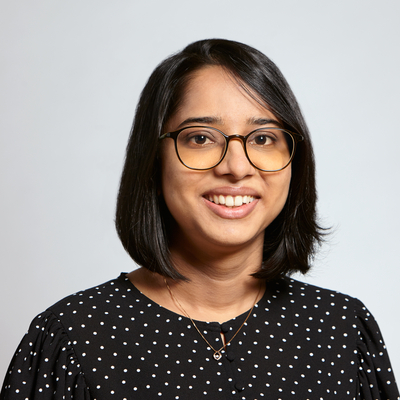
Shweta Shinde is an Assistant Professor at ETH Zürich's Department of Computer Science. She leads the Secure & Trustworthy Systems (SECTRS) group and is affiliated with the Institute of Information Security and the ZISC Center. Her research focuses on foundational and practical aspects of trusted computing, system security, and program analysis to protect devices ranging from smartphones to cloud servers. Key areas include AMD SEV-SNP, Arm CCA, Intel SGX, and hardware-software co-design for security. Dr. Shinde has made significant contributions to confidential computing, including frameworks like OpenCCA and tools for analyzing hardware vulnerabilities. Her work has been recognized with Best Paper Awards and Distinguished Paper Awards at top venues. She advises a group of PhD students, including Mark Kuhne, Supraja Sridhara, and Benedict Schlüter. Her service includes program committee roles at IEEE Security & Privacy, USENIX Security, and as Track Co-Chair for AsiaCCS 2026.
Samir Dani is a Professor of Operations and Supply Chain Management at Keele University’s Keele Business School. He holds Chartered Manager status and is a Fellow of multiple professional bodies, including the Higher Education Academy and Chartered Institute of Logistics and Transport. Prior to academia, he worked in India’s automotive industry. His research focuses on supply chain resilience, sustainability, food logistics, and Industry 4.0 technologies like AI and Blockchain. Affiliations: Keele University (current), University of Huddersfield (2014–2019), Loughborough University (2005–2008) Leadership: Former Head of Logistics, Marketing, Hospitality, and Analytics Department at University of Huddersfield Industry Engagement: £5M Leeds City Region LEP Supply Chain Program, UK-India trade advisory roles Research Interests: Supply chain risk and resilience Food supply chain sustainability AI, IoT, and Blockchain applications Industry 4.0 transformations Recent Article Trends: Focus on climate action impacts, blockchain trust mechanisms, and SME net-zero strategies. His work bridges academic theory with industry challenges, emphasizing technology adoption and sustainability. Awards: Prix des Associations (2015), UK Top 100 Logistics Professional (2017/18) Grants: £800K+ from EPSRC, IMCRC, and KTP Advisory Roles: Editorial Board member of Supply Chain Management: An International Journal, Academic Review Board member of International Journal of Operations and Production Management.
Ron Steinfeld is an Associate Professor in the Department of Software Systems & Cybersecurity at Monash University, Australia. He holds editorial roles in Designs Codes and Cryptography (since 2017) and has served on technical committees for top-tier conferences like ASIACRYPT, CRYPTO, and EUROCRYPT. His research focuses on quantum-safe cryptography, lattice-based cryptography, and blockchain security, with over 80 refereed publications and AUD$4M+ in research funding. Education: BSc Mathematics and Physics (Monash University, 1998) BE (Hons., First Class) Electrical and Computer Systems (Monash University, 2000) PhD Computer Science (Monash University, 2003) Research Interests: Design and analysis of cryptographic algorithms, quantum-safe protocols, lattice-based security foundations, and blockchain applications. His work underpins NIST standard algorithms like Kyber and Dilithium through structured lattice problem research. Recent Articles Trends: Focus on privacy-preserving blockchain protocols, post-quantum signature schemes, encrypted data search, and cryptographic applications in adversarial AI. Recent work includes fair Bitcoin watchtower schemes and genomic database privacy solutions. Awards: ASIACRYPT 2015 Best Paper Award Advising & Grants: Supervises PhD projects on quantum-safe cryptography and blockchain security. Leads initiatives like the AUD$4M ARC-funded Quantum Information Technology project. Collaborates with industry partners including CSIRO/Data61. Labs/Teams: Key contributor to Monash’s cybersecurity and cryptography research groups, involving interdisciplinary projects on materials discovery ( Æinstein initiative) and post-quantum blockchain security.
Dr. Mo Adda is a Principal Lecturer at the University of Portsmouth's School of Computing, part of the Faculty of Technology. He holds a PhD in Distributed Systems and Parallel Processing from the University of Surrey. His research focuses on network security, distributed systems, wireless networks, and cybercrime prevention. He leads projects in the Centre for Cybercrime and Economic Crime, exploring fault management in networks, blockchain applications, and IoT forensics. With 16 supervised theses, he advises on topics like energy-efficient cloud systems and machine learning for environmental modeling. His work bridges academia and industry, addressing challenges in software-defined networks, traffic control, and secure data sharing in social networks. Education: PhD in Distributed Systems (University of Surrey) Affiliations: Centre of Excellence in Defence, Risk & Resilience; Portsmouth Centre for Advanced Materials and Manufacturing Research Interests Dr. Adda's research spans: Network security and fault detection mechanisms Blockchain applications in IoT and forensics Energy-efficient cloud data center optimization Machine learning for climate modeling Self-organizing network protocols Grants & Collaborations His projects include collaborations with industry partners on secure data leakage detection in cloud systems and resilient wireless protocols for harsh environments. He has pioneered fault classification systems using clustering algorithms and fuzzy logic. Labs & Teams He contributes to the Centre for Cybercrime and Economic Crime, focusing on digital forensics and network intrusion analysis. His team develops frameworks for privacy management in social networks and proactive routing in software-defined networks.
Massimo Piccardi is a Professor of Natural Language Processing (NLP), Computer Vision, and Machine Learning at the University of Technology Sydney (UTS) , where he has been since 2002. He currently serves as the Head of the School of Electrical and Data Engineering and leads the Big Data Analytics program at the Global Big Data Technologies Centre. His research focuses on advancing NLP, machine learning applications in healthcare, and cybersecurity in IoT systems. He has authored over 200 journal papers and conference proceedings, secured significant ARC and CRC grants, and holds the IEEE Computer Society Distinguished Contributor Award (2022). Education & Professional Roles: Joined UTS in 2002, progressing from Associate Professor (2002–2007) to Professor (2008–present). Serves as Associate Editor for IEEE Transactions on Big Data and Editor for Artificial Intelligence in Medicine. Active in professional societies including IEEE, ACL, and ALTA (President, 2023–2024). Research Interests: Core areas include NLP (translation, summarization, adversarial attacks), healthcare informatics (clinical NLP, health service analysis), and cybersecurity (IoT security, privacy-preserving systems). Cross-cutting themes include generative models, cross-lingual systems, and ethical AI. Grants & Projects: Principal Investigator on ARC Discovery/Linkage projects and CRC grants. Recent projects include controllable machine translation (Amazon), privacy-preserving digital agriculture, and STEM innovation (ASTRID project with NBN Co). Labs & Collaborations: Leads the UTS Global Big Data Technologies Centre, collaborating on projects like adversarial NLP attacks, medical machine translation, and secure IoT frameworks.
Wei Xiong is the Hugh Leander and Mary Trumbull Adams Professor in Finance and Professor of Economics at Princeton University, affiliated with the Department of Economics and Bendheim Center for Finance. His research centers on behavioral finance and capital market imperfections with a focus on China's financial system and commodity markets. His educational background includes: Ph.D. in Finance from Duke University (2001) B.S. in Physics from University of Science and Technology of China (1993) Research Interests: Professor Xiong's work fundamentally explores behavioral finance and capital market imperfections , pioneering studies on speculative bubbles , heterogeneous beliefs in asset pricing , and financing frictions . His recent scholarship critically examines the financialization of commodity markets , belief distortions during financial crises , and the unique institutional dynamics of China's hybrid economy , where state and market forces interact. Publication Trends: Xiong's 48 publications in top-tier journals reveal an evolving trajectory from classical behavioral finance (2001-2013) toward contemporary China-focused systemic analysis (2017-2025). Recent works integrate cryptocurrency economics, real estate risk management, and policy design in emerging markets, demonstrating methodological rigor through structural modeling and empirical analysis of large-scale financial datasets. Scientific Awards: 2012 Smith Breeden Award (first prize) for the best non-corporate finance paper published in Journal of Finance 2013 NASDAQ OMX Award for the best asset pricing paper presented in Western Finance Association Meetings Professional Activities: As NBER research associate and former Management Science finance editor (2009-2011), Xiong bridges academia and policy. He co-founded VoxChina.org to foster China-world economic dialogue and co-edited The Handbook of China’s Financial System (Princeton University Press). His keynote addresses at major conferences—including the 2024 Chinese Economists Society meeting on “Information Discovery in a Hybrid Economy”—demonstrate sustained policy influence. Labs and Initiatives: Xiong leads Princeton's Bendheim Center for Finance research initiatives and directs VoxChina.org, which produces influential policy analyses on China's economy. His recent work includes the NBER-commissioned study on commodity market risks and ongoing projects examining big tech lending models and data privacy impacts on digital finance.
Ari Juels is the Weill Family Foundation and Joan and Sanford I. Weill Professor at Cornell Tech (Cornell University) and a faculty member in the Department of Computer Science. He co-founded and co-directs the Initiative for CryptoCurrencies and Contracts (IC³) and serves as Chief Scientist at Chainlink Labs. His research focuses on blockchain technology, cryptocurrency, smart contracts, applied cryptography, authentication, and privacy. Juels holds a Ph.D. in Computer Science from UC Berkeley and previously held roles as Chief Scientist and Director of the RSA Laboratories at EMC/Dell EMC until 2013. His work spans foundational contributions to decentralized systems, including Chainlink’s oracle networks and Ekiden’s privacy-preserving smart contracts. Juels has authored influential books like *The Oracle* (2024) and *Tetraktys* (2009), blending cryptography with thriller narratives. He advises numerous students and alumni, many of whom have joined prominent blockchain firms like Chainlink Labs, Mysten Labs, and Espresso Systems. Recent publications explore topics such as liquidity in blockchain assets, oracle network security, and economic analysis of smart contracts. His research emphasizes practical applications of cryptographic principles to real-world challenges in digital systems and decentralized finance. Juels’ lab collaborates on projects like HyDRA (automated bug bounty systems) and Lanturn (economic security metrics). He actively participates in academic and industry partnerships, bridging theoretical computer science with applied blockchain innovation.
Vassilis Zikas is an Associate Professor at the School of Cybersecurity and Privacy and holds a courtesy appointment in the School of Computer Science at Georgia Tech. He previously held positions at Purdue University, the University of Edinburgh, and Rensselaer Polytechnic Institute (RPI). His research focuses on cryptography, blockchain technologies, cryptocurrencies, game theory, and distributed computing. He leads the Blockchain Lab at Georgia Tech and serves as Chief Scientist at Sunday Group, where he contributes to the Mobby blockchain architecture. His work is supported by the NSF, DoD, Swiss NSF, and industry partners like Sunday Group and Algorand Foundation. He has organized major conferences including PKC 2020 and has served on program committees for EUROCRYPT, CRYPTO, and TCC. He advises PhD students in cryptography and related fields and has mentored postdocs and master’s students. Zikas’ publications span topics like secure multi-party computation (MPC), blockchain security, and cryptographic protocol design. His recent work includes advancements in privacy-preserving protocols, adaptive security frameworks, and composability in blockchain systems. Notable awards include the 2023 Leadership Award from Purdue College of Science and an AnlytiXIN Fellowship. He actively contributes to both theoretical and applied aspects of cybersecurity and privacy through academic and industrial collaborations.