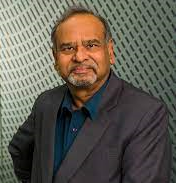
Robert Nehmer is a Professor of Accounting at the School of Business Administration, Oakland University. He holds a Ph.D. in Accounting from the University of Illinois at Urbana-Champaign, where he also completed his master's and bachelor's degrees in Accountancy. Dr. Nehmer teaches graduate and undergraduate courses in auditing and accounting information systems. His research explores formal systems, internal controls, software agents, and emerging technologies in accounting. Key focus areas include blockchain applications, drone technology in auditing, cloud-based systems, continuous auditing frameworks, XBRL implementations, and financial ontologies. He collaborates with industry partners including KPMG on drone-enabled auditing research. Publications demonstrate strong emphasis on technology-driven accounting innovations, particularly blockchain systems (2020), drone auditing frameworks (2017), AI in education (2024), and semantic modeling of financial data (2022). His work consistently bridges theoretical accounting concepts with applied technological solutions. Awards & Recognition: University Service Award, Oakland University/SBA (April 2016) 10 Year Service Award, Oakland University (February 2016) He maintains active membership in the American Accounting Association, Information Systems Audit and Control Association, XBRL-US, and the Object Management Group's Finance Domain Task Force.
Romaric LUDINARD is an Associate Professor at IMT Atlantique since 2017, affiliated with the Department of Systems, Networks, Cybersecurity, and Digital Law (SRCD). He holds leadership roles, including co-head of the post-master professional certificate in Cybersecurity (with CentraleSupélec) and Deputy Head of the SRCD department. Previously, he was Associate Professor at ENSAI (2015–2017), where he led the Data Scientist specialization and computer science team. His career includes research and teaching roles at the University of Rennes 1 and international collaborations, such as a postdoc at Sapienza University of Rome (2015). Research Interests: Focus on distributed systems, blockchain protocols (safety, scalability), fault tolerance, and cybersecurity. Key areas include consensus mechanisms, intrusion detection, and Byzantine fault tolerance in large-scale networks. Current projects involve blockchain compression (BC4SSI), federated learning security (RADAR), and 5G radio access networks. Publications & Projects: Over 30 publications in top venues (IEEE/ACM conferences, journals). Notable works include geometric FTM localization techniques, Bitcoin network analysis, and federated learning reputation systems. Active in grants like Beyond5G (BPI France) and ANR JCJC (BC4SSI). Holds patents for anomaly detection in distributed systems. Teaching: Courses on blockchain, distributed systems, cybersecurity, and programming (Python, object-oriented design). Supervised 10+ PhD/Master students, including defended theses on blockchain improvement proposals and federated learning trust frameworks. Service & Talks: Organizer of AlgoTel workshops, TPC member for SSTIC, NCA, and ICDCN. Delivered keynote speeches on blockchain scalability and fork avoidance (e.g., BART Initiative, DSN'16). Active in conference organization and review committees.
Xin Zhao is a prominent professor at Renmin University of China's School of Information, Department of Computer Science, with an extensive publication record spanning from 1997 to 2026. His research demonstrates significant contributions across multiple disciplines including artificial intelligence, natural language processing, computer vision, and interdisciplinary applications in ecology, medicine, and business. Dr. Zhao's research interests are remarkably diverse, focusing primarily on artificial intelligence and its applications. His work spans natural language processing, large language models, information retrieval, machine learning, and computer vision. Recent publications reveal a strong emphasis on practical AI applications in healthcare (dental implant failure prediction), environmental science (kelp bed dynamics), finance (green finance impact), and industrial systems (composite curing process monitoring). His research often combines theoretical advancements with real-world problem solving, demonstrating both academic rigor and practical relevance. Analysis of his recent publications (2024-2026) shows a clear trend toward interdisciplinary AI applications, with increasing focus on multimodal learning, robustness in dynamic environments, and practical implementations across various sectors. His work bridges theoretical computer science with domain-specific challenges in medicine, ecology, finance, and industrial engineering. The publications demonstrate sophisticated methodological approaches including deep learning architectures, mathematical modeling, and novel algorithmic solutions to complex problems. Dr. Zhao has made significant contributions to the academic community through numerous publications in high-impact journals and conferences including IEEE Transactions, ACL, AAAI, and CVPR. His collaborative work spans international boundaries, with co-authors from institutions worldwide, indicating strong research networks and interdisciplinary collaborations. His research group appears to be actively engaged in cutting-edge AI research, with particular strengths in large language models, multimodal learning, and practical AI applications. The group's work on projects like C-3PO (Compact Plug-and-Play Proxy Optimization) and RMoA (Optimizing Mixture-of-Agents) demonstrates leadership in emerging AI methodologies. Current research directions include enhancing LLM capabilities, improving multimodal understanding, and developing robust AI systems for real-world applications across diverse domains.
Roles and Affiliations: Vijay Kumar is an Associate Professor and Docent in Textile Management at the University of Borås, Sweden, within the Faculty of Textiles, Engineering and Business. He holds a PhD from the Erasmus Mundus Joint Doctorate Programme in Sustainable Management and Design for Textiles, with research contributions across Université Lille 1, Soochow University, and the University of Borås. His academic roles include membership in the Research Education Committee for Social and Human Sciences at the University of Borås (2024–Present) and serving as an internal environmental auditor since 2021. Education: PhD: Erasmus Mundus Joint Doctorate Programme (SMDTex), 2010–2014 M.Tech: Textile Engineering, Indian Institute of Technology Delhi (IITD), India B.Tech: Textile Engineering, Himachal Pradesh University (JN Govt. Engineering College), India Research Interests: Dr. Kumar's research focuses on two core axes: System-Level Modeling : Exploring dynamics of textile processes and value chains using data-driven methods (e.g., discrete event simulations, AI, system dynamics). Key topics include traceability, circular business models, and predictive analytics for textile systems. Analytical Modeling of Textile Materials : Investigating structural parameters of materials like nonwovens, carbon nanotube assemblies, and absorptive glass mats. Techniques include micromechanics and stochastic modeling to understand material behavior under diverse conditions. His work bridges theory and application, leveraging interdisciplinary approaches to advance sustainable textile systems. Publications: His research spans leading journals such as Macromolecular Materials and Engineering , Advanced Materials Interfaces , and Sustainability . Recent work emphasizes textile actuators, blockchain-based traceability, and AI-driven supply chain optimization. Articles often address sustainability challenges, such as circular economy practices and material science innovations. Grants and Projects: Dr. Kumar has led or co-led projects funded by Vinnova, Formas, EU Horizon/H2020, and Swedish ESF Council, among others. These projects address textile recycling, smart manufacturing, and supply chain resilience. Advising and Editorial Roles: He supervises doctoral students in textile systems and materials science. Editorial contributions include roles as Academic Editor for PLOS ONE and member of the editorial board for Advanced Materials & Sustainable Manufacturing . Labs and Teams: His research involves interdisciplinary collaborations, including work on textile muscle fibers, electroactive polymers, and sustainable manufacturing processes. Key projects involve partners like Linköping University and the University of Manchester.
Barbara Re is an Associate Professor at the University of Camerino, specializing in interdisciplinary research at the intersection of blockchain technology, process mining, and IoT systems engineering. Her work emphasizes integrating formal modeling approaches with real-world applications in robotics, digital twins, and smart contract analysis. Key research areas include: Development of BPMN-based frameworks for IoT and multi-robot systems Blockchain applications for choreography-based systems and smart contract auditing Process mining techniques for analyzing robotic and Ethereum-based systems Design of digital twin architectures for industrial and environmental monitoring Recent work highlights include: SAFE Platform : A disaster response system integrating IoT and process-driven protocols ChorChain : Blockchain framework for trustworthy multi-party business processes Fluidware : Model-driven approach for cross-platform IoT applications Her contributions span over 50 academic publications since 2020, with a focus on formal verification, adaptive system design, and interdisciplinary ICT solutions for complex operational environments.
Professor Nik Bessis is a full Professor of Computer Science at Edge Hill University (UK), serving as founder and former Head of the Department of Computer Science (2015-2021) and Engineering (2018-2021). He leads strategic initiatives including the University’s 2023-30 Research Strategy and the international multi-institutional alliance for global societal challenges. His roles include Senior Advisor for Research Partnerships and Institutional Lead for UKRN/OR4 projects. He directs the interdisciplinary Data Science research centre, generating over £5M in external funding from UKRI, EPSRC, and Innovate UK. Affiliations: Edge Hill University, Data Science STEM Research Centre, IEEE, HEA, BCS Education: BA (Graphic Design, T.E.I. Athens), MA/PhD (De Montfort University) His research focuses on smart systems, IoT, disaster management, and big data analytics. He has published over 330 works, including the influential Big Data and Internet of Things (2014, 150k downloads), with an h-index of 40. Awards include 4 best paper prizes and Fellowships from HEA/BCS. He led the University’s REF2021 submission, achieving a 40-place rise in UK rankings. Projects include the £13M Tech Hub building with advanced labs (including a 4K CAVE and robots). He advises on global initiatives like the NW Sustainability in Computing Group and EUA-CDE Building Bridges peer group.
Prof. Amel BOUZEGHOUB is a Professor at Telecom SudParis, affiliated with the SAMOVAR research center. Her work focuses on AI, IoT, and data-driven systems with applications in smart environments, robotics, and education. She has contributed to over 50 peer-reviewed publications spanning machine learning, reinforcement learning, and semantic data processing. Research Interests: Her research bridges theoretical advances in machine learning with practical applications in smart homes, autonomous systems, and educational technology. She explores topics like human activity recognition, anomaly detection in social networks, and real-time data stream processing. Recent Trends: Her 2023-2024 work emphasizes explainable AI, reinforcement learning for autonomous systems, and multi-agent frameworks for stream reasoning. Earlier contributions include IoT-based supply chain traceability and distributed human activity recognition models. Grants & Projects: Key contributions include the ANR INCOME project on multi-scale context management for IoT systems and ACMES initiatives in educational technology. Labs/Teams: Active within the SAMOVAR lab at Telecom SudParis, collaborating with international teams in AI and robotics research.
Professor Nathan Clarke is a Professor of Cyber Security and Digital Forensics at the University of Plymouth and an adjunct Professor at Edith Cowan University, Western Australia. His research focuses on information security, biometrics, digital forensics, intrusion detection, and human factors in cybersecurity. He has contributed over 250 publications across journals, conferences, books, and patents. Clarke serves as a chartered engineer, BCS Fellow, CIIS Fellow, and IEEE Senior Member. He has led pioneering studies in gait authentication, eHealth security, and AI-driven cybersecurity tools. His leadership roles include past Chair of IFIP TC11.12 (Human Aspects of Information Security) and co-chair of the HAISA symposium series. Clarke’s work emphasizes interdisciplinary approaches, blending technical solutions with human-centric design to address evolving cyber threats. Key Research Themes: Biometric authentication systems, digital evidence analysis, explainable AI in forensics, and insider threat mitigation. Awards: Fellowships from BCS, CIIS, and IEEE recognition. Labs/Groups: Director of the Centre for Cyber Security, Communications and Network Research (CSCAN) at Plymouth. Grants & Collaborations: Extensive industry and academic partnerships, including work on GDPR compliance frameworks and smart device security. Clarke’s recent publications highlight advancements in XAI for forensic image analysis, unified digital evidence systems, and AI-driven cybersecurity training. His work bridges technical innovation with user behavior insights to enhance real-world security applications.
Sonia Bergamaschi is a Professor in the Department of Engineering 'Enzo Ferrari' at the University of Modena and Reggio Emilia. She holds dual roles as Contract Professor and Senior Professor, focusing on advanced data management, big data integration, and AI applications in cultural heritage. Her work emphasizes entity resolution, data preparation, and scalable systems for diverse domains such as energy communities and Islamic studies. Her research spans interdisciplinary areas including data science, machine learning, and database systems. Recent publications highlight contributions to entity resolution methodologies, sustainable data practices, and AI-driven analysis of religious texts. She collaborates with international teams on projects like the Digital Maktaba initiative, which digitizes non-Latin cultural heritage materials. Key research themes include: Big Data Platforms for Energy Communities AI in Islamic Studies and Digital Libraries Schema-Aware Entity Resolution Efficient Stream Processing Techniques Data Privacy and Auditable Tokenization Her work bridges theoretical advancements with practical applications in industry and cultural preservation.
Yan Yao is a Professor at Hefei University of Technology, School of Computer Science and Information Engineering, with a distinguished research career spanning over two decades. Her work bridges theoretical foundations with practical implementations across wireless communications, cloud computing, and medical informatics, demonstrating both technical depth and interdisciplinary versatility. Her primary research domains include: Wireless Communications - Pioneering work on distributed wireless communication systems, MIMO technologies, and physical layer security Cloud and Edge Computing - Innovative resource allocation mechanisms using game theory and auction models Medical Informatics - Applying machine learning to critical healthcare challenges including sepsis prediction and diabetic retinopathy analysis Blockchain and Security - Developing secure data sharing frameworks for industrial IoT applications Analysis of Yan Yao's publication trajectory (2002-2025) reveals a strategic evolution from foundational wireless communications research to interdisciplinary applications. Her early work (2002-2008) established her expertise in distributed wireless systems architecture and MIMO technologies, frequently collaborating with Tsinghua University researchers. More recently (2018-2025), she has expanded into cloud-edge computing, blockchain applications, and healthcare analytics, demonstrating remarkable adaptability while maintaining technical rigor. Her most impactful recent contributions integrate multiple domains to solve complex real-world problems, such as applying game theory to cloud-edge resource allocation and developing machine learning solutions for clinical prediction. Yan Yao's research impact is reflected in her consistent publication record in high-impact venues including IEEE Transactions, BMC Medical Informatics and Decision Making, and top-tier conferences. Her work shows a clear progression from technical contributor to research leader, with increasing emphasis on interdisciplinary applications that address significant societal challenges.
Krishna P. Gummadi is a Professor and Scientific Director at the Max Planck Institute for Software Systems (MPI-SWS) , leading the Networked Systems Research Group. His work bridges computer science and social science, focusing on social computing systems that network humans and computers at societal scale. Academic Leadership: Faculty (Scientific Director), Head of Networked Systems Research Group Key Research Areas: Algorithmic fairness, privacy in social media, distributed systems, human-centered machine learning His research methodology combines user-centric studies through large-scale observational analysis, data-centric studies using statistical learning and NLP, and systems-centric approaches for practical deployments like information diet tools and fraud detection services . Current work explores crowdsourcing systems , peer-to-peer networks , and trusted cloud computing . Scientific Awards & Recognitions: CNIL-INRIA Privacy Runners-Up Award (2018) Casper Bowden PET Runners-Up Award (2018) SIGCOMM Test of Time Award (2007) Students & Postdocs: Current: Junaid Ali, Reza Babaei, Nina Grgić-Hlača, Preethi Lahoti, Johnnatan Messias, Till Speicher Former: Asia J. Biega (Microsoft Research), Przemyslaw Grabowicz (UMass Amherst), Muhammad Bilal Zafar (Bosch AI), Juhi Kulshrestha (GESIS), Mainack Mondal (University of Chicago), Rijurekha Sen (IIT Delhi)
Bram Adams is an Associate Professor at Queen's University's School of Computing, part of the Faculty of Arts and Science. He holds a Ph.D. in Computer Science Engineering from Ghent University (2008) and is an adjunct professor at Polytechnique Montreal. His research focuses on release engineering, software analytics, and human affect in software engineering, with contributions to build systems, software modularity, and green software practices. He leads the MCIS Lab, which studies software maintenance, construction, and intelligence. Research Interests: Release Engineering and DevOps Build Systems and Continuous Integration Software Analytics and Empirical Studies Human Affect in Software Engineering (sentiment/emotion analysis) Green Software and Energy Consumption Software Modularity and Concern Mining Awards: 2021 MSR Foundational Contribution Award Multiple Distinguished Paper and Best Paper Awards at ICSE, FSE, and MSR Most Influential Paper Awards for SCAM 2010 and AOSD 2009 Academic Service: General Chair of Mining Software Repositories (MSR) 2025 Editorial roles at IEEE TSE, Empirical Software Engineering, and Information and Software Technology Organizer of workshops on Software Health, Release Engineering, and Mining Software Repositories Labs/Teams: Heads the MCIS Lab at Queen's University, collaborating with researchers on release engineering, build systems, and software analytics.
Ji Zhang is a Professor in the Department of Mathematics, Physics and Computing at the University of Southern Queensland. His research focuses on machine learning, data privacy, computer vision, and blockchain technology. He holds an MSc from Singapore and a PhD from Dalhousie University. His work addresses challenges in secure multiparty computation, adversarial machine learning, and deepfake detection. Key research themes include privacy-preserving techniques for data publishing, generative models for image manipulation, and graph neural networks for network analysis. Recent studies explore efficient neural dynamic data valuation and fair algorithmic systems. He has contributed to scalable graph mining frameworks and secure blockchain applications in healthcare and smart contracts. His publications reflect interdisciplinary innovation across cybersecurity, computer vision, and distributed systems. Notable projects include EVRACE for e-bike charging analysis and Tara-Net for takeaway rider accident detection. Despite no listed awards, his work demonstrates significant impact in AI-driven solutions for real-world problems. Collaborative activities span academic-industry partnerships in fraud detection systems and edge computing frameworks for worker safety monitoring (DeepSafety). Current research emphasizes improving transparency in graph neural networks and developing robust anomaly detection methodologies.
Alok Mishra is a Professor at Molde University College, affiliated with the Faculty of Logistics. His research focuses on Artificial Intelligence, Software Engineering, Cybersecurity, and Digitalization, with a strong emphasis on blockchain technology, machine learning, and sustainability. He leads the research group 'Digitalization for Sustainability Informatics and Digitalization.' Key projects include 'Building Trust in Global Seafood Supply Chains Through DNA Analysis, Digital Product Passports (DPPs), and Blockchain Technology.' His work spans interdisciplinary areas such as AI ethics, data privacy, and IoT-based systems. Recent publications highlight advancements in code smell detection, cybersecurity policy development, and green AI initiatives. His research trends reflect a blend of theoretical and applied studies, addressing challenges in software quality, blockchain integration, and sustainable tech solutions. Collaborations with global researchers underscore his commitment to impactful, cross-disciplinary innovation.
Professor Madhu Chetty is a distinguished academic in Information Technology at Federation University Australia's Institute of Innovation, Science and Sustainability (IISS). He also serves as the Director of AI and ML Stream within the Health Innovation and Transformation Centre (HITC). With over 35 years of tertiary teaching, research, and leadership experience in Australia and overseas, Professor Chetty has held academic positions at the University of Melbourne, Monash University, and the National Institute of Technology, India. His notable visiting appointments include Indian Institute of Technology Bombay, University of Warwick, Jawaharlal Nehru University, and Delft University of Technology. Amity University, India conferred on him a 'Citation and Lifetime Professorship'. Professor Chetty's research focuses on applying Artificial Intelligence (AI), Machine Learning (ML), Large Language Models, and Blockchain to problems in bioinformatics, health, and energy trading. His interdisciplinary work contributes to FedUni's strategic research centers in Health and IT. Key research areas include modeling genetic networks for cardiovascular and eye disease research, mental health applications using AI techniques for analyzing biopsychosocial data, drug repurposing with IBM collaboration, and blockchain algorithms for energy trading funded by the Qatar government. His publication record shows a consistent focus on computational approaches to biological problems, with recent work emphasizing genetic network modeling, mental health applications of AI, and blockchain technology. The research demonstrates a progression from foundational work in protein structure prediction to current applications of AI in healthcare and energy systems, with a strong emphasis on translating computational methods to real-world problems. 2021 Overall Award for Excellence in Graduate Research Supervision 2024 Dean's award for excellence in PhD thesis (awarded to one of his students) 2021 Vice Chancellor's Certificate of Commendation for Excellence in Community Engagement and Impact Professor Chetty has supervised over 22 PhD students to completion and currently supervises 5 PhD students across diverse topics including dementia prediction, drug repurposing, cancer classification, and mental health. His leadership extends to editorial roles for journals, conference organization, and development of publicly available software tools like GRAMP and GlobalMIT for genetic network analysis. He has secured substantial research funding totaling over $1.1 million as lead investigator, including projects funded by NHMRC, Qatar Research, Development and Innovation, and industry partners. As an academic leader, he has served as Deputy Head of School, member of the School Leadership Team, and HDR Coordinator. His professional service includes roles as General Chair of IEEE International Conference and Vice Chair of the IEEE Victorian/Tasmanian Section, demonstrating significant contribution to the broader academic community.