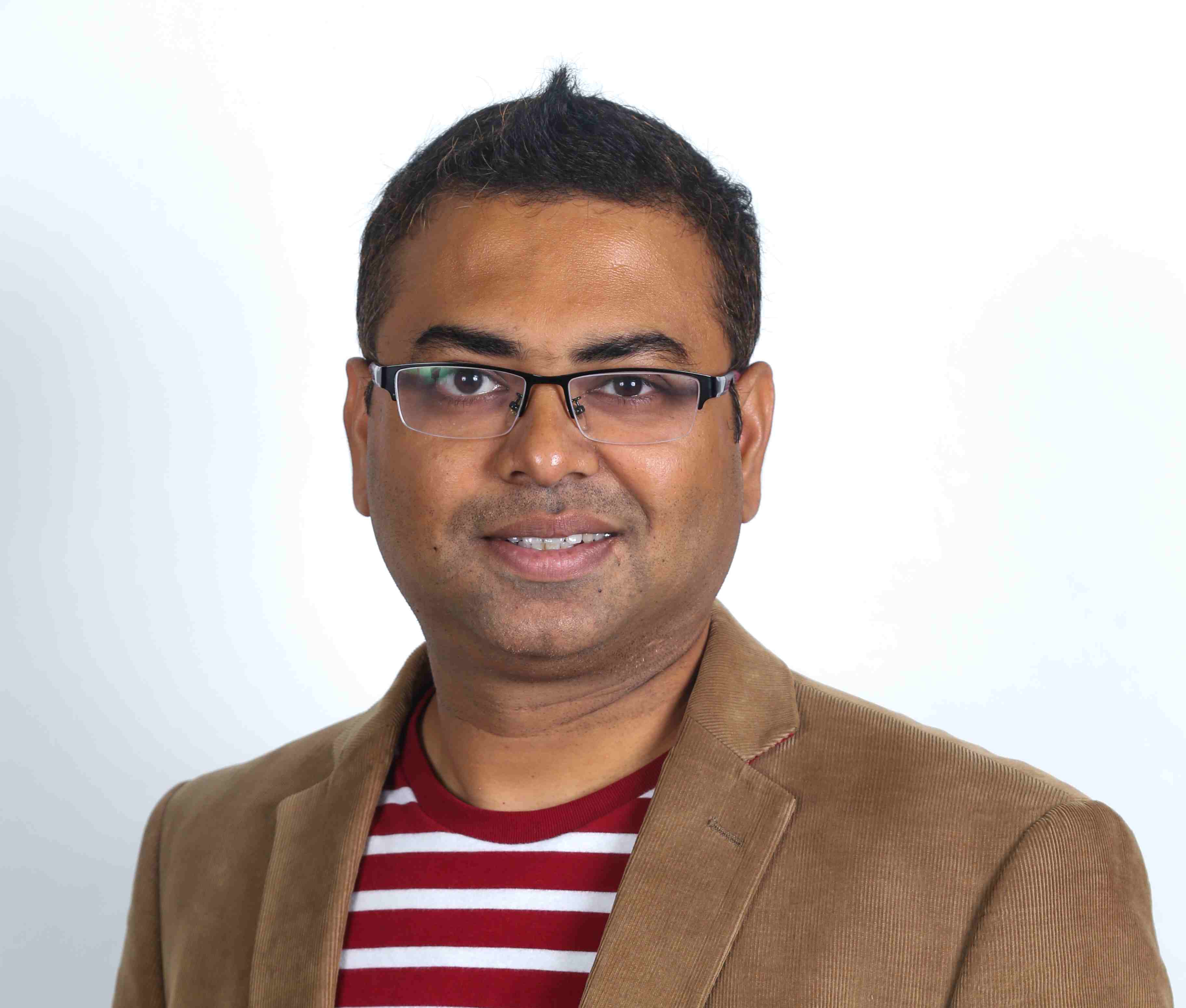
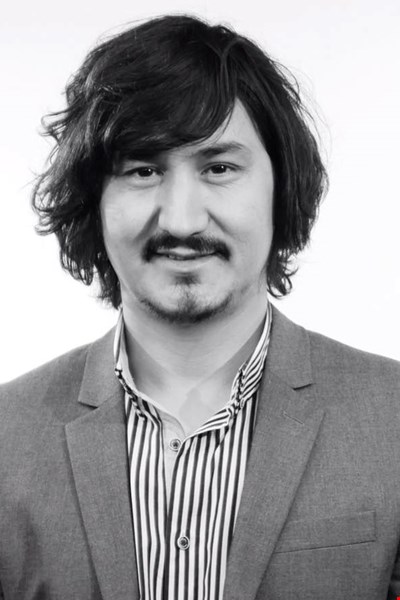
Chantal Taconet is a Lecturer at Telecom SudParis, part of the SAMOVAR research institute. Her work focuses on middleware systems for the Internet of Things (IoT), context-aware computing, energy efficiency, and blockchain applications in supply chains. She has co-authored over 20 peer-reviewed articles and conference papers since 2008, addressing IoT middleware design, QoC management, and middleware for cloud-IoT integration. Her research spans IoT middleware architectures (e.g., IoTVar framework), energy-efficient IoT protocols, and blockchain-based supply chain traceability. She contributed to the ANR INCOME project on multi-scale context management, emphasizing model-driven engineering and distributed system frameworks. Taconet has organized workshops like M4IoT and co-edited special issues on IoT middleware in Annals of Telecommunications . Key technical areas include semantic-based discovery services, fog computing integration for sensor networks, and trust models for IoT systems. Her work bridges theoretical middleware design with practical implementations for IoT applications.
Prof. Sinisa Sremac is a Full Professor at the Department of Transport, Faculty of Technical Sciences, University of Novi Sad. He specializes in logistics, hazardous materials transport, and risk management, with over 100 publications including 25 in top SCI journals. He authored textbooks on dangerous goods transport and logistics systems, and leads expert training programs for transport safety consultants. He chairs the Hazardous Goods Cluster of Serbia and advises the Chamber of Commerce of Vojvodina on transport safety. Education: Bachelor's/Master's in Transport Engineering (University of Novi Sad, 2008), GPA 9.28 PhD in Transport Engineering (University of Novi Sad, 2013), GPA 10.0 Research Focus: Logistics systems optimization, hazardous materials transportation risk assessment, intermodal transport challenges, and digital transformation of logistics. He has led over 20 scientific projects and collaborates extensively with industry partners. Awards: University of Novi Sad Academic Excellence Award (2005/06) 2014 Momcilo Momo Novkovic Award for mentoring and institutional promotion Professional Roles: Head of the Department of Transport Logistics at Faculty of Technical Sciences Founder and Chair of the Hazardous Goods Cluster Serbia Expert for Transport Safety at VoJVODINA Chamber of Commerce Training Programs: Over 250 candidates certified through his leadership in safety consultant training programs.
Lara Houston is a Research Fellow at the Global Sustainability Institute within Anglia Ruskin University's Faculty of Science and Engineering. Her research examines sustainability through grassroots practices and citizen-led innovation, focusing on how marginalized communities create alternative knowledge systems. She employs creative, participatory methods in transdisciplinary collaborations with electronics repairers, urban farmers, and citizen scientists. Education: PhD Sociology, Lancaster University MA Cultural Studies, Goldsmiths, University of London BA Design, Goldsmiths, University of London Houston's research centers on repair cultures as sites of socio-technical innovation and environmental justice. She investigates how communities sustain technologies through repair practices and develop alternative infrastructures. Her work intersects sustainability studies, digital anthropology, and participatory design, with emphasis on: Grassroots responses to technological breakdown Creative methods for sustainable futures More-than-human approaches to urban systems Blockchain applications for food justice Her publications demonstrate sustained focus on citizen-led environmental action, with recent work exploring how creative practices stimulate societal transformation and how blockchain technologies might reconfigure human-environment relations. Key thematic threads include repair economies, community sensing, and algorithmic governance of ecological systems. Research Grants: Co-Investigator, Algorithmic Food Justice project (Not-Equal Network+ grant, ESPRC funded) She leads collaborative projects including CreaTures (transformative creative practices) and Citizen Sense (participatory environmental monitoring), working with international networks of artists, designers, and community activists.
Dr. Yifei Dong is a Research Fellow at the Data Science Institute , University of Technology Sydney, with expertise in LLM-assisted agent systems , explainable AI , and multimodal artificial intelligence . Holding a PhD in Computer Science from UNSW Sydney and over a decade of fintech industry experience including CTO roles, he has secured $2.4 million in competitive funding for AI solutions bridging academia and real-world applications in healthcare, education, and finance. Education : PhD in Computer Science from UNSW Sydney Current Role : Research Fellow at UTS Data Science Institute (2023–present) Past Academic Appointments : Lecturer at Southern Cross University and Western Sydney University Dr. Dong’s research focuses on making AI systems transparent and socially beneficial , with contributions to adversarial AI, trustworthy digital societies, and wireless sensor networks. His recent work includes: Developing AICAttack (2025) for adversarial image captioning attacks Creating the QMAD fairness metric (2025) for dynamic environments Advancing explainable ECG diagnosis systems (2025) via multimodal LLMs As a scientific awardee (2025 RegTech Social Impact of the Year), he has pioneered AI solutions for vulnerable populations, such as NDSI participants through the "My Complaint Assistant" tool. His supervision of PhD and Honours students emphasizes technical rigor and ethical responsibility.
Shahrear Iqbal is an Adjunct Associate Professor at Queen's University and a Cyber Security Researcher at the National Research Council (NRC) Canada . He holds a PhD in Cybersecurity (2017) and MSc in Combinatorial Optimization (2011) from Queen's University, along with a BSc in Computer Science and Engineering (2008) from Bangladesh University of Engineering and Technology. Research Focus: Security and Privacy of Smart Systems, including in-vehicle security, self-aware operating systems, IoT-cloud security, and AI-driven cybersecurity. Teaching: Previously taught CISC490: Cybersecurity at Queen's University. Key Projects: Droid Mood Swing (DMS) for context-aware Android security policies Securing ECU Communications in connected vehicles FCFraud for user-side click-fraud detection
Mohammad Ali Maddah-Ali is an Associate Professor in the Department of Electrical and Computer Engineering at the University of Minnesota Twin Cities. He received his Ph.D. from the University of Waterloo and was a Postdoctoral Fellow at UC Berkeley. His research focuses on information theory, communication systems, distributed computing, and blockchain technology. University of Waterloo (Ph.D.) University of California at Berkeley (Postdoctoral Fellow) Nokia Bell Labs (2010-2020) His work addresses fundamental limits of distributed systems through theoretical advancements like interference alignment, coded caching, and secure multi-party computation. Recent publications emphasize secure aggregation in federated learning and blockchain security. He has received multiple awards including IEEE Fellow (2023), IEEE Jack Keil Wolf Student Paper Award (2017), and IEEE Information Theory Society Paper Award (2016). He has served as associate editor for IEEE Transactions on Information Theory and leads the Maddah Research Group.
Anders Møller is a Professor and Vice Head of Department at the Department of Computer Science, Aarhus University, Denmark. He is a leading researcher in programming languages and software engineering, with a primary focus on static and dynamic program analysis. He serves as Chairman of the PhD Committee and holds leadership roles in the international research community, including Vice-Chair of ACM SIGPLAN and Associate Editor for ACM TOPLAS and ACM TOSEM. His research interests include programming languages, software engineering, static and dynamic analysis, program verification, and security. His work bridges theoretical foundations and practical applications, particularly in improving software reliability and security through advanced analysis techniques. The trends in his recent publications reflect a strong emphasis on static analysis for security, scalability, and real-world impact—especially in web applications, smart contracts, and open-source software supply chains. His research has evolved toward practical deployment, demonstrated by the founding and acquisition of Coana by Socket in 2025 for enhanced vulnerability detection. Recipient of the Danish Elite Research Prize 2020 ACM Distinguished Member He actively mentors students and contributes to the academic community through conference leadership (e.g., OOPSLA, PLDI, ICSE). He also co-authored the widely used textbook Static Program Analysis with Michael I. Schwartzbach. His work is deeply integrated into both academic and industrial advancements in software analysis and security.
Jeff Huang is an Associate Professor in the Department of Computer Science and Engineering at Texas A&M University, specializing in programming languages and software engineering with a focus on concurrency and runtime verification. His research develops advanced program analysis techniques and tools to enhance software performance and reliability. Programming Languages Software Engineering Concurrency Runtime Verification His work has been recognized with prestigious awards including the ACM SIGSOFT Early Career Researcher Award, NSF CAREER Award, Google Faculty Research Award, and DARPA Young Faculty Award. Notably, his research has earned multiple SIGPLAN Research Highlights and PLDI Distinguished Paper Awards. ACM SIGSOFT Early Career Researcher Award NSF CAREER Award Google Faculty Research Award Mozilla Research Award Facebook Research Award DARPA Young Faculty Award ACM SIGSOFT Outstanding Dissertation Award ACM SIGPLAN PLDI Distinguished Paper Award SIGPLAN Research Highlights Jeff Huang actively contributes to academic communities as a committee member in venues like SPLASH, ICSE, ISSTA, and PLDI. He has authored influential papers on concurrency bug detection, pointer analysis, and language translation tools, spanning both theoretical foundations and practical implementations.
Öznur Özkasap is a Professor in the Department of Computer Engineering at Koc University's Graduate School of Sciences and Engineering. She serves as Head of Department and has research interests spanning distributed systems, computer networks, and energy-efficient networking protocols. Her work integrates artificial intelligence into distributed computing frameworks and explores security in peer-to-peer systems. Education: PhD (2000), MSc (1994), and BS (1992) from Ege University Research Areas: Distributed Systems, Cloud/Edge Computing, Network Security, and AI applications in distributed environments Her recent publications focus on blockchain-assisted distributed systems, federated learning optimization, and energy-efficient frameworks for software-defined networks. She explores multi-objective load balancing, decentralized energy trading, and secure P2P architectures. Key trends include cross-disciplinary applications of distributed computing in healthcare and energy systems. Professor Özkasap contributes to advancing edge computing, IoT-based sensor systems, and privacy-preserving mechanisms in decentralized environments. Her work addresses challenges in reliable network protocols, microgrid energy sharing, and security vulnerabilities in autonomous systems.
Vedat Akgiray is a Professor at Bogazici University, holding a Ph.D. from Syracuse University. His teaching and research areas focus on Derivatives , Portfolio Management , Probability , and Financial Markets , with a particular emphasis on Mathematical Finance . He has published extensively on topics such as FinTech, corporate governance, pension systems, and risk management. Education : Ph.D., Syracuse University Email: akgirayv@bogazici.edu.tr
Professor Steve Counsell is a distinguished academic in the Department of Computer Science at Brunel University London's College of Engineering, Design and Physical Sciences. Holding a PhD from Birkbeck, University of London (2002), he previously served as a Lecturer at Birkbeck and brings industry development experience to his academic role. As a Fellow of the British Computer Society, his career bridges theoretical research and practical software engineering applications. PhD in Software Engineering from Birkbeck, University of London (2002) Former Lecturer at Birkbeck Department of Computer Science Industry software development experience prior to PhD Professor Counsell's research centers on empirical software engineering with particular focus on software metrics, refactoring techniques, code smells, fault analysis, and agile methodology implementation. His work consistently emphasizes industry collaboration, addressing real-world challenges faced by developers and project managers. A significant portion of his research investigates the relationship between software structure metrics and maintainability, with extensive studies on object-oriented systems evolution and web application engineering. Analysis of his recent publication trends reveals a sustained focus on empirical validation of software engineering practices, with increasing emphasis on industrial case studies and reproducibility of results. His work spans both theoretical metric development and practical application in commercial environments, particularly examining how structural code properties correlate with fault-proneness and maintenance effort. Fellow of the British Computer Society Professor Counsell actively supervises doctoral research, currently guiding three PhD students while having successfully completed nine PhD supervisions since 2004, all within software engineering and information systems domains. His research has attracted significant funding including EPSRC grants EP/E055141/1 (as Co-investigator studying program slicing and faults), EP/H019685/1 (with Moorfields Eye Hospital on glaucoma data analysis), and current project EP/L011751/1 exploring fault prediction techniques in collaboration with industry partners. His research activities are coordinated through the CIDA research group at Brunel, where he maintains strong collaborations with industry partners to ensure practical relevance of his empirical studies. Current projects focus on analyzing industrial fault data to determine which prediction techniques provide the most accurate explanations of software faults in real-world systems.
Mohammad Swash is a Lecturer in Digital Media at the Brunel Design School within the College of Engineering, Design and Physical Sciences at Brunel University London. He joined the university in 2013 after completing his Ph.D. in Holoscopic 3D Imaging Systems at the same institution, establishing himself as a leading researcher in advanced imaging technologies. Dr Swash's extensive research portfolio spans multiple disciplines with a primary focus on 3D imaging and display systems. His work encompasses holoscopic and multiview 3D technologies, including cameras, processing techniques, and display systems. He has made significant contributions to 3D virtual reality, augmented reality, computer vision, and medical image processing. His research in human-computer interaction design and serious gaming demonstrates practical applications of theoretical concepts across various industries. Analysis of his recent publications (2021-2024) reveals a clear trend toward applying 3D imaging technologies to solve real-world problems in autonomous vehicles, medical applications, and construction. His work increasingly integrates AI and machine learning techniques with 3D imaging systems, particularly in gesture recognition and depth estimation. This interdisciplinary approach bridges theoretical computer vision research with practical implementations across multiple sectors. Dr Swash has earned significant recognition for his scholarly contributions: Prestigious Vice-Chancellor's Doctoral Research Prize, Brunel University London IEEE Broadcast Technology Society 2013 Best Paper Award First BEST poster presentation prize, Brunel Research Students Conference, ReSCon09, 2009 Chancellor prize and the Medal for excellence achievement, Brunel University London, 2008 Graham Hawkes prize for the best final year project, Brunel University London, 2008 Best UG Project Award in Electronic and Computer Engineering, Brunel University London, 2009 His research funding includes major projects such as the Internet of Radio-Light (funded by the European Commission, 2017-2020), CEPROQHA (funded by Qatar National Research Funds, 2016-2019), and initiatives focused on cultural heritage preservation through 3D imaging. These projects demonstrate the practical impact of his work across healthcare, transportation, and construction industries. Dr Swash actively collaborates with researchers globally and is a member of the IMM research group at Brunel University, contributing to cutting-edge advancements in digital media and 3D technologies.
Alessandro Dal Palu' is an Associate Professor at the Department of Mathematical, Physical, and Computer Sciences at University of Parma. He holds a PhD in Computer Science from University of Udine and has been with University of Parma since 2005, transitioning from Researcher to Associate Professor in 2014. His teaching portfolio includes courses on Computer Architecture, Constraint Programming, and Algorithms & Data Structures. His research spans computational logic, bioinformatics, and GPU computing. Notable achievements include the 2007 GULP award for his Ph.D. thesis and the ICLP 2010 best paper award. He has led Italian INdAM-GNCS research projects on GPU applications (2011) and Logic Programming in cancer genomics (2016). Recent publications focus on explainable AI frameworks, bioinformatics applications, and sustainable logistics solutions. His work integrates Answer Set Programming with biomedical challenges like protein structure analysis and cancer genome evolution. He chairs the International Conference on Logic Programming (ICLP 2018) and has organized multiple international workshops on constraint programming. 2007 GULP Award ICLP 2010 Best Paper PI for INdAM-GNCS projects (2011, 2016) Program Committee member for international conferences
Professor Holger Müller is a Professor for Business Administration, especially Supply Chain Management at the Leipzig University of Applied Sciences (HTWK Leipzig), where he has been teaching since 2013. He also serves as the Dean of Studies for the Master's program in Business Administration. His work focuses on the intersection of supply chain management, digital transformation, and sustainable business practices. Professor Müller earned his Diploma in Business Information Systems from Dresden University of Technology between 1992 and 1997. He completed his doctoral studies at the Bavarian Julius-Maximilians-University Würzburg, where he worked as a Research Assistant from 2001 to 2013. His dissertation received the Austrian eProcurement Award and the Science Prize of the Federal Association for Materials Management, Purchasing and Logistics in 2004. Professor Müller's research focuses on how digital transformation is reshaping procurement practices, with particular emphasis on sustainability, data analytics, and the integration of ESG criteria into procurement processes. His work investigates how emerging technologies can enhance supply chain resilience and efficiency, especially in the context of global disruptions like the pandemic. Recent publications demonstrate a clear trend toward integrating sustainability considerations with digital transformation in procurement. His publication record shows a progression from early work on e-procurement systems toward more complex topics involving sustainability, data analytics, and digital transformation in supply chains. Recent articles increasingly address the intersection of ESG criteria, digital tools, and sustainable procurement practices, reflecting the evolving priorities in the field. Professor Müller has received several prestigious awards for his contributions to the field: Austrian eProcurement Award for his dissertation (2004) Science Prize of the Federal Association for Materials Management, Purchasing and Logistics (2004) Dr. Feldbausch Award from the Technical University of Dresden for his diploma thesis (1998) Professor Müller actively contributes to the academic and professional community through his leadership roles. He has served as Managing Director of the Center for Supply Management GmbH since 2004. Since 2010, he has been a member of the Saxony regional board of the Federal Association for Materials Management, Purchasing and Logistics. He has also served on the program committee of the scientific symposium "Supply Management" since 2015. His current research focuses on the Digital Transformation Cluster and Purchasing and Logistics Cluster, examining how digital technologies can drive innovation and sustainability in supply chain management. Professor Müller leads research initiatives within the Department of Production Management and Supply Chain Management at HTWK Leipzig. His work often involves collaboration with industry partners, as evidenced by his participation in events like "Companies Visiting HTWK Leipzig," which connects students with regional companies. He is particularly involved in research projects examining sustainability in supply chains, digital commerce, and the integration of ESG criteria into procurement processes.
Khandakar Ahmed is an Associate Professor of Information Technology at Victoria University's College of Arts, Business, Law, Education & IT (CoABLEIT) and Discipline Leader for Emerging Trends in Science, IT & Engineering at the Institute for Sustainable Industries and Liveable Cities (ISILC). His career spans roles at Victoria University (2017–present), RMIT University (2015–2017), and Shahjalal University of Science and Technology (2007–2015). Education: PhD in Electrical and Computer Engineering (RMIT University, 2014), MSc in Networking and e-Business Centered Computing (University of Reading, 2009), BSc in Computer Science and Engineering (Shahjalal University of Science and Technology, 2007) His research expertise includes Artificial Intelligence, Cyber Security, Digital Health, Federated Learning, Quantum Computing, and the Internet of Things . He has published over 100 refereed papers with 4,200+ citations (h-index 32) and secured $3.4 million+ in funding since 2018 from partners like Australia's Economic Accelerator and Western Health. His recent work focuses on AI-driven mental health analysis , blockchain security frameworks , and edge computing optimizations . He serves as lead supervisor for 6 PhD and 1 Master of Research student and has mentored over 100 students through industry-linked projects. Dr Ahmed actively contributes to editorial roles for leading journals such as Scientific Reports , IEEE Transactions , and ACM Computing Surveys . His research aligns with UN Sustainable Development Goals 3 (Good Health), 9 (Industry Innovation), and 11 (Sustainable Cities).