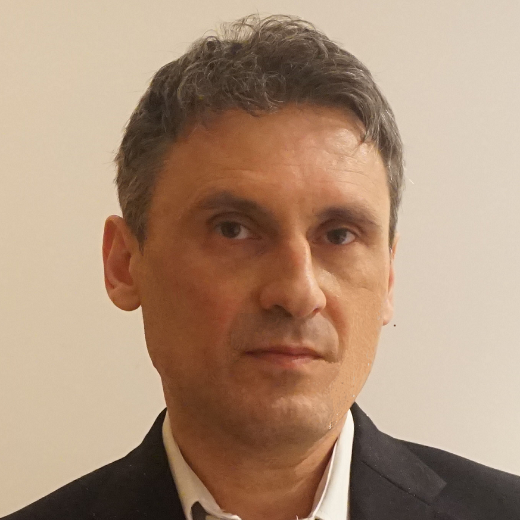
Éric Schost is a Professor in the Cheriton School of Computer Science at the University of Waterloo. His research focuses on symbolic computation, algebraic algorithms, and computational complexity. He specializes in polynomial system solving, algorithm design for algebraic structures, and their applications in mathematics and computer science. Key research interests include: - Symbolic computation and computer algebra systems - Homotopy continuation methods for solving polynomial systems - Efficient algorithms for sparse and structured linear algebra - Complexity analysis of algebraic algorithms - Applications in cryptography and computational algebraic geometry His work bridges theoretical foundations with practical implementations, often published in top venues like the Journal of Symbolic Computation and ISSAC proceedings. Collaborations span topics from algebraic geometry to algorithmic number theory.
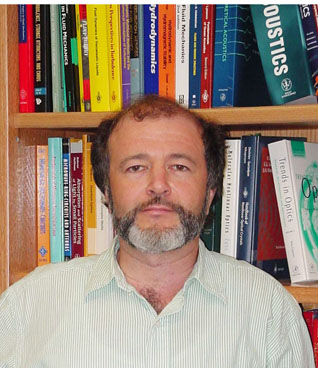
Aleksandr Figotin is a Professor of Mathematics at the University of California at Irvine, specializing in electromagnetic theory, photonic crystals, and complex media wave dynamics. His research bridges applied mathematics and physics, focusing on theoretical frameworks for high-power microwave systems and quantum phenomena. Research interests include nonlinear wave interactions, open systems dynamics, and the development of true random number generators based on physical processes. His work has applications in telecommunications, quantum computing, and RF engineering. Recent publications explore analytic modeling of coupled-cavity systems, exceptional points in degenerate circuits, and metamaterial slow-wave structures. A consistent theme is the unification of Lagrangian mechanics with electromagnetic theory to solve complex wave-matter interactions. He holds multiple patents for innovations in random number generation and photonic devices, including gyrotropic crystals and degenerate band edge technologies.
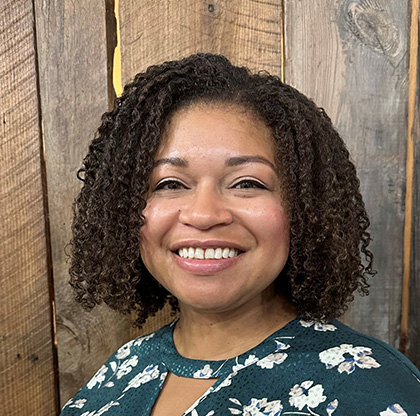
Michelle Gaines, Ph.D., serves as Associate Professor in the Department of Chemistry and Biochemistry at Spelman College since 2017. Her academic foundation includes a B.S. in Chemical Engineering and Biomolecular Engineering from Michigan State University (2003) and a Ph.D. in Materials Science and Engineering from North Carolina State University (2008), where her dissertation explored nanoparticle-block copolymer interfacial chemistry. She maintains an active research program centered on soft materials and interfacial science while teaching core chemistry courses. Her educational background includes: Ph.D. in Materials Science and Engineering, North Carolina State University (2008) B.S. in Chemical Engineering and Biomolecular Engineering, Michigan State University (2003) Dr. Gaines' research focuses on interfacial properties of soft materials , with dual applications in advanced materials engineering and biological systems. Her work integrates Polymer Synthesis, Materials Science, Cell Biology, and Spectroscopy to investigate energy dissipation in thermo-responsive microgels for lithium-ion battery separators and self-actuating biosensors. A significant emerging direction examines material properties of hair through her planned “Hair Academy” initiative, aiming to develop quantitative frameworks for curly hair phenotypes while advancing Spelman College’s legacy in culturally inclusive science. Analysis of her publication record reveals a strategic evolution from foundational work on nanoparticle-block copolymer interactions (2006-2010) toward cell-material interface studies (2016-2018), with recent publications (2023-2025) demonstrating a pronounced shift into cosmetic science and quantitative hair phenotyping. This trajectory reflects her commitment to bridging fundamental materials chemistry with socially relevant applications, particularly in underrepresented communities. No scientific awards or honors were documented in the provided information. Dr. Gaines teaches General Chemistry (CHE 111/112), Physical Chemistry Lab (CHE 346L), and Inorganic Chemistry (CHE 421/421L), mentoring students through her research lab. Her “Hair Academy” initiative represents a significant educational venture to explore how phenotypic hair differences produce distinct material properties, fostering interdisciplinary collaboration between students and faculty. The Gaines Lab operates within Spelman’s Albro-Falconer-Manley Science Center, employing Atomic Force Microscopy and polymer synthesis techniques to study microgel particles, block copolymers, and cell-hydrogel interactions. Current projects focus on developing synthetic 3D culture microenvironments to control cell behavior through precise manipulation of extracellular matrix properties.
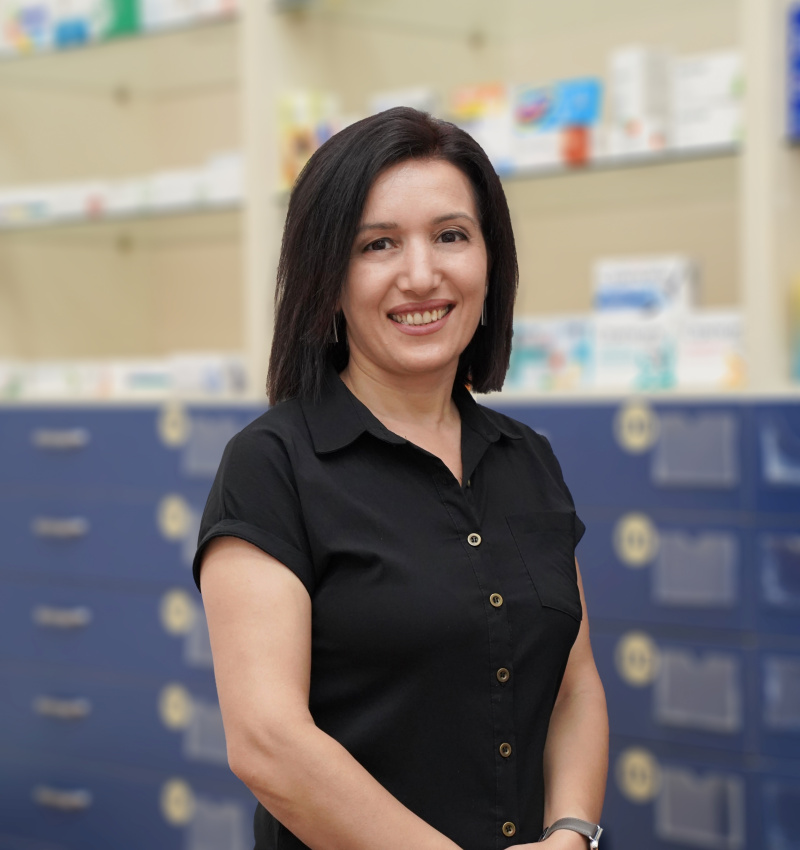
Satenik Ghukas Petrosyan serves as Associate Professor at the Department of Pharmacochemistry and Pharmacognosy within the Institute of Pharmacy at Yerevan State University (YSU), Armenia. With continuous affiliation since 2002, she has progressed from Laboratory Assistant to her current academic role while maintaining research positions at the Biotechnology Research Institute and Armenian Biotechnology Center, demonstrating deep integration into Armenia's pharmaceutical research ecosystem. Her academic foundation includes a Certified Specialist degree from YSU's Faculty of Chemistry (Pharmaceutical Chemistry Department, 1998-2003) followed by a Candidate of Sciences (Chemical Sciences) from the Biotechnology Research Institute in 2011. Her doctoral research under Ashot Saghyan pioneered methods for the highly selective asymmetric synthesis of non-protein α-amino acids, establishing the trajectory for her current work. Dr. Petrosyan's research program centers on asymmetric synthesis of non-protein amino acids with therapeutic applications, particularly investigating their interactions with biological targets like G-quadruplex DNA and serum albumins for anticancer drug development. Her work spans molecular design, binding mechanism analysis, and biological activity assessment, with recent studies examining fibroblast proliferation effects and drug delivery optimization through protein binding studies. Analysis of her 2021-2025 publications reveals consistent innovation in synthetic methodology and biological evaluation. Key trends include development of DNA-binding amino acids for c-Myc oncogene targeting, serum albumin interaction studies for drug delivery enhancement, and analytical method development for pharmaceutical compounds in biological matrices. Her interdisciplinary approach bridges organic chemistry, biochemistry, and pharmaceutical sciences with increasing international collaboration. While no specific scientific awards are documented in available materials, Dr. Petrosyan holds significant academic leadership positions as Chairman of the Methodological Council and Member of the Scientific Council at YSU's Institute of Pharmacy since 2017, influencing curriculum development and research direction. Current information does not indicate doctoral students under her supervision or specific research grants secured. Her collaborative network spans Armenian institutions and international partners, particularly evident in co-authored publications with Italian and Russian researchers on biomolecular interactions and synthetic chemistry. Dr. Petrosyan maintains active laboratory operations within YSU's Department of Pharmacochemistry and Pharmacognosy, where her team focuses on synthesizing novel amino acid derivatives and characterizing their biological properties. Her methodological council leadership ensures integration of these research advances into pharmacy education at Armenia's premier university.
Prof. Dr. Volker Abetz is a full professor (W3) of Physical Chemistry at the University of Hamburg since January 2013 and concurrently serves as Director of the Institute for Polymer Research at the Helmholtz-Zentrum Geesthacht. His career has included professorships at the University of Kiel (2004–2012) and the University of Potsdam, along with visiting roles at Stanford, UC Louvain, and Ben-Gurion University. Education: Habilitation, University of Bayreuth (2000) – “Complex Structures based on ABC Triblock Copolymers” PhD, Albert-Ludwigs-University Freiburg (1990) – “Spectroscopic Polarimetry on Multicomponent Polymer Systems” Diplom, Albert-Ludwigs-University Freiburg (1987) – “FTIR-Dichroism Spectroscopy on Polymer Multicomponent Systems” Research Interests: His group focuses on nanostructured polymers , stimuli-responsive block copolymers , isoporous membranes , vitrimer chemistry , hierarchical polymer composites , and anisotropic gels . A hallmark of his work is translating fundamental self-assembly principles into scalable membrane technologies for water treatment, gas separation, and bioprocessing. Publication Trends: Across >480 peer-reviewed papers, recent output centers on advanced block-copolymer membranes (isoporous, antifouling, ion-selective), reprocessable vitrimer nanocomposites (lignin-based, Au-doped, magnetic), and in-situ diagnostics (synchrotron SAXS, atomic-layer deposition). These studies couple rigorous polymer synthesis with sophisticated characterization and device-level validation. Scientific Awards & Honors: Cover-featured articles in Advanced Materials , ACS Macro Letters , Macromolecular Rapid Communications Keynote & plenary invitations at POLYCHAR, ACS, IUPAC MACRO conferences Patents on isoporous membrane manufacturing (WO, EP, DE filings) Research Funding & Collaborations: His teams secure funding from the German Research Foundation (DFG), Helmholtz Association, EU Horizon programs, and industry partners. The group operates state-of-the-art laboratories at both the University of Hamburg and Helmholtz-Zentrum Geesthacht, hosting a vibrant international cohort of PhD students and postdocs. Laboratories & Facilities: AG Abetz – University of Hamburg Institute of Physical Chemistry Institute for Polymer Research – Helmholtz-Zentrum Geesthacht Access to PETRA-III (DESY), BER II (HZB) & ILL (Grenoble) neutron/synchrotron beamlines
Jianzhen Liu is an Assistant Professor of Teaching at the Institute for Artificial Intelligence and Data Science within the School of Engineering and Applied Sciences at the University at Buffalo, where he focuses on foundational mathematical research supporting data science and artificial intelligence applications. His educational qualifications include: MS in Analytics, Georgia Institute of Technology, 2024 PhD in Mathematics, Auburn University, 2017 MS in Mathematics, Beijing University of Technology, China, 2007 BS in Mathematics, Anyang Normal University, China, 2004 Dr. Liu's research centers on linear algebra and matrix theory, with significant contributions to positive partial transpose matrices, block matrix structures, Toeplitz systems, and quaternion-based matrix equations. His work bridges pure mathematics and computational applications, particularly in quantum information theory and data analysis frameworks. The theoretical depth of his publications demonstrates consistent expertise in matrix decompositions and algebraic structures. His publication history reveals a sustained focus on matrix theory since 2007, with recent work (2017-2020) emphasizing structural properties of matrices relevant to quantum computing and data science. This trajectory shows increasing alignment with his current role in an AI-focused institute. Scientific recognition includes: Tin-Yau Tam Graduate Fellowship, Auburn University, 2016 Ralph B. Bennett Graduate Fellowship, Auburn University, 2015 Don and Sandy Logan Graduate Fellowship, Auburn University, 2014 No information is available regarding graduate student supervision or externally funded research grants. Similarly, details about laboratory facilities or research team leadership could not be determined from the provided text.
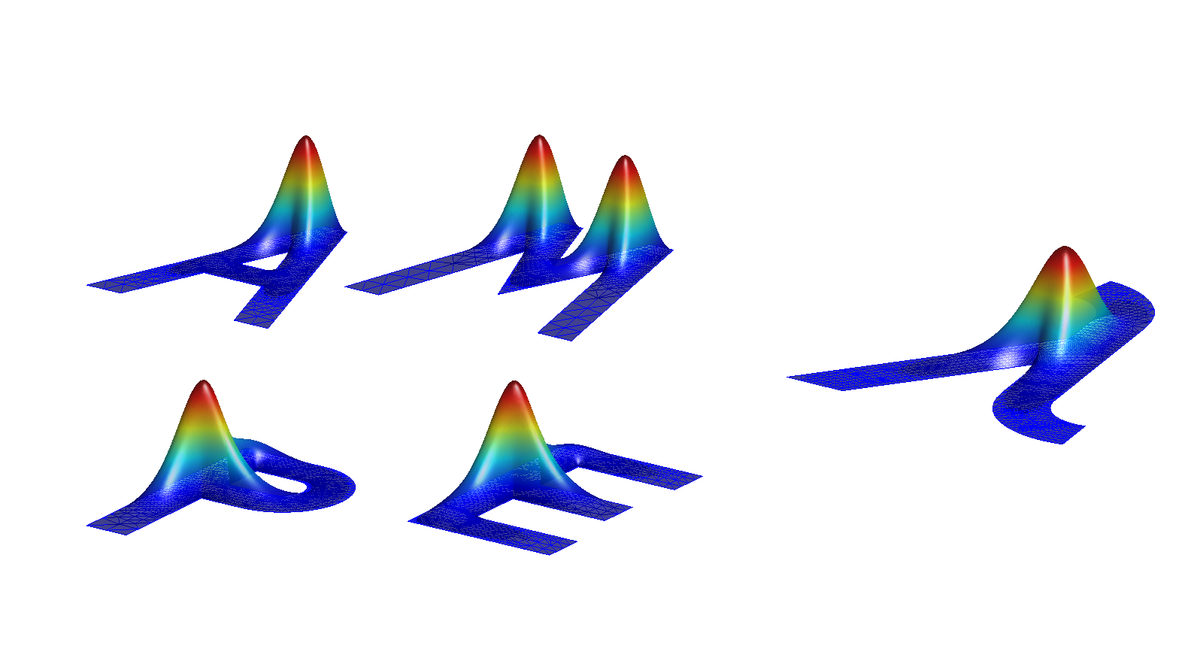
Ming Zhou is a Senior Lecturer at the Institute of Mathematics, University of Rostock, Germany. His research focuses on numerical linear algebra, eigenvalue problems, and adaptive finite elements. He is known for contributions to convergence theory of preconditioned eigensolvers and iterative methods. Zhou co-developed the AMP Eigensolver, a software tool for solving elliptic partial differential operator eigenvalue problems in 2D domains. His work emphasizes robust bounds for Ritz values, block preconditioned gradient methods, and restarted Krylov subspace iterations. Collaborations with researchers like K. Neymeyr and A.V. Knyazev have produced influential studies in numerical analysis. Zhou’s recent publications (2023–2024) address cluster-robust estimates and angle-free Ritz value bounds, advancing eigensolver algorithms. He is based at the Institute of Mathematics in Rostock, with office 332. His email is ming.zhou@uni-rostock.de . Office hours are by appointment.
Phanindra Varma Jampana is an Associate Professor in the Department of Chemical Engineering at Indian Institute of Technology Hyderabad, India. His research focuses on compressed sensing, system identification, and stochastic differential equations, with applications to industrial process control and tomography. Education: Ph.D. in Process Control, University of Alberta (2004-2010) B.Tech. in Chemical Engineering, IIT Madras (2000-2004) His work spans electrical resistance tomography, image processing, and control systems optimization, with key contributions to particle filtering and homotopy optimization. Recent publications highlight applications in hydrocyclone air-core measurements and sparse-view tomography. Contact: pjampana@che.iith.ac.in
Maria Isabel Bueno Cachadina is a Professor in the Department of Mathematics at the University of California, Santa Barbara (UCSB), part of the College of Letters and Science. Her research focuses on Numerical Linear Algebra, Matrix Analysis, and Orthogonal Polynomials, with a particular emphasis on topics such as matrix polynomials, linear preserver problems, and eigenvalue conditioning. She has held a faculty position since at least 2006, contributing extensively to both research and teaching. Her research spans theoretical and computational aspects of linear algebra, including studies on tridiagonal matrices, Moore-Penrose inverses, and Lorentz spectra. She has published over 40 peer-reviewed articles, many in top-tier journals like Linear Algebra and its Applications and SIAM Journal on Matrix Analysis , often collaborating with international researchers. Recent work includes investigations into singular matrices and their inverses, as well as linear preserver problems in matrix theory. Bueno has led the UCSB Mathematics Summer Research Program for Undergraduates, supported by the NSF, fostering student research in areas like matrix analysis and applied mathematics. Her teaching spans courses such as Advanced Linear Algebra, Numerical Methods, and Problem-Solving Seminars, reflecting her commitment to both undergraduate and graduate education. She has advised numerous students, many of whom have co-authored publications in reputable journals. Her academic contributions also extend to organizing workshops, seminars, and mentoring initiatives. Despite no explicitly listed awards, her prolific publication record and program leadership highlight her impact in the field of linear algebra and applied mathematics.
Michal Outrata is an Assistant Professor in the Department of Numerical Mathematics at Charles University's Faculty of Mathematics and Physics in Prague, Czech Republic. He began his position in fall 2024 after completing a postdoctoral fellowship at Virginia Tech with Prof. Eric de Sturler and earning his PhD under Prof. Martin Gander at the University of Geneva, where his thesis was awarded the Henri Fehr Prize in 2023. His academic journey started with undergraduate studies in Prague under Prof. Zdeněk Strakoš (bachelor) and Prof. Miroslav Tůma (master). Dr. Outrata's research focuses on understanding why certain numerical methods work for specific problem classes, with emphasis on numerical linear algebra , Krylov subspace methods , and domain decomposition techniques . His work bridges theoretical analysis with practical algorithm development, particularly in preconditioning strategies for iterative solvers. Current projects include the Primus Research Programme (2025-2028) titled 'Divide, Conquer and Optimize: Domain Decomposition Methods in Scientific Computing' which explores hierarchical matrix formats and mixed precision computations for optimizing domain decomposition methods. His publication record demonstrates consistent contributions to top journals including SIAM Journal on Scientific Computing and Linear Algebra with Applications. His research shows progression from foundational work on GMRES convergence to sophisticated analyses of block Runge-Kutta preconditioners and optimized Schwarz methods with data-sparse transmission conditions. His recent work increasingly integrates hierarchical matrix formats and explores mixed precision computing approaches. Swiss Government Excellence Scholarship (3-year award) Henri Fehr Prize for best PhD thesis in mathematics (2023) Primus Research Programme grant (2025-2028) Dr. Outrata actively mentors students and postdocs, currently supervising Marouan Handa and Lenka Ptáčková (PostDocs) along with undergraduate researchers. He teaches courses including Numerical Analysis and Introduction to Numerical Mathematics at Charles University. His collaborative network spans international institutions including University of Geneva, Virginia Tech, and various European research centers. He is also involved in organizing major conferences including DD29 and GAMM95.
Igor Z. Milovanovic serves as a Full Professor in the Department of Mathematics at the Faculty of Electronic Engineering, University of Nis, Serbia, a position he has held since his appointment in 1991. His academic career is deeply rooted in the institution where he completed all his formal education, establishing him as a cornerstone of the mathematics and computing disciplines within this engineering faculty. His educational background reflects a lifelong commitment to applied mathematical sciences at the University of Nis: PhD in Applied Mathematics (1980), Faculty of Electronic Engineering MSc in Applied Mathematics (1978), Faculty of Electronic Engineering BSc in Mathematics (1975), Faculty of Electronic Engineering Professor Milovanovic's research program bridges theoretical mathematics and practical computational engineering, with primary expertise in parallel computing architectures and algorithm optimization. His work focuses on systolic array implementations for matrix operations, graph algorithms, and linear algebra problems, consistently targeting hardware-efficient solutions for high-performance computing challenges. This interdisciplinary approach integrates mathematical rigor with computer architecture considerations to solve complex computational problems. Analysis of his publication trajectory reveals a sustained concentration on systolic array methodologies across three decades, evolving from foundational matrix algorithms in the 1990s toward FPGA-based hardware implementations and fault-tolerant systems in the 2000s. With 50 total publications including 32 in impact-factor journals, his contributions demonstrate significant impact in parallel processing and reconfigurable computing domains, particularly in optimizing classical algorithms for specialized hardware architectures. No scientific awards or major honors are documented in the available records. He currently participates in one national research project, though international collaborations appear absent from his active portfolio. His advisory activities are not explicitly detailed, but his extensive publication history suggests substantial mentorship of graduate researchers. The professor operates within the Department of Mathematics framework at the Faculty of Electronic Engineering, with no indication of dedicated laboratory facilities or named research teams in the provided documentation. His work remains closely integrated with the department's computational mathematics focus while maintaining strong connections to computer engineering applications.
Valeria Simoncini is a Full Professor in the Department of Mathematics at the University of Bologna. Her research focuses on numerical analysis, linear algebra, and computational mathematics, with particular emphasis on matrix equations, Krylov subspace methods, and optimization algorithms. She has contributed to advancements in iterative solvers, randomized sketching techniques, and preconditioning strategies for large-scale problems. Her work often intersects with applications in partial differential equations and scientific computing. Her research interests include the development of efficient numerical methods for solving matrix equations, such as Sylvester and Lyapunov equations, as well as optimization problems arising in control theory and data science. She explores topics like tensor decompositions, approximation techniques for matrix functions, and the analysis of numerical stability in iterative algorithms. Simoncini’s publications span over two decades, with recent contributions addressing the integration of randomized algorithms into numerical linear algebra, the acceleration of quadrature methods, and the application of low-rank approximations in high-dimensional problems. Her work frequently appears in top-tier journals such as SIAM Journal on Matrix Analysis and Applications and Numerical Linear Algebra with Applications . Despite the extensive list of publications, no specific scientific awards or grants are explicitly mentioned in the provided text. She advises students through her academic role but no specific advisee names are listed here.
Dr. Daniel Alpay is a Professor and holder of the Foster G. and Mary McGaw Professorship in Mathematical Sciences at Chapman University. He is affiliated with both Schmid College of Science and Technology and Fowler School of Engineering, contributing to mathematical research and its applications in electrical engineering. His expertise spans Schur Analysis, Slice-Hyperholomorphic Functions, Signal Processing, Linear Systems, Wavelet Filters, and White Noise Space. Dr. Alpay earned his PhD and MSc in Theoretical Mathematics from the Weizmann Institute of Science (Israel) under Prof. Harry Dym (1986, 1980-1986) and an Electrical Engineering degree from École Nationale Supérieure des Télécommunications (France, 1975-1978). His research focuses on infinite-dimensional analysis, hypercomplex structures, and interdisciplinary applications in signal processing and electrical engineering. His recent publications (2024) demonstrate a strong emphasis on Schur Analysis, hyperholomorphic functions, and their applications in stochastic processes, interpolation theory, and superoscillations. These works bridge pure mathematics with engineering, particularly in wavelet filters and linear systems. Dr. Alpay serves as Editor-in-Chief for the journal Complex Analysis and Operator Theory , reflecting his leadership in advancing mathematical research. His work continues to explore connections between abstract mathematical theories and practical engineering problems.
Bruno Carpentieri is an Associate Professor in Applied Mathematics at the Faculty of Computer Science , Free University of Bozen-Bolzano , Italy. His work focuses on Numerical Linear Algebra , High-Performance Computing , and Preconditioning Techniques for large-scale scientific problems. Education : Laurea in Applied Mathematics (1997, University of Bari Aldo Moro); PhD in Computer Science (National Polytechnic Institute Toulouse). Research Interests : Sparse linear systems, Krylov subspace methods, computational electromagnetics, PageRank problems, and fractional calculus applications in nonlinear engineering. His publications (1998–2025) emphasize efficient solvers for multi-shifted systems, parallel computing, and preconditioning strategies. Recent works (2025) explore fractional-order methods and multilayer network centrality . He has collaborated on ITER tokamak simulations (F4E/MIUR grants) and biomedical finite element models . Grants : F4E-2008-OPE-06-06-11 (ITER analysis); MIUR PRIN 2010SPS9B3. Key Contributions : VBARMS preconditioner (2014), hybrid block GMRES variants (2018), and chaos-enhanced fractional solvers (2025).
Dr. Robert Reams is a Professor and Chair of the Department of Mathematics at SUNY Plattsburgh. He holds a B.A. in Mathematics from Trinity College Dublin, followed by an M.A. and Ph.D. in Mathematics from University College Dublin. His academic journey includes postdoctoral work in mathematical biology and teaching positions at institutions in Ireland, England, and the U.S., including the National University of Ireland, Galway. He joined SUNY Plattsburgh in 2008. Dr. Reams teaches Introductory Statistics (MAT161) and other mathematics courses, including Statistical Inference (MAT362), Probability Models (MAT365), and Financial Math (MAT460). His research focuses on matrix theory, copositive matrices, magic squares, and applications of matrix theory to mathematical biology. His homepage provides detailed insights into his pure mathematics research. His research interests span pure mathematics, with notable contributions to copositive matrices, matrix scaling, and stochastic matrix properties. He has explored interdisciplinary applications in distance geometry and molecular conformations. His work often intersects linear algebra, optimization, and spectral theory. Contact details include his office at 244B Hawkins Hall, SUNY Plattsburgh, and email addresses: rream001@plattsburgh.edu and robert.reams@plattsburgh.edu. Additional resources include his faculty website and publications on topics like matrix completion and inverse eigenvalue problems.