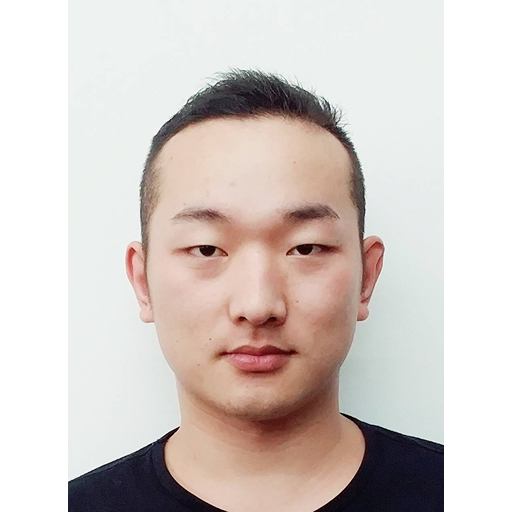
Levent Ertaul is a Professor and Chair of the Department of Computer Science at California State University, East Bay (CSUEB). He holds a PhD in Computer Networks Security from the University of Sussex, UK, and advanced degrees in Electrical and Electronics Engineering from Hacettepe University, Turkey. His expertise spans Cyber Security & Privacy, Cyber War, Cryptology, and Wireless Security. He has led research in IoT Security, Post-Quantum Cryptography, and Enterprise Security Planning. Ertaul has held leadership roles including CSUEB Department Chair and served on committees such as the California Cybersecurity 4 Year Education Program Workgroup. His professional development includes summer faculty positions at Lawrence Livermore National Laboratory (LLNL) focusing on CyberDefenders and Global Security programs. He has authored over 50 publications and presented globally at venues like RSA Conference and IEEE events. Awards include the Cisco Instructor Excellence Award and Keynote Speaker recognitions. He teaches advanced courses in Cyber Security, Cryptology, and Network Security Management. Notable contributions include inventing the L4NE protocol for location-based services and the ERTAUL Crypto Algorithm. His grants exceed $15M, including work on National Military Messaging Systems and Firewall Development. He actively participates in cybersecurity competitions (HackCSUEB, CTFs) and advises on policy matters through roles like Bay Area Council Cyber Security Representative.
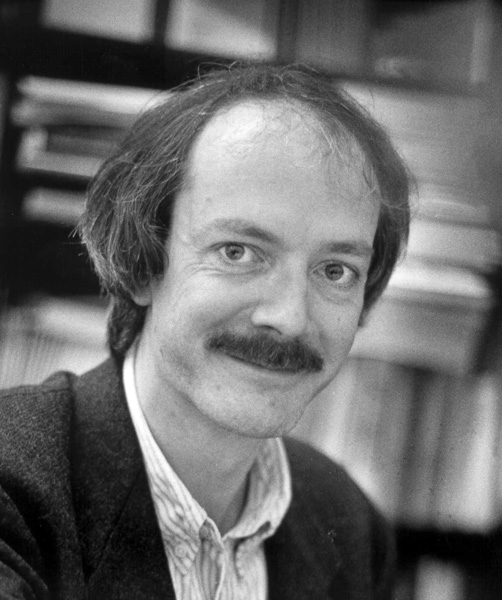
Bart Preneel is a Full Professor at KU Leuven since 2006 and director of the COSIC research group (60 members). He has held visiting professorships at institutions including the Technical University of Denmark and University of California, Berkeley (1993-1994). He co-founded the Leuven Security Excellence Consortium (L-SEC) and chairs the International Association for Cryptologic Research (IACR). Education : Electrical Engineering (1987) and Doctorate in Applied Sciences (1993), both from KU Leuven. Research Focus : Cryptology, cryptographic algorithm design, privacy protocols, and secure software/hardware implementations. His work bridges theoretical cryptography (e.g., hash functions, side-channel analysis) with real-world applications (e.g., automotive privacy, mobile authentication). Scientific Contributions : His publications span cryptanalysis, authentication, privacy metrics, and secure protocol design, with a focus on both foundational theory and practical implementations. Notable works include advancements in side-channel distinguishers and privacy-preserving insurance systems. Scientific Awards : European Information Security Award 2003; Honorary CISM designation by ISACA. Leadership : Supervised 45 PhD students, served as ERC grant panel chair (2013), and contributed to over 30 European research projects. He has testified as an expert before the Belgian and European Parliaments and participated in standardization initiatives (IEEE, ISO/TC68, IETF). Labs/Teams : Leads COSIC (KU Leuven), a member of iMinds; co-founded L-SEC vzw, a security industry collaboration network.
Alessio Meneghetti is a Professor at the Department of Mathematics, University of Trento. His research focuses on cryptography, coding theory, and information security, with applications to post-quantum cryptography, blockchain protocols, and secure distributed systems. He teaches courses such as Coding Theory and Applications, Cryptography, and Programming Lab, emphasizing practical implementations in Java and theoretical foundations. His work spans cryptographic primitives like threshold signatures, quantum-resistant algorithms, and consensus mechanisms. Key contributions include protocols like COB for Byzantine agreement and frameworks for group action-based multi-signatures. He has also explored quantum random number generation and linear codes' weight distributions. Publications highlight advancements in threshold cryptography, distributed key generation, and post-quantum signature schemes. His teaching integrates programming practices with mathematical rigor, preparing students for applied cryptography and computational mathematics.
Tyge Tiessen is an Associate Professor in the Department of Applied Mathematics and Computer Science at the Technical University of Denmark (DTU), where he is affiliated with the Cybersecurity Engineering group and the Center for Quantum Technologies. His research lies at the intersection of theoretical and applied cryptography, with a focus on symmetric key algorithms. PhD in Trusted Cryptography, Technical University of Denmark (2016) Supervised research in cryptanalysis and block cipher design His research interests include cryptanalysis , block cipher design , differential and higher-order differential attacks , boomerang probabilities , and cryptographic primitives such as AES and LowMC. He applies mathematical rigor to evaluate and enhance the security of symmetric cryptographic systems. The trend in his recent publications shows a consistent focus on foundational aspects of symmetric cryptography, particularly in analyzing attack vectors like boomerang and integral distinguishers, with increasing relevance to lightweight and post-quantum schemes. His work bridges theoretical analysis with practical implications for secure system design. He has contributed to impactful research projects, including long-term security for big data and intrusion detection for connected and autonomous vehicles. As a supervisor, he has guided PhD students such as Bjørn Egil Dahl Kidmose and Andreas B. Kidmose, contributing to the next generation of cybersecurity researchers. Tyge Tiessen is actively involved in research teams focusing on cybersecurity and quantum-safe cryptography at DTU. His lab work centers on formal analysis of cryptographic algorithms and developing robust defenses against emerging threats in digital infrastructure.
Professor Tran van Trung is a Professor of Mathematics at the Institut für Experimentelle Mathematik (IEM) within the Faculty of Mathematics at the University of Duisburg-Essen. His academic career includes positions at the University of Saigon and Ruprecht-Karls-Universität Heidelberg, where he earned several advanced degrees, including his Habilitation in 1988. He is affiliated with the IEM, focusing on experimental and theoretical aspects of mathematics. Tran van Trung holds a Licentiate in Sciences (1970) from the University of Saigon. He then pursued his academic career at the Ruprecht-Karls-Universität Heidelberg, where he obtained a Diplom-Mathematik (1974), Doctor rerum naturalium (1976), and later achieved Habilitation with the Venia Legendi in 1988. His research focuses on Group Theory, Finite Geometry, Combinatorial Designs, Cryptology, and applications of Discrete Mathematics to Cryptology and Information Theory. He explores advanced topics such as group-based cryptographic systems, resolvable t-designs, and cryptographic protocols leveraging combinatorial structures. While specific details about his advised students or grants are not explicitly listed, his contributions to cryptography and discrete mathematics suggest involvement in research projects and academic mentorship. His work has implications for both theoretical advancements and practical applications in information security. No specific labs or teams are mentioned in the provided information.
Mostafa Taha is an Assistant Professor at Carleton University's Systems and Computer Engineering Department within the Faculty of Engineering and Design. He holds a PhD from Virginia Tech (2014) and has held postdoctoral roles at Worcester Polytechnic Institute and Western University. His research focuses on securing embedded systems and IoT against implementation attacks, including side-channel analysis, leakage-resilient designs, and cryptographic algorithm hardening. He has contributed to projects like LR-Keymill, a keystream generator with inherent SCA resistance, and has served on program committees for conferences such as DATE and SPACE. Education includes a PhD in Computer Engineering (Virginia Tech), M.Sc. in Electrical Engineering (Assiut University), and B.Sc. in Electrical Engineering (Assiut University). His work spans hardware security, cryptographic implementations, and vehicular networks. Awards include Egyptian Government and Assiut University scholarships for his PhD and M.Sc., respectively. Research interests emphasize quantifying side-channel resistance, leakage-resilient architectures, and lightweight cryptographic implementations. Notable publications include work on AES S-box optimization, threshold implementations for SIMON, and quantifying masking strength in software. He teaches courses on cryptographic implementations, computer systems design, and digital systems at Carleton. Publications reflect a focus on hardware-oriented security, with contributions to conferences like CHES, FDTC, and HOST. His work on LR-Keymill demonstrates a novel approach to SCA resistance without explicit countermeasures, achieving 67.9-bit post-attack complexity. Awards and industrial connections highlight his impact in embedded system security.
Dr. Erke Arıbaş is a Lecturer at Istanbul Technical University's Faculty of Computer and Informatics , specializing in the Department of Computer Engineering . His research spans interdisciplinary domains including artificial intelligence, simulation modeling, and biophysics applications. Education: PhD in Computational Science and Engineering (2001-2013), Istanbul Technical University MA in Information Systems Design and Management (2001), Istanbul Technical University (Evening Education) BS in Physics (1992-1996), Istanbul Technical University BS in Physics (1996-2000), University of Missouri-Rolla His research focuses on generative AI applications , autonomous systems , and multi-phase flow simulations with thermal modeling. He has contributed to fields ranging from smart city cybersecurity to biomechanical modeling of blood flow. Article trends show expertise in AI-personality modeling integration , unmanned aerial vehicle design , and biofluid dynamics with specialized focus on red blood cell aggregation and arterial hemodynamics.
Jessica Sorrell is an Assistant Professor in the Department of Computer Science at Johns Hopkins University and a member of the Data Science and AI Institute. Her research focuses on the theoretical foundations of machine learning, emphasizing replicability, privacy, fairness, and robustness. She has contributed to lattice-based cryptography and secure computation. Johns Hopkins University (Assistant Professor, Department of Computer Science) University of Pennsylvania (Postdoctoral Researcher) University of California, San Diego (PhD in Computer Science) Rochester Institute of Technology (Undergraduate in Applied Mathematics) Research Areas: Theoretical machine learning Replicability and reproducibility of statistical algorithms Differential privacy and adaptive generalization Lattice-based cryptography Secure computation protocols Publications highlight her work on replicable reinforcement learning, algorithmic stability, and cryptographic techniques. She previously studied at UCSD under Daniele Micciancio and Russell Impagliazzo. Teaching: Spring 2025: Theory of Replicable Machine Learning (EN.601.774).
Dr. Pooya Farshim is an Associate Professor in the Department of Computer Science, specializing in cryptography and information security. His research focuses on cryptographic systems, including block ciphers, password hashing, and security protocols in idealized models. He has contributed to advancements in automated proofs and preprocessing techniques in cryptography. His publications highlight expertise in cryptographic protocols and security analysis, with recent work exploring automated methods for block cipher security and earlier contributions to password hashing mechanisms. No scientific awards or grants are explicitly mentioned in the provided information. Dr. Farshim's academic profile includes no listed advisees or educational background details. His work is centered on theoretical and applied aspects of cryptography, reflecting a commitment to advancing secure communication and authentication systems.
Aslı Bay is an Assistant Professor in the Department of Computer Engineering at Antalya Bilim University, Turkey. She serves as Vice Head of her department and coordinates the Cyber Security Master Program. Her academic background spans institutions in Turkey and Switzerland. Bachelor's: Middle East Technical University (Mathematics, 2007) Master's: Middle East Technical University (Cryptography, 2009) Ph.D.: École Polytechnique Fédérale de Lausanne (Communications Sciences, 2014) Her research focuses on cryptography and security, with special emphasis on privacy-preserving computations. Specific subfields include symmetric key cryptography, provable security, cryptanalysis of block ciphers, authenticated encryption, distance-bounding protocols, and privacy-by-design frameworks. She previously held research positions at Turkey's Scientific and Technological Research Council (2015) and Radboud University Nijmegen's Institute for Computing and Information Sciences (2018).
Russell Impagliazzo is a Professor in the Department of Computer Science and Engineering at the University of California, San Diego (UCSD). He has held positions as Assistant Professor, Associate Professor, and Professor at UCSD since 1991 and was a Visiting Professor at the Institute for Advanced Study (Princeton) from 2007 to 2012. His academic journey includes a BA in Mathematics from Wesleyan University and a PhD in Mathematics from UC Berkeley. His research focuses on computational complexity theory , with key contributions to: Randomness in computation Cryptography (e.g., pseudorandom generators) Circuit lower bounds Proof complexity (e.g., polynomial calculus, resolution) Structural complexity (e.g., average-case hardness) Optimization heuristics (e.g., local search) The trends in his publications include foundational work on derandomization, hardness amplification, and algebraic proof systems. His papers often bridge theoretical computer science with mathematics, particularly in analyzing the limits of computational models. Scientific awards and honors include: NSF Young Investigator Sloan Fellow Fulbright Scholar Guggenheim Fellow Simons Investigator Best Paper Award (Computational Complexity Conference) Best Paper Award (STOC) Outstanding Paper Award (SIAM) He actively advises students and has contributed to grants and programs such as the Simons Institute’s Fine-Grained Complexity and Algorithms and the Meta-Complexity program at the Simons Lab in Spring 2023.
Adi Shamir is a world-renowned cryptographer currently serving as a Professor in the Department of Applied Mathematics at the Weizmann Institute of Science in Rehovot, Israel since 1984, with an additional position as Invited Professor at École Normale Supérieure in Paris since 2006. Dr. Shamir earned his BSc in Mathematics from Tel Aviv University in 1973, followed by MSc and PhD in Computer Science from the Weizmann Institute in 1975 and 1977 respectively. His academic career began with a postdoctoral position at Warwick University (1976) and faculty appointments at MIT (1977-1980) before returning to the Weizmann Institute. Shamir's research spans cryptography, computer security, and theoretical computer science. He is most famous for co-inventing the RSA public-key cryptography algorithm with Ronald Rivest and Leonard Adleman, for which they received the ACM Turing Award in 2002. His other seminal contributions include Shamir's Secret Sharing scheme, differential cryptanalysis (with Eli Biham), identity-based cryptography, and visual cryptography (with Moni Naor). His publication record shows consistent innovation from foundational work in the 1970s through to significant contributions in the 2000s. His most recent works focus on identity-based encryption schemes while his earlier publications established fundamental cryptographic techniques that continue to influence modern security systems. Dr. Shamir has received numerous prestigious awards recognizing his contributions to computer science and cryptography. ACM Turing Award (2002) Israel Prize (2008) Election to both the Israeli Academy of Science (1998) and US National Academy of Sciences (2005) IEEE Koji Kobayashi Computers and Communications Award (2000) As an educator and mentor, Dr. Shamir has guided significant talent in the field, most notably Eli Biham with whom he developed differential cryptanalysis. His work has had profound practical impact, forming the mathematical foundation for secure internet communications used by billions worldwide.
Prof. Dr. Gregor Leander is a Professor and Head of the Symmetric Cryptography chair at Ruhr-University Bochum, Faculty of Computer Science. He is a leading researcher in the field of symmetric cryptography with significant contributions to both theoretical foundations and practical applications of cryptographic primitives. Professor Leander has an extensive background in mathematics with a PhD focused on theoretical aspects of Boolean functions. His research spans the entire spectrum of symmetric cryptography, from fundamental theoretical questions to practical implementations deployed in real-world applications. He has been instrumental in designing ciphers that have seen widespread deployment, as well as analyzing and improving existing cryptographic standards. Created the symmetric cryptography group at Ruhr University Bochum in 2015 Founder and managing editor of the IACR Transaction of Symmetric Cryptography journal Active participant in numerous prestigious conferences as program co-chair, organizer, and invited speaker Professor Leander's research interests primarily focus on symmetric cryptography, including the design and analysis of block ciphers, stream ciphers, and cryptographic hash functions. His work bridges the gap between theoretical cryptography and practical security requirements, with particular emphasis on lightweight cryptography for constrained environments. He has made significant contributions to understanding the mathematical foundations of cryptographic primitives while ensuring their practical applicability in real-world systems. His recent publications demonstrate a continued focus on foundational aspects of symmetric cryptography while expanding into post-quantum cryptography and the intersection of symmetric and asymmetric cryptographic techniques. The research output shows a consistent pattern of addressing both theoretical challenges and practical implementation concerns, with many contributions becoming international standards. Scientific Awards and Recognition 2022: SKINNY is ISO standard (ISO/IEC 18033-7) as a Tweakable Block Cipher 2020: IACR CRYPTO 2020, Best Paper Award and invitation to Journal of Cryptology 2015: Heisenberg Professorship, a prestigious funding line for upcoming leaders by the DFG 2014: IACR FSE 2014, Best Paper Award and invitation to Journal of Cryptology 2010: PRESENT is ISO standard (ISO/IEC 29192-2) for Lightweight Cryptography 2010: German IT Security Award (worth 100kEUR), first place 2011: Erdos Number 2 Professor Leander has successfully advised numerous PhD students who have gone on to make their own contributions to the field of cryptography. His group at Ruhr-University Bochum has received significant research funding, including the prestigious Heisenberg Professorship from the DFG. He has been actively involved in organizing major cryptographic conferences and workshops, contributing to the advancement of the field through community building and knowledge sharing. The symmetric cryptography group at Ruhr-University Bochum, which Professor Leander founded in 2015, has become a renowned center for cryptographic research. The group maintains strong collaborations with other leading research institutions worldwide and regularly hosts visiting researchers. Through the IACR Transaction of Symmetric Cryptography journal, which Professor Leander founded, the group has also established a significant platform for high-quality research publication in the field.
Liu Zhang is a Research Fellow at Nanyang Technological University's SYmmetric cryptography and machine Learning Lab (SyLLab) since February 2025. His work bridges symmetric-key cryptography with advanced machine learning techniques. Educational Background : PhD in Cyber Engineering (2024) from Xidian University Visiting PhD Student (2022-2024) at NTU's School of Physical and Mathematical Sciences Master's in Engineering (2017-2020) from Shantou University Bachelor's in Computer Science (2013-2016) from Xinyang Normal University Research focuses on symmetric-key cryptography , cryptanalysis , and artificial intelligence , with particular emphasis on deep learning-aided cryptanalysis. His publications demonstrate expertise in AES, DES, and block cipher vulnerabilities using neural networks. Recent publications highlight trends in neural network integration for cryptanalysis, including Differential-Neural Cryptanalysis on AES and Neural-Inspired Advances in Integral Cryptanalysis . He explores theoretical explanations for machine learning applications in cryptographic attacks. Scientific Awards : 2019 - National Scholarship (Master) 2018 - National Scholarship (Master) 2015 - National Inspirational Scholarship (Undergraduate) Supported by the China Scholarship Council for joint training at NTU (2022-2024). His academic journey shows strong ties to both Chinese and Singaporean institutions.
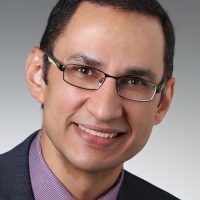
Associate Professor at Anglia Ruskin University's School of Engineering and the Built Environment within the Faculty of Science and Engineering. Director of the Telecommunications Engineering Research Group with expertise in electronic design of telecommunication networks and wireless systems. Education: PhD in Telecommunication Engineering, Anglia Ruskin University MSc in Telecommunications Systems Management, Anglia Polytechnic University BSc in Electrical & Electronic Engineering, Baghdad University Research focuses on wireless networks , RF systems , noise cancellation , and mobile communications across 2G-5G generations. His work extends to cyber security , RF MEMs , mobile ad hoc networks , and emerging areas including cloud computing and artificial intelligence in networking systems. Recent publications reveal strong emphasis on network performance optimization, security enhancements, and energy efficiency in wireless systems, with significant contributions to mobile ad hoc networks, cloud offloading algorithms, and software-defined networking architectures. Awards: Royal Academy of Engineering award (1999) Supervised 12 PhD students and 2 MPhil students to completion as primary supervisor, with 2 additional PhD completions as secondary supervisor. Currently guides 4 PhD candidates. Secured competitive grants including Newton-Bhabha Fund (2016) and UKIERI UK-India Education and Research Initiative (2014-2016) for collaborative research in mobile accessibility and network security. Leads consortium bids for EU Horizon 2020 projects and directs research in RF MEMs sensor design and mobile multiprotocol switches, with active industry collaborations including Sedgewall Ltd and Glazing Vision.




.jpeg)