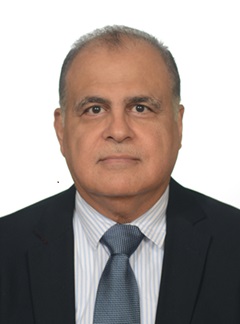
Dr. Esam Abdel-Raheem is a Professor in the Department of Electrical and Computer Engineering at the University of Windsor, Faculty of Engineering. His research focuses on digital signal processing, biomedical engineering, cognitive radio networks, and VLSI design. He holds a Ph.D. from the University of Victoria (1995) and is a Professional Engineer (P.Eng.) in Ontario and a Senior Member of IEEE. Education: B.Sc. Electrical Engineering, Ain Shams University (1984) M.Sc. Electrical Engineering, Ain Shams University (1989) Ph.D. Electrical Engineering, University of Victoria (1995) Research Interests: Dr. Abdel-Raheem’s work spans signal processing for communications, biomedical signal processing, and VLSI implementations. He has pioneered algorithms for cognitive radio networks and adaptive filtering. His recent studies leverage deep learning for medical diagnostics (e.g., lung nodule detection, Parkinson’s disease voice analysis) and cognitive radio spectrum sensing. Publications Trends: Recent work emphasizes biomedical applications (e.g., CT scan analysis, diabetic retinopathy detection) and machine learning integration in communications (e.g., federated learning for traffic crowdsourcing). His articles often bridge theoretical signal processing with practical implementations in hardware (e.g., FPGA-based filters). Awards/Grants: Not explicitly listed in the text, though his senior IEEE membership and prolific publications suggest sustained professional recognition. Lab/Teams: While not detailed, his research themes imply involvement in interdisciplinary teams focusing on biomedical engineering, telecommunications, and VLSI design.
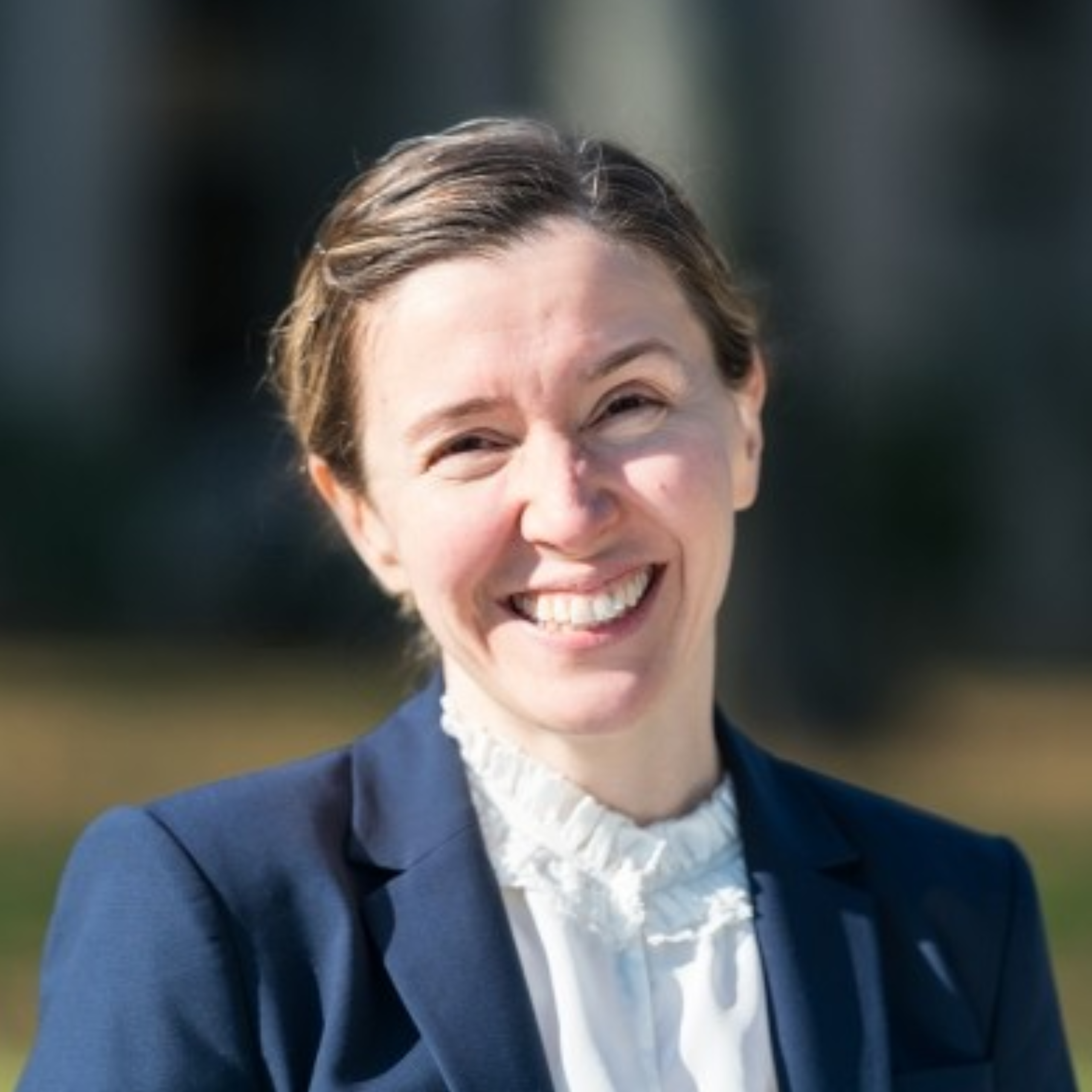
Asu Ozdaglar is the EECS Department Head and MathWorks Professor at MIT, serving as Deputy Dean of Academics in the MIT Schwarzman College of Computing. Her research bridges optimization theory, machine learning, and network science with societal implications, focusing on AI ethics, data-driven decision systems, and strategic interactions in networked environments. Her technical contributions include foundational work on large-scale optimization algorithms (e.g., distributed methods, first-order methods), game-theoretic models for network systems, and federated learning frameworks. Recent work addresses critical societal challenges like misinformation dynamics, data market inefficiencies, and algorithmic fairness in AI systems. Publications from 2023-2025 highlight advancements in graphon-based network game analysis, privacy-preserving data mechanisms, and multi-agent learning dynamics. She co-leads initiatives in MIT's AI+D program, emphasizing interdisciplinary education and ethical AI development. Notable institutional roles include oversight of MIT's computing education strategy and contributions to pandemic-related research on infection control through testing optimization. Her work integrates technical rigor with policy-relevant insights, influencing both academic and real-world systems.
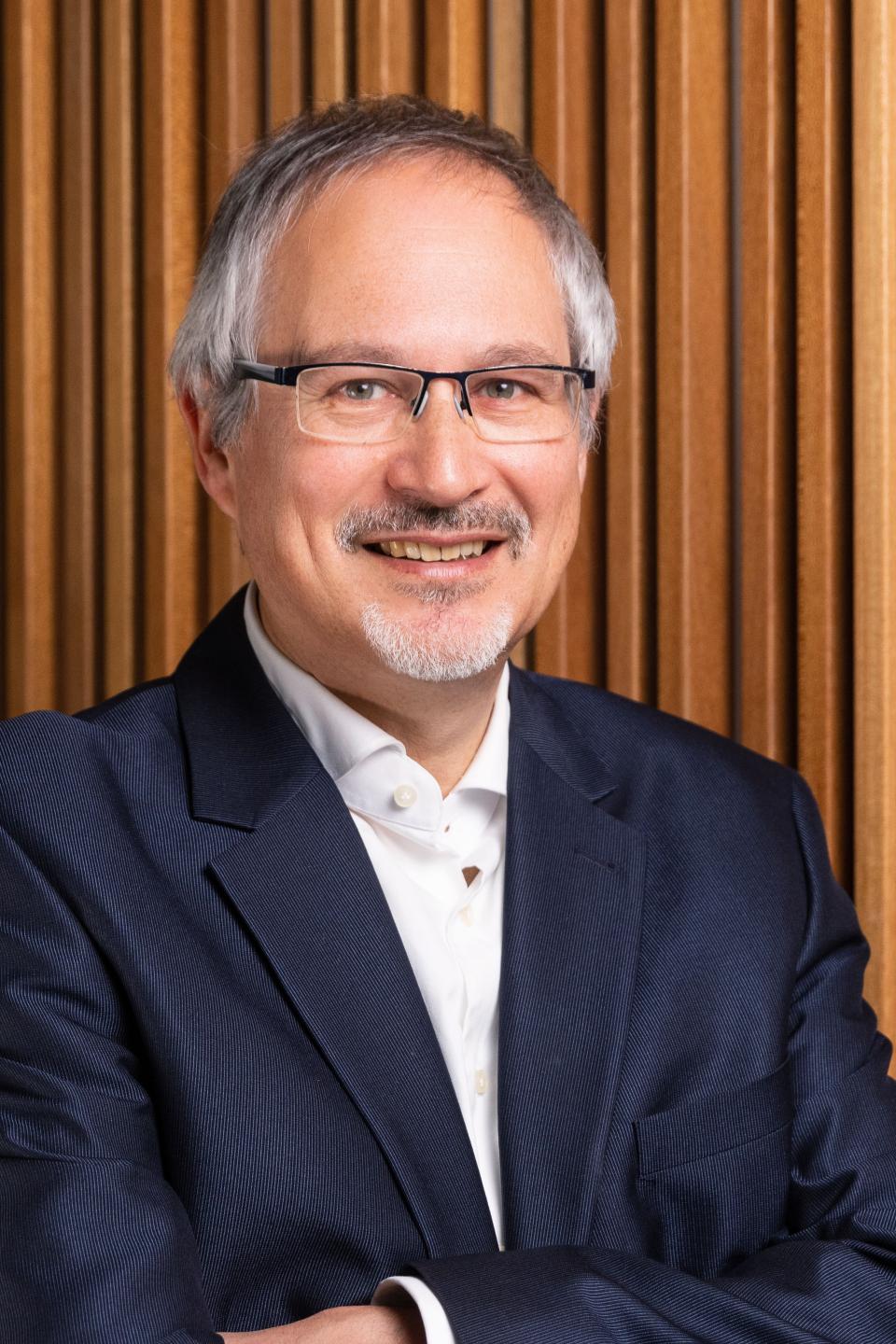
Ralf Peeters is a Full Professor in Mathematics of Knowledge Engineering at Maastricht University's Faculty of Science and Engineering , Department of Advanced Computing Sciences. He serves as Vice-Dean of Research and Director of the STEM Graduate School, while leading the university's team at the inter-university research school DISC and co-chairing the Mathematics Centre Maastricht. Education: PhD in Mathematics (Free University, Amsterdam, 1994) Technical Mathematics (Delft University of Technology, 1988) Research Interests span applied mathematics, systems and control theory, signal/image processing, artificial intelligence, and biomedical engineering applications. His work bridges mathematical techniques with real-world challenges in healthcare and industrial systems. Recent Publications highlight advancements in deep learning for cardiac signal reconstruction, tensor-based signal decomposition, and recurrence plot analysis. These works integrate machine learning with clinical diagnostics, particularly in electrocardiographic imaging and arrhythmia characterization. Key Collaborations: Mathematics Centre Maastricht Dutch Mathematics Platform Dutch Institute of Systems and Control Leadership Roles: Vice-Dean of Research (FSE), Director of STEM Graduate School, Head of DISC-affiliated team, and Co-Chair of Mathematics Centre Maastricht. He has supervised over 25 PhD projects, emphasizing applied research across health and industrial domains.
Bohan Chen is a Postdoctoral Scholar Research Associate in the Department of Computing and Mathematical Sciences. Their work focuses on advancing graph-based machine learning techniques and their applications in environmental science, remote sensing, and AI-driven analysis. Research interests include graph neural networks, active learning strategies, hyperspectral image analysis, and knowledge graph integration. Notable contributions include the development of the GLL layer for neural networks, the CUSP permafrost dataset, and hybrid models for multispectral image processing. Key research trends span theoretical advancements in graph-based learning and practical applications such as environmental monitoring, SAR data analysis, and pandemic modeling. Their work bridges computational methodologies with real-world environmental and societal challenges. Advising and grants: No student advisees listed. Contributions include foundational research without explicit grant mentions in provided text. Labs/teams: No specific lab or team affiliations mentioned in the text.
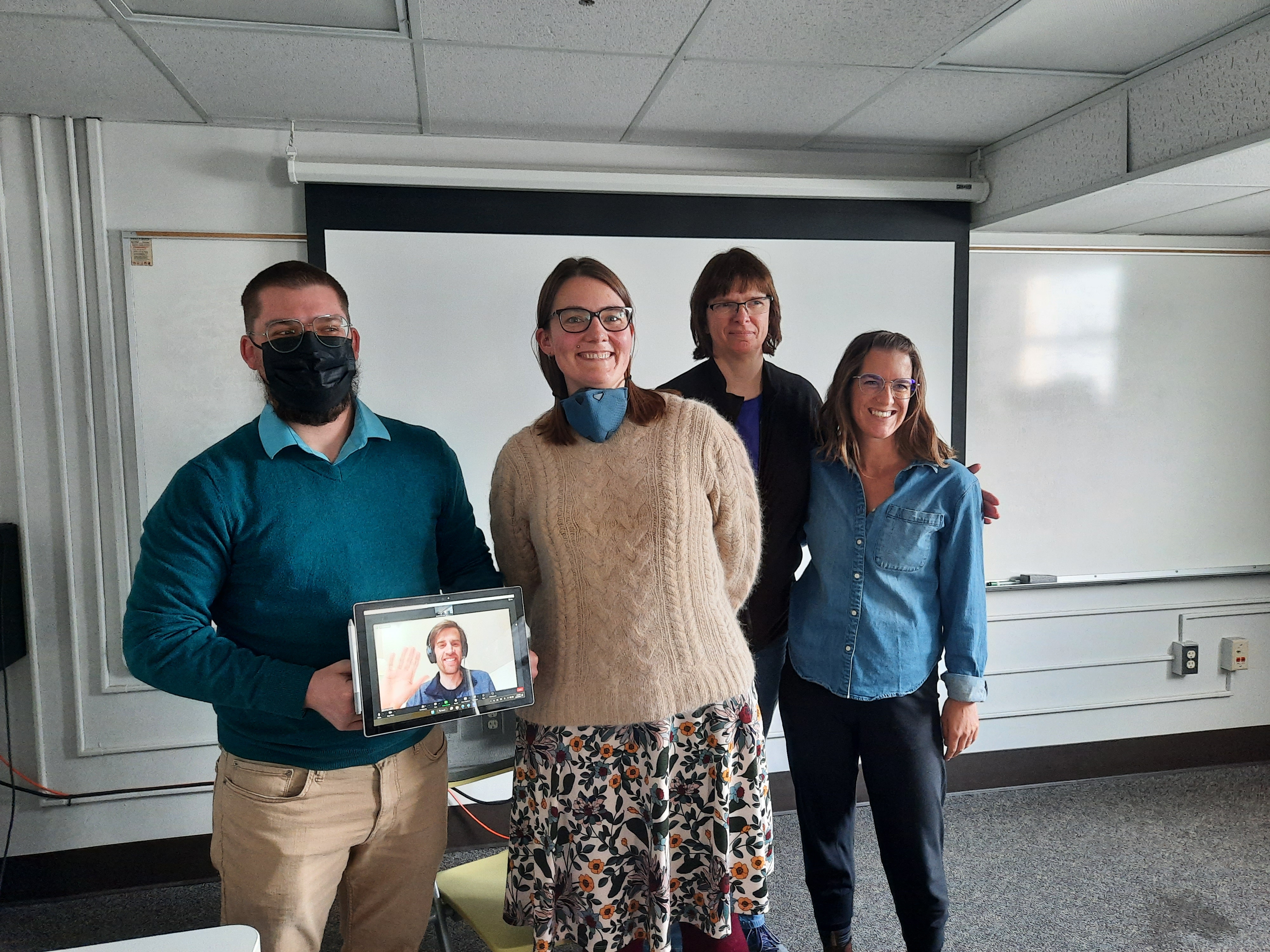
Emily J. King is a tenured Associate Professor in the Department of Mathematics at Colorado State University (CSU), College of Natural Sciences. She previously held a faculty position at the University of Bremen and has been actively contributing to the mathematical community through research, mentorship, and academic leadership. Her primary research interests include Frame Theory , Harmonic Analysis , Algebraic and Geometric Combinatorics , and Data Science , with applications in signal and image processing, Earth science, and artificial intelligence. She integrates deep mathematical theory with practical data analysis challenges. Her recent scholarly output reflects a strong focus on equiangular tight frames, combinatorial structures in frames, mathematical models for attention mechanisms, and applications to satellite imagery and cloud processes. Her work often bridges pure and applied mathematics, with a growing emphasis on interpretable AI and data science foundations. Dr. King has supervised several doctoral and master’s students, including Lander ver Hoef, Sören Schulze, Harley Meade, and Kristina Moen. She is a co-PI on an NSF grant focused on cloud processes and has been recognized for mentoring excellence, as evidenced by her student Emma Slack receiving the inaugural Outstanding Undergraduate in Mathematics award. NSF Grant Co-PI (2024) Outstanding Undergraduate in Mathematics award (mentored student, 2023) She is a founding co-organizer of the international Codes and Expansions (CodEx) Seminar and has organized sessions at major conferences such as SIAM AG and the Joint Mathematics Meetings. She frequently delivers invited talks at universities and research institutes worldwide, including upcoming presentations at the Air Force Institute of Technology, SIAM AG25, and TU Clausthal. Dr. King’s academic lineage includes John Benedetto as her mathematical advisor and Chandler Davis as her mathematical grandfather. She is actively involved in interdisciplinary research, particularly in marine data science, having co-spoken for the Helmholtz School for Marine Data Science (MarDATA).
Dr. Weihao Li is a Research Fellow at The Australian National University's School of Computing, specializing in computer vision and machine learning. His research focuses on object detection, image segmentation, open-set recognition, and point cloud segmentation. He holds a Dr. rer. nat. (PhD equivalent) and is registered to supervise research students. His research interests revolve around advancing techniques for dynamic instance segmentation, open-set learning, and 3D point cloud analysis. Notable projects include the ANU bushfire smoke dataset and contributions to generalized semantic segmentation and anomaly recognition. His work emphasizes data augmentation strategies and weakly-supervised learning methods. Key technical areas include synthetic dynamic instance copy-paste for video segmentation, curved geometric networks for anomaly detection, and cross-modal fusion in building facade analysis. He collaborates on computing-for-social-good initiatives, such as environmental monitoring via hyperspectral imaging. Dr. Li's publications span 2016–2024, with a focus on advancing computer vision through innovative architectures and methodologies. His recent work explores open-set recognition, few-shot learning with reinforced attention, and geometric prior-based segmentation techniques.
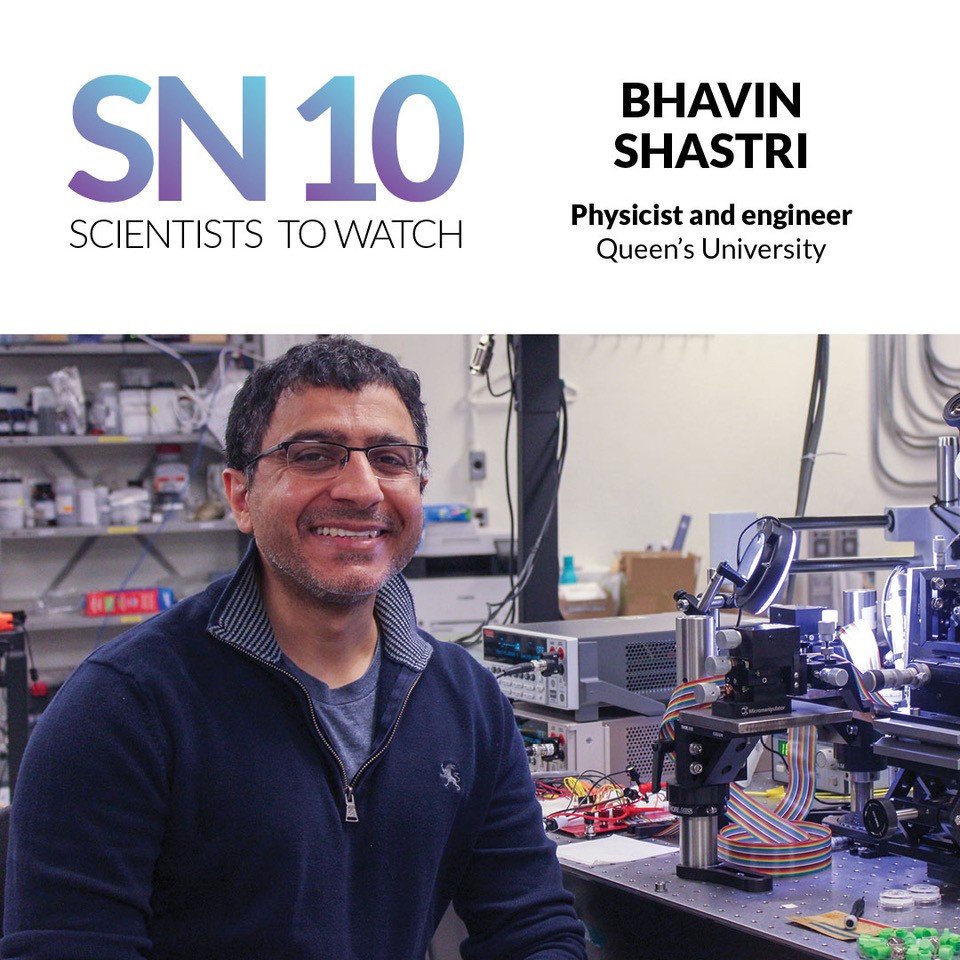
Bhavin Shastri is Canada Research Chair in Neuromorphic Photonic Computing and Assistant Professor of Engineering Physics at Queen's University. He directs research developing light-based computing systems that mimic neural processing for AI applications. His lab designs photonic integrated circuits that implement neural network architectures on chip-scale platforms. Research focuses on overcoming limitations of conventional computing through nanophotonic physics and novel materials. Publications demonstrate advances in photonic tensor cores, quantum photonic neural networks, and microwave photonic processors. Recent work achieves orders-of-magnitude improvements in processing speed and energy efficiency over electronic systems. Awards include: Alfred P. Sloan Research Fellowship (2025) Royal Society of Canada College Member (2024) Science News SN10 Scientist to Watch (2024) SPIE Early Career Award (2022) As Scientific Co-Director of NSERC's NUCLEUS program, he leads national efforts in photonic computing. Guides 12+ graduate students researching silicon photonics, neuromorphic architectures, and quantum photonics.
Dr. Swati Chandna is a Senior Lecturer at the School of Computing and Mathematical Sciences, Birkbeck, University of London. She holds an honorary position as an Honorary Lecturer in Statistics at University College London (UCL) from January 2023 to January 2026. She earned her PhD in Statistics from Imperial College London in 2013. Her research focuses on statistical modeling, network analysis, and bioinformatics, with notable contributions to stochastic networks, single-cell genomic data analysis, and complex-valued signal processing. Teaching responsibilities include modules such as Bayesian Methods, Analysing Data, Statistical Analysis, and Project Applied Statistics. She serves as Admissions Tutor for Graduate Certificate and Diploma in Statistics for Data Science and as School Ethics Lead at Birkbeck. Her work bridges theoretical statistics with practical applications in genomics, environmental modeling, and biomedical research. Dr. Chandna’s recent research explores topics like covariate-driven network estimation, stochastic modeling of genomic data, and bootstrap techniques in source separation. Her publications reflect interdisciplinary collaboration across statistics, computer science, and life sciences.
Ozgur Yilmaz is a Professor in the Department of Mathematics at the University of British Columbia (UBC). He is the Director of the Pacific Institute for the Mathematical Sciences (PIMS) and has held roles such as Interim Deputy Director at PIMS and Deputy Director at the Banff International Research Station (BIRS). His research focuses on applied harmonic analysis, signal processing, compressed sensing, and seismic signal processing. Education: PhD in Applied and Computational Mathematics from Princeton University (2001), B.Sc. in Mathematics and Electrical Engineering from Boğaziçi University (1997). Research Interests: Mathematical problems in analog-to-digital conversion, blind source separation, sparse approximations, compressed sensing, and their applications in seismic exploration. He has contributed to advancements in sigma-delta quantization, low-rank matrix recovery, and compressed sensing algorithms. Funding: Recipient of NSERC Discovery Grants, UBC Data Science Institute grants, and leadership in collaborative research groups (CRGs) on high-dimensional data analysis and applied harmonic analysis. His work bridges theoretical mathematics with practical applications in signal processing and AI-driven medical imaging. Students and Postdocs: Supervised numerous PhD and MSc students in areas like compressed sensing, seismic data reconstruction, and machine learning. Current advisees include Aaron Berk and Xiaowei Li. Former students hold positions at academic institutions and tech companies. Labs and Collaborations: Affiliated with UBC’s Data Science Institute (DSI), Centre for Artificial Intelligence Decision-making and Action (CAIDA), and the Institute of Applied Mathematics (IAM). Collaborates on projects integrating AI with scientific discovery, such as retinal biomarker identification using deep learning.
Randy Bartels is a Professor in the Department of Biomedical Engineering at the University of Wisconsin-Madison. His laboratory specializes in developing advanced biomedical imaging techniques to study complex biological phenomena and translate these methods into applications that enhance fundamental understanding of biology and disease treatments. Education: PhD, University of Michigan (2002) MS, University of Michigan (1999) BS, Oklahoma State University (1997) Research Interests: Bartels focuses on creating novel coherent nonlinear optical imaging modalities, such as spatial frequency modulation imaging (SPIFI), impulsive stimulated Raman scattering (ISRS), and synthetic aperture holography. His work emphasizes label-free imaging, optical scattering robustness, and computational enhancements for resolution and sensitivity. Scientific Awards: 2021 Institut Fresnel Visiting Professor 2013 American Physical Society Fellow 2011 Optical Society of America Fellow 2006 Presidential Early Career Award in Science and Engineering (PECASE) 2005 Sloan Research Fellow (Physics) 2004 NSF CAREER Award Recent Article Trends: Bartels' publications highlight innovations in label-free imaging, nonlinear microscopy, and computational techniques. Key themes include hyperspectral coherent Raman imaging, quantum-classical fusion for super-resolution, and robustness to optical scattering in biological and industrial applications. His work spans fundamental physics, engineering, and biomedical translation. Laboratory: Bartels leads a research group dedicated to advancing imaging technologies, with a focus on overcoming limitations in resolution, depth, and sensitivity through optical and computational methods.
Dr. Stefon van Noordt is an Assistant Professor in the Department of Psychology at Mount Saint Vincent University. His research focuses on understanding brain-based markers of attention control and performance monitoring, particularly in developmental and individual differences contexts. He integrates behavioral, imaging, and computational tools to study neural dynamics in normative and pathological states like anxiety. His work is supported by NSERC, CIHR, and other institutions. He holds postdoctoral training from McGill University and Yale University. Education includes a Ph.D. in Psychology (2016) from Brock University, with postdoctoral fellowships at the Montreal Neurological Institute and Yale Child Study Centre. His research emphasizes EEG analysis, autism risk prediction, and medial frontal theta oscillations. Research interests span cognitive neuroscience, developmental psychology, and neuroimaging, with a focus on EEG methodologies and their application to autism spectrum disorder. Recent work includes studies on infant EEG connectivity, social exclusion effects, and neural responses to peer feedback. Dr. van Noordt collaborates on projects like the EEG-IP platform for international infant data integration and has published extensively on EEG biomarkers and neurodevelopmental trajectories. He mentors students in Honours thesis projects and postdoctoral training.
Professor Kylie Tucker is a distinguished academic at the University of Queensland, serving as Professor and School Director of Teaching and Learning in the School of Biomedical Sciences within the Faculty of Health, Medicine and Behavioural Sciences. She is also an Affiliate of the Centre for Innovation in Pain and Health Research (CIPHeR) and currently serves as President of the International Society of Electrophysiology and Kinesiology (ISEK) for the term 2024-2026. Professor Tucker leads a dynamic research environment focused on advancing knowledge about muscles and movement control, with significant contributions to understanding how pain impacts movement, methods for estimating muscle forces, and assessment of childhood movement control and adolescent skeletal maturity. Professor Tucker earned her Bachelor of Arts, Bachelor of Science, and Doctor of Philosophy from the University of Adelaide. Her academic journey has positioned her as a leader in neuromuscular research, particularly in the areas of motor control and pain adaptation. Within the School of Biomedical Sciences, she has held significant leadership roles including Deputy Director of Teaching and Learning (2018-2020), inaugural chair of the REMEDE committee (2021-2023), and Director of Teaching and Learning (2024-2025). She also co-facilitates UQ's flagship Career Progression for Women program. Her research interests span motor control, pain research, biomechanics, electromyography, neuromuscular control, pediatric movement, scoliosis, and muscle physiology. Professor Tucker's work has transformed understanding of pain's impact on movement and advanced assessment methods for childhood movement control and skeletal maturity. She has recently proposed new insights into scoliosis progression, identifying unique muscle features that can be non-invasively detected early in curve progression. Approximately 3-7% of children worldwide develop adolescent idiopathic scoliosis, often requiring surgical intervention when conservative treatments fail. Analysis of Professor Tucker's recent publications reveals a strong focus on neuromuscular control mechanisms, particularly in relation to pain, scoliosis, and pediatric movement disorders. Her work integrates advanced methodologies including electromyography, shear wave elastography, and biomechanical modeling to investigate muscle function across diverse populations. A notable trend is her leadership in consensus projects (CEDE) establishing standardized methodologies for electromyography research, reflecting her commitment to methodological rigor in the field. Professor Tucker actively mentors the next generation of researchers, supervising numerous PhD students across projects related to scoliosis, knee osteoarthritis, pain research, and pediatric movement disorders. Her research is supported by significant funding including NHMRC MRFF EPCDR grants for chronic musculoskeletal conditions in children and the SRS Research Grant for novel insights into adolescent idiopathic scoliosis. She leads the Motor Control and Pain Research Lab, a collaborative environment bringing together basic science and clinical researchers. The lab focuses on two main research streams: Motor Control and Pain Research and Child and Adolescent Neuromotor Control Research. Professor Tucker teaches across 10 UQ programs with class sizes ranging from 70-1400 students, demonstrating her commitment to education alongside her research leadership.
Herbert Buchner is a researcher affiliated with the University of Cambridge in the Information Engineering Division , focusing on Machine Learning for Signal Processing and Human-Machine Interfaces . Research Interests : Acoustic scene analysis, biomedical interfaces, haptic systems, wave-domain adaptive filtering, and sensor networks. Applications : Speech recognition, wavefield synthesis, active noise control, and full-duplex communication systems. His work explores TRINICON (a framework for broadband adaptive MIMO filtering), blind source separation, and wave-domain filtering, emphasizing theoretical rigor and real-time implementation. Key Awards : Best Paper Award at ITG Conference on Speech Communication (2008) Best Student Paper Award at IEEE Intl. Workshop on Acoustic Echo and Noise Control (2001) Publications highlight 15 recent articles in areas like: Wave-Domain Adaptive Filtering Blind Source Separation for Convolutive Mixtures Robust Extended Multidelay Filters Multichannel Acoustic Echo Cancellation Active Room Compensation Biomedical Signal Processing
Mathieu Fontaine is an Associate Professor in Machine Listening at Télécom Paris , affiliated with the LTCI Lab within the IDS Department (Information, Data, Signal). His research focuses on machine listening for speech and audio signal processing. PhD in Informatics (2019), Lorraine University Master in Applied and Fundamental Mathematics (2015), Poitiers University BSc in Fundamental Mathematics (2013), Rennes University Fontaine's research spans speech enhancement , speaker separation , source localization , and music source separation using heavy-tailed probabilistic models and deep Bayesian networks , with applications in augmented reality . He has expertise in Python , signal processing , and machine learning (80% proficiency). His recent publications (2024) include work on diffusion models for speech synthesis , room acoustics estimation from 3D meshes , robust audio scene analysis , and direction-aware speech processing . Earlier publications (2022-2023) explore flow-based NMF , alpha-stable representations , and adaptive beamforming in multiparty environments. Fontaine collaborates with the S2A team and ADASP group at LTCI Lab. His work integrates probabilistic modeling with deep learning to address challenges in real-world audio processing, including reverberation, noise, and complex acoustic environments.
Professor Jared Tanner is Professor of the Mathematics of Information at the University of Oxford's Mathematics Institute and a Fellow of Exeter College. Previously, he held positions at the University of Edinburgh (2007-2012) as Professor, Reader, and Lecturer in Mathematics, University of Utah (2006-2007) as Assistant Professor, and Stanford University (2004-2006) as an NSF Postdoctoral Fellow. His research focuses on extracting models from high-dimensional data to reveal essential information, with specific contributions including sampling theorems in compressed sensing using stochastic geometry, efficient algorithms for matrix completion, and theoretical understanding of deep neural networks. Recent interests include neural network initialization techniques to preserve geometric and information-theoretic properties, as well as network pruning methods. Professor Tanner has supervised numerous doctoral students at Oxford and Edinburgh, including Alireza Naderi, Thiziri Nait Saada, Ilan Price, Giuseppe Ughi, Charles Millard, Michael Murray, Simon Vary, Bernadette Stolz, Bogdan Toader, Rodrigo Mendoza-Smith, Ke Wei, Bubacarr Bah, and Andrew Thompson, many of whom have gone on to prestigious positions in academia and industry. His publication record spans over two decades with significant contributions to compressed sensing, matrix completion, and more recently deep learning theory. His work demonstrates a consistent progression from foundational theoretical work to practical applications in signal processing and machine learning. As an academic leader, Professor Tanner serves as Founding Editor-in-Chief of Information and Inference: A Journal of the IMA and has held editorial positions at several prestigious journals including Applied and Computational Harmonic Analysis and IEEE Signal Processing Letters . He has organized numerous conferences and workshops including Prospects in Mathematics and the FoCM Computational Harmonic Analysis workshop.