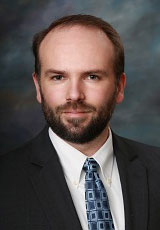
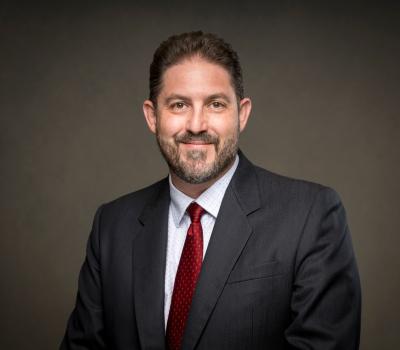
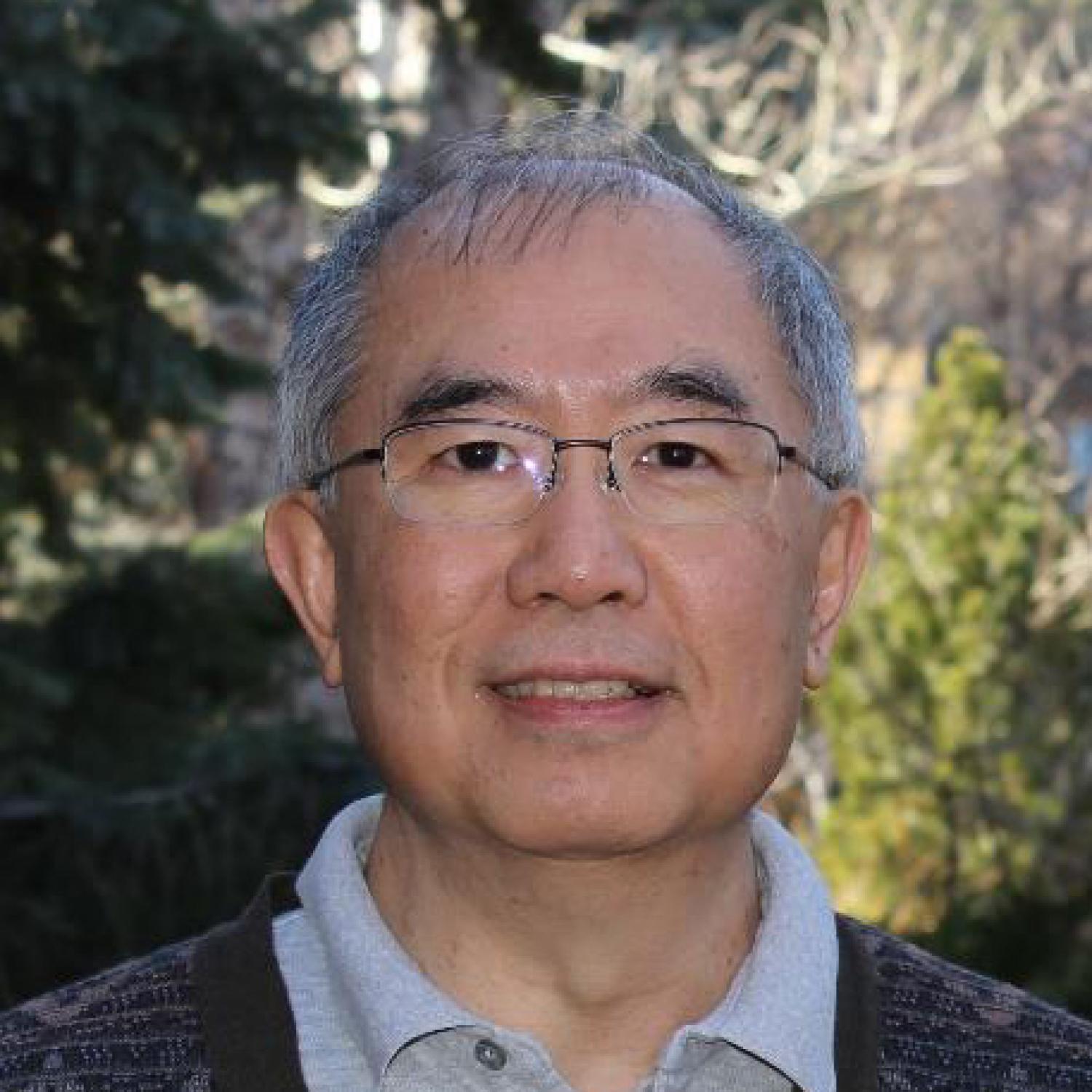
Professor Hong Hao is a John Curtin Distinguished Professor at Curtin University, affiliated with the School of Civil and Mechanical Engineering and the Curtin Research Centre for Infrastructural Monitoring & Protection. His expertise spans Structural Dynamics, Earthquake Engineering, Blast and Impact Engineering, and Structural Health Monitoring. He holds prestigious roles like Fellow of ATSE, ISEAM, and ASCE, and has led organizations such as the International Association of Protective Structures and the Australian Earthquake Engineering Society. Education: BE (Tianjin University, 1982), MSc (UC Berkeley, 1985), PhD (UC Berkeley, 1989). Awards include the Tan Chin Tuan Fellowship and multiple Ko Medals. He has authored over 200 journal articles, with recent work focusing on blast-resistant materials, seismic fragility, and AI-driven structural health monitoring. His research emphasizes resilient infrastructure, including metaconcrete structures, corrosion-resistant materials, and sensor-based damage detection. Ongoing projects involve smart tunnel safety under BLEVE explosions and modular building systems.
Dr. Alan Lloyd is an Assistant Professor in Civil Engineering at the University of New Brunswick, specializing in structural response to extreme loads. He directs experimental research at the Drop Mass Impact Test Facility, focusing on blast-resistant design and retrofit techniques. Education: PhD Civil Engineering, University of Ottawa MASc Civil Engineering, University of Ottawa BEng Civil Engineering, Lakehead University Diploma Civil Engineering Technology, Camosun College Research: Investigates blast/impact effects on structures, structural retrofitting, material behavior under high strain rates, and experimental validation using shock tubes and impact testing. Current projects include developing blast-resistant building components and retrofit solutions for existing infrastructure. Publications: Focus on blast dynamics, FRP composites for structural strengthening, and experimental mechanics. Recurring themes include concrete/wood material performance under explosive loads and design methodologies for blast mitigation. Awards: NSERC Graduate Scholarships National Security Innovation Competition prizes (2010, 2011) ACI Blast Prediction Contest winner Advising: Supervises graduate students researching FRP materials, concrete properties, and structural modeling. Manages industry collaborations on blast-resistant technologies. Facilities: Leads development of the Drop Mass Impact Test Facility for structural component testing under controlled impact conditions.
Mohamed Ezzeldin is an Associate Professor in the Department of Civil Engineering at McMaster University. His work integrates structural engineering, seismic resilience, and machine learning for infrastructure risk management. Research Interests: Seismic behavior of reinforced concrete and masonry structures, blast mitigation systems, urban resilience modeling, and AI applications in construction risk prediction. Teaching: Instructor for courses including Structural Mechanics (CIVENG 2C04), Modern Methods of Structural Analysis (CIVENG 4K04), and Seismic Behavior and Design of Reinforced Concrete Systems (CIVENG 716). His publications focus on hybrid simulation testing, data-driven risk assessment, and bio-inspired structural designs. Recent work (2025) includes advancements in seismic analysis of nuclear facilities and urban resilience frameworks.
Steven Son is the Alfred J McAllister Professor of Mechanical Engineering at Purdue University with a courtesy appointment in Materials Engineering. His research focuses on energetic materials, combustion physics, and advanced propulsion systems through experimental and computational investigations. Primary Affiliation: Department of Mechanical Engineering, College of Engineering Laboratory: Zucrow Labs, Purdue University Dr. Son's research spans: Combustion and detonation physics Laser diagnostics and spectroscopy Smart energetic material design Additive manufacturing of propulsion components Flexoelectric and piezoelectric material applications Thermal decomposition mechanisms His recent work demonstrates advancements in: Aluminized composite propellant characterization Shock sensitivity of molecular crystals Throttleable solid propellant systems Machine learning for energetic material properties 3D-printed energetic compositions Current advisees include graduate student Ethan Binkley , while his laboratory group conducts research at Zucrow Labs, Purdue's premier propulsion research facility.
Chanel Fallon is a Lecturer in the Department of Mechanical Engineering at the University of Bath, affiliated with the Centre for Integrated Materials, Processes & Structures (IMPS). Her research focuses on dynamic material behavior and infrastructure protection under extreme conditions. She holds a PhD and MEng from the University of Cambridge. Research interests include dynamic experimental techniques (e.g., gas guns, Split-Hopkinson pressure bars), numerical modeling of extreme loading, blast/impact mitigation for civilian infrastructure, and strain-rate/temperature-dependent material characterization. Recent projects include cryogenic composite testing (EPSRC-funded), GKN Prosperity Partnership in aerospace materials, and blast protection strategies for concrete structures. She collaborates widely on material testing and structural resilience. Advising and Grants: Principal Investigator/Co-Investigator on 4 research projects, including EPSRC grants and industry partnerships. Supervises doctoral students in protective materials and structural dynamics. Labs/Teams: Active in the IMPS Centre, specializing in advanced material testing and computational modeling.
Armin Stuedlein is a Professor of Geotechnical Engineering at Oregon State University's College of Engineering, specializing in ground improvement, liquefaction mitigation, and soil-structure interaction. He holds a Ph.D. from the University of Washington (2008) and joined OSU in 2009 after consulting in port and harbor engineering. His research focuses on geotechnical testing, probabilistic analysis, and seismic resilience, with over 150 peer-reviewed publications. Education: Ph.D., Civil Engineering, University of Washington (2008) M.S., Civil Engineering, Syracuse University (2003) B.S., Environmental Engineering, SUNY-Environmental Science & Forestry (2000) Research Interests: Liquefaction mitigation and ground improvement techniques Dynamic soil behavior and cyclic softening Seismic retrofit strategies for infrastructure Biocementation and soil modification Probabilistic geotechnical engineering Awards: 2018 ASTM Award for Outstanding Geotechnical Testing Article 2015 ASCE Journal Associate Editor of the Year 2013 Deep Foundations Institute Young Professor Award Advising/Grants: Active in mentoring graduate students and securing grants from NSF, DOTs, and industry partners. Leads the Full-Scale Geotechnics Group, focusing on field-scale geotechnical experimentation. Labs/Teams: Oversees the Full-Scale Geotechnics Group and collaborates with the Geotechnical Research team, advancing large-scale testing methodologies and field applications.
Professor Chengqing Wu is a distinguished academic in the School of Civil and Environmental Engineering at the University of Technology, Sydney (UTS). He serves as Professor of Structural Engineering with a research focus on blast-induced phenomena and advanced concrete technologies. His expertise spans structural response to blast loading, mitigation of blast effects, and the development of ultra-high performance concrete systems. Professor at University of Technology, Sydney Former Chair of Australian Chapter of International Association of Protective Structures (2013-2017) Associate Editor of ASCE Journal of Performance of Constructed Facilities Editorial Board Member of International Journal of Protective Structures Professor Wu's research interests center on structural engineering with emphasis on blast resistance, ultra-high performance concrete, geopolymer concrete, and structural response to extreme loading conditions. His work bridges theoretical analysis with practical applications, particularly in protective structures and extreme environment construction. His research group has made significant contributions to understanding material behavior under blast, impact, and extreme thermal conditions, with applications ranging from terrestrial infrastructure to potential lunar construction. Analysis of Professor Wu's recent publications reveals a strong focus on advanced concrete technologies for extreme environments. His research spans 3D-printed concrete, lunar and Martian construction materials, cryogenic performance of concrete, and blast-resistant structural systems. A notable trend is the increasing application of computational methods and machine learning techniques to predict structural response to explosions, alongside traditional experimental approaches. His work demonstrates a progression from fundamental material characterization to complex structural system analysis, with growing emphasis on sustainable construction and extraterrestrial applications. Author/co-author of over 200 international journal papers Editor of four conference proceedings Editor of two ASCE special issues Editor of two International Journal of Protective Structures special issues Professor Wu has successfully attracted over 4 million dollars in research funding from diverse sources including the Australian Research Council (ARC), Defence Science and Technology Organization (DSTO), and industry partners. His current projects include Eco-friendly Ultra-High Performance Rubberised Concrete, Decarbonised Infrastructure, Structural protective design on large capacity flywheel energy storage system, and Gas Explosion Resistance of Non-Cement Based High Performance Concrete. He actively supervises undergraduate honors students, coursework master's students, and research higher degree candidates, with several scholarships available for prospective postgraduates and research associates. Professor Wu leads research in protective infrastructure technology through the Joint Research Centre for Protective Infrastructure Technology and Environmental Green Bioprocess with Tianjin Chenjian University. His team operates the National Drop Weight Impact Testing Facility and contributes to the National Facility for Physical Blast Simulation. Current research directions include sustainable concrete technologies for extreme environments, blast-resistant structural systems, and innovative applications of concrete in space exploration contexts.
Professor Wensu Chen is a Director of the Centre for Infrastructural Monitoring and Protection (CIMP) and holds the position of ARC Future Fellow at Curtin University's School of Civil and Mechanical Engineering. He leads research in protective structures and materials, structural resilience, and multi-hazard mitigation. With a BE/MSc from Tianjin University, ME from the University of Melbourne, and a PhD from the University of Western Australia, his career spans academia and industry. His research focuses on novel metaconcrete materials, blast-resistant designs, and modular construction. He has secured multiple ARC grants (Discovery, DECRA, Linkage) and collaborates with industry/government bodies like DEMIRS WA and Engineers Australia. Research interests include metamaterials, structural strengthening, and dynamic response analysis under impact and blast loads. Key awards include the Curtin Early-Career Researcher of the Year and Western Australian Premier’s Science Award nominations. He supervises over 20 PhD students and teaches courses in structural analysis and dynamics. His work emphasizes sustainable, resilient infrastructure with applications in building envelopes, seismic control, and tunnel safety under explosive threats.
Ronald Y. S. Pak is a Professor in the Department of Geotechnical Engineering & Geomechanics at the University of Colorado. He holds the position of Professor in the School of Civil, Environmental and Architectural Engineering. His research focuses on geotechnical earthquake engineering, dynamic soil-structure interaction, wave propagation, and constitutive modeling in porous media. Education: Ph.D., California Institute of Technology, Pasadena (1985) M.S., California Institute of Technology, Pasadena (1980) B.E., McMaster University, Canada (1979) Research Interests: Dynamic soil-structure interaction and wave propagation in geotechnical systems Rock mechanics under dynamic and cyclic loading conditions Poroelasticity and boundary element methods for multi-layered media Seismic response of structures and canyons to oblique ground motion Experimental and analytical modeling of geotechnical systems Key Contributions: Development of advanced computational frameworks for soil-structure interaction Studies on water weakening mechanisms in saturated rocks Analysis of seismic amplification effects in complex topographies Awards & Affiliations: NSF Presidential Young Investigator (1985) Association of Professional Engineers Gold Medal, Ontario, Canada Editorial Board Member, ASCE Journal of Engineering Mechanics Member, American Society of Civil Engineers Facilities & Location: Office: ECOT 423, University of Colorado Contact: 303-492-8613 | pak@colorado.edu
Baran Toprak serves as an Assistant Professor in the Geotechnics Department within the Department of Civil Engineering at Kırıkkale University's Faculty of Engineering and Natural Sciences. Appointed to this faculty position in February 2020 following completion of his doctorate, he has been affiliated with the university since 2002 after military service completion in 2001. His academic credentials include: Civil Engineering degree from Balıkesir University Faculty of Engineering and Architecture (1999) Master's in Geotechnics (2005) Doctorate (2019) Dr. Toprak's research centers on Geotechnical Engineering with specialized expertise in foundation design under dynamic loads, soil-structure interaction, and innovative soil improvement techniques. His work addresses critical challenges in low-bearing-capacity soils through methods like fly ash column treatment and advanced in-situ testing (CPT/SPT). He investigates seismic behavior of reinforced concrete structures on improved soils and develops protective systems like gabion walls for blast mitigation, bridging theoretical analysis with practical field applications across earthquake-prone regions of Turkey. Analysis of his 15 publications (2013-2025) reveals consistent focus on geotechnical investigation methodologies, foundation engineering in challenging soils, and dynamic soil-structure interaction. Key trends include utilization of industrial byproducts (fly ash, slag) for soil stabilization, optimization of structural systems via metaheuristic algorithms, and detailed post-earthquake damage assessments linking soil amplification to building resonance. His research demonstrates strong field application emphasis through municipal projects in Kırıkkale and Düzce provinces. No scientific awards were documented in the source materials. No information regarding student advising, research grants, or laboratory leadership was provided in the available documentation.
Professor Luming Shen is a distinguished academic in the School of Civil Engineering at The University of Sydney. With over two decades of experience in mechanical behavior of materials research, he leads cutting-edge investigations at the intersection of civil engineering, materials science, and computational mechanics. His work spans multiple scales from nano to macro, focusing on fundamental understanding that can be applied to real-world engineering challenges in water purification, structural safety, and sustainable infrastructure. Professor Shen's educational background includes: Bachelor's degree in Building Engineering from Tongji University, China Master's degree in Structural Engineering from Tongji University, China PhD in Civil Engineering from the University of Missouri-Columbia, USA Professor Shen's research focuses on the mechanics and behaviors of materials across multiple scales. His primary interest lies in understanding both brittle materials (concrete, rock, glass) and ductile materials (aluminum, titanium, metals). Two major thrusts of his work include nano-mechanics and materials research, particularly developing carbon nanotube membranes for water purification, and studying novel composite materials under impact and extreme loading conditions for applications in blast-resistant structures and vehicle safety. He employs high-performance computing for molecular and macro-level analyses, complemented by physical laboratory testing. Professor Shen's extensive publication record demonstrates a consistent focus on multiscale modeling of materials behavior, with recent work emphasizing granular materials dynamics, carbon nanotube applications, 3D-printed concrete technology, and energy storage systems. His research shows a clear evolution toward increasingly complex multiphysics problems that integrate mechanical, thermal, and fluid dynamics phenomena at multiple scales. The interdisciplinary nature of his work bridges civil engineering, materials science, computational mechanics, and environmental engineering, with applications spanning from fundamental material science to practical civil infrastructure solutions. Professor Shen actively supervises multiple research students, including Yifang Cao working on 3D printing concrete, Jiangshuai Meng studying granular materials under impact loads, and Runda Wang applying machine learning to rock burst prediction. His research is supported by access to advanced computational resources and laboratory facilities at The University of Sydney, particularly through his membership in The University of Sydney Nano Institute. The university has provided specialized space and equipment necessary for conducting physical tests on materials under high-speed impact conditions. Professor Shen maintains active laboratory facilities for conducting physical tests on materials under various loading conditions, particularly high-speed impact testing. His work is supported by computational resources for molecular dynamics and multiscale modeling. As a member of The University of Sydney Nano Institute, he collaborates with interdisciplinary researchers working at the nanoscale, particularly in applications related to water purification technologies using carbon nanotube membranes.
Professor Dimitrios Vamvatsikos is a faculty member at the Laboratory of Steel Structures, National Technical University of Athens (NTUA). He holds a PhD in Civil & Environmental Engineering from Stanford University (2002), specializing in Earthquake Engineering. Prior to NTUA, he served as Assistant Professor at the University of Cyprus (2005–2010). His research integrates structural modeling, computational techniques, and probabilistic methods to assess seismic performance of structures. Key interests include seismic risk assessment, performance-based design, and dynamic analysis of steel structures. Education: BSc in Civil Engineering, NTUA (1997) MSc in Geomechanics, Stanford University (1998) PhD in Civil Engineering, Stanford University (2002) Research Interests: Professor Vamvatsikos focuses on seismic risk mitigation, fragility modeling, and structural dynamics. His work emphasizes practical applications for industrial facilities, oil refineries, and cultural heritage structures. Recent trends in his publications include hazard-consistent fragility curves, vertical ground motion effects, and Bayesian uncertainty quantification. Labs & Teams: Leads research at the Metal Structures Laboratory, collaborating on projects like METIS and PLOTO. His group develops tools for infrastructure resilience assessment and seismic safety of nonstructural components.
Martina Scapin is an Associate Professor at the Department of Mechanical and Aerospace Engineering (DIMEAS) , Politecnico di Torino. She specializes in experimental mechanics, high strain rate testing, and finite element analysis of materials under extreme conditions. Research areas: Energy deposition in matter, Material science, Plasticity Member of DYMAT, INFN, and AIAS associations Research Focus : Her work examines dynamic material behavior across multiple domains: high strain rate testing , high-temperature mechanics , and 3D printed composites . She develops advanced methodologies for post-necking analysis in metals and investigates thermomechanical properties of alloys like Inconel 718 and tungsten. Scientific Contributions : Recent publications highlight 3D printed carbon-epoxy crash boxes, laser-driven shock testing for particle accelerators, and novel strain hardening identification techniques. Her work spans composite materials, computational mechanics, and radiation-resistant structures. Awards & Memberships : DYMAT (2017-) INFN (2017-) AIAS (2010-) Guest Editor, Shock and Vibration (2020-) Advising : Supervises PhD candidates Francesco Bandinelli and Marta Beltramo in Mechanical Engineering. Teaching : Leads courses on Structural Simulation Techniques and Mechanics of Materials.
Dr. Elvedin Kljuno serves as a Visiting Professor at the International University of Sarajevo (IUS), Bosnia and Herzegovina, where he contributes expertise in defense-related engineering disciplines. His academic profile centers on advanced computational methodologies applied to complex mechanical systems and explosive dynamics. His research spans five core domains: Ballistics (armor penetration mechanics, artillery projectile dynamics, and fragmentation effects) Structural Engineering (stress/strain analysis of piping systems using 3D scanning and numerical methods) Blast Engineering (internal/external blast load prediction and overpressure modeling) Aerodynamics (trajectory modeling for irregular bodies under extreme forces) Robotics (cable-driven locomotion systems and bipedal mechanics) His work consistently integrates finite element analysis, computational fluid dynamics, and experimental validation to solve high-stakes engineering problems. Analysis of his 15 most recent publications (2019-2024) reveals a pronounced focus on defense technology applications, particularly in projectile dynamics (40% of works), structural integrity under explosive loads (30%), and advanced simulation techniques (30%). Key trends include the development of novel numerical frameworks for blast wave propagation, refinement of armor penetration models, and innovative stress analysis methodologies using 3D scanning. His research demonstrates strong interdisciplinary connections between mechanical engineering, materials science, and military technology. While no scientific awards or doctoral students are documented in available sources, Dr. Kljuno maintains active research output through IUS's engineering programs. His work shows particular relevance to military R&D institutions focused on munitions design, structural survivability, and high-speed aerodynamics.
Dr. Wieslaw K Binienda is a Professor of Civil Engineering at the University of Akron's College of Engineering and Polymer Science, where he has served since 1988. He co-directs the Gas and Turbine Research and Testing Laboratory. His expertise spans fracture mechanics, composite materials characterization, and computational methods like FEA and CFD. He has received prestigious awards including the NASA 'Turning Goals Into Reality Award' and ASCE's Richard R. Torrens Award for editorial leadership. Education: Ph.D., Mechanical Engineering, Drexel University (1987) M.S., Mechanical Engineering, Drexel University (1985) B.S./M.S., Motor Vehicles and Heavy Duty Machines, Warsaw Polytechnic University (1980) Research Interests: Focuses on advanced composite materials' mechanical behavior under extreme conditions, including high-energy impact, thermal cycling, and dynamic loading. Specializes in failure analysis using multiscale modeling and experimental validation. Active in aerospace applications like turbine durability and structural safety. Awards: NASA 'Turning Goals Into Reality Award' ASCE Aerospace Division 2010 Outstanding Professional Service Award ASCE 2013 Richard R. Torrens Award Fellow, American Society of Civil Engineers (ASCE) Lab & Collaborations: Leads the Gas and Turbine Research and Testing Laboratory, advancing turbine blade containment, impact analysis, and material testing. Collaborates with industry on aviation safety and composite material innovations.