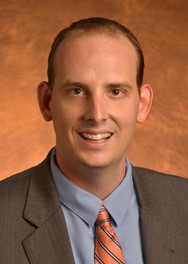
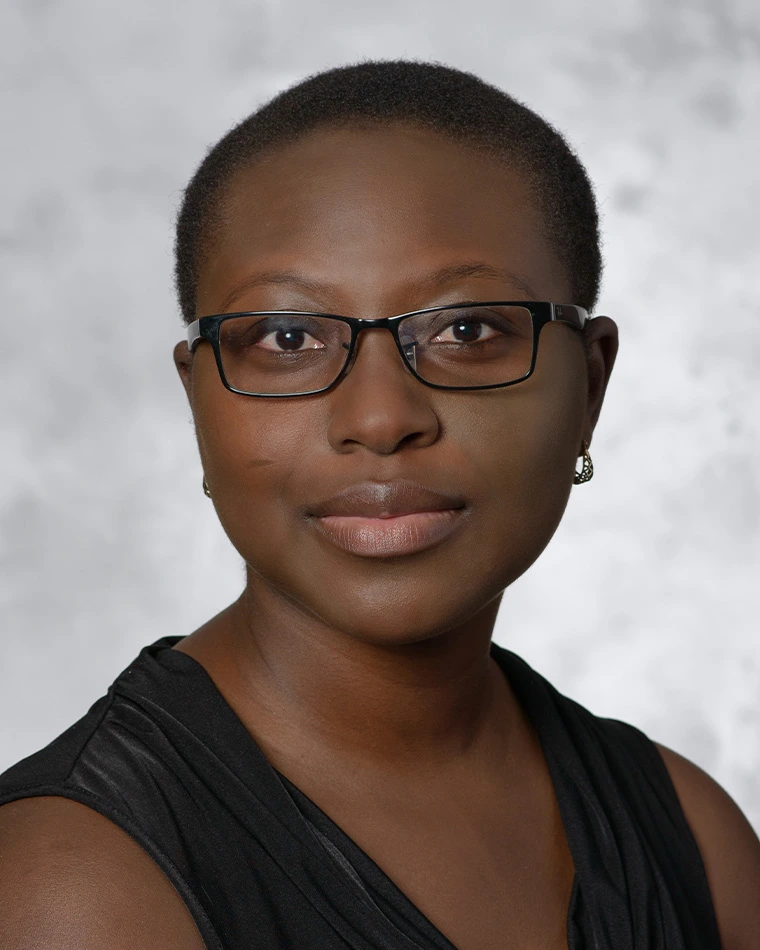
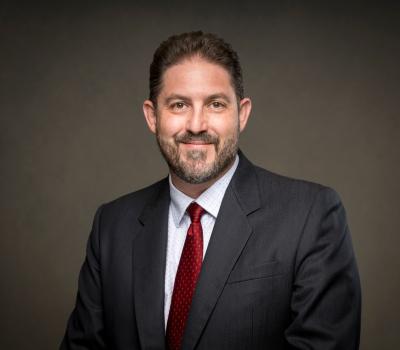
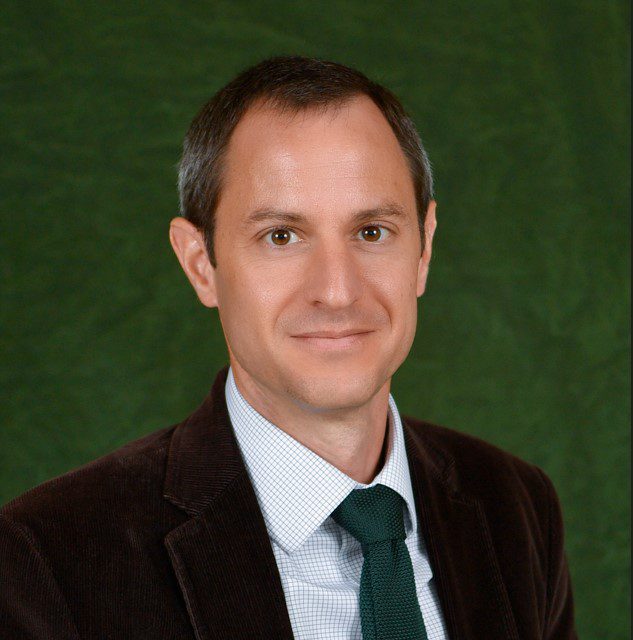
Chanel Fallon is a Lecturer in the Department of Mechanical Engineering at the University of Bath, affiliated with the Centre for Integrated Materials, Processes & Structures (IMPS). Her research focuses on dynamic material behavior and infrastructure protection under extreme conditions. She holds a PhD and MEng from the University of Cambridge. Research interests include dynamic experimental techniques (e.g., gas guns, Split-Hopkinson pressure bars), numerical modeling of extreme loading, blast/impact mitigation for civilian infrastructure, and strain-rate/temperature-dependent material characterization. Recent projects include cryogenic composite testing (EPSRC-funded), GKN Prosperity Partnership in aerospace materials, and blast protection strategies for concrete structures. She collaborates widely on material testing and structural resilience. Advising and Grants: Principal Investigator/Co-Investigator on 4 research projects, including EPSRC grants and industry partnerships. Supervises doctoral students in protective materials and structural dynamics. Labs/Teams: Active in the IMPS Centre, specializing in advanced material testing and computational modeling.
Demetrios M. Cotsovos is an Associate Professor at the School of Energy, Geoscience, Infrastructure and Society, Heriot-Watt University. His research focuses on structural concrete behavior under static and dynamic loads, including seismic, impact, and blast scenarios. He holds a PhD from Imperial College London (2005 Unwin Award) and has extensive experience in numerical modeling, experimental testing, and structural assessment. Education: PhD in Civil and Environmental Engineering (Imperial College London), MSc in Structural Design and Analysis (National Technical University of Athens), BEng in Civil Engineering (University of Patras). Research interests include: constitutive modeling of structural materials, nonlinear finite element analysis, fiber-reinforced concrete performance, and seismic design methodologies. Notable contributions involve developing FE tools for predicting structural responses under high-rate loading and investigating the impact of steel fibers and infill walls on structural integrity. He manages specialized equipment such as drop-test rigs and high-capacity load frames (up to 3000kN). Awards include the 2005 Unwin Award for doctoral research. His work aligns with UN Sustainable Development Goals related to resilient infrastructure and climate action. Collaborations include projects on railway infrastructure dynamics and litigation support for structural integrity assessments. He has supervised multiple research projects and contributed to international conferences, producing over 70 peer-reviewed publications.
Nicholas Wierschem is an Assistant Professor in the Department of Civil and Environmental Engineering at the University of Tennessee, Knoxville, within the Tickle College of Engineering. He leads the Innovative and Smart Infrastructure Group (ISIG), focusing on cutting-edge research in structural dynamics, control, and health monitoring. Education: PhD in Civil Engineering, University of Illinois, Urbana, IL, 2014 MS in Civil Engineering, University of Illinois, Urbana, IL, 2010 BS in Civil Engineering, University of Arizona, Tucson, AZ, 2007 Dr. Wierschem's research centers on structural control, nonlinear dynamics, and sustainable infrastructure. His work integrates experimental methods and advanced modeling to develop innovative solutions for protecting structures against extreme loads such as earthquakes and blasts. A key focus is on nonlinear energy sinks (NESs) and vibro-impact systems for passive damping and vibration isolation. His recent publications demonstrate a strong trend in structural resilience, with emphasis on nonlinear control devices, seismic protection systems, and experimental validation through large-scale testing. The integration of smart materials and real-time monitoring is a recurring theme across his work. Scientific Awards: 2023 UTK Tickle College of Engineering Professional Promise Award 2023 Faculty Research Mentoring Award 2019 UT CEE Outstanding Teaching Award 2016 ASCE ExCEEd Teaching Fellowship Top 5 Most Cited Paper, International Journal of Non-Linear Mechanics (2014–2016) University of Illinois Teaching Excellence (2014–2015) Multiple fellowships and scholarships from NSF, ASCE, and university sources Dr. Wierschem has mentored multiple graduate and undergraduate students, including Anika Sarkar, Simona Abolghasemi, and Jonathan Shell. He has secured research funding enabling student assistantships and experimental projects. His lab, the Innovative and Smart Infrastructure Group (ISIG), conducts dynamic testing using photogrammetry and operates a 6-DOF shake table for structural experiments. Laboratory and Research Facilities: The ISIG lab includes the High Bay Laboratory in the John D. Tickle Building, equipped with advanced tools for laser metrology, structural testing, and real-time monitoring. The group actively develops and tests nonlinear energy sinks and other smart structural systems.
Alper Taşdemirci is a Professor in the Department of Mechanical Engineering at Izmir Institute of Technology (IYTE). His primary research focuses on high strain rate mechanics, material deformation, energy absorption in structural materials, and computational modeling. He has conducted extensive studies on composite materials, metallic foams, and bio-inspired designs, with a strong emphasis on dynamic loading conditions and finite element analysis. Education: B.S. in Mechanical Engineering, Erciyes Üniversitesi M.S. in Mechanical Engineering, Erciyes Üniversitesi PhD in Mechanical Engineering, University of Delaware Research Interests: High strain rate behavior of materials Energy absorption mechanisms in structural components Dynamic material testing (e.g., Split Hopkinson Pressure Bar) Composite and metallic material design for impact applications Numerical modeling with LS-DYNA Publications: His recent works explore bio-inspired metallic structures, additive manufacturing of composites, and the dynamic compression of syntactic foams. Key themes include strain rate effects, material characterization under impact, and the development of constitutive models for advanced materials. Awards and Honors: No specific awards mentioned in the text. Grants and Advising: No explicit details on grants or advisees provided in the text.
Dr. Angelina Anani is an Associate Professor in the Department of Mining & Geological Engineering at the University of Arizona, College of Engineering. She is also a member of the Graduate Faculty and actively contributes to research and teaching in mining systems optimization, mine planning, and sustainable mining practices. Education: PhD in Mining Engineering, Missouri University of Science and Technology, Rolla, Missouri, United States BS in Mining Engineering (Summa cum laude), Missouri University of Science and Technology, Rolla, Missouri, United States Research Interests: Dr. Anani's research spans a broad spectrum of mining engineering challenges, focusing on modeling and optimization of mining systems , mine planning and production scheduling , and sustainable mining system design . She investigates mine equipment reliability , tunneling and underground works , and energy and water efficiency . A significant portion of her recent work integrates machine learning and data-driven approaches into mine safety and planning, including 3D/4D/VR applications and digital twin systems . Her interdisciplinary approach also includes ethnographic research in mining communities and supply chain management in the mining sector. Publications Trends: Her recent publications reflect a strong shift toward intelligent systems in mining, with increasing focus on machine learning for safety, process mining for maintenance, and digital twin deployment. She combines traditional optimization techniques like discrete event simulation with modern AI to solve complex mining challenges, particularly in underground and transition mines. Scientific Awards: Freeport-McMoRan, Inc. Career Development Grant Society for Mining, Metallurgy and Exploration, Fall 2022 Faculty Core Advising and Grants: Dr. Anani supervises graduate research through MNE 900 (Research), MNE 910 (Thesis), and MNE 920 (Dissertation) courses. She has secured external funding such as the Freeport-McMoRan Career Development Grant, supporting her innovative work in mine optimization and safety. While current students are not listed, her active supervision load indicates ongoing mentorship of master’s and PhD candidates. Labs and Teams: She is actively involved with the San Xavier Underground Mine Laboratory, where she contributes to monitoring systems and digital twin development. Her collaborative work with researchers from Chile and Ghana highlights her international engagement. She is also affiliated with professional societies including the Society of Mining, Metallurgy and Exploration (SME), Society of Mining Professors, and Women in Mining (WIM), contributing to both technical and diversity initiatives in the field.
Armin Stuedlein is a Professor of Geotechnical Engineering at Oregon State University's College of Engineering, specializing in ground improvement, liquefaction mitigation, and soil-structure interaction. He holds a Ph.D. from the University of Washington (2008) and joined OSU in 2009 after consulting in port and harbor engineering. His research focuses on geotechnical testing, probabilistic analysis, and seismic resilience, with over 150 peer-reviewed publications. Education: Ph.D., Civil Engineering, University of Washington (2008) M.S., Civil Engineering, Syracuse University (2003) B.S., Environmental Engineering, SUNY-Environmental Science & Forestry (2000) Research Interests: Liquefaction mitigation and ground improvement techniques Dynamic soil behavior and cyclic softening Seismic retrofit strategies for infrastructure Biocementation and soil modification Probabilistic geotechnical engineering Awards: 2018 ASTM Award for Outstanding Geotechnical Testing Article 2015 ASCE Journal Associate Editor of the Year 2013 Deep Foundations Institute Young Professor Award Advising/Grants: Active in mentoring graduate students and securing grants from NSF, DOTs, and industry partners. Leads the Full-Scale Geotechnics Group, focusing on field-scale geotechnical experimentation. Labs/Teams: Oversees the Full-Scale Geotechnics Group and collaborates with the Geotechnical Research team, advancing large-scale testing methodologies and field applications.
Dr. Matthew Whelan is an Associate Professor and EPIC Assistant Director of Research for Energy Infrastructure at the University of North Carolina at Charlotte. He is affiliated with the Department of Civil and Environmental Engineering and specializes in structural health monitoring, sensing technologies, and infrastructure resilience under dynamic loads. Current roles: Associate Professor, EPIC Assistant Director of Research for Energy Infrastructure Department: Civil and Environmental Engineering Research Interests: Dr. Whelan focuses on full-scale structural testing, ambient vibration monitoring, and the application of wireless sensor networks for bridge and building diagnostics. His work addresses deterioration modeling, blast and impact load responses, and digital twin integration for infrastructure management. Key Trends: Recent publications highlight advancements in concrete constitutive modeling, blast testing of cold-formed steel systems, and digital twins for construction quality monitoring. His work bridges computational simulations (e.g., LS-DYNA) with experimental validation using high-rate wireless sensors. Professional Background: He obtained all his degrees (B.S., M.S., Ph.D.) in Civil and Environmental Engineering from Clarkson University and has been a faculty member at UNC Charlotte since 2010. Dr. Whelan is a licensed Professional Engineer.
Jeffrey Erochko is an Assistant Professor in the Department of Civil and Environmental Engineering at Carleton University, Ottawa, Canada. His research and teaching focus on structural engineering, particularly seismic-resistant and self-centering systems for timber and hybrid structures, as well as innovative pedagogical techniques in engineering education. B.A.Sc. Engineering Science, University of Toronto Ph.D., Civil Engineering, University of Toronto Prof. Erochko’s research spans advanced seismic design for timber buildings, hybrid simulation methods, fire performance of structural systems, and nonlinear dynamic analysis of multi-hazard scenarios. His work integrates experimental testing with computational models to enhance resilience in civil infrastructure. Key trends in his publications include hybrid timber-steel/concrete systems, self-centering dampers, nonlinear modeling of seismic responses, and fire safety engineering. His pedagogical contributions emphasize technology-driven assessment tools like micro-video projects and weighted rubrics. He leads the Carleton Hybrid Simulation Research Group and collaborates with the university’s multi-hazard infrastructure protection facility, which explores integrated experimental and computational approaches to natural hazards such as earthquakes, fire, blast, and wind.
Dr. Spencer Quiel is an Associate Professor of Structural Engineering at Lehigh University's P.C. Rossin College of Engineering and Applied Science. His research focuses on structural resilience to extreme loads such as fire, blast, and progressive collapse, with particular emphasis on bridges, tunnels, and building systems. He has secured over $1.5 million in grants from NSF, USDOT, and others, and his work is published in leading journals like Engineering Structures and Fire Safety Journal. Prior to academia, he worked at Hinman Consulting Engineers, contributing to structural designs for hazard resistance. He holds a PhD from Princeton University (2009) and a BS from Notre Dame (2004), supported by a DHS Fellowship during his doctoral studies. Dr. Quiel teaches undergraduate courses in engineering statics and civil engineering design, as well as graduate-level structural fire engineering. He currently serves as Vice Chair of the PCI Blast Resistance and Structural Integrity Committee and contributed to ASCE standards on fire loads and structural fire engineering. His research group focuses on experimental testing, numerical modeling, and large-scale infrastructure resilience. Education: PhD, Civil Engineering, Princeton University (2009) Professional Affiliations: ASCE, AISC, PCI Licenses: Professional Engineer (PA, VA) Key Projects: World Trade Center collapse studies, tunnel liner resilience, thermal energy storage systems His research interests span structural fire effects, blast-resistant design, progressive collapse frameworks, and innovative cladding systems. Recent work includes developing fire-resistant tunnel liners and thermal energy storage solutions using concrete matrices. He also investigates multi-hazard simulation methods for tall buildings using real-time hybrid techniques.
Dr. Anh-Vu Phan is a Professor in the Department of Mechanical, Aerospace, and Biomedical Engineering at the University of South Alabama's College of Engineering. His work bridges computational mechanics, quantum physics, and biomechanics through advanced numerical methods. He maintains an active research program with numerous publications spanning several decades and teaches a wide range of mechanical engineering courses from undergraduate to graduate levels. Dr. Phan earned his B.S. in Mechanical Engineering from Ho Chi Minh City University of Technology, followed by an M.S. in Solid Mechanics from Grenoble Institute of Technology, and completed his Ph.D. in Mechanical Engineering from Ecole Polytechnique, University of Montreal. His academic journey has positioned him at the intersection of theoretical mechanics and practical engineering applications. Dr. Phan's research focuses on boundary element methods, particularly the Symmetric-Galerkin Boundary Element Method (SGBEM), applied to diverse problems including quantum mechanics (confined electron states in quantum structures), fracture mechanics (dynamic crack analysis), and biomechanics (cAMP signaling). His work demonstrates a remarkable ability to apply computational techniques across disciplinary boundaries, from nanoscale quantum phenomena to cellular-level biological processes. He has developed sophisticated numerical frameworks for analyzing energy eigenvalues, T-stresses, and fracture propagation in various materials systems. Analysis of his recent publications (2015-2025) reveals three primary research thrusts: continued development of boundary integral methods for quantum mechanical problems (particularly confined electron states in quantum dots), application of computational techniques to biological signaling processes (especially cAMP pathways), and ongoing work in dynamic fracture mechanics with emphasis on crack interactions and wave propagation. His work shows increasing interdisciplinary collaboration, particularly with biologists and systems engineers in recent years. Dr. Phan teaches a comprehensive range of mechanical engineering courses including Dynamics, Mechanics of Materials, Aerodynamics, Aircraft Structural Analysis, Thermodynamics, Finite Element Analysis, Vibration Analysis, and various graduate-level specialized topics. His teaching portfolio reflects both foundational mechanical engineering principles and advanced computational techniques, aligning closely with his research expertise in numerical methods and computational mechanics. Dr. Phan's research laboratory appears to focus on computational mechanics, with particular emphasis on boundary element methods and their applications across multiple domains. His collaborations with researchers in biomedical fields suggest interdisciplinary work at the intersection of mechanical engineering and cellular biology, particularly in modeling intracellular signaling processes. His recent work on quantum dot solar cells indicates expanding research into renewable energy applications.
Mina Mortazavi is a Senior Lecturer at the University of Technology Sydney's School of Civil and Environmental Engineering with over 15 years of experience specializing in structural engineering. Her academic journey includes a PhD in Structural Engineering from Western Sydney University, an MEng in Structural Engineering from Amirkabir University of Technology in Tehran, and a BSc in Civil Engineering from Shahid Beheshti University in Tehran. Her research interests focus on three interconnected fields: cold-formed steel profile assessment and section optimization, modularization in construction, and prefabrication of seismic mounting systems for building services. Mortazavi has developed expertise in applying machine learning techniques to structural engineering problems, particularly in thermal buckling analysis, seismic performance evaluation, and concrete material behavior prediction. Her publication record demonstrates consistent output in high-impact journals such as Thin-Walled Structures , Automation in Construction , and Journal of Building Engineering . Recent research shows increasing integration of artificial intelligence methods with traditional structural engineering problems, particularly in thermal analysis, seismic performance evaluation, and material behavior prediction. Research Innovation Connection grant recipient Multiple contract research projects with industry partners Active PhD and Masters student supervision Mortazavi's teaching portfolio includes courses in Steel and Composite Design, Steel and Timber Design, Mechanics of Solids, and Application of Timber in Engineering Structures. Her industry collaborations demonstrate strong practical application of research findings to real-world structural engineering challenges.
Prof. Dr. Robert Eberlein is a Senior Lecturer in Mechanics at the ZHAW School of Engineering , specifically working at the Institute of Mechanical Systems (IMES) . He has served as Director of IMES since 08/2017, following previous roles as Senior Lecturer at IMES (11/2013-07/2017) and industry leadership positions including CTO of Angst+Pfister Group (06/2006-10/2013). Dr. Eberlein holds a Dr.-Ing. (PhD) in Numerical Mechanics from Darmstadt University of Technology (1992-1997) and completed an exchange program at UC Berkeley (1991-1992). Education: Dr.-Ing. (PhD) in Numerical Mechanics, Darmstadt University of Technology (07/1992-07/1997); Exchange Student at University of California, Berkeley (07/1991-06/1992) Professional: Director of Institute IMES (08/2017-today); Senior Lecturer at IMES (11/2013-07/2017); CTO & Group Executive Committee, Angst+Pfister Group (06/2006-10/2013); Group Leader in Biomechanics, Sulzer Innotec (07/1998-04/2006) Dr. Eberlein focuses on experimental and numerical modeling of solid polymers and lightweight structures. His research spans material modeling, finite element analysis, and fatigue life prediction for materials like POM gears, TPU and vulcanizates. Recent work explores digital twin development for rubber spring elements and machine learning enhanced process simulation in additive manufacturing. His projects include Lifetime prediction of POM gears , Measurement of human soft tissue properties , and Optimization of plastic gear geometry . Scientific achievements include: Professor ZFH (Fachhochschulrat) - 12/2019 Dr.-Ing. (PhD) summa cum laude - Darmstadt University of Technology - 07/1997 Graduate Assistantship - Darmstadt University of Technology - 01/1993 His work appears in journals like International Journal of Non-Linear Mechanics , Rubber Chemistry and Technology , and Journal of Loss Prevention in the Process Industries . Publications since 2015 show a consistent focus on material characterization , finite element modeling , and fatigue analysis with applications in industrial components and biomedical systems.
Professor Chengqing Wu is a distinguished academic in the School of Civil and Environmental Engineering at the University of Technology, Sydney (UTS). He serves as Professor of Structural Engineering with a research focus on blast-induced phenomena and advanced concrete technologies. His expertise spans structural response to blast loading, mitigation of blast effects, and the development of ultra-high performance concrete systems. Professor at University of Technology, Sydney Former Chair of Australian Chapter of International Association of Protective Structures (2013-2017) Associate Editor of ASCE Journal of Performance of Constructed Facilities Editorial Board Member of International Journal of Protective Structures Professor Wu's research interests center on structural engineering with emphasis on blast resistance, ultra-high performance concrete, geopolymer concrete, and structural response to extreme loading conditions. His work bridges theoretical analysis with practical applications, particularly in protective structures and extreme environment construction. His research group has made significant contributions to understanding material behavior under blast, impact, and extreme thermal conditions, with applications ranging from terrestrial infrastructure to potential lunar construction. Analysis of Professor Wu's recent publications reveals a strong focus on advanced concrete technologies for extreme environments. His research spans 3D-printed concrete, lunar and Martian construction materials, cryogenic performance of concrete, and blast-resistant structural systems. A notable trend is the increasing application of computational methods and machine learning techniques to predict structural response to explosions, alongside traditional experimental approaches. His work demonstrates a progression from fundamental material characterization to complex structural system analysis, with growing emphasis on sustainable construction and extraterrestrial applications. Author/co-author of over 200 international journal papers Editor of four conference proceedings Editor of two ASCE special issues Editor of two International Journal of Protective Structures special issues Professor Wu has successfully attracted over 4 million dollars in research funding from diverse sources including the Australian Research Council (ARC), Defence Science and Technology Organization (DSTO), and industry partners. His current projects include Eco-friendly Ultra-High Performance Rubberised Concrete, Decarbonised Infrastructure, Structural protective design on large capacity flywheel energy storage system, and Gas Explosion Resistance of Non-Cement Based High Performance Concrete. He actively supervises undergraduate honors students, coursework master's students, and research higher degree candidates, with several scholarships available for prospective postgraduates and research associates. Professor Wu leads research in protective infrastructure technology through the Joint Research Centre for Protective Infrastructure Technology and Environmental Green Bioprocess with Tianjin Chenjian University. His team operates the National Drop Weight Impact Testing Facility and contributes to the National Facility for Physical Blast Simulation. Current research directions include sustainable concrete technologies for extreme environments, blast-resistant structural systems, and innovative applications of concrete in space exploration contexts.
Dr. Mike Bambach is a Senior Lecturer at the University of Sydney's School of Civil Engineering, where he also serves as Director of the Centre for Advanced Structural Engineering and Undergraduate Program Director for Civil Engineering. His research spans composite materials, crashworthiness, and structural optimization. Structural Engineering Composite Material Analysis Road Safety & Impact Mechanics Research Interests Dr. Bambach investigates advanced structural systems using fiber-reinforced polymers (FRP), natural fiber composites for sustainable construction, and crash energy absorption in transportation systems. His work combines experimental testing with numerical modeling to improve structural performance under extreme loads. Recent Publications (2025-2018) Current research focuses on natural fiber composites for structural applications, hybrid metal-composite energy absorption systems, and innovative buckling control mechanisms. Key trends include sustainable material development and dynamic structural response analysis. Teaching & Supervision He teaches foundational civil engineering courses and supervises PhD/Master's students working on projects like AI-based quality control in steel fabrication, sustainable cementitious composites, and deep foundation reuse solutions.
David S. Thompson is a Professor in the Department of Aerospace Engineering at Mississippi State University, where he holds the inaugural Airbus Helicopters, Inc. Professorship. He is affiliated with the Bagley College of Engineering and has been a key figure in computational fluid dynamics (CFD) research and education. He previously served in leadership roles at the Center for Advanced Vehicular Systems (CAVS) and the Office of Research and Economic Development. Ph.D., Aerospace Engineering, Iowa State University (1987) M.S., Aerospace Engineering, Mississippi State University (1980) B.S., Aerospace Engineering, Mississippi State University (1979) Dr. Thompson's research focuses on computational fluid dynamics , particularly in aircraft icing , unsteady flows , and vortex-dominated flows . He also works on mesh generation, flow visualization, and high-performance computing applications in both aerospace and biomedical systems. His interdisciplinary work spans engineering mechanics, numerical methods, and biological flow modeling. His recent publications reflect a strong emphasis on turbulent wake analysis , flow visualization techniques , and CFD modeling of complex systems such as iced wings and lung airways. The articles demonstrate expertise in hybrid turbulence modeling, vortex detection, and adaptive mesh refinement, often applied to real-world engineering and biomedical challenges. Faculty of the Year, MSU Department of Aerospace Engineering (2015) Royal Academy of Engineering Distinguished Visiting Fellow (2014–15) Inaugural Airbus Helicopters, Inc. Professorship (2013–present) Bagley College of Engineering Hearin Faculty Excellence Award (2010) Mississippi State University StatePride Award (2010, 2011) Bagley College of Engineering Academy of Distinguished Teachers (2010) NASA Group Achievement Award for LEWICE development (2009) NASA TGIR Award for aircraft icing research (2001) Dr. Thompson has secured research funding from major agencies including the National Science Foundation , NASA , Air Force Office of Scientific Research , Army Research Office , Department of Homeland Security , and aircraft industry partners such as Airbus. He has advised numerous students and collaborators across disciplines, contributing to projects in aerospace, energy, and biomedical engineering. His work integrates simulation, visualization, and high-performance computing to solve complex fluid dynamics problems. He is associated with research facilities such as the Autonomous System Research Laboratory (ASRL) and the Center for Advanced Vehicular Systems (CAVS) , where he led the Computational Fluid Dynamics group. His collaborations extend to international institutions, including Cardiff University during his Royal Academy fellowship.