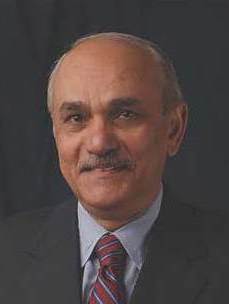
Professor Inge Hoff is affiliated with the Norwegian University of Science and Technology (NTNU) in the Department of Civil and Environmental Engineering, where he has served since 2009. Prior to this, he held roles as senior researcher and research leader at SINTEF. Research Interests : Materials for road construction, frost protection, laboratory testing, pavement dimensioning, road rehabilitation, state development modeling, ground-penetrating radar surveys, and concrete/natural stone coverings. Students : Mentors active PhD fellows Lisa Hannasvik, Arman Hamidi, Clara Weber, and Shoiab Ahmad. Teaching : Coordinates courses like TBA4204/BYGT1102 Transport Infrastructure , BYGT2204 Road and Railway Construction , and BA8600 Pavement Structure Dimensioning . Recent publications highlight his expertise in granular material behavior, asphalt durability under climate stressors, and advanced structural assessment techniques. Collaborations with international researchers and presentations at major conferences (TRB, International Conference on Bituminous Mixtures) demonstrate his ongoing contributions to road engineering.
Hussain Bahia is a Professor at the University of Wisconsin-Madison's Department of Civil and Environmental Engineering and serves as Director of the Modified Asphalt Research Center (MARC). His work focuses on pavement materials and design, particularly modified asphalts and asphalt mixtures, with applications in public and private sector projects. Established the Modified Asphalt Research Center (MARC) in 2009 Principal Investigator for NCHRP projects on modified asphalts and mineral fillers Collaborates with Wisconsin DOT, FHWA, and private industry Research Interests: Dr. Bahia specializes in pavement materials and design, with a focus on modified asphalts, asphalt mixtures, and mineral fillers. His work addresses durability, performance, and innovation in highway construction, supported by over 100 peer-reviewed publications and technical reports. Scientific Awards: Vilas Distinguished Professor Three patents for testing devices in bituminous materials Advising and Grants: Dr. Bahia has led numerous research projects, including SHRP, NCHRP, and Wisconsin DOT initiatives. He consults for agencies and companies globally, contributing to advancements in asphalt technology and pavement engineering. Labs and Teams: He directs the Modified Asphalt Research Center (UWMARC.org) and serves as a Principal Investigator in the Asphalt Research Consortium (ARC).
Amanda Gibney is an Associate Professor and Head of School in the School of Civil Engineering at University College Dublin (UCD). She holds a 1st Class Honours BE (UCD, 1985), a MSc (City University London, 1990), and a PhD (UCD, 2002) focused on asphaltic materials. Her career spans academic and industry roles, including leadership in teaching and research. She has received prestigious awards, including the National Teaching Excellence Award (2009) and UCD Fellowship in Teaching & Academic Development (2007). Research focuses on bituminous materials, pavement engineering, and innovative teaching methodologies. Key contributions include studies on recycled asphalt, cold-mix materials, and fatigue resistance in pavements. She has secured significant research funding, including grants from CEDR, NRA, and Enterprise Ireland. Teaching leadership includes roles as Vice Principal for Teaching & Learning (2008–2019) and coordination of modules like Highway Engineering and Innovation Leadership. Professional activities include committee roles with the Royal Town Planning Institute and NSAI Roads Standards Committee.
Suri Gatiganti serves as an Assistant Research Professor at the National Center for Asphalt Technology (NCAT) at Auburn University . Her work focuses on asphalt mixtures, pavement mechanics, and sustainable infrastructure solutions. Ph.D., Auburn University M.Tech., Indian Institute of Technology B.E., Andhra University Her research spans multiple subfields: Development of balanced mix design methodologies Environmental impact analysis of asphalt production Thermal properties and heat transfer in aggregate materials Recycling technology for cold-mix and reclaimed asphalt Life cycle assessment of pavements and construction equipment Pavement durability and failure analysis Recent publications emphasize asphalt sustainability , emissions quantification , and innovative testing methodologies for pavement performance. She is affiliated with NCAT, a leading research center for asphalt technology.
Luigi De Napoli is an Assistant Professor in the Department of Mechanical, Energy and Management Engineering at the University of Calabria's Engineering Faculty. He has been serving in this position since March 1, 2006, and achieved National Scientific qualification as associate in the Italian higher education system for the disciplinary field of 09/A3 - Industrial design, machine construction, and metallurgy, starting from December 20, 2019. His educational background includes a Bachelor Degree in Mechanical Engineering from the University of Calabria in 1993, followed by qualification as an Engineer in 1994. He completed his Ph.D. degree in Design and Methods in Industrial Engineering at the University of Bologna in 2003, with a thesis focused on the reconstruction of archaeological artifacts using CAD systems. High school: Liceo Scientifico Statale E. Fermi di Cosenza (1986) Bachelor Degree: Mechanical Engineering, University of Calabria (1993) Engineer Qualification (1994) Scholarship: ITIA-CNR in Milan on advanced FEM and BEM systems (1995/96) Ph.D.: Design and Methods in Industrial Engineering, University of Bologna (2003) Dr. De Napoli's research primarily focuses on Reverse Engineering applications in Mechanical Engineering, Product Design and Development, and Virtual Prototyping. His work spans various applications including the reconstruction of archaeological artifacts, geometry inspection, hull and prosthesis reconstruction, and sustainable product design methodologies. His recent publications demonstrate a strong emphasis on biomedical applications, particularly in cranial prosthetics, tissue engineering, and ovarian tissue culture systems. His teaching portfolio is extensive, covering courses such as Computer-Aided Design, Sustainable Product Design, Engineering Drawing/CAD, and Modeling and Prototyping for Bioengineering across both Mechanical and Management Engineering programs. He has been teaching CAD courses since 2010 and Sustainable Product Design since 2011 at the University of Calabria. Dr. De Napoli is actively involved in the Research Group for Industrial Engineering Design and Methods (ING-IND/15), which focuses on methodologies and tools for product development processes, industrial product design and development (with particular attention to parametric and sustainable aspects), prototyping (virtual and mixed), and manufacturing using 3D printers. His work also encompasses Reverse Engineering techniques, User Centered Design methodologies for ergonomic analysis, and Virtual and Augmented Reality applications for industrial product design.
Dr. TÓTH Csaba is an Associate Professor at the Department of Highway and Railway Engineering, Budapest University of Technology and Economics (BME), Faculty of Civil Engineering. He teaches courses such as Highway and Railway Structures (BMEEOUVAI41) and Pavement Structures (BMEEOUVMU63), while previously teaching Pavement Analysis and Design (BMEEOUVDT81) and Project Management in Transportation (BMEEOUVMU-4). His research focuses on asphalt technology, pavement diagnostics, and sustainable road construction. Phone: +36 1 463 1154 Room: ÉL. ép / 206/E Research Interests: His work emphasizes non-destructive evaluation methods (e.g., Ground-Penetrating Radar), rheological modeling of asphalt binders, recycled asphalt pavement applications, and climate-adapted pavement design. Key methodologies include the Ramberg-Osgood model for dynamic modulus prediction and the virtual inertial point method for structural diagnostics. Scientific Contributions: Recent research trends highlight sustainable road rating systems, thermal stress analysis in asphalt pavements, and advanced diagnostic techniques for infrastructure monitoring. Scientific Awards: Magyar Felvételi Scholarship (#építő250)
Lucia Tsantilis serves as an Associate Professor at the Department of Environment, Land and Infrastructure Engineering (DIATI) at Polytechnic University of Turin, where she also acts as Deputy Coordinator of the College of Civil and Building Engineering and is a member of the SISCON Interdepartmental Center for Safety of Infrastructures and Constructions. Her academic career focuses on sustainable transport infrastructure with emphasis on environmental impacts of pavements and development of eco-friendly materials. Dr. Tsantilis's research spans multiple areas of sustainable infrastructure, particularly focusing on assessment of environmental impacts of pavements, development of high-performance eco-friendly materials containing waste-derived additives, rheology of bituminous and non-petroleum binders, and self-healing properties of construction materials. Her work addresses critical challenges in climate change adaptation and mitigation within transportation infrastructure, aligning with UN Sustainable Development Goals 9, 11, and 13. Her recent publications demonstrate a consistent focus on sustainability metrics for road infrastructure, life cycle assessment methodologies, and innovative material solutions. The research trajectory shows increasing integration of environmental impact analysis with material science, particularly in developing sustainable alternatives for traditional asphalt materials and improving understanding of self-healing mechanisms in construction materials. Dr. Tsantilis actively supervises multiple PhD students including Davide Cimenti, Mattia Di Sessa, Aliasghar Akbari Nasrekani, and Rajab Ali Mehraban in the Civil and Environmental Engineering program. She leads significant research projects including SMASHit (2025-2027) as Scientific Manager and participates in the Green Roads project (2024-2026) as a member of the research group. Her work has practical applications in commercial research, such as the 2018 project on physico-chemical characterization of bituminous milled material.
Prof. Dr. Abdullah Hilmi Lav is a faculty member at Istanbul Technical University in the Department of Civil Engineering . His research focuses on Transportation Planning , Bituminous Materials , and Transportation Structures Engineering . He can be contacted via email at lav@itu.edu.tr . PhD from University of Technology, Sydney (1993) Research interests include pavement engineering, sustainable highway materials, and transportation safety measures. His recent work has explored CO2 emission mitigation in highway systems and recycled waste applications in asphalt layers. Key article trends show expertise in: Flexible pavement optimization Environmental impact reduction Speed hump design and safety Alternative binder materials (sulphur, fly ash) Structural stabilization techniques With an h-index of 14 and over 595 Scopus citations, his work spans experimental testing, simulation modeling, and sustainability-focused infrastructure solutions.
Elena ROMEO is an Associate Professor in the Department of Engineering and Architecture at the University of Parma, where she actively contributes to teaching and research in civil and transportation engineering. She teaches courses such as Pavements Management and Design and Road Infrastructure Laboratory for both first and second cycle degree programs in Civil Engineering. Her research focuses on sustainable pavement materials, including the reuse of industrial by-products and plastic waste in asphalt mixtures, thermo-mechanical modeling of bituminous materials, and durability of geotechnical resins. Her work aligns with circular economy principles and sustainable infrastructure development. The recent publications (2023–2024) highlight her expertise in innovative pavement materials, waste valorization, and advanced modeling techniques. Key themes include steel slag utilization, polymer-modified asphalt, and aging effects on construction chemicals, reflecting a strong commitment to environmentally responsible civil engineering solutions. Scientific Contributions: Published in areas related to asphalt technology and geotechnical materials. Active contributor to international research symposia, including ISAP. Collaborates with researchers across Europe on sustainable pavement systems. Advising and Grants: While specific advisees and funded projects are not listed in the provided text, her ongoing teaching and publication activities suggest active supervision and potential involvement in research grants related to sustainable infrastructure and materials innovation. Labs and Research Teams: Though not explicitly named, her work on laboratory-based testing of asphalt and geotechnical materials indicates involvement in pavement and materials testing laboratories within the Department of Engineering and Architecture.
Erica L. Belmont is an Associate Professor in the Department of Mechanical Engineering at the University of Wyoming, leading the Belmont Energy Research Group (BERG). Her work focuses on experimental combustion science, renewable energy conversion, and sustainable materials development within the university's Carnegie R1 research framework. Her academic credentials include: B.S. in Chemical Engineering from Tufts University M.S. in Mechanical Engineering from Tufts University Ph.D. in Mechanical Engineering from the University of Texas at Austin Dr. Belmont's research integrates three interconnected domains: low-temperature combustion chemistry (particularly cool flames for advanced engine applications), biomass energy systems (including co-combustion of beetle-kill wood with coal), and biochar valorization (for carbon sequestration and materials production). Her experimental approach combines species/temperature measurements with numerical modeling to address energy efficiency and environmental sustainability challenges. Recent publications demonstrate consistent innovation in combustion diagnostics and biomass thermochemical conversion, with increasing emphasis on wildfire-derived carbon analysis and sustainable material synthesis. The work bridges fundamental chemical kinetics with practical energy applications, particularly in Western U.S. contexts affected by bark beetle infestations. She mentors a robust cohort of graduate researchers, with 21 advised students (11 Ph.D., 10 M.S.) contributing to BERG's mission. Her group secures research support through university and external partnerships focused on clean energy transitions. BELMONT ENERGY RESEARCH GROUP (BERG) operates specialized facilities for cool flame stabilization, biomass pyrolysis/gasification, and biochar characterization. Current projects include wildfire carbon quantification in Medicine Bow National Forest and development of biomass-derived battery components, reflecting Wyoming's energy landscape and ecological challenges.
Dr. Greg White serves as the Director of the Airport Pavement Research Program at the University of the Sunshine Coast, within the School of Science, Technology and Engineering. With a distinguished career spanning military service as an Airfield Engineering Officer in the Royal Australian Air Force, industry work as Principal Airport Pavement Engineer, and current academic leadership, he brings extensive expertise to airport infrastructure research and education. His educational credentials include a PhD in Civil Engineering from Sunshine Coast, multiple Master's degrees (MEng from Qld.UT, NSW, and Newcastle), MTech in Pavement Engineering from Deakin, GC Applied Statistics from Murdoch, and BE(Civil) First Class Honors from NSW. Dr. White maintains active professional engagement as a Chartered Professional Engineer and National Professional Engineers Member. Dr. White's research focuses on all aspects of airport pavement engineering, with particular emphasis on stochastic design methodologies, improved asphalt performance, expedient construction technologies, and international pavement strength rating systems. His PhD research investigated aircraft-induced shear stresses on asphalt runway surfaces, establishing foundational work that continues to inform his current research directions. Recent publications demonstrate his leadership in transitioning to the new ACR-PCR international airport pavement strength rating system, comparing concrete pavement techniques for airports, and exploring sustainable approaches using recycled materials in asphalt production. His work consistently addresses critical challenges in airport infrastructure with practical applications for safety, efficiency, and sustainability. Australia Most Innovative Engineers (Academia and Research), Engineers Australia, 2016 Australian Airport Association Corporate Project of the Year (Highly Commended), 2015 Community Infrastructure Award, Australian Institute of Project Management, 2004 Young Engineer of the Year, Engineers Australia, Northern Division, 2001 Dr. White actively supervises HDR and Honours students with research projects spanning alternatives to bituminous binders, advanced asphalt testing, concrete mix properties, intelligent pavement instrumentation, and cost analysis of different pavement designs. He has secured substantial research funding including $1.8M from the Australian Airports Association with the Department of Defence, $150k from Sunshine Coast Council and Airport, and $300k from Perth Airport. His industry leadership extends to membership in the Australian Airports Association's Pavement Working Group, the International Civil Aviation Organisation's Airport Pavement Expert Group, Australian Standards Committee CH-025, and editorial roles for the Journal of Pavement Engineering and Asphalt Technology and International Journal of Pavements.
Dr. Therese Sheehan is an Associate Professor at the School of BEACI, University of Bradford, within the Faculty of Engineering & Digital Technologies. She serves as Programme Leader for the MSc in Advanced Civil and Structural Engineering and the ICE Liaison Officer. Her expertise lies in steel and composite structures, with a focus on concrete-filled steel tubes and sustainable construction systems. Education: Bachelor of Engineering (Civil and Environmental Engineering), University College Cork, 2008 MSc in General Structural Engineering, Imperial College London, 2009 PhD in Structural Engineering, University of Warwick (2010–2013), with roles as Research Assistant and Early Career Fellow Research Interests: Experimental and numerical studies on steel-concrete composites, demountable systems for circular economy, geotechnical behavior of buried pipes, and sustainable materials like geopolymer concrete. She emphasizes practical applications of structural mechanics and eco-friendly construction solutions. Recent Research Trends: Articles focus on composite beam systems, sustainable materials, and geotechnical challenges in infrastructure. Key themes include reusability of steel connections, fracture mechanics, and soil-structure interactions under cyclic loading. Teaching & Leadership: Teaches Structural Mechanics and oversees MSc projects. Leads initiatives bridging academic research and professional engineering standards through her roles with the ICE. Awards/Grants: None explicitly mentioned in the provided texts.
Jennifer Galloway is a Researcher at the Geological Survey of Canada and a Professor at Brandon University's Department of Geology. She specializes in palynology and paleoecology , focusing on climate change impacts across various time scales, particularly in Arctic Canada and northern ecosystems . Her work spans Jurassic-Cretaceous stratigraphy , Holocene lake sediments , and contaminant geochemistry in mining-impacted environments. Education: PhD in Earth Sciences from Carleton University (2002-2006), BSc in Biology from Queen's University (1997-2002) Her research integrates palynological biostratigraphy , geochemical analysis , and environmental monitoring to address questions about terrestrial vegetation changes , volcanic impacts , and metal contamination dynamics . Recent publications highlight studies on peat accumulation rates , Arctic wildfire history , and arsenic mobility under climate change. She has served as Editor-in-Chief for the Bulletin of Canadian Energy Geoscience (2020-2024) and editorial advisory boards for journals like the Journal of Cretaceous Research. Key scientific awards include the Natural Sciences and Engineering Council of Canada Visiting Fellow in Canadian Government Laboratory (2009) . She has collaborated with international institutions such as Aarhus University (Denmark) and Geological Survey of Denmark and Greenland . Her fieldwork includes significant projects in Ellesmere Island , Vancouver Island , and Northwest Territories , utilizing techniques like Itrax XRF core-scanning and uranium-lead zircon dating . She has also contributed to environmental monitoring frameworks for mining impacts and climate change resilience studies in subarctic lakes.
Orazio Baglieri is a Full Professor at the Department of Environment, Land and Infrastructure Engineering (DIATI) at the Polytechnic University of Turin, where he has been serving since 2020, after previously holding the position of Associate Professor. He is an active member of the SISCON Interdepartmental Center for Safety of Infrastructures and Constructions and has held leadership roles including Coordinator of the Civil Engineering College (2018–2024) and President of the Italian Society of Road Infrastructures (SIIV) (2023–2024). He also serves as Chair of Task Force 4.5 of the PIARC National Technical Committee on decarbonization in road construction and maintenance. His research interests span high-performance and sustainable pavement materials, with a focus on bituminous binders, rheological characterization, recycled materials (including plastics and reclaimed asphalt), and the application of BIM (InfraBIM) for infrastructure maintenance. He has led numerous research and consulting projects funded by commercial contracts and public institutions, often as Scientific Director. The recent publications highlight a strong trend toward sustainable and resilient pavement technologies, particularly in the use of recycled materials, rejuvenation techniques, and advanced rheological testing methods. His work bridges laboratory characterization with real-world infrastructure performance, supporting innovation in eco-efficient road construction. Scientific Awards: Le Strade SIIV 2006 Award (2006) Orazio Baglieri has supervised PhD students, including Joseph Nicolas La Macchia, whose research focuses on asphalt mixtures with recycled plastics and high RAP content. He has been involved in editorial roles, serving on the advisory board of Materials and Structures and as Guest Editor for Materials . He has also contributed to international conferences as a program committee member and has held visiting positions at Purdue University and the University of Wisconsin. He is actively engaged in professional societies including RILEM, SIIV, and ANPAR, and contributes to national and international research networks focused on sustainable infrastructure and material innovation.
Davide Dalmazzo is an Associate Professor in the Department of Environment, Land and Infrastructure Engineering (DIATI) at Politecnico di Torino, Italy. He specializes in Roads, Railways, and Airports (SSD ICAR/04) and serves as the technical manager of teaching and research activities for asphalt binders at the High Quality Experimental Laboratory of Innovative and Recycled Materials for Civil Engineering Infrastructures. He has been affiliated with Politecnico di Torino since his post-doctoral research (2009–2014), progressing from Assistant Professor (2014–2017) to his current role. His research is centered on sustainable and innovative materials for transportation infrastructure, with a strong emphasis on asphalt technology, recycling, and rheology. Key areas include: Characterization and modeling of bituminous materials Use of recycled plastics and reclaimed asphalt pavement (RAP) Development of sustainable pavement solutions Rheological testing and performance modeling of binders and mixtures Low-temperature behavior and fracture resistance of asphalt His recent publications reveal a consistent focus on circular economy principles in pavement engineering, particularly through projects like Green Roads, which explores plastic-modified asphalt. He frequently employs advanced testing methods such as the Monotonic Torsional Loading (MTL) test and contributes to RILEM standardization efforts. His work bridges laboratory research with practical applications in road construction and maintenance. Scientific contributions include: Co-inventor of a national patent on workability testing equipment for asphalt and granular materials Active participation in competitive and commercial research projects Regular publication in high-impact journals such as Construction and Building Materials , Materials , and Road Materials and Pavement Design Davide Dalmazzo advises several PhD students, including Davide Cimenti, Aliasghar Akbari Nasrekani, Joseph Nicolas La Macchia, and previously Sadegh Yeganeh. He is also involved in multiple research grants and contracts, particularly those focused on sustainable materials and infrastructure resilience. He leads or contributes to teaching in Bachelor’s, Master’s, and PhD programs in Civil Engineering, with courses on pavement engineering, rheology, and infrastructure maintenance. He is a key member of the Interdepartmental Center SISCON, focusing on infrastructure safety. He is actively engaged in laboratory research and leads experimental efforts in innovative material development, particularly for rural and low-volume roads. His work supports UN Sustainable Development Goals 9 (Industry, Innovation, and Infrastructure) and 13 (Climate Action).