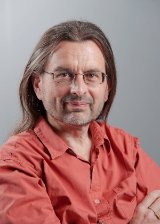
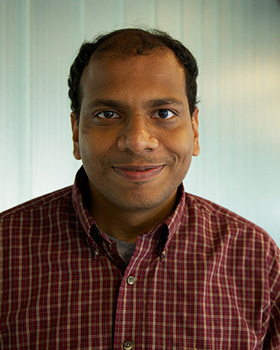
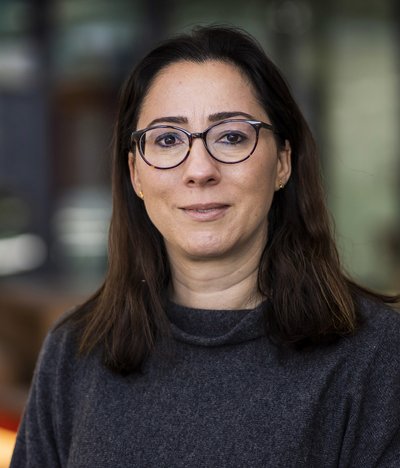
Henry D. Pfister is the Addy Family Professor of Electrical and Computer Engineering at Duke University, with a secondary appointment in Mathematics. He holds affiliations with the Pratt School of Engineering and the Duke Quantum Center. His research focuses on information theory, error-correcting codes, quantum computing, and machine learning applications in communications. Pfister earned his Ph.D. from UC San Diego and has held prior roles at Texas A&M University, École Polytechnique Fédérale de Lausanne, and Qualcomm. Education: Ph.D. in Electrical Engineering, UC San Diego (2003); M.S. degrees in Public Policy and Environmental Management from Duke University; J.D. and additional degrees from UNC Chapel Hill. Research interests include Reed-Muller codes, quantum error correction, neural decoders for DNA storage, and capacity-achieving coding schemes. Recent work highlights include proving Reed-Muller codes achieve capacity on binary-erasure channels and developing quantum-enhanced classical communication protocols. Publications span topics like polar codes for quantum channels, belief-propagation algorithms, and neural network-based decoding. Notable grants include NSF funding for DNA storage coding and quantum simulation projects. Pfister has advised over 20 graduate students and is a recipient of the STOC Best Paper Award and NSF CAREER Award.
Pradeep Kumar is a Professor in the Department of Electrical Engineering at the Indian Institute of Technology Kanpur (IIT Kanpur), specializing in quantum cryptography, quantum optics, and fiber-optic communications. His research focuses on secure quantum communication systems and the application of quantum phenomena in information processing. Dr. Kumar received his PhD from IIT Madras in 2009 under the supervision of Anil Prabhakar. He completed his B.E. at M.V.J. College of Engineering, Visweswaraiah Technological University in 2002. His research interests span quantum cryptography and computation, quantum and nonlinear optics, and fiber-optics. Dr. Kumar's work primarily explores quantum key distribution systems, examining various approaches including frequency coding, decoy states, and spin wave-optical interactions. His research has significant implications for secure communications and quantum information processing. Dr. Kumar's publications demonstrate a consistent focus on quantum communication technologies, with particular emphasis on improving the reliability and security of quantum key distribution systems. His research trajectory shows progression from fundamental quantum state manipulation to practical implementations of quantum cryptography. He maintains an active research laboratory within the Advanced Centre for Electronic Systems (ACES) at IIT Kanpur, where he supervises graduate students working on quantum communication technologies and optical systems.
Dr. Barry Cardiff is an Assistant Professor in the School of Electrical and Electronic Engineering at University College Dublin (UCD), where he has been a member of academic staff since September 2013. His career spans both industry and academia, with significant experience at Nokia Mobile Phone (UK) Ltd and Silicon & Software Systems (S3 group) before returning to complete his PhD at UCD. Education: B.Eng (1992), M.Eng.Sc. (1995), PhD (2011) from University College Dublin Professional Experience: Design Engineer at Nokia (1993-2001), Systems Architect at S3 group (2001-2007, 2011-2013) Current Position: Assistant Professor at UCD School of Electrical and Electronic Engineering Dr. Cardiff's research focuses on Digital Signal Processing applications in communication systems, with particular emphasis on theoretical analysis and practical implementation. His work bridges traditional communication theory with emerging biomedical applications, especially in wearable IoT sensors. He has made significant contributions to power/complexity reduction techniques in circuit design, specifically DSP algorithms for digitally assisted analog circuits. His research program addresses critical challenges in biomedical signal processing, sensor fusion, and efficient data transmission for healthcare applications. His recent publications demonstrate a strong trend toward biomedical applications of signal processing techniques, with a focus on ECG analysis, atrial fibrillation detection, and respiratory rate estimation using multimodal sensor fusion. The research shows a clear progression from traditional communication systems toward healthcare applications, with an emphasis on edge computing solutions that reduce power consumption in wearable devices. IEEE BioCas best paper award (2024) IEEE senior member since 2019 Active reviewer for multiple IEEE journals including Transactions on Biomedical Circuits and Systems, Circuits and Systems, and VLSI Systems Dr. Cardiff has supervised numerous research projects and has been instrumental in developing curriculum for digital communications, signal processing, and wireless systems. His teaching philosophy emphasizes open, friendly, and hands-on approaches that encourage independent thinking. He coordinates multiple modules including Communication Theory, Digital Electronics, DSP Technology, and Wireless Systems, demonstrating his commitment to both theoretical foundations and practical applications of electrical engineering principles. His research group works at the intersection of signal processing, machine learning, and biomedical engineering, developing innovative solutions for wearable healthcare monitoring. Current projects focus on event-driven processing architectures, decentralized classification systems, and signal quality-aware fusion techniques that enable robust performance in noisy real-world environments.
Dr Robin Crockett is the University Academic Integrity Lead at the University of Northampton, based in the Academic Registry. He is a mathematician-ethicist actively engaged in research and professional development in academic integrity, document forensics, and the detection of contract cheating and AI-generated text. He is a member of the European Network for Academic Integrity (ENAI), co-founder of the Midlands Integrity Group (UK), and has advised UK policymakers on legislation to ban essay mills. He holds Chartered Scientist and Chartered Mathematician status. MPhil, The Management of Electricity Supplies via Storage as Hydrogen, Cranfield University Master, Energy Conservation and the Environment, Cranfield University PhD, Electrostatic Damage to Semiconductor Devices, University of Southampton Master, Natural & Electrical Sciences, University of Cambridge Bachelor, Natural & Electrical Sciences, University of Cambridge Dr Crockett's research centers on document forensics and academic integrity, with core interests in Fourier theory, time-series analysis, and stylometry for identifying contract cheating. His work increasingly addresses the challenges posed by generative artificial intelligence in education. He applies mathematical and statistical methods to analyze linguistic cues, writing styles, and embedded information in student submissions. His recent publications highlight a strong trend toward understanding and mitigating academic misconduct in the AI era. Topics include AI-text detection uncertainties, forensic stylometry, and policy development for generative AI misuse. Earlier work includes environmental research on radon remediation and signal processing applications in telecommunications. Chartered Scientist Chartered Mathematician Dr Crockett has supervised PhD students, including Believe Nwamae in Computing. He has secured internal research funding, such as the Small Grants Scheme for Early Career Researchers at the University of Northampton for a project on AI-synthesized text detection. He has been an Academic Visitor at Loughborough University and served on the Turnitin Advisory Board, indicating active collaboration and external engagement. He frequently presents at academic events and contributes to policy discussions. He is affiliated with research networks including the European Network for Academic Integrity (ENAI) and the European Geosciences Union (as a former Scientific Officer). His work is supported by institutional and collaborative projects focused on advancing machine discernment of academic misconduct.
Liang Chen serves as a Full Professor in the Department of Physics, Faculty of Science, University of Ottawa. His office is located in ARC 308 (with secondary listing at MCD 130), and he can be contacted at (613) 562-5800 ext. 6912 or via email at liang.chen@uottawa.ca and lchen@uottawa.ca. Professor Chen has maintained his faculty position at the University of Ottawa since September 2000, following prior appointments at the University of New Brunswick and Bishop's University. His academic credentials include: BSc from Naikai University MA from the University of Southern California PhD from the University of Southern California Professor Chen specializes in applied theoretical optics, with core research areas encompassing polarization mode dispersion (PMD), polarization dependent loss (PDL), chromatic dispersion (CD), and stimulated Brillouin scattering (SBS). His work develops evaluation methods for nonlinear effects in optical fiber communications and investigates fiber optic detector dynamics. Utilizing theoretical modeling and Monte Carlo simulations, his research addresses optical signal degradation and bit-error rate performance in communication networks. His publications from 2003-2007 focus on fiber optic communication challenges, particularly PMD, PDL, and CD impacts on optical eye diagrams and bit-error rates. Additionally, he has pioneered techniques using stimulated Brillouin scattering for distributed sensing and slow light applications, achieving high spectral resolution with nanosecond pulses. These contributions highlight a strong theoretical foundation applied to practical optical networking problems. No scientific awards were documented in the provided sources. Details regarding student advising, research funding, laboratory facilities, and research teams were not included in the available information.
Ashish Khisti is an Associate Professor at the University of Toronto's Department of Electrical and Computer Engineering (ECE), where he directs the Signals, Multimedia and Algorithms Laboratory (SMA Lab). He holds the Canada Research Chair (Tier II) and maintains affiliations with the Vector Institute for Artificial Intelligence. His research bridges communication systems, information-theoretic security, and machine learning, with a focus on real-time streaming and privacy-preserving algorithms. Research Trends: Recent publications emphasize streaming codes for latency-sensitive networks , machine learning-driven compression , and privacy mechanisms in federated learning . Scientific Recognition: Canada Research Chair (Tier II), 2012 and 2017 renewal Cisco Research Center Award, 2017 Ontario Early Researcher Award, 2012 Best Paper at NeurIPS 2021 Deep Generative Models Workshop Academic Contributions: Supervised PhD students Ahmed Badr, Farrokh Etezadi, and Si-Hyeon Lee. Served as Associate Editor for IEEE Transactions on Communications (2012-2015) and IEEE Transactions on Information Theory (2015-2018). Labs & Collaborations: Leads the Signals, Multimedia and Algorithms Laboratory, collaborating with institutions like KAUST, Texas A&M University (Qatar), and the Vector Institute. Organized workshops at BIRS and IEEE conferences.
Inbar Fijalkow is a Full Professor at the National School of Electronics and Computer Science (ENSEA) within CY Cergy Paris University. She is a member of the ETIS Research Unit (UMR 8051), focusing on signal processing for wireless communications, optimization, and machine learning applications. Her research bridges theoretical advancements with practical implementation in emerging communication systems. Education & Career: PhD in Signal Processing from TelecomParisTech (1993) Postdoctoral Fellow at Cornell University (1994–1995) Professor at ENSEA since 1999 Former Head of ETIS Research Unit (2004–2013) Research Interests: Signal processing for wireless communications Optimization techniques in massive MIMO and NOMA systems Machine learning applications in communication systems Nonlinear effects mitigation in high-power amplifiers Community & Awards: Member of CoNRS Section 7 (National Committee for Scientific Research) Chevalier de l’Ordre National du Mérite (2015) Founder of the CY Alliance Women in Science Prize (2017) Recent Projects: Active in ANR-funded initiatives (e.g., EcoBioH2, AI4code) and EU projects (e.g., PERSEUS). Her work emphasizes sustainability and AI-driven communication systems. Teaching: Teaches signal processing and wireless communications at ENSEA. Supervises PhD students and master’s theses in communication systems and signal processing.
Dr. Jaswinder Lota is a Reader in Engineering at the University of East London , School of Architecture, Computing and Engineering, Department of Engineering & Construction. He is also a Visiting Academic at University College London’s Department of Electronic and Electrical Engineering, and a Chartered Engineer with extensive industry and academic experience. Education: BSc BEng MEng PGCert HE PhD Research Interests: Dr. Lota specializes in signal processing, circuits and systems, wireless communication, and their applications in radar systems (weather/military), low-power sustainable networks beyond 5G/6G (robotics, automation, healthcare), and electronic technologies for hydrogen propulsion. His work integrates AI-driven channel modeling and impulsive noise analysis. Scientific Awards: IEEE CAS Society Certificate of Appreciation (2019) Grants and Collaborations: He has secured significant funding, including a £2.5K International Research Collaboration Award (2016), £2.5K Research Internship Award (2015), £76K Impact Grant (2014), and a £7M MoD-funded project (1999-2004). Collaborators include UCL and NYU. Leadership: Dr. Lota leads the Smart Cities Research group at UEL and contributed to the REF 2021 submission. He has served as Associate Editor for IEEE TCAS I and Guest Editor for multiple IEEE journals.
Dr. Wim Korevaar serves as a part-time university researcher at the Signal Processing Systems (SPS) Group of Eindhoven University of Technology (TU/e), while concurrently working as a Senior Telecommunications System Engineer at TNO (Dutch Applied Research Institute) in Delft since April 2019. At TNO, he designs optical and quantum satellite communication systems for ground-to-satellite and satellite-to-satellite links, contributing to standardization efforts at CCSDS and ESA. He earned his PhD, cum laude, from Eindhoven University of Technology for pioneering work on Hermite-based multi-user communication schemes as an alternative to Fourier-based systems. During his doctoral studies, he founded two companies subsequently acquired in 2007 and 2019. Dr. Korevaar's research centers on optical satellite communications, quantum communications, and signal processing for telecommunications, with specific expertise in end-to-end system performance analysis, modem design, and signal processing techniques for space-based systems. His work actively bridges academic research and industrial applications through collaborations between universities, research institutes, and private sector partners. Analysis of his 2022-2024 publications reveals a concentrated focus on advancing space communication technologies, particularly in channel modeling under atmospheric turbulence, latency-constrained fading mitigation, end-to-end performance of coherent optical feeder links, and high-speed channel coding architectures. These contributions target robust high-capacity systems for next-generation satellite networks with dual-use government and commercial applications. He currently participates in the LaiQa project (2024-2026) advancing quantum key distribution space components, and maintains active engagement with students on groundbreaking communication system innovations despite no formal advisee listings.
Vitaliy Lomakin is a Professor in the Department of Electrical and Computer Engineering at the University of California, San Diego (UCSD), affiliated with the Jacobs School of Engineering. He joined UCSD in September 2005 and is associated with the Center for Memory and Recording Research (CMRR). His research spans electromagnetic theory, computational methods, nanophotonics, and metamaterials. His research interests include: Electromagnetic theory and computational techniques in frequency and time domains Wave phenomena on metal-dielectric surfaces and subwavelength structures Antenna analysis and design, including high-efficiency cell-phone antennas Nanophotonics and plasmonics, particularly nanoscale lasers Micromagnetic simulation and magnetic recording technologies Metamaterials, including left-handed and polarization-converting materials His recent publications reveal a strong focus on high-performance computing for electromagnetic and micromagnetic simulations, GPU-accelerated solvers, nanoscale coherent light sources, and advanced magnetic recording systems. Key themes include FastMag development, plasmonic excitation, metamaterial design, and thresholdless nanolasers. Notable scientific contributions are evident through publications in Nature , IEEE Transactions , ACS Nano , and Applied Physics Letters , though specific awards are not listed in the provided text. He advises several graduate students, including Shaojing Li, Ruinan Chang, and Marko Lubarda, and collaborates with researchers in micromagnetics and photonics. His group utilizes advanced computational tools for modeling electromagnetic and magnetic systems. He has also contributed to educational development in electromagnetics and optics at the graduate level. Labs and teams associated with him include the CMRR research group, where he leads projects in electromagnetic modeling, magnetic recording, and nanophotonic devices. His work integrates theoretical, numerical, and applied approaches across disciplines.
Dr. Juan Carlos De Luna Ducoing is a Research Fellow at the University of Surrey, specializing in advanced wireless communication systems with a focus on MIMO (Multiple-Input Multiple-Output) technologies. His work integrates neuromorphic computing, quantum annealing, and non-linear processing to enhance the efficiency and scalability of next-generation wireless networks. Research Interests: MU-MIMO detection and precoding Neuromorphic computing applications Quantum computing in wireless systems 6G network architectures Non-linear signal processing Hardware-software co-design (e.g., SWORD platform) Key Publications: His recent work includes NeuroMIMO (2024), which explores neuromorphic principles for power-efficient MU-MIMO detection, and Scalable MU-MIMO User Scheduling (2023), addressing resource allocation in dense networks. He also contributed to quantum annealing-based detection (2022) and Gyre Precoding (2021), achieving significant SNR gains. Collaborations: Works closely with Konstantinos Nikitopoulos and the SWORD research team to develop open-source platforms for rapid prototyping of advanced communication systems.
Alex Alvarado is a Full Professor in the Signal Processing Systems department at Eindhoven University of Technology (TU/e), leading the Information and Communication Theory Lab (ICT Lab). He is also affiliated with TU/e's Center for Wireless Technology in Eindhoven. His academic career includes roles as a Senior Research Associate at University College London (2014–2016), Marie Curie Intra-European Fellow (2012–2014), and Newton International Fellow (2011–2012) at the University of Cambridge. Alvarado is a Senior Member of the IEEE and has held editorial and committee positions in major conferences like OFC and ECOC. Alvarado holds an Electronics Engineer degree (2003) and MSc (2005) from Universidad Técnica Federico Santa María, Chile, followed by a Licentiate of Engineering (2008) and PhD (2011) from Chalmers University of Technology, Sweden. His research focuses on high-speed secure data transmission in optical and wireless systems, emphasizing energy-efficient algorithms and theoretical limits of telecommunication systems. Key areas include communication theory, information theory, optical fiber systems, and nonlinear interference mitigation. His recent articles explore advanced modulation formats, machine learning applications for channel estimation and decoding, and innovations in free-space optics and MIMO systems. This work contributes to UN Sustainable Development Goals related to affordable and clean energy, industry innovation, and responsible consumption through energy-efficient communication solutions. Scientific Awards: ERC Starting Grant (2018) NWO VIDI Grant (2016) 2015 Journal of Lightwave Technology Best Paper Award 2015 IEEE Exemplary Reviewer Award 2018 and 2023 Asia Communications and Photonics Conference Best Paper Awards 2019 Optoelectronics and Communications Conference Best Paper Award Alvarado's advising contributions include supervising 12 research works. His grants include NWO VIDI and ERC Starting funding. He leads projects like NESTOR (Next-gen optical networks) and LaiQa (Quantum Key Distribution). His lab, the ICT Lab, drives theoretical and applied research in communication systems.
Patty Stabile is an Associate Professor in the Department of Electrical Engineering at Eindhoven University of Technology (TU/e), specializing in Indium Phosphide (InP) photonic integrated circuits for next-generation optical networks and computing systems. She is affiliated with the Electro-Optical Communication group and EAISI High Tech Systems. MSc in Electrical Engineering (2004) from Politecnico di Bari PhD in Nanoscience (2008) from National Nanotechnology Laboratory, Lecce Her research focuses on integrating electronics and photonics for ultra-high-speed data routing, leveraging optical parallelism inspired by brain architecture. She also explores low-cost passive coupling concepts and novel materials like 2D materials to enhance photonic platforms. Key contributions include pioneering work on InP-based switch matrices and high-speed transceiver modules, with publications in Microsystems & Nanoengineering , IEEE Photonics Technology Letters , and Journal of Optical Communications and Networking . She received the Early Career Women in Photonics – Special Recognition in 2016. Active in academic communities, Patty serves on the IEEE Photonics Benelux Chapter board, is a member of the TU/e Young Academy of Engineering, and contributes to educational programs in automotive dynamics and brain-inspired optical computation.
Nikas Thomas is an External Instructor at the Department of Informatics (DI) of the National and Kapodistrian University of Athens (NKUA). His work spans multiple interdisciplinary areas including quantum cryptography, fiber optic sensing technologies, and seismic monitoring. Key roles include advancing secure communication protocols through quantum key distribution (QKD) and developing novel Li-Fi transceivers using perovskite photodiodes. He also pioneers applications of Distributed Acoustic Sensing (DAS) for urban earthquake monitoring in Athens, leveraging existing fiber-optic infrastructure for environmental and geophysical studies. His research bridges theoretical frameworks (e.g., phase transmission analysis) with practical implementations in optical communication systems and seismic detection. Research interests focus on: Secure optical communication systems leveraging quantum principles Fiber optic-based seismic and acoustic sensing Emerging Li-Fi technologies for high-speed wireless networks Phase-sensitive fiber optic analysis for geophysical applications Publications from 2022-2024 highlight trends in: Quantum security protocols for optical and radio-over-fiber systems Urban DAS applications for earthquake monitoring Microwave frequency interferometry for low-cost seismic sensors No scientific awards are explicitly listed in the provided materials. His work often involves collaborative projects with industry and academic partners, though specific grants are not detailed here. Current projects include optimizing DAS for real-time urban seismic networks and exploring novel modulation formats for secure optical transmission.
Arpan Gujarati is an Assistant Professor in the Department of Computer Science at the University of British Columbia (UBC), affiliated with the Systopia Lab. His research focuses on real-time systems, distributed systems, fault tolerance, and reliability analysis in cloud and cyber-physical systems domains. He holds a PhD from the Max Planck Institute for Software Systems (MPI-SWS) and has postdoctoral and research experience at MPI-SWS and UBC. Education: PhD in Real-Time Systems (MPI-SWS/TU Kaiserslautern, 2020), Postdoctoral Researcher at MPI-SWS (2020), Research Associate at UBC (2022–2023), B.Sc. from Birla Institute of Technology and Science (BITS Pilani, India). Research interests include distributed real-time systems, reliability analysis of cloud applications, fault-tolerant machine learning, and scheduling algorithms. His work bridges theory and practice, addressing challenges in ultra-reliable CPS and resilient distributed systems. Awards: Best Dissertation Award (SIGBED, 2020), Best Paper Awards (RTSS 2022, ECRTS 2018), Distinguished Artifact Award (OSDI 2020). Advising: Supervises PhD and undergraduate students in distributed systems and resilience engineering. Active in UBC’s Computer Science Graduate Program, teaching courses like CPSC 416 (Distributed Systems) and CPSC 538G (Topics in Computer Systems). Labs/Teams: Leads the Systopia Lab, collaborating with industry partners on projects like robotic arm datasets and self-driving lab tools (RABIT). Involved in research groups focused on machine learning resilience and real-time systems.