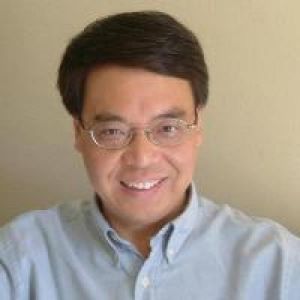
David Hoaglin is a Professor in the Department of Population and Quantitative Health Sciences at UMass Chan Medical School. He holds additional positions in the Biostatistics division and Masters in Clinical Investigation program. His educational background includes a BS in Mathematics from Duke University and a PhD in Statistics from Princeton University. Research Interests: Dr. Hoaglin specializes in statistical methodologies with applications in medical research, particularly meta-analysis techniques, heterogeneity modeling, and development of statistical tests for clinical outcomes. His work focuses on advancing statistical approaches for analyzing binary outcomes, time-to-event data, and diagnostic biomarkers in healthcare research. Publications: His extensive publication record demonstrates consistent focus on statistical methodology development, particularly in meta-analysis techniques and clinical outcome measures. Recent works emphasize win statistics methodologies, heterogeneity assessment in meta-analyses, and applications of natural language processing in health outcomes research. Awards: No specific scientific awards mentioned. Professional Networks: Collaborates with researchers in biostatistics and epidemiology. Actively contributes to statistical methodology through editorial roles and peer-reviewed publications in statistical and medical journals.
Wei-Yin Loh is a Professor in the Department of Statistics at the University of Wisconsin–Madison, affiliated with the School of Computer, Data & Information Sciences. His primary research focuses on classification and regression trees, with applications in machine learning, healthcare, and engineering. He has contributed extensively to the development of algorithms and methodologies in tree-based modeling, including the GUIDE software package. Dr. Loh's work spans theoretical advancements and practical implementations, addressing challenges such as missing data imputation, subgroup identification in precision medicine, and variable importance assessment. His research integrates statistical rigor with real-world problems in public health, federal agency performance analysis, and environmental modeling. Key contributions include studies on tobacco use prediction, cardiovascular health modeling, and pandemic-related mortality analysis. He has also explored applications in engineering, such as pavement thickness analysis and project delivery system evaluation. His publications emphasize interpretable models with strong predictive power, balancing complexity and practical utility. Awards and grants are not explicitly listed in the provided text, though his prolific publication record underscores his academic impact. Advising activities and student mentorship are not detailed here, but his research collaborations likely involve training the next generation of statisticians and data scientists.
Prof. Dr. Göran Kauermann is a Full Professor of Statistics at the Ludwig-Maximilians-University Munich , holding the Chair of Applied Statistics in Social Sciences, Economics and Business . His research spans nonparametric models, generalized linear models, and network data analysis, with applications in economics, epidemiology, and data science. Education: Diplom in Economic Mathematics (1991, TU Berlin), PhD in Statistics (1994), Habilitation (Venia Legendi) in Statistics (2000) Kauermann’s research interests focus on penalized regression , network analysis , and statistical modeling in economics, social sciences, and public health. Recent work explores label uncertainty in machine learning , spatio-temporal conflict diffusion , and dynamic network models for economic and social data. Scientific trends in his publications include penalized splines for nonlinear modeling, network flow estimation in social and economic contexts, and label variation analysis in machine learning. His collaborations span climate zone classification , Covid-19 mortality modeling , and smart city parking analytics . Scientific Awards: Bruce Russett Award (2020) for political network research Leadership Roles: He served as Dean of the Faculty of Mathematics, Informatics and Statistics (2019–2021), Speaker of the Elite Master Program in Data Science (2016–2026), and Chair of the German Statistical Society (2005–2013). He also held editorial roles in journals like AStA Advances in Statistical Analysis and Statistical Modelling .
Renee L. Martin is a Professor in the Department of Public Health Sciences at the Medical University of South Carolina (MUSC), affiliated with the College of Medicine. Her academic focus includes the design, conduct, and analysis of clinical trials, with expertise in statistical methods addressing missing data and stroke-related clinical research. Her research interests emphasize advancing methodologies for clinical trial rigor and improving outcomes through data-driven approaches. No specific scientific awards or recent publications are explicitly listed in the provided texts. No advising records or grants are detailed here, though her contact information (hebertrl@musc.edu) is available for professional inquiries.
Dr. Tracy Smith is an Associate Professor at the Medical University of South Carolina (MUSC) , affiliated with the College of Medicine and the Department of Psychiatry and Behavioral Sciences . She co-leads the Cancer Prevention and Control Program at MUSC Hollings Cancer Center and leads the Team IMPACT lab, focusing on tobacco regulatory science to inform FDA policies. Her research spans nicotine reduction strategies, e-cigarettes as harm-reduction tools, and behavioral economics approaches to tobacco control. Education : B.S., College of Charleston Dr. Smith's work examines regulations to reduce combustible tobacco harms, including menthol bans and nicotine level adjustments. She has conducted large-scale clinical trials like ESCAPE (e-cigarette flavoring impact) and MINT (menthol regulation effects). Her research also explores dual-use dynamics and remote clinical trial methodologies. Recent publications analyze e-cigarette flavoring, nicotine pouch usage, and biomarker responses in low-nicotine cigarette trials. She mentors trainees from high school to postdoctoral levels and has secured funding from National Cancer Institute , NIDA , and NIH . Notable awards include the 2020 Jarvik-Russell Early Career Award for nicotine research contributions. Scientific Awards : Society for Research on Nicotine and Tobacco Jarvik-Russell Early Career Award (2020) Dr. Smith's lab, Team IMPACT , collaborates with Dr. Matthew Carpenter on studies like ADAPT (adaptive cessation treatments) and Switch or Quit (e-cigarette vs. medication efficacy). She has mentored alumni now in academia, including Dr. Margaret Fahey (Middle Tennessee State University) and Dr. Bryan Heckman (Meharry Medical College).
Rongwei F. Fu is a Professor of Biostatistics at the Oregon Health & Science University (OHSU) School of Public Health and a Professor in the Department of Medical Informatics & Clinical Epidemiology at OHSU. She serves as the Director of the Biostatistics Education Program and advises students in M.S., M.P.H., and Graduate Certificate programs. Education: M.S., 1995, Shandong Normal University, P.R. China Ph.D., 2000, University of Connecticut Ph.D., 2003, University of Connecticut Fu collaborates extensively with OHSU investigators and specializes in biostatistics, focusing on systematic reviews and comparative effectiveness research. Her work supports clinical guidelines and health policy decisions for organizations like the U.S. Preventive Services Task Force and the Effective Health Care program. She has contributed to studies on medical imaging, cancer treatment, and emergency care. Fu’s recent publications highlight applications of advanced statistical methods in neuro-oncology, pediatric emergency medicine, and health policy. Key themes include MRI analysis, immune microenvironment heterogeneity in glioblastoma, and evidence-based interventions for low back pain and oral health. Scientific Awards: 2015 – Finalist, OHSU Faculty Senate Research Award 2013 – Department Chair’s Award on Excellence in Research, Public Health and Preventive Medicine 2011 – Department Chair’s Award on Excellence in Research, Public Health and Preventive Medicine Fu has served as a lead biostatistician for the Center for Policy and Research in Emergency Medicine at the Pacific Northwest Evidence-based Practice Center and OHSU’s Research Center for Gender-Based Medicine.
Yunan Wu is an Assistant Professor at the Yau Mathematical Sciences Center, Tsinghua University (since September 2024). Previously, he served as an Assistant Professor at the University of Texas at Dallas (2020–2024) and completed a postdoctoral fellowship in Biostatistics at Yale University’s School of Public Health (2019–2020). He earned his PhD in Statistics from the University of Minnesota (2015–2019), supervised by Prof. Lan Wang, and holds a bachelor’s degree in Mathematics and Physics from Tsinghua University (Beijing, China). His research focuses on **causal inference in precision medicine**, **Mendelian randomization**, **non-parametric/semi-parametric methods**, and **high-dimensional statistical analysis**. He also explores robust machine learning techniques and incorrupted data methodologies. His work bridges theoretical advancements with practical applications in healthcare and biomedical research. Key contributions include the development of tuning-free robust regression approaches (e.g., the TFRE method) and inference frameworks for optimal treatment regimes. His GitHub repositories reflect these efforts, including implementations of robust regression and treatment regime estimation algorithms. He is affiliated with the Yau Mathematical Sciences Center, where he contributes to interdisciplinary research at the intersection of statistics, machine learning, and biomedical sciences. His email is wuyunan@mail.tsinghua.edu.cn , and his office is located in Shuangqing Complex Building A504.
Professor Stuart Reid is an Honorary Professor at the School of Biodiversity, One Health & Veterinary Medicine, University of Glasgow. His research focuses on veterinary epidemiology, zoonotic diseases, and biotechnological applications in animal health. He has extensive experience in studying pathogens like E. coli O157, antimicrobial resistance, and equine parasitology. His work integrates biomedical engineering innovations, such as nanoscale mechanotransduction for stem cell research, with traditional veterinary practices. Key research interests include: Epidemiology of infectious diseases in livestock and companion animals Nanoscale biomaterials for tissue engineering Pathogen transmission dynamics and control strategies Diagnostic methods for equine and bovine health His publications span over two decades, addressing topics like avian influenza network dynamics, prion replication mechanisms, and the spatial distribution of E. coli O157 outbreaks. He has collaborated internationally on projects involving public health, food safety, and veterinary medicine. Recent grants include the PARABAN project (2011-2014), focusing on Johne's disease control in Scottish cattle. His work emphasizes interdisciplinary approaches to address global health challenges at the animal-human-environment interface.
Tapan Mehta is a tenured Professor and Vice Chair for Research in the Department of Family and Community Medicine at the University of Alabama at Birmingham (UAB). He also holds appointments in the School of Health Professions - Health Services Administration and multiple research centers including the Comprehensive Arthritis, Musculoskeletal, Bone and Autoimmunity Center (CAMBAC), Center for Clinical and Translational Science (CCTS), and Center for Outcomes and Effectiveness Research and Education (COERE). His research spans health services, biostatistics, and data analytics with a focus on obesity, cardiometabolic conditions, disability, and rehabilitation. Dr. Mehta earned his PhD in Biostatistics and Masters in Electrical Engineering from the University of Alabama at Birmingham. His educational background combines engineering principles with statistical methodology, providing a unique foundation for his research in health services and outcomes. His research interests center on health services and outcomes research related to cardiometabolic conditions (diabetes and obesity), disability, and rehabilitation. He specializes in pragmatic study design application and development, population health initiatives, and analytics for large datasets. His work often involves developing and testing interventions for weight management, diabetes care, and physical activity promotion in diverse populations, including those with mobility disabilities. He has particular expertise in telehealth interventions, adaptive trial designs, and analyzing large existing datasets to answer critical health services questions. Analysis of Dr. Mehta's recent publications reveals a strong focus on adaptive intervention strategies for obesity and cardiometabolic conditions, telehealth delivery of care for people with disabilities, and innovative methods for improving healthcare quality. His work spans clinical trials, machine learning applications, and qualitative studies to understand patient experiences. A consistent theme across his research is the development of personalized, accessible interventions that can be implemented in real-world settings, particularly for underserved populations. Creativity is a Decision Faculty Contest Award (2016) Dr. Mehta serves as a PI and/or co-investigator on numerous research studies funded by NIH, NIDILRR, and PCORI. His grants portfolio includes the NIH-funded Nutrition Obesity Research Center Behavioral Science and Analytics Core and the CDC-funded Data Coordinating Center for the National Center on Health Physical Activity and Disability. He has mentored multiple PhD students, serving as committee chair for several dissertations in rehabilitation science and health services administration. His collaborative approach is evident in his numerous multi-institutional projects focused on improving health outcomes for people with disabilities and chronic conditions. Dr. Mehta leads several research initiatives including the Research Collaborative in the School of Health Professions and co-leads the NORC Behavioral Science and Analytics Core. His work often involves interdisciplinary teams spanning medicine, public health, engineering, and computer science. He has developed and tested numerous telehealth interventions including Movement-to-Music programs, digital coaching platforms, and AI-powered diabetes management tools designed specifically for rural and underserved populations.
Yildiz Yilmaz serves as Associate Professor of Statistics and Deputy Head of Statistics at Memorial University of Newfoundland's Department of Mathematics and Statistics within the Faculty of Science. Holding a PhD from the University of Waterloo, she maintains an active research program at the intersection of statistical methodology and biomedical applications. Education PhD in Statistics, University of Waterloo (2009) MSc in Statistics, Middle East Technical University (2004) MSc in Computer Engineering, Middle East Technical University (2004) BSc in Statistics with minor in Computer Engineering, Middle East Technical University (2002) Her research focuses on developing advanced statistical methods for survival analysis, genetic epidemiology, and causal inference. Key programs include: (1) novel methods for genome-wide prognosis studies of time-to-event phenotypes, (2) genetic association methods using joint/directional models of multiple phenotypes, (3) evaluation of response-dependent sampling designs, and (4) models for multivariate survival times. Her work addresses critical challenges in biomedical research through innovative statistical theory. Recent publications demonstrate consistent focus on colorectal cancer genomics, statistical genetics methodology, and survival analysis applications. Trends show increasing emphasis on multi-phenotype analysis, SNP interaction networks, and time-varying effects in genetic association studies, with significant contributions to copula-based joint modeling approaches. Research Support Natural Sciences and Engineering Research Council (NSERC) Canadian Statistical Sciences Institute (CANSSI) Faculty of Medicine, Memorial University Research and Development Corporation (RDC) of Newfoundland and Labrador Dr. Yilmaz actively mentors students across multiple programs including PhD, MSc, MAS, and undergraduate levels. Her current research group comprises seven students working on statistical genetics and survival analysis projects, building on a track record of successfully supervising numerous graduate students and post-doctoral fellows since 2013.
Maysson Ibrahim is a Senior Lecturer in Computing at the School of Computing, University of Buckingham, where she joined in 2020 as a part-time Lecturer in Computer Science while continuing her research role at the University of Oxford. She holds a PhD in Bioinformatics from the Buckingham Institute for Translational Medicine (2013) and a BEng in Software Engineering and Information Systems. PhD in Bioinformatics, University of Buckingham (2013) BEng in Software Engineering and Information Systems Her research focuses on bioinformatics, genetic data analysis, and machine learning applications in big data. She has developed computational tools for pathway enrichment analysis and biomarkers identification using gene expression data. At Oxford, she leads bioinformatics work on large-scale biobanks (e.g., UK Biobank) and clinical trials like REVEAL, SHARP, and THRIVE to decode genetic determinants of complex diseases, particularly cardiovascular conditions. Her recent publications emphasize pathway-based algorithms, disease classification, and the integration of gene network analysis with machine learning techniques. Despite no explicit scientific awards listed, her contributions span academic roles in teaching statistics and data science modules at Buckingham and leading analytical pipelines for major clinical studies. She teaches modules such as Data Exploration and Visualisation and Systems and Tools for Data Science in the MSc Applied Data Science programme.
Hassan Doosti is a Senior Lecturer at the School of Mathematical and Physical Sciences, Macquarie University. His research focuses on statistical methodologies, particularly in flexible modeling techniques for complex datasets, with applications in medical studies and business analytics. He has authored or edited books such as Flexible Nonparametric Curve Estimation and Ethics in Statistics: Opportunities and Challenges . Research Interests Nonparametric estimation including wavelet methods and density estimation Statistical modeling of health-related data (e.g., colorectal cancer, stroke) Development of novel statistical algorithms (e.g., censored regression, numerical dependency analysis) Ethical considerations in data analysis for medical sciences Recent Projects Outside Studies Program (2025) APRIntern: Disease Risk Modelling (2019) Key Contributions His work bridges theoretical statistics with practical applications, including: Development of adaptive wavelet quantile density estimation techniques Statistical analysis of neurological and oncological data Advancing methods for handling censored and zero-inflated datasets Awards Recipient of the Faculty of Science and Engineering Award for Inter-School Collaboration (2023) for collaborative research excellence. Professional Activities Editor of multiple peer-reviewed books and active contributor to interdisciplinary projects involving healthcare, data science, and biostatistics.
Joseph Romano is a Professor of Statistics and Economics at Stanford University, where he has served since 1986. He holds dual appointments in both the Department of Statistics and the Department of Economics. His research focuses on theoretical statistics, nonparametric methods, bootstrap techniques, multiple testing, and their applications in econometrics, climate science, genetics, and clinical trials. He has received numerous awards, including the LGBTQ+ Scientist of the Year (2021) and the Presidential Young Investigator Award (1989–1994). Education: Ph.D. in Statistics, University of California, Berkeley (1986) M.S. in Statistics, University of California, Berkeley (1983) B.A. in Statistics, Princeton University (1982), Summa Cum Laude Research interests include developing robust statistical methodologies for high-dimensional data, controlling errors in multiple testing, and applying resampling techniques to complex datasets. He has authored over 100 papers, focusing on topics like permutation tests, bootstrap methods, and econometric modeling. Notable works include advancements in fixed sequence testing and randomized inference for modern data challenges. Awards and Recognition: Fellow, Institute of Mathematical Statistics (2000) Fellow, International Association of Applied Econometrics (2020) Canadian Journal of Statistics Award (1989) Romano has advised numerous students, including doctoral candidates in statistics and economics. He has held administrative roles at Stanford, such as Associate Chair and member of faculty committees. His grants include NSF-funded projects on resampling methods, multiple testing, and econometric theory. He is a vocal advocate for LGBTQ+ visibility in academia and has contributed to initiatives like 500 Queer Scientists. Beyond academia, he enjoys music, tennis, cooking, and architecture.
Dr. Dongsheng Tu is a Professor in the Departments of Public Health Sciences and Mathematics & Statistics at Queen's University, Canada. He serves as a Senior Biostatistician at the Canadian Cancer Trials Group (CCTG) and holds cross-appointments in the Queen's Cancer Research Institute. His primary roles include designing, managing, and analyzing cancer clinical trials, alongside methodological research in statistical procedures for clinical trial design and analysis. Education: Ph.D. in Biostatistics (1994) – Medical University of South Carolina B.Sc. in Mathematics (1983) – University of Science and Technology of China Research Interests: Dr. Tu's work focuses on statistical methodologies for cancer clinical trials, including longitudinal data analysis, biomarker development, and survival analysis. He collaborates internationally on trials evaluating new drugs and treatments, particularly in colorectal, ovarian, and breast cancers. His methodological contributions include innovative approaches to subgroup identification, missing data handling, and quality-of-life metrics integration. Grants & Awards: Not explicitly listed in the text. Advising & Collaborations: Dr. Tu oversees numerous clinical trials and collaborates with clinicians globally. He has contributed to pivotal trials such as the CO.17, CO.20, and SOC-1 studies, evaluating treatments like cetuximab and immunotherapies. Labs/Teams: He leads the Biostatistics team at the Canadian Cancer Trials Group and is part of the Queen's Cancer Research Institute, fostering interdisciplinary research in oncology and biostatistics.
Hwashin Shin is an Adjunct Associate Professor in the Department of Mathematics and Statistics at Queen’s University (Kingston, Ontario, Canada) and a Research Scientist at Health Canada's Environmental Health Science and Research Bureau. She holds a B.Sc. in Mathematics Education from Seoul National University (1982), and M.Sc. (1996) and Ph.D. (1999) in Statistics from Queen’s University. Her research focuses on statistical modeling for environmental health risks, including air pollution exposure impacts, maternal-infant health outcomes, and global disease burden analysis. Notable projects include development of the Air Health Trend Indicator (AHTI), analysis of sex-based differences in air pollution health effects, and contributions to the Global Burden of Disease (GBD) study on air pollution-related mortality. Key achievements include the 2008 Canadian Journal of Statistics Best Paper Award and participation in the U.S. National Academy of Sciences' toxicology risk assessment committee. Current research emphasizes multipollutant models for ozone/PM2.5/NO2 combined risks and critical exposure timing during pregnancy. Her work integrates epidemiological studies with statistical innovation, addressing both local (Canadian air quality) and global health challenges through interdisciplinary collaborations with institutions like the Ottawa Hospital Research Institute and the Institute for Health Metrics and Evaluation (IHME).