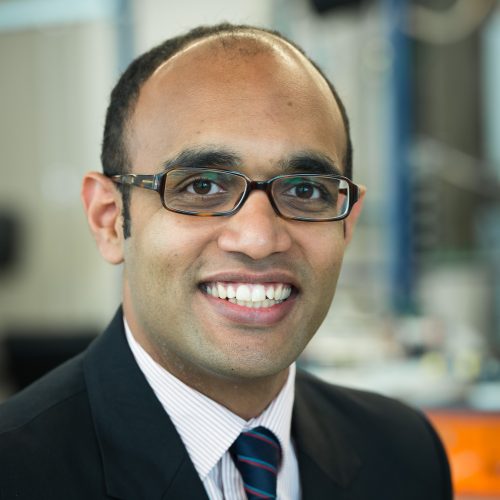
Vikramaditya G. Yadav is an Associate Professor at the University of British Columbia (UBC) in the Department of Chemical and Biological Engineering, Faculty of Applied Science. He directs the Master of Engineering Leadership (MEL) Program in Sustainable Process Engineering and leads the BioFoundry research group. Education: B.A.Sc., University of Waterloo (2007) Ph.D., Massachusetts Institute of Technology (2013) Postdoctoral Associate, Harvard University (2014) His research spans sustainable chemical manufacturing, metabolic engineering, and biotechnology. Key areas include: Designing biosynthetic enzymes for biomass valorization Developing bioremediation strategies for industrial water quality Creating innovative drug delivery systems and tissue engineering solutions Advancing synthetic biology for pharmaceutical and bioenergy applications His recent work focuses on ocular drug delivery, cannabinoid biosynthesis in E. coli, lignin-based nanoparticles for cancer therapy, and computational analysis of plant secondary metabolites. Collaborations with start-ups, industry, and medical labs drive innovation in Canada's bioeconomy. Professional Leadership: Chair, Biotechnology Division of the Chemical Institute of Canada Associate Editor, The Canadian Journal of Chemical Engineering He is affiliated with UBC's BioProducts Institute and contributes to project-based learning pedagogy.
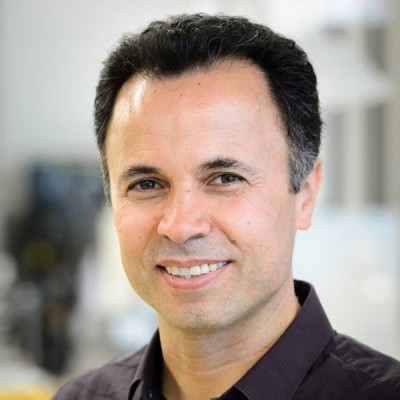
Dr. Madjid Mohseni is a Professor in the Department of Chemical and Biological Engineering at the University of British Columbia's Faculty of Applied Science. He serves as the Scientific Director of the Community Circle on Scaling Business Innovation for Humanity with his office located in CHBE 221. Dr. Mohseni leads the Water Laboratory (http://waterlab.chbe.ubc.ca/), focusing on water quality and advanced treatment technologies for drinking water applications. Dr. Mohseni earned his Ph.D. (1998) and M.A.Sc. (1994) from the University of Toronto, and his B.Sc. from Amirkabir University of Technology in Iran. His educational background has prepared him for his current research in water treatment and environmental engineering. His research program centers on developing, evaluating, and implementing advanced oxidation processes (AOPs), particularly UV-based AOPs, ion exchange, and electrochemical processes. His laboratory conducts both laboratory-scale development and pilot-scale field evaluations at partner community sites. Current work emphasizes PFAS remediation through various approaches including advanced oxidation/reduction processes, ion exchange technologies, and electrochemical methods. He also investigates novel materials like MXenes for water purification and develops practical solutions for municipal and community water systems. Analysis of Dr. Mohseni's recent publications reveals a strong focus on emerging contaminants, particularly PFAS, with significant emphasis on UV-based treatments and vacuum UV technology. His research consistently bridges fundamental science with real-world applications, developing technologies specifically tailored for small community water systems while addressing critical water quality challenges. Dr. Mohseni maintains affiliations with the Clean Energy Research Centre and the Bioproducts Institute at UBC, demonstrating his commitment to interdisciplinary research that addresses environmental challenges through innovative engineering solutions. His work aims to advance the science behind water treatment technologies while offering communities more efficient and cost-effective solutions to protect human health and the environment.
Steven Siciliano is a Professor and NSERC/FCL Industrial Research Chair in In Situ Remediation and Risk Assessment at the University of Saskatchewan's College of Agriculture and Bioresources. He leads the CREATE Human and Ecological Risk Assessment Program. His expertise spans soil toxicology, greenhouse gas dynamics in polar ecosystems, and nitrogen cycle interactions in contaminated environments. Education: Ph.D. in Toxicology, University of Saskatchewan B.Sc. in Biochemistry, Concordia University Research Interests: His work focuses on human-soil interaction dynamics, including soil pollution impacts on human health (e.g., PAH toxicity via soil ingestion) and ecosystem resilience (e.g., nitrogen cycle disruptions). He investigates Arctic/Antarctic soil microbiology, greenhouse gas production in polar deserts, and the ecological effects of pollutants like mercury and petroleum hydrocarbons. His lab is divided into toxicology (e.g., metal cardiovascular effects, soil ingestion models) and ecology (e.g., sub-zero water effects on gene expression, Arctic nitrogen cycles). Teaching: Teaches courses on environmental fate analysis, contaminated site management, and advanced risk assessment methodologies at both undergraduate and graduate levels. Courses include EVSC 420, TOX 820, and EVSC 821. Grants & Labs: Directs the CREATE Program and leads projects funded by NSERC and industry partnerships. His lab integrates fieldwork, molecular techniques, and modeling to address environmental remediation challenges. Collaborates on projects like cryoturbation-driven carbon dynamics and microbial community analysis in agricultural systems. Labs/Teams: Active in soil science research teams, including Arctic soil microbiology and bioremediation innovation groups. Engages in interdisciplinary collaborations with environmental engineers and ecologists to advance in situ remediation technologies.
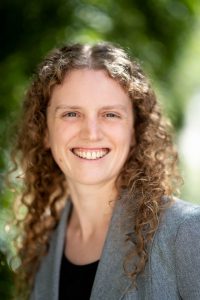
Dr. Rachel Scholes is an Assistant Professor in the Department of Civil Engineering at the University of British Columbia. Her research focuses on protecting human and environmental health through the study of contaminants in urban water systems, with an emphasis on optimizing contaminant removal in engineered and nature-based treatment systems. She holds a B.S. in Chemical Engineering from Northwestern University and M.S. and Ph.D. in Environmental Engineering from the University of California, Berkeley. Her research interests include environmental chemistry, trace contaminants, water reuse, nature-based treatment systems, and stormwater treatment. She teaches courses such as ENVE 301 (Environmental Engineering Intermediate Design Project) and CIVL 562 (Environmental Data Collection and Analysis). Her lab, Scholes Lab, actively investigates contaminant dynamics in constructed wetlands, bioretention systems, and subsurface treatment environments. Key research contributions include enhancing contaminant removal via Fe (III)-EDTA-amended wetlands, studying 6PPD-quinone dynamics in salmon streams, and optimizing pharmaceutical attenuation in benthic wetland biomats. Her work bridges fundamental environmental chemistry with applied engineering solutions for sustainable water management. Dr. Scholes' lab collaborates on projects funded by grants focused on urban water systems, green infrastructure, and contaminant fate. She advises students through the Scholes Lab (www.scholeslab.org), which emphasizes interdisciplinary approaches to environmental challenges.
Curtis Suttle is a Professor in the Department of Botany at the University of British Columbia's Faculty of Science. He also holds affiliations with Earth and Ocean Sciences, Microbiology and Immunology, and the Institute for Oceans and Fisheries. His research focuses on marine virology and the ecological roles of viruses in aquatic ecosystems, particularly their impact on phytoplankton and microbial communities. Dr. Suttle received his B.Sc. and Ph.D. from UBC, was a Coastal Marine Scholar at SUNY StonyBrook (1987-88), and served as Assistant/Associate Professor at the University of Texas at Austin (1988-96) before returning to UBC. His research program investigates the biology and ecology of viruses that infect microalgae and cyanobacteria. Key areas include discerning viral effects on primary productivity, isolating novel marine viruses, developing molecular identification methods, and studying viral distribution patterns. His work has revealed that viruses can occur in seawater at concentrations exceeding 10 5 ml -1 , with cyanophage concentrations reaching 10 6 infectious units ml -1 in coastal waters. Dr. Suttle's team has developed PCR primers specific for viral DNA polymerase genes, showing these viruses belong to a single family related to herpes viruses. Recent publications show a strong focus on marine viral ecology, with particular attention to oyster microbiomes, viral taxonomy, and the role of viruses in marine ecosystems. His research spans from coastal environments to the deepest ocean trenches, examining viral diversity across environmental gradients and investigating viral impacts on carbon cycling and marine food webs. Dr. Suttle leads an active research group with several post-doctoral associates, research scientists, and graduate students. His team conducts field work at multiple locations including the Naica Mine in Mexico, Pavilion Lake in British Columbia, Saanich Inlet, and the Strait of Georgia. Current projects include collaborations with the Hakai Institute, Line P Research Cruise, and CASES (Canadian Arctic Shelf Exchange Study). His laboratory has made significant contributions to understanding viral roles in marine ecosystems, particularly through expeditions to extreme environments like the Naica crystal caves and deep ocean trenches. Ongoing research explores viral impacts on microbial community structure, carbon cycling, and ecosystem function across diverse marine habitats.
Alexandre Poulain is a Full Professor in the Department of Biology at the University of Ottawa and Vice Dean for Research and Infrastructure in the Faculty of Science. His multidisciplinary research bridges biogeochemistry, microbial physiology, and environmental toxicology. Education: B.Sc. (Angers, France), M.Sc. (INRS, Canada), Ph.D. (Université de Montréal, Canada), Postdoc (MIT, USA) Research Interests: Mercury cycling in Arctic and temperate ecosystems, microbial metal transformations, biosensor development for contaminants, redox reaction dynamics, bioremediation using environmental microbes, and mercury-organic matter interactions. His lab (2017-2025) has produced 15 recent publications on mercury biogeochemistry in oil sands, rice paddies, and Arctic lakes, alongside arsenic speciation studies and pesticide impacts on pollinators. Current students explore archaeal mercury regulators, acidothermophilic biosensors, and microbial remediation. Scientific contributions include: NSERC Postdoctoral Fellowship (2007-2009) Co-PI on Microbright, a startup commercializing microbial water treatment Developed portable arsenic biosensor tested in Cambodia Co-edited mercury-climate synthesis in Nature Communications
Dr. Beata Gorczyca is a Professor in the Department of Civil Engineering at the University of Manitoba, affiliated with the Price Faculty of Engineering. Her research focuses on potable water treatment, with expertise in solid/liquid separation, chlorine disinfection by-products control, and fractal analysis of materials. She leads a research group collaborating with Canadian water utilities like Portage la Prairie and Pembina Valley Water Co-op. Education: PhD in Chemical Engineering (2000, University of Toronto), M.Sc. in Civil Engineering (1992, University of Toronto), B.Sc. in Geological Engineering (1986, AGH University, Poland). Active roles: Member of the Particle Specialist Group at the International Water Association, keynote speaker at conferences. Research interests include water purification processes, membrane filtration, and bioremediation. Her work addresses challenges in high-DOC and high-hardness water treatment, with contributions to nanofiltration fouling mechanisms and microbial remediation solutions. She has supervised numerous graduate students and is involved in advancing water treatment technologies through interdisciplinary collaborations.
Dr. Noboru Yonemitsu is an Associate Professor of Teaching in the Department of Civil Engineering at the University of British Columbia (UBC), affiliated with the Faculty of Applied Science. He specializes in Hydrotechnical Engineering and has been with UBC since 1992, contributing to both teaching and research. His research focuses on IR-NDT technologies, turbulent fluid mechanics, and environmental fluid mechanics, with applications in wastewater treatment and ecological systems. Education: M.A.Sc. in Engineering Physics from Hokkaido University (Japan), specializing in Turbulent Fluid Dynamics and Non-destructive Testing (NDT). Ph.D. in Water Resources Engineering from the University of Alberta, Canada. Research Interests: Non-destructive testing (NDT) for infrastructure assessment Fluid dynamics in environmental and ecological contexts Wastewater treatment technologies Awards: 2019 3rd Year Student Appreciation Award 2002 Civil Engineering Teaching Award (UBC) Alberta Ministry of Advanced Education Scholarship (1987-1989) Teaching: Instructs courses including CIVL 303 (Computational Tools), CIVL 315 (Fluid Mechanics II), and Civil Engineering Design Projects. His pedagogical approach integrates practical engineering challenges with theoretical foundations. Professional Experience: Extensive consulting and research work with organizations like Northwest Hydraulics Consultants, NASA, BCIT, and major industries, spanning hydraulics, NDT, and environmental engineering.
Catherine Mulligan is a Distinguished Research Professor in the Department of Building, Civil, and Environmental Engineering at Concordia University, where she also serves as Director of the Concordia Institute for Water, Energy and Sustainable Systems. She was previously the Concordia Research Chair in Geoenvironmental Sustainability (Tier I) until 2021, having held this prestigious research chair since 2002 (initially as Tier II). Dr. Mulligan earned her B.Eng. and M.Eng. degrees in chemical engineering from McGill University, followed by a Ph.D. specializing in geoenvironmental engineering, also from McGill University. After 16 years working at McGill University and in industry (including positions at the Biotechnology Research Institute of the National Research Council and SNC Research Corp.), she joined Concordia University in 1999 as an Assistant Professor, was promoted to Associate Professor in 2002, and to full Professor in 2008. Her research spans multiple critical areas of environmental engineering with a focus on contamination remediation. She specializes in surfactant-enhanced washing and flushing of contaminated soils and sediments, treatment of metal-contaminated media, bioremediation techniques, and various wastewater treatment methods. Her work includes biosurfactant applications, in-situ sediment remediation, anaerobic treatment processes, membrane technologies for water treatment, and energy generation through pressure-reduced osmosis. She has developed sustainability indicators and focuses on practical applications of environmental engineering solutions. Analysis of her recent publications (2023-2025) reveals a continued leadership in environmental engineering with particular emphasis on nanotechnology applications for oil spill cleanup in sensitive coastal regions, advanced membrane technologies for water treatment and energy generation, microbially induced calcite precipitation for mining waste remediation, sustainable resource recovery approaches from waste batteries, and innovative techniques for eutrophic lake restoration. Her research demonstrates a consistent focus on practical, sustainable solutions to environmental contamination problems across diverse settings. Dr. Mulligan's scientific contributions have been recognized with numerous prestigious awards including Fellowship in the Royal Society of Canada, Canadian Academy of Engineering, Engineering Institute of Canada, and the Canadian Society for Civil Engineering. She has received the RSC Miroslaw Romanowski Medal, the Geoenvironmental Award, the A.G. Stermac Award of the CGS, and the John B. Sterling Medal of the EIC. Her Concordia-specific honors include the Provost Circle of Distinction, Concordia Sustainability Champion, and the Petro Canada Young Innovator Award (awarded twice). With over 40 years of research experience across government, industrial, and academic environments, Dr. Mulligan has supervised to completion more than 75 graduate students in Civil Engineering (MASc and PhD programs). Her research has attracted significant funding, including a $1,643,700 NSERC CREATE grant for the Institute in Water, Energy and Sustainability, which represents the first Concordia project to receive funding through this program. She has authored more than 140 refereed papers, holds three patents, and has made substantial editorial contributions as Section Editor for the Journal of Environmental Engineering, Chief Editor for Waste (MDPI), and serves on multiple other editorial boards. As Director of the Concordia Institute for Water, Energy and Sustainable Systems, Dr. Mulligan leads an interdisciplinary team focused on training students in sustainable development practices and advancing research into innovative solutions for water, energy, and resource conservation challenges. The institute represents a significant hub for environmental research and education at Concordia University.
Brian Ingalls is a Professor in the Department of Applied Mathematics and cross-appointed to Biology at the University of Waterloo. His research applies mathematical and control-theoretic approaches to biological systems, including genetic regulatory networks, microbial communities, and cellular metabolism. Institutional Affiliation: Faculty of Mathematics, University of Waterloo Contact: bingalls@uwaterloo.ca His work focuses on systems biology and synthetic biology , particularly sensitivity analysis of biochemical networks, optimal experimental design, and mathematical modeling of cellular processes. Research funding comes from NSERC and CIHR . Notable contributions include the textbook Mathematical Modeling in Systems Biology (MIT Press, 2013) and the Ingalls Quantitative Cell Biology Lab , which investigates intracellular and intercellular network dynamics through computational and experimental methods. Key Collaborations: iGEM Waterloo, Chemical Engineering, and international synthetic biology networks Advising: Mentored 15+ graduate students and postdocs across applied math, biology, and engineering fields
Lisa Gieg is a Professor in the Department of Biological Sciences at the University of Calgary, where she leads research in environmental microbiology. She holds a B.S. in Microbiology from the University of Alberta (1991) and Ph.D. in Microbiology from the same institution (1996). Her laboratory investigates microbial processes in energy environments, focusing on anaerobic hydrocarbon biodegradation pathways and applications in bioremediation and energy recovery. Dr. Gieg's research examines how anaerobic microorganisms metabolize hydrocarbons and related compounds in contaminated environments and natural reservoirs. Her work elucidates novel biodegradation pathways under sulfate-reducing and methanogenic conditions through cultivation, analytical chemistry, and molecular biology approaches. Current applications include anaerobic bioremediation, enhanced methane recovery from marginal oilfields, biocorrosion mitigation, paraffin treatment, heavy oil recovery, oil sands tailings reclamation, and souring control. Her recent publications demonstrate advances in understanding microbiologically influenced corrosion mechanisms, naphthenic acid biodegradation, piezophile microbiology, and enzyme biotechnology for oilfield applications. This research bridges fundamental microbial ecology with practical solutions for energy industry challenges. Gieg teaches Microbial Physiology (CMMB 443) and Petroleum Microbiology (CMMB 545), training students in environmental microbiology concepts and techniques.
Elizabeth A. Edwards is a University Professor at the University of Toronto in the Department of Chemical Engineering and Applied Chemistry , with cross-appointments to the Department of Cell & Systems Biology . As Director of BioZone and Canada Research Chair in Anaerobic Biotechnology, she leads groundbreaking research in microbial bioremediation of groundwater pollutants and industrial wastewater treatment through anaerobic digestion. Ph.D. in Environmental Engineering (Stanford, 1993) M.Eng. and B.Eng. in Chemical Engineering (McGill, 1985/1983) Licensed Professional Engineer (P.Eng.) Her research focuses on anaerobic microbial communities that degrade pollutants like chlorinated solvents and aromatic hydrocarbons. Using advanced molecular biology, genomics, proteomics , and biochemical pathway analysis , her lab investigates functional interactions in microbial consortia and translates discoveries to commercial applications such as the KB-1® bioproduct . Recent studies examine enzyme activity, lignocellulose degradation, and granulation dynamics in anaerobic reactors. Scientific Recognition: 2020 Killam Prize in Engineering 2016 Canada Research Chair (Tier 1) 2014 Royal Society of Canada Fellow 2011 Canadian Academy of Engineering Fellow 2011 AAAS Fellow 2008-2010 Killam Research Fellowship She supervises extensive graduate student projects spanning enzyme discovery, bioremediation optimization, and microbial consortium analysis. Her lab collaborates with GeoSyntec Consultants and SiREM Labs for field implementation of bioremediation strategies.
Dr. Pascale Champagne is a Professor in the Department of Civil Engineering at Queen’s University with a cross-appointment to the Department of Chemical Engineering. She serves as Director of the Beaty Water Research Centre (on leave) and holds roles such as Scientific Director at the Institut National de la Recherche Scientifique (INRS). Her research focuses on sustainable bioresource management, integrating environmental engineering, chemical engineering, and green chemistry to develop novel waste management strategies and water treatment solutions. Key areas include wastewater treatment, bioenergy production, and the application of microalgae in environmental remediation. Dr. Champagne holds a PhD (2001) and M.A.Sc (1996) in Environmental Engineering from Carleton University, and a B.Sc.Eng (1993) in Water Resources Engineering from the University of Guelph. She has been recognized with prestigious awards, including the NSERC Brockhouse Canada Prize for Interdisciplinary Research (2021) and the Canada Research Chair in Bioresources Engineering (Tier II, 2012). Her research explores innovative technologies for nutrient recovery from wastewater, CO2-responsive polymers for forward osmosis, and the use of cyanobacteria for mine tailings stabilization. Collaborative projects span biofuel development, biorefinery sustainability, and interdisciplinary partnerships with researchers in biology, chemistry, and engineering. Dr. Champagne’s work emphasizes systems approaches to sustainability, addressing challenges in water resource management, circular economy principles, and the mitigation of environmental contaminants such as pharmaceuticals and heavy metals. She actively contributes to policy through roles at Queen’s Institute for Energy and Environmental Policy and has published extensively on topics ranging from algal bioremediation to polymer-modified nanomaterials.
Dr. Wensheng Qin is a Professor in Biotechnology and Bioproducts at the Department of Biology, Lakehead University, Canada. He also holds an Adjunct Professor position at the Faculty of Natural Resources Management, Lakehead University, since July 2010. His research focuses on biotechnology applications for enzymes, biofuels, bioproducts, and bioremediation. PhD in Biotechnology and Genetics from Queen's University, Canada Postdoctoral training in Biotechnology and Biochemistry at Stanford University, USA BSc and MSc in Agriculture and Biotechnology from Zhejiang University, China Dr. Qin’s research spans lignocellulosic biomass bioconversion, microbial enzyme production, bioremediation of mining tailing sites, and bioactive compound extraction from medicinal plants. He has led projects in collaboration with institutions across Canada, China, Mexico, and the USA. His scientific contributions include the Ontario Research Chair in Biorefining Research (2008–2013). He actively mentors graduate students in the Biology MSc Program and Biotechnology PhD Program, with opportunities available for domestic and international applicants. Biotechnology for biomass degradation and enzyme production Bioremediation of industrial waste sites Extraction of polyphenols, saponins, and quercetin from plants Contact: Office at Centennial Building Room CB4016, Lab at CB3037, Thunder Bay, Ontario, Canada.
Marc Habash is an Associate Professor at the School of Environmental Sciences, University of Guelph. His work focuses on microbial interactions in environmental systems, particularly pathogen detection, microbial biofilms, and water quality. He holds a BSc in Cellular and Molecular Biology from the University of Toronto, an MSc in Microbiology and Immunology from the University of Western Ontario, and a PhD in Environmental Biology from the University of Guelph. Research interests include molecular and culture-based detection of waterborne pathogens, microbial source tracking using Bacteroidales spp., and biofilm formation studies involving probiotics. Collaborative efforts examine proteomic analysis via mass spectrometry techniques. His lab is located in the Edmund C. Bovey Building (Room 3238). Publications emphasize environmental microbiology applications: from yeast tolerance mechanisms to advanced PCR methods for microbial viability quantification. Recent work explores bacterial surface dynamics, insect pest diapause induction, and enzymatic dehalogenation processes. Research consistently bridges fundamental microbiology with practical environmental monitoring solutions. No scientific awards are listed. Advising and grants sections remain unpopulated in available records. His interdisciplinary approach connects environmental engineering, molecular biology, and ecological systems analysis.