Aleksei Zheltikov is a University Distinguished Professor at Texas A&M University's Department of Physics and Astronomy. He holds dual affiliations with the International Laser Center and Physics Department of M.V. Lomonosov Moscow State University, and the Russian Quantum Center. His research focuses on ultrafast nonlinear optics and biophotonics, addressing applications in imaging, laser filamentation, and strong-field physics. Zheltikov earned his PhD (1990) and Doctor of Science (1999) degrees from Moscow State University, becoming a full professor there in 2000 before joining Texas A&M in 2010. He leads a research team including Xinghua Liu and Ajithamithra Dharmasiri. Recipient of prestigious awards including the Russian Federation State Prize (1997), Lamb Award (2010), and Kurchatov Prize (2014), his work bridges fundamental optics research with medical diagnostics and quantum technologies. Key contributions include developing laser filament-based imaging techniques and advancing Raman scattering-based frequency conversion methods in hollow-core fibers.
California Institute of Technology (Caltech)United States
Changhuei Yang is the Thomas G. Myers Professor of Electrical Engineering, Bioengineering, and Medical Engineering at California Institute of Technology, serving as Executive Officer for Electrical Engineering and Investigator at Heritage Medical Research Institute. He holds a Ph.D. and three master's degrees from MIT, with appointments at Caltech since 2003. Research focuses on: Advanced microscopy techniques including Fourier Ptychography Wavefront shaping for biological tissue imaging Optical phase conjugation for deep-tissue applications Compact medical devices for cerebral monitoring Publications demonstrate leadership in computational imaging, with recent advances in stain-free embryo analysis, portable cerebral blood flow monitors, and high-resolution volumetric imaging techniques using neural representations. Honored as National Academy of Inventors member. Research applications span deep-tissue biochemical imaging, incisionless surgery, and optogenetic activation systems.
Kevin C. Zhou is an Assistant Professor in the Department of Biomedical Engineering at the University of Michigan. His research focuses on developing high-performance computational optical imaging systems with unprecedented spatiotemporal throughput, integrating advanced optical instrumentation with machine learning-driven algorithms to analyze big data in biology and medicine. His lab specializes in creating imaging systems capable of capturing high-resolution, high-speed, and high-dimensional datasets. Dr. Zhou holds a Ph.D. in Biomedical Engineering from Duke University (NSF GRFP Fellow) and a B.S. in Biomedical Engineering from Yale University (Barry Goldwater Scholar). Prior to joining U-M, he was a Schmidt Science Fellow and postdoctoral researcher at UC Berkeley. Key research areas include: High-throughput microscopy (gigapixel-scale systems) 3D tomographic imaging Light field and Fourier-based imaging modalities Machine learning for image reconstruction and analysis Biomedical applications in cellular/molecular imaging His recent work has advanced technologies like multi-camera array microscopes (MCAM/MCAS) and Fourier light field mesoscopes, achieving video-rate 3D imaging of freely moving organisms. These innovations enable applications in digital cytopathology, behavioral tracking, and high-content biological studies. Notable awards include the NSF Graduate Research Fellowship and Barry Goldwater Scholarship. His research has been featured in top journals and conferences with a focus on advancing optical imaging hardware and computational pipelines.
Yuankai (Kenny) Tao is an Associate Professor of Biomedical Engineering at Vanderbilt University's School of Engineering and an SPIE Faculty Fellow. He directs the Graduate Studies program in Biomedical Engineering and leads research in optical imaging systems for clinical diagnostics and therapeutic monitoring in ophthalmology, gastroenterology, and oncology. His lab develops technologies like intraoperative OCT and SECTR, focusing on noninvasive subcellular visualization and biomarker monitoring. Collaborations span engineering, basic sciences, and medicine to translate innovations into clinical tools. Education: Ph.D., Biomedical Engineering, Duke University M.S., Biomedical Engineering, Duke University B.S.E., Biomedical Engineering and Electrical Engineering, Duke University Research Interests: Biomedical optics, optical coherence tomography (OCT), image-guided surgery, therapeutic monitoring, big data analytics, and high-throughput imaging for drug discovery. His work bridges engineering and medicine, emphasizing real-time feedback systems and interdisciplinary innovation. Grants & Labs: Director of the Vanderbilt Institute for Surgery and Engineering (VISE)-affiliated lab, focusing on surgical imaging and translational research. Projects include automated instrument tracking, SECTR systems, and AI-driven imaging analysis. Collaborations involve clinicians and researchers across disciplines.
Maiken Mikkelsen is the James N. and Elizabeth H. Barton Associate Professor of Electrical and Computer Engineering at Duke University, promoted to Professor in 2025. She holds a secondary appointment as Associate Professor of Physics (2023–present) within Trinity College of Arts & Sciences. Her research bridges Nanophotonics , Quantum Materials , and Ultrafast Spectroscopy , focusing on plasmonic nanostructures and nonlinear metasurfaces for quantum optics and optoelectronic applications. Education: Ph.D. in Physics (University of California, Santa Barbara, 2009), B.S. in Physics (University of Copenhagen, 2004), postdoctoral work at University of California, Berkeley. Her work explores Plasmonics and Quantum Optics to engineer nanoscale light-matter interactions, enabling transformative technologies in Single-Photon Sources , Ultrafast Photodetectors , and Active Metasurfaces . Recent projects include real-time tunable lasing and polarization-controlled nanocavity systems. Her 2016–2025 publications highlight breakthroughs in plasmonic fluorescence enhancement, hot electron dynamics, and room-temperature quantum devices. Grants include Nano Solutions On-Chip (Triad National Security, LLC, 2025–2029) and Meta-Imaging (Air Force Office of Scientific Research, 2021–2026). Her lab, jointly based in Electrical & Computer Engineering and Physics, has graduated PhD students Eunso Shin and Hengming Li, and actively engages in STEM outreach initiatives.
Ipek Oguz is an Associate Professor at Vanderbilt University, holding joint appointments in the Department of Computer Science, Electrical and Computer Engineering, and Biomedical Engineering. She received her PhD in Computer Science from the University of North Carolina at Chapel Hill in 2009 and previously worked at leading institutions such as the University of Pennsylvania and the University of Iowa. Education PhD, Computer Science, University of North Carolina-Chapel Hill (2009) M.S., Computer Science, University of North Carolina-Chapel Hill (2007) B.S., Computer Engineering, Middle East Technical University (2004) Dr. Oguz specializes in medical image analysis , focusing on graph-based segmentation methods, longitudinal studies, and machine learning. Her research bridges computational techniques with clinical applications in neurodegenerative diseases, ophthalmology, and obstetrics. She leads the Medical Image Computing Laboratory (MedICL) , which develops algorithms to enhance diagnostic and predictive capabilities through MRI, OCT, and diffusion imaging. Key projects include: Early detection of Huntington’s Disease via longitudinal basal ganglia and cortical thickness analysis Characterizing cortical gray matter atrophy in Multiple Sclerosis Innovative placental assessment using multi-modality imaging She serves on the VISE Steering Committee and co-chaired the VISE Seminar Series (2023-2024). Her work intersects Big Data , Biomedical Engineering , and Clinical Applications , with collaborations across Vanderbilt’s Schools of Engineering and Medicine.
Jaime Cardenas serves as an Assistant Professor at The Institute of Optics and holds a joint appointment as Assistant Professor of Physics at the University of Rochester. He joined the faculty in July 2016 after earning his Ph.D. in Optical Science and Engineering from the University of Alabama in Huntsville and gaining industry experience as a process engineer followed by research at the Cornell Nanophotonics Group. His educational background includes: Ph.D. in Optical Science and Engineering, University of Alabama in Huntsville Professor Cardenas' research centers on integrated photonics, nanophotonics, and nonlinear photonics, with current projects targeting photonic packaging, 2D materials integration, nonlinear optical phenomena, and on-chip quantum photonics. His group develops nanostructured photonic devices that manipulate light within chip-scale platforms, enabling applications in precision sensing, communications, and quantum technologies. This work bridges fundamental optical physics with practical engineering solutions for real-world implementation. Analysis of his recent publications reveals dominant themes in chip-scale photonic systems, particularly advancements in silicon nitride and lithium niobate platforms. Key research trajectories include weak-value amplification for ultra-precise optical gyroscopes, adiabatic frequency conversion in microring resonators, photonic packaging innovations via laser fusion splicing, and multispectral imaging sensor development. His work consistently emphasizes translating theoretical concepts into manufacturable integrated photonic devices with applications spanning navigation systems, spectroscopy, and quantum information processing. Professor Cardenas leads the Cardenas Lab, which specializes in creating photonic devices that fit on the tip of a needle. The lab's research portfolio spans from fundamental nonlinear optical phenomena to applied educational initiatives, including hands-on photonic kits designed to train the next generation of integrated photonics engineers. Current projects focus on developing robust, manufacturable photonic systems for industrial and defense applications while maintaining strong connections to quantum photonics research.
Michal Lipson serves as the Eugene Higgins Professor of Electrical Engineering and Professor of Applied Physics at Columbia University's Fu Foundation School of Engineering and Applied Science. Elected to both the National Academy of Engineering and National Academy of Sciences, she pioneered critical building blocks in silicon photonics that have transformed the field, with over 50,000 related publications annually. Her research has generated more than 250 scientific publications and 45 issued patents. Lipson's research focuses on nanophotonics and silicon photonics, where she demonstrated the ability to tailor electro-optic properties of silicon in landmark 2004 and 2005 Nature papers. Her work has enabled the development of photonic devices and circuits that now form the foundation of over 1,000 papers published yearly. She investigates novel optical phenomena while developing practical applications that address major bottlenecks in microelectronics. Her research spans fundamental physics to practical device implementation, with particular emphasis on integrated photonic systems. Analysis of her recent publications reveals a strategic expansion from foundational silicon photonics into emerging applications including quantum information processing, machine learning acceleration, biomedical sensing, and topological photonics. While maintaining core expertise in silicon-based devices, her work increasingly incorporates 2D materials, heterogeneous integration, and novel optical phenomena to push performance boundaries. The research demonstrates consistent progression from fundamental device physics to system-level implementations with practical applications. National Academy of Engineering (2025) National Academy of Sciences MacArthur Fellowship Blavatnik Award Optica's R.W. Wood Prize IEEE Photonics Award John Tyndall Award NAS Comstock Prize in Physics Thomson Reuters Top 1% Highly Cited Researcher (annually since 2014) Professor Lipson has mentored an exceptional research group, graduating 40 PhD students and 2 MS students, with numerous postdocs and visiting researchers. Her alumni occupy prominent positions including professorships at major universities (Rochester, Ottawa, UNICAMP, Johns Hopkins), leadership roles at Intel, Bell Labs, and startups she co-founded (HyperLight, Voyant Photonics). Her laboratory has received substantial research funding supporting cutting-edge work in nanofabrication, optical characterization, and device development. Current research directions include quantum photonics, AI-accelerated optical systems, and novel materials integration. The Lipson Research Group operates state-of-the-art facilities for nanophotonic device design, fabrication, and characterization. The team comprises principal investigators, postdoctoral researchers, PhD students, and administrative staff working collaboratively across disciplines including electrical engineering, materials science, physics, and applied physics. The group maintains strong industry partnerships while pursuing fundamental scientific advances in light-matter interactions at the nanoscale.
Dr. Zhiwen Jonathan Zhang serves as Associate Professor in the Department of Bioengineering at Santa Clara University's School of Engineering since 2011, with research spanning biomolecular engineering, drug discovery, and BIOAI to combat super-bacterial infections and advance precision protein technologies. Education: Ph.D. in Chemistry and Biochemistry, University of Texas at Austin (2001) Postdoctoral Research, The Scripps Research Institute (2001-2004) His interdisciplinary research pioneers unnatural genetic codes, trM2H systems, site-specific protein cross-linking, and synthetic antibodies. Current focus includes mitochondrial peptide transport, BIOAI design, subcellular protein synthesis, and engineering bacteria for micro-plastics degradation. His lab unraveled molecular dialogues between mammalian and Gram-positive bacterial cells, enabling groundbreaking anti-infective therapies. Publication trends reveal consistent innovation in protein engineering and translational bioengineering, with recent work emphasizing sortase A applications, fluorescent peptide development, and unnatural amino acid incorporation in mammalian systems—demonstrating a trajectory from fundamental biochemistry to industry-ready biotech platforms. Dr. Zhang has mentored 7 post-doctoral researchers, 2 visiting professors, and 5 Ph.D. students while securing grants from NIH NCI R01, NSF SBIR, American Heart Association, Welch Foundation, JOINN Foundation, IBM, and SCU Internal Research. His patented "Biotech+Techbio" platform has co-founded multiple biotech ventures, including two publicly traded companies and a 2024 acquisition. His laboratory maintains active collaborations with Bay Area biotech firms and academic institutions, driving translational research through the patented Biotech+Techbio platform while advancing BIOAI-assisted enzyme discovery for micro-plastics degradation and next-generation antibacterial therapies.
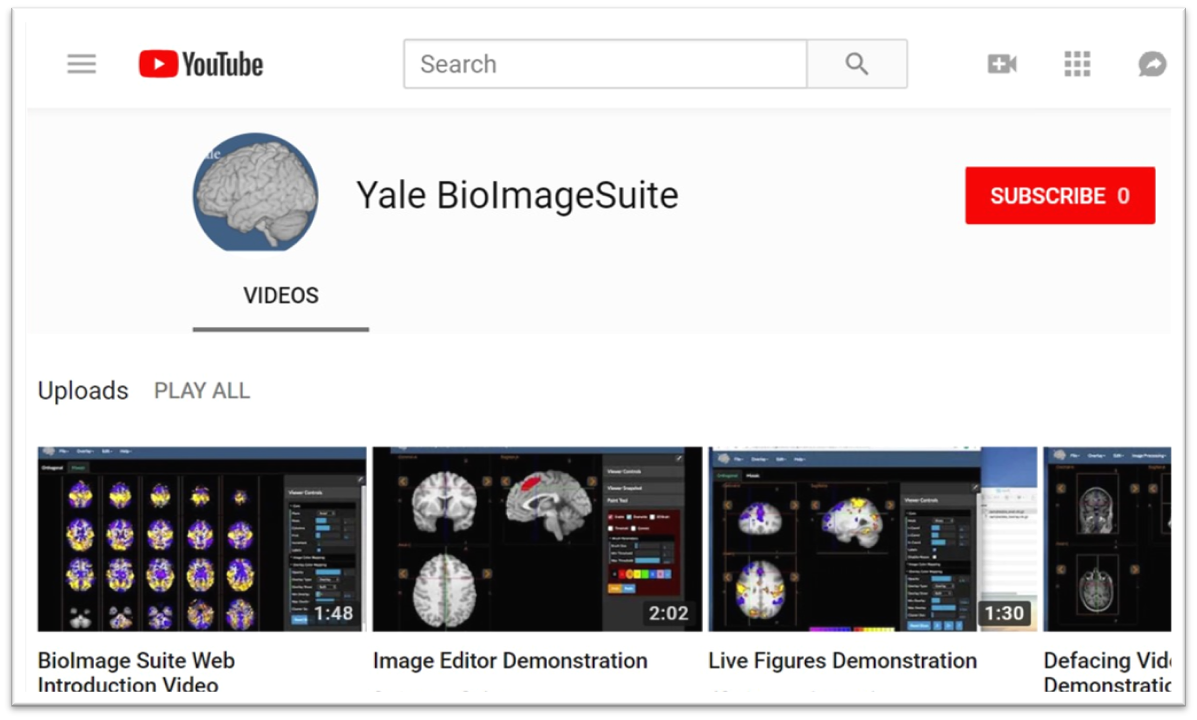
Xenophon Papademetris is a Professor of Biomedical Informatics & Data Science and Radiology & Biomedical Imaging at Yale School of Medicine. He serves as Associate Director of Biomedical Imaging Data Sciences at Yale Biomedical Imaging Institute and directs the Medical Software and Medical Artificial Intelligence Certificate Program. PhD in Electrical and Information Sciences from Yale University (2000) BA from Cambridge University (1994) Postdoctoral Fellowship at Yale University (2002) His research focuses on medical image analysis, machine learning, and biomedical software development. He has developed tools like BioImage Suite Web and contributed to standards committees at the Association for the Advancement of Medical Instrumentation (AAMI). His work spans modalities including MRI, CT, PET, and optical imaging. Recent publications emphasize neuroimaging analysis, explainable AI in healthcare, and multimodal data integration across species. He leads NIH-funded research under the BRAIN Initiative (R24 MH114805) and has authored a textbook on Medical Software published by Cambridge University Press. IEEE Senior Member Yale Brown-Coxe Postdoctoral Fellowship Harding Bliss Prize for Excellence in Engineering He directs the BioImage Suite Project, creating web-based image analysis tools using JavaScript and WebAssembly. His teaching includes both academic courses and a Coursera program on Medical Software with over 14,000 enrollments.
Adam de la Zerda is an Associate Professor at Stanford University's Department of Structural Biology (School of Medicine) and Electrical Engineering (by courtesy). He develops advanced optical molecular imaging technologies combining nanoparticle contrast agents and adaptive OCT systems for cancer and ophthalmic disease research. Technion-Israel Institute of Technology (BSc, 2005) Stanford University (PhD, 2011) UC Berkeley (Postdoctoral Fellowship) Research Themes : Virtual biopsy using machine learning-enhanced OCT Gold nanorod-based molecular contrast agents Speckle noise reduction for cellular resolution Needle beam optical coherence tomography angiography His 15 most recent publications demonstrate technical innovations in: Metasurface optics for extended depth-of-field Spectral deconvolution of multiple contrast agents Speckle modulation for improved diagnostic clarity Noninvasive lymphatic system mapping Scientific Honors : Pew-Stewart Scholar for Cancer Research AFOSR Young Investigator NIH Early Independence Award Forbes 30 Under 30 (x2) Chan Zuckerberg BioHub Investigator His lab team has developed clinical prototypes including OcuBell Inc. 's ophthalmic imaging systems and Visby Medical 's diagnostic platforms. Current research spans from in vivo glycoprotein imaging to de novo biosensor development for real-time disease monitoring in awake animal models.
Massachusetts Institute of TechnologyUnited States
James G. Fujimoto is the Elihu Thomson Professor of Electrical Engineering and Computer Science at MIT and Adjunct Professor of Ophthalmology at Tufts University School of Medicine. He joined MIT's faculty in 1985 and leads the Biomedical Optical Imaging and Biophotonics Group within the Research Laboratory of Electronics (RLE). His work focuses on biomedical imaging technologies, particularly Optical Coherence Tomography (OCT), now a global standard in ophthalmology. Educations : S.B., S.M., and Ph.D. in Electrical Engineering and Computer Science from MIT (1979, 1981, 1984) Research interests include OCT advancements (high-speed imaging, Doppler flow, angiography), clinical applications in ophthalmology and endoscopy, and femtosecond laser technologies. His group pioneered OCT, enabling millions of annual medical procedures. Current projects explore OCT in neurosciences, genetics, and pathology lab imaging. Awards : 1999 Discover Magazine Award for Technological Innovation 2001 Rank Prize in Optoelectronics (co-recipient) 2011 Zeiss Research Award 2012 Champalimaud Vision Award (co-recipient) Advising & Grants : Over 400 journal articles, 9 authored/edited books, and numerous U.S. patents. Extensive grants in laser technology and biomedical imaging. Labs & Teams : Research Laboratory of Electronics (RLE), MIT Department of EECS, and collaborations with Tufts University in ophthalmology.
Abdon Pena-Francesch is an Assistant Professor in the Department of Materials Science and Engineering at the University of Michigan. He is also affiliated with the Macromolecular Science and Engineering Program, Chemical Engineering, and the Michigan Robotics Institute. His interdisciplinary research integrates biomaterials science, polymer chemistry, soft matter physics, and nanotechnology to develop programmable soft materials for applications in healthcare, robotics, and environmental science. Education: Ph.D. in Engineering Science and Mechanics, The Pennsylvania State University, 2017 M.Sc. in Chemical Engineering, Institut Químic de Sarrià (Barcelona, Spain), 2013 B.Sc. in Mechanical Engineering, Institut Químic de Sarrià (Barcelona, Spain), 2011 Research Interests: His work focuses on bioinspired materials , soft robotics , self-healing polymers , and biodegradable microrobots . By engineering molecular and nanoscale structures, his lab designs materials with programmable properties for soft robotic systems and biomedical devices. The group emphasizes both fundamental science and translational applications, including tissue repair, actuation, and environmental sensing. Awards and Honors: Humboldt Research Fellowship for Postdoctoral Researchers (2018–2020) Alumni Association Dissertation Award, Penn State University (2017) Rustum and Della Roy Innovation in Materials Research Award (2016) Materials Research Society Graduate Student Award (2016) First Prize, Penn State ESM Graduate Research Symposium (2015) AGAUR MOBINT Fellowship, Government of Catalunya (2012) Labs and Affiliations: He leads the Bioinspired Materials Lab , an interdisciplinary group within the University of Michigan’s Materials Science & Engineering Department. The lab collaborates with the Macromolecular Science & Engineering Program, Chemical Engineering, and the Michigan Robotics Institute.
State University of New York at BuffaloUnited States
Paras N. Prasad is a SUNY Distinguished Professor with joint appointments in Physics, Chemistry, Medicine, and Electrical Engineering at the University at Buffalo. He serves as Executive Director of the Institute for Lasers, Photonics and Biophotonics (ILPB), which he founded in 1999. Dr. Prasad holds the Samuel P. Capen Chair of Chemistry and has pioneered interdisciplinary research at the interface of photonics, nanotechnology, and biomedicine. Education: BSc, Bihar University, India (1964) MSc, Bihar University, India (1966) PhD, University of Pennsylvania (1971) Postdoctoral Fellow, University of Michigan (1971-74) Research Focus: Dr. Prasad's multidisciplinary research spans photonics, nanophotonics, and biophotonics, with emphasis on nonlinear optical processes in nanostructured materials. His work develops photonic technologies for information processing, medical imaging, and cancer therapy through nanoparticle-based drug delivery systems and diagnostic platforms. The ILPB laboratory features state-of-the-art instrumentation for advanced optical research. Publication Trends: Recent articles demonstrate strong focus on nanomedicine applications, particularly cancer theranostics using functional nanoparticles. Key themes include drug delivery systems, chiral photonic materials, bioimaging technologies, and nanoparticle synthesis techniques. The research consistently bridges fundamental materials science with translational medical applications. Honors and Awards: SPIE Gold Medal (2016) IEEE Photonics Society William Streifer Award (2021) American Chemical Society Peter Debye Award (2018) OSA Michael Feld Biophotonics Award (2017) IEEE Pioneer Award in Nanotechnology (2017) Fellow of National Academy of Inventors (2016) Guggenheim Fellowship (1997) Leadership: As ILPB Executive Director, Dr. Prasad leads multidisciplinary teams developing photonic technologies with applications in healthcare, energy, and communications. His research has generated nine spin-off companies, including Nanobiotix currently in advanced cancer therapy trials.
Maiken H. Mikkelsen is the James N. and Elizabeth H. Barton Associate Professor in the Department of Electrical and Computer Engineering at Duke University, with a joint appointment in the Department of Physics . Her research focuses on quantum nanophotonics , plasmonics , and light-matter interactions in nanoscale materials, aiming to advance optoelectronics, quantum science, and biomedical diagnostics. Education B.S. in Physics, University of Copenhagen (2004) Ph.D. in Physics, University of California, Santa Barbara (2009) Postdoctoral Fellowship, University of California, Berkeley Her work explores nanophotonic engineering for quantum optics , spintronics , and ultrafast optoelectronics , with recent studies on nonlinear metasurfaces and plasmonic enhancement of immunoassays for point-of-care diagnostics. Publications highlight 2D semiconductor emission control , ultrafast single-photon sources , and metasurface-based photodetectors . Scientific Awards Maria Goeppert Mayer Award (2017) NSF CAREER Award (2015) Moore Inventor Fellow (2021) ONR/Air Force/Army Young Investigator Awards (2015-2017) Cottrell Scholar (2016) Stansell Family Distinguished Research Award (2021) She advises graduate students in Duke’s Electrical & Computer Engineering and Physics programs and leads the Mikkelsen Lab , which emphasizes ultrafast spectroscopy and quantum material development . The lab has graduated PhD students like Eunso Shin and Hengming Li (2025).