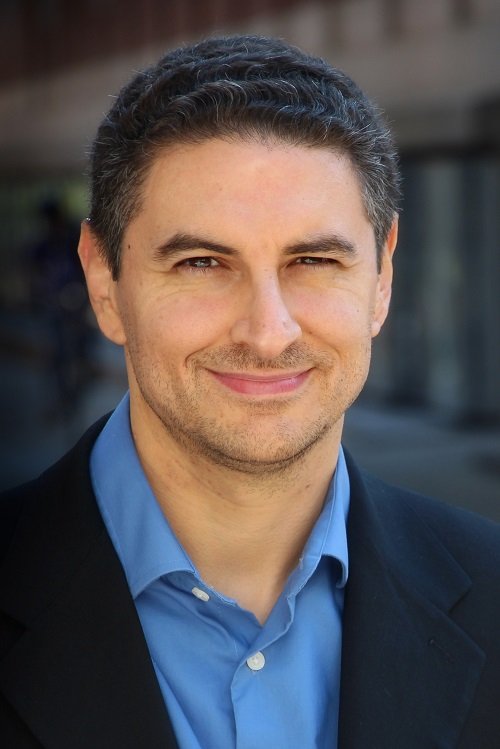
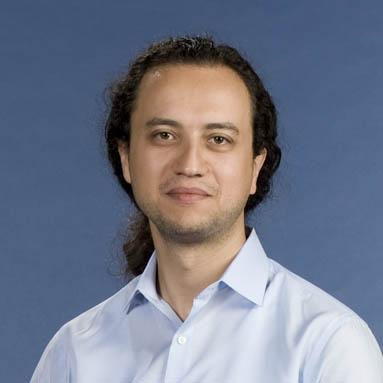
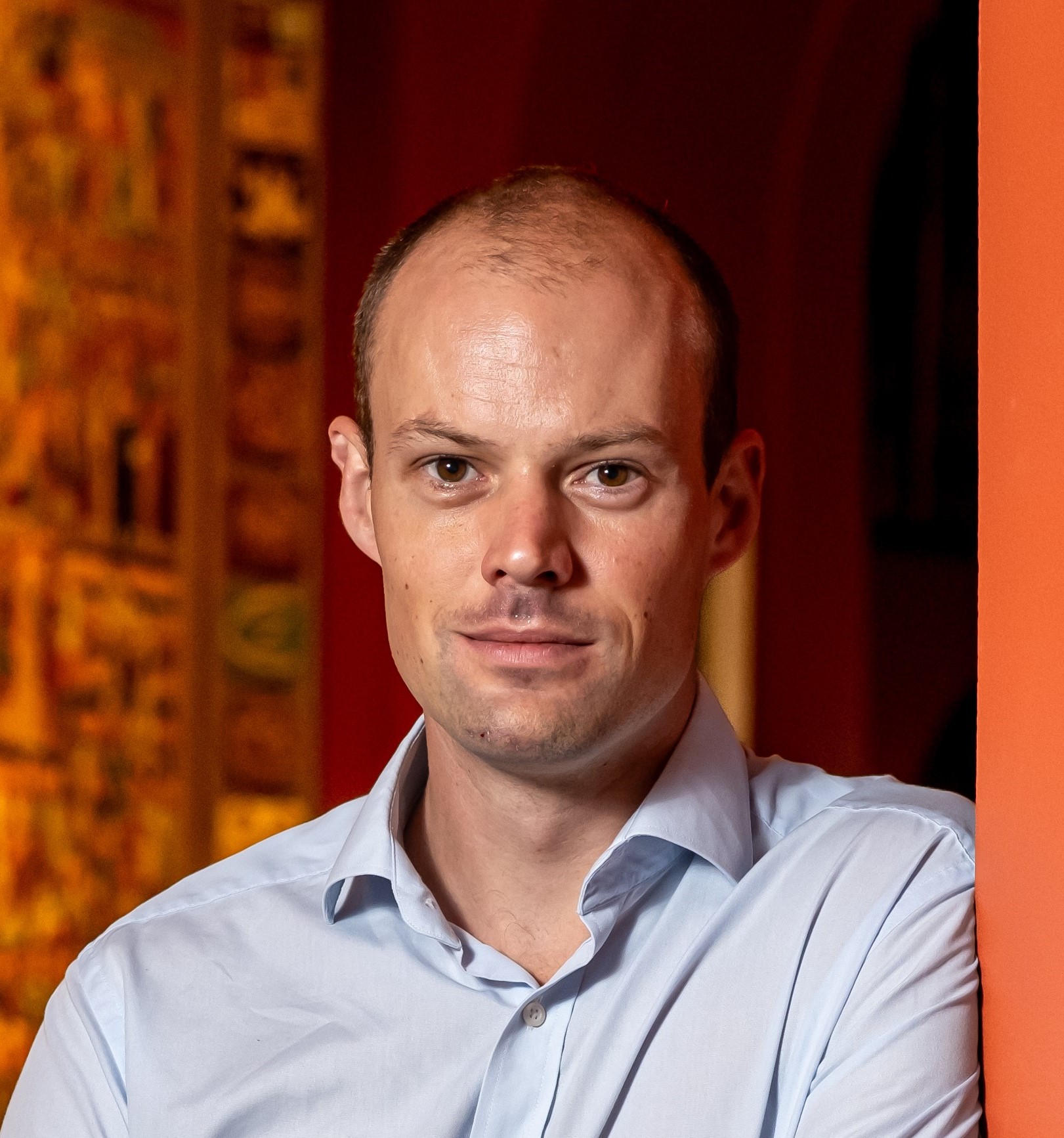
Michael McAlpine is a Professor in the Mechanical Engineering department at the University of Minnesota . He also holds affiliations with the Biomedical Engineering and Electrical and Computer Engineering departments. His research focuses on 3D printing functional materials & devices , Nanoscale inks , Biomedical devices , Bioelectronics , and Flexible Microsystems . Research Interests : 3D Printing, Biomedical Engineering, Nanotechnology, Flexible Electronics, Microfluidics Labs : ME 361/363 Contact : mcalpine@umn.edu , (612) 626-3303, ME 117 Recent Research Trends include 3D Printed Biomedical Devices , Flexible Electronics , and Bioprinting Applications . His work spans from Spinal Organoid Formation to Programmable Drug Release Capsules . Scientific Award : Circulation Research 2020 Best Manuscript Award
Jun Liu is an Assistant Professor in the Department of Mechanical and Aerospace Engineering at the School of Engineering and Applied Sciences, University at Buffalo. His research focuses on advanced energy materials, nano/micro-mechanics, and self-powered systems, with applications in triboelectric energy harvesting and scanning probe microscopy. Education: PhD, Materials Engineering, University of Alberta (2018) MS, Materials Science, Shanghai University (2015) BE, Materials Science and Engineering, Nanchang University (2012) Research Interests: Development of tribovoltaic and triboelectric systems for self-powered electronics Mechanical energy harvesting via dynamic heterojunctions and Schottky contacts 3D-printed hydrogel structures for energy absorption and flexible electronics Nanoscale characterization using atomic force microscopy Design of nanocomposite sensors and catalytic materials Publication Trends: His work emphasizes triboelectricity, nanoscale energy conversion, and sustainable materials. Recent articles explore bionic tactile sensing, tunable hydrogels, and quantum dynamics in sliding interfaces. Awards: SONY Faculty Innovation Award (2021) Nature Springer MINE Young Scientist Award (2020) International Contest of Applications in Nano/Micro Technology Prize (2013) Laboratory: Advanced Energy Materials and Nanomechanics Lab at University at Buffalo.
Dr. Todd D. Murphey is a Professor of Mechanical Engineering at Northwestern University's Robert R. McCormick School of Engineering and Applied Science. He serves as Director of Transformative Research and Director of the Master of Science in Robotics Program at Northwestern, leading initiatives in computational dynamics, control systems, and robotics. His work bridges engineering, neuroscience, and biomedical applications, with a focus on developing systems that interact effectively with humans and their environments. Dr. Murphey received his Ph.D. in Control and Dynamical Systems from the California Institute of Technology in 2002, with a thesis titled "Control of Multiple Model Systems." Prior to that, he earned a B.S. in Mathematics, summa cum laude, from the University of Arizona in 1997. Dr. Murphey's research centers on computational methods in dynamics and control, with applications spanning neuroscience, health science, robotics, and automation. His work in the Interactive & Emergent Autonomy Lab focuses on computational models of embedded control, biomechanical simulation, dynamic exploration, and hybrid control. The group develops mathematical approaches that lead to orders of magnitude improvement in computational efficiency for real-time implementation. Key application areas include assistive exoskeleton control, stabilization of energy networks, bio-inspired active sensing, entertainment robots, robotic exploration, and software-enabled stroke rehabilitation. Analysis of Dr. Murphey's recent publications reveals a strong emphasis on human-swarm interaction, algorithmic matter, and control of cyber-physical systems in uncertain environments. His work increasingly integrates information theory with physical systems, exploring how both autonomous and biological systems interact with environments to learn and improve behaviors. Recent trends show growing applications in rehabilitation technology, with particular focus on human-machine interaction in biomedical devices and embodied intelligence. Dr. Murphey has received numerous honors and awards for his contributions to robotics and engineering: Named Director of Transformative Research at Northwestern University (2025) Appointed IEEE Robotics and Automation Society Vice President of Publication Activities (2022) Co-recipient of Best Paper Award for IEEE Transactions on Robotics (2020) Appointed to Air Force Scientific Advisory Board (2019) Recipient of ABB Best Student Paper Award for CPL-SLAM research (2019) Cole-Higgins Award from Northwestern Engineering (2015) Dr. Murphey has supervised numerous graduate students including Taosha Fan, Giorgos Mamakoukas, and Ian Abraham, with research spanning robotic exploration using electrosense and mechanical contact, human-in-the-loop control, and shared control for rehabilitation devices. His lab has secured significant funding from the National Science Foundation, DARPA, and industry partners including Siemens and Ekso Bionics, supporting research in algorithmic matter, emergent behavior, and human-swarm collaboration. The Interactive & Emergent Autonomy Lab, led by Dr. Murphey, investigates how both autonomous systems and biological systems interact with their environments to learn and improve behaviors. Current projects include active learning and data-driven control, active perception in human-swarm collaboration, algorithmic matter and emergent computation, control for nonlinear and hybrid systems, cyber physical systems in uncertain environments, harmonious navigation in human crowds, information maximizing clinical diagnostics, reactive learning in underwater exploration, robot-assisted rehabilitation, and software-enabled biomedical devices. The lab collaborates with researchers across Northwestern and institutions including Georgia Tech, MIT, and industry partners.
Cagdas Onal is an Associate Professor of Robotics Engineering at Worcester Polytechnic Institute (WPI). He holds a BS and MS from Sabanci University (2003, 2005) and a PhD in Robotics from Carnegie Mellon University (2009). His research focuses on soft robotics, bio-inspired systems, and control theory , emphasizing the development of flexible robotic components for healthcare, industry, and sustainable applications. He leads the Soft Robotics Lab and the Future of Robots in the Workplace (FORW-RD) initiative, advancing human-centric robotics solutions. Research interests include designing bio-inspired soft robots (e.g., origami-inspired snake robots), developing modular actuation systems with embedded sensors, and exploring applications in medical devices and assistive technology. His work aligns with UN Sustainable Development Goals, particularly in healthcare access (SDG 3), quality education (SDG 4), and innovation (SDG 9). Recent projects include origami-based robotic arms for wheelchair users , self-contained underwater robots, and haptic interfaces for teleoperation. His lab collaborates on国家级 grants like the NSF-funded NRT Program and has secured patents for actuator designs (e.g., Hydro Muscle). Labs/Teams: Soft Robotics Lab, FORW-RD, NRT Program. Notable media coverage includes Worcester Telegram & Gazette and Spectrum News for innovations in human-friendly robotics.
Yujia Zhang is a Tenure Track Assistant Professor at the School of Engineering , École Polytechnique Fédérale de Lausanne (EPFL), leading the Laboratory for Bio-Iontronics (BION) since January 2025. His work focuses on developing iontronic biointerfaces and hybrid intelligent systems for biomedical applications. Academic Affiliations: EPFL School of Engineering, STI-SMT SMT-ENS PhD program committee Research Themes: Droplet-based iontronics, synthetic tissues, advanced manufacturing Research Trends from his publications emphasize microscale droplet iontronics , soft energy systems , and biohybrid interfaces , with applications in neurostimulation , tumor modeling , and biomedical devices . Scientific Awards : 2023: Early-career Research Scientist Representative, UK Parliamentary & Scientific Committee 2022: Excellent Doctoral Dissertation, Chinese Academy of Sciences 2021: Outstanding Doctoral Thesis, Chinese Institute of Electronics 2020: Special Prize for President Scholarship, Chinese Academy of Sciences Academic Contributions include mentoring PhD students and teaching microfabrication technologies. His lab develops 3D-printed synthetic tissues and droplet networks for interactive biological communication.
Benoit Delhaye is a Professor at Universite catholique de Louvain , affiliated with the Louvain Polytechnic School (EPL) and Mathematical Engineering Center (INMA) . His research bridges tactile neuroscience and biomechanics to understand how tactile receptors encode object information and how the brain uses these signals for dexterous manipulation. He also contributes to Institute Of NeuroScience (IoNS) . Email: benoit.delhaye@uclouvain.be Email: delhayeben@gmail.com His research focuses on three main areas: Tactile Signal Processing : Analyzing skin deformation patterns during object interactions using advanced imaging and computational models Neuroprosthetic Applications : Developing biomimetic afferent response simulations for bionic hand feedback systems Haptic Perception : Investigating how tactile receptors encode friction, slip, and edge orientation The articles demonstrate his contributions to understanding: tactile mechanics (6 papers), grip force adaptation (4 papers), skin strain patterns (5 papers), and neuroprosthetic simulations (3 papers). Key 2024 publications include collagen-induced anisotropy analysis and 3D fingertip deformation modeling. Benoit's technical innovations include: TouchSim - A MATLAB package for simulating tactile afferent responses Open-source instrumented objects for manipulation studies Advanced skin deformation measurement systems His collaborative network spans institutions in Belgium, the USA, and Germany, working with researchers in Philippe Lefevre 's and Jean-Louis Thonnard 's labs. Current teaching includes LEPL1506 Project and LGBIO2110 Clinical Engineering courses.
Kaiyan Qiu is the Berry Family Assistant Professor of Mechanical Engineering at Washington State University , leading interdisciplinary research at the intersection of 3D printing , artificial organs , and flexible electronics . His work combines advanced manufacturing techniques with biomedical innovation. Ph.D. in Fiber Science & Biopolymers from Cornell University (2012) Postdoctoral experience at University of Minnesota, Princeton University, and Dartmouth College Research focuses on: Medical Applications : 3D printed presurgical organ models (prostate, aortic root) with integrated sensors Wearable Electronics : Stretchable tactile sensors and photodetectors for health monitoring Biomimetic Systems : Bioinspired actuators and surfaces for robotics Advanced Printing : Multimaterial and multiscale additive manufacturing Recent publications address machine learning-enabled 3D printing , biomimetic device fabrication , and direct printing on freeform surfaces . Collaborations with Medtronic Inc. and Visible Heart Laboratory at UMN demonstrate clinical impact. Honors include: Berry Family Assistant Professor (2021) Best of 2018 article selection National Textile Center Competition Awards Liu Memorial Scholarship Qiu's lab develops customized 3D printing systems with motion control, ink dispensing, and monitoring subsystems for biomedical and robotics applications.
Ehsan Esfahani is an Associate Professor and Director of Graduate Studies in the Department of Mechanical and Aerospace Engineering at the University at Buffalo's School of Engineering and Applied Sciences. He is affiliated with the Stephen Still Institute for Sustainable Transportation and Logistics. His research focuses on AI-driven robotics, human-machine interaction, and bio-mechatronics systems. Education: PhD in Mechanical Engineering, University of California, Riverside (2012) MS in Electrical Engineering, University of California, Riverside (2012) MS in Mechanical Engineering, University of Toledo (2007) BS in Mechanical Engineering, Isfahan University of Technology (2004) Research Interests: Brain-computer interfaces for CAD/robotic systems Human-robot collaboration and neuroergonomics Bio-inspired robotics and tactile sensing Swarm intelligence and multi-agent systems Variable stiffness actuators for safe manipulation Key Contributions: Esfahani's work bridges AI with physical systems, emphasizing real-time human-in-the-loop control. Recent trends in his publications focus on scalable swarm robotics, human-swarm interaction dynamics, and adaptive gripper designs for confined environments. His neurophysiological approaches assess cognitive load in collaborative tasks, enhancing system safety and efficiency. Awards: American Power Public Associations DEED Scholarship (2012) UC Riverside Dissertation Year Fellowship (2011–2012) Lung-Wen Tsai Memorial Scholarship (2010) Advising & Labs: Directs the HILS Lab (Human-Inspired Learning Systems), exploring human-centered robotics. Active in grants focusing on AI-driven factories, cognitive modeling in surgery, and variable stiffness mechanisms. Collaborates on projects like SHaSTA (Human-Swarm Team Simulator) and MyoTrack rehabilitation systems. Labs & Teams: HILS Lab: Human-AI collaboration frameworks Stephen Still Institute: Transportation logistics and sustainability
Calogero Maria Oddo is an Associate Professor at Sant’Anna School of Advanced Studies, affiliated with the BioRobotics Institute and Department of Excellence in Robotics and Artificial Intelligence. He leads the Neuro-Robotic Touch Laboratory, coordinating a team of 25+ researchers. His work bridges neuroscience and engineering, focusing on tactile sensing, neuroprosthetics, and biomedical robotics. He holds a national qualification as Full Professor of Bioengineering and serves in academic governance roles, including Vice-Coordinator of the BioRobotics PhD program and President of the University Committee for Equal Opportunities. His research has been featured in top journals like Nature Machine Intelligence and recognized by prestigious awards such as the Feltrinelli Prize under 40 (2023). Education BSc in Electronic Engineering (University of Pisa, 2005, 1st in cohort) MSc in Electronic Engineering (University of Pisa, 2007, Excellence Track) PhD in Innovative Technologies (Sant’Anna School of Advanced Studies, 2011) Graduate of Sant’Anna Honours College (2008, 2006) Research Interests His lab develops tactile sensors inspired by human neurophysiology, with applications in bionic prostheses, robotic surgery, and healthcare. Key areas include neuromorphic engineering, mechanotransduction, and sensory feedback systems. Collaborations span institutions like the National Research Council, University of Pisa, and international partners such as École Normale Supérieure. Grants & Awards Coordinator of €10M+ in research funding from EU, Italian ministries, and private foundations Contributions to technology transfer via RoboIT and the ARTES 4.0 Competence Center Labs & Teams Leads the Neuro-Robotic Touch Lab and collaborates with the N2Lab (National Research Council), focusing on clinical translation of tactile technologies.
Professor Ingvars Birznieks is a Senior Research Fellow at the Department of Physiology, School of Medical Sciences, UNSW Medicine in Sydney, where he leads the Tactile Research Group at Neuroscience Research Australia (NeuRA). Previously, he held an academic position as Senior Lecturer (Physiology) at the School of Science and Health, Western Sydney University from 2011 to 2014. Dr. Birznieks is a sensory neurophysiologist specializing in sensory information encoding mechanisms, with research spanning tactile perception, neural coding, and bionic applications. His work integrates neuroscience, biomedical engineering, and clinical rehabilitation to understand how touch receptors encode information and how this knowledge can be applied to develop advanced prosthetics and rehabilitation technologies. His research program covers tactile receptors and sensorimotor control of the human hand, with applications in stroke rehabilitation, diabetic neuropathy, and bionic hand development. His recent publications reveal a strong focus on neural coding mechanisms in tactile perception, particularly the burst gap code for frequency perception, friction sensing mechanisms, and intensity coding. These studies consistently bridge fundamental neuroscience with practical applications in bionics and rehabilitation. His interdisciplinary approach connects neurophysiological findings with engineering solutions for artificial touch. Dr. Birznieks has secured significant grant funding, including ARC Discovery Projects and NHMRC Ideas Grants totaling over $2.5 million, supporting research on neural coding, sensorimotor control, stroke rehabilitation, and bionic technologies. His current major project 'The secret of tiny hand movements to feel and manipulate objects' (ARC DP230100048) investigates how humans use micro-movements to extract tactile information during object manipulation. He actively supervises students across neuroscience, biomedical engineering, and computer science disciplines, with recent publications featuring undergraduate and graduate students as first authors. His research group maintains collaborations with institutions in France and Sweden, providing international research opportunities for students. Dr. Birznieks' laboratory has developed unique non-invasive mechanical stimulation technology that allows precise control of neural communication at the single neuron level, enabling unprecedented investigation of how spiking activity influences perceptual experience.
Cedomir Stefanovic is a Professor in the Department of Electronic Systems at Aalborg University's Technical Faculty of IT and Design. His research focuses on edge computing, wireless networking, 5G/6G technologies, IoT, smart grids, and bionic limbs. He leads projects like CLIMB (Cloud-connected bionic limbs) and 5G-connected assistive robots, emphasizing assistive robotics and medical technology integration. His work spans random access protocols, latency optimization, and energy-efficient communication systems. With 129 publications (2025: 12; 2024: 8; 2023: 12), his research addresses challenges in industrial IoT, smart grids, and UAV-assisted communication. He has supervised 3 PhD students and actively collaborates internationally. Notable contributions include advancements in deterministic multiple access patterns, AoI-aware scheduling, and bionic limb connectivity. His research is published in IEEE journals and conferences. He hosts guest lecturers and has been featured in media discussions on wireless innovation and smart energy systems. Education: While specific academic credentials are not detailed, his role as a Professor at Aalborg University indicates advanced degrees in electrical engineering or computer science. Research Interests: 5G/6G and IoT networking Edge computing and latency-critical systems Wireless communication protocols (e.g., tree algorithms, NOMA) Smart grid optimization and microgrids Bionic limbs and assistive robotics Age of Information (AoI) minimization strategies Publications: Over 129 papers (2025:12; 2024:8; 2023:12), emphasizing trends in 5G-enabled prosthetics, deterministic access patterns, and industrial IoT optimization. Recent work explores UAV-assisted sensing, D2D communication for smart grids, and deep learning for industrial systems. Funding & Projects: CLIMB (2022–): PI for cloud-connected bionic limbs WindMill (2019–): Machine learning for windmill communication INCOMING (2020–2022): Massive-scale communication innovation Labs/Teams: Edge Computing and Networking group, Classique-Center for Classical Communication in the Quantum Era.
Prof. Tobias Seidl serves as Vice Dean at the Westphalian Institute for Bionics within the Department of Mechanical Engineering at the Westphalian University of Applied Sciences in Bocholt, Germany. He has been with the university since January 2011, teaching bionics and sensor technology while leading research in biomimetic applications for robotics and engineering. Education: Bionics studies at Saarbrücken PhD on desert ant navigation systems under Rüdiger Wehner at the University of Zurich with fieldwork in Tunisia Professional experience at the European Space Agency (ESA) in Noordwijk, Netherlands Research Focus: Prof. Seidl's work centers on bionics , translating biological principles into engineering solutions. His expertise spans neuroethology (neural basis of natural behavior), functional morphology (structure-function relationships), and biomechanics . Key application areas include biomimetic robotics inspired by ants and spiders, sensor development, and bio-inspired materials. His research consistently bridges entomology with robotics, aerospace, and materials science to solve complex engineering challenges. Publication Trends: Recent publications (2025-2016) reveal a strong focus on biomimetic applications in robotics, 3D printing, and aerospace. Dominant themes include adaptive biomimetic valves for automotive cooling, force-based path integration in walking robots, hydrophobic surface replication, and satellite deployable structures inspired by insect wings. His work consistently leverages biological observations—particularly from desert ants and spiders—to advance robotic locomotion, adhesion mechanisms, and space technology. Research Infrastructure: As head of the Westphalian Institute for Bionics, Prof. Seidl leads R&D projects such as developing force sensors in ant legs for robotic applications. His institute serves as a hub for interdisciplinary collaboration between biologists and engineers, focusing on translating biological insights into technical innovations for automotive, aerospace, and medical applications.
Associate Professor Richard Vickery is a researcher and educator at the University of New South Wales (UNSW), focusing on understanding the neural code of the brain to advance brain-machine interfaces. His work bridges neuroscience, physiology, and bionics, with a primary interest in tactile perception and cortical coding in the somatosensory system. He has developed innovative approaches to restore touch to upper limb amputees through bionic hand prostheses, integrating electrophysiological recordings with behavioral and psychophysical studies. At UNSW, he contributes to teaching across medicine, health science, science, and engineering programs, notably convening SOMS1913 Human Systems 2 and PHSL2101 Physiology 1A. BSc Hons (University of Sydney) PhD (UNSW) His research spans sensory neuroscience, neural coding, and biomedical engineering, with significant grants from the ARC Discovery Project, UNSW Learning and Teaching Innovation Grants, and NHMRC. He has supervised PhD students and served as a grant reviewer for NHMRC, ARC, and NIH. His awards include the Vice-Chancellor's Award for Teaching Excellence (2017). Recent publications explore temporal coding in tactile and auditory systems, friction sensing mechanisms, and neural prosthetics, reflecting his interdisciplinary approach to decoding the brain's language for practical applications. His work intersects with advanced research infrastructure like the Mark Wainwright Analytical Centre and Research Imaging NSW, though he is not listed as a staff member there. Current projects involve tactile afferent encoding, sensory suppression during movement planning, and machine learning applications in neural prosthetics. His collaborations span academia, industry, and clinical research environments, emphasizing real-world translation of fundamental neuroscience discoveries.
Tong (Joy) Lu is an Assistant Professor of Marketing at the Tepper School of Business, Carnegie Mellon University, and an affiliated faculty member in the Department of Social and Decision Sciences at the Dietrich College of Humanities and Social Sciences. Her research focuses on soft-matter electronics, materials science, and wearable technologies, with applications in robotics and biomedical engineering. Her work explores the development of flexible, stretchable electronics such as soft bionic hands with tactile sensing capabilities, UV laser-patterned conductive materials, and electrically tunable composites. She has pioneered methods for rapid prototyping of liquid metal circuits and soft anisotropic conductors, advancing fields like additive manufacturing and sensor technology. Key contributions include innovations in electronic skins (e-skins), reversible rigidity control materials, and carbon-doped PDMS composites for durable stretchable electronics. Her interdisciplinary research bridges engineering, material science, and human-centric design, with potential applications in healthcare, consumer electronics, and robotics.
Hoda Fares is an Assistant Professor in the Department of Electrical and Computer Engineering at Aarhus University, specializing in neuroprosthetics and human-machine interfacing. Her research focuses on developing brain-inspired neural interfaces (BI-BCIs) that integrate neuromorphic hardware and flexible materials to restore sensorimotor function in individuals with disabilities such as stroke or amputation. She works on closed-loop systems combining bioinspired spiking neural networks (SNN) with low-power neuromorphic hardware. Her expertise includes intelligent neuroprosthetics, tactile sensing technologies, and electrotactile stimulation for bionic limbs. Current projects involve wearable neuromorphic interfaces for bidirectional control of prostheses and enhancing rehabilitation systems through artificial sensory-motor restoration. Fares' work bridges artificial intelligence with neuroengineering to create adaptive, miniaturized neural implants. Selected publications highlight advancements in functional electrical stimulation for stroke recovery, electronic skin validation, and multi-channel tactile feedback systems. Her research emphasizes clinical translation of technologies for real-world prosthetic applications, leveraging flexible/stretchable materials and distributed sensing networks. Despite no listed academic awards, her contributions to tactile sensing and prosthetic control systems demonstrate significant innovation in biomedical engineering. Ongoing work includes collaborations on neuromorphic hardware design and validation of virtual prosthetic systems with tactile feedback interfaces.