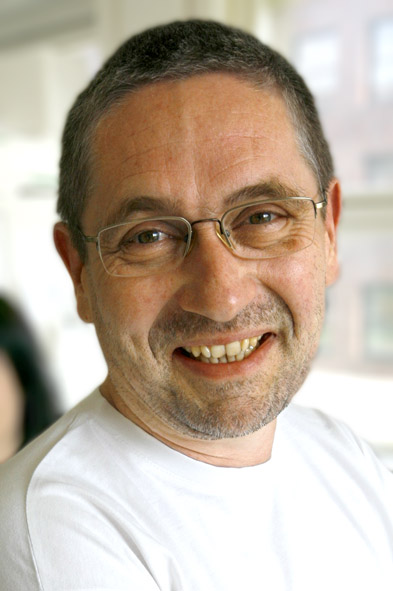
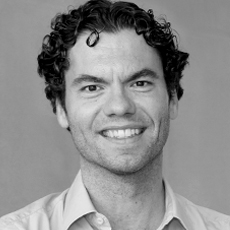
Gerhard Braus is a Professor of Microbiology and Genetics at the University of Göttingen, leading the Department of Molecular Microbiology and Genetics. His research focuses on fungal developmental biology, protein turnover, and pathogenic mechanisms. Education: 1983: Diploma in Biology, Albert-Ludwig University, Freiburg 1987: Dr.sc.nat., ETH Zurich 1991: Habilitation in Microbiology, ETH Zurich Research Interests: Coordination of fungal development with secondary metabolism via light Role of Nedd8 and COP9 signalosome in protein turnover Molecular control of fungal adhesion and biofilm formation Fungal models for Parkinson's disease and human/plant pathogens Publications Trends: Braus' recent work emphasizes fungal developmental pathways, ubiquitin-like systems, and pathogenic mechanisms in Aspergillus and Verticillium species. Studies often combine molecular genetics with biochemical approaches to uncover regulatory networks. Affiliations: Molecular Biology (IMPRS) Biomolecules: Structure-Function-Dynamics (GZMB) International Research Training Group 2172 - PRoTECT Laboratory: The Braus lab is located at Grisebachstrasse 8, Göttingen, with a dedicated webpage at http://www.uni-goettingen.de/molmibio .
Dirk Görlich is a Professor and Director of the Department of Cellular Logistics at the Max Planck Institute for Multidisciplinary Sciences in Göttingen. He holds a Diploma in Biochemistry from Martin Luther University Halle-Wittenberg (1989), a Dr. rer. nat. in Biochemistry from Humboldt University Berlin (1993), and completed postdoctoral research at the Laboratory of RA Laskey in Cambridge (1993-1995). He led a research group at the ZMBH Heidelberg (1996-2007) and was a Professor of Molecular Biology at Heidelberg University (2001-2007) before joining the MPI. From 2018-2019, he served as Managing Director of his institute. His research focuses on nuclear pore complexes, hydrogels, structural biology, and protein transport mechanisms. Key interests include cargo recognition mechanisms of importins/exportins, phase separation phenomena in nuclear transport, and the development of recombinant antibodies for advanced imaging and protein complex analysis. His work bridges biochemistry, cell biology, and biophysics to elucidate nuclear transport dynamics and material properties of biomolecules. Selected recent publications highlight groundbreaking studies on nuclear pore permeability, FG hydrogel behavior, and nanobody applications in super-resolution microscopy. His research has advanced understanding of nuclear transport barriers, exportin functions, and the structural basis of nucleoporin complexes. Görlich is affiliated with the Göttingen Graduate Center for Neurosciences, Biophysics, and Molecular Biosciences (GGNB), contributing to programs in Molecular Biology and Biomolecules: Structure-Function-Dynamics. His lab’s innovations include novel tools for proteomics and structural biology, emphasizing translational applications in biotechnology.
Dr. Henrik Schneidewind is a Researcher at the Leibniz Institute of Photonic Technology (Leibniz-IPHT) in Jena, Germany, where he works in the Research Department Fiber Photonics as part of the Hybrid Fibers work group. His research focuses on advanced optical fiber technologies, with particular expertise in thin film preparation on optical fibers and optical near-field microscopy (SNOM). In addition to his research activities, he serves as coordinator of occupational safety and co-chairman of the works council at the institute. Dr. Schneidewind's research spans multiple cutting-edge areas in photonics and optical engineering. His work primarily investigates novel approaches to light manipulation using advanced fiber structures and nanoprinting techniques. Key research themes include supercontinuum generation, nonlinear frequency conversion, plasmonics, and optical sensing applications. His innovative approaches to fiber modification through nanoscale structuring have led to significant advancements in light collection efficiency, angular demultiplexing, and spectral control. Analysis of his publication record reveals a consistent focus on pushing the boundaries of fiber-based photonic devices. His recent work demonstrates particular expertise in nanoprinting techniques applied to fiber optics, with applications spanning from biomedical imaging to quantum technologies. The research shows a progression from fundamental studies of material properties to increasingly sophisticated device implementations, with a strong emphasis on practical applications in spectroscopy, sensing, and medical diagnostics. Dr. Schneidewind is an active member of the Hybrid Fibers work group at Leibniz-IPHT, collaborating extensively with colleagues including Markus A. Schmidt, Matthias Zeisberger, Oleh Yermakov, and Torsten Wieduwilt across multiple publications. His work demonstrates strong interdisciplinary connections between physics, materials science, and engineering, with applications spanning telecommunications, environmental monitoring, and medical technologies.
Dr. Ludger Tebben is a tenured researcher at the Organisch-Chemisches Institut (University of Münster). He has held key roles since 2007, including Vize-Speaker (2012) and Managing Director (2010) of the Collaborative Research Center "Synergistic Effects in Chemistry - From Additivity towards Cooperativity" (SFB 858). His work focuses on organometallic chemistry , particularly ferrocenophane derivatives and asymmetric catalysis . Education: PhD in Organic Chemistry (2007, WWU Münster) on asymmetric [3]ferrocenophanes Awards: Procter & Gamble Prize (2003), IRTG 1143 Fellow (2006-2007) His research spans bioorganometallic chemistry , polymer chemistry , and cooperative effects in chemical systems. Publications highlight Nitroxides , enantioselective catalysis , and interdisciplinary projects like co.labore merging arts and science. He contributes to infrastructure projects for the new OC/BC-I institute building.
Axel Karger is a Researcher and Laboratory Head at the Institute of Molecular Virology and Cell Biology (IMVZ) within the Friedrich-Loeffler-Institut . His work spans virology, proteomics, and mass spectrometry applications. Research Interests: Molecular virology, focusing on viral attachment proteins (e.g., pseudorabies virus glycoproteins) Development of MALDI-TOF mass spectrometry for bacterial identification and viral proteomics Proteomic analysis of pathogens like African swine fever virus and zoonotic agents Publications highlight his expertise in viral pathogenesis, bacterial typing, and advanced spectroscopy techniques. Recent work includes phosphoproteomic studies of viral kinases and MALDI-TOF applications in clinical and veterinary microbiology.
Christian Hackenberger is a Leibniz-Humboldt Professor of Chemical Biology at Humboldt University and Head of the Chemical Biology II Department at the Leibniz-Forschungsinstitut für Molekulare Pharmakologie (FMP) . His research centers on synthetic methodology development for natural protein modifications, with applications in biomedicine and drug delivery systems like antibody-drug conjugates (ADCs). Education: University of Freiburg RWTH Aachen University of Wisconsin/Madison (USA) The Hackenberger Group focuses on creating chemoselective bioconjugation reactions to study functional consequences of protein modifications and develop pharmaceutical applications. Their work spans organic synthesis, biochemistry, and biophysics, with a particular emphasis on Staudinger-phosphite/phosphonite reactions and cell-penetrating peptides (CPPs). Recent publications highlight advancements in ethynyl-phosphonamidate peptides for protein delivery, fluorogenic glycan labeling for cell surface imaging, and hydrophilic electrophiles for ADCs . Collaborative efforts with Tubulis GmbH, a company he founded, focus on cancer therapeutics. Scientific Awards: Max Bergmann Medal 2024 Hackenberger actively mentors 13 PhD students and PostDocs , with projects covering topics from tau protein nanobodies to asymmetric organocatalysis . Grants include funding from the German Research Foundation (DFG) , BMBF , and the European Union's Horizon MSCA program .
Markus Bohnsack is a Professor of Molecular Biology at the University Medical Center Göttingen, part of the University of Göttingen. He leads a research group focused on RNA-protein complexes (RNPs), ribosome biogenesis, and RNA modifications. He has held leadership roles as Speaker of the PhD program 'Molecular Biology of Cells' since 2014 and Speaker of the Göttingen Graduate Center for Neurosciences, Biophysics, and Molecular Biosciences (GGNB) since 2019. 2005: Dr. rer. nat. (PhD), Center for Molecular Biology Heidelberg (ZMBH), University of Heidelberg 2006–2008: Postdoctoral Fellow, University of Edinburgh, UK 2008–2012: Group Leader, Goethe University, Frankfurt 2009–2012: Adjunct Investigator, Cluster of Excellence Frankfurt Since 2012: Professor of Molecular Biology, University Medical Center Göttingen His research centers on the biogenesis, dynamics, and function of RNA-protein complexes in yeast and mammalian cells. He employs genome-wide techniques like CRAC and proteomics to study protein-RNA and protein-protein interactions. A major focus is ribosome biogenesis, particularly the roles of RNA helicases and methyltransferases in driving structural transitions and maturation. His work also investigates how RNA modifications regulate gene expression and how defects in these processes lead to diseases like ribosomopathies. He explores the cross-regulation of RNA metabolic pathways by multifunctional enzymes. The recent publications highlight a strong trend in understanding the molecular mechanisms of ribosome assembly, RNA helicase function, and RNA modifications. These works span from fundamental enzymatic mechanisms to disease implications, with recurring themes in structural dynamics, regulatory networks, and translational control. Techniques such as CRAC, mass spectrometry, and functional assays are consistently used across studies. Markus Bohnsack has not been mentioned with any scientific awards in the provided text. He advises graduate students through the GGNB and IMPRS programs and leads funded research projects on RNP dynamics and ribosome biogenesis. His group investigates how ribosome production is modulated during development and in disease contexts. While specific grants are not listed, the depth and continuity of research suggest sustained funding from national and institutional sources. He mentors students in interdisciplinary approaches combining molecular biology, biochemistry, and bioinformatics. His laboratory, the Molecular Biology Research Group (AG M. Bohnsack), is based at the Department of Molecular Biology, University Medical Center Göttingen. The team uses integrative methods including CRAC, proteomics, and functional assays to study RNPs. They are actively involved in training through PhD programs and collaborate within the GGNB network, focusing on biomolecules, molecular medicine, and cellular dynamics.
Alex C. Faesen is the Max Planck Research Group Leader of the Biochemistry of Signal Dynamics at the Max Planck Institute for Multidisciplinary Sciences in Göttingen, Germany. His research focuses on the molecular mechanisms of protein signaling, particularly through HORMA domain dynamics in cell division, DNA damage signaling, and autophagy. He leads an independent research group dedicated to biochemical reconstitution of complex signaling systems. His research interests lie at the intersection of biochemistry, structural biology, and cell biology. He investigates how reversible structural changes in proteins, particularly HORMA domains, regulate spatiotemporal signaling. His group uses a bottom-up approach combining biochemical reconstitution , structural biology , and biophysical methods to dissect the assembly and disassembly of signaling complexes from purified components. His recent publications demonstrate a strong trend in understanding macromolecular machine assembly in mitosis and ubiquitin signaling. The work centers on protein-protein interactions , conformational switching , and dynamic regulation in cellular pathways. These studies have appeared in high-impact journals such as Nature and Molecular Cell . Alex Faesen has held significant research positions, including postdoctoral work at the Max Planck Institute of Molecular Physiology and graduate studies at the Netherlands Cancer Institute. He is affiliated with the GGNB graduate program (Biomolecules: Structure - Function - Dynamics), indicating his involvement in training the next generation of scientists. Although no specific advisees are listed, his role as a group leader implies mentorship responsibilities. His research is driven by fundamental questions about signaling initiation, partner exchange, and target selection in HORMA-based systems. His laboratory aims to reconstitute the full dynamic control of HORMA-centric signaling complexes in vitro, with the long-term goal of enabling in vivo manipulations and understanding disease-related perturbations. The team operates at the cutting edge of mechanistic biochemistry, focusing on minimal component systems to uncover fundamental principles of cellular regulation.
Florian Mörz is a researcher specializing in advanced photonics and ultrafast laser technologies. His work focuses on developing innovative optical systems for spectroscopy, imaging, and material characterization. Key areas of expertise include mid-infrared plasmonics, tunable laser sources, and nanoscale sensing techniques. He leads a team dedicated to creating robust photonic devices with applications in biomedical imaging, materials science, and quantum optics. Research interests encompass optical parametric amplifiers, metasurface design, and surface-enhanced spectroscopy. His group has pioneered alignment-free mid-IR sources and developed ultrafast laser systems capable of attomolar detection of biomolecules. Recent efforts emphasize low-noise light sources for coherent Raman scattering microscopy and high-repetition-rate lasers for advanced spectroscopic imaging. Publications highlight contributions to plasmonic materials, GeSn heterostructures, and nanoantenna-based sensors. Despite prolific output, no formal awards or grants are explicitly mentioned in the provided texts. The team's work is characterized by interdisciplinary collaboration between photonics, materials science, and biomedical engineering.
Dr. Martin Kind is a Research Fellow at the Institute of Inorganic and Analytical Chemistry within the Faculty of Chemistry (Fachbereich 14) at Goethe-Universität Frankfurt, part of Prof. Andreas Terfort's research group. His work focuses on surface science, particularly the functionalization and patterning of surfaces for applications in organic electronics, sensing, and biomolecule interactions. Key methods include infrared reflection-absorption spectroscopy (IRRAS), ellipsometry, scanning probe microscopy (STM/AFM), and SEM imaging. Education: PhD in Chemistry (1999) from Ruhr-Universität Bochum Studies at Ruhr-Universität Bochum (1990–1995) Professional Experience: 2010–present: Research Fellow at Goethe-Universität Frankfurt 2007–2009: Postdoc at Ruhr-Universität Bochum 2002–2009: Roles in environmental agencies and academic research Research emphasizes self-assembled monolayers (SAMs) and surface-bound MOFs, with contributions to understanding molecular interactions and surface engineering. Teaching includes laboratory courses for freshmen in inorganic and analytical chemistry.
Jan Hinrichs is a researcher at the Chemistry Department of the University of Hildesheim 's Faculty of Mathematics, Natural Sciences, Economics and Computer Science. He serves as Vice Department Head and contributes to research in environmental chemistry, organic synthesis, and analytical methods. Teaches core courses: Organic Chemistry I/II, Biochemistry, Analytical Chemistry, and Environmental Chemistry Focuses on reaction mechanisms (S N , E, A N ), organometallic chemistry, and chromatographic/spectroscopic techniques (GC-MS, AAS, ICP-OES) Actively involved in the Explore Sciencenter for STEM outreach to youth His research spans sustainable industrial chemistry, element analysis, and biomolecule interactions. Publications emphasize green synthesis methods and environmental trace pollutant analysis. Contact: Telephone +49 5121 883-40764, Room HC.D.4.10 (consultation by appointment). Homepage: https://www.uni-hildesheim.de/fb4/institute/biologie/abteilung-chemie/das-team/
Farren Isaacs is a Professor of Molecular, Cellular and Developmental Biology at Yale School of Medicine with extensive affiliations across Yale University. His primary appointments include the Department of Molecular, Cellular and Developmental Biology, Microbiology, and the Yale Cancer Center. He also participates in the Center for RNA Science and Medicine, Genomics, Genetics and Epigenetics Program, Molecular Cell Biology, Genetics and Development, Yale Combined Program in the Biological and Biomedical Sciences (BBS), and Yale Ventures. Dr. Isaacs received his BS in Bioengineering from the University of Pennsylvania, followed by MS and PhD degrees in Biomedical Engineering and Bioinformatics from Boston University. He completed postdoctoral training at Harvard Medical School before establishing his independent research program at Yale. His research focuses on developing and applying genome engineering technologies to understand and reprogram biological systems. His lab has pioneered approaches like MAGE (Multiplex Automated Genome Engineering) and has made significant contributions to genome recoding, CRISPR-based editing, and synthetic genetic circuit design. Recent work includes engineering genomically recoded organisms with simplified genetic codes and developing precision multiplexed base editing techniques with potential therapeutic applications. Dr. Isaacs' publication record demonstrates sustained innovation in synthetic biology and genome engineering, with high-impact papers spanning from foundational work in the early 2000s to multiple 2025 publications in journals like Nature, Nature Communications, and Science. His research trajectory shows a clear progression from developing basic genome engineering tools to applying these technologies to increasingly complex biological problems. Beckman Young Investigator Award (2012) Rising Young Stars of Science (2008) Dr. Isaacs maintains an active research program with multiple current grants supporting work in genome engineering and synthetic biology. His lab trains graduate students and postdoctoral fellows in cutting-edge genomic technologies while fostering interdisciplinary collaborations across Yale and with external institutions. The lab operates across two locations - at Yale's main Science Hill campus and at the West Campus facility. The Isaacs Lab focuses on developing next-generation genome engineering technologies and applying them to fundamental biological questions and potential therapeutic applications. Current research directions include expanding the genetic code, developing precision editing tools, and creating synthetic biological systems with novel properties and enhanced biocontainment features.
Dr. Svenja Morsbach serves as Group Leader of the polymer analytics core facility at the Max Planck Institute for Polymer Research, advancing characterization methodologies for polymers in biological media and synthetic/biological polymers. Her research bridges fundamental interfacial science with biomedical applications through nanomaterial engineering. Her academic journey includes: Biomedical Chemistry studies at Johannes Gutenberg University of Mainz (Diploma 2012) Research stay at Brookhaven National Laboratory (USA) with Joanna Fowler Ph.D. in Chemistry (2012-2015) at Max Planck Institute for Polymer Research under Prof. Katharina Landfester Research focuses on two interconnected pillars: (1) molecular-level characterization of nanomaterial interactions with proteins, peptides, and lipids using physico-chemical techniques, and (2) engineering functionalized nanomaterial surfaces for enhanced blood circulation, complement activation prevention, and tissue-specific targeting. This work integrates polymer science, biophysics, and nanomedicine to develop advanced drug delivery systems. Recent publications (2018-2023) reveal consistent expertise in protein corona analysis, liposome cellular uptake mechanisms, and surface functionalization strategies, with emerging emphasis on QCM-D/proteomics integration and bio-orthogonal antibody coupling techniques for precision nanomedicine applications. As Group Leader, Dr. Morsbach mentors researchers in the polymer analytics facility though specific advisees aren't documented. She actively contributes to the Polymer Path educational initiative, developing public outreach materials about polymer science and plastics technology to bridge academic research with community understanding.